February is always a kind of interstitial space for me. In my mind fall was a lifetime ago, and spring’s just ahead. Usually, I’m coming off a week of chasing the sun, which lets me frame the rest of winter as a downhill sprint. This year, we stayed home, and so everything feels just a little…off. The world is still moving as best it can; I just need to get back in sync with it.
I also spent a good deal of time helping my son comparison shop for a utility trailer. That’s not a sentence I ever thought I’d be writing, but here we are. He runs a lawn care/snow removal company and is ready to scale up. And he’s doing the old fashioned way. No hacks, or other shortcuts; just consistent customer service, and sweat equity. I’m clearly biased, but I’m proud of him.
With my part of the world moving full speed into the depths of winter (and a week straight of sub-zero temps), most of us will be hunkering down. It’ll be his time to shine.
It’s all perspective, I guess.
Grab yourself some coffee or tea, and let’s get on to the good stuff:
Making friends can be hard enough as an adult- COVID has just made it worse. This article from David Cain lays out the one small step you can take to change that.
As we ramp up vaccinations, cracks in the system are being laid bare. Distribution is consistently inconsistent and supply is not matching demand. At all.For a logistics nerd like me, it’s vexing. Every nation should be treating this as a wartime effort. We have the people and resources. All that’s missing is the will.I’m encouraged by early signals from the Biden administration, but we’ve got a long way to go. This Twitter thread from David Freiberg is the blueprint I believe gets us the furthest the fastest.
Even just taking a minute to take stock of things will do wonders.
We all have a personal philosophy. Our ideal for living. Here’s what Thelonious Monk had to say.My favorite: “You got to dig it to dig it, you dig?” Sage advice.
Onward up the mountain, Kevin–
P.S. I would love to hear from you! Rants, raves, whatever’s on your mind.
While all of us were distracted with “GameStock,” new variants of COVID, and new levels GOP bat-shittery, the new administration was busy getting down to business.
Biden spent most of his first days in office, well, actually, working. He ended the so-called “Muslim ban,” reframed the battle against COVID as a “wartime effort” (finally!), and rejoined the World Health Organization.
Actual, tangible progress. Who’d have thought?
Apparently, not the press. They seemed to have missed the message that grievance culture and performative outrage are out. We’re a tired, angry nation. We don’t need any more gas thrown on that fire. While we’re at it, can someone please tell the NYT we don’t need anymore think pieces on the “aggrieved Trump voter?” It’s over.
We’re back to focusing on what doesn’t matter with the President (tan suit, anyone?). The recent pearl-clutching over Biden’s watch or his bike is annoying but in a small way also kind of a relief.
Given a choice, I’d much rather be debating the security levels of a Peleton than watching a sitting president try to overthrow our entire democracy.
“The gotcha formula is strange, because wealthy politicians who advocate for the poor should be celebrated, not questioned. By definition, they’re not looking out for themselves, or their one percent tax bracket. Instead, they’re using their positions in power to try to advance an agenda of justice and lifting people up.”
We’re addicted to outrage, and the Fourth Estate is addicted to supplying it, but focusing on “boring” things like policy updates and initiatives would do us all a world of good. No more “both sides-ism,” no more pandering for clicks/eyeballs. Just a speedball of actual information and retelling of facts as they’ve occurred.
We may be addicted to outrage, but this is the best kind of withdrawal.
On to the good stuff:
Ear Candy: I was supposed to be on vacation this week. Actually, I am on vacation, we just didn’t go anywhere. That’s turned out to be a blessing in disguise. Getting up when it’s light and going to bed when it’s dark has been a nice change from my normal schedule. That said, I really missed chasing the sun this year. So I did the next best thing and made a playlist of tracks that remind me of the previous trips we’ve taken, or just help me escape.
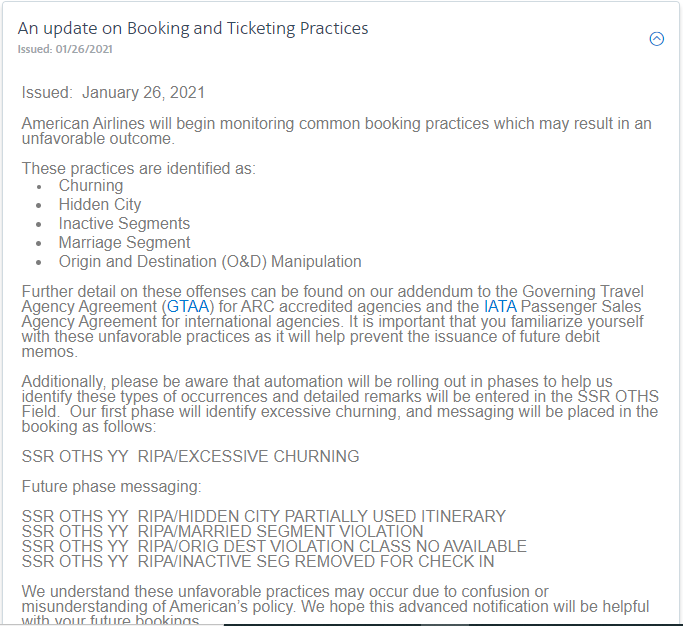
Speaking of travel: Last week, I linked to an article about travelers gaming the system. The goal is to essentially fly for free every time. Some of the methods simply take advantage of loopholes in the system (kinda like Gamestop), and some are sketchy at best. This week, American Airlines dropped the hammer on these shenanigans. I can’t link to it directly, but if you go here and scroll down to “Latest Communications,” you’ll find this update:
Translation: “We’re done tolerating this nonsense.”
Books: I recently finished “The Creative’s Curse” by Todd Brison, and Essential by The Minimalists (not affiliate links). I cannot recommend these enough. If you are in any way creative, Brison’s book is a must-read. If you are looking to clear out the white noise in your life, pick up Essential.
Both have me feeling a little better about the world, and the path I’m on.
In the meantime, here’s a quick read using packing for a trip as a metaphor for the baggage we carry around in our lives. The takeaway: Don’t overpack.
Eye Candy: I might not be able to use my passport, but I can be a tourist in my own town. Sometimes from the comfort of my own couch. This Instagram Account never fails to make my part of the world seem like a Wonderland. Maybe ‘cause it is.
It’s a new day in America, and we can all collectively exhale. Watching the inauguration this week, I felt real joy and hope. I was asked what I liked best about the speeches.
My response:
“I think what impressed me most about yesterday’s speeches was what they lacked.
There was no bile or name-calling. There was no finger-pointing. There were no attempts at rallying people by focusing on what they’re against.
Instead, we listened to calls for civility. For coalition. For concord. It was refreshing–and it wasn’t lost on me that yesterday was the first time in days that we saw the sun up here.
The ceremony itself seemed to recognize today’s(?) America. I don’t know if I can articulate that well. It was nice to see traditional things like nods to heroism (take a bow, Eugene Goodman), but also a blend of august and novel. “Stars and Stripes Forever” got played, and someone in the audience was wearing Jordans. A 22 yr. old stopped us in our tracks with her evocative words, and Bernie became a meme. I hope that all makes sense.
I’ve always thought what makes this crazy experiment of ours great is the people. America isn’t a corporation. It’s not it’s geographic borders. It’s us. All 330M of us. The last 4 years saw the worst of us surface. The next 4 will bring out the best in us.
On the morning after the 2016 election, my family was returning home from a vacation in Pensacola. When you fly space-available, you get an early start, so there we were driving in the pre-dawn silence. As we crossed the Three Mile bridge, I looked over and saw my wife had tears running down her cheeks. Yesterday, she posted a picture of our flag waving in the sun. Yesterday felt less like a ceremony and more like healing.
Scott Galloway keeps telling his audience that “Everything that’s wrong with America can be fixed by what’s right with America.” Yesterday felt like the clarion call to get rolling on that, and it’s what I liked best. I’m excited.”
And I hope you are too. We’ve got work to do. Let’s get rollin’!
On to the good stuff…
Everything falls apart. On some level, we all know this, yet failures still surprise us. This week my shoulder decided to stage it’s own revolution. A much more typical—and much less painful— example can be the stuff we own. We all know quality > quantity, and most of us are aware of planned obsolescence. Maybe the better way to go is to simply own less stuff. Fewer things, less stuff to maintain. Perfect.
Some day soon, we’ll all be traveling again. In a previous issue, I shared the 1st part of a great historical recap of United Airlines’ storied history in Cleveland. Here’s Part 2, covering the 1970-80’s. It’s a wonderful read, even if you’re not as into aviation as I am.
P.S. Not for nothing, if we ever vote on changing our national anthem, “Stars and Stripes Forever” gets my vote. It’s a hill I’m totally willing to die on.
P.P.S. I’d love to hear what you think about this week’s list. Rants, raves, or anything in between. Let me know in the comments, and share widely!
If you’re reading this, I’m pleased to tell you we’re still here. Our republic is down, but not out.
As terrifying as last week’s insurrection was (and the more we learn, the worse it gets), I don’t think the fate of our nation was ever in doubt. That may be naivete but for me, the appeal of the American Experiment is its resilience.
We bend but never break.
A huge part of the larger discourse has been the rise of social media, and the influence it has on the populace. There is no shortage of analysis and/or hot takes on the massive reach of Facebook (or the calls to #DeleteFacebook), the often arbitrary moderation of Twitter, and whateverthehell Parler was.
The latter was effectively erased from existence last week, and a lot of people made sure we all knew they thought their freedom of speech was being infringed on.
Regardless of where you stand on Parler’s extinction, we can all agree on 2 distinct truths:
1. Civics needs to make a return to our school’s curriculum, post haste.
2. For all intents and purposes, social media IS today’s Town Square. It’s where we go to share ideas, get on our (cyber) soapbox, and debate. The discourse isn’t happening down the street- it’s on your screen.
The First Amendment doesn’t apply to private companies, and everyone has to consent to a platform’s Terms of Service as a condition of participation. The easy answer here is to point to that, and say “if you don’t like it, leave.” I know, I’ve done it. But maybe the better solution is to model Terms of Service after the First Amendment.
It’s pretty clear that online is where people are now assembling, and as broad as it is, 1A still has defined guardrails. I don’t think you could legislate (read: force) companies to do this, but it’s certainly a model worth looking into going forward. Don’t @ me*.
On to the good stuff…
Like many of you, I often find refuge in music. This week was no different. Here are a few songs that made navigating life during wartime a little better.
Speaking of escape, the life of the Digital Nomad has exploded in popularity. COVID has been an accelerant for many things, and this is no different. As the Knowledge Economy has blossomed, so too has the ability to work from anywhere as long as you have internet access. Susanna Perkins has written a great piece about the age of the “Anywhereist.” As she explains, it goes far beyond simple categories, and far beyond the stereotypical 20-something.
“An “anywhereist” goes beyond “work from home,” “remote work,” or “digital nomad” — although it encompasses all of them. To me, it means I have the ability to truly work and live anywhere, either as a remote employee or through my own business.”
With some nations now offering work visas (Aruba, anyone?), there’s never been a better time to load up your laptop and go. Work From Home sounds a whole lot more appealing when “home” is an island paradise.
Long live the Business Traveler. As COVID continues to ravage the aviation industry, many have predicted the end of corporate travel. Given the disproportionate amount of revenue they bring in, this is particularly concerning. The truth is, this is nothing new.
When the Suits do return to the terminal, you know what won’t be there? CNN Airport News. Not sure I’d be able to write any kind of elegy here, but it is more proof that change is constant.
COVID has clearly changed how we work, how we travel, and how we… (checks notes)… build stadiums?
This year is off to an…interesting start. Can someone please let 2021 know it’s not a contest?
Two days ago, we all watched in real-time as a group attempted to overthrow our government. It was a poor man’s version of storming the Bastille, except they wanted to keep the King in power.
Consensus is a rare commodity anymore, but I believe we can all agree that what happened at the Capital this week is inexcusable…
…And it didn’t occur in a vacuum. Anyone looking would’ve seen this train roaring right at us. Instead, many chose to soothe themselves with the idea that these people aren’t to be taken seriously, or that it’s all for show. It clearly wasn’t. While we pacified ourselves on a diet of interviews in diners and gentle think pieces about the disaffected middle class, they were plotting.
Anything burns if you pour enough accelerants on it. The truth is, white gas has been pouring on these embers for years. Social Media gave it oxygen.
In any society, there are lines that can be pushed but never crossed. This past Wednesday, 1000’s of people-urged on by elected officials– high-hurdled them.
The last time the People’s House was breached was over 200 years ago. That’s a number we should definitely try to beat.
On to the Good Stuff:
1. In the early ’90s, the world looked on in horror as the former Yugoslavia disintegrated. Spectacularly.
Places like Kosovo and Bosnia were inextricably linked with atrocity. Nearly 30 years on, things are quieter, but not fully resolved. Overt violence has been replaced with things revisionist history and onerous zoning regulations. The shooting may have stopped, but the aggression hasn’t.
2. Polina Marinova continues to knock it out of the park with her newsletter, The Profile. In one of her latest posts, she writes on the importance of one’s Content Diet, and how critical “watching what you eat” can be.
“In a world that bombards us with clickbait and articles solely written to sell ads, it’s up to you to become more aware and intentional about your own content diet. Ultimately, the information you consume on a daily basis will determine how you think about and see the world.”
Literary superfoods, each of these will nourish your heart & mind both.
4. Airlines are in the fight of their lives, and some storied carriers are on the ropes. In an excellent piece packed with maps and pictures, Paul Soprano walks us through United’s history in Cleveland, Ohio. It’s a lovely look back to a time when travel was glamorous and less fraught. Be sure to come back for Part 2.
5. While we’re waiting to get back out in the world, take a listen to this podcast from Stuff you Should Know on the Eiffel Tower.
That was the last thing that went through my head before my life was upended.
In the time it will take to read this sentence, I had gone from having a great game, to blowing out my knee.
This is the story of my road back, and how it can help you.
I am part of a local pickup soccer group. We have a long-standing weekly game. We’ve played for long enough now that many of our kids are now old enough to join us.
On this night, my team worked the ball out of our end, beat a few defenders, and were on a breakaway towards the goal. One of my teammates sent a beautiful pass across the field to me. It came across my body from the right and onto my left instep. Running full speed, I did the only thing I could do and took the shot…
… and then I was on the ground, pounding my fist into the turf. As I struck the ball, my right shoe caught in the turf, my right knee bending completely inward. That hurt, but my foot hurt worse. I’d learn later that I had also fractured my foot in multiple spots on the way down.
I managed to get off the field and get to my car. Fueled on adrenaline, I somehow got home, where my wife helped my get my shoe off. It looked bad and felt worse.
I saw a specialist the next day, and they tentatively diagnosed a sprained MCL. It was still too swollen to see if it was torn or not, so I was fitted for a Bledsoe Brace and sent home to wait for my MRI.
Waiting became almost unbearable. The pain had ebbed a little, but I didn’t know exactly what I’d done. And without knowing what was wrong, I couldn’t start working to fix it. I’m impatient on a good day. Having nothing to do but wait was its own kind of hell.
Three weeks later, I got my results. My MCL wasn’t torn, (good news!), but I had a severe sprain (ok). I also had a completely torn ACL (wait, what?!), and it apparently had been that way for a while.
Convinced they’d sent me someone else’s results, I called back. They assured me that they were correct, and I went from mildly annoyed at being in limbo to scared.
Would I ever get to play again? What would life look like if I couldn’t? Soccer wasn’t just a game I loved, it was also the nexus most of my social life was built around. Picturing a life without it was tough to take.
I realized that some things were out of my control, but that if I was going to be kept off the field, it wouldn’t be for lack of trying.
My rehab plan was built around NOT repairing my ACL — given that I had been without it for some time, we would instead focus on the surrounding muscles to cope.
My first exercises focused simply on regaining strength-it’s amazing how fast everything atrophies. Leg bridges, walkouts, and more filled my days. Later, I progressed to lateral movements, and working with resistance bands. There was also a horrible attempt at getting back on a treadmill. I tried to tell myself it was progress, but really it was just a dumb move on my part, and about 90 days too soon.
At the 4 month mark, my therapist and I decided I was ready to try and run. I started small. 1 minute on, 4 minutes off. Repeat three times. Seemed simple enough but was anything but. Still, I kept going. Thanks to COVID restrictions, we had shifted to tele-visits, with my son filming me running up/down the street so she could see my form.
All seemed okay, and I got the greenlight to keep pushing. Our visits ended, with her wishing me well, but also leaving my case open for 90 days- a lifeline, just in case.
At this point, I’d hit a crossroad. I was “healed,” but not better. I needed a simple path forward, something that would let me focus my energy on getting better. Below are the steps I used to get on track.
1. Have a plan that removes friction.
I would try and run, but it was inconsistent, and I didn’t have much of a routine. What I needed was consistency, and a clear plan that did not involve a lot of thinking.
Enter Hal Higdon. By total chance, I saw his training programs in a newsletter I get, and decided to check it out. The 5k “novice” was just what I needed. The program’s secret weapon is that it removes the friction of decision. Each day has a specific training; some days you run, some days, you walk/run, and 1 day a week you rest.
Your only job is to look at what day you’re on, and do whatever it says to do. That’s it.
2. Use small steps to build a streak.
You may have heard of the “Seinfeld Strategy” before, where the comedian talks about the power of building a streak, and how seeing visual proof of that streak builds momentum.
After a few days you’ll have a chain. Just keep at it and the chain will grow longer every day. You’ll like seeing that chain, especially when you get a few weeks under your belt. Your only job is to not break the chain.” — Jerry Seinfeld
Actual sheet I used. Photo courtesy of author
The first week went as expected. When I hit a mile-and-a-half, I yelled. Completing 2-miles felt like winning a gold medal. As they days roll on, it’s important to celebrate each new win, in whatever form that may take for you.
Real progress happens when you focus on more on “finish” and less on “fast.”
3. Support will come from places you least expect.
I have been floored by how supportive the running community has been. Many may have simply been passing along a kind word. Some were likely paying forward the support they’d received.
From comments here on Medium, to encouragement at the gym, to tweets from people I’d never met, the support was invaluable.
If you’re in the same spot I was in, my advice is simple: when you see support, grab it. When it’s your turn, give it freely.
4. Come for the rehab, stay for the mental clarity.
When I started to run, I had a reasonable idea of what to expect physically. I knew I’d be sore, get winded a lot, and that persistence would beget endurance.
What I never saw coming were the psychic benefits. I’m much calmer on days that I run. I feel that I’m on a much more even keel than I was when I first put my shoes on. With my mind free to run (no pun intended), all kinds of ideas spring up. I wrote much of this article while jogging. I won’t dare to try and explain the neuroscience behind it, but can tell you I feel amazing. To be able to say that in a year like this is something.
I’m still running and have almost completed another 8 week cycle. My times are still terrible, and I sweat way too much, but I don’t care. The feeling of accomplishment outweighs both of those.
It will be there for you too.
Summing Up:
Find a plan that removes friction/decision making
Use small steps to build a streak- focus on finishing, not how fast you can run.
Use your streaks to build momentum.
Support may come from where you’d least expect- when you see it, take it with gratitude.
2020 is in our rearview mirror, and brighter days await! I hope this finds you ringing in the New Year healthy and safe.
Here are 5 things I want to share with you this week.
1. On Christmas, a lot of people got presents they didn’t necessarily want or need. On the surface that seems like a good problem to have. But left unchecked, “stuff” becomes overwhelming, and your things wind up owning you. A good way to start the year is by clearing away the white noise in your life. And a good first step for that is to ask yourself something like, “how many towels do I really need?”
3. The other day my son and I were in line at Costco, when he asked me how credit cards work. More specifically, what happens between when you swipe your card and when you get your receipt. I had no idea. Maybe you didn’t either? This video explains it well.
Merry Christmas to those of you celebrating! I know this has been a year like no other, but wherever this finds you, I wish you a season of joy & wonder.
It’s no secret that more and more people are cutting the cord, and ditching traditional cable for streaming platforms. For soccer fans, having access to channels like NBCSN and Bein Sports mean stead access to games for the first time…ever?
Now channels are looking to move more and more games behind paywalls. That could mean the death knell for channels like NBCSN. Further, what happens to platforms like Fubo if those games are no longer available? Do subscribers vanish too?
In the early days of the pandemic, hoarding cash was the name of the game for airlines. All retreated to their main hubs, pulled flights down, and used daily cash burn as a barometer of relative health. Brett Snyder, aka Cranky Flier argues that the time for such conservative behavior is over, and now is the time for airlines to experiment with new routes and get back in the game.
Fortune favors the bold, but does it favor carriers with aggressive strategies? Snyder certainly thinks so.
Hanlon’s Razor is a maxim that states, “never attribute to malice that which is adequately explained by stupidity.” In other words, not everything people say is necessarily a personal attack. Polina Marinova walks us through how keeping this in mind can help avoid petty arguments. In this season of grievance culture, and social media rage machines, that might be the best gift we can give each other. One of the next best would be to sign up for Marinova’s newsletter, The Profile. It’s fantastic.
The Queen’s Gambit has brought chess back into mainstream discussion. Its rules require a steady mind and concentration- the antithesis of today’s Attention Economy. Getting off our phones and back to games like this can reap huge benefits- the least of which is the ability to think clearly. From the article:
“Our problem today is not that we don’t or can’t pay attention, but that the systems and structures of society oblige us to pay attention so frequently and fleetingly that we cannot in fact concentrate. Lacking an ability to concentrate, it’s a struggle to construct and maintain a coherent and autonomous sense of self, which leaves us at the mercy of digital, commercial and political puppeteers. Without concentration, we are not free.”
Many people used their extra time this year to finally chase their creative dreams. New Podcasts sprang up, got back to playing music, and dusted off their pens to write for the first time in years (including yours truly). Whatever your endeavors are, keep this quote from James Clear in mind, and above all else, keep going!
“Your favorite athlete’s first workout was just as bad as yours.
Your favorite chef’s first meal was just as bad as yours.
Your favorite artist’s first work was just as bad as yours.
These Are a Few of My Favorite Things (this week).
Interviews with most pro-athletes today are terribly anodyne. “All credit to the team,” “I just want to give 100%,” blah blah blah. Eric Cantona was always the opposite. His on-field play was amazing. His actions off it even more so. If you have time over the holidays, take a few minutes to watch some clips. To wit: “When seagulls follow the trawler, it is because they think sardines will be thrown into the sea.”
Speaking of which, even now there are highlights. Small victories are all around us; we just need to be looking for them.
We now have two vaccines authorized for use. Both far exceed even the rosiest of projections. Clearly a big victory, both for science and humanity. If you are still looking for a Christmas miracle, this is it.
This week I stumbled into Peak Internet. If social media ever had a value-added service, this is it.





 Kevin Sent