
Subscribe to continue reading
Subscribe to get access to the rest of this post and other subscriber-only content.
Your antidote for the music algorithm
Subscribe to get access to the rest of this post and other subscriber-only content.
Best Record of 2001: Day 48
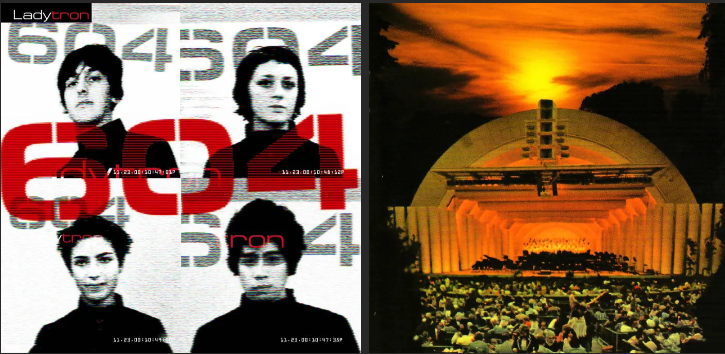
Today we’re taking a quick look at Ladytron’s 604 as it faces off against At Dawn by My Morning Jacket.
There was a time when I would buy records based solely on the label. Dischord never missed. 4AD? Odds were high you’d love what they were issuing. K Records? Whether or not it matched my tastes was up for grabs, but you could bank on it being something quirky, and that screamed “Olympia.” Wax Trax! was the gift that kept on giving for a kid who was both into hardcore and synth pop. The late ’80s and early ’90s were wildly dissonant for me musically. Nettwerk was right there too, with offerings sometimes less for the dance floor, more toward the after-after-after party. I was always happy to take a flyer on these types of records, even if I didn’t bat 1.000.
Seeing Ladytron’s 604 was on Nettwerk, I was surprised I’d missed them. Turns out that just the reissue was on the label, but that doesn’t explain how I’d missed the band entirely. I guess by ’01 I’d tuned everything out, even stalwart genres like synthpop.
Reading up a bit, I kept seeing “electroclash” tossed around, and maybe it’s just me, but I’m not seeing it. What I am seeing is a band whose members 110% have a Kraftwerk record or two in their collection. Stereolab as well, right down to the dueling female vocalists—and stylings—in Mira Aroyo and Helen Marnie. They’re cooler than you, but don’t flaunt it. The sort of icy personality that would also definitely let you bum a dart. Tracks like “CSKA Sofia” are a bit of spacy noodling, but “Paco!” is pure uncut new wave, and I’m here for it. You could’ve told me this was released in ’89, and I would’ve believed you. It’s the sort of thing I spent a lot of time listening to while riding the bus downtown to places like Dudley’s (RIP) to pick up some import or another. Same story with Playgirl and Discotraxx.
In fact, I could swear I’ve heard these all before. They’re just vaguely familiar enough to convince me I have, even though I know otherwise.
At 16 tracks, it’s a bit too long. There’s an incredible 10–11 track record in here. Some of the padding feels like a mandate to flesh out the song count to “fill” the CD (were we still doing this in ’01? I can’t see any other reason why “Laughing Cavalier” made the cut.), but the good far outweighs the bad.
I’m bummed I missed this before, but I’m happy to have found it as part of this challenge. This is one I’ll definitely be returning to.
I can tell you that had I heard My Morning Jacket’s At Dawn in 2001, I would’ve had no time for it. I had no taste for this sort of woozy Americana jam-band stuff. Times change. It’s not bad! “Lowdown” reminded me of those slow summer mornings where it’s already humid, but the searing heat hasn’t yet kicked in. If I had a front porch, I’d sit out there and listen to this sort of thing while watching the world go by. “Xmas Curtain” has a nice slide guitar (or steel pedal, who knows?) that, in ’01, would’ve had me spraining my finger by smashing the fast-forward button. 25 years on, and I find that sort of thing endearing… in limited doses. It works here.
Similar to 604, there is a 10-track “10” in here somewhere. A couple of tracks went straight onto my playlists, a few were objectively pleasant— if not for me—and a couple left me shaking my head. Put your lighters down, this is not a ballad band. I will be fine never hearing “If It Smashes Down” or “I Needed It Most” again. I would’ve scotched this in a hot second 25 years ago, and almost did just now. Sorry, not sorry. Tracks like the aforementioned “Lowdown” and “Just Because I Do” are what they do best.
Bottom Line: So! We’ve got two wildly different new-to-me records whose only common ground was the year of release. On paper, this should be a lock for Ladytron. Once a synth kid, always a synth kid. But My Morning Jacket was better than I was expecting. If I’m honest, I’d be okay with either of these going through to Round 2. We could do worse.
Looking at my bracket, I have Ladytron pegged as winning Round 1. Apparently, I’d already taken a flyer on 604. Hopefully it pays off.

Any thoughts on either of these records? Agree/disagree with my take? Sound off in the comments!
Best Record of 2001: Day 45
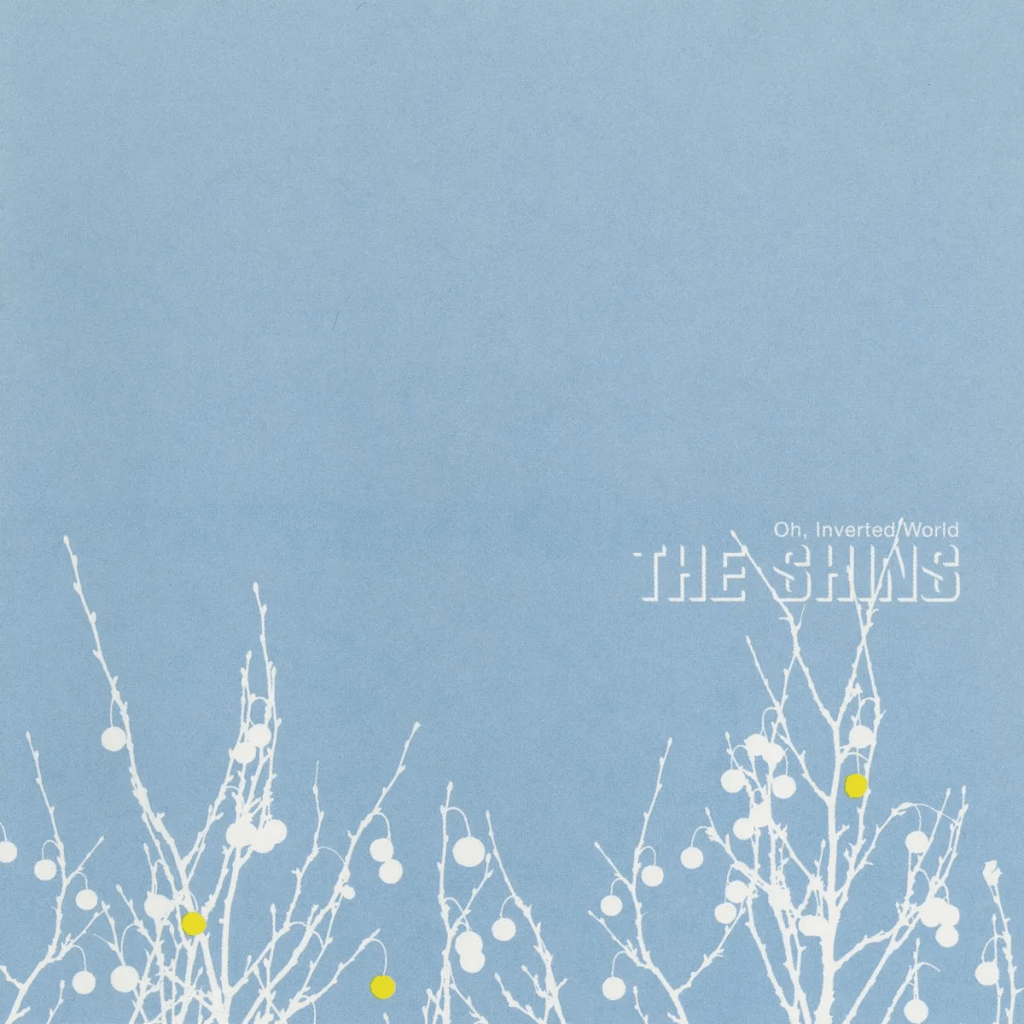
Today we’re taking a look at Oh, Inverted World by The Shins
If you knew me in my teens and 20s, you know that I was an insufferable music snob. Like, just the worst. It’s something I’ve worked hard to move away from. It’s not like hitting middle age suddenly meant I liked everything; fuck no! I’m more opinionated than ever.
In 1996, I would just point and laugh at a record that wasn’t my bag, or just meet it with sneering derision. These days, I’m genuinely interested in what about a given record lands with someone. What is it about this specific recording that speaks to you? Is it tied to a seminal life event? Was this playing when you met your future partner/spouse? They’re obviously not my stories, but I don’t need much of a thread to grab onto. Usually, these are interesting enough on their own. Ideally, they get me to look at a record/band/etc in a new light.
So, if anyone has one of those regarding The Shins’ Oh, Inverted World, I’m all ears.
There was a time when one of the first things you did when meeting someone new was root through their records (and later CDs/tapes). It was—and is— a great window into someone’s personality, and how they might align with yours. And there was a time when the Garden State soundtrack was everywhere. This wasn’t a dealbreaker, but it usually ended with me muttering “fuck “ under my breath or dismissing whatever might have come after it. It just seemed to embody the very definition of tepid. Worse, it spawned a whole legion of bands to pen purposely obscure lyrics and set them to a similar style of music.
I don’t want to punch down—again, the days of me trying to write similar to Pitchfork 1.0 are mostly gone, but man, this is a pressure test. I will say that this has much more of a pulse in places than I was expecting (I’m thinking of opener Caring is Creepy here), and there are songs that would be right at home on late-stage Beach Boys records (”Girl Inform me”). And then we hit a wall with “New Slang.” Earlier today, if you’d have asked me what the name of this song was, I would’ve come up empty. It took exactly three notes of it to trigger some sort of musical PTSD in me. I swore if I never heard this song again, it’d be too soon, and yet here we are…again. In the interest of “research,” I’ve avoided skipping tracks. I did that here, but I’d be lying if I didn’t mention that this was also a good time to go downtown and get more coffee.
The Celibate Life lost me on the title alone, but it’s fine. It’s all a dead cat bounce, though. Girl on the Wing is back to the beach Boys-y vibe that likely only exists in my head. The point here is that they’ve pulled at least one amp back in, and there’s a pulse, albeit a weak one. And on it goes; one step forward, two steps back. Pressed In A Book dials up the fuzz to like a 4(?) and could be a B-side on a Sgt. Pepper’s record. It’s not terrible! And then we end with The Past and Pending, and we’re right back to the sort of folk-y, overly plaintive stylings that drive me bonkers. Even the horn is lonely, and I’m a guy who likes just about anything with a lil’ brass in it.
Bottom line: I’m a little more up on the band than I was 45 minutes ago, but not by much. A couple of good songs got my eyebrows raised and hopes up. A lot of sensitive ponytail guy stuff didn’t send them crashing back to earth. This is seeded at #10, so clearly a lot of people hold it in high regard—or at least enjoyed Garden State.
So again, if anyone wants to share what this means to them and why, I’m all ears. Until then, Oh, Inverted World has a couple of (relatively) high points, but it’s not enough to overcome the wall of beige that is the rest of the record.
EDIT: The algorithm served me up “Split Needles” after this, and I dug it. Maybe there’s hope yet?
Bottom Line: This is up against The Invisible band by Travis, and well, in the interest of saving time, my review can be distilled down to “Second first, same as the first.” Only difference was I’d never heard these guys before (at least that I know of), and there’s no Garden State-related enmity here. I listened on Spotify (I know! I know!) and the site says this band has just under 3.1 million listeners a month. Clearly, someone is seeing something I’m not. Maybe that’s you? If so, tell me a story…
Any thoughts on either of these records? Agree/disagree with my take? Sound off in the comments!
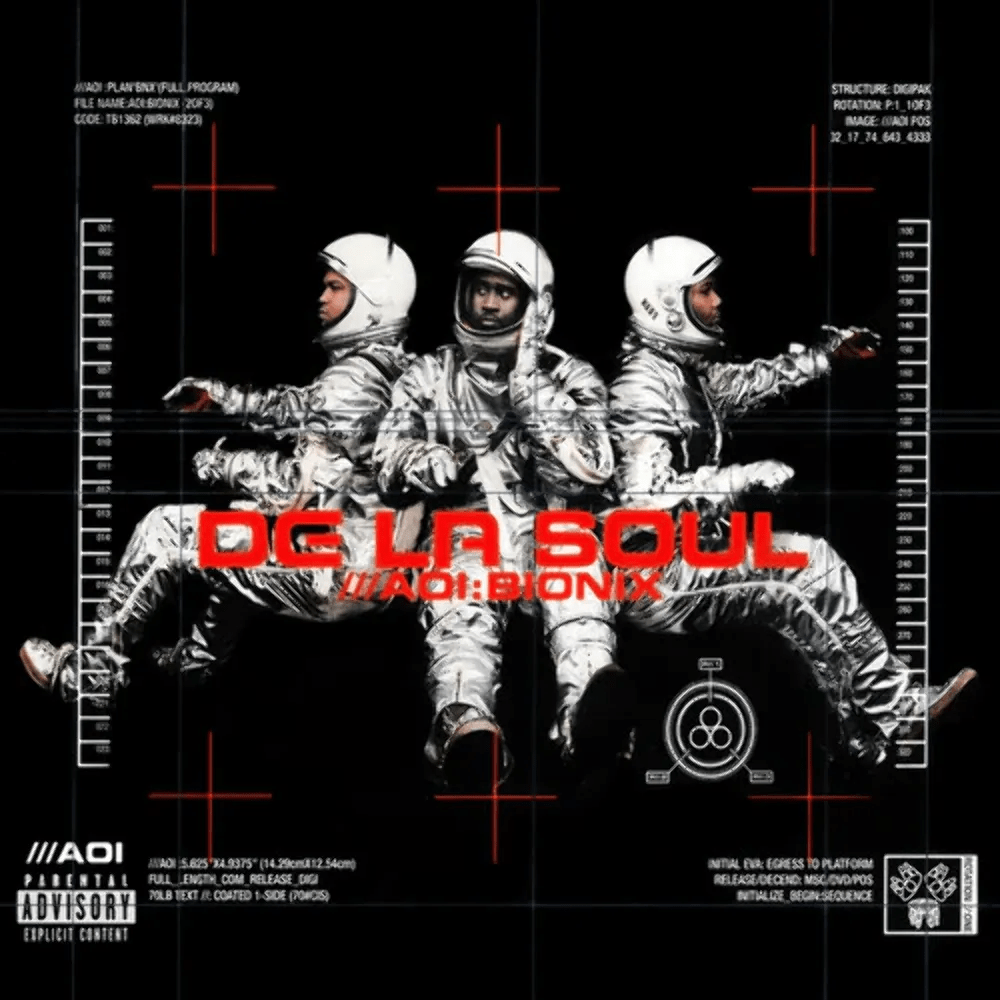
Today we’re taking a look at De La Soul’s AOI: Bionix.
Note: As many of you saw, I recently wrote about a Best Record of 2001 challenge and noted that I’d be writing some of these up.
The plan is to do quick hits on each first-round matchup and post them directly to the page. Some will be longer, some won’t, and some might just be a handful of sentences. There’ll probably be a few typos. We’ll also have a few guest posts along the way, so make sure to stay tuned for those!
Check ’em out and let me know your thoughts! Chin wags & hot takes welcome! Sharing and restacks always appreciated.
KA—
A wise man once famously asked, “Well, how did I get here?” On AOI: Bionix De la Soul seems to be asking the same. Not in a bad, confused, old-man way, but in a bemused, slightly disoriented way. This is made by—and for—people who have graduated, moved out to the suburbs, and might have this playing while cleaning the house, instead of at a house party.
De La Soul sound older here, sure, but “older” doesn’t mean tired or reaching into a tired bag of tricks. They’re still playful, still clever, and still love a good sample. But there’s a polish on AOI: Bionix that makes the whole thing feel more measured than the chaos of 3 Feet High and Rising. Hard to put into words, but it feels like they turned the “sheen” dial up to 11.
That maturity works for me. In fact, it’s a big part of what makes the album interesting. Bionix isn’t trying to recapture youth so much as it’s trying to capture where the trio’s at. The record is uneven—feel free to skip “Pawn Star”— and tbh, it could probably lose three or four tracks and a few of the interstitial skits without sacrificing much (why are these skits a thing?!).
But even with the padding, the middle 100% holds. The production is smooth, the rhythms are locked in, and the samples are still doing that De La thing where they’re just familiar to recognize but also just far enough out of reach that you find yourself going to WhoSampled a lot.
“Baby Phat” is an obvious standout, and for good reason: it’s a banger. Or at least I think that’s still what we’re still callin’ ‘em. “Simply” and “Watch Out” also hit that sweet spot, with effortless grooves. They even took “Wonderful Christmas Time” and smoothed it out into something good. That’s a rare talent! Cee-Lo rocks up and puts in good work, as do Slick Rick and B Real. I’ve seen others comment that these two drag things down, but I didn’t see it that way. Sure, B Real is talking weed. What else did you expect? If anything needs to go, it’s the goddamned skits.
What AOI: Bionix really shows is that De La Soul could evolve without losing their personality. It’s not the wild, youthquake daisy-age energy of their debut, and it doesn’t need to be (nor should it). It’s a late-era album with some extra baggage but also a lot of charm, good taste, and enough great moments to make the uneven parts easy to forgive.
Bottom Line: This is up against Dismemberment Plan’s Change, a record that had we been doing in this in 2001 or even ‘02 or ‘03, I would’ve been lauding from the rooftops. This is very much the lane I was in at the time. And man, even now there are spots that just nail it, yaknow? If I squint hard enough, I can see mid-20s me, dart in one had, steering wheel in the other making my around town listening to this through (almost) blown speakers. They also get bonus points for helping to propagate Maritime (via bassist Eric Axelson); one of the best bands to come of Milwaukee. I dug AOI: Bionix more than I thought I might, but old habits die hard. No changing things up for me; Change it is.
Any thoughts on either of these records? Agree/disagree with my takes? Which one of these would you vote for? Sound off in the comments!
For a hot minute, I had a weird streak going: I’d make the drive from Portland to Seattle and tune into 107.7 The End as soon as it came in. And sure as shit, every time I did, I’d hear The Clash’s “Train in Vain.” They certainly made more tracks than that, and certainly made ones that are more resonant, but my point here (besides some musing about the universe working in mysterious ways) is that it was incredibly catchy and stuck with you long after you heard it. It felt like Mssr. Strummer, Jones, Headon, and Simonon could do no wrong. Then came the split, Cut the Crap, and the most important band in the world suddenly… wasn’t.
Flash forward a couple of years, and Strummer starts writing some songs and playing with the Mescaleros. There’s a record. Rock and the X-ray Style? Not his best work. To be fair, I think the world held him to a high- even if unfair- bar. And maybe this first one was needed to get his sea legs again.
Whatever, the second act would have to wait a bit.
So along comes Global a Go-Go, and it’s clear that Strummer has spent his time shaping the corners. This is an amorphous record that comes across like everyone brought some ideas to the garage just to see what might happen. Remember when you were a kid, and the fixins bar at Fuddruckers seemed like a dare? Yeah, like that. (Just me? Oh. Okay.)
At any rate, all of these elements make for what is often diplomatically called a ‘challenging listening.” It’s catchy in parts, and there are a few spots where I caught myself catching the groove, but it doesn’t have the cohesion of something like Train in Vain or Rock the Casbah. And that’s fine! At this point, the days of Combat Rock were firmly in the rearview mirror. At the same time, I can’t help but wonder if having someone keep him in check a little bit would’ve helped. I mean, an almost 18-minute track to wind things up? C’mon. Some sort of editorial guidance (for lack of a better term) could’ve elevated this from simply interesting to really good.
You know, the kind of thing you hope is playing when you turn your radio on.
While Strummer & the Mescaleros come across as serious musicians trying not to be taken seriously, The Beta Band seems just the opposite. Hot Shots II is also a sprawling, throw-everything-in-the-mixer kind of thing. But sometimes a soufflé collapses in on itself. Every time I thought, “Ah, here we go!” something would shift… or, worse, an annoying crackle or pop that set off my misophonia. Maybe I’d like this better if I still got high? I dunno…
Bottom Line: On Bluesky, someone posted that Strummer should win everything this week, and I’m all in on that. Global a Go-Go it is…
Any thoughts on either of these records? Agree/disagree with my takes? Which one of these would you vote for? Sound off in the comments!
Best Record of 2001: Day 30
Good morning!
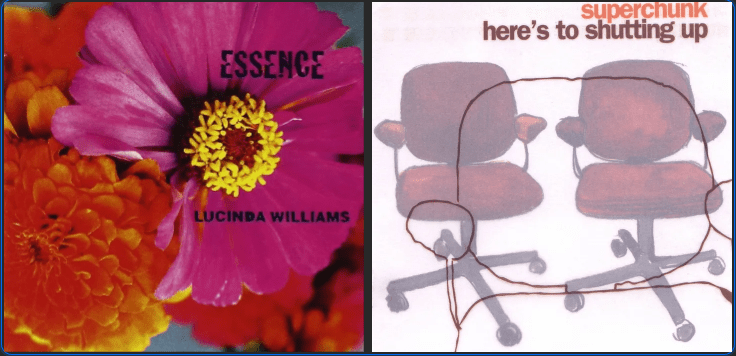
Today we’re taking a look at Lucinda Williams’ Essence as it faces off against Superchunk’s Here’s to Shutting Up.
Note: As many of you saw, I recently wrote about a Best Record of 2001 challenge and noted that I’d be writing some of these up.
The plan is to do quick hits on each first-round matchup and post them directly to the page. Some will be longer, some won’t, and some might just be a handful of sentences. There’ll probably be a few typos. We’ll also have a few guest posts along the way, so make sure to stay tuned for those!
Check ’em out and let me know your thoughts! Chin wags & hot takes welcome! Sharing and restacks always appreciated.
KA—
When I was a teenager, I was a holy terror behind the wheel. It was hammer down all the time from a kid who could barely see over the steering wheel. Tracks like Superchunk’s “Precision Auto” were the perfect soundtrack. Mac McCaughan had some shit to get off his chest, and I was there for it. Albums like ’93’s On the Mouth were the perfect record for where I was at the time.
Flash forward to 2001: I drive a Corolla, and while I’m not quite at the stage where I call out every sign I pass, it’s close. I’m only 26, but well on my way to becoming old before my time. Not being able to see very well doesn’t help.
Mac McCaughan, on the other hand, sees things perfectly. As he’s racked up the miles—er, years—his writing (and the band’s sound) has taken on a much more reflective tone. He’s still railing against a lot of the issues of the day, but there’s more perspective—the kind that can only be earned by the years (see also: Mould, Bob).
If you like mid-discography Superchunk, you’ll find plenty here to dig. What you see is what you get; no one’s trying to make a concept record. If you’re all in on the early stuff, you might find the edges a little too sanded off, but odds are good you’ve thought that for a while now. It’s easy to get consumed by (waves hands all around), and while fully checking out isn’t an option, trying to care less is sage advice.
I don’t know anyone who claims this as their favorite record by the band, but it’s got a lot of what’s helped them make it to elder statesman status, and with just the right blend of angry and sanguine, it was the right record for them to make at the time.
With Williams, I’m at a bit of a disadvantage here as the music I was listening to wasn’t her speed. Or rather, her music wasn’t mine. At this point in my life, I preferred louder, harder, faster, more from my stereo, whether that was in the form of a band like Bad Religion, or a high BPM count from (insert techno band here). My friend circle also had a total of zero fans of singer-songwriters. In other words, there was no one there to get a record like Essence on my radar, let alone make the case why I might like it (tbh, it likely would’ve been a few years too early, but I’d have come around). It’s also likely that whoever would’ve been making this hypothetical case would’ve been influenced by the record that came before it: Car Wheels on a Gravel Road. A record that has come to be almost required listening for anyone looking to pen a song or two.
Williams released that record in 1998 after scrapping multiple versions to hit a mix of country, rock, and blues. It (rightfully, IMO) earned her acclaim and it influenced generations of songwriters while defining the Americana genre. Essence is the follow-up, and was a radical departure from those expectations.
Essence is much more spare, plain-spoken, and down-tempo. After the high-profile success of her previous work, this record reads as a weird turn. The problem—or rather my problem—is that this is a gentle record made in an era where there wasn’t much space given to such things. Even though I wasn’t listening to singer-songwriter stuff in any meaningful capacity, I had carved out exceptions (see also: John Hiatt). The kicker was it had to have a little oomph. I wanted a track that sounded good while burning up the interstate, not one that evokes images of looking out the window thinking about things. I could see “Out of Touch” fitting the former, but I have to squint to do it.
In a broader sense, this fits in well with what singers like Sarah McLachlan were doing at the time. In other words, writing incredible songs only to set them to what was often lukewarm music.
If there’s any sort of miscarriage of justice here, it’s that Williams also writes incredibly well. It’s a rare talent that can squish an entire story into a verse or two. She was recently included on the NYT list of 30 Greatest Living American Songwriters, and whether you agree with the premise of these sorts of things, it’s hard to argue her warranting a place on there. Essence feels like an odd turn for someone who never really made them.
Bottom Line: I think Williams will carry the day with the voting crowd, and my bracket pick reflects that. However, my vote will likely go to our friends from North Carolina.
Any thoughts on either of these records? Agree/disagree with my takes? Which one of these would you vote for? Sound off in the comments!
Best Record of 2001: Day 28

Cover art courtesy of Geffen Records
Today we’re taking a look at Weezer’s Green album as it takes on Melody A.M. by Röyksopp.
In my head, every Weezer fan is one of these two people. Reductive? Maybe. Accurate, probably.
At any rate…
At the risk of great bodily harm, here’s my tl;dr: Weezer didn’t follow up Pinkerton so much as they ran as fast as they could away from it. This was a good thing.
After the (at best) confused reaction to their 1996 album, Rivers Cuomo and co. went back to the drawing board and reeled things back. The Green Album plays like something of a reset button, a record built to avoid risk at all costs, and one meant to make you forget Pinkerton ever happened. No oversharing from Cuomo or blood-on-the-page type lyrics. No big swings, sound-wise. Instead, we got ten clean, efficient power pop songs that stick to the formula and rarely step outside it.
And for the most part, the plan works.
Clocking in at just under 30 minutes, the record is as streamlined as Weezer ever sounded. Crunchy mid-tempo riffs, stacked harmonies, and guitar solos that mirror the vocal melodies almost exactly. It is tight, polished, and an easy listen. You can hear the influences, too: bright 60s-style vocal hooks sitting atop thicker, fuzzed-out 70s guitar tones. Again, this is the band’s stock in trade, but they’re talented enough that it never feels derivative.
The album peaks early. “Hash Pipe,” “Island in the Sun,” and “Crab” are one of the best three-song runs in the band’s catalog. “Hash Pipe” brings a thick, sleazy riff with just enough bite to give the record some edge. “Island in the Sun” is the opposite; loose, warm, and about as effortlessly catchy as anything they have written. IOW, it’s a weapons-grade earworm. It was in ’01, and it still is in ’26, at least for me, anyway. “Crab” keeps things moving without losing momentum, sticking to the same structure and sticking the landing. I was too lazy to look, but if that was a single, I’m surprised it didn’t fare better. If it wasn’t, I’d be curious to know why.
Either way, that stretch does a lot of the heavy lifting here.
From there, the album settles in, and, well, kinda settles. Nothing falls apart, but not much pushes forward either. Cuomo had traded that raw, uncomfortable writing of Pinkerton for lighter, more surface-level lyrics. Again, that makes for an easy listen, a pleasant one, even. But it also opens the door to monotony, which the back side of the record comes perilously close to. If this is your thing, it’s a bunch of what you love. If it’s not, it can all feel like one big amorphous blob. The band deserves kudos for that consistency, but it comes with a cost. The songs start to blur together, built from the same pieces and delivered in the same way.
Still, I have to think that was the point.
The Green Album is Weezer playing it safe and doing it with discipline. Every choice feels controlled, from the short runtime to the repeated song structures. It makes for a smooth, no-frills listen that never overstays its welcome. You can throw it on, let it run, and not think too hard about it. If this had gotten stuck in my car’s CD player, it wouldn’t have been the end of the world.
If viewed as a comeback record, it does the job. This course correction set Weezer back on track for the next several releases. The highs hit, and even the lows never drag things down. The whole thing moves quickly. Sure, the whole record leans heavily on those three standout tracks rather than the full tracklist, but that trio is strong enough to keep it in rotation.
This is not Weezer at their most ambitious or creative, and in the end, that was the right move. It is Weezer keeping things simple, keeping things clean, and getting back on track.
Bottom Line: Weezer’s up against Röyksopp’s Melody A.M., a pleasant enough record. There were parts that screamed “sync music” to me, but also some total delights like “Eple.” In the end, I can’t see it coming out on top here, but that’s down more to an unfair seeding/match up than anything else. Given a lower ranked/lesser-regarded opponent, it’s easy to see a scenario where this sails through. There’ll be some less deserving records that go through to round 2
Any thoughts on either of these records? Agree/disagree with my takes? Which one of these would you vote for? Sound off in the comments!
Best Record of 2001: Day 27

Today we’re taking a look at beautiful garbage as it faces off against Andrew WK’s I Get Wet.
Note: As many of you saw, I recently wrote about a Best Record of 2001 challenge and noted that I’d be writing some of these up.
The plan is to do quick hits on each first-round matchup and post them directly to the page. Some will be longer, some won’t, and some might just be a handful of sentences. There’ll probably be a few typos. We’ll also have a few guest posts along the way, so make sure to stay tuned for those!
Check ’em out and let me know your thoughts! Chin wags & hot takes welcome! Sharing and restacks always appreciated.
KA—
You can tell who is from Madison and who isn’t by how they describe the traffic. If they tell you it’s awful, they grew up here. If they laugh and say it’s not too bad, they’re a transplant. The only exception to this rule (IMO) is East Washington Avenue (aka East Wash). The arterial runs through the city and gets more treacherous the closer you get to the capital. While you’re fighting to stay alive, you might miss what’s left of Smart Studios.
Standing there forlorn at the intersection of East Wash and Baldwin streets, it’s easy to forget that some incredible records were made in Madison on the isthmus. Records from L7, Nirvana, Smashing Pumpkins, Young Fresh Fellows, and many, many more were all made there.
So it only stood to reason that when some of the people behind the boards on those records decided to make their own, the result would be great.
Former Angelfish frontwoman Shirley Manson joined producer Butch Vig, Duke Erikson, and Steve Marker, and together they crafted something unlike everything else we were hearing at the time. It’s safe to say that Vig was one of the architects of the grunge movement. It’s also safe to say that this record doesn’t sound anything like it. Whether it’s the woozy, buzzsaw opening guitar on the opener “Supervixen,” the creeping sound of “Queer,” or the in-your-face menace of “Vow,” it was exactly the new sound needed to fill in the void as the grunge wave began to ebb. Garbage 2.0 was more of the same, and we couldn’t get enough.
Would beautiful garbage keep the streak going?
Opener “Shut Your Mouth” sure makes it seem like it. The band–and specifically Shirley Manson— roar back with their trademark mix of snarling vocals and gritty industrial sounds. It’s all on brand and makes it easy to assume this’ll be a record stylistically similar to the two records that came before it.
Not so fast.
“Androgyny” leans a bit toward the pop light with an infectious hook and sing-along choruses. It’s catchy enough, but something feels undercooked here. I can’t quite put my finger on it. Maybe the edges were sanded off just a bit too much? Then we get to “Can’t Cry These Tears.” This one goes all in on electro pop, right down to including some bells. I’m scribbling these notes the day we learned Nedra Talley of The Ronettes has passed, and all I keep coming back to is “this is a song they totally could’ve pulled off.”
Garbage is best when there’s some fuzzy guitar right up front, and “Til the Day I Die” has got that for days. And is it just me, or did they lift the riff from Funky Cold Medina?
“Cup of Coffee“ is the band’s stab at a ballad. Manson’s voice can carry just about anything, but I don’t think a ballad is what people are looking for from them.
“So Like a Rose” is a woozy bit of dramatic pop. Like if Kevin Shields let the fog clear a little bit.
Stylistically, this record is all over the map. There’s a fine line between “pushing creative boundaries” and “mixed bag,” and beautiful garbage isn’t quite sure which side to land on– especially when compared to the first two records. Part of me wonders if they were afraid fans would reject more of the same. I doubt it. People loved that! We wanted more of that spark; more of that techno-meets-industrial-meets chanteuse (with a little sampling thrown in for good measure).
It wasn’t exactly a world beater at the register, either. It wasn’t drawing in new fans and seemed to turn away older fans (though that seems to have changed over time). I’m sure dropping a record in the first few weeks following 9/11 didn’t help, nor did dropping “Androgyny” as the first single (one of the weaker tracks on the album, IMO). It’s not terrible, but just feels labored. Like they were meeting a contractual obligation, but were too proud (and too good) to drop an overtly shitty record.
Over time, people seem to have warmed to beautiful garbage. I wonder how much of that is down to being able to stream the good tracks whole, leaving the others behind.
The building where Smart Studios is located is now an Airbnb, and how people react to that is also a tell. Some think it’s lovely and are happy to see it invested in, while others see it as heresy. What’s not up for debate is that some world-changing sounds came from inside those walls, and Garbage’s is but one of them. And it still sounds like nothing else.
While Garbage may have worried about their record sounding like everything else they’d already done, Andrew WK bet the other way, going all in on being a one-trick pony. And taken at face value, it works. It’s a simple premise- make an over-the-top party record. Not everything has to be so serious all the time! There’s a time & place for that, and there’s a time & place to record that helps you just check out for a bit. This is the sort of thing that’s really easy to dismiss, but it takes a lot of work to make something look easy. It’s safe to say that a lot of music scolds were annoyed by this record. It’s also safe to say that’s always a good thing. Sometimes you just want a record so outlandish that it defies description. Something that sounds good cranked to 11 as you barrel down the freeway.
Bottom Line: Tough call. At first blush, I think Garbage will go through to Round 2 on reputation alone. Plus, I like that it was recorded a few miles from where I now live. OTOH, I like how forcefully I Get Wet pushes back on some of the navel-gazing styles people were embracing in ‘01. I Get Wet also doesn’t try to be anything more than what it says on the tin. My bracket pick and vote will go to Andrew WK.
Any thoughts on either of these records? Agree/disagree with my takes? Which one of these would you vote for? Sound off in the comments!
Best Record of 2001: Day 26

Today we’re taking a look at Air’s 10000 hz Legend as it faces off against Tenacious D’s self-titled debut.
Note: As many of you saw, I recently wrote about a Best Record of 2001 challengeand noted that I’d be writing some of these up.
The plan is to do quick hits on each first-round matchup and post them directly to the page. Some will be longer, some won’t, and some might just be a handful of sentences. There’ll probably be a few typos. We’ll also have a few guest posts along the way, so make sure to stay tuned for those!
Check ’em out and let me know your thoughts! Chin wags & hot takes welcome! Sharing and restacks always appreciated.
KA—
I don’t know Air enough to know if they’re particularly ambitious, so for ease of context, I’m going to assume that the success of tracks like “Sexy Boy” was a happy accident. Accidental or not, it also put them at the head of the chill-out table. It’s a Rosetta Stone for a ton of your fave retro-future bands. They could’ve ridden that wave for a few more records or two—I’m going off fuzzy memory here, and frankly, it’s too early to look—but by most accounts, Moon Safari was highly regarded and still shows up at the top of most people’s “Air records ranked” lists.
It was all very much in the realm of music-for-heads type stuff or what you might hear at the after-after party. And that was fine! No one could’ve blamed them for milking that for all it was worth.
Instead, they went the other way and built what, to my ear, is a decidedly less commercial sound (and decidedly more… I dunno… weird?). By and large, it works fine. Beck’s here, and it’s a perfectly serviceable collab. I prefer his partnership with The Chemical Brothers more, but that’s a story for another day.
The voice on “How Does It Make You Feel” made the hair on my arms stand up. I’m one of those people who find ASMR irritating, and these weird-ass whisper vocals are having the same effects. Fellow misophonia sufferers, feel free to skip this one.
And it just goes on like this: a great song here, a dud there. One of the knocks on this record is its inconsistency, and after sitting with it for a little bit, I wonder if that was by design. Did they do it to throw fair-weather fans (and critics) off, or were they trying to make each song its own little universe?
I suppose the vibe they were going for is “relaxed” (aka chill), but really it’s just dreary. There’s an art to picking the right music for the after party (and of course making it in the first place).
I can appreciate how much of a gamble Air took making this record—it’s good to take an artistic risk now and again. I can also get behind the idea that following up Moon Safari was never going to be easy, no matter what direction they took. It’s an easy record for listeners to like, and perhaps they saw that simply stamping copies of that out would be nice for their bank accounts but taxing on their creative spirit.
It’s easy to risk it all when you’ve got nothing to lose, right? But others have done it before and done it better. 10,000 Hz Legend hits the bullseye in some spots and doesn’t even hit the target in others. I can’t tell if they aimed for the fences or just said “F it” and mailed this one in.
Either way, I hope they were sincere in that effort, which is more than I can say about Tenacious D. Oh hey, satire-as-homage-as-pastiche. Fun! (eye roll). Jack Black is best served in limited doses… like, really limited. At any rate, the whole thing is presented as some sort of high-level joke only the in-crowd can truly appreciate. But as I found myself looking for literally any excuse to slog through this album, it became pretty clear that I’m not the target demographic.
I know a lot of people think this sort of thing is manna from heaven, but I find it all incredibly tedious. Life’s too short for this sort of thing!
Bottom Line: Not thrilled to pull the lever for either of these, but on balance, it’s gotta be Air. If they go through to round 2, it’ll be a short-lived victory as they’ll go onto face Bjork’s Vespertine.
Any thoughts on either of these records? Agree/disagree with my takes? Which one of these would you vote for? Sound off in the comments!
Best Record of 2001: Day 24- Basement Jaxx vs. Sophie Ellis-Bextor
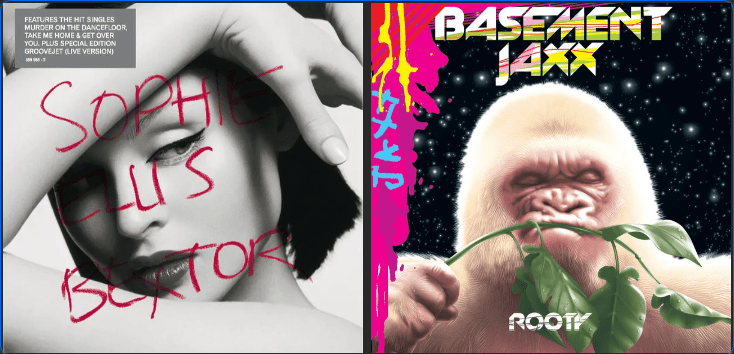
Today we’re taking a look at Rooty by Basement Jaxx as it faces off against Read My Lips from Sophie Ellis-Bextor.
Note: As many of you saw, I recently wrote about a Best Record of 2001 challengeand noted that I’d be writing some of these up.
The plan is to do quick hits on each first-round matchup and post them directly to the page. Some will be longer, some won’t, and some might just be a handful of sentences. There’ll probably be a few typos. We’ll also have a few guest posts along the way, so make sure to stay tuned for those!
Check ’em out and let me know your thoughts! Chin wags & hot takes welcome! Sharing and restacks always appreciated.
KA—
Basement Jaxx- Rooty
I’m gonna carbon-date myself here, but there used to be a time when you could buy ringtones for your phone. There was a whole-ass marketplace that sprung up selling (first) 8-bit interpretations of these, and then actual clips of songs or sounds themselves for your flip phone. Was this legal? Beats me, but 25 years ago this was cutting-edge stuff. I did this exactly twice: one was for “One Step Beyond” by Madness and was relatively short-lived. That was replaced by Basement Jaxx’s “Where’s Your Head At?” and it stayed until I got rid of the phone.
Let’s get that one out of the way first: it’s still catchy AF, sounds as good in the club as it does coming out of your car speakers (or phone), etc. Oh, and it samples not one, but two Gary Numan songs. So yeah, 11/10. No notes.
For those that don’t know: this is my kind of house. Think more big, bouncy beats and less bleep-bloop type stuff. It’s usually right in the pocket BPM-wise, and if there’s any sampling, it over-indexes on soul, early R&B, or disco. In other words, it sounds like it’s coming from the future but with a ton of retro pop flavor. That’s some serious dissonance, but when it works, it works.
That’s a good chunk of this record—specifically “Where’s Your Head At,” “Jus 1 Kiss,” and “Get Me Off.” “Do Your Thing” is a little acid house with a really cool jazzy piano and vocal that will remind you of Moby before he decided to double down on being weird (in the studio and real life). Those four alone should be enough to get this through to round two.
Other tracks are a little too chopped up for my taste (looking at you, “Crazy Girl”), but zooming out, I get why people dig them.
And just when you think Rooty can do no wrong, we… get interludes. For those that don’t know, these are one of my pet peeves. I know this was still the early days of CDs, and artists/labels felt like they had to fill that space to justify the extra cost, but no one wanted these. There’s no value add in tracks like “Kissalude” or “Freakalude” other than juicing the track count. These mar what is otherwise a killer record.
I know they usually wipe phones before reselling them, but I’d like to think they missed this with mine and someone, in some corner of the world, charged it up, got it ready to go, and then had their mind blown on that first incoming phone call.
Sophie Eliis-Bextor- Read My Lips
One of the knocks against Basement Jaxx is that they tried to be too much and delved into too many genres. One of the knocks against Read My Lips is that it doesn’t go far enough. Fair enough. This record is solid, if unremarkable, dance pop. It’s the sort of thing you’d hear in the lobby of a downtown Marriott. It’s energetic but never distracting. I will say that I was stoked to see Gregg Alexander had his hand in this record. The New Radicals frontman’s second life as a writer/producer doesn’t get nearly enough attention. Also, “Move This Mountain” has bells in it—something that’s almost always a plus in my book.
I sometimes like to read reviews while giving a record a first pass, and I’ve gotta say I was surprised at how widely this was panned. To hear some of these tell it, Read My Lips was an affront to humanity. Ellis-Bextor already had a solid résumé before going into the studio and more than once had been tabloid fodder. I wonder if some of this was a bit of tall poppy syndrome? I will say that in isolation, each of the tracks is solid. Ten in a row, though, and they start running together. I can’t help but think that if these had been released as 12” singles, the overall reception might’ve been more positive.
At any rate, it’s very much a 2001 dance-pop record—the sort of thing Kylie Minogue (and everyone else) was making at the time after that last wave of SAW records passed through. Ellis-Bextor has a fantastic voice that carries a lot of the load here. This is the sort of record I might put on at work to keep things moving but wouldn’t mind missing a lyric or two if the phone rang or we got a blitz of teletype messages.
If they set out to make a record that people would regard as “pleasant,” mission accomplished.
Note: looks like this was reissued for this year’s Record Store Day as an “RSD First” release, featuring exclusive voice recordings incorporated throughout the album, plus rare bonus tracks and reimagined artwork. Releasing exclusively as part of Record Store Day 2026 on a limited edition red transparent glitter 2LP, each copy will be numbered and housed in a single sleeve with reimagined album cover art, plus printed inner bags featuring new unseen imagery compared to previous reissues. Okay, then.
Bottom Line:
On a surface level, both are dance records for different audiences—one very much high-sheen and one a little grittier. But only one sticks with you long after the record is over. Basement Jaxx it is.
Any thoughts on either of these records? Agree/disagree with my takes? Which one of these would you vote for? Sound off in the comments!

