Best Record of 2001: Day 60

Ruby vs. Missy Elliott

Good morning!

Today we’re taking a quick look at Ruby’s Short Staffed at the Gene Pool as it faces off against Missy Elliott’s Miss E: So Addictive!


Imagine, if you will, a world where, instead of venturing to America’s Dairyland, Shirley Manson decides to make a record with, say, Tricky or Thievery Corporation. Feel free to substitute Curve’s Toni Halliday here if you prefer.

If you squint hard enough, you can see it—and when you do, you’ll have a pretty good idea of what Short-Staffed at the Gene Pool sounds like. Instead of Manson, we get Lesley Rankine, late of Silverfish (instead of Angelfish…another parallel?).

In case that didn’t work, the short version is this: full-voiced female vocals, sometimes chanteuse, sometimes vixen, pouting and preening and snarling over synth grooves and post-party sounds.

The sounds? They’re as varied as the vocals they support. Together with producer Mark Walk (Skinny Puppy), they hit on everything from trip-hop to rock to Latin-ish grooves (“Lamplight”), which, to torture the analogy, feels like a slinkier version of Garbage’s “Queer.”

Some of it delves a little too far into the bleeps and bloops for my taste (“Cargo”), but the good far outweighs the bad here. Indeed, the very next track, “Sweet Is,” reminds me of the poppiest sides of Stereolab or even Pizzicato Five.

Really, whatever genre they venture through, they never forget to bring along a groove. Prioritizing the hook (writ large) takes this from a record that “forces you to pay attention” (read: not very good, but I hope there’s something in there) to something equally at home soundtracking the after-after party, your commute, or a dinner party with the coolest people you know.

Maybe even one in the Dairyland.


I’d never heard a Ruby record before just now. Oddly, I’ve heard Missy Elliott countless times. Yet the score for Short-Staffed and Miss E was a 0–0 tie.

“Get Ur Freak On” was—and is—an inescapable anthem, but I couldn’t name a single other track on the record. And fair play to Elliott—I had to laugh when I heard her let us all know about giving us “some shit that you never heard before.” I mean, it works on so many levels.

Anyway, I don’t know enough about hip-hop to speak on it intelligently, so I’ll just say this: Elliott and her partner in crime, Timbaland, come out of the lab with a very distinct sound each time they work together. I’d say when they get back to what they know, that’s when the record works best. When Elliott tries to veer into ballad territory, it stumbles.

I don’t know if it represents the Hampton Roads scene broadly speaking, or if they created it and everyone followed. Probably the latter. Whatever. She’s got bars for days, and there’s no shortage of beats here to make you scream “Hollah!


Bottom Line: Short Staffed… is the sort of record I like to root for, and anything can happen, but I think it’s going to be Missy Elliott in a rout.

Any thoughts on either of these records? Agree/disagree with my take? Sound off in the comments!

A Good Band Is Easy To Kill

Best Record of 2001 Day 58: The story of an unappreciated pop masterpiece and the demise of a great band that never got their due.

Cover art courtesy of Velocette Records

Good morning!

For the last guest post in Round 1, Matty C takes the wheel and shares his take on Beulah’s The Coast Is Never Clear.


If you ask him, Matt Carlson will likely answer that he’s “a musician.” That’s of course very true-I’ve been lucky enough to hear him play. But he’s also a writer, podcaster, hosts a radio show, runs a record label, and more. And that doesn’t even touch on the work he does here on the platform with What Am I Making. If you ask me, he’s someone who’s work you should check out- there’s something there for everyone.

The words—and work— below the jump are all his, and I’m beyond grateful he let me share this article with everyone! I think you’ll dig it. When you’re done here, please be sure to check out more of his work!

KA—


2001 was a pretty damned good year in music.

The charts were littered with a variety of styles from Radiohead, Jay Z, The Weezer, and more. There were breakout records from The Strokes, Aaliyah, The White Stripes and The Shins. Radiohead’s Amnesiac topped many best of lists for the year.

What Am I Making is a reader-supported publication. To receive new posts and support my work, consider becoming a free or paid subscriber.

It was an exciting time of variety and energy. There was bandwidth for all of these records to coexist with one another in a vibrant ecosystem of diversity and experimentation.

Your local college station very liked played new songs from Low, Nick Cave, Bob Dylan, Missy Elliott, Gorillaz and Muse. It feels like a lifetime ago.

Seeing this landscape for sounds getting attention in 2001 makes it all the more puzzling how a record as brilliant as Beulah’s The Coast Is Never Clear could be missed in its own time, and then simply forgotten.

Beulah first came to prominence in the indie rock boom of the mid to late-nineties. Formed in San Francisco, CA by Miles Kurosky and Bill Swan, the band forged a sound from the sun soaked harmonies of The Beach Boys, syrupy melodies and the voice of an unreliable narrator weaving us through the California twilight at the end of the century.

Robert Schneider of Apples In Stereo heard a cassette of some early demos and offered to master the band’s first album Handsome Western States, which was released in 1997.

The lo-fi affair was a nice debut effort, but was bolstered by Schneider’s connection to the Elephant 6 Collective, and the blossoming success of Elephant 6 label mates, Neutral Milk Hotel. The connection with Elephant 6 would stick for better or worse, despite the fact that Schneider mastering the album and a 7” single were band’s only affiliation with the legendary collective.

The follow up, a decidedly more mid-fi sounding effort, When Your Heartstrings Break arrived in 1999. In addition to better sonic quality, there was a leveling up in the songwriting and arrangements on this second record. Instead of a sophomore slump, Beulah seemed to be surging.

Lost Classics: Beulah "When Your Heartstrings Break" - Magnet Magazine

The opening strains of Hello Resolven set the scene of The Coast Is Never Clear in cinematic fashion. Sickly sweet strings and a ghostly ethereal bell ring out to the vocal refrain,

“Wake up the king/Wake up the queen/Everybody laugh, everybody sing/It’s over . . . it’s over.”

What follows is a Southern California sunshine record that feels as though it were ghost written by Raymond Chandler. Despite overt poppiness oozing from nearly every note and arrangement, The Coast Is Never Clear is the perfect example of what Tom Waits once called, “Beautiful melodies telling me terrible things”.

Perhaps the best example of this can be found in the chorus of album highlight, Gene Autry. The song is ostensibly the tale of a journey to the west coast in a quest for self discovery and renewal. What follows is a conclusion summed up by the hooky chorus, “The city spreads out, just like a cut vein/Everybody drowns sad and lonely, alright”.

We can change the scenery but we cannot change the core of ourselves by relocation alone. The echoes of loneliness and desperation are littered within the words of these songs, all while the grooves pour out easy to swallow melodies and harmony.

On A Good Man Is Easy To Kill, Kurosky sings,

And when they cut out your lung
You said we could all breathe easy
The hole swallowed your heart
When they drilled holes in your skull
And screwed that halo to your head
Did you think you could fly?

It’s hard to know if the song is about Kurosky’s own personal health struggles, of which he has had many, or if this the tale of a friend, a partner, or complete fiction. In the end, it’s a song of survival and refusal to go quietly into that good night. Something Beulah is also struggling to do. Maybe the band itself is the hole in the heart.

The song title is of course a nod to the great southern gothic master Flannery O’Connor, and her famous story, A Good Man Is Hard To Find. Much like O’Connor, lyricist Kurosky takes a normal form, and turns it on its head.

For O’Connor the form was the short story. For Beulah, it’s a sunny pop song inflected with a stark honesty and darkness that is both jarring and easy to overlook. It’s a crafty way to deliver a brilliant and multileveled work. It’s also easy to miss just how brilliant it actually is.

After some label mergers, and various corporate machinations, Velocette Records released The Coast Is Never Clear in America on the auspicious date of September 11, 2001.

It’s unlikely that the unfortunate timing of the album’s release led to its under—appreciated status, but it cannot have helped. It was also lost in a sea of great records by bands with more momentum and greater resources than Beulah.

While this record holds its own against great albums of the era like Yankee Hotel Foxtrot, The Soft Bulletin and And Then Nothing Turned Itself Inside Out, this was a band without the necessary foundation in place and the proper amount of luck and resources to get their just desserts.

The film A Good Band Is Easy To Kill is an unflinching, but fascinating look at the final tour for Beulah. The tour takes place in the wake of the band releasing their fourth and final album, Yoko. It’s a make or break moment for Kurosky, Swan and co.

Spoiler alert: They don’t make it.

It’s a great look at a very good band making terrific records and still not being able to make it work. And this was in a time when it was far easier to make it as an independent musician than it is a quarter century later.

Kurosky went gone on to release an excellent solo record called The Desert of Shallow Effects in 2010, but Beulah has remained dormant since 2004. There has been recent talk of a follow up to that record on varying social media accounts, but nothing has surfaced as yet.

As a songwriter and singer, I am in awe of The Coast Is Never Clear. It’s a masterwork of storytelling, soundscapes and songwriting. It’s a record I wish I had been a part of. My band The Stick Arounds even recorded a version of Gene Autry and we play it often at our live shows.

They say that “if you build it, they will come”. Beulah is living proof that they might not, but it’s worth building it anyway.

Cheers,

Matty C

Thank you again to Matty for today’s post! Please be sure to check out more of his work over at What Am I Making! Any thoughts on this record? Agree/disagree with his take? Sound off in the comments!

Check out the full bracket here.

Info on the tourney, voting, and more is here.

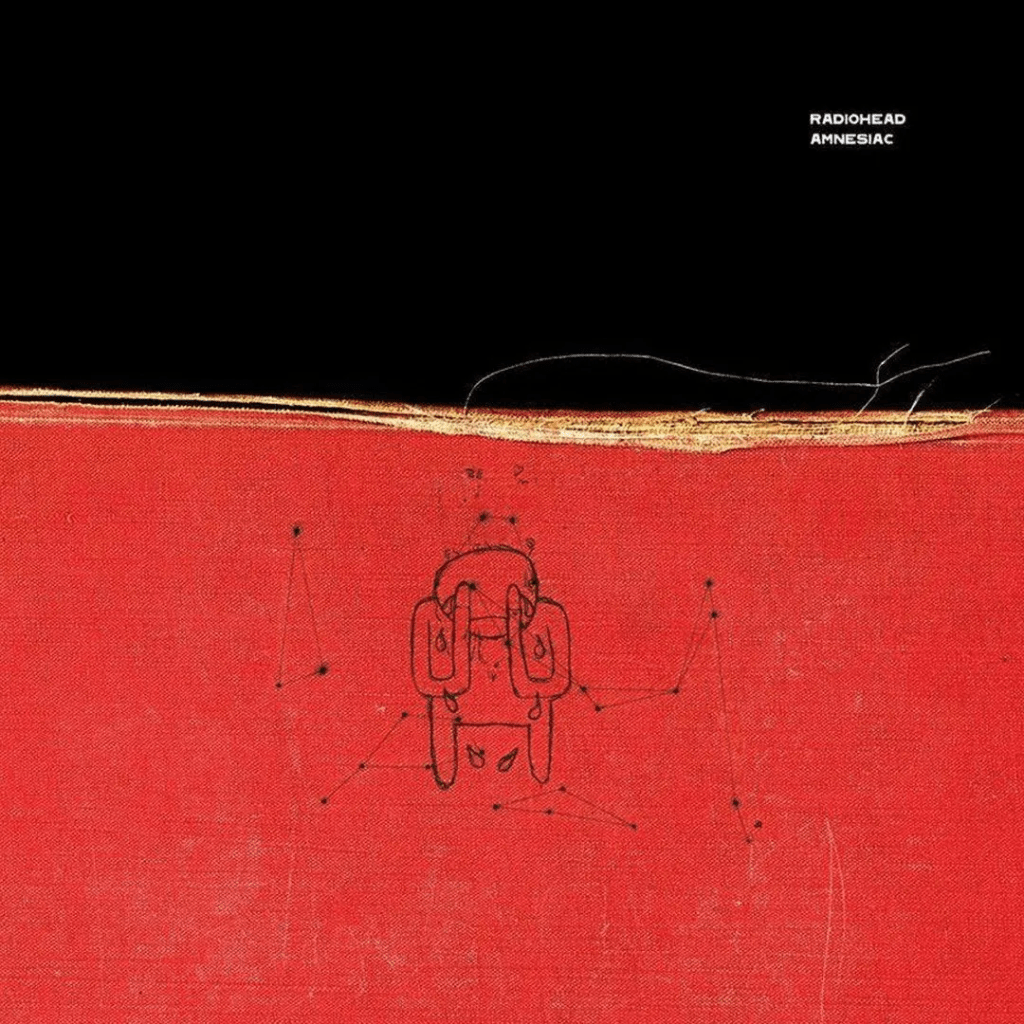
Amnesiac: Radiohead’s Fractured Aftershock to Kid A

Best Record of 2001: Day 57

Cover art courtesy of EMI Records.

Good morning!

We’re in for a treat today, as Sam Colt takes the wheel and shares his take on Radiohead’s Amnesiac LP.


If you’ve been here for a minute, you’ve seen Sam’s work before. He and I did a Top 100 Series, are part of a group that shares our year-end lists, and, of course, have a monthly series on, well, whatever we find interesting.

You likely also know my feelings on Radiohead, and Sam’s quest to get me to come around on them. The TL;DR for new folks: he loves ‘em, and I don’t. But he’s also a helluva writer I’m lucky to get to “collab” with every month, and for as much as I give the band shi*t, I can’t think of anyone who’ll give the record its due more than him.

The words—and work— below the jump are all his, and I’m beyond grateful he let me share this with everyone! I think you’ll dig it, too. When you’re done here, please be sure to check out more of his work at This Is a Newsletter!

KA—


Supposedly made up of tracks that were recorded during the Kid A sessions, Amnesiac has been derisively called “Kid B,” and while there’s some truth to that statement, it’s also underselling the album a bit. In the aftermath of releasing a decade-defining alt-rock masterpiece, Radiohead spent years tearing apart their sound, reconstructing it, then found themselves with a deluge of material once the pieces started to fall into place. Kid A was the spearhead of their reinvention, carefully assembled as a statement of intent—one of alienation, disillusionment, and paranoia in an increasingly digitized and atomized world.

As a companion album, Amnesiac is the schizophrenic inverse: While it’s not Frankenstein-ed out of discards, it does serve as a catch-all repository for everything that didn’t suit the more controlled tracklist of its predecessor. The band once described Kid A as the equivalent of starting a forest fire from a great distance, while Amnesiac is standing at the center of the blaze. This is certainly not an immediately appealing album like The Bends or In Rainbows, but it pushes Kid A’s electronic experimentation to more anxious lengths. Amnesiac fills the vacant, desolate void within Kid A with a harrowing and offbeat freneticism. It’s more of a dark nebula than a shining star, reminiscent of Joy Division’s Closer, David Bowie’s Low, or other atmospheres of gloom.


For a band with an impeccable record of providing quality album openers, “Packt Like Sardines in a Crushd Tin Box” is particularly noteworthy, kicking off with these clanging hollow percussions and cold, desperate synths before Thom Yorke’s droning voice repeats “I’m a reasonable man, get off my case.” The transition to “Pyramid Song” is a bit jarring, but it’s an all-time Radiohead track; disquietly haunting and depressingly beautiful, and the way it descends with ghostly falsettos and ethereal strings is spine-tingling. With its razor-sharp groove, “I Might Be Wrong” is Radiohead’s interpretation of dance music, a nerve-wracking, anxiety-inducing bassline complemented by a jerky, jangling guitar riff. “Knives Out” is somewhat of an olive branch to everyone who thought the band had abandoned guitars completely, but because of its relative normality, it sounds the most alien of any track on Amnesiac, despite it being an odd endless rush forward without a chorus and seemingly beginning mid-riff.


Some of this is Radiohead at their least compromising. The backing track for “Like Spinning Plates” is a backmasked version of another song that hasn’t been released yet, and Yorke’s rising vocals syncopate with the abstract soundscape, making it feel apocalyptic and strikingly moving. “Pulk/Pull Revolving Doors” is the skeletal backing track as an attempt to record the already-fabled “True Love Waits,” but with all its melody stripped out so it sounds like a robot repeatedly banging its head against a wall. The jazz-tinged “You and Whose Army?” and “Dollars and Cents” have crescendos that carry the same gloomy power as OK Computer but reshaped into something more of a free-form jam sesh.


Amnesiac isn’t necessarily a challenging album as much as it’s disorganized and dense, flipping itself around and over its head with every subsequent song, taking you through the gamut of Radiohead’s different sounds. There’s no convenient cohesive harmony, just a collection of screams colliding into one another and forging a new context through the cacophony. It pulls the listener from one extreme to the other without pause, except for the interlude “Hunting Bears,” which offers a moment of quiet amid the maelstrom.

This album certainly deserves at least some of the criticisms directed towards it. It’s an unhinged mess that swings wildly in quality, endlessly compared against its big brother and losing in obvious ways. But even a lesser Radiohead project—it ranks sixth in my personal rankings—is still a very good album. Even at its most alienating, meandering, or downright messy, much of it is perversely interesting and positively bewildering, making for an enjoyable and revelatory listen.

Amnesiac isn’t really a grower as much as it’s a grab bag of fragmented ideas that offers something different each time you put your hand in it. It’s the release that most explicitly states that Radiohead was done with being a straightforward rock band, or anything other than some guys trying to make the most interesting soundtrack that reflects the tenor of its time.


Bottom Line: Amnesiac is the #6 seed in this tourney, and is up against Whiskeytown’s Pneumonia, which sits at #123. I might not like Radiohead, but I am a fan of a sure thing. Thom Yorke & co it is.

Thank you again to Sam for today’s post! Please be sure to check out more of his work over at This Is a Newsletter!

Any thoughts on this record? Agree/disagree with Sam’s take? Sound off in the comments!

Check out the full bracket here.

Info on the tourney, voting, and more is here.

As always, thanks for being here.

KA—

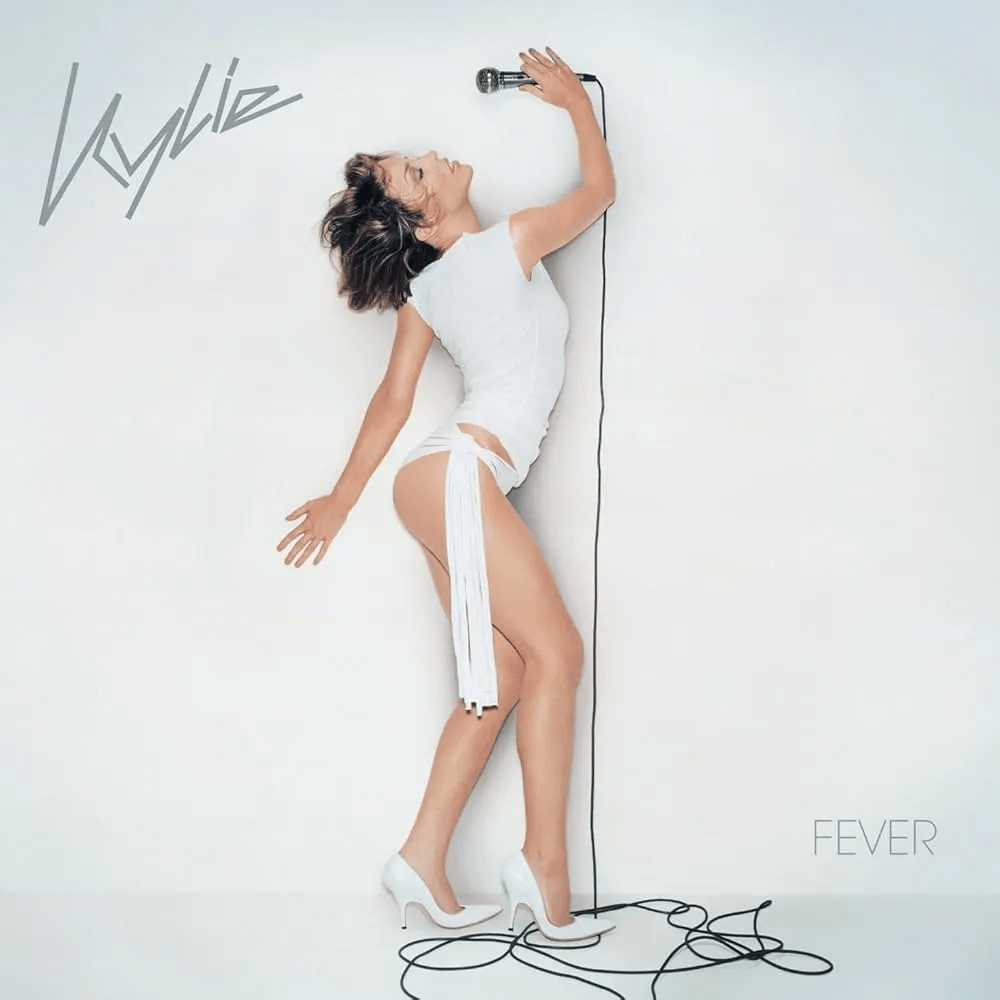
Fever: The Album That Finally Made America Love Kylie Minogue

Best Record of 2001: Day 55

Cover art courtesy of Parlophone.

Good morning!

We’re in for a treat today, as Lavender Sound (Max Freedman) takes the wheel and shares his take on Kylie Minogue’s Fever LP.


Today, as part of the Best Album of 2001 series, Lavender Sound (Max Freedman) is back to share his take on Kylie Minogue’s Fever album. He previously covered Björk’s Vespertine.

The words—and work— below the jump are all his, and I’m beyond grateful he let me share this with everyone! I think you’ll dig it, too. When you’re done here, please be sure to check out more of his work at Lavender Sound and his interview series over at the Creative Independent!

KA—


Even shimmering gold hot pants couldn’t break Kylie Minogue in the United States. After the Australian pop icon ditched everyday pop lyricism and production for sleeker, more trip-hop-indebted introspection on her sixth album, 1997’s Impossible Princess, she pivoted back hard to highly accessible pop with 2000’s “Spinning Around,” kicking off the cycle for her seventh album, Light Years, with the music video with the legendary hot pants. And yet, despite Kylie dominating the U.K. and Australian pop charts from her 1987 debut album Kylie onward and “Spinning Around” handily going to #1 in both countries, it didn’t even touch the Billboard Hot 100. It had all the musical ingredients necessary to be her first big U.S. hit since Kylie’s “The Loco-Motion,” which went to #3 here in 1988 (though two prior covers of it, by Little Eva in 1962 and Grand Funk Railroad in 1974, both went to #1): Kylie rides a disco-funk arrangement into pure ecstasy and sounds equally commanding whether she’s singing into the skies or coming on all sultry. It’s basically the platonic ideal of a pop song, and yet, nothing. Nada. Zilch.

Something shifted when Kylie’s “Can’t Get You Out of My Head” arrived the next year to introduce her eighth album, 2001’s Fever. Not only did “Can’t Get You Out of My Head” reach #7 in the U.S., but it also went to #1 in every other country where it was promoted. From the wordless “la, la, la / la, la, la, la, la” chorus to the playfully cyborgian beat and Kylie’s enraptured yet close-to-the-chest vocal performance, it’s about as hypnotic as pop music gets. With one song, she finally had the world under her spell, so much so that Fever went on to sell over a million copies stateside.

I think there was a hunger for music like Fever by the time it arrived on October 1, 2001. About seven months prior, Daft Punk’s Discovery brought French house, a clear influence on “Spinning Around,” to the masses, and at points, Fever is steeped in the genre too. Two of its greatest highlights, “Love at First Sight” and “In Your Eyes,” might as well be Bangalter/Homem-Christo productions, what with their flickering guitars and glorious choruses that explode forth from their tightly wound verses. But if Fever were just a repeat of territory Kylie had traversed, it would’ve been uneventful. Instead, the album abounds with silky, computer-perfect beats that both gradually seep and vigorously hammer right into the cerebellum. The music’s robotic energy only emphasizes the humanity in Kylie’s smooth, sensual vocal performances, and the rich production and hook-packed melodies won over even some rockist skeptics in 2001. Poptimism was a few years away, but Fever was helping to plant the seeds.

And how could it not? The joyously brash thump and shuffle of “Give It To Me,” with a euphoric chorus awash in massive vocal harmonies, is sugar in song form. The title track’s Neptunes-like low-end is as menacing as it is alluring, with the fever Kylie sings about inevitably infecting your ears, mind, and body too. (The song’s metaphor of a crush as a fever is about as lyrically innovative as Fever gets, and the fact that the album goes so hard despite its merely passable lyrics is a reminder that pop music’s effectiveness can sit entirely in its sound if what’s being sung isn’t full-on cringe.) “More More More,” which opens the album, latches on right away with synthetic toms that sound like they’re a tad on the fritz, only locking in further with a slinky bassline, gleaming synths, and Kylie’s liberated vocal performance.

And these aren’t even the singles! Seriously, the run of singles from this album is just insane, as are the music videos released to promote them. “Can’t Get You Out of My Head” is, of course, Kylie’s signature song, but just as iconic is the mega-cleavage hoodie-minidress she wears in the video full of humanoid-looking dancers in tracksuits pulling off all kinds of striking choreography. Few people have looked as genuinely joyous as Kylie does while she dances throughout the “Love at First Sight” video in which, even though she’s just wearing a simple white tank top (and, wildly, cargo pants). Her aura jumps out from the arrays of brightly-fashioned, brightly-wigged dancers who are, yes, dressed like cyborgs. A similar enthusiasm and commitment to her performance radiates from everything she does in the humanoid-heavy “In Your Eyes” video, even though its lighting is much darker.

“Come Into My World,” both in terms of its visuals and its music, is something else entirely. I still can’t quite figure out how Michel Gondry made the video happen even though he previously directed at least two videos with similar special effects. It’s just Kylie walking the same circle in Paris four times, but it’s also so much more: Each time she completes a lap, another version of her, wearing the exact same outfit, appears, and with each lap, the chaos around her — bikers brawling, a mattress thrown out of a window — swells further, elevating the drama and hilarity. I’m tempted to read the video as a commentary on how, when things recur, they often intensify, because that’s the magic of so many pop songs and especially “Come Into My World.” Its verse-chorus-bridge song structure, with each refrain bursting brighter than the last, is nothing new in its form, but as the synths plink and tremble and Kylie breaks out her innermost seductress, she achieves irresistible pop perfection.

From its videos to its actual music, Fever was cutting-edge pop in 2001, and it still sounds distinct today. Its impact was clear in the years to come: Without it, Madonna probably would’ve avoided the DJ-set feel of 2005’s Confessions on a Dancefloor, and Britney Spears’ 2007 pop bible Blackout might have sounded too strange for mainstream acceptance. All kinds of pop musicians today cite Fever and Kylie in general as an influence, especially Dua Lipa, whose nu-disco sound on 2020’s smash-hit Future Nostalgia is a direct heir to “Love at First Sight.” I mean, hell, its 2021 reissue even has a track named “Fever.”

And yet, for all Fever’s impact and innovation, not everyone agrees with me that it’s Kylie’s best album. Depending on who you ask, that’s Light YearsFever’s R&B-infused 2003 follow-up Body Language, 2010’s Aphrodite (think Fever if Stuart Price, who produced Confessions on a Dancefloor, worked on it), or 2023’s Tension, on which Kylie embraced the nu-disco genre she helped birth and found a whole new legion of young fans some 35 years into her career. “I’m a star, babe, babe, babe / Do this all day, day, day,” she chants at the outset of Tension’s title track. She’s always found endless elation in her music.

On Fever, for the first time, the whole world got to feel it.


Bottom Line: I think many people might be surprised to learn that I am unironically and unabashedly a Kylie Minogue fan. From the S.A.W.- fueled debut record through the more refined sound in the mid-90s and beyond, I’ve always found something I like on each of her records. Fever has the added bonus (?) of my associating it with one of my favorite trips overseas. Visiting Malta in early 2002, “Can’t Get You Out of My Head” was literally everywhere (Natalie Imbruglia too, for that matter, but that’s a story for another time). Listening now, 25 years on, I’m surprised at how well it holds up. Kylie for the win.

Thank you again to Max for today’s post! Please be sure to check out more of his work over at Lavender Sound! Any thoughts on this record? Agree/disagree with Max’s take? Sound off in the comments!

Check out the full bracket here.

Info on the tourney, voting, and more is here.

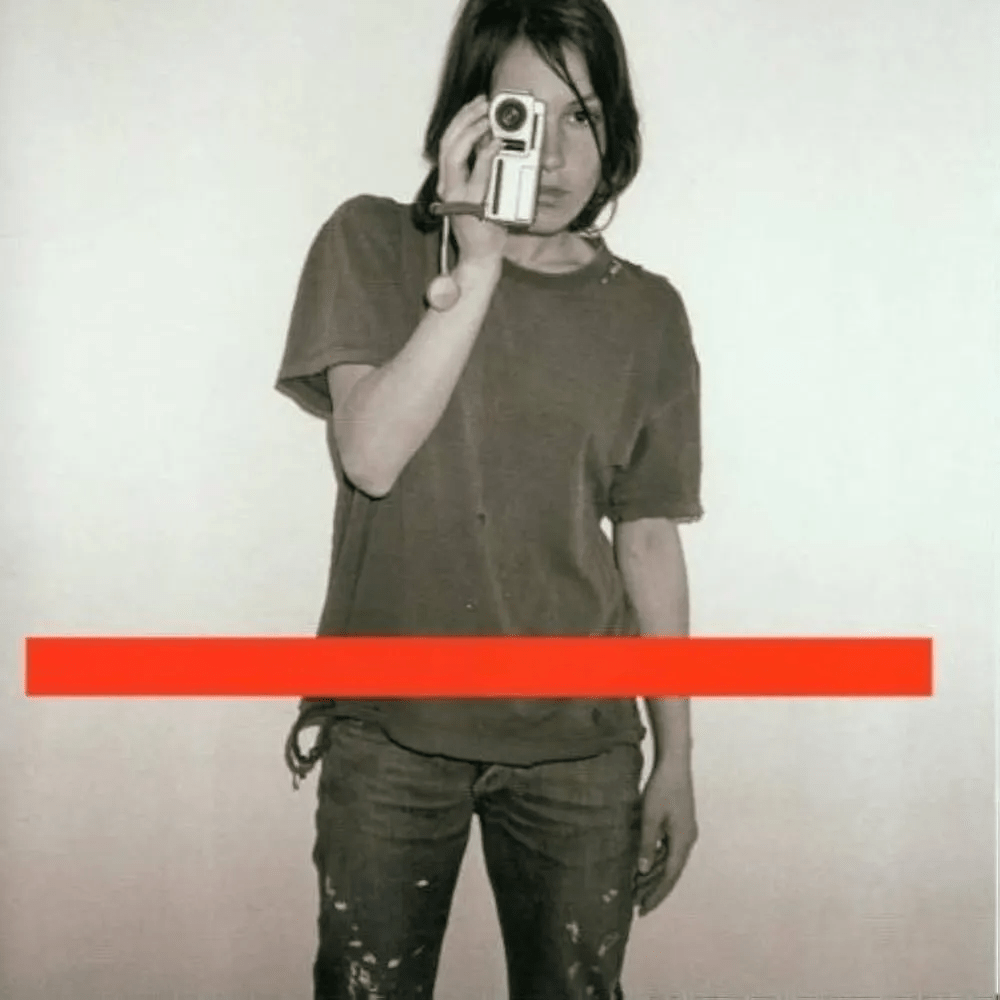
A Quick Look at New Order’s ‘Get Ready’

Best Record of 2001: Day 54

Cover art courtesy of London/Reprise Records

Good morning!

Today we’re taking a quick look at ‘Get Ready’ by New Order


It took 8 years to get the band back together for what would ultimately be their final record in their original form. Get Ready isn’t a bad album; it just feels like watching a show that ran for a season too long. With the exception of “Crystal,” and ”60 Miles an Hour,” I’m not sure I could ID any other track by sound alone. It just never established itself in my head.

“(the title) could mean anything or nothing. I thought it was just nice; New Order, Get Ready; ‘cause we are, we’re getting ready for the next phase of our musical lives both physically and mentally, so it’s quite a simple thing but it’s very pertinent

~Peter Hook

In hindsight, part of that is because I was — and am — so invested in the band’s earlier work. 8 years is a long time, and if you’re still enjoying the band’s “old stuff,” it’s easy not to put much stock in a new release with a new(er) sound.

I seem to be in the minority here, as it was well-received by many critics, with David Browne of Entertainment Weekly describing it as a “stunning and confident return to form.” It had guests such as Billy Corgan and Bobby Gillespie.

Get Ready had all the ingredients to top this list, and yet…

New Order have a lot of tracks that can read like an elegy– to say nothing of Low Life’s “Elegia.” But perhaps none feel as melancholic as “Run Wild.”

Open hearts, empty spaces
Dusty roads to distant places
But all the time when I’m alone
I think of you and how you’ve grown
Far and wide, sweet and simple
Jehovah knows that I’ve been sinful
But if Jesus comes to take your hand
I won’t let go, I won’t let go

Recorded in the wake of manager & longtime friend Rob Gretton’s passing, this feels like a goodbye as the band moves on to its next chapter.


Bottom Line: Sure, this might not be my favorite record by the band, but it’s New order! There might be a universe where I vote against them, but this ain’t it.

Tell me: Any thoughts on this one? Where would you rank Get Ready? Sound off in the comments!

A Quick Look at Life Without Buildings’ ‘Any Other City’

Best Record of 2001: Day 52

Cover art courtesy of Tugboat Records

Good morning!

Today we’re taking a quick look at Life Without Buildings’ Any Other City.

When I listen to a band like Life Without Buildings, I think about the music, sure, but mostly I think about the listeners. There are a lot of bands that exist today only in the memory of those lucky enough to be able to say, “I was there.”

LWB feels like one of those bands you found through a friend of a friend, or maybe even their roommate. They were playing in the back of some garage in a plumbing warehouse, or on the fourth floor of a walk-up, and you had to say a secret phrase to get in.

You could still sometimes smoke indoors in those days, but you’d stand near an open window to be cool toward everyone else. It smelled like humanity, but you equated that with a good time, so it never fazed you. Any physical media was nearly impossible to come by. Maybe somebody had a burned CD they’d lend you. Maybe.

Life Without Buildings was a short-lived, mathy art-rock band from Glasgow fronted by Sue Tompkins. The band was named after a B-side by Japan. That they were one-and-done, studio-wise, only adds to the lore, though there’s a live album out there too. Makes it easy for the completists, I ‘spose.

The most distinct part of Life Without Buildings is Tompkins— or rather her vocals, which can be talk-singing, spoken word, or a (much) drier version of Cocteau Twins’ Liz Fraser’s wordplay. When she says, “No details, but I’m gonna persuade you,” on “PS Exclusive,” you have no choice but to believe her. And she’s right.

The songs are repetitive, but never boring. It’s art-rock, but never pretentious. I suspect none of them really felt precious about any of it, which is part of why it works. Sure, they walked so bands like Current Affair and Dry Cleaning could run, but what I hope they realize is that in 2001 this was a risk. And a novel one at that.

A quote from Reddit sums it up:

Formed a band in college, released one 10/10 album, and then broke up never to play again” is the only acceptable indie-band trajectory. All other bands are posers, nepos, or tryhards, sorry.

That’s worth a chuckle, but I’m not sure I 100% co-sign. Besides, Tompkins hasn’t totally vanished — she can be found on a couple of Sleaford Mods tracks — but this band ended exactly the way it always was destined to. Some movies should never have a sequel.

If you don’t like this on the first pass, give it another spin. And maybe a third. At some point, they’re going to persuade you.


Bottom Line: This was up against Firewater’s Psychopharmacology, which seems to have a lot of champions in the best Album community. I liked it well enough, but not enough to vote against Any Other City.

Any thoughts on either of these records? Agree/disagree with my take? Sound off in the comments!

Ladytron’s ‘604’ vs. My Morning Jacket’s ‘At Dawn’

Best Record of 2001: Day 48

Good morning!

Today we’re taking a quick look at Ladytron’s 604 as it faces off against At Dawn by My Morning Jacket.


There was a time when I would buy records based solely on the label. Dischord never missed. 4AD? Odds were high you’d love what they were issuing. K Records? Whether or not it matched my tastes was up for grabs, but you could bank on it being something quirky, and that screamed “Olympia.” Wax Trax! was the gift that kept on giving for a kid who was both into hardcore and synth pop. The late ’80s and early ’90s were wildly dissonant for me musically. Nettwerk was right there too, with offerings sometimes less for the dance floor, more toward the after-after-after party. I was always happy to take a flyer on these types of records, even if I didn’t bat 1.000.

Seeing Ladytron’s 604 was on Nettwerk, I was surprised I’d missed them. Turns out that just the reissue was on the label, but that doesn’t explain how I’d missed the band entirely. I guess by ’01 I’d tuned everything out, even stalwart genres like synthpop.

Reading up a bit, I kept seeing “electroclash” tossed around, and maybe it’s just me, but I’m not seeing it. What I am seeing is a band whose members 110% have a Kraftwerk record or two in their collection. Stereolab as well, right down to the dueling female vocalists—and stylings—in Mira Aroyo and Helen Marnie. They’re cooler than you, but don’t flaunt it. The sort of icy personality that would also definitely let you bum a dart. Tracks like “CSKA Sofia” are a bit of spacy noodling, but “Paco!” is pure uncut new wave, and I’m here for it. You could’ve told me this was released in ’89, and I would’ve believed you. It’s the sort of thing I spent a lot of time listening to while riding the bus downtown to places like Dudley’s (RIP) to pick up some import or another. Same story with Playgirl and Discotraxx.

In fact, I could swear I’ve heard these all before. They’re just vaguely familiar enough to convince me I have, even though I know otherwise.

At 16 tracks, it’s a bit too long. There’s an incredible 10–11 track record in here. Some of the padding feels like a mandate to flesh out the song count to “fill” the CD (were we still doing this in ’01? I can’t see any other reason why “Laughing Cavalier” made the cut.), but the good far outweighs the bad.

I’m bummed I missed this before, but I’m happy to have found it as part of this challenge. This is one I’ll definitely be returning to.

I can tell you that had I heard My Morning Jacket’s At Dawn in 2001, I would’ve had no time for it. I had no taste for this sort of woozy Americana jam-band stuff. Times change. It’s not bad! “Lowdown” reminded me of those slow summer mornings where it’s already humid, but the searing heat hasn’t yet kicked in. If I had a front porch, I’d sit out there and listen to this sort of thing while watching the world go by. “Xmas Curtain” has a nice slide guitar (or steel pedal, who knows?) that, in ’01, would’ve had me spraining my finger by smashing the fast-forward button. 25 years on, and I find that sort of thing endearing… in limited doses. It works here.

Similar to 604, there is a 10-track “10” in here somewhere. A couple of tracks went straight onto my playlists, a few were objectively pleasant— if not for me—and a couple left me shaking my head. Put your lighters down, this is not a ballad band. I will be fine never hearing “If It Smashes Down” or “I Needed It Most” again. I would’ve scotched this in a hot second 25 years ago, and almost did just now. Sorry, not sorry. Tracks like the aforementioned “Lowdown” and “Just Because I Do” are what they do best.


Bottom Line: So! We’ve got two wildly different new-to-me records whose only common ground was the year of release. On paper, this should be a lock for Ladytron. Once a synth kid, always a synth kid. But My Morning Jacket was better than I was expecting. If I’m honest, I’d be okay with either of these going through to Round 2. We could do worse.

Looking at my bracket, I have Ladytron pegged as winning Round 1. Apparently, I’d already taken a flyer on 604. Hopefully it pays off.

Any thoughts on either of these records? Agree/disagree with my take? Sound off in the comments!

A Quick Look at ‘Oh, Inverted World’ by The Shins

Best Record of 2001: Day 45

Hello there!

Today we’re taking a look at Oh, Inverted World by The Shins


If you knew me in my teens and 20s, you know that I was an insufferable music snob. Like, just the worst. It’s something I’ve worked hard to move away from. It’s not like hitting middle age suddenly meant I liked everything; fuck no! I’m more opinionated than ever.

In 1996, I would just point and laugh at a record that wasn’t my bag, or just meet it with sneering derision. These days, I’m genuinely interested in what about a given record lands with someone. What is it about this specific recording that speaks to you? Is it tied to a seminal life event? Was this playing when you met your future partner/spouse? They’re obviously not my stories, but I don’t need much of a thread to grab onto. Usually, these are interesting enough on their own. Ideally, they get me to look at a record/band/etc in a new light.

So, if anyone has one of those regarding The Shins’ Oh, Inverted World, I’m all ears.

There was a time when one of the first things you did when meeting someone new was root through their records (and later CDs/tapes). It was—and is— a great window into someone’s personality, and how they might align with yours. And there was a time when the Garden State soundtrack was everywhere. This wasn’t a dealbreaker, but it usually ended with me muttering “fuck “ under my breath or dismissing whatever might have come after it. It just seemed to embody the very definition of tepid. Worse, it spawned a whole legion of bands to pen purposely obscure lyrics and set them to a similar style of music.

I don’t want to punch down—again, the days of me trying to write similar to Pitchfork 1.0 are mostly gone, but man, this is a pressure test. I will say that this has much more of a pulse in places than I was expecting (I’m thinking of opener Caring is Creepy here), and there are songs that would be right at home on late-stage Beach Boys records (”Girl Inform me”). And then we hit a wall with “New Slang.” Earlier today, if you’d have asked me what the name of this song was, I would’ve come up empty. It took exactly three notes of it to trigger some sort of musical PTSD in me. I swore if I never heard this song again, it’d be too soon, and yet here we are…again. In the interest of “research,” I’ve avoided skipping tracks. I did that here, but I’d be lying if I didn’t mention that this was also a good time to go downtown and get more coffee.

The Celibate Life lost me on the title alone, but it’s fine. It’s all a dead cat bounce, though. Girl on the Wing is back to the beach Boys-y vibe that likely only exists in my head. The point here is that they’ve pulled at least one amp back in, and there’s a pulse, albeit a weak one. And on it goes; one step forward, two steps back. Pressed In A Book dials up the fuzz to like a 4(?) and could be a B-side on a Sgt. Pepper’s record. It’s not terrible! And then we end with The Past and Pending, and we’re right back to the sort of folk-y, overly plaintive stylings that drive me bonkers. Even the horn is lonely, and I’m a guy who likes just about anything with a lil’ brass in it.

Bottom line: I’m a little more up on the band than I was 45 minutes ago, but not by much. A couple of good songs got my eyebrows raised and hopes up. A lot of sensitive ponytail guy stuff didn’t send them crashing back to earth. This is seeded at #10, so clearly a lot of people hold it in high regard—or at least enjoyed Garden State.

So again, if anyone wants to share what this means to them and why, I’m all ears. Until then, Oh, Inverted World has a couple of (relatively) high points, but it’s not enough to overcome the wall of beige that is the rest of the record.

EDIT: The algorithm served me up “Split Needles” after this, and I dug it. Maybe there’s hope yet?


Bottom Line: This is up against The Invisible band by Travis, and well, in the interest of saving time, my review can be distilled down to “Second first, same as the first.” Only difference was I’d never heard these guys before (at least that I know of), and there’s no Garden State-related enmity here. I listened on Spotify (I know! I know!) and the site says this band has just under 3.1 million listeners a month. Clearly, someone is seeing something I’m not. Maybe that’s you? If so, tell me a story…

Any thoughts on either of these records? Agree/disagree with my take? Sound off in the comments!

De La Soul Grow Up Gracefully on AOI: Bionix

Best Record of 2001: Day 35

Good morning!

Today we’re taking a look at De La Soul’s AOI: Bionix.


Note: As many of you saw, I recently wrote about a Best Record of 2001 challenge and noted that I’d be writing some of these up.

The plan is to do quick hits on each first-round matchup and post them directly to the page. Some will be longer, some won’t, and some might just be a handful of sentences. There’ll probably be a few typos. We’ll also have a few guest posts along the way, so make sure to stay tuned for those!

Check ’em out and let me know your thoughts! Chin wags & hot takes welcome! Sharing and restacks always appreciated.

KA—


A wise man once famously asked, “Well, how did I get here?” On AOI: Bionix De la Soul seems to be asking the same. Not in a bad, confused, old-man way, but in a bemused, slightly disoriented way. This is made by—and for—people who have graduated, moved out to the suburbs, and might have this playing while cleaning the house, instead of at a house party.

De La Soul sound older here, sure, but “older” doesn’t mean tired or reaching into a tired bag of tricks. They’re still playful, still clever, and still love a good sample. But there’s a polish on AOI: Bionix that makes the whole thing feel more measured than the chaos of 3 Feet High and Rising. Hard to put into words, but it feels like they turned the “sheen” dial up to 11.

That maturity works for me. In fact, it’s a big part of what makes the album interesting. Bionix isn’t trying to recapture youth so much as it’s trying to capture where the trio’s at. The record is uneven—feel free to skip “Pawn Star”— and tbh, it could probably lose three or four tracks and a few of the interstitial skits without sacrificing much (why are these skits a thing?!).

But even with the padding, the middle 100% holds. The production is smooth, the rhythms are locked in, and the samples are still doing that De La thing where they’re just familiar to recognize but also just far enough out of reach that you find yourself going to WhoSampled a lot.

“Baby Phat” is an obvious standout, and for good reason: it’s a banger. Or at least I think that’s still what we’re still callin’ ‘em. “Simply” and “Watch Out” also hit that sweet spot, with effortless grooves. They even took “Wonderful Christmas Time” and smoothed it out into something good. That’s a rare talent! Cee-Lo rocks up and puts in good work, as do Slick Rick and B Real. I’ve seen others comment that these two drag things down, but I didn’t see it that way. Sure, B Real is talking weed. What else did you expect? If anything needs to go, it’s the goddamned skits.

What AOI: Bionix really shows is that De La Soul could evolve without losing their personality. It’s not the wild, youthquake daisy-age energy of their debut, and it doesn’t need to be (nor should it). It’s a late-era album with some extra baggage but also a lot of charm, good taste, and enough great moments to make the uneven parts easy to forgive.


Bottom Line: This is up against Dismemberment Plan’s Change, a record that had we been doing in this in 2001 or even ‘02 or ‘03, I would’ve been lauding from the rooftops. This is very much the lane I was in at the time. And man, even now there are spots that just nail it, yaknow? If I squint hard enough, I can see mid-20s me, dart in one had, steering wheel in the other making my around town listening to this through (almost) blown speakers. They also get bonus points for helping to propagate Maritime (via bassist Eric Axelson); one of the best bands to come of Milwaukee. I dug AOI: Bionix more than I thought I might, but old habits die hard. No changing things up for me; Change it is.

Any thoughts on either of these records? Agree/disagree with my takes? Which one of these would you vote for? Sound off in the comments!