Good morning! Need an antidote for the algorithms? Looking for a place to share the music you love with like-minded people? You’re in the right spot.
For those of you who are new, we kick off every week by sharing what we’ve been playing, and the playlist below is some of what’s been in heavy rotation for me.
As always, thank you to those who have recently upgraded their subscriptions. Your direct support fuels this community and makes a positive impact. Shares and reposts also help!
When you’re ready, joining them is easy. Just click here:
Last week, my wife and I decided to walk up to our local high school to watch the boys’ basketball team. As we walked in, we were met with the usual sort of mild chaos these events bring. This was made worse by the fact that the school is trying to realign the kids/parents/visitors/home sections. On paper, this makes sense—they want the student section behind the bench as a sort of sixth man. I get it. That the new layout was only sorta explained and almost totally ignored is on brand. There are, of course, much, much worse things to deal with.
As we found a place to sit, I was struck with two conflicting thoughts: 1) man, I’m glad we don’t have to deal with this anymore, and 2) how lucky we are that we still get to do this.
There was a time when that was all very much in question. In 2020, we were steeped in the world of player-parenting. I’ve noted it before, but there was a years-long stretch where my car never didn’t have a pair of cleats in it (It smelled exactly they way you’re imagining it did). Losing that sports lifeline cut deeper than a lot of the other things that vanished. Again, not the biggest thing to worry about during a global pandemic, but it sure felt like it. It felt like a dark tunnel with no way out.
Then came light. A pinpoint at first, but my first inkling that it wasn’t another oncoming train came in the form of seeing people posting clips of Wilco’s “Shot in the Arm” on their social media feeds. Help was on the way in the form of a vaccine. It was, well, the boost we needed to bounce back.
2026 is off to an equally heavy start. I don’t know how we’ll know if/when we’ve turned a corner, but seeing “creative” uses of songs from Frozen being used in Minneapolis gives me the same sort of cautious optimism I felt six years ago.
This week, that Wilco song is here. So too are brand-new tracks from Autoleisureland (former members of The Kane Gang), Odd Marshall, Girl Scout, and Memorials. Minneapolis is well represented (how could they not be?!), as are a couple of old standbys. My eyes are wide open and my shoulder very much dropped, but how lucky we are to still get to do this. Let’s work to keep it that way.
Note: Qobuz is missing a couple this week. Apple is missing Autoleisureland.Now it’s your turn.
Any new releases or shows you’re looking forward to? Whatcha got? Share your thoughts in the comments!
P.S. A few of you have asked if I sequence these as if they’re an album or mixtape. The answer is always “yes.” In my head, I imagine them being played on your morning commute or road trip. I’m too old to use the word “vibes” as much as I have lately, but, well, if the shoe fits…
This week, Side A is tracks 1-13, with Side B being 14-27.
P.P.S What song defined 2025 for you?Tell me about it here. Thank you to everyone who has responded so far. Please keep ‘em comin’!
Members of the band stop by to discuss their latest record and what’s next.
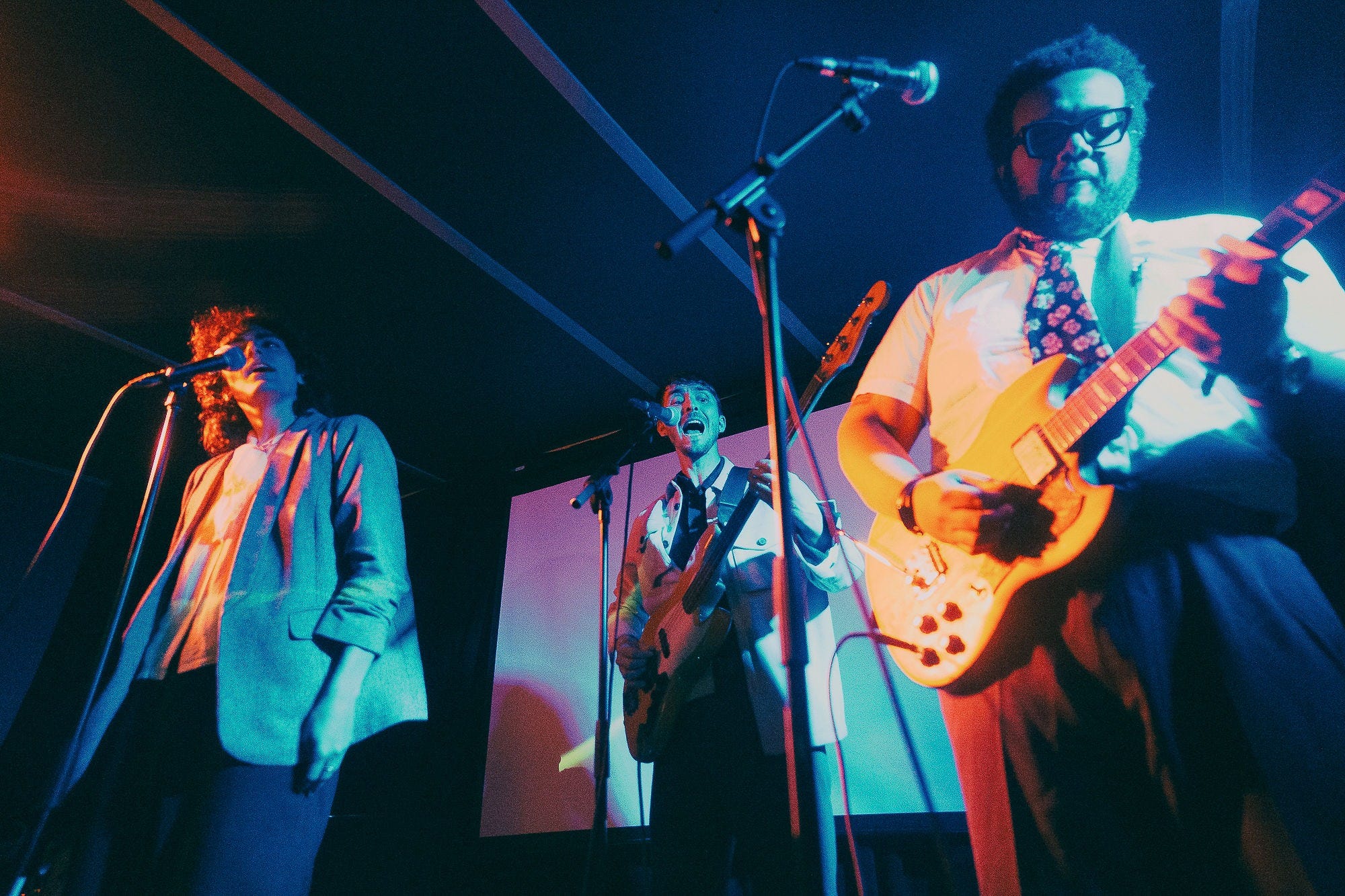
Photo: Katy McElroy
Good morning!
We’re in for a treat today! Members of Winged Wheel—one of my fave discoveries of the last few years stop by to chat.
The pitch: An “experimental super-band” comprised of Whitney Johnson (Matchess, Circuit des Yeux), Cory Plump (Spray Paint, co-owner of the dream venue Tubby’s), Matthew J. Rolin (solo guitar wizard and half of the Powers/Rolin Duo), Steve Shelley (Sonic Youth), Lonnie Slack (Water Damage), and Fred Thomas (Idle Ray, Tyvek), Winged Wheel is a creatively and geographically scattered collective, with each player living in a different city and bringing their own unique element to the group’s interpersonal alchemy.
The first record (2022’s No Island) was a product of file trading, with each band member living in a different city and sending in their own part to be assembled later. The result: a record they describe as “accidentally really good” (my take: yes), with its high-voltage kosmische-meets-jam-band vibes. 2024’s Big Hotel was one of my sleeper picks for AOTY, with “Sleeptraining” easily one of my most-played tracks.
When I first heard a new record was inbound, I was excited. As each single rolled out, that excitement only grew. A few weeks ago, I mentioned that I was going to be obnoxious about it, but also wondered whether the record would live up to whatever bar I’d set in my head. Spoiler: it totally does. In last week’s Sound Advice column, I wrote “[where] intensity is still very much there, with layers of synths, walls of noise, and unfamiliar sounds. The band has mentioned trying to balance excitement and tension, and it shows. Things move a little slower here, and the hits come a little harder.”
I ended that piece by noting Desert So Green“is yet another evolution from a collective that has made that their stock-in-trade. It’s not always the easiest listen, but for those who make the effort, the payoff is enormous.”
Having listened to it a bunch since then, I’d only double down on that assessment.
I recently had a chance to chat with band members Fred Thomas and Matthew Rolin via email. In our wide-ranging discussion, we talked about the band’s origin story, the record, and what’s coming next. Our chat has only been lightly edited for grammar and flow.
KA—
Congrats on the new record! Can you walk us through the backstory of how this project came together?
Fred Thomas: It’s been a very unusual path! The easiest way to explain the band is as a series of unexpected outcomes. It started as a remote recording project when everyone was locked down heavy in 2020, and that unexpectedly resulted in a really interesting first album, 2022’s No Island. When shows started happening again, Cory asked Steve if he’d want to sit in with us. He said he’d be down, which was unexpected, and we all got together in person to record the jams and ideas that became 2024’s Big Hotel. I think after that recording session, none of us really expected to play live, but we quickly started touring and operating like a traditional band, even though we all live in different places and come together around the conceptual entity of Winged Wheel.
Big Hotel was the on-ramp for many people. What should they expect this time around?
FT: The only goal we had for making the new record was that it be completely different than the last. Where Big Hotel was cauterized together from hours of jams and searching, Desert So Green was collectively designed in the studio, with structure and composition playing a much larger role. It’s still the result of searching, but there’s a lot more group intention here.
Matthew Rolin: If Big Hotel was the on-ramp, then I would say Desert So Green is reaching a foreign, yet familiar, place. You’re not sure if you are close to the destination yet, but you’ve just stumbled across something that is interesting enough to stop and check out.
Desert So Green is described as an album that spends its duration struggling to balance a scale with excitement on one side and anxious tension on the other. Say more, please.
FT: Listening to the album, it might be difficult to pin down exactly how it makes you feel at any given moment. There are pretty parts, but they’re always a little bit shaky. There’s sections of peaceful drone, but fried undercurrents are always there, too. Nothing fully resolves, and it’s almost like the songs stubbornly don’t allow themselves to be just punky rippers or meditative zoners, or anything singular. Whatever dominant energy is present, its agitated foil is always nearby.
MR: That’s life (mine at least). As far as how it relates to the music, I take it as this ever-present undercurrent that gets under your skin. Even the prettiest songs on the album have some of what I’m talking about. Sometimes it’s drones, sometimes it’s sharp, unfamiliar noises, but they are always there to add to the song and maybe mess a little with expectations.
I can hear a few different artists that might’ve been an influence, and everyone here has an impressive CV. That said, were there any specific bands informing the sound?
FT: We’re all huge music listeners and absorbers, so specific influences would be next to impossible to list. That said, while we were making the record, we all noticed there were some accidental similarities to Slint’s Spiderland here and there. That wasn’t so much an intentional homage as something that showed up once the dust settled and was interesting to observe.
MR: Like what Fred said, we all listen to probably too much music, so it’s impossible to pin it even on a dozen bands/artists. That being said, this time I found our CAN-style approach to recording to be tightened up. For Big Hotel, we just hit record and let it rip. This time, various members contributed demos and ideas beforehand, so we had a skeleton to fill out while in the studio.
For anyone new to Winged Wheel, what’s the one thing you hope they walk away with?
FT: Each of our three records so far has had wildly different tonalities and sound worlds while remaining somewhat connected to a blurry type of grand vision. Desert So Green is the most restrained and layered Winged Wheel album yet, so it would be great if listeners could tune into some of the deeper waves and movement that happened in the recording this time around.
MR: I hope they can see how amazed we all are that this band even exists. We are all playing music that I don’t think anyone in the band would come up with alone. A true collaboration!
By the time people read this, you will be touring Europe. Besides Big Ears at the end of March, are there any plans for stateside shows?
FT: Things keep on coming up unexpectedly, so it’s very likely there will be more on the books soon. As of this moment, however, nothing is planned past Big Ears.
Last one, just for fun; I bump into you as you walk out of the record store. What records are you carrying?
FT: Each member of the band would be carrying a completely different selection, and it wouldn’t make even a shred of sense to anyone outside of the Winged Wheel bubble. There’d be some Cumbia records, some Bakersfield-style country, a Beatles rarities box set, some microtonal organ music, and probably a Velvet Underground bootleg as well.
MR: As someone who just moved several times in the last few years… I am carrying the money I just got from selling my entirely too large and too heavy record collection and walking straight to the chiropractor.
Listen:
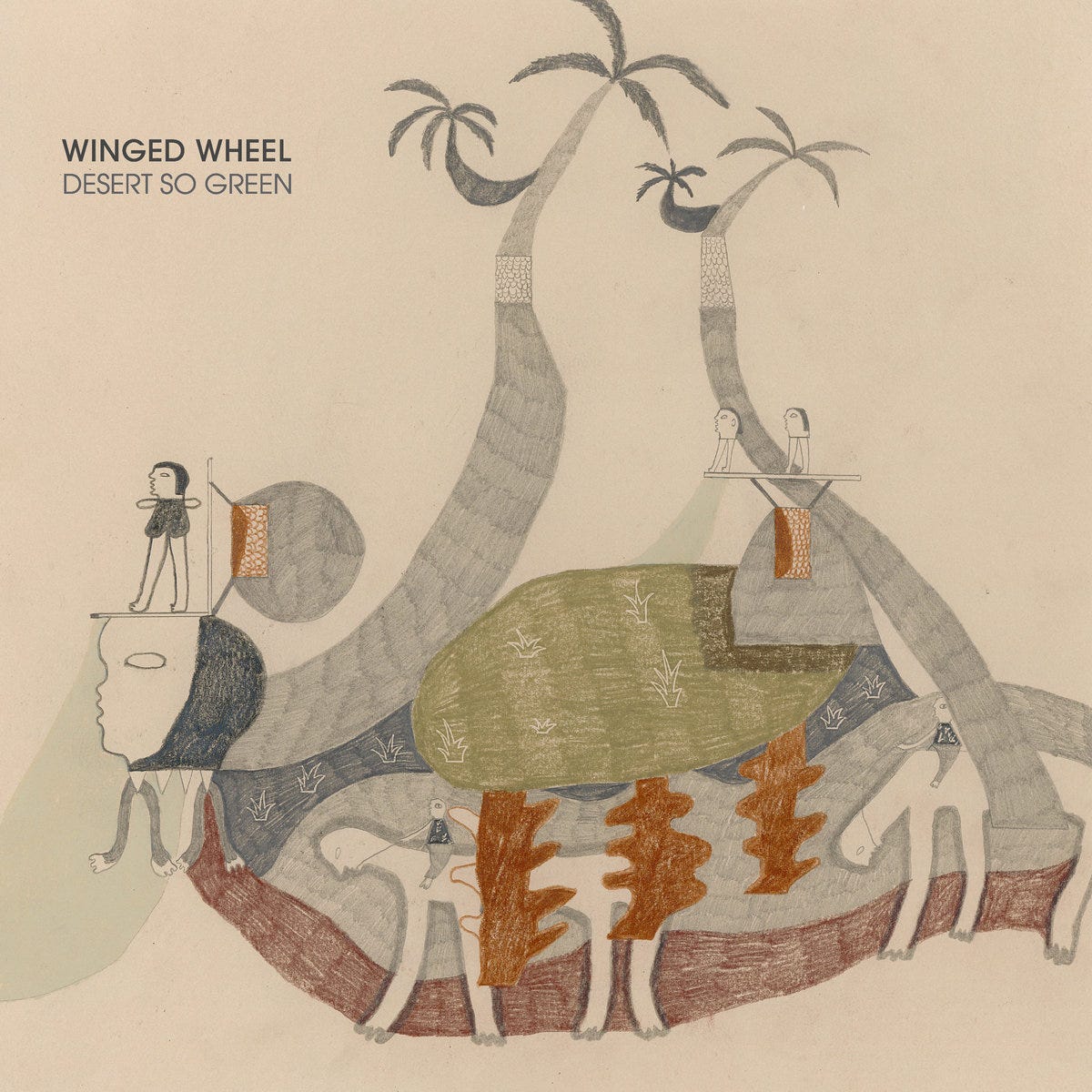
Winged Wheel | Desert So Green (2026)
Right-click the record to listen via Bandcamp.
Desert so Green is out now via 12XU. You can grab your copy here.
Good morning! Need an antidote for the algorithms? Looking for a place to share the music you love with like-minded people? You’re in the right spot.
For those of you who are new, we kick off every week by sharing what we’ve been playing, and the playlist below is some of what’s been in heavy rotation for me.
As always, thank you to those who have recently upgraded their subscriptions. Your direct support fuels this community and makes a positive impact. Shares and reposts also help!
When you’re ready, joining them is easy. Just click here:
I hope this finds you well is the ultimate cliché when it comes to openers. But no, really—how are you? How are you holding up? Life’s never easy. But 2026 has been an 12-day pressure test. It seems weird to put out playlists and write about records in a time like this, but also completely normal. One of the foundations of this nation has always been that tomorrow will be better. That aspiration found its way into every corner of life here. It’s hard to see that as an ongoing concern—and, anecdotally, a bit bewildering to realize that life goes on. I had that revelation driving home after dropping our car off at the shop. Oil changes and interval checks? Now?! Apparently so. More importantly, as bad as things are, nothing is a foregone conclusion. There is still so much we can do.
There’s zero historical context for any of the last couple of weeks, but we’ve always leaned into music when things get sketchy. Indeed, this nation’s entire history has been soundtracked; from fifes and drums during the Revolutionary War to Woody Guthrie, to RATM during the Bush Sr. era, and on to today. It also serves as both a respite and fuels resolve. It’s always seemed like anything’s possible when you’ve got something good playing.
This week, Dan Epstein touched on that using Curtis Mayfield as an example, highlighting his 1971 track “Keep On Keeping On,” writing:
Curtis went to his untimely grave believing that, for all of humanity’s myriad faults and fuckups and self-inflicted tragedies, we still have the potential to get our collective shit together. He also knew that no one was coming to save us, and that we’d have to do it ourselves and within our own communities before we could bring about any lasting and meaningful changes at the national or global level. But he damn well believed that it was still possible.
I do too, Curtis. Even after this past week.
Same here. I went with “Move On Up,” a track that to my ear feels both impossibly sunny and makes one feel like at the sky’s the limit. Besides Curtis, we’ve got some brand new blistering hot sounds from up here in Madison, a bit of shoegaze from the Second City (at least Bears fans have a little something to celebrate?), and the usual dose of sonic comfort food. There’s also a couple of Grateful Dead tracks in the mix. RIP Bob Weir.
And for anyone that feels helpless right now and wonders what they can do, there are plenty of options for every ability and every level of risk tolerance. The only non-starter is doing nothing.
KA—
P.S. A few of you have asked if I sequence these as if they’re an album or mixtape. The answer is always “yes.” In my head, I imagine them being played on your morning commute or road trip. I’m too old to use the word “vibes” as much as I have lately, but, well, if the shoe fits…
This week, side A is tracks 1-12, with Side B being 13-27.
P.P.S What song defined 2025 for you?Tell me about it here. Thank you to everyone who has responded so far. Please keep ‘em comin’!
Good morning! Need an antidote for the algorithms? Looking for a place to share the music you love with like-minded people? You’re in the right spot.
For those of you who are new, we kick off every week by sharing what we’ve been playing, and the playlist below is some of what’s been in heavy rotation for me.
As always, thank you to those who have recently upgraded their subscriptions. Your direct support fuels this community and makes a positive impact. Shares and reposts also help!
When you’re ready, joining them is easy. Just click here:
I’ve mentioned it before, but before my knee decided to commit harakiri (0/10, do not recommend), I played pickup soccer every week at a local gym. Every January, the parking lot would get exponentially more crowded for a few weeks as the “new year, new me” crowd resolved to “do something,” only to lose faith, interest, whatever, a few weeks later. It went on long enough that we started betting informally on the over/under for how long it would take to get a good parking spot again. And to reiterate, we never bet on anyone specific—they could’ve easily been one of us (and occasionally were).
All of this is a long way around to say that there won’t be a sonic version of “new year, new me” here; I like what I like and am a creature of habit (exhibit A: track 10). But one of my habits is finding new music, so there’s that (exhibit B: tracks 21–22). I enjoyed Miki Berenyi’s Tripla but hadn’t really done a close listen since I reviewed it. I checked it out again and found a new appreciation for it.
This week, there are a few other faves from 2025 back in the mix. What’s the over/under on when AOTY season ends? A few new-to-me records are here, and of course a bunch of old favorites. My world looked like Hoth for a minute, and going back to/through those records is my version of hygge. We went out for an early dinner on NYE, and tracks 8–11 were heard at our fave pizza place (resolution: go there more). And we were overdue for a two-for from Trent Reznor & co.
Turnstile is a band that seemingly on everyone’s list except mine. Did I miss the boat? Sure looks like it. Might be one of those records I left on the table. I’ll resolve to find out…
KA–
P.S. A few of you have asked if I sequence these as if they’re an album or mixtape. The answer is always “yes.” In my head, I imagine them being played on your morning commute or road trip. I’m too old to use the word “vibes” as much as I have lately, but, well, if the shoe fits…
This week, side A is tracks 1-13, with Side B being 14-28.
Some thoughts on community, curation, and why indie writing matters more than ever
My dad’s last job was in what we would today call “IT.” For a while, he was on the hardware side, and our garage was full of boxes from long-lost brands like Leading Edge. While on the software side, we got to see games that today seem primitive, but back then seemed revolutionary.
LOGO? Sure, laugh now, but man, that turtle was f’ing something. Ditto the original Oregon Trail game—who knew dying of dysentery could be fun? For a minute, we had an Apple IIe. This also coincided exactly with how long I was cool at school. I’m sure it was a coincidence. His final project before he passed was a program that pulled together your frequent flier miles, applied each airline’s award rules, and showed how close you were to any given redemption—so you could book your next trip with whatever carrier made the most sense. Today, we’d call that an app, and probably one you’d learn to build in a 200-level class.
That idea—aggregating value across fragmented systems so people can make better choices—has stayed with me. Because in a small, non-technical way, that’s what this project is trying to do too.
It’s a miracle, this internet. For as much as words like doomscrolling and digital decay have now become regular parts of the discourse, nothing else has done more to slip the surly bonds of geography and let people find one another around shared interests, values, and obsessions. Yes, it’s often weaponized, but it’s just as frequently used as a force for good—whether that’s organizing pro-democracy rallies or yapping about records. All of it would look like science fiction to people just a few short years ago.
This time of year is flooded with lookbacks and lists, but if you’ll indulge me for a second, I wanted to take one last glance before we start looking ahead this Saturday.
This community continues to grow in new and exciting ways. Its success is due to readers like you. Thank you for making it what it is. Thank you for sharing it on social media and with your friends and family. If you’re sharing it with your enemies, well, thanks for that, too.
Whether you’ve been here since Day 1, just recently showed up, or this is the first post of mine you’ve ever read, I’m glad you’re here. And if you’re up at 7 AM on New Year’s Day? More power to you!
Some red meat for the data wonks:
Because of your recommendations, On Repeat Records is read in 48 states (2024 resolution: get North Dakota and Wyoming on board; 2025 resolution: try again; 2026: third time’s a charm?!) and 71 countries worldwide. There are a lot more of us here than there were a year ago at this time, but the vibe still seems to be “the coolest dinner party you’ve ever been to.” One 2026 goal: keep that goin’. These missives land in inboxes as close as literally just down the block and as far away as New Zealand. That never ceases to amaze me and is incredibly humbling.
The numbers are interesting and prove there is an appetite for sharing the music we love with people, subverting algorithms, and supporting indie music journalism. Metrics are fun to discuss, but wouldn’t mean much without engagement.
The conversations—especially the ones in the comment sections that go far off into the weeds—are a highlight of every week. Same with the stories you share directly with me. I appreciate the feedback and love hearing the role certain records have played in your life. I read every one and try to respond as quickly as possible. That door is always open. Please use it.
This was also the year that I finally got hit with a few “stick to music” responses and performative unsubscribes. So be it. It’s a reminder that there are people on both sides of the glass. Most folks are here for hot takes on cool records, but once in a while, there will be a wildcard essay from a middle-aged guy trying to make sense of the world around him (spoiler: that guy is me).
Rather than list everything month by month, here are a few moments that felt representative of the year:
We took a rocket into space and got a chance to chat with Gelli Haha, among others.
Cool people doing cool shit? Yes please! This place is bursting with incredible talent. And I’m 110% here for it. This list barely scratches the surface. We’ll be doubling down on that in ’26.
Through it all, the throughline was community.
We don’t do ads or sponsored content here. There is no media team or marketing, either. It’s just Gizmo and me spreading the word about good records (and warning you away from bad ones).
That only works because of reader support. Paid supporters have full access to the entire archive, but more importantly, that revenue is the jet fuel that keeps this project in the air. Your support, shares, and recommendations all make an immediate, positive impact and keep this place independent.
I also want to again thank every guest writer, collaborator, and co-conspirator from the past year. If you recognize yourself in that sentence, thank you for trusting me with your work. And to the few of you I got to meet in real life, know that those moments were genuine high points of the year. More of that in ’26, please!
We’ve talked about a lot of records and covered a lot of ground. I hope you’ve found a new favorite or two, and a new favorite spot on the internet. Life’s better with records in it and people to share ’em with.
2025 was a meaningful year for On Repeat Records, and 2026 is already looking bright. Thanks for being a part of it.
The Rosy Overdrive EoY reader list has become one of my year end must-reads. Maybe it will for you too? Can almost guarantee your new favorite record is waiting for you in there!
Good morning! Need an antidote for the algorithms? Looking for a place to share the music you love with like-minded people? You’re in the right spot.
For those of you who are new, we kick off every week by sharing what we’ve been playing, and the playlist below is some of what’s been in heavy rotation for me.
As always, thank you to those who have recently upgraded their subscriptions. Your direct support fuels this community and makes a positive impact. Shares and reposts also help!
When you’re ready, joining them is easy. Just click here:
Welcome to dead week, everyone! The liminal space where nothing really happens unless you’re in the resolution business, in which case it’s peak season. Maybe you have 1–2? I don’t, other than the boringly boilerplate ones like “eat better,” and “listen to more records.” The smart money says I’ll go 1-for-2. You can probably guess which is which. Later this week we’ll take a look both back at the decade that was 2025, and forward to 2026. In the meantime, here’s some tracks that have been in heavy rotation here at the house. Hopefully these’ll sound good on the trail or treadmill.
I was having a discussion with a friend about bands that often get lost in the discussion when talking about any given scene, and that led me down a Cabaret Voltaire rabbit hole (yes, they’re from Sheffield, yes I’m counting it as Manchester). There was also a lot of album playing over the last few days, and that’s reflected in some deeper cuts throughout the list. I feel like I missed the boat on J Brekkie this year. For Melancholy Brunettes (& Sad Women) never really landed with me, yet every time I hear a track off the record, it’s my new favorite. Guess that’s how it goes sometimes.
“Monie in the Middle” might stick out here, but is one that pops into my head every now and again and stays for a few days. The Big Audio Dynamite and Let’s Active tracks are old favorites from new (to me) records picked up last week at a benefit event for our local LW FM station, WVMO. “Stimulation” is an older track from a new (to me) band, Preoccupations. Tbh, I think they would’ve fit right in on a bill with some of the Manchester bands of old.
We spent a lot of time with Kitchens of Distinction as part of the “Best Record of 1989” bracket challenge. This one’s from ‘91, and the next bracket is for ‘01, which is a bit of a blind spot for me. Maybe that should be my resolution? We can workshop it. In the meantime, Milwaukee’s represented here with Collections of Colonies of Bees. Spotlighting more Wisco bands is definitely on order for the new year, as is finding more new-to-me stuff like Air Miami.
KA–
P.S. A few of you have asked if I sequence these as if they’re an album or mixtape. The answer is always “yes.” In my head, I imagine them being played on your morning commute or road trip. I’m too old to use the word “vibes” as much as I have lately, but, well, if the shoe fits…
This week, side A is tracks 1-16, with Side B being 17-27.
What caught your ear this week? Any new releases or tickets to shows for Christmas/Hanukkah/ Boxing Day? Do you make any end-of-year lists or resolutions? If so, please share below!
Good morning! Need an antidote for the algorithms? Looking for a place to share the music you love with like-minded people? You’re in the right spot.
For those of you who are new, we kick off every week by sharing what we’ve been playing, and the playlist below is some of what’s been in heavy rotation for me.
As always, thank you to those who have recently upgraded their subscriptions. Your direct support fuels this community and makes a positive impact. Shares and reposts also help!
When you’re ready, joining them is easy. Just click here:
One of my biggest holiday wishes for everyone is that you get a day (or 2-3) to do…well, whatever you want. Maybe that means letting the sun wake you up instead of a shrieking alarm clock. Perhaps it means declaring email bankruptcy and going nuclear on your inbox. There’s probably some coffee in there, too. I was on vacation this past week and got to enjoy several of those things. I also chipped away at my TBR pile and spun a lot of records.
It’s strange; when people hear that I work for an airline, the default assumption is that we’re always jetting off to somewhere exotic. I have plenty of ink on my passport, but the truth is that sometimes I just want to do a dry run on what retirement might look like. In other words, the other side of Madison was the farthest I ventured.
Music-wise, this list reflects hanging around the house. There’s a reason this week’s is a bit longer (and eclectic) than usual- plenty of free time and sub-zero temps mean plenty of time in front of the sound machine. There’s also a couple of best of 2025 tracks back in the mix. Last week, I mentioned hitting a wall and needing some space from the records I’d been gorging on ahead of AOTY season. That was short-lived, and I got back to enjoying them. Plenty of post-punk too. Some things never change, I guess. And there’s some New Order on here, because of course there is.
Looking over the list, I can remember exactly where I was when I first heard a few of them. “Coldsweat” sounded as good a few days ago as it did when my friend Kendra pushed a copy of Life’s Too Good in my hand a few lifetimes ago and told me I needed to hear it. I wonder if those memories would have been as strong had the algorithm fed ‘em? I doubt it. Ironically, it was my employer that tipped me off to J-Boy; I first heard it while listening to IFE on a flight as we rocketed out of Portland.
I hope you find a few new faves here and that everything on your list shows up under your tree.
KA–
P.S. A few of you have asked if I sequence these as if they’re an album or mixtape. The answer is always “yes.” In my head, I imagine them being played on your morning commute or road trip. I’m too old to use the word “vibes” as much as I have lately, but, well, if the shoe fits…Side A is tracks 1-17, with Side B being 18-35.
What caught your ear this week? Any new releases or shows you’re hoping will be under the tree? Do you make any end-of-year lists? If so, please share below!?
What happens when a music critic, two poets, a Nashville transplant, and a former Migos labelmate all come together?
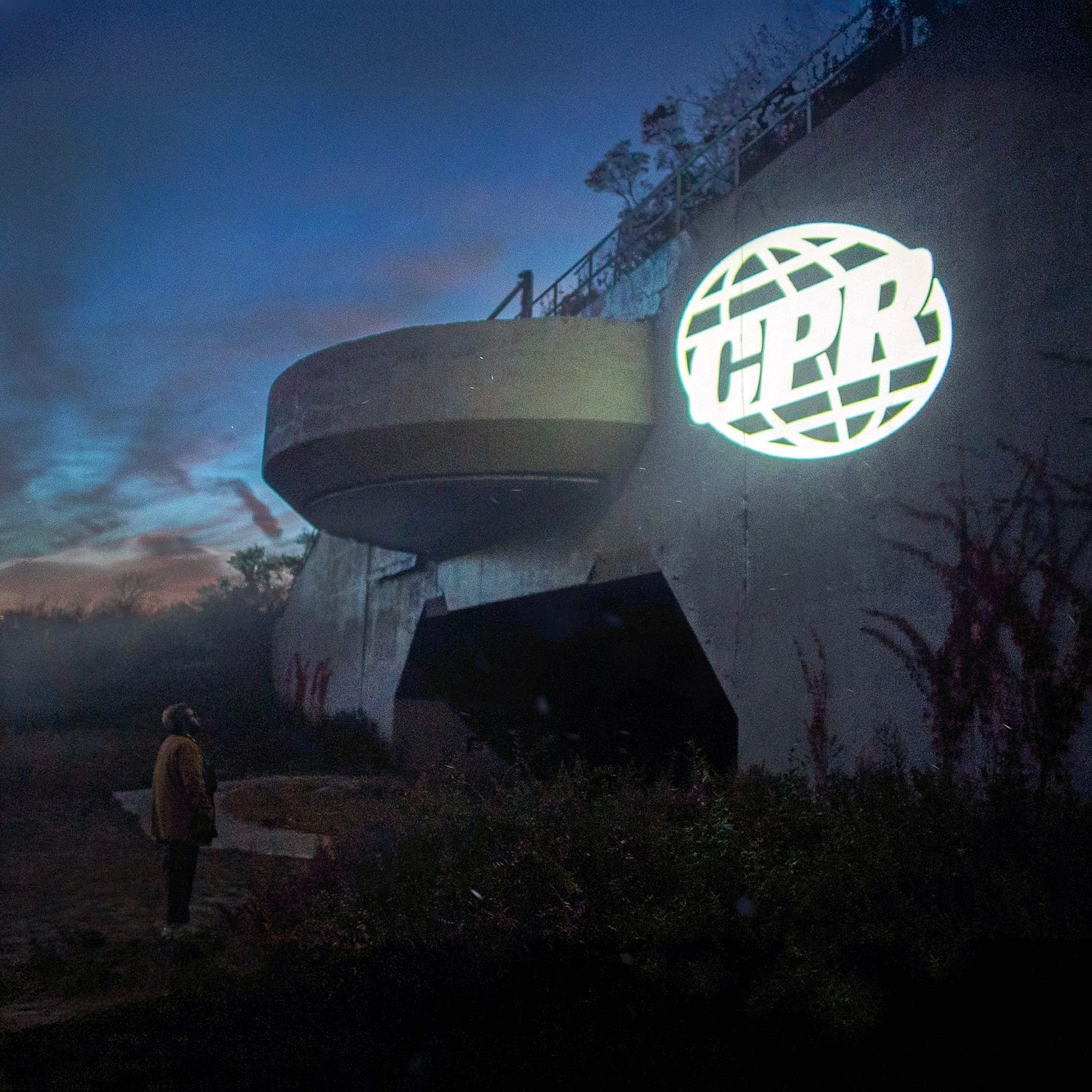
Photo courtesy of CPR
Good morning!
We’re in for a treat today; NYC-based Crisis Public relations stops by to talk about their new EP, how they got here, and what’s coming next.
The pitch: A self described “NYC-based firm consisting of a former Migos labelmate, a pseudonymous music critic, two sister-poets, and a Nashville-to-Brooklyn transplant” get together and make an EP that bends the definition of pop and all it’s variants. It might read like the set up to a hipster version of a dad joke, but is quite the opposite. Part experimental, part hyperpop, part screed against the hellscape we find ourselves in, Life Rights is quite a ride.
My on ramp to the band first came this past fall when I was turned on to their “Out the Window” single, which we had a chance to feature on playlist 316. This past week, they released an EP, Life Rights, which is fantastic.
Trying to define the band’s sound has proved tricky for me. I know my way around a keyboard, but with each track, my list of possible influences and reference points would shift. That makes for tough review writing, but an awesome listening experience, and I wondered if it was by design. This is after all a group that set out to challenge assumptions and the status quo.
We’re interested in persona, we’re interested in production, we’re interested in obscurity—all things that might scan as “less authentic.” But “Crisis Public Relations” and “Life Rights” are phrases that read as clinical, but the component words are all quite meaningful.
I recently had a chance to chat with the band via email. In our wide-ranging discussion, we talked about the band’s origin story, the record, and what’s coming next. Our chat has only been lightly edited for grammar and flow.
KA—
Congrats on the new record! Can you walk us through the backstory of how this project came together?
Three of us—Reggie, who sings and plays guitar, Isa, who sings and produces the songs, and Meg, who also sings, plays guitar and writes lyrics—moved into a house together during the COVID pandemic. We started jamming most Sundays, gradually inviting friends, including Meg’s sister Eleanor and John, who now plays bass, to join. In 2023, the project started really coming together, and then in 2024, we met Noah, who plays drums, through mutual friends.
On your website, you describe the band as “a new NYC-based firm consisting of a former Migos labelmate, a pseudonymous music critic, two sister-poets, and a Nashville-to-Brooklyn transplant.” Say more, please.
You forgot the food content creator, Noah! It does what it says on the tin. That’s all literally true. Isa was signed to a 360 record deal when they were 18 years old, Reggie is not who he says he is, Meg and Eleanor are sisters and published poets, and John was performing as a folk singer-songwriter in Nashville for several years before he moved back to the East Coast.
Photo courtesy of CPR
How is this EP different from previous outings, or to be more specific, work band members previously released?
This project has aspects of each of our styles, but it comes together into something new. For instance, this music is still really lyric-focused, but compared to, say, John’s solo music, it’s much freer from traditional narrative and song structures.
I can hear a few different artists that might’ve been an influence. Were there any specific bands that informed the sound on Life Rights?
Our inspirations are pretty varied; CPR is made up of a lot of members with different tastes. “You’ll Be Fine” was definitely influenced by the Jamaican diasporic sounds on labels like Trojan Records, and also the RnB-gone-reggae sounds of ‘90s and ‘00s radio. And the ending of the song breaks down into an almost Pinegrove like acoustic indie rock thing, which breaks down into pure ambient noise.
NYC is obviously a massive scene, but what’s your orbit like? What other bands are in it? How (relatively) close-knit are you all?
In our non-CPR lives, we all have various different scenes we travel in—Reggie writes a lot about all kinds of different scenes, and John works at a conservatory. Noah collabs with indie musicians. It’s TBD what the CPR scene is, but we loved performing with Sister, and Jude Johns recently, and we always make a point to see acts like Asher White and Grumpy.
For anyone new to CPR, what’s the one thing you hope they walk away with?
Sometimes, it feels like social media algorithms put pressure on musicians to manufacture “authenticity” to compete for attention, to grab people with the most intensity possible. So a lot of tears, a lot of “here’s a song about the time I saw my dad run over my dog.” Some people really make that work, to be clear. But we’re interested in persona, we’re interested in production, we’re interested in obscurity—all things that might scan as “less authentic.” But “Crisis Public Relations” and “Life Rights” are phrases that read as clinical, but the component words are all quite meaningful. Similarly, we hope that people see that these glossy songs were all made with care.
What’s next for the band? What’s 2026 look like? Back in the studio? On the road?
We’ve talked about doing a couple weekenders in other cities in the northeast, but mainly we want to be making a lot more music. We want to rent out a practice space and dial in the CPR sound. Noah played on the last two songs on the EP, “You’ll Be Fine” and “The Subletter.” Production is a huge part of our sound, so the next step is finding our groove in the room and working that into our records. In 2026, we’re also looking for someone who can reprogram a printer to print sheets of music so we can incorporate that into the show… so if that’s you, please message us.
Last one, just for fun; I bump into you as you walk out of the record store. What records are you carrying?
Reggie is probably carrying something from Mississippi Records. Isa bought 15 unfindable-online $1 records in the hopes of finding sample gold. John’s probably holding some sensitive folk record about, like, the light through the leaves or whatever. Meg’s holding the collected works of Eileen Myles. Noah’s carrying a world-class sandwich he personally made.
Listen:
Crisis Public Relations | Life Rights (2025)
Right-click the record to listen via Bandcamp.
Life Rights is out now. You can grab your copy here.
Thank you to CPR for their time, and thank you for being here.
The 3rd Annual On Repeat & Friends Best Records of 2025
Good morning!
Today we’re taking a look at our Top Albums of 2025
We’re back!
By almost any metric, 2025 wasn’t great. The universe didn’t send us its best. But if we’re talking about records—and we are—this was a banner year. For every stain on the landscape (Daniel Ek, the Velvet Sundown), there were countless counterpoints: music that doubled down on what we love, and artists unafraid to cover new ground.
I sometimes get asked if I ever worry that I’ll run out of records to write about. My answer is always a polite version of, “Are you kidding me?!” That might happen at some point, but the biggest hurdle in 2025 was finding enough time to cover all the records I wanted to. I thought for sure I’d have figured out how to do that by now. Nope. Maybe next year.
The list below represents what I consider the best the year had to offer. These were the records that consistently fed my ears and lit up my brain. For fans of semantics, we can swap in/out terms like “best,” “favorite,” etc.—dealer’s choice.
The ultimate barometer is this: if we were at a diner after a show and you channeled your inner Rob Gordon and asked me what records I’d recommend, these would be the ones I pitched.
For the past couple of years, Sam ColtSteve Goldberg and I have put together our annual favorites. There’s not a lot of overlap in taste, and that’s what keeps this so fun. I’m not blowing smoke when I say that I start looking forward to this group project in early fall.
When you’re done here, please head over to their pages and check out their takes!
Meet the co-conspirators
Sam Colt—Recovering copywriter and author of This Is A Newsletter!—a consistently hilarious, biting chronicle of modern life and its indignities.
Sam’s List:
Rosalia- Lux
Clipse- Let God Sort ‘em Out
Deftones- Private Music
Geese- Getting Killed
billy woods- GOLLIWOG
Nourished by Time- The Passionate Ones
Wednesday- Bleeds
Panda Bear-Sinister Grift
FKA twigs- EUSEXUA
Stereolab- Instant Holograms on Metal Film
Read his full breakdown- including honorable mentions-here.
Steve Goldberg—Writes Earworms and Songloops, weaving personal essays with the songs that lodge themselves in your brain.
Steve’s Picks:
(alphabetical order)
Yazz Ahmed – A Paradise in the Hold
Amadou & Mariam – L’amour à la folie
The Antlers – Blight
The Besnard Lakes – The Besnard Lakes Are the Ghost Nation
Anna Von Hausswolff – Iconoclasts
Henge – Journey to Voltus B
Walt McClements – On a Painted Ocean
Midlake – A Bridge Too Far
Vines – I’ll Be Here
Youth Lagoon – Rarely Do I Dream
Check out Steve’s thoughts on his picks—and those that just missed the cut— here.
As in Part 2, some of these we’ve talked about before, and I’ve included excerpts from previous reviews. I like yapping about records, but the goal is—and remains—finding you a new favorite or two.
Also: All are Gizmo-approved:
Let’s get to it!
Immersion-WTF
My love for Wire is no secret, and the same holds true for frontman Colin Newman’s solo work. This year, that circle expanded to include Immersion, his project with partner Malka Spigel (formerly of Minimal Compact). They actually gifted us two releases this year (plus a collaboration with / reworking of a single by Dummy). Nanocluster Vol. 3, with SUSS, was gorgeous. WTF?? takes the best parts from all of those disparate pieces and blends them into something incredible.
From my original review:
The record kicks off with “Defiance,” an instrumental that gets things off to a strong start with uptempo beats but refuses to plant its flag in either camp: not synth, not pop, not really anything but itself. Immersion—and Wire before them—thrive in these in-between zones, especially when they let the music do the talking. I tried to categorize their last record, Nanocluster Vol. 4, and failed spectacularly. I know better this time around.
“It’s a Long Way to Brooklyn” is a highlight, a track that doesn’t need words. But the whole thing opens up when they do. Spigel’s voice on “Timeline” is cool and almost detached, and Newman sidles in with a wry spoken-word counterpoint. Elsewhere, like on “Use It Don’t Lose It,” his trademark deadpan delivery turns a good track into a great one.
If this all sounds heavy, it is—and it isn’t. At least no more so than something like Talking Heads’ Life During Wartime was back in the day. David Byrne was singing about NYC’s Alphabet City, and Immersion is speaking on a much larger scale. Nevertheless.
WTF?? is an album about the constant, low-grade anxiety of modern life, and an era where current events have you saying “what the fuck?” several times before lunch.
Bob Mould- Here We Go Crazy
At my day job, one of my corollary duties is administering annual hearing exams and helping people find hearing protection that works for them. This is thanks to Bob Mould.
Husker Du’s New Day Rising hit me like a kick to the head and was never played at less than full volume. I liked it that way and loved his power trio, Sugar. To this day, it’s still the loudest show I’ve ever been to. I used to find that post-show ringing in my ears a weird badge of honor. When it was still there after day two, I started to worry. My hearing rebounded (sort of), which marked the point when I no longer cared how uncool I looked wearing earplugs at shows. But Mould hasn’t quieted down. He’s at his best when he’s at full throttle, and on his 15th solo record, he delivers.
The opener, “Here We Go Crazy,” reminds listeners of the best parts of Sugar. “Fur Mink Augurs” and “Sharp Little Pieces” are equally intense. The songs come at you relentlessly: blast furnace chords, merciless drumming, and sometimes hard-to-understand vocals (especially for those with hearing difficulties). When you listen closely, they often touch on challenging subjects—it would be easy for a sound like this to wear down even the strongest among us. Yet Mould consistently shows us a bit of light (heh).
Here We Go Crazy isn’t exhausting; it’s invigorating. It’s a breath of fresh air at a time when we need it more than ever. Play it loud; just remember to limit your exposure and keep in mind that the most effective hearing protection is the kind you’ll actually wear.
Hayley Williams– Ego Death at a Bachelorette Party
I know you’ve already seen a bazillion reviews of this record, so let me save us all some time by just saying: “same!” But before you go play it, I want to add that I love how this record was released. Last year, Cindy Lee’s Diamond Jubilee drew raves for not being streamable and for being available only on YouTube and a specific website. Williams followed suit (sort of) by releasing the tracks via her website—no tracklist, no problem.
This is her first outing as an independent artist, and if that’s not doing things on your own terms (while raising a middle finger to those who got rich off your talent for decades), well, I don’t know what is. Williams—and, to an extent, Paramore—have always shapeshifted stylistically, but here that impulse is taken to another level, with wonderful results. Still, in my opinion, she truly shines when she leans all the way into old-school pop, like “Good Ol’ Days.”
Do the kids still refer to songs as “bops”? Because this is a bop—and a perfect example of her incredible talent.
Ryan Davis & The Roadhouse Band- New Threats from the Soul
Over the last few months, there’s been a trend in “bigger” publications to tout Americana as the latest new thing, as if it just popped out of the ether—as if Waxahatchee (or whoever) suddenly sparked a whole-ass genre. That’s obviously not true. What’s actually happening is that people are slowly discovering artists and bands who have been there, putting in the miles for years.
I can’t claim any sort of moral high ground or expertise here. As noted in my initial review, “until not too long ago I was a dues-paying member of the ‘anything but country’ club”—a broad brush that also treated folk and Americana as collateral damage. As usual, I’m late to the party, but I’m happy to be here now.
That said, how do you not fall for a record that casually namechecks A Tribe Called Quest, Peg Bundy, and Betty Rubble before the first chorus even hits?
And then a line like this comes in and stops you cold:
“You can see the kingdom from the tailgate
If you stack a couple coolers, but you’re never gonna see it from the front of the line”
Maybe college football has cooked my brain, but damn, that’s my kind of wordsmithing. Again, we’re not even through the opening track here!
Speaking of which, these sound radio-friendly but are absolutely not built for the airwaves—the shortest track here clocks in at 5:55. That’s fine by me. Morgan Wallen and co. can have the chart space and radio spots. This is a record suited for back roads, sitting on the porch, or in your favorite bar on a cool summer evening.
With New Threats…, Davis and the Roadhouse Band tip their hat to Americana while bringing new energy. It’s not easy to sound brand-new and 100 years old at once, but they walk that tightrope well here (absolutely NOT derogatory). It’s music that understands the lay of the land, respects it, and is cool with adding its own take. It’s the sort of thing that will convert skeptical listeners like me sooner rather than later.
Nourished by Time- The Passionate Ones
When I was in high school, my girlfriend was very much into R&B, and I was very much… not. We landed at a kind of musical détente, where we’d swap who got to control the music based on a very blurry set of criteria that seemed to change with every trip. That said, there were a few “compromise” records that we both begrudgingly enjoyed.
The Passionate Ones reminds me of that same very narrow band of R&B from around 1988–92 that used to blast out of my tape deck. We spent a lot of that time dreaming, and on Marcus Brown’s latest, it feels like a love letter to the dreamers—the ones just trying to get by. It’s a bit of sonic reassurance that it’s okay to have your head in the clouds.
It might evoke memories of bands and days gone by, but it’s also really hard to pigeonhole. Sure, R&B fits, but so do experimental and dance. Brown takes us on a ride and isn’t afraid to go off on a tangent or two. And there are earworms, and…
…and in a world where slop like Velvet Sundown becomes a thing, it’s nice to know there are still some things Suno just ain’t going to be able to copy. In my totally objective, not-at-all-blurry rubric for what makes a great record, originality is part of the calculus. And in that category, The Passionate Ones is off the charts.
There are no compromises on this LP, but I’d like to think it would absolutely qualify as a compromise record.
The number one way my newsletter finds new readers is when people share it. So, feel free to spam share it with everyone.
Have you ever been to Wendover, Nevada? If not, it’s a border town that’s a little worse for wear. Not quite a Temu-brand Vegas, but it’s close. It’s transient by nature, and melancholy and hard luck seem to be the only permanent residents.
In my head, this is the sort of place where Dan Bejar—aka Destroyer—would have a standing gig as a lounge singer. The songs are great, but the louche persona he’s built feels like a perfect fit. On 2011’s synth-pop masterpiece Kaputt, he talked about doing coke and all sorts of other midlife debauchery.
New iterations came via subsequent records like Poison Season and have reached their peak (or bottom?) with Dan’s Boogie. It feels like the end of the road for a guy with nothing left to lose—the sort of entertainer who still thinks “the act” has some life left in it, even if that means playing to a midday crowd of four or five disinterested truckers. The whole thing has a morning-after vibe, literally and figuratively, as if Bejar is in on the joke and no longer worries whether you’ll “get” his free association and poetry.
…and it’s fantastic.
Ultimately, places like Wendover are a great place to study the human condition—the wins, the losses, the beautiful, and the ugly. Sometimes they’re just a great place to get off the road and into some cheap food. Dan’s Boogie encompasses all of that. I honestly don’t know where Bejar goes from here, but I’m in no rush to get past this record.
Kathleen Edwards- Billionaire
One of the highlights of my week are our Monday discussions. Sure, I share a ton of picks with everyone, but I get WAY more in return. Occasionally, a record takes on a life of its own in the chat, and comments about it stretch over the course of a few weeks. This, of course, is a very loud signal that maybe, you know, you should check the record out? That happened with Billionaire, and man, am I glad I paid attention!
I originally noted
It didn’t take me long to get why people are so excited about this record. In fact, it took about 30 seconds of the opener “Save Your Soul.” I found myself nodding enthusiastically and saying, “Okay, then!” The line “Line your pockets with gold… Who’s gonna save your soul/When your money’s no good.” feels like a question a LOT of people should be asking themselves in 2025. And just in case Jason Isbell doesn’t already have enough fans here in the community, the solo on this track rips.
That was followed by “Say Goodbye, Tell No One,” one of those rare tracks whose gorgeous sound is a thin veneer over caustic lyrics. It’s incredible. I can almost guarantee someone’s going to use this to get through a bad breakup. They could do worse.
I also mentioned that if there was a weak link here, “I Need a Ride” was it. People told me to give it some time; maybe it would grow on me? Dear reader, that’s exactly what happened. And if Isbell wasn’t enough, towards the end, Shelby Lynne and Allison Moorer stop by to add some vocals.
Gelli Haha- Switcheroo
Where do I start with a record described by a fan as “…like Kate Bush meets Suburban Lawns, and it is pretty good!“? Switcheroo is what happens when an artist starts out making folk music, moves to LA, connects with a producer, and makes the pivot of a lifetime. Along the way, Angel Abaya ditched her legal name, adopted the Gelli Haha persona, and proceeded to make one of the most unhinged records of 2025.
Imagine your favorite dream pop band grabbing a copy of The B-52s’ Whammy! on the way to the launch pad, taking off, and crash-landing in an electroclash warehouse party in the coolest part of the galaxy.
Switcheroo is ecstatic. It’s aspirational and absurd in equal measure. It’s awesome. In other words, it’s perfect for this moment. Speaking with Abaya earlier this year, I asked how this project came to be. Her answer?
“Gelli Haha is a project born through curiosity. I wanted to create something that was fun and moved people physically and emotionally. Fun music to dance to, something mystical, and enchanting and silly.”
Mission accomplished.
In that same piece, I said,
Maybe it’s just me, but here’s something liberating about how this album refuses to care what you think. It’s not just theatrical—it’s maximalist identity performance with zero fucks given apologies. Gelli Haha isn’t aiming for relatability; she’s too busy being a pop gremlin, and tbh, that rules. The whole project feels like a rejection of our (collective) obsession with being “real,” that’s often ripping through the usual music discourse channels. Instead, she turns her persona into a playground—and lets you run wild with it.
Switcheroo is weird, hilarious, and absolutely unhinged—and it might be the most fun I’ve had with a record all year. Listening makes joy feel like a radical act- a rare treat in the current era. Once you’re in the Gelliverse, you may never want to leave. I certainly don’t.
Fust-Big Ugly
From November:
Fust is the latest to corner the market on the sort of storytelling Drive-By Truckers and Wussy have mastered. On Big Ugly, the band’s third album, they’ve hit critical mass. Real stories about real people, just tryin’ to get through the day. It’s the world of hard-working folks, hours under a vicious sun, and well-lit places. In this case, 24-hour gas stations out by the highway. It’s always strange to me, a child of suburbia, and a man that’s spent 49(ish) of his 50 years living above the Mason-Dixon line, to be so fascinated with the stories from the South. I don’t know what it is, but it’s always been a goldmine for storytelling. Even the nomenclature follows this pattern: Big Ugly is an area in West Virginia. And like the state, it’s an odd name for a beautiful thing — or in this case, specifically, a record from a North Carolina–based band.
“Spangled” kicks things off with a story of a repossessed hospital and helping a friend. And if that’s not a track for today, I’m not sure what is. It’s also a banger with no shortage of guitars, piano, and pedal steel. It’s purpose-built for rippin’ a heater and thinkin’ about things as you whiz down your nearest moonlit back road.
“Mountain Language” is another swaggering track with fuzzy riffs and lines like:
You can’t even find work at the Country Boy Selling gas station drugs To take care of your sister Dallas She’s a little, little older than us She’s a little older than us
This is a masterclass in telling the stories of the people who live in places Yankees rarely go, and of values we can all relate to. The record ends the same way it begins — with a story of collapse when Aaron Dowdy tells us on the way out that he’s blacking out from living.
Big Ugly is a mix of ballads and rockers, but truly shines on the latter. Dowdy isn’t afraid to paint an unvarnished picture of real life, but does so in a way that never feels condescending. The characters here feel like his people, not caricatures built for peddling records. This is a world progress often leaves behind, but like an abandoned school bus slowly being consumed by kudzu, there is grace and beauty in the decay.
I keep trying to find new things to say about this record, but my quiver of superlatives only holds so many arrows, ya know?
Preoccupations- Ill at Ease
Ill at Ease is certainly not something you’ll be blasting on your boat as you and the crew knock back tall boys. It’s icy in spots and apocalyptic in others. One song mentions centrifuges. Does Van Halen sing about centrifuges? Dear reader, they do not.
Oh, and it will sometimes make you want to dance (probably on land).
When Women broke up in 2012, the Flegel brothers went their separate (musical) ways. Patrick morphed into Cindy Lee, whose Diamond Jubilee record was on just about every AOTY there is last year. Matt and bandmate Mike Wallace went on to form the core of Viet Cong. That name was thankfully changed for a whole host of obvious reasons, and Preoccupations came to be.
Ill at Easeis the band’s fifth record, and arguably their most accessible. It’s a post-punk record, but it’s as pop as anything Psychedelic Furs or The Sound ever put out. On a more contemporary note, I kept drawing a line to The Helio Sequence. For absolutely no reason at all, the record’s “Andromeda” reminds me of “Keep Your Eyes Ahead.” While I’m at it, Flegel’s almost raspy vocals will evoke comparison to The Fur’s Richard Butler’s.
None of this is a liability. In fact, it’s all in the plus column for me. There has been some chatter that this record is too pat, too polished compared to their previous releases. I am not in that camp. Sure, there are a points where I miss that earlier volatility, but I like my post-punk dance-y, and this delivers for days. “Andromeda” and “Focus” have been battling it out for my fave track of the year, and several others make a good case for being shortlisted as well.
Get in, we’re listening to the soundtrack to the apocalypse.
A few more incredible records I’d recommend in a second:
Stereolab — Instant Holograms on Metal Film: The data goblins at Spotify tell me my most-played song in 2025 was “Ping Pong,” off the band’s 1994 record Mars Audiac Quintet. Such is the staying power Stereolab enjoys that, three decades on, I’m still playing the records—and so are a whole lot of other people. Will this one have the same longevity? It’s Stereolab! I wouldn’t be against it.
Sextile — Yes, Please: One of my “old man yells at cloud” complaints is that techno—er, EDM—er, dance music has started to over-index on glitches and bleeps and bloops. There’s nothing wrong with that (see Stereolab), but sometimes I want big bass, a little sweat, and some weapons-grade hedonism. The lyrics flit between existential and immediate, but if I’m honest? I’m here for the beats. And they never stop coming. Incredible record that takes you right back to those nights that didn’t even get started until 10:30 p.m. Listen again? Yes, please.
Andy Bell — Pinball Wanderer: This year, we got records from Erasure’s Andy Bell and the former Ride frontman of the same name. A real “Oh, we got both kinds. We got Country and Western” moment. This one is from the latter Andy and is a fantastic ride into space. The record’s cover of the Passions’ 1981 track “I’m in Love With a German Film Star” is worth the price of admission alone.
Avery Friedman — New Thing: Writing this record up last spring, I quipped: “I am convinced someone, somewhere, decided that any promo email had to include either ‘pedal steel’ or ‘indie folk’ in the description. It feels like a bit of PR Mad Libs or refrigerator-magnet poetry gone wrong…those two phrases are as ubiquitous as UPCs on the records they’re trying to move.”…which said PR rep then posted on social media. Lol. Oops. It was all taken in stride, and why not? I loved the record, and Friedman made it easy. On the title track, Friedman tells us: “It’s a little bit of a new thing / It’s a little hard to predict / And I can’t quite describe it / But it’s like a magnet flipped.” Honestly, I can’t think of a better way to sum up this record than that. This album fades in and out—sometimes it feels like the light of midday; other times like a fever dream or fuzzy memories struggling to make it out of the back of one’s mind. I closed that first review by stating, “It’s not PR spin when I tell you that’ll be a contender for a spot on my AOTY list.” And, well, here we are.
Die Spitz — Something to Consume: My elevator pitch for this Austin-based quartet has always been simple: Die Spitz is the Gen Z equivalent of L7. To be clear, that’s meant as high praise. They’re fast, loud, and have something to say—and exactly zero Fs to give. Ava Schrobilgen, Chloe De St. Aubin, Eleanor Livingston, and Kate Halter also happen to be talented musicians. Their 2023 record was centered around “Hair of Dog,” one of my favorite tracks of the year, and the EP quickly found its way onto my Best of 2023 list. It set the stage for Something to Consume. Almost a rough draft, if you will. That’s not to say this record has the edges sanded off—it absolutely doesn’t—but it’s clear the group has worked to evolve from those early beginnings.
And that’s a wrap! Any of your favorites on this list? What should be on here? I’d love to hear your thoughts. Sound off in the comments, and let me know!








Leave a Reply