We’ve got a great host and a killer record, all set to go. All we need now is you! Here’s how to join the fun.
Good Morning!
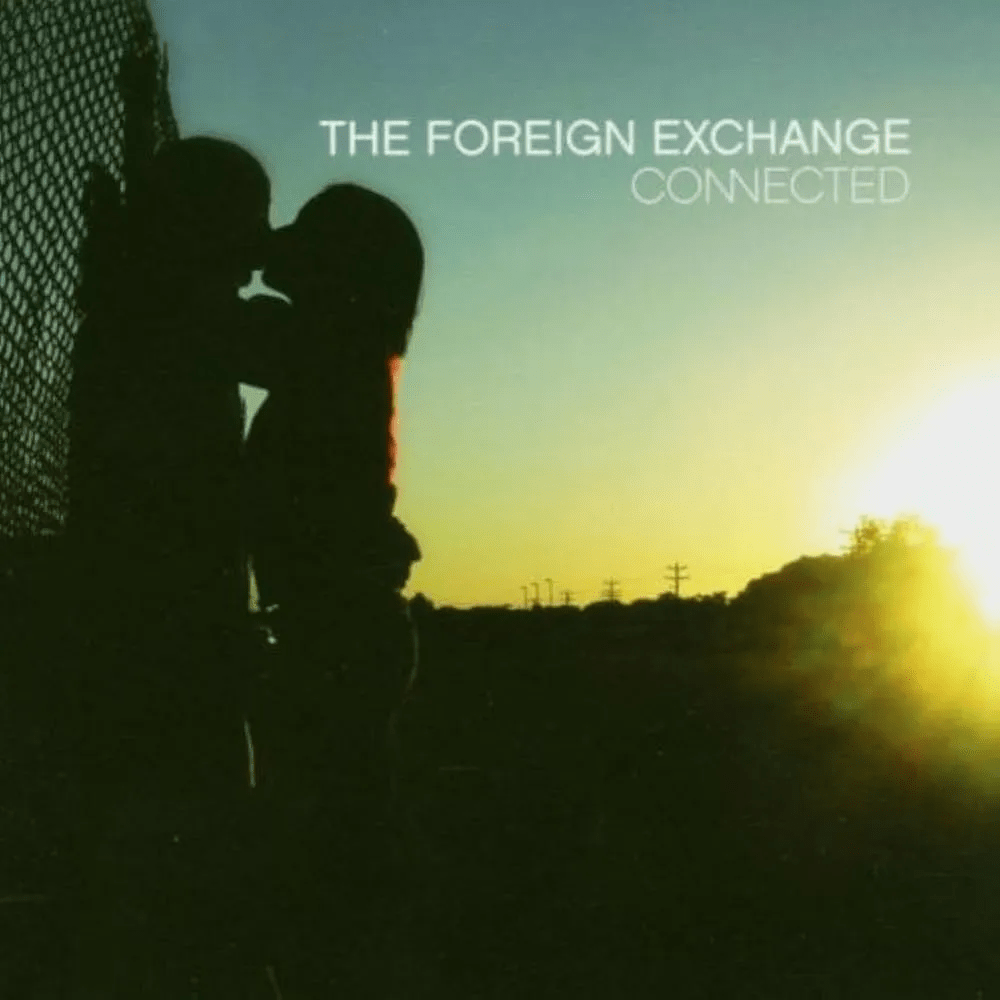
Today we’re talking about Connected by The Foreign Exchange, and how you can talk about the record with other like minded people.
Note: As some of you know, I’m one of the editors for an online music publication called The Riff. Each month, we host an album discussion (via Zoom), and this month’s is coming up this Sunday November 2nd, 4PM EST/1PM PT
Backspin Hip-Hop’s Jeffrey Harvey, this month’s host. These guys are doing the heavy lifting.
As you’ll see below, these are low-key affairs; all are welcome! If you want to share some thoughts, that’s awesome. Wanna just sit back & listen? That’s cool, too. Everything you need to know about how to join us is below.
Either way, it’d be better with you there.
Today’s guest post below comes from Harvey himself, who makes a fantastic case for why he picked this record, why it’s the right record for right now, and why you should be there Sunday to hear about it and/or share your thoughts.
KA—
My connection to October/November’s Riff Album of the Month was a culmination of sorts. Or maybe a coronation. It actually came by way of the album after this one in a catalog that offered a template for 21st Century collaboration.
But let’s rewind before we fast forward.
In 1999, producer/The Roots’ drummer ?uestLove and writer Angela Nissel founded Okayplayer as an online hub to connect progressive hip-hop artists with like-minded listeners. As was happening all over the web, a community emerged. The features, reviews, and artist interviews gave the platform its gravitas. But its lifeblood was the message boards.
The boards allowed members to connect with one another. They quickly became a place where everybody knows your username for a particular subset of teens and young adults. This was the crowd more likely to stay up until 3 AM deciphering how Dilla chopped that Rick James sample into sonic witness protection on Common’s “Dooinit” rather than arguing over which sucker MCs Com was firing at. On those message boards, they found their tribe.
Chief among the tribesmen was “Taygravy.” Behind that username lived Phonte Coleman, an aspiring MC from North Carolina who shared tracks from his group, Little Brother, on the boards. In 2002, Little Brother landed a record deal, based at least partly on the internet buzz that began on Okayplayer. When their debut album, The Listening, the following year, it was a seminal moment for the site — the message boards in particular. Though The Listening was released through a tiny indie label and struggled to find retail space on box store shelves, it felt like the moment that Okayplayer’s digital oasis became anchored in something tangible.
When Dutch producer Nicolay began corresponding with Phonte via the boards, he was connecting with a made man. Yet, in the context of the Okay-ecosystem, they were peers. Music lovers. OKPs. Young artists hustling to connect their sounds with open ears. What began as an exchange of beats and ideas between community members blossomed into something unprecedented. It ultimately foreshadowed the future of not only music but 21st-century collaboration.
From Holland, Nicolay sent files to Phonte in Durham via AOL Instant Messenger (RIP AOL). Phonte laid vocals and snail-mailed the files back to Nicolay for post-production. Momentum built, and what began as an experiment became a passion project.
Tay and Lay could have held the lightning in a bottle for themselves. Instead, they opened the bottle and invited their friends to sip. Tay’s Little Brother partner, Big Pooh, features prominently. So does their extended Carlonia-based Justus League crew. But the album also provides a platform for peers from around the U.S. (the Eastern Seaboard, anyway) to whom the duo extended the digital share space — fellow OKP Von Pea (Brooklyn), Critically Acclaimed (DC by way of NYC), Kenn Starr (DC), Oddisee (Maryland).
As a result, the album plays as a collective mission statement for a generation ascending into adulthood at a moment of jarring paradigm shifts and getting by with a whole lot of help from their friends. Want a cheat code to understanding the album’s ethos? Pay close attention to the propulsive fourth track, “Hustle, Hustle”. Here, Phonte seems not only content, but enthusiastic to slide into a supporting role. He sings the hook while Critically Acclaimed’s Quartermaine and C.A.L.I.B.E.R. set the album’s thematic table of navigating the quest for personal fulfillment in the face of mounting responsibilities.
No matter when you entered adulthood, the core themes of defining identity, priorities, and place in the world will likely resonate as a right of passage. The universality of the themes and earnestness with which they’re explored are a big part of why, even at a moment when digital technology was making our relationship to music more transient, this album stuck with its listeners.
The other component of its timelessness is Nicolay’s production. Think the meticulous sonic polish of Steely Dan paired with the enveloping warmth of The Ummah. But where Steely Dan had access to state-of-the-art studios and all-star musicians, Nicolay had a desktop computer and a mini-arsenal of keyboards in a bedroom. If Aja represents the pinnacle of analog-era studio craft, this month’s album was an early beacon of fully realized digital-age craftsmanship.
By the time I formally joined the Okayplayer team as a writer in the late 2000s, the platform had already tipped. OkayOGs like Common, Erykah Badu, and Jill Scott were firmly situated in popular culture. Okayplayer was regularly cited in mainstream media outlets, as established journalists increasingly looked to it as a harbinger of cresting sounds. The signature logo shirts were visible on the streets of major cities worldwide. The Roots would soon become Jimmy Fallon’s house band.
Yet, there was the distinct sense that us second (third?) generation writers had arrived after the true golden years — the moments when a movement was coalescing in real time.
So when I was tapped to write the top-of-fold review for The Foreign Exchange’s 2008 sophomore album, Leave It All Behind, it felt like a connection to the glory days. A link to the era when a website became a community, digital dialog sparked creative collaboration, and a proof-of-concept emerged for 21st-century connection. When my review was “blurbed” for the album’s digital banner ad, it was validation. (I would soon be blurbed for Brooklynatiby Von Pea’s group, Tanya Morgan — also formed on the message boards — locking in my Okay bonafides.)
This month, we’re going back to the genesis.
October/November’s Riff Album of the Month is Connected by The Foreign Exchange.
We’ll connect and discuss on Sunday, November 2nd at 4 PM EST, details below.
** A BRIEF LISTENING NOTE: ** The original version consists of 14 tracks, ending with “All That You Are.” Tracks 15–17 were later added as bonus cuts. Feel free to listen, but for the purposes of the discussion, the album is tracks 1–14.
With The Riff Album of the Month Club itself having evolved from digital dialog to virtual community to several in-person meet-ups, it feels like the perfect setting to discuss not only Connected, but the nature of connection in the age of digital anomie.
I hope to see all the regulars, semi-regulars, and irregulars.
For newcomers, joining the community is easy. Simply listen to the album and log into the Zoom call detailed below. You can talk as much or as little as you want and are free to say anything.
This article is not paywalled, so share it freely on social media and elsewhere.
“A clown is a coronary in a wig waiting to happen. “ ~ Sheila Moeschen
Good morning!
Today we’re diving into the sounds of the season. Spooky Szn, that is.
It’s Spooky szn y’all!
It’s October, and that means a season of ghouls and zombies. It also means pumpkin spice everything, and if you’re in a “battleground state” like I am, some years it means the torture of nonstop political attack ads that often run back-to-back-to-back. This is an off year, so we’ve mostly been spared, but all of this is its own horror show (waves hands around).
I don’t know about you, but I think I’d take the zombies if given a choice.
There are often certain conventions attached to holiday playlists.
For example, on Thanksgiving, there really can only be one song. With Christmas, people usually have their own lines drawn in the sand:
Traditional vs. non-traditional…
Religion-themed vs laic…
What’s the earliest allowable date to hear Mariah Carey’s “All I Want for Christmas Is You…”
And so on…
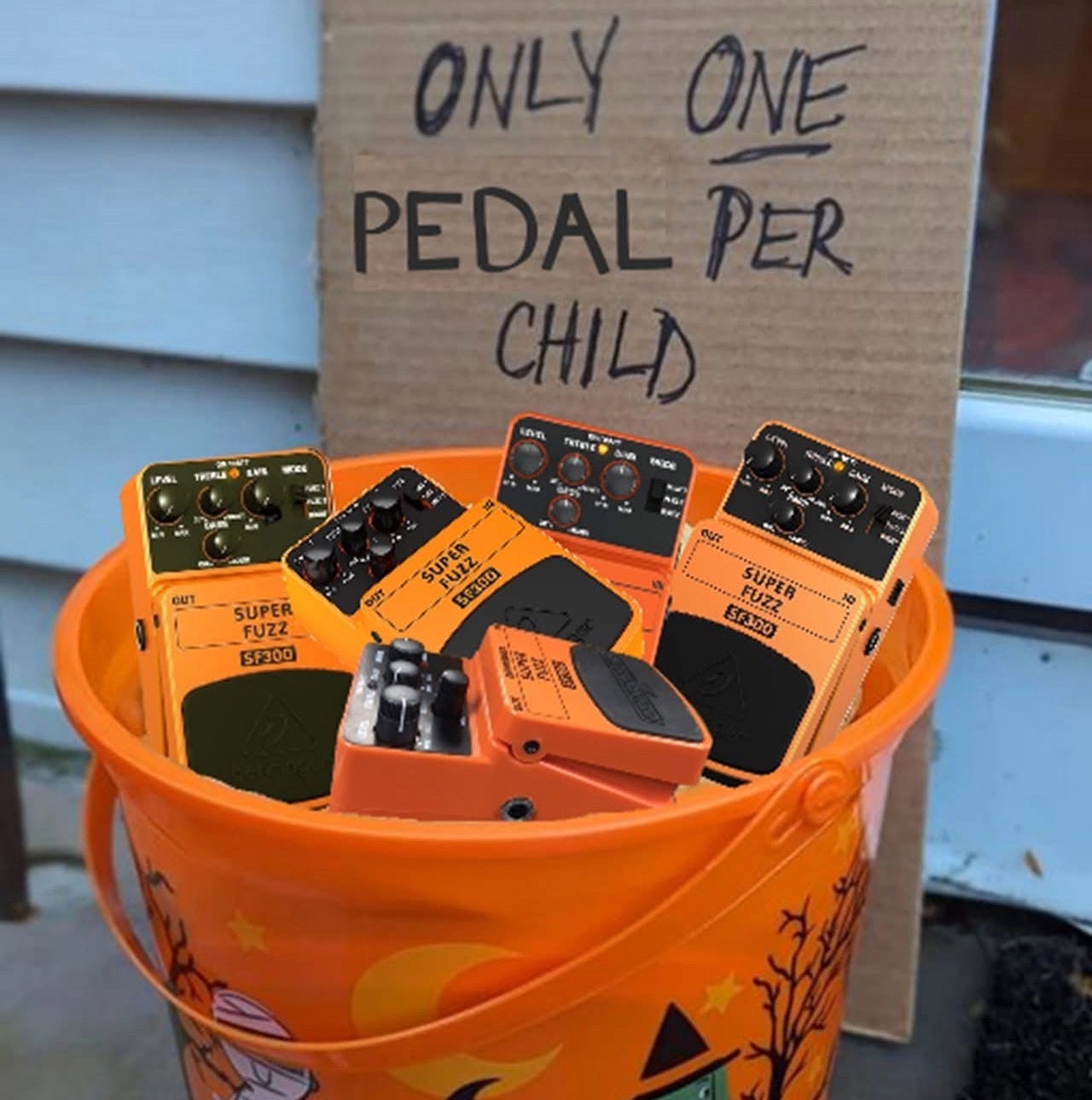
Instagram photo courtesy of SW Lauden
Halloween lists don’t generally bend to those same orthodoxies.
Maybe it’s because so many of us associate the day with the same themes. It’s not a consumption vs. family debate. It’s trick-or-treating and bad movies. And if you live where I do, there’s the annual angst surrounding whether or not it’ll snow.
In other words, anything goes, as long as it can be loosely tied to the day.
There are plenty of standards, a few curveballs, and at least one legit jump scare in here…and hopefully a new favorite (or two) to add to your mixes!
What’re your favorite tracks to play on Halloween? Any tracks that should be on here? Let me know in the comments!
Thanks for being here,
KA—
The Terrible, Horrible, No Good, Very Bad Halloween Playlist:
Subscribe to continue reading
Become a paid subscriber to get access to the rest of this post and other exclusive content.
Volume 10 | October 2025: Sam & I throw the hoodies back on and share some perfect records for fall listening.
Good morning!
So nice, we’re doin’ it twice. Today Sam Colt and I are each sharing a few more of our favorite fall records…ones that might’ve been overlooked or deserve more time in the spotlight.
Welcome to the tenth installment of our (not so) new series! For those of you who may have missed previous editions, here’s a bit of context:
In this monthly series, Sam Colt and I will each share our picks for artists and/or titles that haven’t received their due. You’ll recognize Sam’s name from our On Repeat and Friends Best of Series, and also our Top 100 of all-time serieslast fall. These posts will adopt the latter’s format; I will make my case for my three picks and my reaction to Sam’s. Sam’s page will do the reverse.
In the inaugural post, we noted that successive editions would narrow things down slightly. Maybe a specific genre…maybe a specific era…maybe a specific…well, who knows!
Last month, I talked about the vibe shifts that coincide with the school year. Living in a college town puts all of those in sharper relief. Living in a place where you get all four seasons (sometimes in a day) cements it.
We’re in full swing here, with school having been in session long enough that high school playoffs have started. The UW Badgers football team hasn’t quite figured out that the regular season has started, but that’s… fine. Hockey’s here, and hoops start soon enough! (EDIT: Tonight, actually!)
It’s the most wonderful time of the year. It’s also the time of year when a certain set of records hits differently than they do in the dog days of summer or the preternaturally hopeful late spring. These are generally softer—or if not, at least have heavier themes. Sometimes a record just “feels like fall.” Or if your mind’s wired like mine, a record that was released in October with blue cover art forever imprints itself as an autumn record.
Whatever the reason, there are a lot of fall records. Enough so that Sam and I felt like we’d left some great picks on the table last month. The responses we got from all of you said the same. So we went back to the crates and grabbed a few more that fit the bill. Some of these will be familiar. Some might be ones that get overlooked by bigger releases in the artist’s catalog.
I am a devout heliophile. Summer is my time—even if I don’t like sweating. For me, fall starts strong: it’s still sunny, there’s all the new school year energy, etc. But just underneath that is the slight unease that comes with knowing temps in the teens and a monochromatic landscape are right around the corner.
Zooming out, I think on some level, the records here represent a sort of fight against the dying of the light. I don’t mean in some big-minded, overly literate way—I mean literally clinging to daylight for as long as Mother Nature’ll let me. Someday I will retire. My plan? Put a snowblower in the back of the truck. As soon as I get somewhere that people ask what it is, I’ll know I’m far enough south. That day’s not here yet, and I need to keep finding comfort in records.
Sam paints a picture of a guy who’s already got his sweaters out and is raring to go. Maybe this is his time to shine? I probably should’ve asked him when we were chatting about this month’s piece. Either way, all of his picks were new to me. Maybe a few of these will be to you as well? At any rate, we decided on a second round, and here we are.
When you’re done here, remember to check out Sam’s take at This Is a Newsletter!
After a long hiatus, Sugar is back. After a recent cryptic post on Instagram, they confirmed it by releasing a single and a few tour dates. I suppose a post on social media is how one builds hype in 2025. In 1992, it looked different. You might read about a record in a magazine. Maybe see something on 120 Minutes. And of course, word of mouth. In the fall of that year, I was swimming in all of those circles and constantly on the hunt for new sounds. When/where I first heard about this project has been lost to time, but the smart money says word of mouth. I knew Hüsker Dü—New Day Rising is still an all-timer for me—and I knew of Mould’s solo work. But a new band? That had my curiosity piqued.
There’s no need to bury the lede here: this record rips. Mould’s solo work to that point was good, but he’s in his element when the amps are set to “full throttle.” Writing about it previously, I noted:
Sugar feels like Hüsker Dü if you turn up the pop dial and down the screaming. It hits as hard as anything they put out, but it’s sunnier, more refined, and almost anthemic. Mould is on record as loving MBV’s Loveless and, upon hearing it, recognized the need to add more dimensions to his sound. Mission accomplished, but it never gets too complex. The album is track after track of pop rock that goes 100 mph. The only real pause you get is on “If I Can’t Change Your Mind,” a lovely respite and a highlight on the record. Copper Blue is a record that holds up a lot better than much of what came out in the fall of ’92. You can hear vestigial traces of it in hundreds of records that have come in the years since, including Mould’s more recent solo work.
For years, the answer to the question, “What’s the loudest concert you’ve ever been to?” was Sugar. And it wasn’t even close. Melvins took that title a few weeks ago, but this record is still one of the best in Mould’s discography—and a perfect one to rattle those last leaves off the trees in your yard.
Sam’s Pick and My Take: Elliott Smith – Self-Titled
Speaking of marketing: one of the things I miss are concert flyers posted on telephone poles. I know they still exist, but they seem like a much rarer commodity today. Growing up in Portland, one of our favorite things to do (besides going to the shows themselves) was to walk around NW Portland—this was before it had been rebranded as “The Pearl”—and find flyers. If it was for a show that had passed, we felt like they were fair game to take. If it was for an upcoming show, we only did if there was more than one on the post. I don’t know who was putting these up, but at least one guy was hella lazy and would put like 15 on each pole so he could clock out early. Whoever you are, thank you.
That’s all to say that I liked Heatmiser, and one of those flyers graced my bedroom walls for a good chunk of my teens. I feel lucky to say that I was able to see them play.
This record is very clearly not a Heatmiser record. Their louder, electric sound is replaced by a gentler acoustic one. That shift is even more acute if you decide that listening to them before this album is a good idea. Ask me how I know this.
So, about the record: the TL;DR is that it’s a much more spare affair than much of what the band put out. But this softer sound also gave Smith’s voice room to stand in front of the music, rather than having to shout over it. The themes are darker, and there’s no shortage of brooding. Smith met a tragic end, and it’s easy—I think—to slip into a Talmudic parsing of lyrics, looking for clues or cries for help. Mostly, I think he was just looking to be taken seriously as a songwriter and made a record that reflected where his head was at at this point.
Bar trivia: Alphabet Town is in the same part of town I mentioned above, and when he sings “I’ll show you around this alphabet town,” I wonder if he was imagining those same pole-lined streets my friends and I were cruising up and down looking for Heatmiser fliers. The streets all go in alphabetical order, and at least four Simpsons characters got their names from them (Matt Groening is also a PDX native). I’ve also literally never heard it referred to as such until recently. If you happen to look up the list or find yourself in the Rose City, just know that “Couch” rhymes with “Pooch.”
Rebecca Gates joins him on “St. Ides Heaven.” Gates was one half of The Spinanes, a band that belongs on any list of underrated early-’90s bands from the NW.
Yo La Tengo – Painful
If you’ve been with us for any length of time, you’ve seen me spill some words about this band. The joke is that they’re one of your favorite bands’ favorite bands. Well, that applies to music writers, too. Heck, this isn’t even the first time this series that this record has come up.
Writing about it previously, I noted:
That steadiness is reflected in the record itself. Previous YLT records had a bad habit of bouncing between walls of fuzz and something akin to folk rock. Appealing yet inconsistent. Ira Kaplan’s vocals could verge into a bratty/sneering style. He hasn’t lost his edge, but they’ve evolved into a more—if not congenial—then conversational style.
One of YLT’s hallmarks is that any song feels like it could be remade in a dozen different ways. Much of Painful continues that tradition—see the two wildly different versions of “Big Day Coming” as Exhibit A—but it also feels fully fleshed out. The record turned 30 earlier this year, but it’s the one I repeatedly return to. I can’t say the same for many of the records released around the same time.
The first lyrics we hear are “Let’s be undecided,” but Painful is a decisive statement record from a band fully formed. One hitting its stride and never looking back.
If you’re getting the idea that it’s an important record to me, trust your gut. What it’s not, though, is a summer record. Not that YLT is a band you play while out on the lake, but even relatively speaking, some tracks pair better with October. And it doesn’t hurt that this record came out in October. I’d make an “Autumn Sweater” joke here, but that’d be too on the nose.
One could also make the argument that And Then Nothing Turned Itself Inside Out fits here, but it’s a brooding record—more fitting for short days and long nights when you’re hunkered in. Painful still has jolts of energy in it, much like those random 70-degree days when you’ve already pulled out your sweatshirts and hard pants. My copy might not leave the shelf a lot in July, but in October or November? That’s a different story.
Sam’s Pick and My Take: Alex Turner – Submarine (EP) & boygenius – S/T (EP)
Most of what I know about Arctic Monkeys actually comes from Sam, who included their 2006 record Whatever People Say I Am, That’s What I’m Not in our Top 100 series. Likewise, frontman Alex Turner didn’t know much about the film he was asked to score—director Richard Ayoade didn’t let him see any of the film until after the songs had been composed. He delivered a lovely (to my ear) EP of five(-ish) tracks. I say that as a snippet of “Stuck on the Puzzle” kicks the record off. Speaking of which, the full version is a highlight here, and is as close as we’re gonna get to a conventional pop song. It’s also the fastest song on the record—again, it’s all relative; by fast, I really just mean that there are some drums on it. The pace is lilting, and maybe that’s why it feels right for fall. Its slower pace and gentle sounds are fitting for this time of year.
On that Arctic Monkeys record, Sam noted that the first words we hear from Turner are: “Anticipation has a habit to set you up for disappointment.” Maybe. But not in this case. I always anticipate Sam’s picks, as they usually involve something I’ve never heard before. I had no idea what I was in for, but this was anything but disappointing.
If these words have reached you, I’m fairly sure you’re familiar with boygenius, and 2023’s cleverly titled record… the record. It was seemingly everywhere, and few AOTY lists left it off. Objectively, it was solid. Subjectively, it wasn’t my speed. I was a fan of Bridgers (both solo and with Better Oblivion Community Center), but I dunno… it just never really landed with me. Maybe a case of anticipation setting me up for disappointment.
Nevertheless…
“Bite the Hand” kicks things off with Lucy Daucus starting before being joined by Bridgers and Julien Baker, and the harmonies are incredible. The record might not’ve been my thing, but that’s a me problem. Their talent—and the way they play off one another—isn’t in question. And if it is, that last bit of this track should be Defense Exhibit A.
Sometimes fall can be subtly jarring. I know that’s an oxymoron, but I’m thinking about those times when you walk outside and the air is a lot sharper than you bargained for—and you realize another whole season has passed. “Stay Down” caught me in a similar fashion—I was listening and thinking that Julien Baker is really underrated, and that this was a pretty song… and then I started listening to the lyrics:
I look at you and you look at a screen I’m in the back seat of my body I’m just steerin’ my life in a video game Similar acts and a different name
Damn.
I suppose this is where I should talk more about the record and the level of talent it takes to pull off making dark lyrics sound pretty. Or delve into production or some other liner-notes-style details. Mostly, what I thought as I listened was: okay, I’m on board now. I didn’t get the fervor around the record. Now I do. I get it.
The Fall – Extricate
John Peel once described The Fall as “always different, always the same,” and it’s easy to see how that could be construed as reductive—but The Fall were one of his favorite bands, and I’ve always interpreted that line the same way you might describe Guided By Voices. If you’re not a fan, everything sounds kind of the same. If you’re listening with open ears, there’s a ton of variation in style and sound. Robert Pollard is the only constant for GBV, and Mark E. Smith for The Fall. Both bands can be described as “prolific,” with dozens of records apiece.
The Fall’s discography can be broken up into seasons: the early years, the Brix years, etc. “Brix” refers to Brix Smith, a member of the band and Mark’s one-time wife.
Extricate is the first record of the post-Brix era (both in the band and in Mark’s life), and in many ways, it feels like a divorce record. If you overlay the five stages of grief onto the tracklisting, you can kinda imagine him going through it as he wrote. He’s at turns distraught, sanguine, and as cynical as ever—mostly the latter. The names might’ve changed, but the sentiment hasn’t. Always different, always the same.
Musically, the sound is way different, with things like keyboards and (I think?) a violin. There are horns, too. It’s almost as if Smith is trying to distract himself from the absence Brix (and her guitar) left behind.
“Bill Is Dead” is gorgeous and feels almost like an elegy for a relationship that’s imploded. We’ve hit the Acceptance stage early, and it’s the looking back you do while walking through the ashes of something that didn’t quite make it to forever. Then you remember who you’re listening to and imagine it being sarcastic, and well… Oops. Still rad, though. Still one of my all-time favorites from a band that put out countless tracks.
Other points on the curve include Anger (“Black Monk Theme Pt. 1” and “Sing, Harpy!”). It’s a wild ride all around—and one I think more people should take. Most “best of” lists usually slot this one in around mid-pack to upper-third, with Hex Induction Hour or This Nation’s Saving Grace taking the top spot. But Extricate is one of my faves and belongs right up there with the best of ’em.
Sam’s Pick and My Take: Real Estate – Atlas
Once again, Sam has batted 1.000 regarding records I haven’t heard. Honestly, I’m not sure I’d even heard of Real Estate. That said, this is nice (again, not derogatory). It feels of a piece with bands like The Shins—the type of record you hear on a day when you’ve got wool socks on, have scraped your windshield, and half the heat in the car is coming from the travel mug between your seats.
I can easily see myself playing this one quite a bit in the coming weeks.
That’s a wrap! What are your thoughts on these records? Do you own any of them? Share your thoughts in the comments! Rants, raves, and spicy takes are all welcome. And if you have any ideas on future themes, please share those as well! Don’t forget to check out Sam’s thoughts over at This Is a Newsletter!
Good morning! Need an antidote for the algorithms? Looking for a place to share the music you love with like-minded people? You’re in the right spot.
As always, thank you to those who upgraded their subscriptions over the last several days. Your direct support fuels this community and makes a positive impact. Shares and reposts also help!
When you’re ready, joining them is easy. Just click here:
For those of you who are new, we kick off every week by sharing what we’ve been playing.
The playlist below is some of what I’ve had in heavy rotation. The last vestiges of summer finally seem to be giving way here, and fall is in full swing. In my part of the world, that means bright red trees and frosty windshields. It also means winter isn’t too far out.
There are records I like in July, and some that really only see daylight this time of year. Maybe that’s you, too? At any rate, my listening habits tend to change with the seasons, and this week’s playlist reflects those cooler temps and lower sun. Side A kicks off with an all-timer from one of my favorite bands. Sonic comfort food? Maybe. From there, we go to brand new stuff from Dazy and Formal Sppeedwear before more comfort food from Paul Wedsterberg.
Side B takes us back to early ‘90s Portland and Elliott Smith before he was, you know, Elliott Smith. We visit another Smith (as in Mark E., Neko Case, and Louisville before ending with a gorgeous track from Ezra Furman.
Good morning! Need an antidote for the algorithms? Looking for a place to share the music you love with like-minded people? You’re in the right spot.
As always, thank you to those who upgraded their subscriptions over the last several days. Your direct support fuels this community and makes a positive impact. Shares and reposts also help!
When you’re ready, joining them is easy. Just click here:
For those of you who are new, we kick off every week by sharing what we’ve been playing.
The playlist below is some of what I’ve had in heavy rotation. This week’s Side A kicks off with a new single from The Lemonheads. Yep, they’re back. Evan Dando’s got a new memoir out as well. That’s followed by Eleventh Dream Day—a band I missed their first time around, and Ride who luckily, I didn’t. Winged Wheel might be putting out some of the most interesting music these days; their “Sleep Training” was one of my most played tracks last year. The side’s rounded out with the latest from The New Romantics. Synthpop from Knoxville? Yes please!
Side B roars in with Sugar’s latest. I promise it really is 2025. Like Dando, Bob Mould is as good as ever, and this feels like the band hasn’t taken any time off at all. ‘Course when you have a blast furnace for a guitar, the rust probably comes off easy. Anyway, your neighbors will like it too. After that is some power pop from Crossword Smiles and then a 1-2 punch of faves from the Blake Babies and Paul Westerberg, before we wrap up with the latest from Winter and Billie Marten, who’s Dog Eared LP is on the AOTY leaderboard.
Some thoughts on Ticketmaster, Resellers, and Swifties.
It shouldn’t surprise you that a considerable chunk of my adolescent years were spent going to, coming from, or actually at shows. If you’re reading this, I’d bet our timelines overlap.
Some of that was down to questionable life decisions—I quit more than one job after being unable to get time off. Some was timing— people on my block had cars long before I did, making getting downtown easier. But mostly, it was economics. Tickets were simply cheaper (something that will surprise absolutely no one). We dealt with plenty along the way, but automated resellers weren’t one of ’em.
Back then, the first step to seeing a show usually meant heading to a brick-and-mortar building—a sporting goods store called GI Joe’s (think Dick’s Sporting Goods, but with a token record section). They had a desk whose sole mission was to sell park passes, fishing licenses, and concert tickets. This was the designated Ticketmaster outlet, back before they decided to go all in on villain shit. Prices were reasonable, and fees weren’t absurd. Most bands and crews weren’t getting rich, but at least the system hadn’t yet been weaponized against us.
Those little paper tickets were passports to whole new worlds—or beloved old haunts. Today, they mostly live in shoeboxes or scrapbooks. Concert tickets now exist on phones or in apps we’re forced to download—just a string of ones and zeroes sitting on a server somewhere. And speaking of numbers: the average ticket last year was $136.45, up about 42% from just five years earlier.
I know, I know—I’m deep in “old man yells at cloud” territory. Stick with me.
This isn’t a “things were cheaper in my day” stemwinder. Of course they were—so was everything else. I’ve got neighbors who had apartments downtown, paid $250 a month, and can’t figure out what today’s kids are griping about. I get it.
There were certainly systemic issues even then, and Pearl Jam was already taking on Ticketmaster. People were already testing workarounds. But complete monopolization hadn’t yet hit, and “reseller” still usually meant a chainsmoking, slightly sketchy dude in the parking lot an hour before showtime. Thirty-five-ish years later, we’re still inventing workarounds: house shows are back, pop-ups are a thing, and so on.
It’s the reseller I want to focus on here.
And look, I get it—we live in a late-stage capitalist hellscape. Supply and demand are real. So is surge pricing. Even the airline I may or may not work for has toyed with the idea. In aviation, it’s called Yield Management. In the music world, it more closely resembles highway robbery. And look, if artists and crews were the ones making that extra revenue, it might be palatable—but they’re not. It’s going to faceless corporations and bad actors who’ve mastered the system. The losers? Concertgoers and, occasionally, local venue owners.
Today’s resellers are much more ominous and much better equipped. They have all the levers of technology at their fingertips and know how to weaponize each one. The rise of AI has changed the rules of engagement yet again. If you’ve ever tried to buy tickets only to find the remaining ones priced several orders of magnitude above face value, you know what I’m talking about.
It’s gotten so bad that legislation was recently introduced here in Wisconsin to push back. The bill—introduced by Democratic lawmakers—came after a theater in Racine watched helplessly as $22 tickets ballooned to several hundred dollars for a production of Legally Blonde, effectively pricing people out of the show and diverting revenue from the venue. If passed, it would require resellers to disclose total ticket costs, cap markup limits, and prohibit bots that scoop up tickets before fans can.
History is littered with similar bills that never made it out of committee. Others have tried to tackle pricing itself. If I ruled the world, future versions would include bans on venues taking merch cuts. I’m not holding my breath. That’s one the market itself will have to handle—maybe if enough of us stop going to those places, they’ll stop. Maybe.
You’ve got to have a dream, right?
Back to the bill: Wisconsin is one of the most politically balkanized states in the nation. Both parties spend more time throwing rocks at each other than actually getting things done. The GOP here can be politely characterized as “humorless.” Still, I’d like to think there’s a sliver left that remembers it’s supposed to champion small business and working people. They’ve whiffed on plenty of easy wins in recent years—hopefully this won’t be one of them. Other states are following similar paths, but like the slogan says: As goes Wisconsin…
Ideally, these obscene price hikes will go the way of the paper ticket. My dream is that kids today get to experience the same adventures I did—and that, for once, consumers aren’t the ones left holding the bag.
If nothing else, at least the bill has a killer name: the Stop Wildly Inflated Fees and Ticketing Industry Exploitation Act. 11/10 No notes. Hopefully, our elected officials will get it and realize the peril of voting against something with a title like this.
Political survival 101: Never start a land war with Swifties.
Today we’re talking about AI. Or rather the crossroads of AI and music with our pal Chris Dalla Riva.
You don’t have to go far to hear about AI today. There’s everything from wistful think pieces to spicy takes and everything in between. It’s an equal opportunity target. If you’re anything like me, you’ve read a million takes both for and against its use.
Consider this the millionth and one.
Most of us have a strong opinion one way or the other; we either think it’s great or hate it. I’ve yet to see anyone say they don’t much care. Those strong thoughts are particularly divided in the art world/creator economy, where consumers are being overrun with slop and artists/authors are rewarded by having their work stolen and used to “teach” machines or compose hours of mindless music to be piped into fluorescent-lit hallways and your local Anthropologie.
Before we get too far, I want to be clear: I’m all for what has been referred to as the Three C’s: Consent, Credit, and Compensation. Those are largely self-explanatory, but the short version is this: if a tech bro is gonna hoover up an original idea, they should at least be paying the person whose synapses sparked it. A little credit would go a long way, too.
What does that look like in practice? I don’t know yet, but it’s not whatever we have right now.
I also want to be clear that most of the discourse so far has been binary. A lot of bandwidth’s been used in either/or discussions when it should be more of a “yes, and” or “yes, but” dialogue. For example, should a person take a 2-line prompt, generate a 750-word article “in the style of Kevin Alexander,” and pass it off as their own? I think most reasonable people would say no. What about non-native English speakers who use Grammarly to clean up grammar errors in their own words/ideas? Is that okay? I personally think it’s in bounds.
Much of the pushback has been because it feels like we’re being taken advantage of. We want to believe the person whose work we’re reading or listening to actually hammered it out on a notepad, keyboard, or instrument. Modern life never misses a chance to take advantage of us (or sell us more shit), and this often feels like one more in a long line of slights.
But what if the builder is transparent? Does upfront disclosure change the calculus? I think it does, if only because a consumer can then make a more informed choice. Pivoting back to music, that was a huge driver in the pushback against The Velvet Sundown earlier this year. The sting of catching someone trying to pull a fast one on you doesn’t wash away easily. If a singer tells you they’re using AI to give voice to their own words—now what?
Enter
Chris Dalla Riva. Chris writes the fantastic Can’t Get Much Higher which sits at the intersection of objective data and how it relates to the almost purely subjective world of music. He’s also the author of the forthcoming book Uncharted Territory: What Numbers Tell Us about the Biggest Hit Songs and Ourselves, a data-driven history of pop music and a multi-year project that started with him listening to every number one hit in history. Put another way, he knows his stuff. I’m reading an advance copy, and can confirm it would make a great early Christmas gift.
Long-time readers may also recall Chris and me working on a project where he used Python code to extract data points from my Spotify history. He then used those to paint a picture of what I look like as a user, and share what I was “really listening to.” It was fascinating to watch come together. It’s also a situation where I think one could make a use case for using AI. After all, isn’t sifting through large data sets the sort of thing we want AI doing?
At any rate, today Chris brings us two real-world examples worth consideration. The first is an artist using AI to “sing” lyrics she herself came up with. The second is a fantastic breakdown of how it can be used to remaster/rerelease songs long thought lost to time.
Neither of us makes a declarative statement or pretends to have the answers. In my opinion, Chris’s article reinforces that more than anything, we need to collectively decide what’s acceptable and what isn’t, rather than outsourcing that to companies that only see us as data points to extract ad revenue from.
And with that, I’ll get out of the way and let Chris take the wheel.
So, who is this rising star? I’m not sure. She doesn’t exist in the traditional sense.
Xania Monet is the first AI-generated artist to land a song on one of Billboard’s charts. Unlike other AI-generated artists in the news, nobody is claiming that Monet is a real person. “Xania Monet” is a project by Telisha Jones, says Billboard, a “Mississippi woman … who writes her own lyrics but uses the AI platform Suno to make them into music.”
Scrolling through the comments on Monet’s songs, you’ll notice that people connect with it. And most have no idea that this is not a traditional artist. As someone who works in the music business, writes songs, and spends most of his free time chronicling the music industry, I’m all for songs people can connect with. Music can have power independent of the technology used to create it. Still, I think there are some looming ethical issues with fully AI-generated artists.
First, is this music copyrightable? A recent report from the US Copyright Office noted that, according to existing law, “Copyright does not extend to purely AI-generated material, or material where there is insufficient human control over the expressive elements.” Furthermore, “Whether human contributions to AI-generated outputs are sufficient to constitute authorship must be analyzed on a case-by-case basis.” Is setting human-written lyrics to AI-generated music enough human contribution to be copyrightable? It’s unclear.
Second, even if it is copyrightable, should the artists whose music was included in Suno’s training set receive royalties when Xania Monet is streamed? Given Anthropic’s recent settlement with book authors and pendinglawsuits against Suno and Udio, it seems that the underlying music will have to be licensed in some way.
But let’s assume all of the intellectual property debates get sorted out. (They will at some point.) Then, is there an ethical issue with generating music with AI in part or in full? In the abstract, I don’t think so. Generative AI is a new musical technology in the same way that pitch correction and drum machines were once new musical technologies. As I note in my book, new musical technology always faces backlash. Still, when you think about the specific consequences of music made like this, things become dicier.
The Ethical Issues of Generative AI Music
I know next to nothing about Telisha Jones, the person behind Xania Monet. But let’s imagine for a second that I created Xania Monet. For those that don’t know, I am a 30-year-old White guy. Xania Money is presented as a Black woman. I think most people would agree that a White guy using generative AI to make music as a Black woman would be a bad thing. But I don’t see any world where that doesn’t happen without some sort of regulation around the usage of this technology.
Furthermore, generative technologies allow music to be made at an inhuman rate. Since July, Xania Money has released 44 songs. It is certainly possible for a human to release that many songs in a matter of months (see Morgan Wallen). However, products like Suno make it easy for someone to generate thousands of songs quickly. Unless it was choked off at some point in the distribution process, there’s no way streaming services don’t become flooded entirely with musical slop.
Anytime I levy these criticisms about generative music, I am often met with some claim that companies like Suno are “democratizing creation.” I’ve never bought this claim. Though you could argue that music has been democratized since the rise of upright pianos and low-cost acoustic guitars, I think it’s safe to say that true democratization came in three parts over the last 25 years.
The proliferation of digital audio workstations, like Pro Tools and GarageBand, made recording at home incredibly cheap
The rise of digital distributors, like TuneCore and Distrokid, drove the marginal cost of distributing your music around the world close to zero
Mobile recording software, like BandLab, has made it possible to create musical masterpieces with nothing more than a phone
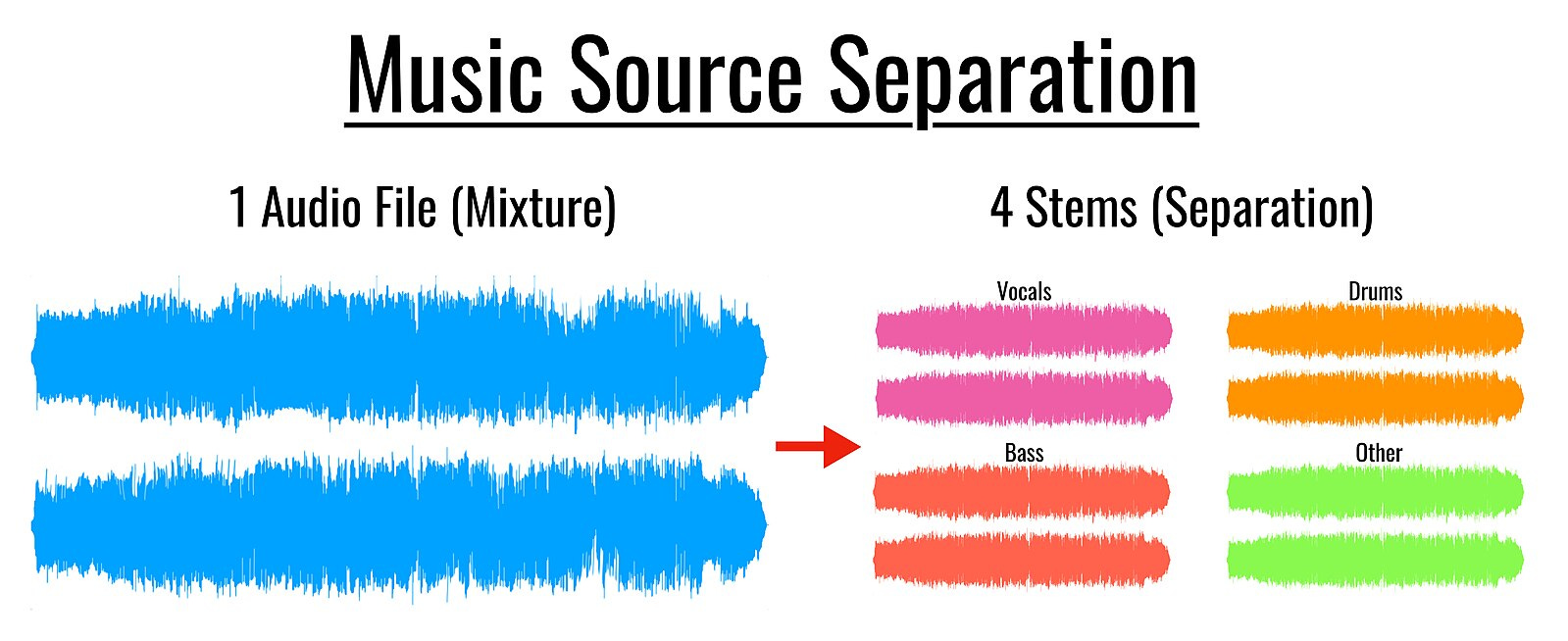
If I am such a downer on AI being used in the music industry in this way, then am I excited by any AI-based technologies? Of course. When I last wroteon this topic, I highlighted a few exciting tools. A year later, the most exciting use case remains stem separation.
On the Joys of Separation
One of the earliest known compositions of country legend Hank Williams is “I’m Not Coming Home Anymore,” a sad tale of lost love that sounds as complete as some of his more mature classics. The problem is that you can’t really hear it. Williams’ beautiful melody barely peaks through an avalanche of static. If only we could pull The Hillbilly Shakespeare’s voice out of that static.
Because of AI, we kind of can.
AI technologies have proven very adept at taking a mixed audio file and separating out all of the instruments. In the Hank Williams case, stem splitting technologies from LALAL.AI, Deezer, Serato, and a bunch of others could almost certainly get a clean cut of Williams’ vocal separated from the static and acoustic guitar.
We have already seen this technology used to great effect. In 2023, The Beatles released “Now and Then,” often noted as their “final song.” This was created from a low-quality home recording that John Lennon had made decades before. The Beatles’ team lifted a clean vocal from the recording using AI-powered technology. The living Beatles then completed Lennon’s demo.
This technology will become ubiquitous in the coming years. Not only will it allow us to preserve the past pristinely, but it will also make it easier than ever before for artists to remix, remaster, and reimagine other musical works.
As you can tell, I am much more excited by this musical technology than the technology that just allows us to generate songs for artists like Xania Monet. This new stem separation technology uses AI to solve a very hard problem. What Suno, Udio, and other generative products do is cool, but I don’t think it fundamentally alters the music-making process.
So what do you think? Are you all in, or are you on Team No F’in Way? In your view, are there acceptable carveouts? If so, what are they? I’d love to hear your thoughts!
Thanks again to Chris for his time, and thank you for being here.
Good morning! Need an antidote for the algorithms? Looking for a place to share the music you love with like-minded people? You’re in the right spot.
As always, thank you to those who upgraded their subscriptions over the last several days. Your direct support fuels this community and makes a positive impact. Shares and reposts also help!
When you’re ready, joining them is easy. Just click here:
For those of you who are new, we kick off every week by sharing what we’ve been playing.
The playlist below is some of what I’ve had in heavy rotation. This week, we’re starting by heading back in time (and just a little bit south of here) to Rockford Illinois, for a dose of Cheap Trick. Are they Power Pop? Maybe. Do they rock? No doubt. From there we’ve got a deeper cut from JAMC, and a brand new one from
It’s Spooky Szn, so Side 2 kicks off with a trifecta of Fever Ray’s “Shiver,” Water From Your Eyes’ “Nights In Armor,” and something from LA Witch, before ending with fresh tracks from Massage, Joel Cusumano, and Petrov, the Hero.
Broken record alert: I know I’ve said it for several weeks now, but it’s true: 2025 might be is a hot mess, but not when it comes to new music.
Today we’re taking a quick look at the latest from Automatic, The Cords, and Ryan Davis and the Roadhouse Band.
Longtime readers may recall that I reviewed 100 new (to me) records last year. Because I’m a glutton for punishment love music, I’m doing it again this year. This is the latest in the series.
Good morning!
Today we’re taking a look at the latest from Automatic, The Cords, and Ryan Davis and the Roadhouse Band
The boilerplate intro: Every year, I celebrate all the great music we’ve been gifted while worrying that next year will see the other shoe drop. I first did that in December 2020 and have been proven wrong every month since. Not only are there a ton of releases steadily coming out, but it also transcends genre or any other artificial guardrail we try to put up.
In other words, a ton of good stuff is coming out, and there’s something for everyone. It’s almost overwhelming— but in all the best ways. Below are another trio that caught my attention recently.
Let’s get into it!
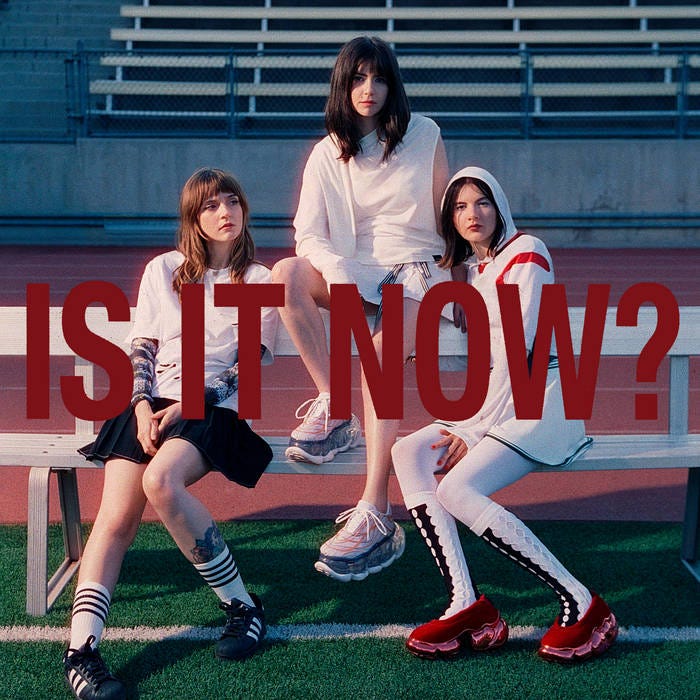
Automatic- Is It Now?
Cover art courtesy of Stones Throw Records
When we last heard from Los Angeles’ Automatic, they had us looking toward the stars. On this latest release, they’re looking at the world collapsing around them.
Is It Now? finds the trio deepening their sound while sharpening their focus. Formed nine years ago, the band has this time teamed with producer Loren Humphrey (Arctic Monkeys, et al.), who brings a lean precision to their already taut mix of minimalist grooves and pop-forward melodies.
When I wrote about Excess, I asked readers to “close your eyes and imagine Devo as a dance band—or a collaboration between the Go-Go’s and Wire—and you have Automatic.” That description still holds, but Is It Now? pushes further into darker territory. The group uses those perky, tightly wound rhythms as a vehicle to deliver commentary on automated warfare, mindless consumerism, and the political machinery of oil and power.
The grooves remain effortlessly cool, but the themes cut waaay deeper.
Of the single “Black Box,” Izzy Glaudini says, “The title ‘Black Box’ refers to the black box in a crashed plane. The repetitive synth is supposed to suggest a plane gliding as it crashes/ an alarm distress call. I was listening to the Leonard Cohen album The Future a lot around the time the lyrics were written. It’s a pretty straightforward critique of people that have sold out on a large scale, specifically within creative industries. Thierry Mugler said, “art used to tell money what to do, now money tells art what to do” and the world is a less interesting place because of it.”
Okay, then!
Elsewhere, the woozy synths on “Mercury” are fantastic—coming in and out of focus, staying just long enough for you to find their rhythm before disappearing again. Those fragmented textures leave you slightly off balance in the best way.
“Lazy” is a chilled-out groove that I played three times in a row, trying to place its reference point before landing on Altered Images. I’m curious to hear if you hear it, too. And I’ll tell you this: “Country Song” doesn’t refer to the genre.
Last time around, I said the band had a bass sound that felt like it “came from the same finishing school as Peter Hook.” I meant that as high praise, and I’ll happily repeat it here, doubly so on the title track. The song is the album’s centerpiece—icy, chaotic, and alive all at once. It sounds like Movement-era New Order at their most up-tempo, and it absolutely hits.
Is It Now? is a record that makes you think as much as it makes you move. The beats are irresistible, the message impossible to ignore. Unlike Excess, this isn’t about escapism—it’s about working your way through the current moment, heavy as it may be. Luckily, Automatic know how to turn reflection into rhythm.
Good morning! Need an antidote for the algorithms? Looking for a place to share the music you love with like-minded people? You’re in the right spot.
As always, thank you to those who upgraded their subscriptions this past week. Your direct support fuels this community and makes a positive impact. Shares and reposts also help! Thank you!
When you’re ready, joining them is easy. Just click here:
For those of you who are new, we kick off every week by sharing what we’ve been playing.
The playlist below is some of what I’ve had in heavy rotation. This week, we’re starting by heading to Portland (the best city on Earth, in my extremely biased opinion) for a taste of “America’s best Krautrock band.” From there, it’s off to Nashville and some very-much-not-country music from palm Ghosts. The first three wrap up with the latest from Coast City Bus.
Side 2 kicks off with a little bit from The Church’s Starfish album, a brand new one from This House is Creaking, and a 1-2 combo of Dummy and Immersion. From there we wind things out with a lesser known SY track, a gem from Pąșśìóň Pïț and a jolt of jangle pop from The Radio Dept.
Broken record alert: I know I’ve said it for several weeks now, but it’s true: 2025 might be is a hot mess, but not when it comes to new music.










Leave a Reply