Good morning! Need an antidote for the algorithms? Looking for a place to share the music you love with like-minded people? You’re in the right spot.
As always, thank you to those who upgraded their subscriptions this past week. Your direct support fuels this community and makes a positive impact. Shares and reposts also help! Thank you!
When you’re ready, joining them is easy. Just click here:
For those of you who are new, we kick off every week by sharing what we’ve been playing.
The playlist below is some of what I’ve had in heavy rotation. This week, we’re starting with one from Former Champ and the latest from Chicago’s Ratboys, before heading down to Louisville for the new single from Second Story Man, a band a reviewer once asked readers to think of as a “female-fronted Jawbreaker.” ICYMI, Natalie Weiner recently wrote a great piece on Amanda Shires for Texas Monthly. Tsar’s 1998 demos are finally (!) seeing the light of day and sound fantastic.
Side 2 kicks off with some Immersion. If you’ve been here a little while, you know what a fanboy I am of Wire and frontman Colin Newman’s solo work. Immersion is the work of he and his partner Malka Spigel. Look for a review of the record soon. There is also a (relatively) deep cut from Depeche Mode, and a little something from Total Wife, before coming back to Chicago and ending with a (definitely) deep cut from Urge Overkill.
I know I’ve said it for several weeks now, but it’s true: 2025 might be is a hot mess, but not when it comes to new music.
Good morning! Need an antidote for the algorithms? Looking for a place to share the music you love with like-minded people? You’re in the right spot.
As always, thank you to those who upgraded their subscriptions this past week. Your direct support fuels this community and makes a positive impact. Shares and reposts also help! Thank you!
When you’re ready, joining them is easy. Just click here:
For those of you who are new, we kick off every week by sharing what we’ve been playing.
The playlist below is some of what I’ve had in heavy rotation. This week, the pendulum again swings and it’s back to old faves and comfort sounds, with a few fresh tracks mixed in. We start with all-timers The dBs before launching into Home Front and Redd Kross
Side two kicks off with something from John Cale and ends with the Waterboys. Along the way, we stop in Motown, LA, and whatever universe gifted us Brothertiger.
I know I keep saying it, but it’s true: 2025 might be a hot mess, but not when it comes to new music.
The flood of great records continues! Today we’re taking a quick look at the latest from Ivy, Dar Williams, Lail Arad, and more!
Longtime readers may recall that I reviewed 100 new (to me) records last year. Because I’m a glutton for punishment love music, I’m doing it again this year. This is the latest in the series.
Good morning!
Today we’re taking a look at the latest from Ivy, Dar Williams, Maia Sharp, and more!
The boilerplate intro:
Every year, I celebrate all the great music we’ve been gifted while worrying that next year will see the other shoe drop. I first did that in December 2020 and have been proven wrong every month since. Not only are there a ton of releases steadily coming out, but it also transcends genre or any other artificial guardrail we try and put up—
In other words, a ton of good stuff is coming out, and there’s something for everyone. It’s almost overwhelming— but in all the best ways. Below is another batch that caught my attention recently.
A lot of recent releases landed on my radar all at once, and I want to shine a light on them before too much more time passes. Not quite an 88 lines about 44 records kind of deal, but close. More of a clearing the decks, if you will.
Let’s get into it!
Ivy- Traces of You
Here are reunions, there are comebacks, and then there’s whatever Ivy just did.
Five years after losing creative engine Adam Schlesinger, and seemingly out of nowhere, Ivy is back with Traces of You.
The last time we heard new material from them was All Hours, a synth-forward pivot that left many fans blinking in confusion. Traces of You, by contrast, feels like Ivy returning to the house they built in the late ’90s and early 2000s.
What’s remarkable—at least to me—is that Schlesinger is everywhere. The band stitched his work back into the mix using fragments and demos tracked between 1995 and 2012. The result isn’t eerie or gimmicky. I’ve always disliked things like hologram performances, and wondered if this might feel similar. It doesn’t. Whatever they’ve done feels organic—authentic, not synthetic.
Dominique Durand still sounds like she’s whispering secrets from the other side of the door, while Andy Chase and longtime collaborator Bruce Driscoll know exactly how to frame that haze and shimmer.
Traces of You fits seamlessly into Ivy’s golden-era lineage. “The Midnight Hour” and “Say You Will” could easily sit on In the Clear, all velvet melancholy and zero wasted motion. “Heartbreak” flirts with bossa nova. “Lose It All” luxuriates in its own pace. And “Hate That It’s True” might be the most emotionally direct song they’ve ever recorded.
This record didn’t have to exist. No one expected it, and maybe that’s why it lands so powerfully. Traces of You feels like a gift, and it’s easily among their finest work. It’s a dreamy, deliberate, impossibly cool farewell…or perhaps just another pause. Either way, we’re lucky to have it.
Dar Williams-Hummingbird Highway
Though known for folk music, Williams knows her way around other genres. On her 13th release, she wastes no time doing just that. Put Coins On His Eyes is classic bluegrass. Tu Sais Le Printemps is a fun bit of bossa nova that will transport you to 1960s Paris, which makes for, as Williams puts it, “a light, flirty song amidst many gloomy news stories.” I’d submit that it’s just the sort of thing we can use right now.
The Way I Go is an uptempo track that will remind listeners of early Mary Chapin Carpenter work. I Want To See the Bright Lights Tonight is an excellent take on the Richard Thompson classic, kicking everything up just enough to get you moving. Maryland, Maryland is both a love letter to her home state and a call to action.
The styles are disparate, yet matched by Williams’ knack for crafting intricate narratives with rich storytelling that give you plenty to contemplate without weighing you down. Like any recipe, adding the wrong ingredient or the wrong amount can end in disaster. On Hummingbird Highway, all of these elements blend together to make a cohesive, compelling whole.
As Williams notes, “As I’ve gotten older, I feel more comfortable holding a lot of different threads in my hand to create more complicated patterns. Time has given me a better ability to hold a bunch of colors and temperaments and see what happens, where they become interesting new stories and also where I need to stop and untangle the themes and characters. It’s daunting, and I’ve learned that, you know, daunting is fine, just keep going.” Amen.
Maia Sharp- Tomboy
Maia Sharp has always written with a steady hand—and written tracks for plenty of others. Tomboy, her newest record, sharpens that instinct into something leaner, tougher, and oddly freer. Sharp shows her cards with the title: this album is about stance, and owning space you might have been told not to take up.
The production is stripped down here. Guitars cut nice, clean lines, and the drums are in the backseat. There are some horns, but they, too, are in a supporting role. Sharp’s warm, husky voice carries the weight. There’s a steadiness to it, a real old soul vibe.
She’s not going it alone, though; plenty of people are along for the ride, including Terri Clark, who joins her on “Asking for a Friend,” one of the highlights on the record.
What stands out is how unforced these songs feel. You don’t get the sense of Sharp chasing relevance, clicks, or bending toward trends. Instead, Tomboy is fueled by direct melodies, emotions, and stakes. The writing is as tight as ever, less about clever turns and more about saying what matters.
It’s the kind of album that sneaks up on you (or did for me, anyway). One listen sets the mood; give it a couple of listens, and things start to pop out at you.
In the end, Tomboy is Sharp playing to her strengths.
Also awesome:
JF Robitaille & Lail Arad- Wild Moves:
One of the coolest things Substack used to do was host workshops for writers. These meet & greets were not only informative—you always came away having learned something—but also genuinely fun. Part of the charm was the surprise; you never knew who you’d be paired with. At one of these sessions, I was lucky enough to be put in a cohort with
Lail Arad. She’s been making fantastic music for a long time, as has her partner Robitaille. Now, with Wild Moves, they’ve joined forces, and the result is a delight from start to finish. The record opens with Swim Toward Your Troubles, a track whose infectious refrain will have you singing along in no time. It only gets better from there.
Bleary Eyed- Easy:
You want some shoegaze? You got it! On their latest record, Philly’s Bleary Eyed bring it all; sludgy guitar, ethereal vocals, and just enough pop to keep you coming back for more. Somewhere Kevin Shields is looking on and smiling. (Huge shoutout to
Good news for twee pop fans! Tullycraft is back with Shoot the Point, their first release since 2019’s The Railway Prince Hotel. This is a newer band for me, and if I’m honest, my capacity for twee is negligible. But in a case like this, it’s easy to get swept away on a wave of infectious hooks, back-and-forth vocals between Sean Tollefson and Jenny Mears, and tambourines… so many tambourines. A seriously enjoyable record from a band that doesn’t take itself too seriously.
Also: I’m callin’ it now: “Jeanine’s Up Again and Blaring Faith by The Cure” is the wildest song title that’ll grace this page in 2025.
As always, I’d love to hear your thoughts on these records! Did I get it right, or am I way off the mark?
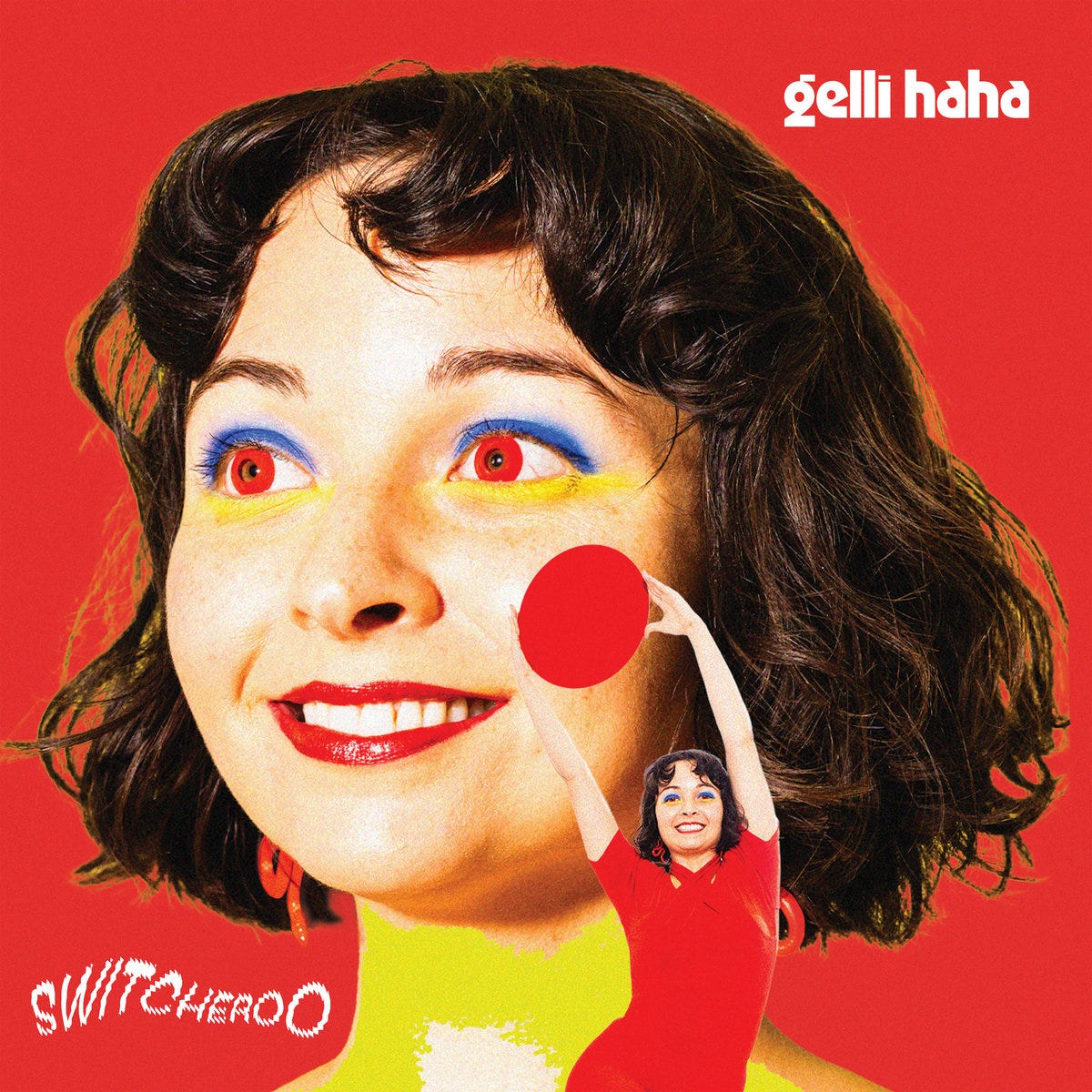
We’re in for a treat today; Gelli Haha stops by to talk about her latest record Switcheroo, how it came to be, and what’s coming next.
There’s a particular kind of pop record that doesn’t wait to be invited in—it knocks down your door and dares you to keep up. Switcheroo, the debut LP from Gelli Haha (aka Angel Abaya), doesn’t waste time being performatively cool. It’s too busy being genius. Equal parts sugar rush, fever dream, and circus act, this kind of album turns overthinking into a punchline and escapism into high art.
Gelli Haha (pronounced “jelly”) has built a chaotic wonderland, aka the “Gelliverse,” where the synths are steady, beats alternate between hiccup-y and booming, and every note feels hand-drawn in crayon and glitter glue (and slightly outside the lines). Imagine your favorite dream pop band grabbing a copy of The B-52s’ Whammy! on the way to the launch pad, taking off, and crash-landing in an electroclash warehouse party in the coolest part of the galaxy.
That said, Switcheroo isn’t just wacky for wackiness’ sake. There’s a wry intelligence to it all, a real structure hiding beneath the glitz. Tracks like “Tiramisu” make you laugh…and then realize you’ve been singing along. “Spit” will remind you of all those hot, sweaty nights at the club back in the day. “Bounce House” is purpose-built for the pop charts. Seriously, why is this not climbing the Hot 100 already?! Even the deliberately juvenile “Piss Artist” glows with confidence and (per Bandcamp) revels in tequila-fueled storytelling about an infamous party moment (involving a jar — don’t ask, just dance). Fair enough! Another artist might’ve buried it as a skit. Gelli Haha put it right in the middle of the album. Meanwhile, tracks like “Dynamite” chug along at just the right pace/BPM.
The record saves the best for last. “Pluto is not a planet; it’s a restaurant” (this writer’s favorite track on the record) takes all of the above and puts it in a blender, pouring out grandiose synths, pulsing beats, and a cathedral sound that will make you feel like you’re floating untethered in space.
Maybe it’s just me, but here’s something liberating about how this album refuses to care what you think. It’s not just theatrical—it’s maximalist identity performance with zero fucks given apologies. Gelli Haha isn’t aiming for relatability; she’s too busy being a pop gremlin, and tbh, that rules. The whole project feels like a rejection of our (collective) obsession with being “real,” that’s often ripping through the usual music discourse channels. Instead, she turns her persona into a playground—and lets you run wild with it.
Switcheroo is weird, hilarious, and absolutely unhinged—and it might be the most fun I’ve had with a record all year. Listening makes joy feel like a radical act- a rare treat in the current era. Once you’re in the Gelliverse, you may never want to leave. I certainly don’t.
I recently had a chance to chat with her via email. In our wide-ranging discussion, we talked about how the concept for Switcheroo came to pass, what she hopes listeners will take away from it, and what’s coming next. Our chat has only been lightly edited for grammar and flow.
KA—
For those that might not know, can you walk us through the backstory of how this project came together?
Gelli Haha is a project born out of curiosity. I wanted to create something that was fun and moved people physically and emotionally—fun music to dance to, something mystical and enchanting, and silly. A couple of years ago, I started working with Sean Guerin of De Lux, wrote dozens of demos, and then created a live performance art world to accompany the project.
On Bandcamp, a supporter described the records as “…like Kate Bush meets Suburban Lawns, and it is pretty good!” Is that an accurate take?
It’s subjective, but I like those artists. Kate Bush was a top influence for the project. I’ve not listened to Suburban Lawns much, though. There’s more of an experimental, electronic flavor to the record as well that goes beyond these artists.
Switcheroo has been described as an “exercise in letting go, an inside joke turned theatrical spectacle.” Say more please.
In order to make the record, I had to let go of some old tendencies of mine. I can be a bit of a perfectionist and want people to take me seriously. This record sounds very free because I had to become very free to make it. We wanted the project to feel like something everyone is in on, like the audience is involved somehow. And it’s all just really goofy. When we perform, we have mini trampolines and dolphin balloons and boxing matches and snakes in a can.
Listening to the record, I can hear everything from Italodisco to the B-52s and back again. Are there any artists who had a particular influence on the sound here?
I’m a big fan of Björk, Animal Collective, of Montreal…and lots of obscure late 70s/early 80s records that Sean showed me. But I also grew up listening to pop radio and MTV, going to musicals, and being in a choir and orchestra, so there’s a lot of influence coming from everywhere.
What’s the songwriting process look like? What generally comes first, the music/beats or the lyrics?
I made about 45 demos, each a minute or so long. Sean and I picked which ones we liked the most and expanded upon them together. Vocals and lyrics followed suit. Sometimes, they came quickly, and other times, we had to search a little bit.
If you had to narrow it down, what’s one thing you hope someone will get out of listening to Switcheroo?
A laugh.
What’s next? Any shows? Touring? What’s the back half of 2025 look like?
We have some fun things in the works for later this year to be announced!
Last one, just for fun; I bump into you as you’re walking out of the record store. What records are you carrying?
Tom Tom Club by Tom Tom Club, Philharmony by Haruomi Hosono, and Oops!…I Did It Again by Britney Spears.
Listen:
Gelli Haha | Switcheroo (2025)
Click the record to listen on the platform of your choice.
Good morning and Happy Labor Day to those of you reading in the U.S.!
Need an antidote for the algorithms? Looking for a place to share the music you love with like-minded people? You’re in the right spot.
As always, thank you to those who upgraded their subscriptions this past week. Your direct support fuels this community and makes a positive impact. Shares and reposts also help! Thank you!
When you’re ready, joining them is easy. Just click here:
For those of you who are new, we kick off every week by sharing what we’ve been playing.
The playlist below is some of what I’ve had in heavy rotation. This week has again been more of a balance between new tracks and old faves, with a local favorite thrown in for good measure.
2025 might be a hot mess, but not where new music is concerned.
The flood of great records continues! Today we’re taking a quick look at the latest from Superchunk, The Cavernous, and Case Oats (and more!)
Longtime readers may recall that I reviewed 100 new (to me) records last year. Because I’m a glutton for punishment love music, I’m doing it again this year. This is the latest in the series.
Good morning!
Today we’re taking a look at the latest from Superchunk, The Cavernous, Case Oats, and more!
Every year, I celebrate all the great music we’ve been gifted while worrying that next year will see the other shoe drop. I first did that in December 2020 and have been proven wrong every month since. Not only are there a ton of releases steadily coming out, but it also transcends genre or any other artificial guardrail we try and put up—
In other words, a ton of good stuff is coming out, and there’s something for everyone. It’s almost overwhelming— but in all the best ways. Below is another batch that caught my attention recently.
A lot of recent releases landed on my radar all at once, and I want to shine a light on them before too much more time passes. Not quite an 88 lines about 44 records kind of deal, but close. More of a clearing the decks, if you will.
Let’s get into it!
Superchunk – Sounds From the Key of Yikes
When I was a teenager, I was a holy terror behind the wheel. It was hammer down all the time from a kid who could barely see over the steering wheel. Tracks like Superchunk’s “Precision Auto” were the perfect soundtrack. Mac McCaughan had some shit to get off his chest, and I was there for it. Albums like ’93’s On the Mouth were the perfect record for where I was at the time.
Flash forward to 2025: I drive a wagon, and while I’m not quite at the stage where I call out every sign I pass, it’s close. Not being able to see very well doesn’t help.
Mac McCaughan, on the other hand, sees things perfectly. As he’s racked up the miles—er, years—his writing (and the band’s sound) has taken on a much more reflective tone. He’s still railing against a lot of the issues of the day, but there’s more perspective—the kind that can only be earned by the years (see also: Mould, Bob).
Talking about 2022’sWild Loneliness, I noted that “Wild Loneliness finds the band in a more contemplative place. Lead singer Mac McCaughan isn’t railing so much as he’s reflecting.”
On this release, he’s somewhere in the middle.
With Jon Wurster having left and Laura Ballance no longer touring with the band, Superchunk have a real Ship of Theseus thing starting to happen. Yes, I know Ballance still plays on the records themselves, but still.
Fear not; the tone has softened, but only a little, and the band continues the trajectory started with 2018’s What a Time to Be Alive. It’s overtly political, but not annoyingly so, and when things are couched in power-pop goodness, the medicine goes down easy.
Opener “Is It Making You Feel Something” starts the record off strong with all the fizzy pop and chunky power chords we’ve come to expect. Say what you will, but for my money, guitarist Jim Wilbur is this band’s secret sauce.
“Bruised Lung” keeps things moving right along, and so do the next couple of tracks. McCaughan is optimistic, but there’s lament creeping in—almost like he’s forcing a smile as resistance. Our generation is quite good at performative nonchalance, and when he sings:
I’m trying to care less I’m trying to care less Don’t make me remember What I can’t forget I’m trying to care less, yeah
I’m not sure if he’s being serious or sardonic. Is this a political rant about the current state of play, or an updated version of Driveway to Driveway?
If you like mid-discography Superchunk, you’ll find plenty here to dig. What you see is what you get; no one’s trying to make a concept record. If you’re all in on the early stuff, you might find the edges a little too sanded off, but odds are good you’ve thought that for a while now. It’s easy to get consumed by (waves hands all around), and while fully checking out isn’t an option, trying to care less is sage advice.
I don’t know that anyone will claim this as their new favorite record by the band, but it’s got a lot of what’s helped them make it to elder statesman status, and with just the right blend of angry and sanguine, it’s the right record for right now. (Bandcamp link)
Case Oats- Last Missouri Exit
I have this daydream that I’ll retire early from my job, hit the Midwest backroads, and restart my quest for the four calendar cafe. I did this a lot in my early 20s, coming close a couple of times, but never hit the jackpot. This time around, I’d find it- just as imagined; a clean, well-lit place, populated with locals sitting in the same spots their families have for generations. Where everyone knows your name (except for me, obvs), and the coffee is strong enough to stand a spoon up in. The menus are one-sided single laminate sheets, and the aroma of the freshly baked pie is seared into the slightly cracked vinyl booths. You can see over the diner counter back into the kitchen where a radio is perched up on a shelf (antenna pointed just so), and you’ll hear something like Case Oats’ “In a Bungalow” coming through the tinny speakers. It will be exactly what I’ve been looking for, and it will be fantastic.
I never really know what I’m looking for when it comes to alt-country or Americana. As both a fan ofsad dad bands and a music writer, saying I’m mostly looking for a vibe might not be the best approach, but that’s what happens. Albums in this lane either have that vibe (see above) or they don’t. Last Missouri Exit checks all the boxes. Casey Walker’s plaintive vocals feel authentic in a way that’s becoming increasingly rare. When she’s singing about life and lives lived, you feel it. Supporting her is a lot of talent, including Spencer Tweedy. It takes a lot of work to sound this unpolished, but they make light work of it.
Last Missouri Exit doesn’t stray too far from the plan here. Like those one-page menus, the tracks are simple and to the point (not derogatory). No one will describe this album as pushing boundaries—and it never tries to. This is a record that feels as lived-in as those booths. And it, too, is fantastic. (Bandcamp link)
The Cavernous – Please Hold
The (literal) pitch: It’s a lo-fi, trip-hop–leaning album accessible only by calling a North American toll-free number. The record blends ambient textures, eerie downtempo, and cryptic operator messages into something equal parts surreal and existential. Lead single “Guile” is streaming now.
Okay, so the idea that you would need to call a 1-800 number to hear a record seemed too clever by half… but also really intriguing. Sort of like taking Cindy Lee’s Geocities–only release to the next level.
In an era of hours-long hold times, sadistic phone trees, and AI chatbots, the idea of willfully calling a line to literally listen to a treatise on hold times seems like an incredible self-own. And it would be… except for one thing: the record is really good. Not even sure I can call it a record, but whatever it is, it kept me fully engaged. The lo-fi beats and loops felt comforting, like I was finally being let in on a joke, only to then be jolted back to reality by the “just a little too loud” spoken word updates that are on all the routine calls we suffer through. I have to assume those are there to ensure we don’t fall asleep, right?
There are downtempo beats and washed-out synths for days. Even the sounds like Microsoft’s hold music, which usually make me reflexively angry, only made me chuckle here.
“It started as a joke about hold music,” says frontman Rob McLaren. “Then it became a meditation on death.”
I’m not sure I can describe it any better than that. Want to experience it for yourself? Call 1-877-420-9159. It might be the only time you’ll be happy to be “on hold” for 45 minutes.
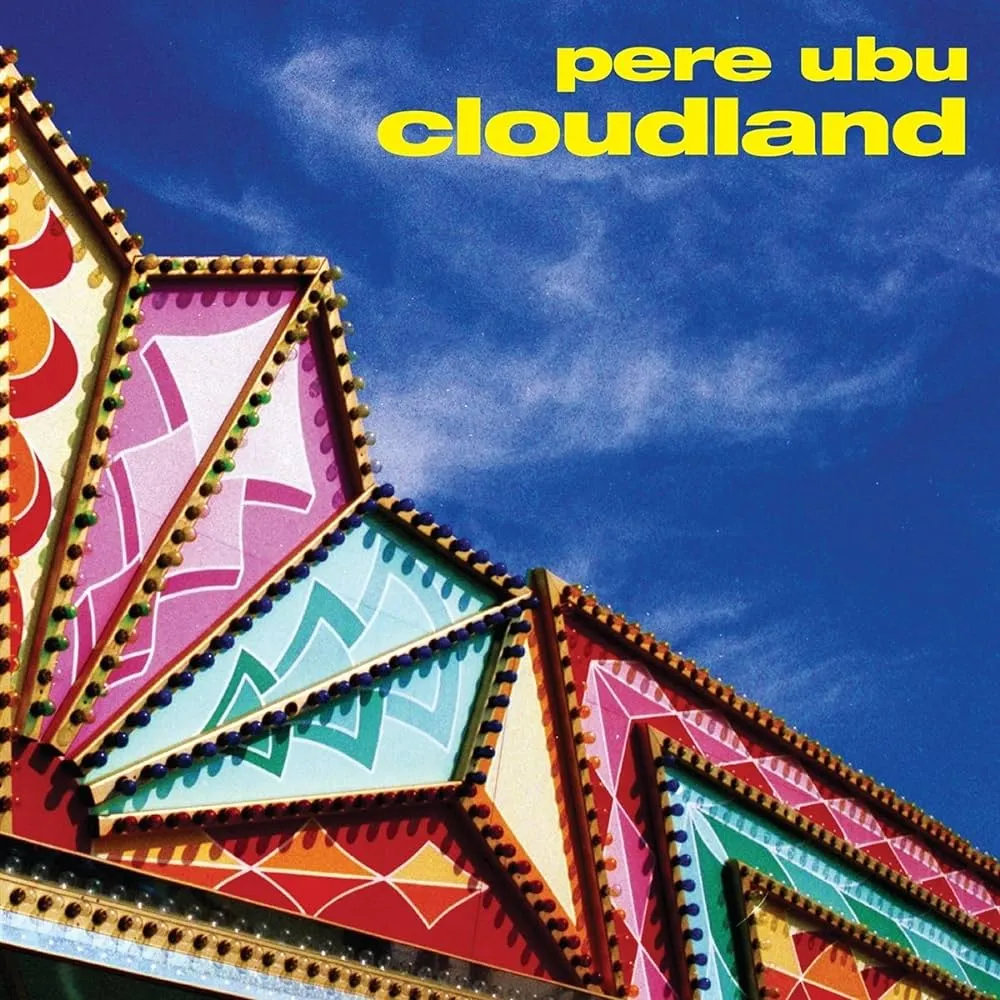
From the archive: A quick look at Pere Ubu’s groundbreaking Cloudland album.
Good Morning!
Today as Round 1 of the Best Record of 1989 tourney wraps up, we’re taking a quick look at Pere Ubu’s Cloudland. This was originally published in May of last year to mark the record turning 35.
Most record collectors have a holy grail: the one record they hope to find above all others. For years, mine was Pere Ubu’s 1989 album, Cloudland.
I’d first found the record not too long after it came out. In the late 80s, CDs were still a novelty, but someone at our city library decided to go “all in” on them (thank you, whoever you are). It was delightfully eclectic as a place trying to be something for everyone. You truly never knew what you might find and rarely came out with exactly what you’d gone in looking for.
They’d put a lot of effort into procuring them but not nearly as much into keeping them organized, settling instead for a brittle system of roughly sorting by genre and hoping for the best. It was all a wonderful mess purpose-built for happy accidents.
One of those collisions was my onramp to the band.
📻📻📻
I would ride my bike there (Haro freestyle, thankyouverymuch) and spend hours flipping through the titles, picking not just names I knew but ones that looked, well, interesting. I’m sure there was an official limit on how many titles you could have checked out at once, but I usually defaulted to about 7-8, as that’s how many could fit in those heavy-duty plastic bags they gave you.
It was always easy to check this CD out. As much as I’d like to frame myself as some sort of tastemaker or just ahead of my time, the reality was that word traveled slowly from Cleveland. And the people who may have known them from work like “30 Seconds Over Tokyo” or their Dub Housing record were probably not hanging out in suburban Portland libraries.
This record has proven hard to find in subsequent years for a bunch of reasons. If I’m honest, had I known how many years I’d ultimately spend looking for this record, I might’ve just kept it, said I lost it and paid the fine. Nevertheless…
📻📻📻
It’s reductive to call the band avant-garde, but the band has done more to define the genre than most. Their sound combined elements of kraut rock, art, flurries of guitar, and frontman Dave Thomas’ odd yelps and yowls. Thomas’s vocals also ricochet between spoken word, a warbling, and actual singing, and the result is a mix of what we recognize as the structure of normal songs and wild sonic field trips. Along the way, Pere Ubu has created a sound that is often dissonant but always original.
You don’t listen to a Pere Ubu record; you experience it.
In 1987, after a several-year hiatus, the band reformed with what would be one of a bazillion lineup iterations and released The Tenement Year—a record with one foot firmly in the traditional realm of the band’s anarchic sound and the other edging toward a more palatable—if not quite radio-friendly—world.
If The Tenement Year represented dipping a toe into the world of Pop, Cloudland was a cannonball into the deep end of the pool. Stephen Hague (Pet Shop Boys, New Order, among others) was behind the boards and took everything the band had done to that point and proudly ignored it. Gone were the usual weapons-grade chaos, tangents, and noise. Instead, he helped corral the band’s usual wanderings into something much more cohesive and melodious. Experimentation was out, and flirting with formulas was in.
In other words, Hague helped Pere Ubu make something no one saw coming—a bona fide pop record.
📻📻📻
There are plenty of high water marks here. Through any other lens, “Race the Sun” and “Ice Cream Truck” would be boilerplate tracks, but Pere Ubu is nothing if not subversive, and the band puts their own odd magical touch on them almost in spite of themselves.
“Waiting For Mary” is the closest they’ve come yet to a hit, cracking the Modern Rock Tracks top 10. “Bus Called Happiness” is arguably the most pop song the band has ever—or will ever—create. It’s also this writer’s favorite and drove much of the multi-year quest to hunt this record down.
That’s not to say Hague finished the job. If Side A is as radio-friendly as it gets (certainly college radio, anyway), Side B assures fans that not all has been forgotten. There are plenty of odd loops and experimentation here on tracks like “Nevada” and “Monday Night,” maintaining a line to the rest of the band’s catalog.
📻📻📻
I wasn’t looking for Cloudland when I walked into my local record shop a couple of years ago—in fact, I rarely know what I’m looking for when I go in. And even when I do, I usually either toss that list, come up with something totally different, or both.
But the universe has a funny way of gifting you things when you least expect them. In much the same accidental way I came across their CD all those many years ago, I came across a vinyl copy, misfiled under the wrong letter.
Again, Pere Ubu can be an acquired taste. A friend and I saw them open for Pixies not too long after this came out. Going in, I’d bet we were 2 of only a handful of people eager to see them. Post-show, I doubt that number went up much. Their records can be hard to find, and even if/when you do, they are often inaccessible and occasionally unlistenable. The release was out of print forever, and a reissue appears to be missing a couple of tracks—even trying to find listening links for this article has proven to be a challenge.
But when they’re on, they’re on, and with Cloudland, Pere Ubu made a masterpiece.
📻📻📻
What are your thoughts on this record? Do you have any favorite tracks or memories associated with it? Where does it land on your list of Pere Ubu albums? Share your thoughts in the comments!
Thanks for being here,
Kevin—
Some light housekeeping:
Save the date! The date for this month’s Album of the Month Discussion will be on Sunday, the 24th, at 4 PM Eastern. This month’s discussion will be led by Vancouver-based Jessica Lee McMillan, whose previous presentation on Stereolab’s Dots and Loops was one for the ages. This time around, we’ll discuss Special Beat Service by The English Beat. These are always fun, but will be better with you there! Meeting Details:When: Sunday 24 Aug 2025 ⋅ 4pm — 6pm EST Zoom Meeting Link:. https://presby-edu.zoom.us/j/85339128617?pwd=MDfb510FCFXCayaFPNtatnLiUdEsey.1&jst=2
The Best Record of 1989, Day 59: #27 Fine Young Cannibals, The Raw and the Cooked vs. #102 Godflesh, Streetcleaner
Good morning!
Today we’re taking a quick look at records from Fine Young Cannibals and Godflesh
Note: As many of you know, I recently wrote about a Best Record of 1989 challenge and noted that I’d occasionally write some of these up.
I’ve started doing some quick hits of each matchup and posting them directly to the page. Some will be longer, some won’t, and some might just be a handful of sentences. There’ll probably definitely be some typos.
Check ’em out and let me know your thoughts! Chin wags & hot takes welcome! Sharing and restacks are always appreciated.
KA—
Fine Young Cannibals, The Raw and the Cooked
Going into this review, my biggest question was, “Is it any good?” I knew the ubiquitous “She Drives Me Crazy” and “Good Thing.” I also vaguely remembered “I’m Not Satisfied” and “Baby Don’t Look Back” and vaguely recalled liking them.
My biggest question afterward was, How do you classify this record? And why had I not bothered with it all these years? Okay, that’s two questions, but both fair ones. Honestly, I have zero idea how to classify this album. There’s ska, Motown-era influence, a Buzzcocks cover, and everything in between.
FWIW, that cover was featured in the movie Something Wild, and a few other tracks were featured in other films. Even the band name was taken from a movie title.
Fine Young Cannibals — which included former members of The Beat, Andy Cox and David Steele, and vocalist Roland Gift — weren’t exactly straight out of central casting when it came to hit makers, but here we are. Steele and Cox had already cracked the chart code before with tracks like “Mirror in the Bathroom” and “Save It for Later,” but it turns out what would be their biggest hit almost didn’t happen.
The Cannibals—Roland, Andy and David—sent me songs through email for a few weeks and we decided on a list.”
One song was titled “She’s My Baby,” which David Z loved. The band, however, appeared less than enthused: “When they said it was rubbish and they wanted to throw it away, I told them I wouldn’t want to work with them unless we did that song,” Z said, “They reworked the lyrics and came up with ‘She Drives Me Crazy.’ Everyone I know could feel that way—and has.”
Lucky for us, it was released. With that sharp snare hit, a stripped-down arrangement, and Roland Gift’s now-iconic falsetto, we got the sort of right song at the right time that comes along about every 10 years or so.
The much more straightforward “Don’t Look Back” peaked at #11, while the fifth and final single, “I’m Not Satisfied,” only reached an anemic #90. Shame, really, as it deserves to be heard by a much wider audience.
This would (more or less) mark the end of the line for the band; they split up a few years later before recording a follow-up LP. But before that, we got the Raw and the Cooked- a record that is, well, a good thing (sorrynotsorry)
Don’t be me: If you haven’t checked outThe Raw and the Cooked yet, do yourself a favor and give it a listen. Albums that nail that perfect mix of art and pop, old school and new school, don’t come around too often.
Godflesh, Streetcleaner
Oh, hey, sludgy riffs and ghoulish vocals labeled as “post metal.” Fun! Man, what a letdown after listening to FYC. I hope whoever nominated this got the help they needed.
Okay, that’s maybe a bit unfair. I can appreciate the way they blend metal and industrial genres here, and they’ve done well to paint a dystopian hellscape, but this feels like something a SWAT team would play on a loop to coax a suspect out of a house. Hard pass.
My vote: Ever fallen in love with a record you hadn’t heard in a while? You can never have too much of a good thing. I’m not gonna look back when I vote for FYC.
Any thoughts on either of these records? Agree/disagree with my takes? Which one of these would you vote for? Sound off in the comments!
The Best Record of 1989: Day 52: #35 10,000 Maniacs, Blind Man’s Zoo vs. #94 Michael Penn, March
Good morning!
Today we’re taking a quick look at records from 10,000 Maniacs and Michael Penn
Note: As many of you know, I recently wrote about a Best Record of 1989 challenge and noted that I’d occasionally write some of these up.
I’ve started doing some quick hits of each matchup and posting them directly to the page. Some will be longer, some won’t, and some might just be a handful of sentences. There’ll probably definitely be some typos.
Check ’em out and let me know your thoughts! Chin wags & hot takes welcome! Sharing and restacks are always appreciated.
KA—
I’ve mentioned it before, but I’ve always associated 10,000 Maniacs’ very specific, very literate sound with universities. And not just any university, but somewhere like Dartmouth (sorry, Hurricane fans). It’s a sound that, to me, has always felt more at home on a campus with a vibrant field hockey program than on the Billboard charts.
The short version of these earlier records is this: a bit of well-styled jangle pop coupled with Natalie Merchant’s gorgeous voice and thoughtful lyrics. That’s the upshot. The downside is that these often leave you feeling like you’re being lectured to. Merchant can come across like that neighbor who’s usually pretty cool, but will also tut-tut you for not composting enough or not having one of those “In This House We Believe…” signs1. Nice enough and well-intentioned, but it can wear thin.
Cueing this up, I wondered if I’d been remembering them in too harsh a light. After all, “These Are the Days” is a song I associate with travel and adventure, thanks to reading Jeff Greenwald’s “The Size of the World.” Maybe I’d been wrong?
The opening track, “Eat For Two,” is about teen pregnancy, so well, no. But that slick, made-for-radio formula is as delicious as I remember it.
Speaking of which, this is the last record that could be classified as janlge pop, and even here, it’s a stretch in places. This is really the jumping-off point for the more refined pop style of Our Time in Eden and everything that came after.
“Trouble Me” is a fine, if unremarkable, bit of ear candy, and I’m starting to wonder (again) if I’m being too harsh on the band. Those doubts vaporize pretty quickly with “You Happy Puppet.” Musically, it’s right up my alley. It’s polished with the sort of sunny grooves I buy in bulk.
And then I make the mistake of pulling up the lyrics, and well:
How did they teach you to be just a happy puppet dancing on a string? How did you learn everything that comes along with slavish funnery? Tell me something, if the world is so insane, Is it making you sane again to let another man tug at the thread that pulls up your nodding head?
Same story with “Headstrong”…
…and “Poison in the Well”…
(sigh).
Stylistically, it is a great transitional record that does well to tie the two on either side of it together. With the benefit of hindsight, the signs are also all there that 10,000 Maniacs is increasingly becoming a Natalie Merchant backing band. Our Time In Eden would seal the deal, even if the timelines don’t match up perfectly.
A couple of songs feel like they go out of their way to be inoffensive (in the same way that same neighbor might start every criticism with something like “I feel like…”, but overall it’s not enough to sink the record. That title goes to the preachy and overbearing lyrics. Blind Man’s Zoo is a solid effort, but one best consumed in small doses.
I’ll be honest here: here’s everything I know about Michael Penn: His brother is Sean Penn (RIP Chris Penn). He’s married to Aimee Mann, and No Myth was inescapable when it came out. That’s it. He was almost a predecessor to Duncan Sheik, if you remember. All signs point to him being an artist I’d be more familiar with, but here we are.
All signs also point to him taking himself too seriously, but I don’t get that impression when I listen to the first few tracks. The ride takes us through a few folk-y ballads and a couple of up-tempo numbers. It’s all well done, but I’m not getting a particularly strong sense of FOMO here. It’s fine that I’ve waited 36(ish) years to hear this…
…and then we get to the closer, “Evenfall,” and man, talk about ending on a high note! This is a rollicking good time, with barrel piano and an ornate section that’ll have you moving in your chair. Now that’s how you close an album! Where was this in ’89?!
My vote: I have a feeling a lot of people are in the same boat as me here (10,000 Maniacs aren’t bad, have only heard the one song by Penn). I will vote mainly on name recognition and Merchant’s voice. I’m still in the bottom third of the rankings in this challenge, and the first rule of getting out of a hole is to stop digging. My bracket pick and vote will both be for Blind Man’s Zoo.
Any thoughts on either of these records? Agree/disagree with my takes? Which one of these would you vote for? Sound off in the comments!
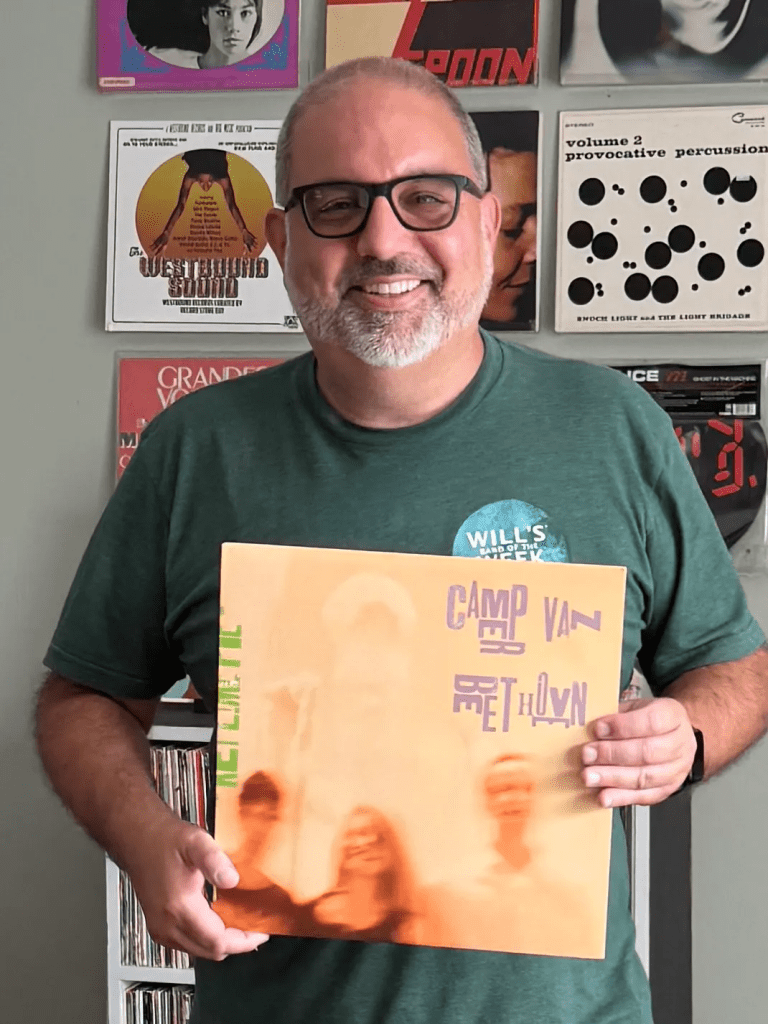
The Best Record of 1989 Day 51: #30 Camper Van Beethoven, Key Lime Pie vs. #99 Ice-T, The Iceberg/Freedom of Speech… Just Watch What You Say!
I am incredibly photogenic.
Good morning!
Today we’re taking a quick look at records from Camper Van Beethoven and Ice-T
Growing up, one of the guys on my block lived in a house with a basement. You have to understand that this was relatively unusual in Oregon. You also need to know that it had its own entry, separate from the rest of the house, which, of course, meant it was the default place for all of us to hang out.
All well and good, except that my friend also played guitar. Yeah, that guy. We all know one. Worse, he’d often play it to impress girls on the rare occasion they stopped by. This is how I first heard Camper Van Beethoven’s cover of “Pictures of Matchstick Men.” Not a strong start, but for better or worse, this was the band for me growing up.
This record was also the sound of Camper Van Beethoven growing up—not gracefully, exactly, but white-knuckling it through the end of the 80s like the rest of us. If Our Beloved Revolutionary Sweetheart was the band getting serious, Key Lime Pie is them getting mean; not in a cruel way, but with the kind of sardonic clarity that only comes after you’ve watched the Reaganomics tear apart the American Dream brick by brick.
By 1989, the band was peeling away their own layers. Jonathan Segel was gone. David Lowery had taken the wheel, and the group’s weirdness started to harden into something leaner and a bit darker. The violin remained, but now it ached. The jokes hadn’t vanished, but now, they came with shadows instead of a wink and a nudge. Irony no longer softened the blow; it was the hammer delivering it.
But that’s what makes this record the gem it is. Say what you will about this style shift, but Key Lime Pie is an honest, beautiful, and impossibly human album. The songs aren’t necessarily sad in the normal sense—they’re quietly devastating. It may take a few years and the benefit of hindsight to realize.
Listening feels like looking directly into the souls of people on edge, or even standing at the edge. It can be humbling, and it’s quite a counter to the demanding style of patriotism that was so in vogue.
Musically, Key Lime Pie is a masterclass in restraint. It’s still unmistakably them—strange little chord changes, unexpected melodic sidequests, and eerie violins—but it’s more grounded. Michael Urbano’s drumming is the most conventional thing on the whole record, giving the songs the structure they need. Pedal steel threads through tracks, especially on “Borderline” (my personal favorite) and “Sweethearts.”
And before I forget, the run from “Sweethearts” through “Borderline” is one of the strongest 4-track runs going.
The band sounds tighter, but not sanitized. They’ve ditched the genre-hopping of earlier albums and focused the chaos into something more purposeful. There’s Americana here, but it’s postmodern Americana.
Lyrically, Lowery is at his best here. There’s less snark, more ache. “Sweethearts” paints Ronald Reagan as a puppet for state-sponsored violence and capitalism, but it’s delivered with enough subtlety that you almost miss it.
“When I Win the Lottery” may be the best song ever written about bitterness as a survival strategy. It’s funny, but not ha-ha funny. It’s incredible line-level writing from the POV of someone like the guy at the end of your local bar; the one who’s seen some things.
The whole album walks the line between love and futility, beauty and decay, hope and despair—nihilism. This is a portrait of a broken America song by characters who’ve watched the American Dream collapse under its own weight.
It’s a record about America, sure. But more than that, it’s about people navigating what America does to you. People leaving, people drinking, people stuck in laundromats or backwater towns with only Swap Shop or gospel on the radio. People literally and figuratively stuck on the side of the road. Still, it’s the most empathetic album they ever made (we can use that, too). It doesn’t punch down; instead, it meets its characters where they are.
Despite my less-than-auspicious onramp to the band, this album has never really left my rotation. Very rarely do I play it and not find something new.
You can call it alt-rock, Americana (maybe), or whatever you want—it’s eclectic enough that pretty much anything will fit. But again, it’s just one of the most human records of the year. That sort of thing never goes out of style. It’s always relevant.
Gather ‘round, kids: It’s time to tell you the story of who Fin Tutuola used to be.
Shame that an entire generation only knows Ice-T from his portrayal of a cop on Law & Order. How odd it is to remember that the same guy now flashing a badge used to flout—and run afoul of—the law. This is, after all, a guy who was also almost arrested in Georgia for the high crime of swearing onstage. Such was the climate at the time. It’s all enough to catch a case of the vapors.
In 1989, Ice-T was still a rapper who put hot girls and guns on his covers. He sang songs about power, and how it started “with P like p***sy.” He swore. A lot.
Meanwhile, the Parents Music Resource Center was busy being busybodies and decided that someone should think of the children! Think Maude Flanders but with Congress’s ear. Ice-T made the perfect target. He rapped about all the things supposedly tearing this country apart, and he was popular.
Ice=T wasn’t about to give an inch, and if you were to condense a review of The Iceberg/Freedom of Speech…Just Watch What You Say down to a line or two, it’s that he made a whole-ass record doing just that. It was a baker’s dozen worth of tracks, and all of them were a raised middle finger to anyone with the audacity to decide what was best for anyone.
You can have your endless reruns of Law & Order SVU; I prefer this version of Ice-T.
My vote: Ice-T fought hard against Tipper Gore and co., but he’s no match for David Lowery. It’s Key Lime Pie all day for me.
Any thoughts on either of these records? Agree/disagree with my takes? Which one of these would you vote for? Sound off in the comments!








Leave a comment