We’ve got a great host and a killer record, all set to go. All we need now is you! Here’s how to join the fun.
Good Morning!
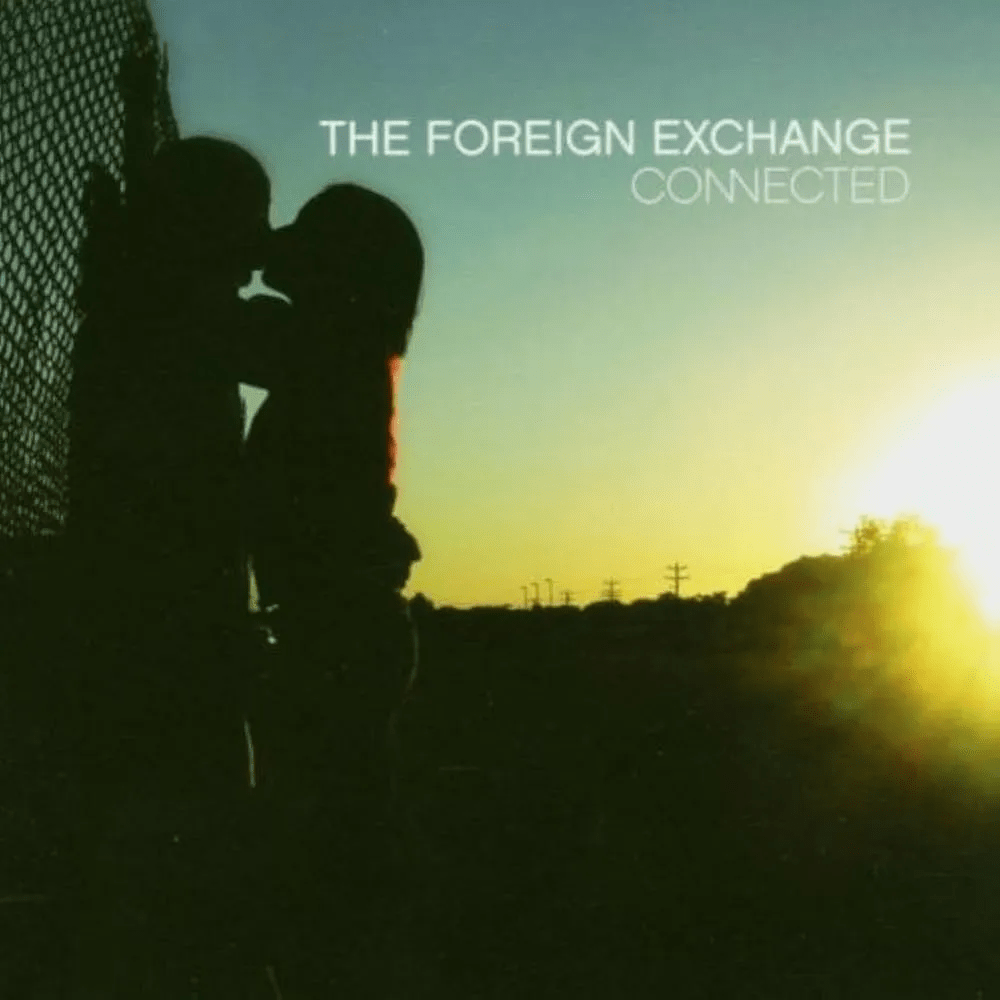
Today we’re talking about Connected by The Foreign Exchange, and how you can talk about the record with other like minded people.
Note: As some of you know, I’m one of the editors for an online music publication called The Riff. Each month, we host an album discussion (via Zoom), and this month’s is coming up this Sunday November 2nd, 4PM EST/1PM PT
Backspin Hip-Hop’s Jeffrey Harvey, this month’s host. These guys are doing the heavy lifting.
As you’ll see below, these are low-key affairs; all are welcome! If you want to share some thoughts, that’s awesome. Wanna just sit back & listen? That’s cool, too. Everything you need to know about how to join us is below.
Either way, it’d be better with you there.
Today’s guest post below comes from Harvey himself, who makes a fantastic case for why he picked this record, why it’s the right record for right now, and why you should be there Sunday to hear about it and/or share your thoughts.
KA—
My connection to October/November’s Riff Album of the Month was a culmination of sorts. Or maybe a coronation. It actually came by way of the album after this one in a catalog that offered a template for 21st Century collaboration.
But let’s rewind before we fast forward.
In 1999, producer/The Roots’ drummer ?uestLove and writer Angela Nissel founded Okayplayer as an online hub to connect progressive hip-hop artists with like-minded listeners. As was happening all over the web, a community emerged. The features, reviews, and artist interviews gave the platform its gravitas. But its lifeblood was the message boards.
The boards allowed members to connect with one another. They quickly became a place where everybody knows your username for a particular subset of teens and young adults. This was the crowd more likely to stay up until 3 AM deciphering how Dilla chopped that Rick James sample into sonic witness protection on Common’s “Dooinit” rather than arguing over which sucker MCs Com was firing at. On those message boards, they found their tribe.
Chief among the tribesmen was “Taygravy.” Behind that username lived Phonte Coleman, an aspiring MC from North Carolina who shared tracks from his group, Little Brother, on the boards. In 2002, Little Brother landed a record deal, based at least partly on the internet buzz that began on Okayplayer. When their debut album, The Listening, the following year, it was a seminal moment for the site — the message boards in particular. Though The Listening was released through a tiny indie label and struggled to find retail space on box store shelves, it felt like the moment that Okayplayer’s digital oasis became anchored in something tangible.
When Dutch producer Nicolay began corresponding with Phonte via the boards, he was connecting with a made man. Yet, in the context of the Okay-ecosystem, they were peers. Music lovers. OKPs. Young artists hustling to connect their sounds with open ears. What began as an exchange of beats and ideas between community members blossomed into something unprecedented. It ultimately foreshadowed the future of not only music but 21st-century collaboration.
From Holland, Nicolay sent files to Phonte in Durham via AOL Instant Messenger (RIP AOL). Phonte laid vocals and snail-mailed the files back to Nicolay for post-production. Momentum built, and what began as an experiment became a passion project.
Tay and Lay could have held the lightning in a bottle for themselves. Instead, they opened the bottle and invited their friends to sip. Tay’s Little Brother partner, Big Pooh, features prominently. So does their extended Carlonia-based Justus League crew. But the album also provides a platform for peers from around the U.S. (the Eastern Seaboard, anyway) to whom the duo extended the digital share space — fellow OKP Von Pea (Brooklyn), Critically Acclaimed (DC by way of NYC), Kenn Starr (DC), Oddisee (Maryland).
As a result, the album plays as a collective mission statement for a generation ascending into adulthood at a moment of jarring paradigm shifts and getting by with a whole lot of help from their friends. Want a cheat code to understanding the album’s ethos? Pay close attention to the propulsive fourth track, “Hustle, Hustle”. Here, Phonte seems not only content, but enthusiastic to slide into a supporting role. He sings the hook while Critically Acclaimed’s Quartermaine and C.A.L.I.B.E.R. set the album’s thematic table of navigating the quest for personal fulfillment in the face of mounting responsibilities.
No matter when you entered adulthood, the core themes of defining identity, priorities, and place in the world will likely resonate as a right of passage. The universality of the themes and earnestness with which they’re explored are a big part of why, even at a moment when digital technology was making our relationship to music more transient, this album stuck with its listeners.
The other component of its timelessness is Nicolay’s production. Think the meticulous sonic polish of Steely Dan paired with the enveloping warmth of The Ummah. But where Steely Dan had access to state-of-the-art studios and all-star musicians, Nicolay had a desktop computer and a mini-arsenal of keyboards in a bedroom. If Aja represents the pinnacle of analog-era studio craft, this month’s album was an early beacon of fully realized digital-age craftsmanship.
By the time I formally joined the Okayplayer team as a writer in the late 2000s, the platform had already tipped. OkayOGs like Common, Erykah Badu, and Jill Scott were firmly situated in popular culture. Okayplayer was regularly cited in mainstream media outlets, as established journalists increasingly looked to it as a harbinger of cresting sounds. The signature logo shirts were visible on the streets of major cities worldwide. The Roots would soon become Jimmy Fallon’s house band.
Yet, there was the distinct sense that us second (third?) generation writers had arrived after the true golden years — the moments when a movement was coalescing in real time.
So when I was tapped to write the top-of-fold review for The Foreign Exchange’s 2008 sophomore album, Leave It All Behind, it felt like a connection to the glory days. A link to the era when a website became a community, digital dialog sparked creative collaboration, and a proof-of-concept emerged for 21st-century connection. When my review was “blurbed” for the album’s digital banner ad, it was validation. (I would soon be blurbed for Brooklynatiby Von Pea’s group, Tanya Morgan — also formed on the message boards — locking in my Okay bonafides.)
This month, we’re going back to the genesis.
October/November’s Riff Album of the Month is Connected by The Foreign Exchange.
We’ll connect and discuss on Sunday, November 2nd at 4 PM EST, details below.
** A BRIEF LISTENING NOTE: ** The original version consists of 14 tracks, ending with “All That You Are.” Tracks 15–17 were later added as bonus cuts. Feel free to listen, but for the purposes of the discussion, the album is tracks 1–14.
With The Riff Album of the Month Club itself having evolved from digital dialog to virtual community to several in-person meet-ups, it feels like the perfect setting to discuss not only Connected, but the nature of connection in the age of digital anomie.
I hope to see all the regulars, semi-regulars, and irregulars.
For newcomers, joining the community is easy. Simply listen to the album and log into the Zoom call detailed below. You can talk as much or as little as you want and are free to say anything.
This article is not paywalled, so share it freely on social media and elsewhere.
NWA’s Straight Outta Compton vs. Inner City’s Paradise
Good morning!
Today we’re taking a look at N.W.A.’s Straight Outta Compton (#8) and Inner City’s Paradise (#121)
Note: As many of you saw, I recently wrote about a Best Record of 1989 challenge and noted that I’d be occasionally writing some of these up.
I’ve started doing some quick hits of each match up and posting them directly to the page. Some will be longer, some won’t, and some might just be a handful of sentences. There’ll probably be a few typos.
Check ’em out and let me know your thoughts! Chin wags & hot takes welcome! Sharing and restacks always appreciated.
KA—
Portland has an NBA team but no NFL or NHL teams. Most people pick one based on proximity; thus, lots of Seahawks and 49ers fans. In 1989, if you didn’t know any better, you’d think everyone was an LA Kings or Raiders fan. Those hats with their distinctive script and Starter jackets were everywhere. And it was all down to NWA. We were nowhere near South Central, but you coulda fooled me. That fashion—and this record— were inescapable.
So why was a record about the gritty life in LA so popular in suburban Portland? Good question. The easy answer is that the sound was novel, and it sounded hella good coming out of our car speakers. Looking at the record through a clinical lens, the sound was new, the flow was different from what we knew, and the beats were 10/10.
There were larger cultural forces at play, of course. There is a point where kids rebel against whatever structures are in place: school, social systems, whatever. This was also the era of white paranoia, the explosion of the prison industrial complex, and Willie Horton. Tipper Gore was peaking. Parents were freaking out, and we were here for it. A few years earlier, we’d had the satanic panic; now it was hip hop’s turn in the barrel.
On a local level, law enforcement shifted from a community policing model (the one where cops would hand out Trailblazer trading cards) to a much more militarized version. Regular uniforms were out in favor of military ones. In my part of the world, they overindexed on firepower, too. It was not unusual for them to now show up at the basketball courts with assault rifles. Again, this was suburban Portland. It was absurd, and we (rightfully) bristled against it. To have an anthem like “Fuck Tha Police” was catnip, and we all ate it up. At one point, I saw a map of Compton in someone’s locker. Like a literal paper map. I wish I were kidding.
listening to his record through a 2024 lens isn’t easy. There’s a reason every track has an “explicit” label. The N-word is used liberally. The F-word is used like a comma. It’s snarling. It’s misogynistic. It’s…all the things, and I wouldn’t dare try to excuse, rationalize, or explain away any of it. It is what it is. Listen at your own risk…and maybe not at work.
That said, this was a record that literally everyone I knew had a copy of; the wannabe gangsters at my school, the jocks, the heads, and everyone in between. And we were listening to it on repeat. It’s been over 30 years since I’ve played this front to back, and I can remember almost every word— and I’m at that point where I spend a lot of my days looking for my glasses only to realize I’m wearing them.
Same goes in 2025 and for this record.
Straight Outta Compton is a look into a world that many of us will never see, and many others wish they could escape. Where earlier records had reflected the realities of this, like gang violence and misogyny, Straight Outta Compton glorified them.
And then there is the uncomfortable truth that this was a bot of socioeconomic voyeurism. A bit of ghetto tourism, if you will. America is very good at squirreling away its more unpleasant realities and keeping up appearances. This record ripped the lid off the reality of life in a place like Compton and put it all on display. There is, of course, some poetic license and a bit of aggrandizement in play. Was Ice Cube really gonna cook people up like gumbo? I doubt it, but the wordplay was on point).
It was all edgy and dangerous…and we could all visit that world without ever having to leave our very safe reality.
Perversely, the howls of protest from adults about the record proved the point NWA was trying to make. White America focused on how the message was delivered (profane, vulgar) and not the meaning behind the lyrics and the statements they were making. It was all a deflection of attention—a jingling of keys distracting us from the real issue. For our part, we were distracted by beats and the thrill of hearing taboo subjects being rapped about.
The members of the group eventually went their separate ways to varying degrees of success, but the marks they left were indelible. This was a statement record, a proclamation that they were here, and an indictment against any sucka who tried to say otherwise.
There’s a popular meme going around that reads “still punk AF as I…(insert something very not punk here). My contribution to the canon was that I was still punk AF as I turned down the car stereo so I could see better.
Sometimes, I wonder if there’s a hip-hop version. Was Ice Cube still gangster AF when he acted in “Are We There Yet?”? Yeah, probably.
Much like The Chronic,Straight Outta Compton upended an entire genre, carved another one out in gangster rap, and put Compton on the map.
Looking at this bracket, there are a few records that left me wondering, “How did this make the cut?!” A few others have left me wondering: How did I miss this? To be fair, The preliminary list of submissions for this bracket clocks in at just over 700 entries. Something slipping through the cracks was bound to happen.
Inner City’s Paradise is squarely in the latter category. For all of the punk and hardcore I was listening to, I was also spending a good bit of time listening to dance, techno, and house.
Before this, Kevin Saunderson’s main claim to fame was being part of the Belleville Three and being one of the originators of Detroit techno, referred to as such (as opposed to Detroit House) to distinguish it from Chicago house. I’m telling you, midwest rivalries run deep.
At any rate, Saunderson and vocalist Paris Grey teamed up, and the result is Paradise. Not to get too far into the weeds here, but Detroit techno differs from the Second City in a few ways; it’s a little more stripped down, with the instrumentation more rapid-fire and the beats more strident.
Similarly, a lot of tech records are best suited for after sunset. The association with the club is too much to overcome. Dusting off of a 12″ midday on a Sunday isn’t always the first thought that comes to mind. Paradise was one you could play. Grey’s vocals lend a brighter feel to it all (not as in disposition, as in “feels okay to play at 11 AM). There are faces on the album cover instead of a plain white or black sleeve.
Furthermore, this was a stylistic departure from the Detroit techno scene. The instrumentals are warmer. The concept of futurism is never far away in this genre, but here, that sterile vision of tomorrow comes up against things like string arrangements and warm synths. Even the drum machines take an occasional breather.
Again- another difference is that the genre is still built mainly on the 12″ single or SoundCloud download. Inner City made an entire record of techno tracks, and one I’ve found myself listening to repeatedly over the last few days.
With the benefit of hindsight, I can hear Inner City’s influence on many groups that came after them. This feels like a record that should be in the crate of any self-respecting DJ, and now, it needs to be in mine as well.
Bottom Line: That both of these records are/were influential isn’t up for debate. The ripple effects of Paradise can be felt far and wide, and no one should doubt the role Straight Outta Compton played in hip-hop culture and the larger cultural discussion. That said, I have to think name recognition will carry NWA here (I mean, it is #8 vs #121). If Inner City pulls it off, that’ll be one for the record books. And hey, my bracket’s trash anyway, so why not?
For me, the word “best” is doing a lot of work in this tourney. As I consider(ed) which way to go in a given match, I thought about the objective quality of the record (obvs), but also the aftershocks it set off, the wider ramifications in the industry, etc.
Taking all of that into consideration, it’s got to be NWA.
Vote & bracket pick: NWA’s Straight Outta Compton
Any thoughts on either of these records? Agree/disagree with my takes? Which one of these would you vote for? Sound off in the comments!
The flood of great records continues! Today we’re taking a quick look at the latest from Momma, The Miki Berenyi Trio, Rose City band, and more!
Longtime readers may recall that I reviewed 100 new (to me) records last year. Because I’m a glutton for punishment love music, I’m doing it again this year. This is the latest in the series.
Good morning!
Today we’re taking a look at the latest from Momma, Research Vessel, Rose City Band, and more!
Every year, I celebrate all the great music we’ve been gifted while worrying that next year will see the other shoe drop. I first did that in December 2020 and have been proven wrong every month since. Not only are there a ton of releases steadily coming out, but it also transcends genre or any other artificial guardrail we try and put up—
In other words, a ton of good stuff is coming out, and there’s something for everyone. It’s almost overwhelming— but in all the best ways. Below is another batch that caught my attention recently.
Let’s get into it!
Momma-Welcome to My Blue Sky
I’m gonna carbon date myself here, but when I was in school, we still had a smoking section, and that real estate was the where the coolest kids hung out.
Listening to Momma, it feels like Etta Friedman and Allegra Weingarten are the logical successor(s) to that crowd. I keep thinking that at some point Momma’s brand of rock will wear thin, and keep getting proven wrong. That’s obviously a good thing. With Welcome to My Blue Sky, the scoreboard shows ‘em at 4-0.
Listening with an ear for finding influences feels like going through the my glove box and CD binder from HS. Maybe they raided their parent’s music collection, or certain bands were just always on. I dunno, but it’s a good thing. There’s shoegaze, fuzzed out grooves, and more. Most importantly, this band can rock, and when they do, look out. Each of their records are solid, but has 1-2 outliers. Last time around, it was “Speeding 72.” This time it’s “Rodeo.”
Look, I’m aware that saying the only thing wrong with a record is that it’s too short is flimsy journalism, but it fits here. This isn’t the first time the band has featured here, and if we’re lucky, it won’t be the last. Summer’s coming. Open the windows and turn it up; your neighbors will thank you.
Research Vessel- Next Weekend EP
Shoutout to Janglepophub for tipping me off to this gem. Research Vessel is the project of Danny Rowland and is the follow up to March 2024’s Going Tomorrow Ep. Not much to tell you here other than if you like jangle pop and what Rowland describes as Casio flavored, jangly pop standards, you’re in for a treat. It feels a bit like Kiwi Jr. meets bedroom pop. Next Weekend is 5 light, jaunty tracks that wouldn’t be out of place in a Wes Anderson film. Grab your fixie and impossibly cool sense of style and put this on one.
For Oregonian readers, I’ll make this one quick: picture the outdoor patio of a McMenamins on a sunny day in, say, Redmond circa 2010. You’ve got a Nebraska bitter in your hand, and Smith Rock in your view. Your Subaru is out in the lot wearing a fine coat of dust and least 6 state park stickers on the windshield—you’ve lost count. That’s t he vibe here.
For everyone else, the fifth release from Portland’s Rose City Band is more of the same from Ripley Johnson and co. There’s plenty of sun kissed grooves, and the pedal steel gets a good workout. They ramble and rove but get too far out into jam band land. this is a group that would make the Dead smile, but are so in the pocket, you feel like you owe them change. The album takes care to slow down in a few spots letting you take it all in along the way before picking back up with tracks like “radio Song.”
The record ends with “Walls,” a song that can’t help but make you feel like somehow all of this (waves hand around) shall pass. Sol Y Sombra is gorgeous record that will soundtrack your escape; be they literal trips down Highway 97 or just a field trip into your mind.
Art d’Ecco – Serene Demon: A little post punk, some new wave, some horns… this record puts it all in the mixer, and the results are some of the catchiest sounds to come out of Vancouver in recent memory.
Lilly Hiatt- Forever: Having music from one Hiatt is enough to be grateful for. Having two? What a time to be alive! In all seriousness, this feels like the record where the younger Hiatt has really hit her stride. If you liked Trinity Lane, or even Walking Proof, you’ll love this.
Miki Berenyi Trio- Tripla:Tripla is a record full of shimmering guitars, drum & bass for days, and electronica. And Lush fans? Fear not: there’s plenty of shoegaze for us too. There’s no mistaking the former frontwoman’s voice, but the latest from Miki Berenyi is anything but a rehash.
As always, I’d love to hear your thoughts on these records! Did I get it right, or am I way off the mark?
The flood of great records continues! Today we’re taking a quick look at the latest from Throwing Muses, Miscellaneous Owl, and Ministry
Longtime readers may recall that I reviewed 100 new (to me) records last year. Because I’m a glutton for punishment love music, I’m doing it again this year. This is the latest in the series.
Good morning!
Today we’re taking a look at the latest from Throwing Muses Miscellaneous Owl, and Ministry
Every year, I celebrate all the great music we’ve been gifted while worrying that next year will see the other shoe drop. I first did that in December 2020 and have been proven wrong every month since. Not only are there a ton of releases steadily coming out, but it also transcends genre or any other artificial guardrail we try and put up—
In other words, a ton of good stuff is coming out, and there’s something for everyone. It’s almost overwhelming— but in all the best ways. Below is another batch that caught my attention recently.
Let’s get into it!
Throwing Muses- Moonlight Concessions
The first time Throwing Muses rearranged my mind was in May of 1989. They were opening for New Order, of all people. Being labelmates makes for strange bedfellows, and their sound was unlike the headliners’ and a world away from anything else I’d heard at that point. It was enchanting, and I’ve never really stopped listening to them since.
Over 36(ish) years since Throwing Muses has lived many lives, and their sound has checked just about every box. There’s been melody. There’s been noise. There’ve been experiments that bordered on shoegaze. There was a stint as indie darlings.
The constant here is change, and for the band’s 11th record (and the first since 2020’s Sun Racket), they went back to the basics. Whereas its fuzzed-out predecessorwas fueled by amps and electricity, Moonlight Concessions is human-powered. At its core, this is an elemental record. Throwing Muses aren’t exactly synonymous with excess, but even by their usual standards, this is a stripped-down record, with not a note or space to spare.
The opening track, “Summer of Love,” sets the mood early and would feel right at home soundtracking a noir thriller on HBO or the slightly sketchier side of New Orleans. Indeed, Nola gets a shout on “Drugstore Dramatic.” It might be just this writer, but in a lot of ways, Moonlight Concessions feels like a record Dr. John might’ve made if he was from Rhode Island and played guitar.
If you’re holding on for some bright sunny pop here, you’ll be disappointed. It’s in short supply. There is no “Not Too Soon” equivalent on this record. That’s a good thing. The best version of Throwing Muses is the one that’s just a bit off-balanced and just a little disorienting. This is a band that has never really concerned itself with the boundaries of convention.
At the show I mentioned above, the first thing I noticed about the band was how understated yet potent David Narcizo’s drumming was. I was still under the illusion that I, too, was a drummer, and watching him play (no cymbals!) was inspiring and intimidating. Here, his playing is even more minimalistic but no less fantastic. It’s much more percussion than drumming. Pete Harvey joins in, and his cello is a welcome addition. It all makes for a reserved atmosphere.
All these elements orbit frontwoman Kristin Hersh, her guitar, and plaintive vocals. The former is acoustic and understated. The latter are unmistakable and alternate between effusive and erratic. Sedate and snarling.
“I don’t know why anyone else would know it was a return to form, but it is,” she shrugs, “because these songs—songs like ‘Drugstore Drastic’ and ‘Summer of Love’ and ‘Libretto’—were songs that Throwing Muses used to sound like before we made our first record. So, this is a return to form that no one would know is a return to form. But, you know, we used to sound like that!”
Muses’ sound has always been a bit off-kilter as if looking through a slightly distorted lens after having been in the sun for a few minutes too long. It’s a basic tenet of their sound, and in that regard, Moonlight Concessions is more of the same. And I’ll take all of that you got.
Back to basics…back to what they used to sound like. Both fit. Both make for a great record.
Februarys here in America’s Dairyland are bleak. By that point, the novelty of winter has long worn off, and the world has descended into a monochrome of white (and salt). It’s enough to drive someone to drink. Fortunately for us, it instead inspired local artist Huan-Hua Chye (performing as Miscellaneous Owl) to take part in February Album Writing Month.
Things kick off with the upbeat (and this writer’s favorite) Tender and Laughing.
With lyrics like:
“Everything becomes a string of stars
Everything becomes the smell of rain
Everything we love will fall apart,
Everything we lose comes back again,”
“You and I Are Earth” feels like a love song to someone else and the seasons.
“The Wounded Moon” is a lilting, almost lullaby that showcases her vocalist strength. From here, we jump to “Oh Sister,” which sounds like a graduate of the same finishing school that gave us Depeche Mode’s Speak and Spell. It’s a treat. “In Clover” is a bop (albeit with some brutal lyrics) that will get stuck in your head before you know what’s happening. “Spooky Action at a Distance feels purpose-built to be closer.
Those jumps happen often throughout the record but are never jolting. The tracks vary from light and airy to softer and subtle, but they all fit well together and feel like part of the whole.
The latest in a sizeable discography, The Cloud Chamber shows Chye at her best.
In May of 1983, Ministry recorded With Sympathy. Frontman Al Jourgenson then spent the ensuing years telling anyone who’ll listen that it’s awful. If the “Make Ministry synthpop again “memes are anything to go by, many people never go to the memo. They’re also now getting what they want…kind of.
After With Sympathy, Ministry recorded Twitch and then began releasing a series of industrial and metal records, both as Ministry and with side projects like Revolting Cocks. All well and good until you make the same record several times in a row. The first time you hear a record like The Land of Rape and Honey, it’s amazing. But it only takes a few records to see that Jourgenson was on autopilot. For me, it was like the music version of the law of diminishing marginal returns.
If asked, I’m definitely on #teamsynthpop here, and that’s why I’m happy to see this record come out. Maybe Jourgenson is mellowing. Maybe he sees the appetite for this music (i.e., profit potential). That said, this isn’t just a remake of With Sympathy and Twitch The tracks have been redone and remodeled. I cringe anytime I hear the word “refresh” used as a synonym for update. But it fits here. You will know you’re listening to gems like “Work for Love,” but it’s not a 100% faithful cover/remake. Same with classics like “Over the Shoulder” and Every Day is Halloween.” Elements have been added, and others taken away. There’s less sheen than the originals and more groove. It’s a great blend of both worlds. This is a return to form for a band that had grown complacent in recent years.
The Squirrely Years is anything but. It’s energetic and alive. It might be a rework of old material, but it never feels stale or reheated. It’s a modern, well-done take on the band’s early work, and it’s their best release in years.
And therein lies the beauty of the record. The Squirrely Years has made Ministry synthpop again. (Make Ministry synthpop here)
As always, I’d love to hear your thoughts on these records! Did I get it right, or am I way off the mark?
There are two sides to Yo La Tengo. Both are very good sides.
The first is quiet, contemplative Yo La Tengo. That’s the one we’ve seen the most of in recent years. Sometimes haunting and/or listless, other times endearing. Occasionally, like on tracks like Looney Tunes, a sonic lazy river that seemingly stretches forever.
The second is rocking Yo la Tengo. Sometimes it’s vaguely menacing, as with tracks like Shaker.The sound is locomotive. I’ll also include their poppier side and impeccable taste in picking covers here.
Either way, they’re giving us straight rippers with Kaplan barely in control, playing like one of those inflatable wavy guys you see at low-rent used car lots.
Instead of a specific direction, they just chose ‘em all
Messy. Precise. Jarring. Soothing. Over the last forty(ish) years, Yo La Tengo have consistently been an exercise in contradiction. And yet somehow, it all fits together nicely, as it’s supposed to.
This is one of those bands that always sound like themselves, no matter what boundary they’re pushing or which norm they’re winging out a third-story window.
It’s always a YLT record, ya know?
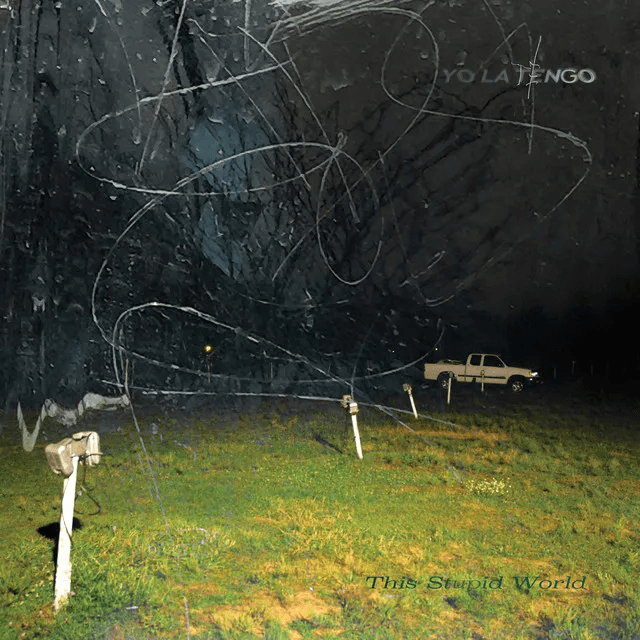
On their latest release, “This Stupid World,” they’ve kept all of that going.
Sidebar: Yo La Tengo can be a band that makes you work before you get it. The full listening experience requires intention. There’s friction. The effort is always worth it, though, with something new revealing itself with every spin. And while they have some songs that could broadly be classified as singles, this band’s work is best heard from A1 to the closer.
So I have to say that for as much hype as there was leading up to the release of This Stupid World, I’m grateful that they only released a couple of tracks ahead of time. Hearing the record unfold for the first time is a joy.
The record opens strong with Sinatra Drive Breakdown. Look, I know “motorik” is fast becoming the most overused adjective in my arsenal, right up there with “awesome” and “fantastic.” but for this track, it fits. Just trust me here.
Drummer Georgia Hubley and bassist James “new guy since ‘92” Mcnew lay down a killer groove that promptly chugs on for 7+ minutes. So much for radio-friendly.
Another rule proudly ignored.
Next up is “Fallout,” easily their most pure pop offering since perhaps Ohm off of Fade, or Electr-O-Pura’s Tom Courtenay. With an easy rhythm and quasi-call-and-response-like chorus of:
Wanna fall out, fall out of time Wanna fall out, fall out of time Wanna fall out, fall out of time Wanna fall out, fall out of time
Don’t be surprised if you get caught singing this at a red light. I’m not saying this has happened to me, but I’m not not saying it, either.
This band is famously introverted, with Hubley sometimes giving the impression that she’s using the drum kit as a shield. But perhaps more than anyone else, she has come more into her own with each release.
On “Aselestine,” her vocals are unguarded & lovely, even as she’s singing Where are you/The drugs don’t do/What you said they do.
On closer, “Miles Away,” they’re endearing as she laments those she’s lost along the way.
You feel alone Friends are all gone Keep wiping the dust from your eyes So many signs I must be blind How few of them I see
But to get there, we get to get through a few more tracks. Kaplan’s usual knack for squishing an entire backstory into a paragraph is on display throughout the record, but perhaps no more so than on Apology Letter, where he sings:
It’s so clear What I’m trying to say, but right on cue It doesn’t ever come that easily ‘Cause the words Derail on the way from me to you It seems to happen with some frequency Depressingly
Brain Capers is expansive and rides a thick groove. It’s relentless—and it’s my favorite song on the record. Kaplan is in full glorious wavy inflatable guy mode here.
The title track is a steely shoegaze monster. A weighted blanket of the band’s distortion and feedback, with Kaplan telling us, “This stupid world, it’s all we have.”
They know the only way out is through, and this is their way of telling us that if it’s not gonna end well, we can at least have a good time on the way down.
Bottom Line: Yo La Tengo has never been a band that fits nicely in a box, and 2023’s no time to start. They’ve gone from critics darling to your favorite band’s favorite band to indie rock elder statesmen.
And all of that from a band that feels more like neighbors you’d ask to watch your house while on vacation.
With seventeen records and a bunch of EPs and singles, this would’ve been a fine capstone to a storied discography. Instead, it feels like a band hitting its stride with the best yet to come.





 Kevin Sent
Leave a comment