100 lifetimes ago, I worked in a record store. The manager wouldn’t let us play Liz Phair’s Exile in Guyville, and instead tried to helpfully suggest…Shawn Colvin.
In hindsight, it wasn’t the worst choice. But at the time, it seemed kinda awful? Colvin just wasn’t writing stuff like this:
And the license said you had to stick around until I was dead But if you’re tired of looking at my face, I guess I already am But you’ve never been a waste of my time It’s never been a drag So take a deep breath and count back from ten And maybe you’ll be alright
Look, there’s no denying Phair’s talent, but when Exile came out, owning it felt like a very performative thing to do. Girls liked it because it represented the “f**k you” they’d wanted to say for years. Guys bought it ’cause they wanted those girls to… like them.
None of that is fair to Phair, whose only crime was putting together a record with an openness, vulnerability, and ferocity we’d never seen before. Lost in titillating lyrics about BJ queens and f’ing and running were a searing indictment (and mild hit) about the music scene (“Never Said”) and a track about the fine line between being friends and lovers and how that often becomes a tripping hazard (“Divorce song”). Not for nothing, Hrishikesh Hirway’s Song Exploder podcast did a great episode breaking down the latter.
We all caught up with her eventually, and Exile In Guyville long ago earned its rightful place in the alternative rock canon. The record turns 33 today and still seems a bit ahead of it’s time.
Tell me: what do you think?
KA—
On to the music…
Besides Phair, this week we’ve got a few old faves from VU, Material Issue and The Police. There’s also a ton of fresh tracks from the likes of Hawk and Steel, Kelz, Julia Jacklin and feeble little horse.
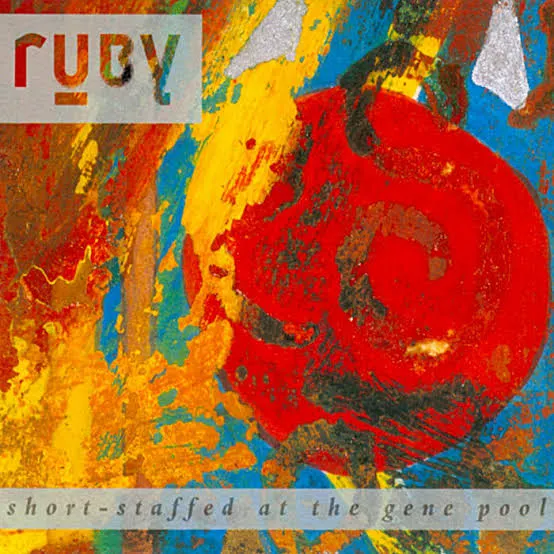
Today we’re taking a quick look at Ruby’s Short Staffed at the Gene Pool as it faces off against Missy Elliott’s Miss E: So Addictive!
Imagine, if you will, a world where, instead of venturing to America’s Dairyland, Shirley Manson decides to make a record with, say, Tricky or Thievery Corporation. Feel free to substitute Curve’s Toni Halliday here if you prefer.
If you squint hard enough, you can see it—and when you do, you’ll have a pretty good idea of what Short-Staffed at the Gene Pool sounds like. Instead of Manson, we get Lesley Rankine, late of Silverfish (instead of Angelfish…another parallel?).
In case that didn’t work, the short version is this: full-voiced female vocals, sometimes chanteuse, sometimes vixen, pouting and preening and snarling over synth grooves and post-party sounds.
The sounds? They’re as varied as the vocals they support. Together with producer Mark Walk (Skinny Puppy), they hit on everything from trip-hop to rock to Latin-ish grooves (“Lamplight”), which, to torture the analogy, feels like a slinkier version of Garbage’s “Queer.”
Some of it delves a little too far into the bleeps and bloops for my taste (“Cargo”), but the good far outweighs the bad here. Indeed, the very next track, “Sweet Is,” reminds me of the poppiest sides of Stereolab or even Pizzicato Five.
Really, whatever genre they venture through, they never forget to bring along a groove. Prioritizing the hook (writ large) takes this from a record that “forces you to pay attention” (read: not very good, but I hope there’s something in there) to something equally at home soundtracking the after-after party, your commute, or a dinner party with the coolest people you know.
Maybe even one in the Dairyland.
I’d never heard a Ruby record before just now. Oddly, I’ve heard Missy Elliott countless times. Yet the score for Short-Staffed and Miss E was a 0–0 tie.
“Get Ur Freak On” was—and is—an inescapable anthem, but I couldn’t name a single other track on the record. And fair play to Elliott—I had to laugh when I heard her let us all know about giving us “some shit that you never heard before.” I mean, it works on so many levels.
Anyway, I don’t know enough about hip-hop to speak on it intelligently, so I’ll just say this: Elliott and her partner in crime, Timbaland, come out of the lab with a very distinct sound each time they work together. I’d say when they get back to what they know, that’s when the record works best. When Elliott tries to veer into ballad territory, it stumbles.
I don’t know if it represents the Hampton Roads scene broadly speaking, or if they created it and everyone followed. Probably the latter. Whatever. She’s got bars for days, and there’s no shortage of beats here to make you scream “Hollah!
Bottom Line:Short Staffed… is the sort of record I like to root for, and anything can happen, but I think it’s going to be Missy Elliott in a rout.
Any thoughts on either of these records? Agree/disagree with my take? Sound off in the comments!
Best Record of 2001 Day 58: The story of an unappreciated pop masterpiece and the demise of a great band that never got their due.
Cover art courtesy of Velocette Records
Good morning!
For the last guest post in Round 1, Matty Ctakes the wheel and shares his take on Beulah’s The Coast Is Never Clear.
If you ask him, Matt Carlson will likely answer that he’s “a musician.” That’s of course very true-I’ve been lucky enough to hear him play. But he’s also a writer, podcaster, hosts a radio show, runs a record label, and more. And that doesn’t even touch on the work he does here on the platform with What Am I Making. If you ask me, he’s someone who’s work you should check out- there’s something there for everyone.
The words—and work— below the jump are all his, and I’m beyond grateful he let me share this article with everyone! I think you’ll dig it. When you’re done here, please be sure to check out more of his work!
KA—
2001 was a pretty damned good year in music.
The charts were littered with a variety of styles from Radiohead, Jay Z, The Weezer, and more. There were breakout records from The Strokes, Aaliyah, The White Stripes and The Shins. Radiohead’s Amnesiac topped many best of lists for the year.
What Am I Making is a reader-supported publication. To receive new posts and support my work, consider becoming a free or paid subscriber.
It was an exciting time of variety and energy. There was bandwidth for all of these records to coexist with one another in a vibrant ecosystem of diversity and experimentation.
Your local college station very liked played new songs from Low, Nick Cave, Bob Dylan, Missy Elliott, Gorillaz and Muse. It feels like a lifetime ago.
Seeing this landscape for sounds getting attention in 2001 makes it all the more puzzling how a record as brilliant as Beulah’s The Coast Is Never Clear could be missed in its own time, and then simply forgotten.
Beulah first came to prominence in the indie rock boom of the mid to late-nineties. Formed in San Francisco, CA by Miles Kurosky and Bill Swan, the band forged a sound from the sun soaked harmonies of The Beach Boys, syrupy melodies and the voice of an unreliable narrator weaving us through the California twilight at the end of the century.
Robert Schneider of Apples In Stereo heard a cassette of some early demos and offered to master the band’s first album Handsome Western States, which was released in 1997.
The lo-fi affair was a nice debut effort, but was bolstered by Schneider’s connection to the Elephant 6 Collective, and the blossoming success of Elephant 6 label mates, Neutral Milk Hotel. The connection with Elephant 6 would stick for better or worse, despite the fact that Schneider mastering the album and a 7” single were band’s only affiliation with the legendary collective.
The follow up, a decidedly more mid-fi sounding effort, When Your Heartstrings Break arrived in 1999. In addition to better sonic quality, there was a leveling up in the songwriting and arrangements on this second record. Instead of a sophomore slump, Beulah seemed to be surging.
The opening strains of Hello Resolven set the scene of The Coast Is Never Clear in cinematic fashion. Sickly sweet strings and a ghostly ethereal bell ring out to the vocal refrain,
“Wake up the king/Wake up the queen/Everybody laugh, everybody sing/It’s over . . . it’s over.”
What follows is a Southern California sunshine record that feels as though it were ghost written by Raymond Chandler. Despite overt poppiness oozing from nearly every note and arrangement, The Coast Is Never Clear is the perfect example of what Tom Waits once called, “Beautiful melodies telling me terrible things”.
Perhaps the best example of this can be found in the chorus of album highlight, Gene Autry. The song is ostensibly the tale of a journey to the west coast in a quest for self discovery and renewal. What follows is a conclusion summed up by the hooky chorus, “The city spreads out, just like a cut vein/Everybody drowns sad and lonely, alright”.
We can change the scenery but we cannot change the core of ourselves by relocation alone. The echoes of loneliness and desperation are littered within the words of these songs, all while the grooves pour out easy to swallow melodies and harmony.
On A Good Man Is Easy To Kill, Kurosky sings,
And when they cut out your lung You said we could all breathe easy The hole swallowed your heart When they drilled holes in your skull And screwed that halo to your head Did you think you could fly?
It’s hard to know if the song is about Kurosky’s own personal health struggles, of which he has had many, or if this the tale of a friend, a partner, or complete fiction. In the end, it’s a song of survival and refusal to go quietly into that good night. Something Beulah is also struggling to do. Maybe the band itself is the hole in the heart.
The song title is of course a nod to the great southern gothic master Flannery O’Connor, and her famous story, A Good Man Is Hard To Find. Much like O’Connor, lyricist Kurosky takes a normal form, and turns it on its head.
For O’Connor the form was the short story. For Beulah, it’s a sunny pop song inflected with a stark honesty and darkness that is both jarring and easy to overlook. It’s a crafty way to deliver a brilliant and multileveled work. It’s also easy to miss just how brilliant it actually is.
After some label mergers, and various corporate machinations, Velocette Records released The Coast Is Never Clear in America on the auspicious date of September 11, 2001.
It’s unlikely that the unfortunate timing of the album’s release led to its under—appreciated status, but it cannot have helped. It was also lost in a sea of great records by bands with more momentum and greater resources than Beulah.
While this record holds its own against great albums of the era like Yankee Hotel Foxtrot, The Soft Bulletin and And Then Nothing Turned Itself Inside Out, this was a band without the necessary foundation in place and the proper amount of luck and resources to get their just desserts.
The film A Good Band Is Easy To Kill is an unflinching, but fascinating look at the final tour for Beulah. The tour takes place in the wake of the band releasing their fourth and final album, Yoko. It’s a make or break moment for Kurosky, Swan and co.
Spoiler alert: They don’t make it.
It’s a great look at a very good band making terrific records and still not being able to make it work. And this was in a time when it was far easier to make it as an independent musician than it is a quarter century later.
Kurosky went gone on to release an excellent solo record called The Desert of Shallow Effects in 2010, but Beulah has remained dormant since 2004. There has been recent talk of a follow up to that record on varying social media accounts, but nothing has surfaced as yet.
As a songwriter and singer, I am in awe of The Coast Is Never Clear. It’s a masterwork of storytelling, soundscapes and songwriting. It’s a record I wish I had been a part of. My band The Stick Arounds even recorded a version of Gene Autry and we play it often at our live shows.
They say that “if you build it, they will come”. Beulah is living proof that they might not, but it’s worth building it anyway.
Cheers,
Matty C
Thank you again to Matty for today’s post! Please be sure to check out more of his work over at What Am I Making! Any thoughts on this record? Agree/disagree with his take? Sound off in the comments!
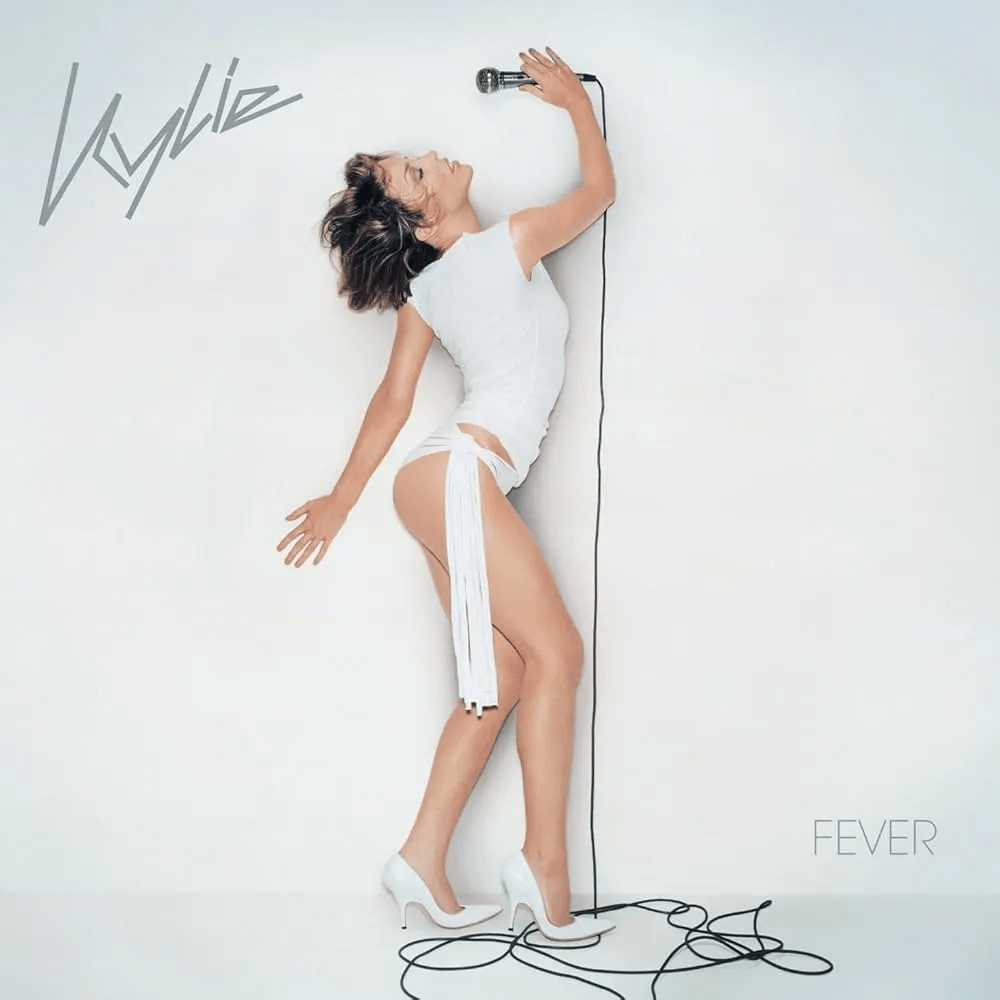
We’re in for a treat today, as Lavender Sound (Max Freedman)takes the wheel and shares his take on Kylie Minogue’s Fever LP.
Today, as part of the Best Album of 2001 series, Lavender Sound (Max Freedman)is back to share his take on Kylie Minogue’s Fever album. He previously covered Björk’s Vespertine.
The words—and work— below the jump are all his, and I’m beyond grateful he let me share this with everyone! I think you’ll dig it, too. When you’re done here, please be sure to check out more of his work at Lavender Sound and his interview series over at the Creative Independent!
KA—
Even shimmering gold hot pants couldn’t break Kylie Minogue in the United States. After the Australian pop icon ditched everyday pop lyricism and production for sleeker, more trip-hop-indebted introspection on her sixth album, 1997’s Impossible Princess, she pivoted back hard to highly accessible pop with 2000’s “Spinning Around,” kicking off the cycle for her seventh album, Light Years, with the music video with the legendary hot pants. And yet, despite Kylie dominating the U.K. and Australian pop charts from her 1987 debut album Kylie onward and “Spinning Around” handily going to #1 in both countries, it didn’t even touch the Billboard Hot 100. It had all the musical ingredients necessary to be her first big U.S. hit since Kylie’s “The Loco-Motion,” which went to #3 here in 1988 (though two prior covers of it, by Little Eva in 1962 and Grand Funk Railroad in 1974, both went to #1): Kylie rides a disco-funk arrangement into pure ecstasy and sounds equally commanding whether she’s singing into the skies or coming on all sultry. It’s basically the platonic ideal of a pop song, and yet, nothing. Nada. Zilch.
Something shifted when Kylie’s “Can’t Get You Out of My Head” arrived the next year to introduce her eighth album, 2001’s Fever. Not only did “Can’t Get You Out of My Head” reach #7 in the U.S., but it also went to #1 in every other country where it was promoted. From the wordless “la, la, la / la, la, la, la, la” chorus to the playfully cyborgian beat and Kylie’s enraptured yet close-to-the-chest vocal performance, it’s about as hypnotic as pop music gets. With one song, she finally had the world under her spell, so much so that Fever went on to sell over a million copies stateside.
I think there was a hunger for music like Fever by the time it arrived on October 1, 2001. About seven months prior, Daft Punk’s Discovery brought French house, a clear influence on “Spinning Around,” to the masses, and at points, Fever is steeped in the genre too. Two of its greatest highlights, “Love at First Sight” and “In Your Eyes,” might as well be Bangalter/Homem-Christo productions, what with their flickering guitars and glorious choruses that explode forth from their tightly wound verses. But if Fever were just a repeat of territory Kylie had traversed, it would’ve been uneventful. Instead, the album abounds with silky, computer-perfect beats that both gradually seep and vigorously hammer right into the cerebellum. The music’s robotic energy only emphasizes the humanity in Kylie’s smooth, sensual vocal performances, and the rich production and hook-packed melodies won over even some rockist skeptics in 2001. Poptimism was a few years away, but Fever was helping to plant the seeds.
And how could it not? The joyously brash thump and shuffle of “Give It To Me,” with a euphoric chorus awash in massive vocal harmonies, is sugar in song form. The title track’s Neptunes-like low-end is as menacing as it is alluring, with the fever Kylie sings about inevitably infecting your ears, mind, and body too. (The song’s metaphor of a crush as a fever is about as lyrically innovative as Fever gets, and the fact that the album goes so hard despite its merely passable lyrics is a reminder that pop music’s effectiveness can sit entirely in its sound if what’s being sung isn’t full-on cringe.) “More More More,” which opens the album, latches on right away with synthetic toms that sound like they’re a tad on the fritz, only locking in further with a slinky bassline, gleaming synths, and Kylie’s liberated vocal performance.
And these aren’t even the singles! Seriously, the run of singles from this album is just insane, as are the music videos released to promote them. “Can’t Get You Out of My Head” is, of course, Kylie’s signature song, but just as iconic is the mega-cleavage hoodie-minidress she wears in the video full of humanoid-looking dancers in tracksuits pulling off all kinds of striking choreography. Few people have looked as genuinely joyous as Kylie does while she dances throughout the “Love at First Sight” video in which, even though she’s just wearing a simple white tank top (and, wildly, cargo pants). Her aura jumps out from the arrays of brightly-fashioned, brightly-wigged dancers who are, yes, dressed like cyborgs. A similar enthusiasm and commitment to her performance radiates from everything she does in the humanoid-heavy “In Your Eyes” video, even though its lighting is much darker.
“Come Into My World,” both in terms of its visuals and its music, is something else entirely. I still can’t quite figure out how Michel Gondry made the video happen even though he previously directed at leasttwo videos with similar special effects. It’s just Kylie walking the same circle in Paris four times, but it’s also so much more: Each time she completes a lap, another version of her, wearing the exact same outfit, appears, and with each lap, the chaos around her — bikers brawling, a mattress thrown out of a window — swells further, elevating the drama and hilarity. I’m tempted to read the video as a commentary on how, when things recur, they often intensify, because that’s the magic of so many pop songs and especially “Come Into My World.” Its verse-chorus-bridge song structure, with each refrain bursting brighter than the last, is nothing new in its form, but as the synths plink and tremble and Kylie breaks out her innermost seductress, she achieves irresistible pop perfection.
From its videos to its actual music, Fever was cutting-edge pop in 2001, and it still sounds distinct today. Its impact was clear in the years to come: Without it, Madonna probably would’ve avoided the DJ-set feel of 2005’s Confessions on a Dancefloor, and Britney Spears’ 2007 pop bible Blackout might have sounded too strange for mainstream acceptance. All kinds of pop musicians today cite Fever and Kylie in general as an influence, especially Dua Lipa, whose nu-disco sound on 2020’s smash-hit Future Nostalgia is a direct heir to “Love at First Sight.” I mean, hell, its 2021 reissue even has a track named “Fever.”
And yet, for all Fever’s impact and innovation, not everyone agrees with me that it’s Kylie’s best album. Depending on who you ask, that’s Light Years, Fever’s R&B-infused 2003 follow-up Body Language, 2010’s Aphrodite (think Fever if Stuart Price, who produced Confessions on a Dancefloor, worked on it), or 2023’s Tension, on which Kylie embraced the nu-disco genre she helped birth and found a whole new legion of young fans some 35 years into her career. “I’m a star, babe, babe, babe / Do this all day, day, day,” she chants at the outset of Tension’s title track. She’s always found endless elation in her music.
On Fever, for the first time, the whole world got to feel it.
Bottom Line: I think many people might be surprised to learn that I am unironically and unabashedly a Kylie Minogue fan. From the S.A.W.- fueled debut record through the more refined sound in the mid-90s and beyond, I’ve always found something I like on each of her records. Fever has the added bonus (?) of my associating it with one of my favorite trips overseas. Visiting Malta in early 2002, “Can’t Get You Out of My Head” was literally everywhere (Natalie Imbruglia too, for that matter, but that’s a story for another time). Listening now, 25 years on, I’m surprised at how well it holds up. Kylie for the win.
Thank you again to Max for today’s post! Please be sure to check out more of his work over at Lavender Sound! Any thoughts on this record? Agree/disagree with Max’s take? Sound off in the comments!
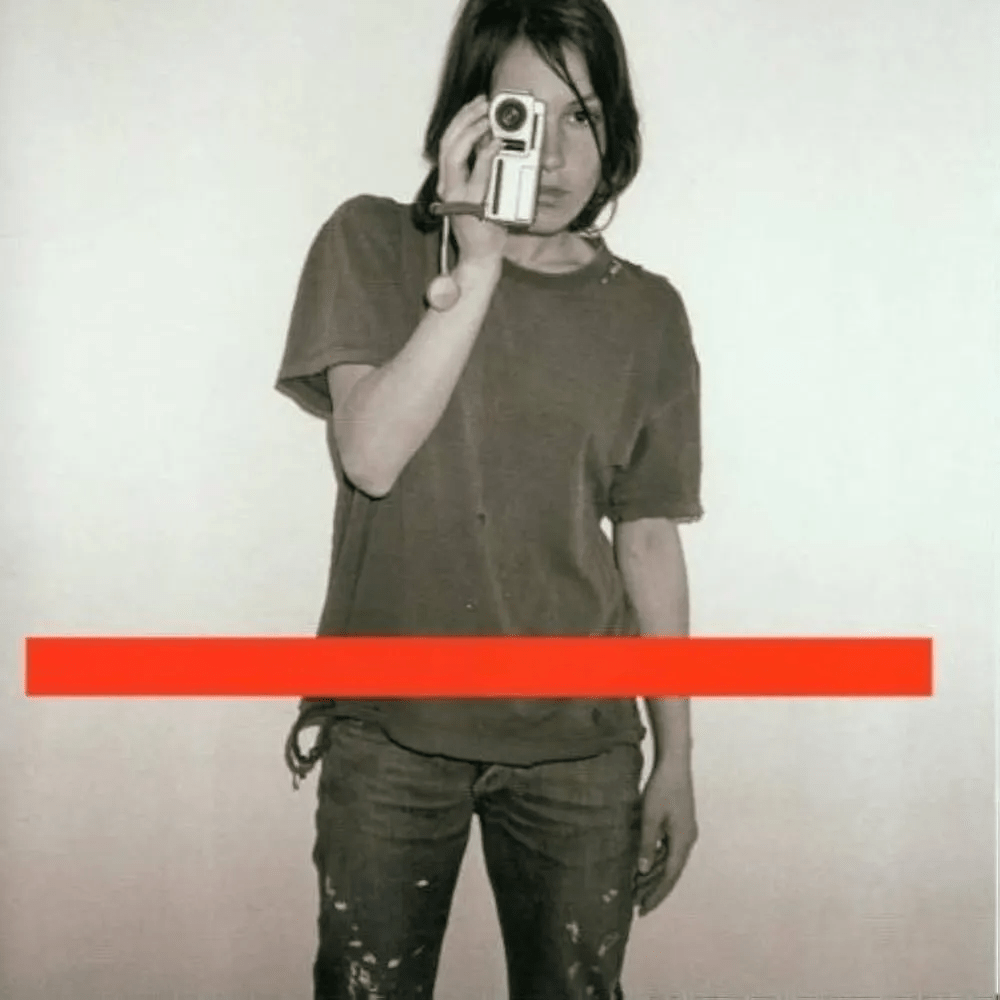
Today we’re taking a quick look at ‘Get Ready’ by New Order
It took 8 years to get the band back together for what would ultimately be their final record in their original form. Get Ready isn’t a bad album; it just feels like watching a show that ran for a season too long. With the exception of “Crystal,” and ”60 Miles an Hour,” I’m not sure I could ID any other track by sound alone. It just never established itself in my head.
“(the title) could mean anything or nothing. I thought it was just nice; New Order, Get Ready; ‘cause we are, we’re getting ready for the next phase of our musical lives both physically and mentally, so it’s quite a simple thing but it’s very pertinent
~Peter Hook
In hindsight, part of that is because I was — and am — so invested in the band’s earlier work. 8 years is a long time, and if you’re still enjoying the band’s “old stuff,” it’s easy not to put much stock in a new release with a new(er) sound.
I seem to be in the minority here, as it was well-received by many critics, with David Browne of Entertainment Weekly describing it as a “stunning and confident return to form.” It had guests such as Billy Corgan and Bobby Gillespie.
Get Ready had all the ingredients to top this list, and yet…
Open hearts, empty spaces Dusty roads to distant places But all the time when I’m alone I think of you and how you’ve grown Far and wide, sweet and simple Jehovah knows that I’ve been sinful But if Jesus comes to take your hand I won’t let go, I won’t let go
Recorded in the wake of manager & longtime friend Rob Gretton’s passing, this feels like a goodbye as the band moves on to its next chapter.
Bottom Line: Sure, this might not be my favorite record by the band, but it’s New order! There might be a universe where I vote against them, but this ain’t it.
Tell me: Any thoughts on this one? Where would you rank Get Ready? Sound off in the comments!
Today we’re taking a quick look at Life Without Buildings’ Any Other City.
When I listen to a band like Life Without Buildings, I think about the music, sure, but mostly I think about the listeners. There are a lot of bands that exist today only in the memory of those lucky enough to be able to say, “I was there.”
LWB feels like one of those bands you found through a friend of a friend, or maybe even their roommate. They were playing in the back of some garage in a plumbing warehouse, or on the fourth floor of a walk-up, and you had to say a secret phrase to get in.
You could still sometimes smoke indoors in those days, but you’d stand near an open window to be cool toward everyone else. It smelled like humanity, but you equated that with a good time, so it never fazed you. Any physical media was nearly impossible to come by. Maybe somebody had a burned CD they’d lend you. Maybe.
Life Without Buildings was a short-lived, mathy art-rock band from Glasgow fronted by Sue Tompkins. The band was named after a B-side by Japan. That they were one-and-done, studio-wise, only adds to the lore, though there’s a live album out there too. Makes it easy for the completists, I ‘spose.
The most distinct part of Life Without Buildings is Tompkins— or rather her vocals, which can be talk-singing, spoken word, or a (much) drier version of Cocteau Twins’ Liz Fraser’s wordplay. When she says, “No details, but I’m gonna persuade you,” on “PS Exclusive,” you have no choice but to believe her. And she’s right.
The songs are repetitive, but never boring. It’s art-rock, but never pretentious. I suspect none of them really felt precious about any of it, which is part of why it works. Sure, they walked so bands like Current Affair and Dry Cleaning could run, but what I hope they realize is that in 2001 this was a risk. And a novel one at that.
A quote from Reddit sums it up:
Formed a band in college, released one 10/10 album, and then broke up never to play again” is the only acceptable indie-band trajectory. All other bands are posers, nepos, or tryhards, sorry.
That’s worth a chuckle, but I’m not sure I 100% co-sign. Besides, Tompkins hasn’t totally vanished — she can be found on a couple of Sleaford Mods tracks — but this band ended exactly the way it always was destined to. Some movies should never have a sequel.
If you don’t like this on the first pass, give it another spin. And maybe a third. At some point, they’re going to persuade you.
Bottom Line: This was up against Firewater’s Psychopharmacology, which seems to have a lot of champions in the best Album community. I liked it well enough, but not enough to vote against Any Other City.
Any thoughts on either of these records? Agree/disagree with my take? Sound off in the comments!
Today we’re taking a quick look at Yeah Yeah Yeahs self-titled EP.
Yeah Yeah Yeah’s self-titled, 5-song EP was self-released on their own Shifty label in 2001.
Their decidedly garage-punk sound featured guitarist Nick Zinner, drummer Brian Chase, and no bassist. No matter; even in these early days, everything orbits around frontwoman Karen O. Her vocals are hard to pin down– she coos one minute, screams the next (see also: the entire chorus of “Art Star”), and occasionally works in a sort of disaffected monotone
The synths and more polished sound would come in time, but here they’re still incubating, and it’s very much rough around the edges. Whether that was because they were still finding their legs or an intentional aesthetic choice, the end run is the same. Nick Zinner’s riffs do a lot of weight-bearing. They’re basic, but that’s all that was called for here.
The first thing we hear is Karen O repeating “the bigger, the better” on “Bang.” Signing to a major… Fever to Tell (or It’s Blitz!- whichever’s your fave)…a bazillion kids being introduced to “Maps” by whoever picked it while playing Rock Band and then being bewildered by the rest of their catalog…and so on. That would all come in time.
But it all starts here in peak “Meet me in the bathroom” New York… You don’t need to know this is their first EP to know it’s some of their earliest work. And like anything, if you stare too long or overthink it, you can find nits to pick. But it’s ‘01 in the hippest quarters of NYC. Who tf has time for that?!
This is up against Lightning Bolt’s Ride The Skies, and I gotta tell ya, I’m really struggling to reach for positives here. I know there’re plenty of noise rock people out there, but this is not my tribe. Nothing wrong with that, of course. We like what we like! But god damn this whole thing felt like a test. It probably didn’t help that I was listening at work. At any given time I have 6 monitors, two radios, a teletype printer, and about 30 tabs open, and it can feel like what this record sounds like.
There’s a spot on “The Faire Folk” where I thought the noodling was reminiscent of AC/DC’s riff on AC/DC’s Thunderstruck. That was about all I could salvage from this.
Bottom Line: Karen O & co for the W.
Any thoughts on either of these records? Agree/disagree with my take? Sound off in the comments!
Cover art courtesy of Sympathy For the record Industry
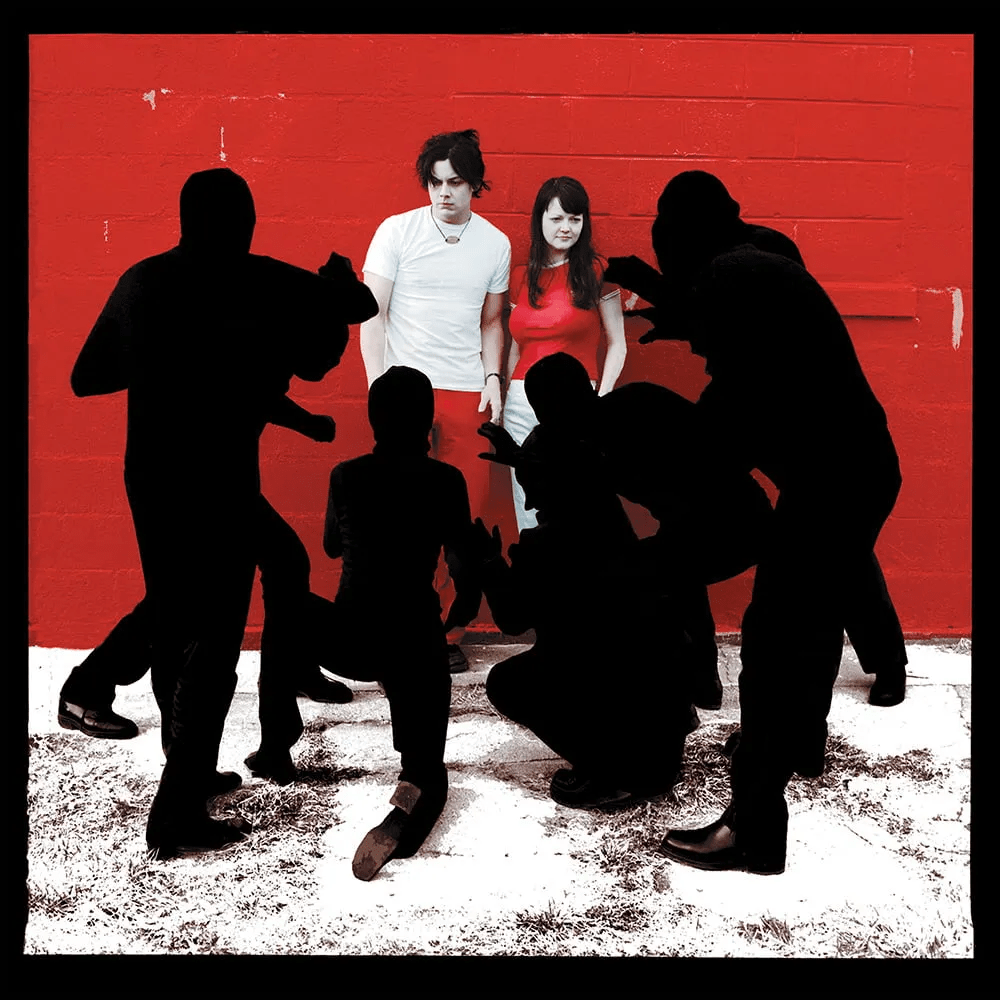
Good morning! Today we’re taking a quick look at The White Stripes’ White Blood Cells
I catch myself whenever I hear Seven Nation Army ring out from the soccer stand. What a song to co-opt! How odd that a band that’s not exactly obsessed with fame still has 1000s of people singing that song 20+ years on. Is there anyone else in that rarified air? My bemusement aside, Elephant is a solid record. How so much sound can come from two people is beyond me, but here we are. Other than some backing vocals, it really is just the two of them. Meg White’s drumming is simple (and simple is never easy), and Jack White’s guitar (and piano) take us from soccer stand fodder to swamp flats on tracks like “I Want to be the Boy to Warm Your Mother’s Heart.” It’s a no-skips record, even if not everything would sound good being yelled from a terrace.
If Elephant is what put the duo on the map, White Blood Cells is what lays the groundwork. I can almost guarantee at some point today someone will work “masterpiece” into the discourse or refer to it as art. The latter is true- all music is art. The former? Mmmm…I don’t know.
Fair play to “Fell In Love with a Girl “; it’s one of the best singles we’ve come across in Round 1. It’s loud, euphoric, and the kind of messy that says, “I want you to think this didn’t take any effort, but we spent days making it that way.” That sort of disheveled sound taps the same roots that DBT’s Southern Rock Opera did earlier in the week, as well as the likes of MC5 (which, I mean, sure. The White Stripes are from Detroit after all.)
Contrived or not, that simplicity works here—and as mentioned above— simple is never easy. Ask your favorite drummer. As a reformed one myself, I never miss a chance to defend Meg White from people that say “she’s not that good.” First, she’s more talented than 99.99999% of the people that say this, and second, see above. Playing a rudimentary style is easy…for about a minute. Doing it consistently and in a way that matches Jack White’s all-over-the-place stylings is anything but.
Did people do this with VU’s Moe Tucker? Maybe, but I doubt it. Look, I can be as snarky as anyone, but the boo boys can fuck off into the sun with all that.
(Exhale)
The sneering hipster take from Serious Music People ™ is that the basic, stripped-down style is a deficit. Really, it’s their superpower. Sometimes you just want some teeth and something that’s unapologetically loud…. even tracks like “I’m Finding It Harder to Be a Gentleman” and “The Same Boy You’ve Always Known” both of which which, I guess, count as slower tracks here, still have a little intentional grit and edge to ‘em. “We’re Going to Be Friends” is a bit too twee for this record, but people love it, so (Kanye shrug).
This band has always been polarizing, mostly, I think, because their records bring out the worst in the Rock Guy™ and Hipster tribes. So be it. In the meantime, with its mix of blues-y tracks and face melters, White Blood Cells will still be a punchy record that locked in the pair’s style.
Bottom Line: This is the #3 seed in the tourney, and I can’t see it slowing down anytime before Round 4 where it’ll likely face off against Kylie Minogue. Today it’s up against Squarepusher, who seem like almost an afterthought in comparison. Took the safe bet on this one; my bracket pick and vote will be for White Blood Cells.
Any thoughts on either of these records? Agree/disagree with my take? Sound off in the comments!
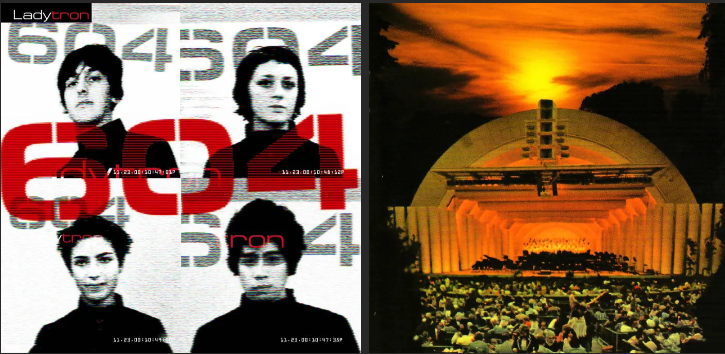
Today we’re taking a quick look at Ladytron’s 604 as it faces off against At Dawn by My Morning Jacket.
There was a time when I would buy records based solely on the label. Dischord never missed. 4AD? Odds were high you’d love what they were issuing. K Records? Whether or not it matched my tastes was up for grabs, but you could bank on it being something quirky, and that screamed “Olympia.” Wax Trax! was the gift that kept on giving for a kid who was both into hardcore and synth pop. The late ’80s and early ’90s were wildly dissonant for me musically. Nettwerk was right there too, with offerings sometimes less for the dance floor, more toward the after-after-after party. I was always happy to take a flyer on these types of records, even if I didn’t bat 1.000.
Seeing Ladytron’s 604 was on Nettwerk, I was surprised I’d missed them. Turns out that just the reissue was on the label, but that doesn’t explain how I’d missed the band entirely. I guess by ’01 I’d tuned everything out, even stalwart genres like synthpop.
Reading up a bit, I kept seeing “electroclash” tossed around, and maybe it’s just me, but I’m not seeing it. What I am seeing is a band whose members 110% have a Kraftwerk record or two in their collection. Stereolab as well, right down to the dueling female vocalists—and stylings—in Mira Aroyo and Helen Marnie. They’re cooler than you, but don’t flaunt it. The sort of icy personality that would also definitely let you bum a dart. Tracks like “CSKA Sofia” are a bit of spacy noodling, but “Paco!” is pure uncut new wave, and I’m here for it. You could’ve told me this was released in ’89, and I would’ve believed you. It’s the sort of thing I spent a lot of time listening to while riding the bus downtown to places like Dudley’s (RIP) to pick up some import or another. Same story with Playgirl and Discotraxx.
In fact, I could swear I’ve heard these all before. They’re just vaguely familiar enough to convince me I have, even though I know otherwise.
At 16 tracks, it’s a bit too long. There’s an incredible 10–11 track record in here. Some of the padding feels like a mandate to flesh out the song count to “fill” the CD (were we still doing this in ’01? I can’t see any other reason why “Laughing Cavalier” made the cut.), but the good far outweighs the bad.
I’m bummed I missed this before, but I’m happy to have found it as part of this challenge. This is one I’ll definitely be returning to.
I can tell you that had I heard My Morning Jacket’s At Dawn in 2001, I would’ve had no time for it. I had no taste for this sort of woozy Americana jam-band stuff. Times change. It’s not bad! “Lowdown” reminded me of those slow summer mornings where it’s already humid, but the searing heat hasn’t yet kicked in. If I had a front porch, I’d sit out there and listen to this sort of thing while watching the world go by. “Xmas Curtain” has a nice slide guitar (or steel pedal, who knows?) that, in ’01, would’ve had me spraining my finger by smashing the fast-forward button. 25 years on, and I find that sort of thing endearing… in limited doses. It works here.
Similar to 604, there is a 10-track “10” in here somewhere. A couple of tracks went straight onto my playlists, a few were objectively pleasant— if not for me—and a couple left me shaking my head. Put your lighters down, this is not a ballad band. I will be fine never hearing “If It Smashes Down” or “I Needed It Most” again. I would’ve scotched this in a hot second 25 years ago, and almost did just now. Sorry, not sorry. Tracks like the aforementioned “Lowdown” and “Just Because I Do” are what they do best.
Bottom Line: So! We’ve got two wildly different new-to-me records whose only common ground was the year of release. On paper, this should be a lock for Ladytron. Once a synth kid, always a synth kid. But My Morning Jacket was better than I was expecting. If I’m honest, I’d be okay with either of these going through to Round 2. We could do worse.
Looking at my bracket, I have Ladytron pegged as winning Round 1. Apparently, I’d already taken a flyer on 604. Hopefully it pays off.
Any thoughts on either of these records? Agree/disagree with my take? Sound off in the comments!
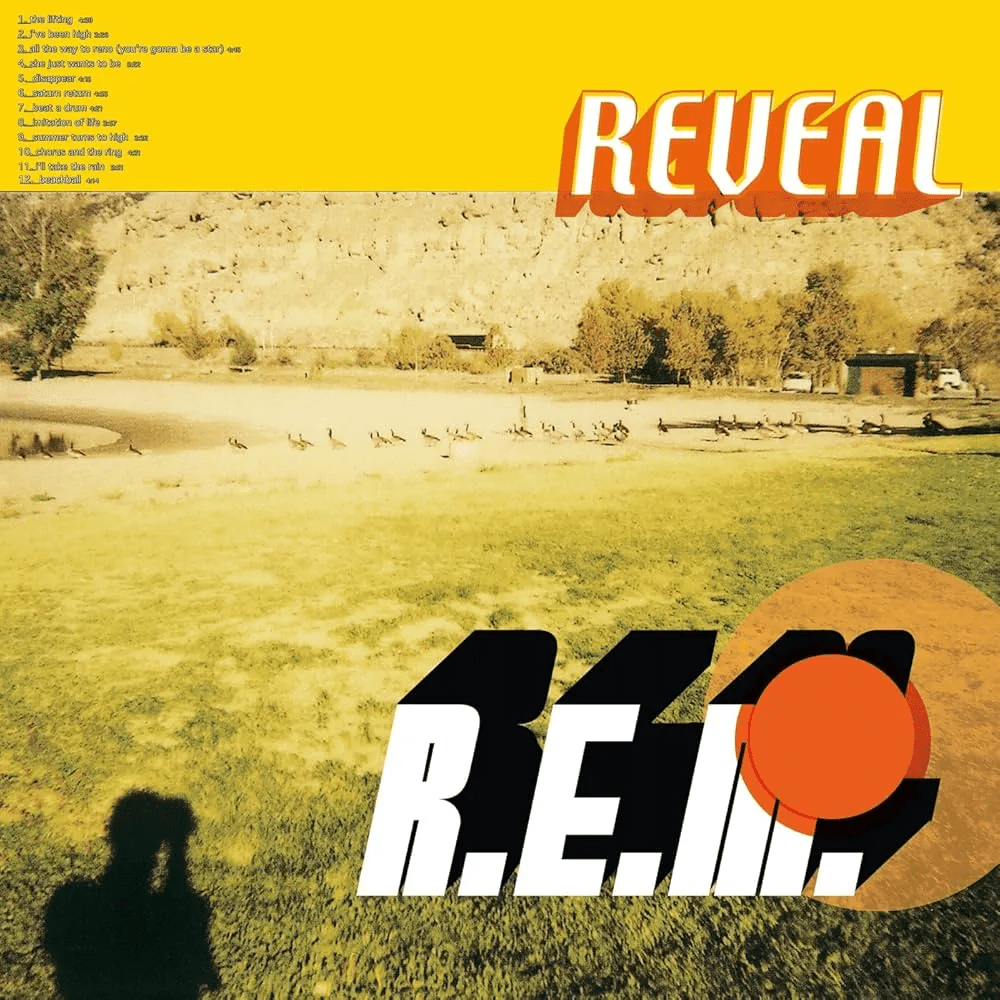
Today we’re taking a look at R.E.M.’s 2001 LP, Reveal.
Sometime ago, I raised some eyebrows not by declaring that Document was R.E.M.’s best record (a relatively safe pick, tbh), but by ranking Out of Time so high and slotting in AFTP so low at 9th.
There were a couple of caveats and carve-outs (it’s my list!). First, Up punches above its weight for the simple reason that no other song so perfectly describes the feel of an airport at 03:30 AM as Airportman does. This is a side of travel few see, but one that’s been my world for most of my adult life.
Second—and I think more relevant here—REM’s discography can be broken into three distinct eras, and the order you slot these records in depends a lot on which one your on-ramp was in. For me, this was Green and Eponymous. The latter is a comp, but there’s a very real calculus behind why the former sits at #5 for me.
I also feel like the post-Bill Berry years are a sort of denouement for the band. If the cut-out bins were anything to go by, this was the era that many listeners passed on. It certainly was for me, though YMMV.
Really, I think the one thing most fans can agree on is that Around the Sun has a lock on last place. Pretty much everything else is up for grabs.
That said, something has to come in next to last, and up until now, that something for me has usually been Reveal.
By this point, I’d kind of checked out. I’d still give any new release at least a cursory glance, but I was perfectly happy to stay behind, enjoying Green, Out of Time, and even Monster. Up was interesting- an appreciation that grew over time, but Reveal passed me by entirely. Knowing me, I probably dismissed it out of hand. No Bill Berry? No, thank you. Never mind the reasons behind his (very amicable and very necessary) reasons for leaving. I could be pretentious that way—not unlike my gatekeeping ancestors who felt the same way for anything post-IRS. Really, I think it was 10 years too early for me. I wasn’t ready.
Listening again, I’m surprised at how solid the first three tracks are. I’ve long held a soft spot for “All the Way to Reno (You’re Gonna Be a Star)” but “The Lifting” is a lot better than I’d remebered. It’s a harkening back to something closer to their earlier sound; almost an antidote to the way Up left off. Maybe a reminder to all of us that 3/4s of the band we grew up on was still there/ Maybe it was a reminder to themselves.
“Disappear” is a bit of a dirge, which…ok. I mean, I know that plays with a huge part of the fan base, but I prefer my R.E.M. a little more jangly, thankyouverymuch. Ditto “Saturn Return.” “Beat A Drum” pulls things up a bit and reminds me of the Pet Sounds-era Beach Boys. Not my bag, but it’s objectively pleasant.
“Imitation of Life” was the “big” single of the album, and its catchiness and hook make a solid case for why it deserved to be. The video reminds me of Weezer’s “Island in the Sun” with trippy effects. Actually, a lot of videos from this era went all in on this motif. Were we into this back in the day? These didn’t look like any parties I was going to, I’ll tell you that for free. And I like the wistful vibe that closer “Beachball” sends us out on.
As noted, Up has long punched above its weight thanks to Airportman. That’s an all-timer for extremely niche reasons, but Reveal took that same nose for experimentation and pulled it into a much sharper focus.
Going in, I wasn’t really sure what I was gonna get. Time can be kind or cruel in equal measure. But after years of slagging off the last 1/3 of the discography, I was really hoping for redemption. And I’m happy to say it came. None of my top 5 is at risk, but even just typing this, I think it deserves to be scooched up at least a notch or two.
Bottom Line: This is up against Super Furry Animals’ Rings Around the World LP. a record that has a fervent fan base. I can certainly repsect that, but sometimes you gotta dance with who brang ya, ands this is one of those times. R.E.M. for both bracket pick and my vote today.
Any thoughts on either of these records? Agree/disagree with my take? Sound off in the comments!