The Best Record of 1989: Day 16

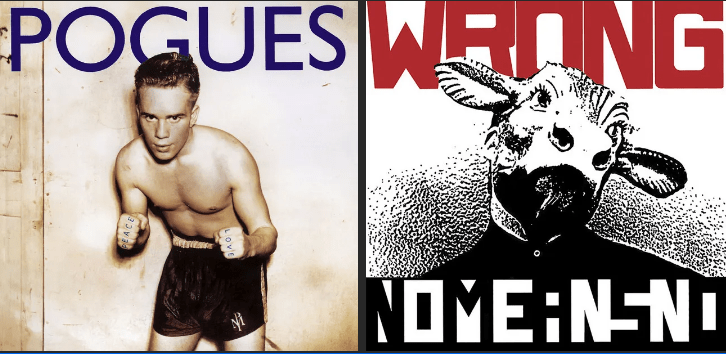
#41 Mekons, The Mekons Rock n’ Roll takes on #88 Slint’s Tweez


Today we’re taking a look at records from Mekons and Slint


Note: As many of you know, I recently wrote about a Best Record of 1989 challenge and noted that I’d be occasionally writing some of these up.

I’ve started doing some quick hits of each matchup and posting them directly to the page. Some will be longer, some won’t, and some might just be a handful of sentences. There’ll probably definitely be some typos.

Check ’em out and let me know your thoughts! Chin wags & hot takes welcome! Sharing and restacks are always appreciated.

KA—


Earlier this year, Mekons released their Horror LP. Reviewing the record, I commented, “A Mekons record in 2025? I can’t think of a more timely release. If you’re a fan of the band, it will not surprise you in the least that they’re not happy with the state of the world and have some thoughts about it.”

So, yeah, not much has changed in 36 (ish) years. Any record that starts with “Destroy your safe and happy lives before it is too late” has a lot to live up to, and The Mekons Rock N Roll does just that. It’s a record that rails against the issues of the day, fueled by a seemingly endless supply of righteous anger. It’s seething. It’s cynical. It is also a helluva-sounding record. Sometimes it’s okay to dance while you’re throwing a brick through a wall.

Shame then that it sold almost nothing. It’s not like the ingredients weren’t there; they were on a decent label, put out a frankly f*cking incredible album at a time when the world (or at least the indie world, anyway) was primed for it, etc. Play “Only Darkness Has the Power,” and try and tell me otherwise. Go ahead, I’ll wait. They were on Twin/Tone, which meant being labelmates with Soul Asylum, The Replacements, etc. This should’ve been the record that put Mekons on the map and landed them a spot in all of our hearts. Instead, it was the first step in a long and winding story of what might’ve been. But they’re still out there putting out outstanding records. Long live rock and roll. Long live Mekons.


SO! I had a whole-ass story to use as a framework for reviewing Slint’s Tweez album. I was going to share the story of how an employee at my local record store used to live near one of the band members and would often see her walking her dog. I would weave that into a larger narrative about how the record store employee is an asset to any community, especially those that are open to whatever you bring up to the register (no Rob Gordons, please, and thank you!). The ones that are always happy to try and turn you on to a record based on what they already know you like and how this was probably the on-ramp to the band for countless people. It was nice—a bona fide feel-good story.

I got about 500 words into it and realized that I was thinking of Slant 6 and NOT Slint. Savvy readers probably picked up on that a while ago. I wish I had. I could’ve saved some keystrokes. Not only had I not been introduced to this band when they first came out, but listening now, I’m not sure it would have been my thing. I liked a lot of shit in 1989, but even I had some limits. I liked music that sounded like demolition in real-time, but I liked it with synthesizers.

Just when I’m about to check out, “Kent” comes along. It’s as disjointed as anything else on the record, but here’s the thing: it sounds like what was happening in every garage or house show in the country at the time. Another case of people trying to be Pavement before they existed or whoever their favorite hardcore band was. It’s a jumbled mess, but that roughness is intentional. That’s all well and good; we love us some character and edge. But ultimately, it all blends into itself and is as unremarkable as all of those other bands time has forgotten.


Bottom Line: In Mekons, we have a band hitting what would prove to be one of their peaks. There are a lot of underrated records from 1989. This is one of ‘em.

With Slint, we have a gumbo of all the styles that were percolating at the time. Not a bad idea, but just like a cake without just the right ingredients, it ultimately falls flat.

My vote: My bracket and vote will go to Mekons.

Any thoughts on either of these records? Agree/disagree with my takes? Which one of these would you vote for? Sound off in the comments!

Check out the full bracket here.

Info on the tourney, voting, and more is here.

As always, thanks for being here.

KA—

The Best Record of 1989: Day 15

#24 The Replacements’ Don’t Tell a Soul vs. #105 Tin Machine’s Tin Machine

Good morning!

Today we’re taking a look at records from The Replacements and David Bowie’s Tin Machine


Note: As many of you know, I recently wrote about a Best Record of 1989 challenge and noted that I’d be occasionally writing some of these up.

I’ve started doing some quick hits of each matchup and posting them directly to the page. Some will be longer, some won’t, and some might just be a handful of sentences. There’ll probably definitely be some typos.

Check ’em out and let me know your thoughts! Chin wags & hot takes welcome! Sharing and restacks are always appreciated.

In case you missed this week’s earlier matches, check out:

Day 11- #25 Prince, Batman vs. #104 The Durutti Column, Vini Reilly

Day 12- #40 Chris Isaak, Heart Shaped World vs. #89 Technotronic’s Pump Up the Jam

Day 13-#9 Tom Petty, Full Moon Fever vs. #120 Negativland, Helter Stupid

Day14- #56 The Vaselines, Dum-Dum vs. #73 Peter Gabriel, Passion of the Christ soundtrack

KA—


There used to be a wall in downtown Portland, Oregon, where someone had painted “Paul Westerberg is God.” Anytime my friends and I were down there, we’d see it, laugh, and make the sort of inside jokes funny only to us. (notably, it stayed up for a really long time).

I’m not sure I’d go that far, but when it comes to taking sincerity and cynicism and making it sound fantastic, Westerberg is definitely in rarefied air.

Westerberg, of course, was in The Replacements, a band I’ve yet to find anyone say anything bad about. Don’t Tell a Soul is a record that evokes plenty of strong thoughts.

Part of that rationale comes from the fact that DTaS is a departure from their earlier records. Gone are some of the rowdier, adolescent elements that made records like “Sorry, Ma’ and “Hootenanny” such a wild ride. This is a more polished, straightforward-sounding record. There’s no “Gary’s Got a Boner” on this one. For all the self-sabotage and self-inflicted wounds over the years, DTaS at least feels like a record from a band that wants it to become popular.

The album kicks off with “Talent Show,” one of my all-time favorites by the band. We can talk about playing style and instrumentation all day, but none of it would matter without first mentioning Westerberg’s talent as a songwriter. Few people can tell a full story in so few words the way he can. He says in a few verses what it would take us mere mortals a book to describe.

You could make the argument that this was a preview of Westerberg’s solo career, and it would have some merit. That would come in time. But for now, this is still a four-piece, and the music holds up as well as anything that came from Westerberg’s pen. “Talent Show” is an all-timer, but “We’ll Inherit the Earth” is right up there as well. “Achin’ to Be” feels purpose-built to rocket up the Modern Rock charts, and does “I’ll Be You.” And no Reps record would be complete without a few acoustic-ish tracks. Here, “They’re Blind” and “Rock n Roll Ghost” fill the bill.

If forced to pick a clunker, I’d go with “I Won’t,” but I wouldn’t like it,

there is a line of thinking that “Darlin’ One” is one of the weaker closers in the band’s discography. When posted up against its predecessors (“Here Comes a Regular,” “Can Hardly Wait,” Answering Machine,” etc.), it’s an easy statement to make. But we’re not comparing DTaS to those earlier records, and taken as part of this album, it holds its own just fine.

People like what they like, and they generally like whatever record they first hear of any given band. It’s easy to see why the adoration for Tim, Pleased to Meet Me, etc., is still there decades later. In my case, DTaS was the first record by the band that I owned. And you never forget your first, right? I don’t know if this would be one of my desert island discs, but it’d definitely be one of the ones spread out on my bed while I was scrambling to figure out what to pack.

If there’s a lament here, it’s that this should’ve been the record the band used to call time. It’s the perfect endcap to a brilliant discography, and they would have gone out on top, IMO.

Instead, they hung out for one more record (All Shook Down), and it was a case of one record too long. In an alternate universe, that would’ve been the first solo Westerberg record rather than masquerading as the final Replacements one.

Comment from YouTube

Somewhere, there is also a universe where Westerberg does things like run errands. He goes to the same appointments the rest of us endure. He does laundry. That’s not a universe I want to acknowledge or even know about. He might not be God, but he’s certainly a legend, and that’s enough for me.


In 1995, I saw David Bowie play. Setlist.FM will tell you it was a decent—if not great— setlist. A few hits, some deeper tracks as red meat for the true fans, and a couple of covers. Serviceable, if nothing else.

Nine Inch Nails was co-headlining, and they came out to play a couple together as well. All well and good.

What that webpage won’t tell you is that I spent most of his set feeling underwhelmed. None of it made sense. This was Bowie! What the fuck? Maybe it was that the lights were never quite turned down. Maybe he didn’t play a couple of tracks I’d been hoping for. Maybe I just wanted to see NIN more. The reasons don’t matter, only the result.

This also happens to be how I feel listening to Tin Machine. I know it’s a side project, but still! It’s David Bowie’s Tin Machine.

And herein lies the rub. This wasn’t just another reinvention; this was an intellectual break with what he’d been doing. This was a quartet all on (supposed) equal footing, as opposed to hired guns performing Bowie’s work.

The recording of the album was also a departure, with live takes making the final cut, etc.

It’s a bluesy, gritty record- especially compared to the poppier veins he’d been tapping in the years leading up to this. There would still be a bit of time before Grunge really caught fire, and this feels like a Grunge record made before anyone knew what that was.

Being ahead of one’s time was nothing new to Bowie– he’d spent a whole career doing just that, but it’s one thing to do it when you’re a neophyte. It’s wholly another to do it as an established m, member of the rock god Pantheon. We like what we like, and we (collectively) had no taste for whatever this was.

There are a couple of bright spots here and there (“Pretty Thing” in particular), but you have to squint to hear ’em. Relistening to the record, I couldn’t help but be transported back to that show.

Sitting in that seat, I kept thinking I should be digging this more than I was. Listening to this ahead of the bracket challenge, those same feelings came flooding back.


Bottom Line: Both of these records represent a departure in form for the respective artists. It might be a hot take amongst Reps fans, but I think the band nailed it with DTaS. On the other hand, Tin Machine proves that abrupt departures aren’t without their risks. Specific to this matchup, one of my favorite records of all time is up against one of the more underwhelming releases from an artist I like.

My vote: My bracket and vote will go to DTaS, and I won’t even blink while throwing the lever.

Any thoughts on either of these records? Agree/disagree with my takes? Which one of these would you vote for? Sound off in the comments!

Check out the full bracket here.

Info on the tourney, voting, and more is here.

As always, thanks for being here.

KA—

The Best Record of 1989: Day 14

56 The Vaselines, Dum-Dum vs. #73 Peter Gabriel, Passion of the Christ soundtrack

Good morning!

Today we’re taking a look at records from The Vaselines and Peter Gabriel.


Note: As many of you know, I recently wrote about a Best Record of 1989 challenge and noted that I’d be occasionally writing some of these up.

I’ve started doing some quick hits of each matchup and posting them directly to the page. Some will be longer, some won’t, and some might just be a handful of sentences. There’ll probably definitely be some typos.

Check ’em out and let me know your thoughts! Chin wags & hot takes welcome! Sharing and restacks are always appreciated.

KA—


Coming off the massive success of So, it would have been easy for Gabriel to go back into the studio and put out another pop record. I think it’s safe to say that the public would’ve eaten it up, and there would’ve been a couple of chart-toppers (at least). The money would’ve flowed in. Maybe there would’ve been a tour. No one would’ve blamed him.

And the people banking on that happening–or hoping it would–would’ve had to ignore Ganriel’s recording past. That’s simply not how he works.

Instead, he bet the other way and went to work on a film. More specifically, the soundtrack to Martin Scorcese’s The Passion of the Christ.

I want to reiterate one point early and make a second one for context. First, I’m not a fan of soundtracks. We covered this earlier in the week with Batman, but it bears repeating. If this had been my contest, there would’ve been a “no soundtracks, no live records, and no greatest hits” rule on the chalkboard, but it isn’t, and so we get what we get.

The second is that I’ve never seen the movie. I only recall the outrage associated with its release. Scorcese rebounded, but did Jim Jim Caviezel? I should probably look that up, but it’s not relevant here. My point is that I’m listening to his record in isolation, not considering how it may or may not work within the context of the film.

So! With that out of the way, I can say the record flows well. That’s sometimes cheap filler for a review, but it’s genuinely worth noting here. Any story involving religion should by default be large in scale. The music here fits the bill. It’s majestic. It’s magisterial.

This was also the era when Gabriel was big into world music. For many of us, the introduction to world music and artists like Youssou N’Dour was via their appearances on Gabriel’s records. He always did well to blend these artists’ styles with his own, but he takes it to the next level here. Perhaps that thought is colored by the idea that the story of the Gospel is a Middle Eastern or Arabian one, but it just fits.

The story (and, I assume, the film) is a ride through a lot of emotion. The soundtrack pairs well with each. Mostly, though, it’s relaxing. It’s evocative. Listening to it feels nice; enough so that a couple of times I wondered if I was enjoying something that marks a “bad” part of the movie. I’ll have to watch it to find out.

The story of the Gospel is one known worldwide. There was no way this soundtrack could be authentic and NOT represent a plurality of nations. The only knock here (besides being a soundtrack!) is that there are not enough of Gabriel’s vocals here. But that might just be me expecting a “regular” album (read: pop) and ignoring his track record as an artist.


If Passion is an exercise in lush soundscapes and languid sound, Dum-Dum is one whose sugary sweet hooks and quick pace get you moving. Gabriel might have been the on-ramp for world singers, but he was a Washingtonian who introduced a lot of success to the Scottish indie rock band Kurt Cobain. For younger readers, you have to understand that this was an era when people hung on every word he said. When he described the band as one of his favorites ever (paraphrasing), people took it to heart.

When Nirvana covered a couple of their songs, that sealed the deal; we were all Vaseline fans now.

Okay, that’s a bit of hyperbole, but it’s also kinda true. That’s just how it worked back then. They had his stamp of approval, so it was cool to like them. And had Dum-Dum sucked, that would’ve been an awkward spot for everyone. Thankfully, it doesn’t. The record burns bright but burns fast, coming in at just under 30 minutes. But within that half hour is some deliciously hooky pop. If nothing else, The Vaselines were very good at making even the quickest blitzes of pop feel deep. “Sex Sux” is a bright bit of pop (title notwithstanding). The guitars are front and center on “Teenage Superstars.” If this reminds you of a few of your favorite bands, trust your gut. A lot of people heard this, picked up their guitar, and got to work.

In the late 1980s and early 1990s, a weird orthodoxy emerged surrounding fame. “Sellout” was a four-letter word, and accessibility was equated with acquiescence. I’m not sure how easy it was to find this record back in the day, but in 2025, it takes some work. I couldn’t find it streaming anywhere. I had to re-listen to it on YouTube.

In an era where you can have everything all at once, this felt almost refreshing. The best things take a little work.


Bottom Line: Passion was a revelation (no pun intended), and Dum-Dum was a visit back to a formative era in my life. I won’t claim to have any idea of the voting demographic in this challenge, but I have to think a lot of people bet the same way I did, and went with Gabriel on name recognition alone. Dum-Dum is more my style, but so is having a fighting chance in any game I play. For that reason, my bracket pick is Passion of The Christ.

My vote: The Vaselines check a lot of boxes for me, and I’m a fan of the sort of sound they made. The vestigial influence of Cobain is also still there all these years later. My vote will be for Dum-Dum. Apparently I’m a fan of dissonance as well.

Any thoughts on either of these records? Agree/disagree with my takes? Which one of these would you vote for? Sound off in the comments!

Check out the full bracket here.

Info on the tourney, voting, and more is here.

As always, thanks for being here.

KA—

The Best Record of 1989: Day 13

#9 Tom Petty, Full Moon Fever vs. #120 Negativland, Helter Stupid

Good morning!

Today we’re taking a look at records from Tom Petty and Negativland


Note: As many of you know, I recently wrote about a Best Record of 1989 challenge and noted that I’d be occasionally writing some of these up.

I’ve started doing some quick hits of each matchup and posting them directly to the page. Some will be longer, some won’t, and some might just be a handful of sentences. There’ll probably definitely be some typos.

Check ’em out and let me know your thoughts! Chin wags & hot takes welcome! Sharing and restacks are always appreciated.

KA—


Tom Petty has never backed down from a fight.

In 1979, Tom Petty found himself a million miles away from Gainesville, Florida, in Los Angeles Superior Court right in the heart of a legal battle with his record label. While recording his third album for Shelter Records, the label’s parent company was acquired by MCA. When Petty tried to opt out of his contract, he found himself in court. Petty threatened to scrub his forthcoming record, and MCA petitioned to seize the tapes from the band’s sessions.

After each session, Petty had an engineer hide the recordings as a preemptive strike. Refusing to back down (heh), he even filed for bankruptcy, forcing MCA to open his contracts to renegotiation.

Years later, while recording Full Moon Fever, his label informed him that they didn’t hear a single and wouldn’t release the record. This time, Petty recorded a Byrds cover, “Feel a Whole Lot Better,” as a concession.

His label might’ve thought it didn’t hear a single, but the public sure did. Working with ELO’s Jeff Lynne behind the boards, this is the record that gave us “Free Fallin’,” “Runnin’ Down a Dream,” and, of course, “I Won’t Back Down.” Anyone of these would’ve carried a lesser record, but Full Moon Fever also gave us the seething “Love is a Long Road” (this writer’s fave track on the record).

That it’s considered something of a deep cut tells you all you need to know—both about the strength of this record and how far off the mark label execs were.

As I scream into middle age, one of the things I find myself enjoying is college football—the pomp… the tribal identity…all of it. I also love how certain schools have adopted songs to play at specific points during the game, electrifying the crowd and rallying the team. My beloved Oregon Ducks play the Otis Day & The Knights’ version of “Shout!”. The Wisconsin Badgers play House of Pain’s Jump Around, and the crowd’s reaction has shown up on seismographs.

And in 2017, 90000+ Florida Gators fans sangTom Petty’s “I Won’t Back Down.” It was a moving tribute to their hometown hero who had passed away days earlier and never left in many ways. I don’t know what Petty would think of all that, but I like to think he’d flash that trademark half smile of his and nod approvingly.


Negativland has had its own share of battles, but theirs have been more of their own doing than anything else, including media stunts like linking one of their songs to a real-life murder— which they ginned up to get out of going on tour. Okay then.

On the surface, Negativland feels like an art-school version of Consolidated. Both put out screeds against the establishment. Consolidated wove in bits of audience commentary from their shows; these guys used news clips and other media. Neither pulled any punches with the establishment, and both records are a harsh commentary on society’s bloodlust. The former leaned much more towards politics (and particularly at the global level), but both used records as a mirror held up to a society largely high on its own supply.

“Helter Stupid” (the song) stands out for its deft weaving of bits and beats together. It’s a sonic collage, and anyone who’s ever done a mashup owes a tip of the hat to the Bay area trio. If executives couldn’t hear a single on Full Moon Fever, what would they make of the 18-minute title track here?

Reviewing ‘The Myth of Rock’ last year, I noted that its relevance was also its biggest bummer. I had hoped by now that the points made in 1990 would seem quaint, something that would make kids glance askance when they learned about them in history class. Instead, it was as timely as ever. Empire building and crass consumerism are still in style, it would seem.

Helter Skelter (the song) is no different. If anything, in this era of deepfakes and disinformation, it might be even more relevant now than it was in 89. We love us some tawdry headlines and a delicious scandal. The names might’ve changed, but the mindset has not. These are not tracks that will ever be sung in the stands, but it would be nice if 50000 Gator fans (or whoever) at a time could take these lessons to heart.

The rest of the record is a series of tracks, all titled “The Perfect Cut (something).” Seven more tracks of taking seemingly a bazillion different songs and sound bites, throwing them in a blender, and then pouring whatever resulted into the recording. It’s a fun exercise in what’s possible with both mashups — and now stitching — but it becomes tiresome at a point. Brilliant doesn’t always equal beguiling, and gamifying “name that sample” is good for about a track-and-a-half. After that, I lose interest. If this were an EP, this would be a much tougher call to make. As it is, I’m happy someone got their pet pick into the bracket, but also happy that I won’t have to write up this record again.


Bottom Line: Maybe it’s just my cargo shorts talking, but Petty’s got a leg up on Q-rating, strength of the record itself, and more. Negativland’s message is timely, but Full Moon Fever sounds timeless. This was never going to be a fair fight.

My vote: Bracket and Vote will both go to Gainesville’s favorite son.

Any thoughts on either of these records? Agree/disagree with my takes? Which one of these would you vote for? Sound off in the comments!

Check out the full bracket here.

Info on the tourney, voting, and more is here.

As always, thanks for being here.

KA—
The Best Record of 1989: Day 12

#40 Chris Isaak, Heart Shaped World vs. #89 Technotronic’s Pump Up the Jam

Good morning!

Today we’re taking a look at records from Chris Isaak and Technotronic.


Note: As many of you know, I recently wrote about a Best Record of 1989 challenge and noted that I’d be occasionally writing some of these up.

I’ve started doing some quick hits of each matchup and posting them directly to the page. Some will be longer, some won’t, and some might just be a handful of sentences. There’ll probably definitely be some typos.

Check ’em out and let me know your thoughts! Chin wags & hot takes welcome! Sharing and restacks are always appreciated.

KA—


Chris Isaak’s third record might be called Heart Shaped World, but to me, it evokes a different shape- that of the road. The record feels like it’s a soundtrack for a road trip. Or maybe the musical score to Blue Highways. Most people know the record for the (IMO) interminable Wicked Game —and it’s not lost on me that its use in Wild at Heart was its launchpad to smash hit territory. But if that’s all you know, you’re missing out on, frankly, much better tracks. Isaak and Co. are tapping into the vein of early American rock here – think Ricky Nelson, Elvis, etc.

If you’ve ever burned up the miles on late-night drives through the middle of nowhere, you’ll know the mood “Kings of the Highway” evokes. “I’m Not Waiting” is what you’ll likely hear as you open the door and walk into the severe florescent lights of the ever elusive four calendar cafe. “Don’t Make Me Dream” drops right into a swanky groove with just the right amount of sax across the top.

We’re not even 10 minutes in, and things are already heating up.

If you’re reading this and wondering just what the heck I’m talking about, give the record a spin. There are two Chris Isaaks; both are fairly self-serious & introspective, but one is a balladeer trafficking in dirges, the other much less melancholy. To my ear, it’s the latter that carries this record and makes it worth one’s time.

If you happen to find yourself sitting at the bar in a juke joint along the way, “Wrong to Love You”—not salvation— is what you’ll find in the bottom of that glass. And in the moment, it’ll be just the thing. Ditto most of the back half of this record. Hell, there’s even a Bo Diddley cover at the end to wrap things up.

There’s only one clunker here —and it’s a doozy. “In the Heat of the Jungle” is terrible. There’s really no other way to frame it. It’s as out of place as Warren Zevon’s “Leave My Monkey Alone” is on his Sentimental Hygiene album. We’re not in the same rarified air as The Police’s “Mother,” but we can see it from here. Yikes.

Look, I know people love “Wicked Game.” Checking Spotify, it’s currently at 863m plays. The next closest is his “Blue Spanish Sky” at ~10m. Things drop off precipitously from there. All data tells a story, and the story here is that many people only know Isaak from this one track. They’re missing out.


Pump up the jam should be taken—and appreciated—for what it is. At its core, this is a party record. It does not apologize for this. It doesn’t try to rationalize it. It never dares pretend it’s anything serious. It is not political. The dancefloor is/was an escape for many of us, and Technotronic wanted to help you get there.

Technotronic emerged from the Belgian New Beat scene. By 1989, that wave had crested, and label owner Jo Bogaert was desperate for a new hit to turn things around. New Beat had always been closely connected with Chicago House, and this time would prove no different. Bogaert formed the Pro 24s and put out “Technotronic,” drawing heavily from a sample of Farley Jackmaster Funk’s “The Acid Life.”

Sidebar: Before I forget, all credit and a shoutout to Pe Dupre who writes the incredible The 12 Inch newsletter for the extensive background on this record’s title track.

So, you had a track with a thumping beat, some synths, and just the right BPM to get everyone moving. The missing piece? Vocals. Enter Ya Kid K and her mix of rapping and singing. With everything in place, a hit was born.

It’s worth noting here that Technotronic made the same move as other bands (Black Box, C & C Music Factory) at the time, putting a model in the video/cover/whatever and trying to pass them off as the actual vocalist. Martha Wash’s fight for credit was a hard-fought battle. In this case, Ya Kid K had a shorter but no less steep path, and before too long, Felly Kilingi was out, with the rapper out in front where she rightfully belonged.

So, we all know “Pump Up the Jam,” and most of us remember “Get Up (Before the Night Is Over).” Maybe “Move This” as well, boosted somewhat by its use in makeup ads. But what about the rest of the record?

“Tough” sees MC Eric join the fray and slows the pace a little. The word “little” is doing a lot of work here – this is still something you could easily see blaring through an arena’s sound system ahead of your hometown NBA team coming out onto the court. Just close your eyes and pretend there are a lot of neon lights — and maybe a t-shirt cannon.

No rap (or vocals, really) on “Come On.” Just a few clips interspersed through the track.

Reading up on this, I learned that “Rockin’ Over the Beat” was a single off the record, but I’d never heard it. I mean, I’d heard it (once you’ve heard one Technotronic track, you’ve heard ’em all), but still.

It’s more of the same, really. And depending on what you’re looking for, that’s either a good thing or a bad one.

In my case, it’s a notch in column A. Dusting this off, I fully expected something stale and poorly aged. Instead, I found something that has held up well for what it is—and what it never pretends to be.

Will I listen to this again? Yeah, probably. I work an impossibly early shift and often lean on things like this to give me a boost in those first hours. I have a coworker who’s really into EDM and House, and I’m curious how they’d take some of these lesser-known tracks.

Looking for a dancefloor filler with industrial-strength hi-hats? Synths? They got you. Beats that never quit? Yep, that too. Sometimes, that’s all you need.


Bottom Line: Today’s matchup features two records that rightly or wrongly have been shackled with one massive hit casting a shadow over everything else. Pump Up the Jam and Heart Shaped World both feature tracks that are well worth your time, depending on what you’re looking for.

My vote: I think people’s (collective) will recall Isaak in a brighter light. Filling out my bracket, I was concerned most would relegate Technotronic to novelty act status and chose accordingly.

That said my vote today could’ve gone either way, but I was in a more analog mood, so despite Wicked Game and In the Heat of the Jungle, I’ll check the box for Isaak.

Any thoughts on either of these records? Agree/disagree with my takes? Which one of these would you vote for? Sound off in the comments!

Check out the full bracket here.

Info on the tourney, voting, and more is here.

Leave a comment

The Best Record of 1989: Day 11

Prince’s Batman soundtrack takes on The Durutti Column’s Vini Reilly


Today we’re taking a look at Prince’s Batman record as it faces off against Durutti Column’s Vini Reilly.


Note: As many of you know, I recently wrote about a Best Record of 1989 challenge and noted that I’d be occasionally writing some of these up.

I’ve started doing some quick hits of each matchup and posting them directly to the page. Some will be longer, some won’t, and some might just be a handful of sentences. There’ll probably definitely be some typos.

Check ’em out and let me know your thoughts! Chin wags & hot takes welcome! Sharing and restacks are always appreciated.

KA—


I won’t bury the lede here; when I think of Batman, it’s of the Adam West Cesar Romero era. I want camp and bad jokes. I want the dorky Biff! Bam! Pow! graphics that popped on the screen during fight scenes. I want the Batusi.

When I think of Prince, I want that irresistible funk and nasty groove that can only come out of Paisley Park. And I want a bit of controversy sprinkled across the top. I want, well, “Controversy.”

I’m also not the biggest fan of soundtracks- whether the OST ones or the “songs from” type. There are a few exceptions (e.g., Singles and 24 Hour Party People), but as a rule, those are full of bands/songs I’m already listening to.

Sometimes, a soundtrack spits the difference, and a single artist/band crafts a soundtrack to a movie that catches my ear, but off the top of my head, only Wang Chung’s To Live and Die In LA fits that bill.

To put it another way, Prince’s Batman record did not check a lot of boxes for me. It’s not the OST (Danny Elfman wrote that). Instead, it’s nine tracks, of which two got some decent screen time, the rest relegated to bits and pieces here and there.

Perhaps that’s part of why it’s not memorable compared to the rest of his discography. Prince is not known as a guy who puts filler on his records (at least not in this era, anyway), and yet here we are: an entire album of formulaic tracks. Of little bits that do well to augment a film scene but grow tiresome quickly in their entirety. And on the other end of the spectrum, a 6+ minute Batdance track that is about 3:30 too long.

Again, give me the Batusi over whatever this is.

Not even Sheena Easton can save the awful “Arms of Orion.” This is the same pair that knocked it out of the park with “U Got the Look” just a couple of years earlier. Where’s that heat?!

This is a record that relies on the film itself to work; without that symbiosis, it fails to take off. I’m mindful that I’m measuring it against Price’s other work– an unfairly high bar–but still.

Reading up on this ahead of listening, I came across the idea that this was initially supposed to be an album split between Michael Jackson and Prince. MJ would take on the role of Batman, with Prince taking on the Joker.

If only. That kind of dichotomy would’ve made this a much more vibrant release! If nothing else, it would’ve made it more interesting.


As we go through this list, I’m finding myself surprised at how many bands I thought I’d heard (or had an idea of their sound), only to be proven dead wrong. If you looked at my music history, Durutti Column is a band—or a one-man band, mainly—that would be a logical fit. That one man would be Vini Reilly, the record’s namesake.

They were on Factory, which by default meant I was likely to check them out at least. Their name came up often enough in the circles I was swimming in. In ’89, Reilly was riding high after playing guitar and keys on Morrissey’s Viva Hate record. Listening now, I’m hit with the realization that I have absolutely never heard this before. Whatever the opposite of déjà vu is, I’m experiencing it in real time as I type.

The first thing that strikes me is that, in hindsight, this makes sense. In 1989, I wanted music with a pulse. With pace. And this ain’t it. This is gorgeous, experimental, and largely instrumental. And at that point in my life, instrumental was fine—as long as the BPM rate was above a certain threshold, and/or the bass hit hard enough. We don’t get any kind of verve until the mellow funk of People’s Pleasure Park at track 4. I was not a patient kid- no way would I have made it to this stage without passing.

The other thing that would’ve kept this from my tape deck or CD player was the aesthetics. I was in high school in 1989, and even amongst the indie crowd, there were fractures and factions. This seems like it would’ve appealed to the uber-pretentious among us. They were the people who wore black turtle necks year-round and performatively carried copies of The Stranger under their arms. My tribe wore skateboard T-shirts and over-indexed on louder, faster, and messier. As noted, there was plenty of techno & EDM and much love for anything “Madchester,” but this is something teenaged me almost certainly wouldn’t have got. I was a junkie— addicted to the rush sound gave me, and this was too low of a dose.

Back to today: listening now, I find this record genuinely interesting. It’s pleasant. I’m not saying either of those as a nicety. It’s varied. It has texutre. For a record, that’s now 36; it’s aging well—certainly compared to some of what came out of Factory during that era. I’m not sure I’d second the genius label Reilly had slapped on him, but his talent is not in question. This is a record I’d pick for a deep work session, but I worry it might be a little too interesting and prove a distraction. I can also say this is a record that I likely won’t listen to again after writing this piece. There’s just not enough of a pull to bring me back to it. Not enough “there” there.


Bottom Line: “You have so much potential” is a line that can trigger PTSD in a TAG kid decades later, and I’m loathe to invoke it here. Still, both these records need to hear it. Perhaps in a different universe, these records would’ve blown me away. But not in this one. Woulda, coulda, shoulda.

My vote: No heed/heart split here. My bracket and vote will both go to Prince; I think this is case of name recognition carrying an otherwise underwhelming matchup.

Any thoughts on either of these records? Agree/disagree with my takes? Which one of these would you vote for? Sound off in the comments!

2 responses to “The Best Record of 1989: Day 11”

  1. Ray Van Horn, Jr. Avatar

    I still play that Prince Batman album A LOT. One man show, funky as eff.

    1. Kevin Avatar
      Kevin

      I’m happy to hear it! Didn’t land for me, but you’ll get no argument from me about Prince being funky.

Leave a comment

Best Record of 1989: Day 10

Mudhoney’s self-titled record takes on Robyn Hitchcock & The Egyptians’ Queen Elvis

Good morning!

Today we’re taking a look at Mudhoney’s self-titled release (#57) as it squares off again Queen Elvis by Robyn Hitchcock and The Egyptians (#72)


Note: As many of you know, I recently wrote about a Best Record of 1989 challenge and noted that I’d be occasionally writing some of these up.

I’ve started doing some quick hits of each matchup and posting them directly to the page. Some will be longer, some won’t, and some might just be a handful of sentences. There’ll probably definitely be some typos.

Check ’em out and let me know your thoughts! Chin wags & hot takes welcome! Sharing and restacks are always appreciated.

KA—


On day 4, we covered Screaming Trees, and here we are less than a week later in the Emerald City. As a PDX native, this is not my favorite place. As a music fan, I’m willing to overlook some things.

The reality is that Mudhoney—or rather, Mark Arm — had a hand in a lot of the bands we all know and love. In the 80s and 90s, the overlap in personnel was common. Many people were in the same bands. You sometimes needed a scorecard to keep track at home. Arm was in more than a couple, including Green River, which gave way to Mudhoney, but also Mother Love Bone, Temple of the Dog, and more. Jeff Ament and Stone Gossard were there. I wonder what ever happened to them? I hope they’re still playing somewhere.

They went one way, and Arm went another. There was Mudhoney, and there was this record —a bar-burner of white-hot rock ‘n’ roll. There’s some psych here. Some punk. Some metal. It sounds like every opening band that ever played a sweaty club with low ceilings and a sound tech learning the ropes— and I 100% mean that in the best way possible,

“Flat Out F*cked” drops the hammer and never lets up. It’s an insistent piledriver that dares you not to sing along. “Get Into Yours” sounds like every song we’d hear from out on the street if we were late getting to a show. This is an admittedly clunky description, but one I hope both makes sense and is relatable. It’s also high praise. “Here Comes Sickness” has an infectious, scuzzy groove.

With maybe the exception of “Come To Mind,” the whole record goes on like this. It’s a one-note recording, but it never gets old.

The guitars and Arm’s vocals are out front here, but to discount the rhythm section of Matt Lukin (yes, the same Lukin PJ named a song after) and Dan Peters would be a disservice. Someone had to keep things tethered to the Earth.

Some groups aspire to a higher calling. They write records they hope will change the world. This record isn’t trying to do anything of the sort.; it’s just trying to have a good time.

It’s trying to rock — and that’s exactly what it does.


Remember when you were a kid, and your parents would try to get you to taste new food? It’s got everything you like in it! they’d plead, while you sat there with your arms crossed. Just take a bite! You’ll see.

And it’s true that you likely would’ve liked whatever it was on the plate in front of you. But for whatever reason, that wasn’t the day. Maybe you’d eventually come around. Perhaps you never would.

A few years would go by, and instead of food and your parents, it would be your friends and an artist.

And yet

This record is great! They’d say. It’s got intelligent lyrics and wry humor! They’re on top of some of the sunniest, jangly music going! There’s a video on 120 Minutes! It’s got everything you like! The record would be Robyn Hitchcock & The Egyptians’ Queen Elvis….and I still wasn’t biting (heh).

Look, there is nothing wrong with this record. It’s objectively good! It’s generally regarded as one of the best in his extensive discography. It’s extremely British. It was quirky before that became a thing.

Lyrics like this from Devil’s Coachman are the sort of thing I would’ve pored over:

I remember everything as if it happened years ago
Probably it did, so I remember it
You are just your feelings. It might give you vertigo
Falling off a high place and into it
And I was into you

And yet.

“Madonna of the Wasps “is an excellent peek at the sort of thing 120 Minutes might expose you to. For many people, I suspect this was their on-ramp to Hitchcock, doubly so if you lived somewhere with cable but without a decent college radio station. Listening to the record ahead of this, I wondered if that’s how whoever nominated this first found him.

“Freeze” is a track I genuinely dig. It’s about as hard as things get on the album. There are bits of horns, too, which I always dig. No less than REM’s Peter Buck makes a balance here. Another thing I like.

And yet.


Bottom Line: Rooting for my Pacific Northwest homeland can make for strange bedfellows. Sometimes it even means rooting for a band from Seattle. Mudhoney it is.

Any thoughts on either of these records? Agree/disagree with my takes? Which one of these would you vote for? Sound off in the comments!

Check out the full bracket here.

Info on the tourney, voting, and more is here.

As always, thanks for being here.

KA—

An Album of the Month Event You Should Check Out

We’ve got a great host and a killer record, all set to go. All we need now is you! Here’s how to join the fun.

Album art courtesy of Dangerbird records

Good Morning!

Today we’re talking about Holly Miranda’s self-titled sophomore album, and well, how you can talk about the band with other like minded people.

Note: As some of you know, I’m one of the editors for an online music publication called The Riff. Each month, we host an album discussion (via Zoom), and this month’s is coming up on Sunday.

To be clear, all credit goes to Terry Barr and Scott Fountain who facilitate the meetings, as well as Jeremy Shatan this month’s host. These guys are doing the heavy lifting.

As you’ll see below, these are low-key affairs; all are welcome! If you want to share some thoughts, that’s awesome. Wanna just sit back & listen? That’s cool, too.

Either way, it’d be better with you there.

KA—

It’s that time again; it’s time for our monthly album discussion!

One of The Riff’s core tenets is sharing music. That obviously involves writing about it, but also talking about it together. We do that monthly here.

This Sunday, June 8th, is that day.

Below is my boilerplate explanation of these discussions and the value you’ll get from joining us. Under that are both the record being discussed and the meeting login details.

  • Don’t know the record? Doesn’t matter.
  • Not comfortable speaking in public? Me either. And you don’t have to if you don’t want to. Heck, you don’t even have to turn your camera on. It’s a safe space, but you control what you share.
  • Ultimately, you’re part of the community; we want you to be a part of this, too.

So check out the “rules” below, and then plan to dial in.

What is this?

For new readers (hi everyone!), The Riff hosts an online discussion every month.

Here’s how it works:

  • A writer (more on that in a second) picks a record to discuss and writes a brief piece about their choice and the meeting details.
  • At the meeting, they discuss why they picked it, offer a bit of a backstory/context, and whatever else they’d like to share.
  • Everyone else on the call can share their own “hot take,” related story, or anything else you think is relevant.
  • At the end of the meeting, the next month’s writer volunteers (or is chosen), and the process repeats itself.

NOTE FOR INTROVERTS: If you’d prefer to sit in and listen, that is 110% okay. Keep your video off…stay muted…it’s up to you. It’s a safe place; you can participate as much/as little as you’d like.

This month’s host:

This month’s host is

Jeremy Shatan who writes the fantastic ‘Stack An Earful. He’s also been blogging since, well, forever, and has a YouTube channel. As if that wasn’t enough, he’s also an accomplished photographer and was behind the lens for a record cover you might’ve seen before.

Cool! So, what are we talking about?

Jeremy has chosen Holly Miranda’s self-titled sophomore record.

Fromhis review of the record:

That same year, she released Everlasting and Desert Call, two of her best songs yet, featuring the kind of singing and emotion that just stops you in your tracks. That made 2014 the hardest year of waiting, because I knew she had finally figured out how to reveal her full talent in the studio. While she did let us pledgers know about some of the mitigating circumstances behind the delay, I did start to worry that she was stalling out somehow, getting lost in side projects and backing other musicians.

Then, [in 2015], the dam finally broke. Some songs appeared on Spotify, and pledgers were notified that the album was coming in May. I tried not to get too hung up on dates, to just let it happen, but it all happened on schedule: Holly Miranda was released on May 18th, and it is brilliant.

Musical adventure, exploring new sounds, and sharing great music with great people make these discussions a joy.

Join us and see for yourself.

Listen:

Holly Miranda | Self-titled (2015)

(Click the record to listen on your platform of choice)

I’m in! How can I join?

Here ya go:

When: Sunday, June 8th: 4 PM Eastern/ 8 PM GMT

Where: Join Zoom Meeting

Join our Video Meeting
ID: 875 1630 8282
Passcode: 359061

Thanks for being here (and there!),

Kevin—

Leave a comment

The Best record of 1989: Day 9

NWA’s Straight Outta Compton vs. Inner City’s Paradise

Good morning!

Today we’re taking a look at N.W.A.’s Straight Outta Compton (#8) and Inner City’s Paradise (#121)


Note: As many of you saw, I recently wrote about a Best Record of 1989 challenge and noted that I’d be occasionally writing some of these up.

I’ve started doing some quick hits of each match up and posting them directly to the page. Some will be longer, some won’t, and some might just be a handful of sentences. There’ll probably be a few typos.

Check ’em out and let me know your thoughts! Chin wags & hot takes welcome! Sharing and restacks always appreciated.

KA—


Portland has an NBA team but no NFL or NHL teams. Most people pick one based on proximity; thus, lots of Seahawks and 49ers fans. In 1989, if you didn’t know any better, you’d think everyone was an LA Kings or Raiders fan. Those hats with their distinctive script and Starter jackets were everywhere. And it was all down to NWA. We were nowhere near South Central, but you coulda fooled me. That fashion—and this record— were inescapable.

So why was a record about the gritty life in LA so popular in suburban Portland? Good question. The easy answer is that the sound was novel, and it sounded hella good coming out of our car speakers. Looking at the record through a clinical lens, the sound was new, the flow was different from what we knew, and the beats were 10/10.

There were larger cultural forces at play, of course. There is a point where kids rebel against whatever structures are in place: school, social systems, whatever. This was also the era of white paranoia, the explosion of the prison industrial complex, and Willie Horton. Tipper Gore was peaking. Parents were freaking out, and we were here for it. A few years earlier, we’d had the satanic panic; now it was hip hop’s turn in the barrel.

On a local level, law enforcement shifted from a community policing model (the one where cops would hand out Trailblazer trading cards) to a much more militarized version. Regular uniforms were out in favor of military ones. In my part of the world, they overindexed on firepower, too. It was not unusual for them to now show up at the basketball courts with assault rifles. Again, this was suburban Portland. It was absurd, and we (rightfully) bristled against it. To have an anthem like “Fuck Tha Police” was catnip, and we all ate it up. At one point, I saw a map of Compton in someone’s locker. Like a literal paper map. I wish I were kidding.

Back to the record itself for a second:

When writing up Dr. Dre’s The Chronic I mentioned that

listening to his record through a 2024 lens isn’t easy. There’s a reason every track has an “explicit” label. The N-word is used liberally. The F-word is used like a comma. It’s snarling. It’s misogynistic. It’s…all the things, and I wouldn’t dare try to excuse, rationalize, or explain away any of it. It is what it is. Listen at your own risk…and maybe not at work.

That said, this was a record that literally everyone I knew had a copy of; the wannabe gangsters at my school, the jocks, the heads, and everyone in between. And we were listening to it on repeat. It’s been over 30 years since I’ve played this front to back, and I can remember almost every word— and I’m at that point where I spend a lot of my days looking for my glasses only to realize I’m wearing them.

Same goes in 2025 and for this record.

Straight Outta Compton is a look into a world that many of us will never see, and many others wish they could escape. Where earlier records had reflected the realities of this, like gang violence and misogyny, Straight Outta Compton glorified them.

And then there is the uncomfortable truth that this was a bot of socioeconomic voyeurism. A bit of ghetto tourism, if you will. America is very good at squirreling away its more unpleasant realities and keeping up appearances. This record ripped the lid off the reality of life in a place like Compton and put it all on display. There is, of course, some poetic license and a bit of aggrandizement in play. Was Ice Cube really gonna cook people up like gumbo? I doubt it, but the wordplay was on point).

It was all edgy and dangerous…and we could all visit that world without ever having to leave our very safe reality.

Perversely, the howls of protest from adults about the record proved the point NWA was trying to make. White America focused on how the message was delivered (profane, vulgar) and not the meaning behind the lyrics and the statements they were making. It was all a deflection of attention—a jingling of keys distracting us from the real issue. For our part, we were distracted by beats and the thrill of hearing taboo subjects being rapped about.

The members of the group eventually went their separate ways to varying degrees of success, but the marks they left were indelible. This was a statement record, a proclamation that they were here, and an indictment against any sucka who tried to say otherwise.

There’s a popular meme going around that reads “still punk AF as I…(insert something very not punk here). My contribution to the canon was that I was still punk AF as I turned down the car stereo so I could see better.

Sometimes, I wonder if there’s a hip-hop version. Was Ice Cube still gangster AF when he acted in “Are We There Yet?”? Yeah, probably.

Much like The Chronic, Straight Outta Compton upended an entire genre, carved another one out in gangster rap, and put Compton on the map.


Looking at this bracket, there are a few records that left me wondering, “How did this make the cut?!” A few others have left me wondering: How did I miss this? To be fair, The preliminary list of submissions for this bracket clocks in at just over 700 entries. Something slipping through the cracks was bound to happen.

Inner City’s Paradise is squarely in the latter category. For all of the punk and hardcore I was listening to, I was also spending a good bit of time listening to dance, techno, and house.

Before this, Kevin Saunderson’s main claim to fame was being part of the Belleville Three and being one of the originators of Detroit techno, referred to as such (as opposed to Detroit House) to distinguish it from Chicago house. I’m telling you, midwest rivalries run deep.

At any rate, Saunderson and vocalist Paris Grey teamed up, and the result is Paradise. Not to get too far into the weeds here, but Detroit techno differs from the Second City in a few ways; it’s a little more stripped down, with the instrumentation more rapid-fire and the beats more strident.

Similarly, a lot of tech records are best suited for after sunset. The association with the club is too much to overcome. Dusting off of a 12″ midday on a Sunday isn’t always the first thought that comes to mind. Paradise was one you could play. Grey’s vocals lend a brighter feel to it all (not as in disposition, as in “feels okay to play at 11 AM). There are faces on the album cover instead of a plain white or black sleeve.

Furthermore, this was a stylistic departure from the Detroit techno scene. The instrumentals are warmer. The concept of futurism is never far away in this genre, but here, that sterile vision of tomorrow comes up against things like string arrangements and warm synths. Even the drum machines take an occasional breather.

Again- another difference is that the genre is still built mainly on the 12″ single or SoundCloud download. Inner City made an entire record of techno tracks, and one I’ve found myself listening to repeatedly over the last few days.

With the benefit of hindsight, I can hear Inner City’s influence on many groups that came after them. This feels like a record that should be in the crate of any self-respecting DJ, and now, it needs to be in mine as well.


Bottom Line: That both of these records are/were influential isn’t up for debate. The ripple effects of Paradise can be felt far and wide, and no one should doubt the role Straight Outta Compton played in hip-hop culture and the larger cultural discussion. That said, I have to think name recognition will carry NWA here (I mean, it is #8 vs #121). If Inner City pulls it off, that’ll be one for the record books. And hey, my bracket’s trash anyway, so why not?

For me, the word “best” is doing a lot of work in this tourney. As I consider(ed) which way to go in a given match, I thought about the objective quality of the record (obvs), but also the aftershocks it set off, the wider ramifications in the industry, etc.

Taking all of that into consideration, it’s got to be NWA.

Vote & bracket pick: NWA’s Straight Outta Compton

Any thoughts on either of these records? Agree/disagree with my takes? Which one of these would you vote for? Sound off in the comments!

Check out the full bracket here.

Info on the tourney, voting, and more is here.

As always, thanks for being here.

KA—
Leave a comment

The Best Record of 1989: Day 8

Weird Al’s UHF takes on 11 by The Smithereens

Good morning!

Today we’re taking a look at Weird Al Yankovic’s UHF – Original Motion Picture Soundtrack and Other Stuff (#48) as he takes on 11 by The Smithereens (#81)


Note: As many of you know, I recently wrote about a Best Record of 1989 challenge and noted that I’d be occasionally writing some of these up.

I’ve started doing some quick hits of each matchup and posting them directly to the page. Some will be longer, some won’t, and some might just be a handful of sentences. There’ll probably definitely be some typos.

Check ’em out and let me know your thoughts! Chin wags & hot takes welcome! Sharing and restacks are always appreciated.

KA—


I want to preface this by adding a few points for context. First, writing humor is hard. Like, really hard. If you think it’s not, just try it and show your work to a couple of friends. See what happens. Anyone who can do it once is worth noting—anyone who can do it for four decades plus is nothing short of amazing.

Weird Al‘s parody songs have delighted generations of fans, and it won’t be me that says anything bad about that.

UHF (the movie) was itself a parody- a parody of all the bad TV we used to be subjected to, where the channels were still changed by hand via a clunky dial. Before there were 57 channels and nothing on. It’s a fun enough premise and the sort of film you might’ve watched on a Saturday afternoon when it was pouring with rain. Yankovic plays a schlub who gets a job running a TV station his uncle won in a card game. Michael Richards plays one of the main characters. Hijinks ensue!

My second point? I have a very low capacity for humor in music. I’ve never gotten the appeal of a novelty band like Ween, and don’t get me started on that fistful of late 90s/early 00’s groups whose whole mission was to make “Zany” a new sub-genre. That goes double for all the ska groups that tried. Christ, some of that was interminable.

There’s none of that pretense here. The value prop with Weird Al is that he’s gonna take a song you love, and tweak the lyrics just enough to make you laugh. Maybe there’ll be enough of us smirking to make it a hit. There’ll be a metric ton of puns, some wordplay, and a liberal dose of accordion—all part of the schtick, and all good things.

The UHF soundtrack is no exception. There’s a take on Dire Straits’ “Money for Nothing” that’s solid. Ditto the spoof of Fine Young Cannibals’ “She Drives Me Crazy.”

Among a few of my friends, Spatula City was an inside joke for so long that it had morphed into something unrecognizable —one of those things that would be impossible to reverse engineer.

And hey, Yankovic’s songs are cool…the first time you hear them. But for me, they’re like a Carolina Reaper or Dave’s Insanity Sauce; you really only need to try them once every few years.


Speaking of movies, the title of The Smithereens’ 3rd record was actually a nod to Spinal Tap (as in “This one goes up to 11”). I am not entirely sure that’s true, but I’ve heard it enough over the years to think it might be. Besides, I want to believe it, so…

Even if you don’t recognize the record, you’ll likely recognize “A Girl Like You,” which cracked the Top 40. That was supposedly written for the movie Say Anything, but didn’t make the cut. Just imagine Lloyd Dobler blasting that out of his boombox instead of Peter Gabriel’s ‘In Your Eyes.’

Woulda, coulda, shoulda.

That song would be their biggest hit, and it would be easy to assume that every track went as hard as it did. But the band owes much more to pop bands than rock bands. There are family-sized riffs and plenty of power chords, but those are balanced with plaintive lyrics and plenty of catchy choruses purpose-built for singing along. I wrote a whole ass love letter to Ed Stasium about his treatment of The Replacements’ Tim LP, and his touch behind the boards here is just as on point.

You get “A Girl Like You,” but also tracks like “Baby Be Good” (this writer’s fave on the record), and “Maria Elna,” which would be equally at home on a Gin Blossoms record.

Anyway, like Weird Al, the value prop with the Smithereens is simple; you get Mack truck-sized riffs, a groove so in the pocket, you owe it some change, and Pat DiNizio’s vocals. With 11, you get a record that is best enjoyed loud.


Bottom Line: My streak of playing the odds on my brackety and voting with my heart aligning was short-lived. But hear me out here: Somehow, Weird Al made the cut to get into this tourney. Do enough people actually like this record for it to be taken seriously, or was it, well, a parody of sorts? When making my picks, I went with the former. Each had to meet a threshold of votes to be invited to the dance, and I just can’t see there being a viable path to collusion. Maybe there’s an inside joke from previous tourneys that I’ve missed. I dunno. Either way, once again, my bracket pick is for one record, and my vote will be for another.

Head: Weird Al

Heart: The Smithereens

Any thoughts on either of these records? Agree/disagree with my takes? Which one of these would you vote for? Sound off in the comments!

Check out the full bracket here.

Info on the tourney, voting, and more is here.

As always, thanks for being here.

KA—