Best of 2001 Day 5: Tori Amos closes out her time with Atlantic by reinventing the music of men.

Good morning!
We’re in for a treat today, as Z-sides Music takes the wheel, and shares his take on Tori Amos’ Strange little Girls release.
Note: As many of you saw, I recently wrote about a Best Record of 2001 challenge and noted that I’d be writing some of these up.
The plan is to do quick hits on each first-round matchup and post them directly to the page. Some will be longer, some won’t, and some might just be a handful of sentences. There’ll probably be a few typos. We’ll also have a few guest posts along the way, so make sure to stay tuned for those!
Check ’em out and let me know your thoughts! Chin wags & hot takes welcome! Sharing and restacks always appreciated.
Today, Z-Sides Music stops by to share his take on Strange Little Girls. The words—and work— below the jump are all his, and I’m grateful he let me share this with everyone! I think you’ll dig it, too.
KA—
Tori is known for her prolific list of covers (“Smells Like Teen Spirit” anyone?) that she’s recorded in the studio and performed live. It was a matter of time before she used her skills for reinvention to make her own covers project.
What would it include? This go around, she gathered an eclectic group of songs, all written by men, to spin from a female perspective. This marks the last album on Atlantic Records before she signed with Epic. This is also a bit of a soft boundary between Amos’s more rugged words of the 90s and the softer sound she would adopt on later projects. Each song brings something different to the table. She’s traded out the Kurzweil for a Wurlitzer and Rhodes. We also trade out Steve Caton, Tori’s long-time guitarist, for Adrian Belew.
The richness of Tori’s heavily reverberated Wurlitzer adds a unique depth to this Velvet Underground cover of “New Age.” Her keys keep the dreamy psychedelic vibe of the 1969 original. Amos’s heavy vocals add the proper amount of sultriness to the sexuality that Lou Reed’s words provide. Adrian Belew’s guitar work beautifully matches the vibe Tori created.
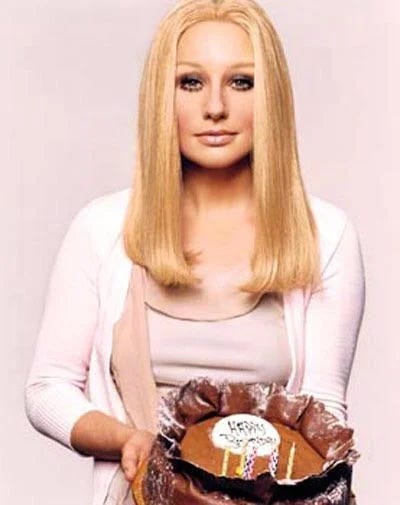
The most evocative song on the album is her take on Eminem’s “‘97 Bonnie and Clyde”. She places you in the woman’s point of view from the car’s trunk. She’s half alive and overhearing her husband relay, in a twisted paternal way, why her mother is soon to be dead. It’s chilling. Amos takes on this spoken, whispered tone throughout the song that sends shivers down your spine.
Compared to the demented sing-song-like rap verses Eminem brings at you, Tori’s breathy delivery drives the image of a half-dead woman hearing her husband’s psychotic reasonings to his daughter over the soon-to-be death of her mother. The loss of breathe at the end of the lines, “Here, you wanna help da-da tie a rope around this rock?/ We’ll tie it to her footsie then we’ll roll her off the dock/ Ready now, here we go, on the count of free../ One.. two.. free.. WHEEEEEE!”, really drive home the image of this woman’s last moments alive. It’s a powerful take on one of the more violent tracks in Eminem’s catalog.

The only single to be taken from the album is Tori’s version of The Stranglers’ “Strange Little Girl.” She gives the song a more 70s wash, opting for the Wurlitzer over the original synths and giving a rushing drum progression that quickly grabs you from the song’s beginning.
I really liked the take Amos has on the character when put into the progression of the album’s track list:
“This is the little girl whose father killed her mother in Eminem’s song, all grown up, having to deal with the fact that she was an accomplice to the murder. She’s a dichotomy of things because she’s divided — even when parents divorce, if they turn one child against one parent, you’re dividing that child at the core. It’s a manipulative thing to do.”
The words, “one day you see a strange little girl look at you/ one day you see a strange little girl feeling blue/ walking home in her wrapped up world/ she survived, but she’s feeling old/ cause she found all things cold,” give off such a broken vibe after reading that response. I thoroughly enjoy the fast-paced drum and guitar work that evokes the feeling of frantically outrunning your past, present, and future.
Tori takes a much more stark approach to Depeche Mode’s “Enjoy the Silence.” She strips away all of the electronics, leaving just her vocals, piano, and the most subtle synth and bass line to add some levity. It gives the words a much harsher tone. They are quite literally breaking the silence. The small change to the second verse’s lines, “Pleasures remain/ So does the pain/ Words are meaningless/ And unforgettable,” adds such a heavy gravity to the power of words and the scars they can leave behind.
Regarding transformations, Amos made an extremely emotionally impactful move to an alt/electronic classic. I quite enjoy Amos’s take on 10cc’s “I’m Not in Love.” The originally airy 70s song gets a much darker makeover. The 10cc original has a very flowery vibe, which gives the lyrics a more sarcastic, playful mood in response to the woman he is singing to. Amos gives the song a threatening coldness. This juxtaposition of sound makes the man’s lines emotionally abusive: “Said, I’d like to see you, but then again/ It doesn’t mean you mean that much to me/ So if I call you, don’t make a fuss/ Don’t tell your friends about the two of us.” Chamberlain’s empty percussion creates a beautifully dark, hollow mood.
Tori tones down the tempo just a hair on the Lloyd Cole track “Rattlesnakes.” Keeping the richness of the strings through the use of a slide guitar and a Rhodes piano. It gives the song a touch of Americana that I think works in its favor. Tori’s vocal delivery, I think, provides more depth to Jodie’s story, a troubled woman still haunted by the loss of her unborn child. I wish this had been another single off the project. It’s a nice bridge to what would come on Amos’s next project.

One of the album’s most straightforward covers is the Tom Waits cover of “Time.” Trading Waits’ guitar for Amos’s piano keeps the same reverence as the original. One thing that makes this track stand out is its familiarity. It sounds so much like something Amos would pull out on stage solo for a special moment.
She had thought to put this on the organ but opted for the stripped-down take:
“I thought about taking this to the organ, but I stripped it back… It’s from the point of view of Death, so I felt like you need to feel like you are sitting on the piano stool. No masks, no effects, it’s right here, dry, with a little compression on vocals.”
It’s a very special moment on the album. Tori’s take on Neil Young’s “Heart of Gold” is one of the few that misses the mark for me. We trade out the folk styling of Neil’s original for a more ’70s-styled rock sound that layers Amos’s vocals over one another. It just feels a bit too chaotic and cluttered compared to the other reinventions she’s created on the album thus far.
Like her treatment of “Enjoy the Silence,” The Boomtown Rats’ “I Don’t Like Mondays” is a simple Rhodes-and-vocal track. The lush reverb on the Rhodes is a treat for the ears. Compared to the other tracks on the album, it feels just a bit flat. Seeing this a song about a woman shooting up an elementary school playground, the mellow mood of the song just doesn’t match the subject matter on the song well.

The longest song on the album is her spin on The Beatles’ “Happiness Is a Warm Gun.” Coming in at 9 minutes, it is interspersed with audio clips of George H.W. and George W. Bush, Daniel Bocking, and Tori’s own father, Dr. Edison Amos, discussing their thoughts on gun violence. It’s probably one of the most abstract takes on the entire album.
Giving this song a menagerie of political clips alongside Lennon and McCartney’s words makes for a unique stand for gun control, which has only become an even greater issue in recent years. I find Amos’s dual-wielding of the synth and piano to be outstanding and the spin on the track to be much more powerful now. I just wish it had a bit more form.
Another favorite of mine off the project is the unique spin on Slayer’s “Raining Blood.” She flips the speed metal track on its head, opting for a deep, crawling piano line, a growling bass line, and a vocal reverb that only highlights the song’s emptiness. It’s battered and seething compared to the original, tearing viciousness.
Of her take on the song, Tori told Oor:
“The text is really beautiful indeed, the words touched me deep. The ‘Raining Blood’ girl revealed herself to me from the moment that I heard the song. She said from the first line, ‘Come with me Tori, I’ll show you everything.’ She took me to a warfield, pure horror. Still I felt safe with her, because of her braveness. But not only the girl came to me. There was another image. Of a big, beautiful vagina in the air. From which blood is raining. It’s falling out of the air on certain countries which are so terribly violent against women. Like Afghanistan, where women can’t even go on the street without a man, are not allowed to study and often get raped. And these horrors can not be lead in any way to religion. It’s straight from the spirit of men”
This malice-fueled feminine point of view only promises retribution for the horrors the women have suffered: “The sky is turning red/ Return to power draws near/ Fall unto me, unto/ Fall unto me the sky’s crimson tears/ Abolish the rules/ Abolish the rules made of stone.” Though extremely colorful in Amos’s description above, the notion pours thickly over you as the track oozes.
We end off the project with another, more straightforward take on Joe Jackson’s “Real Men.” For an album that focused on reinventing songs from a male perspective, it is only fitting that she would cover one that calls out all kinds of masculinity. Her vocal hums in the song’s chorus are absolute ear candy. I’m glad she saved this one at the end of the album. It feels like the perfect closing chapter to Tori’s narrative.
Overall, I think most of the album shows Amos’s talent for covering a song and making it all her own. Some of the tracks, “‘97 Bonnie and Clyde”, “I’m Not in Love,” and “Raining Blood,” become something entirely their own through Tori’s interpretation.
That said, I think there are a few missteps on the album. “I Don’t Like Mondays” is too calm compared to its dark lyrics, and “Heart of Gold” feels overloaded. I wish her covers of David Bowie’s “After All” and Alice Cooper’s “Only Women Bleed” took the place of those two tracks instead of being B-sides.
My favorites off the album:
- “‘97 Bonnie and Clyde”
- “Enjoy the Silence”
- “I’m Not in Love”
- “Rattlesnakes”
- “Time”
- “Raining Blood”
My overall rating: 7.0 out of 10.0.
Bottom Line: Thank you again to Z-sides Music for today’s post! Please be sure to check out more of his work over on Medium. You can also connect with him on Instagram.
As for the vote: Not all of these tracks landed with me. There are some discussions as to whether this was Amos trying something new, or simply mailing it in to meet the terms of her contract with Atlantic. I’m choosing to buy into the former, so she’s getting both my bracket pick and vote. And Aesop Rock? I like hip-hop, but nothing about this album stuck with me.
 Kevin Sent
Leave a comment