The Best Record of 1989: Day 44: #90 Roy Orbison, Mystery Girl vs. #39 Jungle brothers, Done By the Forces of Nature
Good morning!
Today we’re taking a look at records from Roy Orbison and Jungle Brothers
Note: As many of you know, I recently wrote about a Best Record of 1989 challenge and noted that I’d occasionally write some of these up.
I’ve started doing some quick hits of each matchup and posting them directly to the page. Some will be longer, some won’t, and some might just be a handful of sentences. There’ll probably definitely be some typos.
Check ’em out and let me know your thoughts! Chin wags & hot takes welcome! Sharing and restacks are always appreciated.
KA—
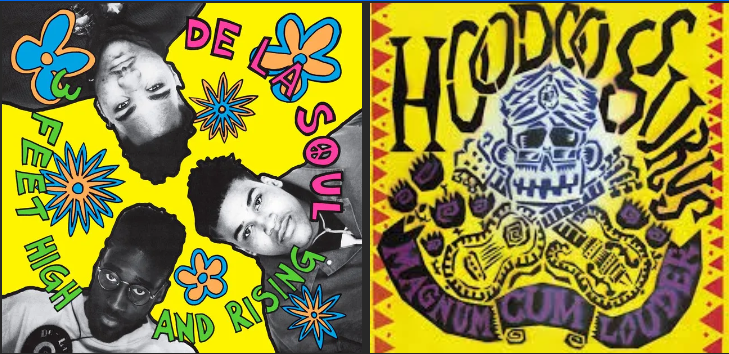
Let’s talk about Jungle Brothers’ second album. Done by the Forces of Nature isn’t just their best—it’s their crowning achievement. IMO, it’s conscious rap’s finest hour.
Hyperbole? Maybe. But I’ve listened to a ton of albums over the years, and I can’t think of one this consistent from front to back—fifteen tracks, and not a single dud in the mix. No filler. No skits. No middling nonsense. Just bangers. It never gets boring. It never stalls out. It’s sonically rich and wide-ranging. Even the cover reminds me of a happier era.
Picking a pull track here is tough. If pushed, I’d go with “Sunshine” and the infectious “What U Waitin’ For?”. If you’re old enough to remember house parties, this’ll take you right back to being squished into the front room with everyone. And of course, this being made when it was, there’s a group track, featuring Q-Tip, Monie Love, Queen Latifah, and De La Soul. It’s pretty much the full roster of the Native Tongues crew just vibing.
The production is textbook; especially with regards to sampling. Sure, you’ll recognize the samples, but they’re chopped, layered, and flipped into something new. And is that a sample of Junior’s “Mama Used to Say” on “Days 2 Come?” You better believe it. Magic. This was back when producers were alchemists, not just playlist DJs with a loop pack and a laptop. The sample of People’s Choice’s “Do It Any Way You Wanna” on “What U Waitin’ For?” is (chef’s kiss). On a sidenote, this is also fuels Public Enemy’s equally fantastic “Shake Your Booty.”
Sound-wise, you’ve got a sizeable dose of funk, jazz, and—less common at the time—Afrobeat, which fits well with the album’s Afrocentric vibe. But here’s the deal: it never gets preachy or self-righteous. None of that aggressive posturing some so-called “conscious” acts fell into that just got exhausting after a few tracks. Jungle Brothers recognize that rest is resistance. It’s okay to cut loose once in a while! It’s grounded and positive in a way often missing in modern rap.
This is the record people are thinking of when they talk about conscious, alternative hip-hop. It’s the blueprint, but somehow, still underappreciated. Maybe even forgotten in some circles? I’m sure some of that is down to its (relative) unavailability, which is a shame.
If you’ve never heard it, fix that immediately (you can find it on YouTube). If you have—listen again. It’s even better than you remember.
Until now, the only track I’d heard from Roy Orbison’s Mystery Girl was the hit “You Got It,” which seemed everywhere back in the day. With his operatic voice, Orbison has always seemed out of place in the world of rock. That’s not to say his voice is not stunning, only that he’s a square peg trying to fit in a round hole. He’s unique; I’ll give him that.
Mystery Girl was a comeback record in every sense of the word. After 10 years and a run of not-so-great releases, he put out what would be one of his best records. Unfortunately, it would also be the last one recorded while he was alive. Released posthumously, it was finished just a month or so before he passed away.
At the risk of being crass, if you’re going out on a high note, this is the way to do it. I’m not all that familiar with Orbison’s body of work, but taken in isolation, Mystery Girl works. An armada of talent put this together, including (at least) Jeff Lynne, Tom Petty, and the more famous half of U2. Bono and The Edge wrote “She’s A Mystery to Me” for Orbsion, and Bono produced the song.
With a roster like this, there’s always a risk of an album coming across as disjointed, but listening, I’m surprised at how consistent it sounds. There’s no shortage of sheen here—it’s a Jeff Lynne record, after all—but it doesn’t detract from things. The horns on songs like “The Only One” give it a nice Memphis sound.
Overall, it feels like the epitome of an Orbison record. Too bad he never got to see everyone enjoying it.
My vote: Orbison went out on a high note, but Done By The Forces of Nature is a force of nature. By bracket pick and vote are going to Jungle Brothers.
Any thoughts on either of these records? Agree/disagree with my takes? Which one of these would you vote for? Sound off in the comments!
The Best Record of 1989, Day 43: #26 Bob Mould, Workbook vs #103 Skinny Puppy, Rabies
Good morning!
Today we’re taking a look at records from Bob Mould and Skinny Puppy
Note: As many of you know, I recently wrote about a Best Record of 1989 challenge and noted that I’d occasionally write some of these up.
I’ve started doing some quick hits of each matchup and posting them directly to the page. Some will be longer, some won’t, and some might just be a handful of sentences. There’ll probably definitely be some typos.
Check ’em out and let me know your thoughts! Chin wags & hot takes welcome! Sharing and restacks are always appreciated.
KA—
The first time I heard Husker Du’s New Day Rising, it was like a kick to the head. The blast furnace riffs, the distortion, the vocals—the record was a revelation. I couldn’t get enough and went on to devour any record of theirs I could find.
The first time I heard Bob Mould’s Workbook, I was surprised. I’d been looking for more of the same and instead got… an acoustic guitar? And was that a cello? WTF was going on here? Where was the feedback? The molten lava feedback? Had Mould gone pop?
Maybe. Or maybe he was just tired of being angry. Either way, Husker Du was dead, and Mould was starting anew. In his autobiography, “See A Little Light,” he notes, “I sensed there was a part of the punk audience that would feel betrayed.” I’m sure there was plenty of that (it’s worth noting that when seeing Sugar a few years later, he emphatically stated that they would NOT be playing any Husker Du songs), but if anyone felt betrayed, that’s on them.
Artists are allowed to pivot, are they not?
I didn’t feel betrayed per se— I hadn’t been a Husker fan that long, anyway. Even if that was justified, I’m not sure I’d put in enough time for it to be justified. It was a case of not knowing what to do with what I had in my hands. I was an angry/angsty teenager, and records like New Day Rising fit right in with that. Workbook opens with a 2(ish) minute acoustic number. This record was appealing, but it was also much more (relatively) poppy. Those two things did not align for 14-15-year-old me.
Much like the Grinch, whose heart grows two times bigger, mine opened just enough to let this record in. It took a few listens and more than a few renewals from the Beaverton Library for that to happen, but I eventually came to love this record.
The aforementioned acoustic track (“Sunspots”) is fine, but things really kick off with “Wishing Well,” which to my ear initially felt like a feedback-free return to form. “See a Little Light” is, for my money, the most accessible track Mould has ever penned. I’m talking about mainstream audiences here, btw.
“Poison Years” is a preview of what was to come with Mould’s next project, Sugar, and proves early that this wouldn’t be all mandolins (or whatever) and pastoral moods. It was all right there; it just took a few listens for it to click for me. Mould is supported by Tony Fier and Tony Maimone here, and they do well to both support him as he strikes out on his own and keep him tethered (this isn’t the last time we’ll see Maimone in this challenge, btw).
And lest anyone still feel betrayed, the swirling maelstrom of the closing track, “Whatever Way The Wind Blows,” offers one last chance to see that the patented sound hadn’t died; it‘d just changed form.
My youngest son recently asked me if he could go with his friends to see Pantera play. My official on-the-record answer was that I needed more info (who, what, here, all the things we’re supposed to be asking). My unofficial answer was “hell yeah.”
My own experience with shows means I require clearing a pretty low bar to get permission. Really, it just involves listening to my prepackaged bit about safety, sticking together (he’s going with friends), and serving up my boilerplate speech about wearing earplugs. Luckily, a lifetime of him hearing me say “What?” makes this an easy sell. But really, I just want him and his brother to have the same transformative experiences I did.
In the winter of 1990, I had a chance to see Skinny Puppy perform. I’m intentionally using the word “perform” here instead of the (linguistically) easier “play.” It was as much a performance as a concert, and it completely rearranged my mind in all the best ways. The kids today would describe it as unhinged.
You could say the same thing for their records. Bites was my on-ramp to the band, and “Assimilate” is still one of my go-to records anytime I’m in the mood to hear something industrial. Many of those elements were still in place on Rabies; Nivek Ogre’s vocal stylings (half growl/half underwater), film clip dialogue spliced into tracks, and synths best described as vaguely menacing. There is an art to creating music like this, and Skinny Puppy are master craftsmen.
Opener “Rodent” starts things off on just the right note. Ditto “Hexonxonx.” You want industrial dance music? You’re gonna get industrial dance music. “Worlock” comes across as something Front 242’s evil twin made. It’s magnificent.
Ministry’s Alain Jourgensen produced and contributed here, and depending on your tastes, either enhances the order or detracts from it. This was the same era as “A Mind Is a Terrible Thing to Taste,” where our Al was shifting further away from synths and more towards blinding speed and off-the-charts BPMs. That works well in limited doses, but feels out of place in spots. And that’s the rub; as a fan of the band, this is a record I enjoyed, but don’t return to the same way I do Bites, Viva Sect VI, or Remission. I like my Skinny puppy synth-y, thank you.
Tracks like “Tin Omen” would be right at home on A Mind…, but on Rabies, they feel a bit like an odd man out. Still, it sounded great live; I just wish I’d worn earplugs.
My vote: To varying degrees, both of these records represent a shift in style(s). Rabies is more of a transition, while Workbook is almost a clean break. There’s really not much other common ground here.
Workbook took time to grow on me, while Rabies never truly landed the way earlier records had. I played it early and often, but it was more about skipping to tracks I liked than letting it play all the way through. Workbook was enjoyable enough to clear the hurdle of my preconceived notions, while Rabies clipped the bar. My vote will be for the former.
Any thoughts on either of these records? Agree/disagree with my takes? Which one of these would you vote for? Sound off in the comments!
The Best Record of 1989: Day 42: #58 Boogie Down Productions, Ghetto Music: The Blueprint of Hip Hop vs #71Young MC, Stone Cold Rhymin’
Good morning!
Today we’re taking a look at records from BDP and Young MC
Note: As many of you know, I recently wrote about a Best Record of 1989 challenge and noted that I’d occasionally write some of these up.
I’ve started doing some quick hits of each matchup and posting them directly to the page. Some will be longer, some won’t, and some might just be a handful of sentences. There’ll probably definitely be some typos.
Check ’em out and let me know your thoughts! Chin wags & hot takes welcome! Sharing and restacks are always appreciated.
KA—
BDP—and, by extension, KRS-One—have always been lost on me. I have been much more interested in his role as a sort of hip-hop ambassador emeritus and the work he’s done in/for the community than I have in his work as an MC. This is not an indictment of his talent but a testament to where I was in life when he hit.
In 1989, things like “conscious rap” and a return to core principles weren’t on my radar. Sure, I’d take all the boom bap you could give me, but I was more into the beats (and bass) than anything else. Lessons and teachable moments? No thanks. And let’s be honest; as a teenager, hearing rhymes about “bitches” and light crimes was probably more thrilling than anything that would have opened my mind or raised my consciousness. I’m not saying that was cool; I’m just saying that’s how it was.
All that aside, there was a TON of hip hop to pick from in ‘89. We’ve already seen records from LL Cool J, The D.O.C., NWA, Biz Markie, Beastie Boys, with more on the way. No one was left wanting, regardless of what you were looking for in an MC or crew.
So while I was off misspending my youth, KRS-One was spreading a message to anyone ready to hear it. After the landmark Criminal Minded and By All Means Necessary, BDP came back for its third record in as many years: Ghetto Music: The Blueprint Of Hip-Hop.
The record has a dancehall/reggae flavor, reinforced through the samples used and lyrical cadence. Those easy rhythms support some harsh truths and real talk as KRS-One and co. take on all comers. No one’s safe; sucka MCs… crooked cops…you name it. The theme here is peace through strength. To achieve anything worthwhile, you must be willing to fight for it. “World Peace” throws an exclamation point on that, with wit, a deceivingly soulful beat, and a good dose of horns, oh, and a refrain of:
If we really want world peace And we want it right now We must make up our minds to take.. it..
That message was on time in ‘89 and is particularly relevant today. I might’ve passed on BDP back in the day, but Ghetto Music: The Blueprint Of Hip-Hop is too important to leave on the shelf.
The easy line here would be to note that Young MC had a massive hit with “Bust a Move,” and that was that. We could also talk about the chatter calling him an industry plant and grumble about his doing ads for Taco Bell and Pepsi. Doing ads might raise hackles, but they make financial sense. And who better in the game to pencil that out than someone with a (checks notes) economics degree from USC? WTF? Wasn’t everyone in ‘89 trying to talk about how street they were?
Maybe, but is it better to have one massive hit or a string of tracks the heads deem essential? One acts as a de facto annuity, and one gets you…props.
Depending on the criteria, Marvin “Young MC” Young had more than one hit to his name, helping pen some hit tracks for Tone Loc you might have heard. Even on this record, there were no less than six singles. I’ll be damed if I can remember more than two of them (“Principal’s Office” was also pretty good).
And the truth is, Stone Cold Rhymin is pretty good too. Some of the bars sound dated, as does the flow, but I’m listening to this as I type, and the overarching sentiment is one of surprise and mild delight. This isn’t half bad! Reading the liner notes, it looks like our man also had plenty of help; Mario “Mario C” Caldato Jr. is in the mix. Flea shows up. Wild. N’Dea Davenport of labelmates Brand New Heavies appears on “I Come Off.” There’s a lot more here than just the refrain of “if you want it, you got it, “ and a girl in yellow dancing on Arsenio Hall.
As much as I love that song (yes, really!), listening to it today, I’d dare say it’s not even the second or third best track on the record. The title goes to “Know How.” Young gets some help from the Dust Brothers, and using a sample from Shaft and the infamous Apache drum break, they deliver an absolute Banger.
Say what you will about Young MC, but he deserves credit for putting together a feel-good record that never tried to pretend it was anything different.
My vote: One of these records reinforced my (preconceived) notions about it, while the other demolished similar thoughts. BDP is good, carries a worthwhile message, and still just isn’t my bag. It is what it is. Young MC, meanwhile, put out a record far better than I remember/would‘ve given him credit for. I never owned either, but I am a little bummed it took me almost 40 years to dig into Stone Cold Rhymin’.
In sum, you’ve got some music with a message and a feel-good record. I have a feeling this is one match where people will vote for what they perceive as the more ‘real” record. Using that metric, BDP is the winner hands down, and my bracket reflects it.
Any thoughts on either of these records? Agree/disagree with my takes? Which one of these would you vote for? Sound off in the comments!
The Best record of 1989 Day 41: #7 The Stone Roses, The Stone Roses vs. #122 Lounge Lizards, Voice of Chunk
Good morning!
Today we’re taking a look at records from The Stone Roses and Lounge Lizards
Note: As many of you know, I recently wrote about a Best Record of 1989 challenge and noted that I’d be occasionally writing some of these up.
I’ve started doing some quick hits of each matchup and posting them directly to the page. Some will be longer, some won’t, and some might just be a handful of sentences. There’ll probably definitely be some typos.
Check ’em out and let me know your thoughts! Chin wags & hot takes welcome! Sharing and restacks are always appreciated.
KA—
If this were a tweet, I’d sum up this record thusly: Incredible first three tracks. Pretty weak run in the middle, before pulling out the flat spin and redeeming itself. Things are capped off with one of the filthiest grooves of the era. Particularly good if you happen to be off your face while listening.
Well, Twitter (still not callin’ it X) is an absolute dumpster fire. You’ll have to bear with me as I work my way through the reocrd.
The Stone Roses (the band) and The Stone Roses (the record) were both served up to us fully formed as things we were somehow required to like. I’m not sure who the invisible tastemakers were who deemed it so, but here we are. And there we went—to Tower Records to each get a tape or CD of our own. Copies just wouldn’t do, you see.
So! You have a record with absurdly high expectations, PR buzz ripping through my part of the world, and cassette in hand. Now what?
Well, you should know that (depending on mood) your Fast Forward and Reverse buttons are going to get a workout. The opening track, “I Want to Be Adored,” is a slow burn, building up slowly until bursting open with some of the best sounds on the record. It’s short on lyrics and long on mood, and it’s awesome—though I’m not sure I would’ve slotted it in at A1.
“She Bangs The Drums” is a lovely bit of pop that sounds like the band either rooted through their parents’ record collection or fell into a time machine set to 1967. It’s bright and “up,” a strong contrast to the moodiness on the rest of the record. It’s a goofy love song about a guy in love with a girl drummer, but hey, who wouldn’t want that? “Waterfall” is…okay… It rounds out a solid opening trio. And here’s where things take a turn…
“Don’t Stop” is frankly awful, with “Bye Bye Bad Man” only slightly better. At 53 seconds, “Elizabeth My Dear” is about 52 seconds too long.
The opening riff of “(Song For My) Sugar Spun Sister” sounds like another song, and trying to figure out what it is has been driving me bonkers. If you have any ideas, please comment!
At any rate, the song isn’t terrible. And it’s not awesome, either. Better than the three that precede it, but that‘s a bar low enough to be a tripping hazard.
Right about the time your fast-forward button will be begging for mercy, comes ”Made of Stone,” and not a moment too soon! It’s strangely uplifting and a nice break from what we’ve just been through. While looking at the lyrics, I learned this track is supposedly about the car crash that took artist Jackson Pollack’s life. Go figure.
We’re right back at it (hitting buttons, that is) for “Shoot You Down.” This strikes me as one of those songs someone brought to the studio and either made a compelling case for or lost a bet. Dealer’s choice.
I vaguely recall a bit of indignation at “I Am the Resurrection.” 1989 America was a particularly pious one, and thinking about it now, I wonder if that became part of the record’s appeal for us? Nothing ships units like a bit of rebellion. At any rate, opinion on the track itself was split in my circle, with people either really digging it or barely being able to stand it. I was firmly in the former camp, and still am. It’s not the best song on the record, but no matter, it still works. At 8+ minutes, it’s entirely too long and does devolve into a weird jam band type thing, but in 1989, this was about as close as I was gonna get to digging anything of the sort, my love for the Grateful Dead still being several years off.
The original release didn’t include “Fool’s Gold,” but I’m gonna call an audible and pretend it did. Why? ‘Cause it’s incredible, that‘s why. I know it‘s not for every taste, but it was right up my alley. Mani’s Bass? On point. Reni’s drumming? Off the charts. John Squire’s guitar work is good too, but it’s the rhythm section that carries it.
That this record is seeded at #7 for this tournament tells me two things: nostalgia has a long shelf life, and that maybe there was something to that PR campaign I mentioned up top. If nothing else, it’s got a long tail. This is a solid record, but is it #7 seed good? I’m not seein’ it.
When I think of jazz, I usually think of either Thelonious Monk or the poppier side (e.g., George Benson). The sort of “this is a work in progress, and we’re not really sure where it‘s going, but we’ll have fun along the way” stuff is kind of a blind spot for me. Doubly so anything made after the Eisenhower administration. It always feels like a squonk too many, or just dissonant enough to turn me off. The idea that you‘re supposed to see the notes between the notes (or whatever) always felt like a papering over for what was most likely a jam session by the local chapter of psychonauts.
There’s a third lane as well; the one that evokes images of places like New York at dawn, the sort of grainy image with the early light of, say, 6 AM, a taxi (obvs), and steam coming up through the vents. It’s this sort of noir imagery that I couldn’t shake the entire time I listened to this. It’s the sort of record that could only be made in NYC (note: I haven’t looked to see if it was or not).
Sure, there are plenty of squonks and odd notes, and a few tracks suffer from a touch too much sax (‘Sharks”), but there are some fun things like elements of blues here. “Tarantella” is what you’ll hear as you’re walking into the best funhouse you’ve ever been to. “A Paper Bag and the Sun” is almost too esoteric for its own good (notes between the notes and all that), but somehow managed ot become my favorite track on the record.
In the end, that smiling sneakiness is what made this such an enjoyable listen. Will I come back to it? It beats me, but I wouldn’t be surprised to find myself using it to soundtrack a Saturday morning breakfast. I would probably fast-forward through “Sharks,” though.
My vote: A lounge Lizards win would be a hell of an upset—and stranger things have happened— but in this case, I think name recognition will carry The Stone Roses far further than the record alone. And I need every win I can get, cheap or not. My bracket pick and vote will be for them.
Any thoughts on either of these records? Agree/disagree with my takes? Which one of these would you vote for? Sound off in the comments!
We’re in for a treat today! Author Rob Janicke stops by to talk about his book,Slacker—1991, Teen Spirit Angst, and the Generation It Created.
It’s weird, this online life. There are people I’ve known for years—that I feel like I’ve known longer— that I’ve never been in the same room (or even the same time zone) with.
Rob Janicke is one of those people. He and I first connected as editors for the same online publication. It quickly became clear that we had more in common than a penchant for using a red pen. Our music tastes run largely in parallel, but so too did a lot of our early years, and the transformative role music played in them. More than once, I’ve said that it’s not an exaggeration to say music saved my life. It certainly saved his.
I’ve quipped that he and I were often at the same shows, just on opposite coasts. Except that it’s not a joke. Having those chats makes me wish I’d saved more than 1-2 of my ticket stubs. Who saw which band first, depending mainly on which side of the country the van left from?
Rob stepped away from his editing role to start a new project—a project that ultimately became Slacker—1991, Teen Spirit Angst, and the Generation It Created. As you’ll see below, it’s been a long road, and the final version looks very different from that initial pitch.
I will tell you now that reviewing this book was tough. It’s a project I’ve rooted for, and I was ecstatic to get an early copy of it (NOTE: for more on how to win a signed one of your own, read on). In other words, you shouldn’t have any expectation of objectivity here. Spoiler alert: it’s awesome. That said, I’m not just being nice when I tell you this is a harrowing and exhilarating read in equal parts.
It would’ve been easy enough for him to write a fairly straightforward look back at that early 90s scene. People love that sort of thing, right? Maybe even punch it up by making it into an oral history full of stories from those lucky enough to have been there. Instead, Rob weaves together that history with that of his own life. Ultimately, that blend makes for a much richer, more interesting story.
The shiny parts are an easy read (hanging out at the record store, going to shows, etc.). The book also dips a bit into the science of why music moves us the way only it can. If you’ve ever had your mind rearranged by a slab of vinyl, this’ll be relatable. All well and good.
However, the book also touches on some darker parts of life as a latchkey kid. That’s his story to tell, and he doesn’t gloss over any of it. My copy is full of highlights, dog-eared pages, and notes in the margins- some of which were questions I wanted to make sure to ask him.
Slacker isn’t a puff piece for GenXers looking to relieve their youth; there’s no garden hose memes, or rants about “kids these days.” Rather, it’s for anyone looking to read more about why that very specific time had such an outsized impact on our lives and pop culture. It was an era that changed the world, one life at a time.
If you’re of a certain age, it will absolutely resonate with you. You’ll likely see your own life reflected back at you the way I did.
I recently (Finally!) had a chance to speak with Rob. In our wide-ranging chat, we discuss the Slacker origin story, where it started and ended up, and the opportunities writing the book has presented.
The discussion has only been lightly edited for grammar and flow.
KA—
Congrats on the book! I know this has been years in the making. For those who may not be familiar with the backstory, could you walk us through how Slacker came to be?
Thanks, Kevin! You’re right. SLACKER started with some personal introspection during the COVID-19 pandemic and kind of took on a life of its own soon after I wrote the first few pages. It was April 2020, and I was in my backyard watching my dog play. As I’m sure you remember, life was pretty strange back then, as we were all locked down in our homes due to the pandemic and had to pass the time somehow.
While standing in the yard and sort of daydreaming a bit, I recalled a conversation I’d heard on a podcast or radio show earlier in the day. During that show, the year 1991 was brought up, and I remember thinking, “damn, next year (2021) we will be 30 removed from ‘91”. It blew my mind. I tend to think of life in terms of music, and for me, as many Gen Xers, 1991 was a massively important year in terms of music and culture. It changed everything.
So, with that in mind, I went back into my house and just started writing my thoughts down about that year, what it meant to me, the music I discovered, and the impact it and so much of what came after have had on me right up through this very day. A few months later, I found myself with over 30,000 words, some chapters, and the skeleton of a book.
To avoid making this answer too long, I’ll fast-forward to a meeting with a publisher (after many rejections or simply being ignored by other publishers had taken place) who was given a description of my “book” by a mutual friend. Luckily for me, they loved the idea and wanted to learn more. As they say, the rest is history.
One thing that sets this book apart is how it takes your own story and parallels it with what is happening in the music scene. It would’ve been easy to write a more straightforward history of the scene–and a lot of people would’ve dug that. What made you decide to pivot this into a more personal narrative?
This is a great question because, at first, the intention was to chronicle the scene without too much of a personal narrative. I don’t believe there are many books that do that with regard to the early Seattle movement. There are plenty of books on bands and artists from that era, but I can’t think of one that walks you through the overall story.
As I was writing it, though, it became obvious that the reason I love the music and culture from that period as much as I do is due in large part to how it shaped and helped me from the earliest moments of me hearing it. I couldn’t separate myself from the music. I’ve always believed that the personal lyrics and vulnerability of the songs played as much of a role as the sound of the music did in creating a global fanbase.
Millions upon millions upon millions of people cared about this music and still do today, so it didn’t seem right to leave my story out. I knew other fans would be able to relate because their stories probably mirrored mine in many ways.
You make no secret of your mental health struggles here. For me, this made reading the story that much more authentic. What sort of other feedback have you received from people? Have you been doing (or plan to do) any speaking on the topic as you do press for the book?
I appreciate you saying that. In early drafts of the book, I hinted at certain things about the issues and trouble I had back then, but I wasn’t fully letting go. I have to give credit to my publisher, Inspired By You Books, and their editors for teaching me how to let go. They saw what I was doing and worked with me to dig deeper and allow myself to be more upfront about my life rather than tiptoe around the more difficult topics.
As far as feedback, I’m so grateful that it’s been overwhelmingly positive thus far. They like the musical aspects for sure, and many casual fans of the era have told me they learned so much about the scene, how and when some of the bands started, etc. One thing almost everyone has said, though, is that they were taken aback by my story (most people in my life knew little to nothing about some of the more personal aspects) and that, in some cases, has given them courage to start talking about past trauma they’ve been through. Some have even told me things that they never told anyone else.
I wasn’t prepared for that, but I cannot tell you how happy it makes me that people struggling with things found at least a small step towards dealing with their struggles because they’ve read my book. As for speaking engagements surrounding the topic of mental health and/or how music plays a role in healing, I’ve given a few talks so far and absolutely plan on doing more.
There’s a passage–and I’m paraphrasing here– that says, “When strange things get stranger or just played out, and the youth of any generation decides it’s time for a change, things happen.” In your opinion, are we there now? We could take this in numerous socioeconomic directions, but I’m specifically interested in hearing how it might relate to music and how we discover and consume it. Listening parties are back in fashion. Blogs are in vogue. Are we there? If so, what’s that next phase look like?
I hope so!! Had I been asked this question prior to 2020, I’d say that we may never see a change in music or youth culture again. I was pretty sure of that. Since then, however, I have changed my mind. I think we’re living through very strange, difficult, and dare I say bizarre times right now, and I’ve seen and heard more than a handful of bands and artists rising to the challenge of creating something new.
Back in the day, music discovery was limited to Top 40 radio, MTV, fanzines, corporate magazines, and, to a lesser degree, your local scene. Distribution for the local or underground music was essentially nonexistent, so without major record labels and the money and power that came with them, we “discovered” what they told us to. It just so happened that what they gave us in the late 80s and early to mid-90s was pretty damn great. That music was the definition of change and rebellion to the norm at that time.
In today’s musical and cultural landscape, that doesn’t exist outside of pop music (included in that are the vanilla versions of hip hop and country). But because of streaming technology and the social media revolution, we can find anything we want. It takes more effort than it did back when it was spoon-fed to us, but it’s more fun this way.
I find most of the new music I love by diving down rabbit holes on YouTube or Instagram, Spotify, and the like. They say that if something was truly great, or at least powerful enough to have made a large dent in culture, it will find its way back every 25-30 years. This is because the original youth audience has grown up, had kids of their own to expose it to, and those kids have reached an age where they become inspired enough to put their spin on what they’ve been shown.
I think we are at that point now. I feel like the future of music will get edgier and angrier than it has been in a while, and hopefully, it will become popular enough to influence future generations to continue that sonic cycle.
In the book, you state that “Smells Like Teen Spirit” isn’t the best song on Nevermind, but rather that “Lounge Act” is. That’s a take sure to raise some eyebrows. Say more on that, please.
Ha…I’m glad you picked up on that. Let me first say that I LOVE “Smells Like Teen Spirit.” I thought it was an amazing song in 1991, and I think it’s an amazing song now. I honestly do not get tired of hearing it. It’s the reason the scene had a chance to take off and thrive, so it’s undoubtedly one of the most important songs of all time.
As far as my comment about “Lounge Act” being better, it’s a matter of taste. ‘Teen Spirit’ has that perfect verse-chorus-verse arrangement (the song actually begins with the chorus but without any vocals so you don’t really get the full punch) to it so once you get through the first chorus, the formula is there and you know what to expect.
Like I said, amazing song, blew me away when I first heard it. “Lounge Act,” with its infectious bassline that starts the track, instantly finds its way into your bloodstream. It’s just a great, solid groove. But as the song continues, it slowly builds up, feeling a little anxious and ready to explode.
The problem is, you don’t know where or how it will explode because the verses and choruses don’t change much, except for those slight upticks in tempo and feel. Then, the last verse hits, and structurally it’s the same as the others except Kurt is now screaming the vocal part. This is the payoff. It floored me the first time I heard and I just fell in love with it from that day on. It’s so simple yet I can’t recall hearing a song with such a slow build up (for a fast song no less) that leads to this visceral pounding.
As you look back now on the process of writing this, what surprised you the most?
The biggest surprise is that I finished it. I gave up a couple (or five) times. I took month-long breaks from writing a single word. I fought bouts of Imposter Syndrome. I had never written a book before and had absolutely no clue just how hard it would be. I believed in it though, so no matter the obstacle or length of time, I was determined to finish it.
One of the people you interviewed stated [they] believe record stores are more important than churches or cathedrals. I agree and would add concert halls to the list. What do you think it was that made those places so sacred for people like you and me?
Yes, that was John Richards, host of the morning show on KEXP in Seattle. He’s a legendary figure on the music scene, and since he’s my age, he was there when it all started. I loved speaking with him.
Record stores, along with music venues, as you mentioned, were the communal foundation for music fans from our generation. I lived in my local record store from 1991-1994. I spent most weekends going to small and medium-sized clubs in NYC to see any and every band I could. This was during the very infancy of the internet and more than a decade before any semblance of social media, so these places are where we found our tribe. People who wanted to watch, listen to, and discuss music.
It’s where we not only felt welcomed but also belonged. Those stores and venues, although owned by others, were ours, and we all felt it.
Towards the end, you touch on the idea that describing what it was like to be on the scene in 1991 will never come close to actually being there. Was trying to do that one of the reasons for writing this book? Mission accomplished?
Absolutely! When I was in college, I spent a ridiculous amount of time in the school’s main library for a kid who barely held a C average. I wasn’t studying or doing homework as you can gather by my previous sentence. Instead, I was reading every book I could find on The Beatles, The Rolling Stones, Led Zeppelin, and any other musician or band I liked or simply heard of.
I immersed myself in cultures I wasn’t alive to see for myself but wanted to learn about. I’ve always been the type of music fan who reads every liner note inside the album jacket, every story and interview in the magazines, and watches every documentary I can. I was a sponge and information about music was the water. The more I knew about my musical heroes, the more I wanted to listen to their music.
Fast forward to today, or more importantly, when I started writing the book, I wanted to “pay back” the authors who wrote all the books I read from days gone by and hopefully have SLACKER become one of those books for some wide-eyed kid wanting to learn about music he or she wasn’t alive for. I want it to be a historical document as well as a relatable story of a kid who had his ups and downs, but through these bands, and through this music, made it out far enough to write a book about it all and hopefully inspire others to do the same if they so choose.
Mission accomplished? I think so, but time will tell I guess.
Last one, just for fun, you got tickets for a show this weekend. Who are we going to see?
Hmmm. Well, if you’re talking about a band from back in the day, it would have to be Nirvana. I say that because they’re just about the only band from that era I didn’t see. As you know, they broke big very quickly, in January of 1992. That’s when Nevermind went to number one on the Billboard album chart and the band only lasted a little more than two years beyond that. They didn’t tour a ton in the States after Nevermind took off, and for me in New York, most of their shows were for TV and a few invitation-only shows.
If your question is geared for the present day, I’d say we’re going to see either Bad Nerves or Winona Fighter.
Thanks so much, Kevin, this was a lot of fun!
We want to get this book into your hands! Want one? Here’s all you need to do:
Comment below and/or restack this post before 11:59 PM CDT on Wednesday, July 23rd, 2025.
Entries will be thrown in a wheel, with the winning name drawn on Thursday.
This is open to all readers. As always, Paid supporters of the newsletter automatically get two entries, and free subscribers can restack the post for a second entry.
Today we’re taking a look at Janet Jackson’s Rhythm Nation 1814 and Gretchen Goes to Nebraska by King’s X
Note: As many of you know, I recently wrote about a Best Record of 1989 challenge and noted that I’d be occasionally writing some of these up.
I’ve started doing some quick hits of each matchup and posting them directly to the page. Some will be longer, some won’t, and some might just be a handful of sentences. There’ll probably definitely be some typos.
Check ’em out and let me know your thoughts! Chin wags & hot takes welcome! Sharing and restacks are always appreciated.
KA—
If Jackson’s Control album was a declaration of independence, follow up, Rhythm Nation 1814 was her manifesto on how she thought the world should be.
So how do you follow up an artistic/commercial victory like that? Well, you start by going back to Minneapolis and again working with Jimmy Jam and Terry Lewis. There’s a familiarity there, but 1989 was a new day and that meant a new direction for this record. Jackson had some things to say, and the synth pop of the last record would give way to a (relatively) grittier sound. Less synths, more guitar. She was taking on some heavy topics and weighty topics require weighty foundations.
Those nasty grooves are all over this record, but so too is the New Jack Swing sound. There’s hard charging riffs, and even samples from the last album.
As many longtime readers know, i’m not exactly a fan of the interludes and skits that were in vogue back int he day. At best they disrupted a record’s flow. At worst they were just obnoxious. Rhythm Nation is an exception; here, they do well to tie everything together, helping Jackson make her case. The title track is a call to arms, with songs like “State of the World” and “Livin’ in a World (They Didn’t Make)” serving as supporting arguments.
But! This is also a Janet Jackson record, and she (and Jam and lewis) do well to know when to let off the gas and let us let our hair down. “Miss You Much” is straight up bit of pop ,ready made for a run up the charts. Ditto “Escapade” and it’s easy, breezy escapism. “Alright” might be the most underrated track on Jackson’s first 5-6 records. Play it and try not to feel better about the world, if only for a moment. And it wouldn’t be a Janet Jackson record without a torch song or two- “Come Back to Me” fits the bill nicely. “Someday Is Tonight” feels is the logical successor to Control’s “Let’s Wait a While.”
Rhythm Nation 1814 is a serious record made by an artist hellbent on having the wordl take her seriously. Mission Accomplished. It’s not lost on me that one of the early lines we hear on the title track is “It’s time to give a damn, let’s work together.” This is an album that will pull you to the dancefloor, but make you think while you’re doing it. All this from an artist then in her early 20’s.
As she sings on Escapade, “We’ll make the rules up as we go along/And break them all if we’re not havin’ fun”
Jackson’s stardom and lasting influence are hard to argue. Meanwhile, a case for King’s X is hard to make. If anything, they might dominate the “what might’ve been” leaderboards, but are otherwise a footnote in rock history. Maybe fodder for bar trivia or that pedantic “rock guy” we all know.
I can vaguely recall seeing one of their videos is fairly decent rotation on MTV, but I’ll be damned if I can remember which track it was. It’s not that this is objectively bad music— it’s not— it’s just not something that ever stuck with me. Part of that may have to do with their being saddled with a Christian Rock tag. While not overtly so in the same manner as ,say, Stryper, there was enough there to get them sorted into the bucket. The band had to spend a lot of time and energy stating that they were simply Christians that happened to play in a band together. Which, ok. Nothing wrong with that, but that’s a needle you aren’t gonna be able to thread in 1989.
Frontman Doug Pinnick was also gay, and that meant Christian stores wouldn’t carry the record. Meanwhile Prog fans had what they needed in bands like Rush. They couldn’t win.
In another timeline, things like discrimination wouldn’t exist, the band’s timing would’ve been better, and King’s X would’ve been huge. If nothing else, Pinnick’s vocals would get the credit they deserve— he can sing and do metal yells with the best of ‘em.
As it stands, it’s a good record heard by far too few people to have made a dent.
Bottom Line:Rhythm Nation 1814 was a huge commercial success, but also got a lot of people to think about things they otherwise might not’ve. King’s X is prima facie evidence that not every good record rises to the top.
My vote: My bracket pick and vote will be going to Rhythm Nation 1814.
Any thoughts on either of these records? Agree/disagree with my takes? Which one of these would you vote for? Sound off in the comments!
Prince’s Batman soundtrack takes on The Durutti Column’s Vini Reilly
Today we’re taking a look at Prince’s Batman record as it faces off against Durutti Column’s Vini Reilly.
Note: As many of you know, I recently wrote about a Best Record of 1989 challenge and noted that I’d be occasionally writing some of these up.
I’ve started doing some quick hits of each matchup and posting them directly to the page. Some will be longer, some won’t, and some might just be a handful of sentences. There’ll probably definitely be some typos.
Check ’em out and let me know your thoughts! Chin wags & hot takes welcome! Sharing and restacks are always appreciated.
KA—
I won’t bury the lede here; when I think of Batman, it’s of the Adam West Cesar Romero era. I want camp and bad jokes. I want the dorky Biff! Bam! Pow! graphics that popped on the screen during fight scenes. I want the Batusi.
When I think of Prince, I want that irresistible funk and nasty groove that can only come out of Paisley Park. And I want a bit of controversy sprinkled across the top. I want, well, “Controversy.”
I’m also not the biggest fan of soundtracks- whether the OST ones or the “songs from” type. There are a few exceptions (e.g., Singles and 24 Hour Party People), but as a rule, those are full of bands/songs I’m already listening to.
Sometimes, a soundtrack spits the difference, and a single artist/band crafts a soundtrack to a movie that catches my ear, but off the top of my head, only Wang Chung’s To Live and Die In LA fits that bill.
To put it another way, Prince’s Batman record did not check a lot of boxes for me. It’s not the OST (Danny Elfman wrote that). Instead, it’s nine tracks, of which two got some decent screen time, the rest relegated to bits and pieces here and there.
Perhaps that’s part of why it’s not memorable compared to the rest of his discography. Prince is not known as a guy who puts filler on his records (at least not in this era, anyway), and yet here we are: an entire album of formulaic tracks. Of little bits that do well to augment a film scene but grow tiresome quickly in their entirety. And on the other end of the spectrum, a 6+ minute Batdance track that is about 3:30 too long.
Again, give me the Batusi over whatever this is.
Not even Sheena Easton can save the awful “Arms of Orion.” This is the same pair that knocked it out of the park with “U Got the Look” just a couple of years earlier. Where’s that heat?!
This is a record that relies on the film itself to work; without that symbiosis, it fails to take off. I’m mindful that I’m measuring it against Price’s other work– an unfairly high bar–but still.
Reading up on this ahead of listening, I came across the idea that this was initially supposed to be an album split between Michael Jackson and Prince. MJ would take on the role of Batman, with Prince taking on the Joker.
If only. That kind of dichotomy would’ve made this a much more vibrant release! If nothing else, it would’ve made it more interesting.
As we go through this list, I’m finding myself surprised at how many bands I thought I’d heard (or had an idea of their sound), only to be proven dead wrong. If you looked at my music history, Durutti Column is a band—or a one-man band, mainly—that would be a logical fit. That one man would be Vini Reilly, the record’s namesake.
They were on Factory, which by default meant I was likely to check them out at least. Their name came up often enough in the circles I was swimming in. In ’89, Reilly was riding high after playing guitar and keys on Morrissey’s Viva Hate record. Listening now, I’m hit with the realization that I have absolutely never heard this before. Whatever the opposite of déjà vu is, I’m experiencing it in real time as I type.
The first thing that strikes me is that, in hindsight, this makes sense. In 1989, I wanted music with a pulse. With pace. And this ain’t it. This is gorgeous, experimental, and largely instrumental. And at that point in my life, instrumental was fine—as long as the BPM rate was above a certain threshold, and/or the bass hit hard enough. We don’t get any kind of verve until the mellow funk of People’s Pleasure Park at track 4. I was not a patient kid- no way would I have made it to this stage without passing.
The other thing that would’ve kept this from my tape deck or CD player was the aesthetics. I was in high school in 1989, and even amongst the indie crowd, there were fractures and factions. This seems like it would’ve appealed to the uber-pretentious among us. They were the people who wore black turtle necks year-round and performatively carried copies of The Stranger under their arms. My tribe wore skateboard T-shirts and over-indexed on louder, faster, and messier. As noted, there was plenty of techno & EDM and much love for anything “Madchester,” but this is something teenaged me almost certainly wouldn’t have got. I was a junkie— addicted to the rush sound gave me, and this was too low of a dose.
Back to today: listening now, I find this record genuinely interesting. It’s pleasant. I’m not saying either of those as a nicety. It’s varied. It has texutre. For a record, that’s now 36; it’s aging well—certainly compared to some of what came out of Factory during that era. I’m not sure I’d second the genius label Reilly had slapped on him, but his talent is not in question. This is a record I’d pick for a deep work session, but I worry it might be a little too interesting and prove a distraction. I can also say this is a record that I likely won’t listen to again after writing this piece. There’s just not enough of a pull to bring me back to it. Not enough “there” there.
Bottom Line: “You have so much potential” is a line that can trigger PTSD in a TAG kid decades later, and I’m loathe to invoke it here. Still, both these records need to hear it. Perhaps in a different universe, these records would’ve blown me away. But not in this one. Woulda, coulda, shoulda.
My vote: No heed/heart split here. My bracket and vote will both go to Prince; I think this is case of name recognition carrying an otherwise underwhelming matchup.
Any thoughts on either of these records? Agree/disagree with my takes? Which one of these would you vote for? Sound off in the comments!
Throwing Muses Hunkpapa vs. The D.O.C.’s No One Can Do It Better
Today sees #32 Throwing Muses ‘Hunkpapa’ album facing off against #97 The D.O.C.’s No One Can Do It Better.
I sent in a Designated Cheerleader piece for Hunkpapa, so that should tell you where my vote’s going. Last fall, Sam Colt and I took on the ambitious/absurd mission of ranking our top 100 records of all time. I slotted this one in at #48, and wrapped it up by noting:
“This band was like nothing I’d ever heard before. In a lot of ways, they still are. Writing this, I’ve struggled to pin down an easy genre tag or a way to describe the sound. Some of it feels like the sun’s surface (literally, in the case of “Dizzy”), and some of it reminds me of fall. I don’t know how best to describe this record besides saying, “Just go play it!” What I do know is that in the 30+ years (yikes!) since that show, this record has never drifted too far from my playlists.“
All that aside, IMO, this is a much tougher call than it would seem on paper. Both are incredible records–albeit for very different reasons. And both have had a lasting influence–albeit on much different groups of artists.
I blew out my knee right at the start of COVID (0/10 do not recommend), and The D.O.C. kept me company for a lot of my rehab. It’s a record of its time, but still sounds fresh.
There is some chatter that Hunkpapa is overranked, while the D.O.C. is underranked. I can see the case for each. What do you think? Who ya got?
Check out today’s write-up (and Designated Cheerleader article (not mine)here.
Val Lowry-Ortega’s latest project speaks of big dreams in small town America
Photo: : Hannah Marie Belisle
Good Morning!
Today we’re listening to Minneapolis-based Oceanographer
Over the last few years, our journey to find new music has taken us to some odd corners of the country. We’ve made stops in places as far afield as Bellingham, Washington; Bloomington, Indiana; Athens, Georgia; and Portland, Maine.
Today, we’re staying in flyover country and hopping over the border into Minnesota.
The upper Midwest is dotted with small towns full of people with big dreams. Growing up in rural Worthington, MN, Val Lowry-Ortega was no exception. Like many from small towns (or suburbs), most of their school years were spent counting the days to get out of town; they left right after graduation. After receiving a scholarship, Lowry-Ortega Initially channeled their energy toward acting, but quickly found their heart wasn’t in it. Playing the guitar to put off doing coursework ultimately became the genesis of their musician origin story. It was a much better fit.
After a stop in central Wisconsin, they moved to the Twin Cities, met up with some friends, and Oceanographer was born.
It’s probably good that it didn’t work out with NYU anyway, because going through my acting program made me realize how off-path I was. I didn’t want to be told what to do by other people. I wanted to write my own work that I had full creative control over. So, I honed in on my songwriting and started playing small gigs with the folk punk community in Stevens Point. I introduced my first iterations of my songs in grimey basements littered with beer cans, but I finally felt like I was heading in the right direction, oddly enough.
Deep Sea Diver taps heavily into those early years and the constraints of life in a small ton. Lowry-Ortega describes the sounds as “Midwest Dream Folk… a happy mix of Laurel Canyon Folk, 90s Dream Pop, and Midwest Emo.” The presser lists bands like Big Thief as comparisons, and even suggested The Sundays! Those are all apt, but listening I was reminded of KD Lang as well. Not everyone can nail that wistful sense of longing. Lowry-Ortega does.
When they sing His black eye swollen shut with shame/ Still half undressed in the window frame/He said that he had everything/But he gambled it away on “Midwestern Cowoby” you feel it.
The EP is three tracks full of guitars, lap steel, and easy beats, supporting her powerful vocals. It’s a bit folk, a bit country, and even a bit of pop- all with some gothic overtones sprinkled across the top. The lilting melodies belie the sometimes not-so-gorgeous stories of dreams unrealized and lives never fully lived. It’s the story of some people watching the big sky, yearning for something more, and of others destined to keep up appearances and settle for what they think they’re supposed to.
It’s the sound of something you’d hope to find on the AM dial while driving between Worthington and the Twin Cities, leaving the silos in your wake.
For readers in the Twin Cities area, the band has several upcoming shows!
June 1st Grand Ole Days (Solo) 12:30PM-5:00PM
June 12th Kingfield porchfest 6-9PM
June 13th at The Mess’s Backyard Blend With Skeleton Crew, Not Your Baby, and Modern Wildlife 6pm doors, 6:30pm show
July 2nd songwriter round at Greenway Recording (solo) 7:30PM Doors/ 8PM Music
July 8th New Band Night at The Green Room 6:30PM Doors, 7PM Music
July 16th at Pilllar Forum With Finick and Natl Park Service Load in at 5, Doors at 6
July 26th Hot Dog Party at the Black Hart, St. Paul With ?Watches?, Dollchaser, Lure of Lilith, Mystery Meat, and Splendid 12-6PM (Benefit in support of trans youth)
Deep Sea Diver is out now on all platforms.
Listen:
Oceanographer | Deep Sea Diver (EP) 2025
Click the record to listen via Bandcamp
As always, I’d love to hear your thoughts on this record!
Leave a comment