#31 Ministry, The Mind Is a Terrible Thing to Taste vs. #98 Sepultura, Beneath the Remains
Good morning!
Today we’re taking a look at records from Ministry and Sepultura
Note: As many of you know, I recently wrote about a Best Record of 1989 challenge and noted that I’d be occasionally writing some of these up.
I’ve started doing some quick hits of each matchup and posting them directly to the page. Some will be longer, some won’t, and some might just be a handful of sentences. There’ll probably definitely be some typos.
Check ’em out and let me know your thoughts! Chin wags & hot takes welcome! Sharing and restacks are always appreciated.
KA—
I’m very much in the “Make Ministry synth pop again!” camp, but also loved The land of R*pe and Honey. I also had no reason to be angry about anything, but teenage angst is funny that way, I guess.
At any rate, earlier this year, frontman Al Jourgenson decided to listen to the masses (or his accountant) and put out The Squirrelly Years Revisited, a remaking/refresh of those early records.
Writing about it I noted,
In May of 1983, Ministry recorded With Sympathy. Frontman Al Jourgenson then spent the ensuing years telling anyone who’ll listen that it’s awful. If the “Make Ministry synthpop again “memes are anything to go by, many people never go to the memo. They’re also now getting what they want…kind of.
After With Sympathy, Ministry recorded Twitch and then began releasing a series of industrial and metal records, both as Ministry and with side projects like Revolting Cocks. All well and good until you make the same record several times in a row. The first time you hear a record like The Land of Rape and Honey, it’s amazing. But it only takes a few records to see that Jourgenson was on autopilot. For me, it was like the music version of the law of diminishing marginal returns.
Sometimes I wonder if with each passing record, Jourgenson was trying to get further and further away from those early releases. But here’s the thing: people liked records like With Symptahy and Twitch—at least where I lived, anyway. And even today, the coolest people I know still work “Every Day is Halloween” into their October playlists.
The Mind Is a Terrible Thing to Taste feels like him in a full sprint. It’s a great fusion of thrash, metal, and industrial. It’s bruising and the sort of record that is either perfect for channeling the misdirected anger you have in your life, or leaves you feeling like you’ve been in a bar fight. Better this than punching a wall or running red lights. The riffs are jagged, the beats pulverizing. It’s like taking the hardest parts of Skinny Puppy and dialing them up (they too would experiment with “louder, faster, more!” soon enough). The best parts of the record are where Jourgenson seamlessly blends industrial and metal elements. Tracks like “So What” are almost-almost!- Dance floor ready. You can run, but you can’t hide.
If nothing else, it serves as a decent enough vehicle for escape. Speaking of which, it’s worth noting that Jourgenson was absolutely off his rocker on drugs at this point.
At any rate, with each Ministry record, I grew further away from them while also (ironically) more into the Ministry adjacent bands like RevCo, and Murder Inc. Go figure. Listening to this again feels like falling into a time machine where I’m again fretting about acne, some girl, and god knows what else.
Pity my friend Mark. He is responsible for so much of my music discovery. He tried so hard to get me into Sepultura. This was literally a decades-long project. And yet, it was all for naught. It took a bracket challenge on Bluesky of all places to finally get me to listen to them.
And look, this record rips! If you’re a metal fan, you’ll love it. It’s in the same wheelhouse as LPs like Metallica’s Kill’ Em All and even Suicidal Tendencies. Perfect for ripping along back roads at 110 mph. Best played loud and not on a pair of work speakers at 8 AM, but you do what you gotta do. if I had to name a pull track, “Inner self” would do the trick.
All in all, a solid outing! A cursory glance online says that this is also a fan favorite, so there’s that.
I wouldn’t have much minded this as a teenager, but I likely would have only gone as far as getting a copy from someone. Maybe. I was just too far gone into other genres to dig this. Besides, a lot of the same people listening to this in ‘89 were the ones throwing me into lockers during passing time. Sorry, Marky, but I’m going to pass.
My vote: Chicago > Belo Horizonte. Would love to hear what you think!
Any thoughts on either of these records? Agree/disagree with my takes? Which one of these would you vote for? Sound off in the comments!
2 Beastie Boys, Paul’s Boutique vs. #127 Cardiacs, On Land and in the Sea
Good morning!
Today we’re taking a look at records from Beastie Boys and Cardiacs
Note: As many of you know, I recently wrote about a Best Record of 1989 challenge and noted that I’d be occasionally writing some of these up.
I’ve started doing some quick hits of each matchup and posting them directly to the page. Some will be longer, some won’t, and some might just be a handful of sentences. There’ll probably definitely be some typos.
Check ’em out and let me know your thoughts! Chin wags & hot takes welcome! Sharing and restacks are always appreciated.
KA—
Last fall, Sam Colt and I took on the absurd fun idea of writing up our respective Top 100 lists. We started at 100, and over several weeks worked out way to the top. I’ll say only this; Paul’s Boutique made it’s appearance pretty late in the game. Felt strange trying to describe what is best described as the band’s magnum opus, but below is/was my attempt.
Around the time this came out, a guy was something of an extra in the movie of my life. He was a DJ, and I’d see him everywhere. Tower Records, house parties, on the street; you name it. I lived in a suburb, but it wasn’t that small. He would refer to himself as “{your] hip hop connection” and hand us a business card, which I guess was the late 80s way of building a brand. I dunno. But he was really good at turning people on to new records. One of them was Paul’s Boutique.
Running into him on the street, he was evangelical about the record, almost begging us to buy it and see for ourselves. I did…and was promptly disappointed. In hindsight, I should‘ve known a DJ would talk up a record built on samples- so many, in fact, that a lot of them are almost unrecognizable. But I was expecting/half hoping for a License to Ill PT II. That, of course, wasn’t going to happen. Time and the band had moved on.
What we got instead was nothing the world had ever seen. MCA hadn’t yet gone full monk, but he was already cooler than a cucumber in a bowl of hot sauce. Tracks like “Shake Your Rump” show Ad-Rock and Mike D largely dropping the frat boy bit but none of their swagger. For anyone looking for “Brass Monkey” or a similar ditty about chasing girls, “Hey Ladies” will have to do. “Sounds of Science” is still a banger. “Looking Down The Barrel of a Gun” feels like an homage to the Cookie Puss days. This is a hip-hop record, but they were a band first.
It took me a while, but I came around to his record. Several months later, I was at a party where my DJ friend was spinning wax. He played “Sounds of Science,” and the place came alive. Later that night, we were outside smoking, and I told them I loved the record. “Man, I told you!” he said, “If you ever need a DJ, let me know,” pressing yet another business card into my hand.
Thirty-something years later, my son tagged along with me to our local record store. He liked rap and was looking for what would be his first vinyl buy. I sold him on Paul’s Boutique the same way I had been all those years—and miles—ago. He walked out the door with a copy.
If listening to Paul’s Boutique made me feel 10 times cooler, playing On Land and in the Sea did the opposite. I know there’s a whole world of fans out there that dig this sort of thing, but it just felt like a bit that would show up on an episode of The Young Ones. Something Vyv would love and something Mike the Cool Person wouldn’t touch. Rick would go predictably berserk, and Neil would say something out of pocket about carrots, or whatever. Hijinks ensue! Yawn.
My vote: Is there any question? A record that upended a whole genre for the better, or one that had me looking for some Anacin? Paul’s Boutique. All day.
Any thoughts on either of these records? Agree/disagree with my takes? Which one of these would you vote for? Sound off in the comments!
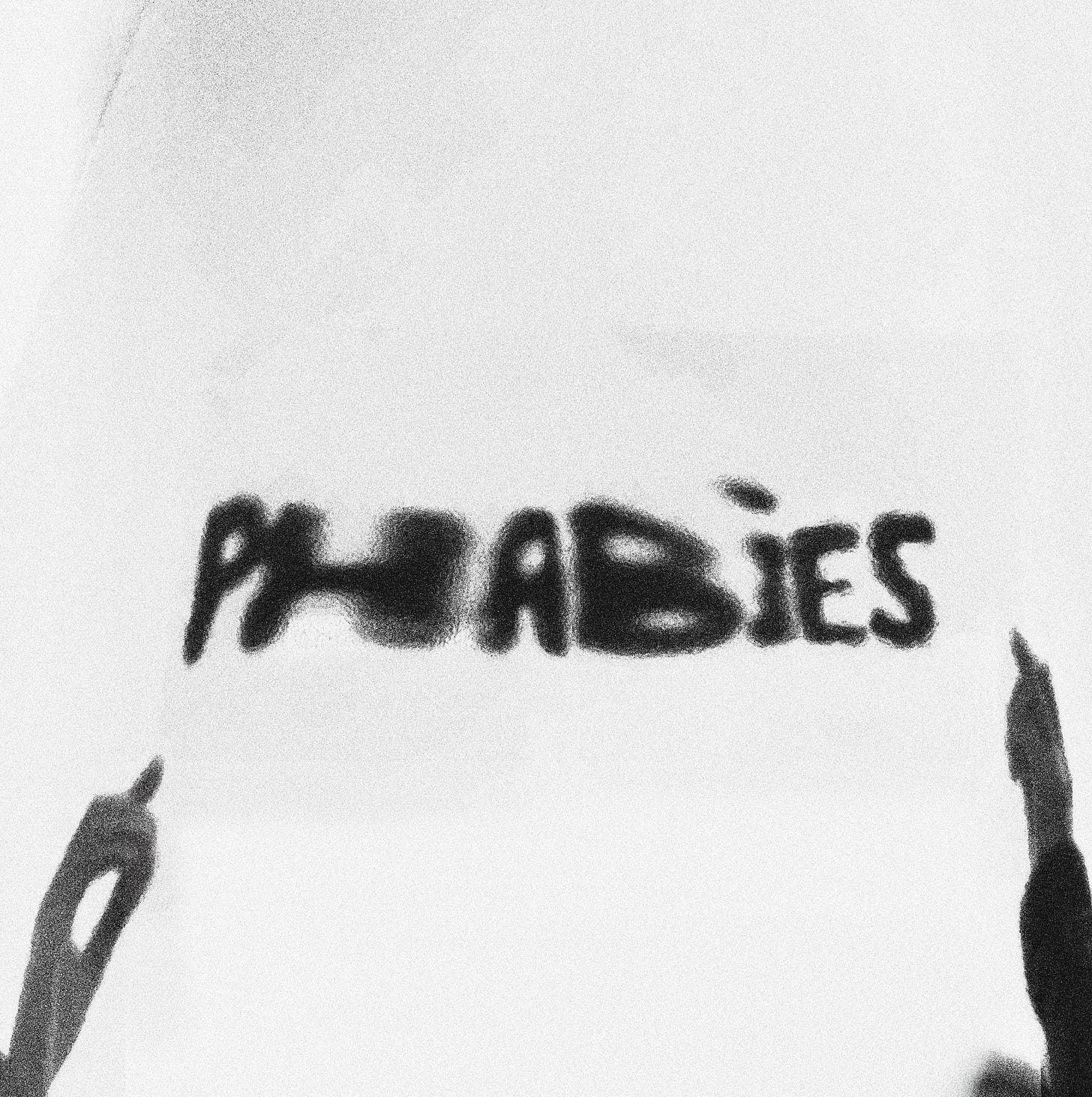
Laura Hobson of Phabies stops by to chat about The Curse of Caring, the band’s latest release.
Photo: Leigh Ann Cobb
Good morning!
We’re in for a treat today! Laura Hobson of Grand Rapids-based Phabies stops by to talk about their latest record, how it all came together, and what’s coming next.
When a reader first tipped me off to Phabies, I wasn’t sure what to expect. I initially thought this would be a band well suited to a punk band or co-headlining shows with The Germs. That’s what I get for judging a group by its name.
The band’s sound is nowhere near that. Their sophomore LP, The Curse of Caring, leans much more toward indie pop, with bright sounds and playful pop coursing through it: more sunshine, less low ceilings.
The odds are extremely high that you’ll get at least one of these songs stuck in your head for a day or two. They’re just that catchy. It’s an album that’s one of my faves of 2025. But that breezy sound contrasts with some heavy lyrics. Throughout the 10 songs, bandleader Laura Hobson tackles a menu of serious topics. “Who’s gonna save us now?” she asks on opener “Blooms of April.”
Who indeed?
“I’ve always felt a duty to create something out of nothing,” says Hobson. “Changing a grass lawn into a native ecosystem or playing three chords to create a song.”
On “Green Cement,” she asks us, Are we doing it right? Are we doing it right? / Pave the kingdom for an endless supply?”
I can’t answer that, but also? We’re not.
There is an urgency there, but The Curse of Caring isn’t a downer of a record. Hobson’s got strong thoughts and some unflinching takes, but they’re never preachy. It’s the opposite, leaving the listener full of hope and looking for a light at the end of the tunnel. We might be heading straight over the waterfall, but we can love one another right up until the end.
And we can spin some killer records like The Curse of Caring.
I recently had a chance to speak with Hobson via email. In our wide-ranging chat, we cover the Phabies origin story, the Grand Rapids scene, the record’s sound, and what’s next for the band. The discussion has only been lightly edited for grammar and flow.
KA—
For those that might not know, can you quickly walk us through the backstory of how the band came together?
Yes! Phabies was started by me (Laura Hobson) in 2018. I had been looking for a way back into playing music for years prior to solidifying the group. I had an enormous backlog of music but no one to play it with and I wasn’t interested in debuting these new songs as a singer/songwriter. The band clicked into place through long-lasting friendships. My partner Garrett Stier is the bassist and manager and my college buddy Josh Holicki plays drums. The three of us have played in the group Jack Droppers and the Best Intentions for a long time. I’ve known both of them for over a decade, so there’s a familiarity that makes practices and shows just feel like hanging out. Josh knew Max McKinnon from touring with his band Mertle and Max was able to join on synth/keys. In 2024, we welcomed Andrew Deters on guitar and he’s the most thoughtful guy. He’ll literally call you if he’s thinking about you.
Congrats on the new record! Was the approach similar to the last record (2022’s Fire Seed), or did you set out to make something wholly different?
Thanks for listening to the new album! The Curse Of Caring was in many ways much more difficult to write than Fire Seed, simply because I had that notion of the “sophomore slump” in my head. Feeling pressure to follow any creative endeavor with something even more unique, special, or exciting puts a tremendous amount of pressure on you. I was able to find a way out of my own head with help from friends who let me stay at their house and use their space as a quasi artist residency. It was a rejuvenating time and I wrote, or at least started, nearly half of the album while down there.
Fire Seed felt like a collection of songs that I used to explore the notion of songwriting. The songs each have their own unique flavor, as we were still a young band trying to hone in on our sound. The Curse Of Caring has a lot more intention, there are through-lines if you sit down with the lyrics.
During the recording of the album when I was intensely immersed, I made this murder map where I wrote all the lyrics out by hand and connected similar thoughts and through-lines with red string to get an overall feel for what I was trying to say. I’d like to think that each new album will just be tighter and more cohesive as the writing becomes stronger.
What’s the songwriting process look like? What generally comes first, the music or the lyrics?
Believe it or not, the lyrics and music usually come together at exactly the same time. It’s almost hard to practice new chords, scales, or tunings because as soon as I start learning, my brain goes off into creative overdrive. In a way, it’s a blessing, but when I’m just trying to practice it can feel like a procrastination technique I use to fight boredom. I never write any lyrics down ahead of time, with the exception of the song “Tell Her” from our new album. For me, it’s too clunky and rigid to force-fit lyrics into a melody. It always ends up trying to sound too profound or intellectual. I prefer for the lyrics and melody to evolve together so they feel tailored, like a couture suit.
“Tell Her” was the exception because it was written for an assignment given by Phil Elverum through School of Song. The assignment was to wake up uncomfortably early, meditate for 10 minutes, and then free write what you feel (not what you think you feel) for 5 minutes. We were then instructed to organize our writing into haibun (a chunk of prose ending in a haiku). The song came out almost completely formed, I only edited a few words and added the haiku onto the end.
I’m not sure if I’d get that lucky again, but this interview just reminded me about the process, so maybe I’ll try it out soon.
On “I Care For You” there’s a (very catchy) line that goes, “There’s too much city in you now/We gotta get out of this town/There′s too much city in you now/Ain’t gonna lose ya to the crowd.” I found myself singing it here and there over the course of a couple of days. What was the inspiration behind that verse? Is it simply a call to get away from all the concrete and back to nature, or is there a more abstract message here?
I love singing these lines because they have a very special memory attached to them. As I mentioned earlier, I had help from my friends when I was feeling daunted by what felt like an enormous creative endeavor. My friends Jake & Merilee let me stay at their home in Cincinnati for a week to help shake up the monotony of my own life, as I had been feeling stuck.
Jake arranged all of these fun things to do & I met and spoke with a woman who is a forensic psychiatrist and bee-keeper trying to save a forest in Cincinnati from being cut down for a dog park. I had lunch and saw “Stop Making Sense” in a group with Bryan Devendorf (drummer for The National) and watched films late into the night with Jake & Merilee (Children of the Corn, The Descent, They Live, Babadook, Event Horizon, The Mothman Prophecies).
Merilee and I went on a guided mushroom identification hike led by the parks department through the old-growth forest. On the hike, I overheard a woman lamenting about modern times, gesturing around at the forest saying, “These kids have too much city in ‘em these days! No one remembers this stuff. It used to be that when you lived in rural places, you’d know everything that came with each season.”
I knew immediately I would be incorporating the summarized phrase “there’s too much city in you now” into the chorus of I Care For You. It was the missing piece that I had been searching for, and it was gifted to me in that moment! It’s so special when things like that happen, that’s why it’s so important to shake up your routine. I never would have heard that woman if I had stayed fighting with my own brain in Grand Rapids. I still would have finished it, but the song would have been something else, entirely.
Grand Rapids, MI. isn’t on a lot of people’s radar. What should we know about the city? What’s the scene like there?
I’m hesitant to talk up my city too much for selfish reasons. I like that it’s not too crowded yet, haha. I think it’s like a miniature Austin, TX but with snow and very impressive and welcoming environmental movements.
I’m thinking specifically of Pleasant Peninsula, a national mural festival whose purpose is to fuel conservation and environmental education efforts. It was started by Eddie Chauffer a few years back but has turned into a full-blown music, art, education, and mural fest.
There’s a laid-back happiness to the people here. I know all my baristas by name and love seeing them. Grand Rapids still very much feels like a small town but with incredible coffee. Every time I leave the house, I run into someone I know. These built-in interactions provide just enough human connection to brighten my mood.
The music scene has always been here, but lately it feels like it’s become connected in more meaningful, exciting ways. When you’re in any place for over a decade, you become familiarized with the people and places around you. I take it for granted that we still have mid-size independent venues who don’t take merch cuts. Musicians have to work unfairly hard to make a living in any place, but at least in Grand Rapids, it’s still semi-affordable. I’m not running myself into the ground just to pay rent. Living here, I get to set my own pace. I love working with local photographers, videographers, and artists who feel like hidden gems.
The Grand Rapids scene feels like quality over quantity to me. Those who are creating are committed to it and it shows. Sometimes they make the jump to bigger cities, sometimes they stay. I stayed because I feel useful here, I have a lot of purpose in my own neighborhood and I like to feel helpful.
What’s next for Phabies? Any shows? Touring? What’s the back half of 2025 look like?
Hey, if you’re a band who’s further down the road than us and is looking for an opener to take along on tour, we’re interested. We’re not on a label, so Garrett’s been DIY-booking all of our shows so far and I bet he’s tired.
We’d love to tour and bring our music to more of the Midwest and beyond. I’m hoping to play in Chicago and Indianapolis again this year (nothing booked yet). If I’m allowed to dream for a second, the hope would be to tour somewhere warm during the winter months opening for a band in the the 500-1,000 seat range.
We are playing up in the Keweenaw Peninsula this August at a music festival called Farm Block. I’m excited about that show because I haven’t been that far North in over 5 years.
Last one, just for fun; I bump into you as you’re walking out of the record store. What records are you carrying?
“Oh, hey – what’s up, Kevin!” I found this record with a woman’s face on it in the $1 bin – I have no idea what kind of music it is and I can’t find anything online, but it’ll probably be fun to listen to. This other record is one I’ve been meaning to purchase for a long time, but haven’t been able to find because they’re an indie Melbourne-based songwriter. I put it on special order and it finally came in 🙂 The album is “Some Kind Of Control” by Ruby Gill, I love the song about the chimpanzees.
Listen:
Phabies | The Curse of Caring, 2025
Click the picture to listen via Bandcamp
Hit Bandcamp to grab your copy of the record, and connect with them via their website and Instagram.
As always, I’d love to hear your thoughts! Is this a new band to you? Sound off in the comments or send me an email- I read every one of ‘em.
Thank you to Laura for her time, and thank you for being here.
60 Biz Markie, The Biz Never Sleeps vs. #69 Love and Rockets, Love and Rockets
Good morning!
Today we’re taking a look at records from The Biz and 3/4 of Bauhaus
Note: As many of you know, I recently wrote about a Best Record of 1989 challenge and noted that I’d be occasionally writing some of these up.
I’ve started doing some quick hits of each matchup and posting them directly to the page. Some will be longer, some won’t, and some might just be a handful of sentences. There’ll probably definitely be some typos.
Check ’em out and let me know your thoughts! Chin wags & hot takes welcome! Sharing and restacks are always appreciated.
KA—
Pity Marcel Hall; he never quite gets the respect he deserves. Like a sort of Warren Zevon of Hip Hop, his biggest hit was a novelty (“Just a Friend”), featured a big ass beat and some seriously off key signing. The bars are relatable if not “fire,” and I’m willing to be that most people of a certain age can still recite them…or after a couple of drinks will willingly caterwaul the chorus at the local watering hole’s karaoke night.
Fun. But that doesn’t tell the rest of the story about the rest of Hall’s (aka Biz Markie), The Biz Never Sleeps. Once you get past that put-on silliness, the album is a goldmine of sampling, beats, and production. While Biz might not’ve had the best flow in ‘89, he was a dynamo behind the boards. And just in case that wasn’t enough, Marley Marl came through to mix it all.
Besides, “Just a Friend,” the other single off the record was “Spring Again,’ an all-timer, IMO. Biz is still trying to lay that weird singing across the chorus, but man! The rest of it with Roberta Flack and Donny Hathaway’s “Back Together Again?” That sure sounded good booming out of the trunks in my neighborhood.
At any rate, this record found me at just the right time. People contain multitudes, but in 1988-89, you only needed five letters to sum me up: s-u-r-l-y.
Bad acne, bad hair (never quite figured that one out), and a worse attitude. Everything was terrible all the time. Even playing soccer- a game woven into my DNA- became an exercise in misery. This team could be better… Our opponents suck….Why can’t first-year students letter?
Blah, blah, blah. I was insufferable.
But hearing the right track at the right time was always the exception. There’d be a respite, if only for 3-4 minutes. I wasn’t the biggest Biz Markie fan, but this track did it for me. The horns up against that beat? Incredible! His bars? Solid. All made for a nice 3-4 minute respite. I’m old enough to know this is no longer my time to refer to songs as “bangers” or that I was obsessed, but both are true. I’m also old enough to remember the time before the internet and sites like whosampled.com. I knew enough to know Biz was sampling other tracks but not enough to know where to look to find out.
So we’ve got two singles—one a huge hit and one that should’ve been. But what about the rest of the record?
There’s plenty more silliness- topics covered include such “hard-hitting” themes as bad breath and kindergarten girlfriends- but also plenty more samples. You want soul? Maybe some funk? He’s got you. Have fun trying to place ‘em all!
One sidenote that needs to be pointed out: it’s not all fun and games here. “A Thing Named Kim” is problematic at best. After a pretty dope build up, Biz fumbles by ending with a shitty verse of transphobia. Delete the punchline. It’s some standard issue braggadocio of the day, and put together nicely. Leave it in and it ages like milk left in the sun. Even looking at it through a 1989 lens, it’s still a letdown. Did it reflect the times? Yeah kinda, but that doesn’t mean we can’t call it out.
Luckily, our man gets back on track with “I Hear Music,” this writer’s second favorite track on the record after “Spring Again.” Why this has been relegated to deep cut status is beyond me. This has “summer playlist staple” written all over it.
Biz Markie’s legacy might be “Just a friend,” but this record is so much more than that; just like Excitable Boy is so much more than “Werewolves of London.”
At my school, having a Bauhaus (or synth-era Ministry) shirt was the ultimate badge of indie cool. This was before such things became common, and to have one was to tell people you had zero interest in whatever was on the radio. There’s probably a timeline out there where “Stigmata Martyr” was a huge hit, but we’re not living in it.
How strange, then, to have 3/4 of the band with an unlikely hit on their hands with “So Alive.” To be fair, it’s got all the ingredients of a hit song recipe: steady beat, beguiling backing vocals, and Daniel Ash half-whispering into your ear.
It’s also unlike just about everything else on the record.
There are harder-edged tracks that might remind one of the more jagged edges of Bauhaus. “Motorcycle” is loud and repetitive in all the best ways. Yeah, it’s about…motorcycles..but who cares? It sounds fantastic. For my (entirely subjective) money, it remains the band’s best.
“No Big Deal” feels like something stamped out at The Jesus and Mary Chain’s song factory (pre-Automatic). It’s good, but doesn’t lend itself to pretend listens.
The knock on this record is that it’s uneven. Like, really uneven. The highs (“Motorcycle”) are offset by things like “The Purest Blue,” a track that takes far too long to go absolutely nowhere. Seriously, was there a song quota they needed to meet?
At 6+ minutes, you could probably make the same argument for “Bound For Hell,” but at least it’s got a rocking groove, some harmonica, and you have a decent time getting there. Meanwhile, some of the slower tracks like “The Teardrop Collector” border on annoying. Not something you want to say about these guys!
Ultimately, this record’s songs sound better in isolation than they do as a collective. It’s a good enough record, but there’s a reason Love and Rockets shirts never really caught on.
Bottom Line: Despite its faults, The Biz Never Sleeps works really well as a whole album. Maybe it’s first-day jitters, but Love and Rockets’ debut is uneven, quite so when compared to today’s opponent. Winning this sets you up to face Pretty Hate Machine in the next round, so that victory might be short-lived. Nevertheless.
My vote: Biz Markie all day.
Any thoughts on either of these records? Agree/disagree with my takes? Which one of these would you vote for? Sound off in the comments!
Today’s battle sees some sophisti-pop squaring off against some improv jazz.
Good morning!
Today we’re taking a look at Welcome to the Beautiful South by The Beautiful South and Keith Jarrett’s Changeless.
Whatever else you might say about Paul Heaton, he’s definitely got a flair for the subversive. Few others can wrap acerbic lyrics in sunny pop melodies the way he can. Before we even get to that, we have the band name itself. The Beautiful South is a bit of dry wit for a band from Hull (very much in the north). The group itself came into being when Heaton and David Hemingway left Housemartins at their peak. This, of course, also meant that Norman Cook was now free to reinvent himself as well. If that name doesn’t ring a bell, maybe Fatboy Slim does.
Then we get to the cover, featuring a woman with a gun in her mouth and a man lighting a heater. Wild album art conceals some gorgeous-sounding sophisti-pop. And that gorgeous sound? Well, that’s covering up some of the most acerbic lyrics you’ll hear in this bracket challenge. No one pairs angsty words and upbeat, catchy sounds quite like our Mr. Heaton. See also: The Housemartin’s Happy Hour Again
Distilled own, the one-liner for this record could be “Housemartins as Sophistipop.” or “Close cousin to the Smiths.” Heaton’s less of an asshole than Morrissey turned out to be, so that’s good. I might also throw in a cheap comparison to Prefab Sprout, but that might be because Two Wheels Good just turned 40, which means I’ve been playing it a lot lately. That Petrol Emotion as well just in case someone wants another one.
The melodies are bright. They’d be right at home in an elevator, er, “lift.” The topics are alternately between cynical and straight-up grim (looking at you, “Woman in the Wall”). Along the way, we get treatises on love lost, irony, and no shortage of brass which is a nice touch.
“Oh Blackpool” is a standout for this writer and feels like a 45 rpm of Happy Hour Again played at 33. And then there’s a cover of Pebbles’ “Girlfriend.” Because, of course, there is.
Welcome to the Beautiful South is Heaton at his peak— and that’s coming from a staunch Housemartins fan. The arrangements are on point, and the lyrics are pointed. It’s pop, but he still makes you work a bit for it (the first two tracks are each 6 minutes, for example.
Being jaded never sounded so fun.
So, fair play to Keith Harrett (or rather, the “Keith Jarrett Trio”), but I probably shouldn’t have played this at 6:13 in the morning. This is relaxing piano bar stuff. It’s the sort of thing you wash down with a finely aged scotch, not 2-3 cups of coffee that come from a Bunn machine. Changeless is nice jazz (not derogatory), but this is/was the wrong time and place for it. It’s also a live record, which I didn’t realize until I was well into it. The crowd is that muted- even when adjusting for scale/genre. that’s all well and good, but man, if you’re gonna do a live record, leave some of that energy in! If we wanted a studio album, we’d play one, ya know?
Also: The short track on here clocks in *just* under 9 minutes, which, I mean, ok.
AA review I read of the album refers to it as “subversive,’ but having just come off the Paul Heaton ride, I’m not sure what to make of that statement. Apparently, in this context, it’s in regards to the improvisation. Turns out this entire record was made on the fly. That’s truly admirable! No snark from me on that point.
Another one gifted us this gem: As per usual, Peacock sparks the trio’s deepest-running flame, and his amplified bass line herein lulls us into a memorable groove. The ostinato feel builds through Jarrett’s grinding left hand while DeJohnette’s never-cease-to-amazing subtleties draw us in.
Jesus.
As if jazz fans didn’t already have a (usually undeserved) reputation for being haughty and aloof. Can you imagine someone reading a review like this and being inspired to run out and grab the record? Dear reader, I most certainly cannot. And we haven’t even made it to the liner notes, which are wild. Talk about being high on your own supply.
To wit:
And that’s a shame, ’cause honestly, this is pretty solid all around. “Lifeline”–all 11 minutes plus of it— was a favorite, and I could see myself cueing it up again at some point.
Also, New life goal: work “ostinato” into as many reviews as I can.
NOTE: I want to give a huge shoutout/thanks to friend of the newsletter Greg Layton who helped a ton by lending his expertise and perspective, as well as unearthing a copy of the liner notes and some reviews. His help was invaluable. Greg runs The Jazz Tome, which is a goldmine of record covers, liner notes and more. Seriously, cancel your plans and go check it out.
Bottom Line:Two well done records, neither of which would normally normally be in my wheelhouse. Both are well polished, shiny gems. One has Paul Heaton’s sardonic wit. The other has “ostinato feel.”
My vote: bracket and ballot are both going to our friends from Hull.
Any thoughts on either of these records? Agree/disagree with my takes? Which one of these would you vote for? Sound off in the comments!
Today we’re revisiting Wire’s groundbreaking “It’s Beginning To And Back Again” album as it takes on Laurie Anderson’s Strange Angels in the battle for The Best Record of 1989.
When I was a soccer coach, Most players had one or two go-to moves, got pretty good at them, and then got complacent. It was fairly predictable. It’s also incredibly easy to coach against.
Much better—and much more interesting—were the players unafraid to do what I (very professionally) referred to as trying shit. These players might not have been blessed with speed or height, but their superpower was unpredictability.
These players always had a spot on my roster.
Similarly, Wire has never been afraid to experiment with new sounds, bend genres, and ignore convention.
In other words, they’ve never been afraid to try shit.
Of course, Wire is the band that gave us Pink Flag, Chairs Missing, and 154, arguably one of the best three record runs of our time. They followed that by splitting up for several years.
“There are those who say Wire was the best punk band ever because it broke all of the rules, didn’t stick with any of the blueprints and did actually what it wanted…I just wouldn’t call that punk, personally. Punk is just one of those words that’s so overused that you have no idea what it means anymore.”
In 1985, they reunited and again tried something new, this time swapping jagged guitars and minimalism for a more electronic sound. They had found synthesizers on their hiatus and embraced them. Signed to Mute, they delivered a 1-2 punch of 1987’s The Ideal Copy in 1987 and A Bell Is A Cup…Until It Is Struck the next year. The band’s live sound was always quite different from what listeners experienced on the records—mainly because the technology they used to create the music in those days wasn’t exactly easy to load in the van and take on the road.
Nevertheless, there was a growing demand from fans for a live record. That could’ve been easy. Record a show or two, clean the tapes up in post-production, and ship units. Simple enough. But Wire’s never been one to take the easy route. Instead, they decided to try something new.
Enter It’s Beginning To And Back Again (“IBTABA”)
The quick and dirty story of IBTABA is that the record is 11 alternate takes, half from The Ideal Copy and A Bell… and the rest previously unreleased. Describing it that way is also reductive. Wire didn’t just mix things up; they took the songs, dismantled them, and rebuilt them using overdubbed guitar, synth, and vocals—most of the drum parts stayed. The results are (almost) wholly new tracks.
An album of remixes also often represents a creative drought, a cash grab, or both. And those indictments would have been justified had these been straightforward reworkings. But they’re not; they’re complete revampings and remodeling of what previously existed. In many cases, the titles are the only recognizable things left standing.
Experiments sometimes represent breakthroughs; sometimes, they end up with shattered glass on the lab floor. One of the knocks against IBTABA is that it’s a mixed bag. Some of the songs are brilliant, and some are… not.
“Finest Drops” is heavier than the originals, and that extra bounce makes for a superior version. The grit and bleak imagery of “German Shepherds” benefit similarly from a revamping here (IBTABA’s title is derived from a line in this song). And most people agree that this version of “In Vivo” is much worse than the original mix. It’s also worth noting that it wasn’t included on the original vinyl release and was only added later when the label wanted another single. If A Bell Is A Cup…Until It Is Struck represents peak pop for the band; this record represents an intentional dive back toward the experimental.
The 12” version of “Eardrum Buzz” (the second single) is here and is as radio-friendly as the band gets. In the opinion of this writer, the 12” is light years better than the original, and the original isn’t bad. It was also the on-ramp to the band for many, thanks to decent rotation on MTV. At the opposite end of the spectrum are tracks like “Over Theirs,” which was likely the off-ramp for those same fans, and why you saw so many copies of IBTABA in the cutout bin not too long after the record was released.
Distilled down, IBTABA represents some amazing results and some…not so amazing ones. It’s a signpost that marks the band’s second era and closes the book on the Pink Flag/Chairs Missing/154 triad for good. Call Wire what you will; at this point in their career, they might’ve still embraced the punk ethos writ large, but the days of playing punk music were done and dusted.
There is also a timing issue, of course. 1989 was a seminal year for albums; the calendar was packed with great releases—and IBTABA isn’t in line with any of them. If you wanted comfortable, indie, or “college rock,” this wasn’t the record for you. But if you like unpredictability and bands opposed to complacency, then IBTABA checks a lot of boxes.
(sigh)
Ok, look; I know I’m supposed to hold this album in some high(er) regard, but I just can’t. I know Anderson is a beloved figure who has long been on the cutting edge of avant-garde art and was Lou Reed’s partner, among other notable achievements.
None of that takes away from the fact that the entire time I listened to Strange Angels, I felt like I was watching a rehearsal for a play at the Learning Annex directed by someone who thinks they’re too good for the place. At its best, it felt like it was trying to punch above its weight (“Ramon”). At its worst, it was just annoying (“The Day the Devil”). I’m not trying to rain on anyone’s parade here- if you like this, more power to you! But man, life’s just too short…
Bottom Line: One of my Desert Island Discs is facing off against a record I could barely get through. Strange Angels was always going to have a steep climb, but the record’s pretentious nature didn’t help.
My vote: Bracket and vote are for IBTABA, without a second thought.
Any thoughts on either of these records? Agree/disagree with my takes? Which one of these would you vote for? Sound off in the comments!
29 XTC, Oranges and Lemons vs. #100 Pizzicato Five, On Her Majesty’s Request
Good morning!
Today we’re taking a look at records from XTC & Pizzicato Five
Note: As many of you know, I recently wrote about a Best Record of 1989 challenge and noted that I’d be occasionally writing some of these up.
I’ve started doing some quick hits of each matchup and posting them directly to the page. Some will be longer, some won’t, and some might just be a handful of sentences. There’ll probably definitely be some typos.
Check ’em out and let me know your thoughts! Chin wags & hot takes welcome! Sharing and restacks are always appreciated.
KA—
Memphis can be a funny place to live if you’re not from there. The traffic is like a video game; the people are either the nicest you’ll ever meet or not, and so on. Living there briefly in the late ’90s is something I’ve tried to memory-hole, but a few moments still stand out. One of which was an impossibly sunny day. The sort of day where you think nothing could make this even better…and then XTC’s “King for a day” comes on the radio. And let me tell you, blasting this, windows down as I whizzed along on I-240 might be the highlight of my time living there.
“I don’t know how to write a big hit song” is a funny line coming from someone like Andy Partridge. And it’s true that he–and XTC– haven’t exactly dominated the charts, but that’s more an indictment of our tastes than his skill. This is, after all, the band that gave us “Generals and Majors,” “Senses Working Overtime,” and “Making Plans for Nigel.” One of their biggest (“Dear God”) is a B-side on a single that should’ve been a hit (“Grass”). Maybe they were too self-serious; maybe it was a timing issue.
All of that to say that by the time 1989 rolled around, I can’t blame the band for saying “F it” and just making a fun record. Brian Wilson’s passing has colored everything I’m listening to right now, but it seems clear to me that the band had been spending a lot of time steeped in the Beach Boys’ discography. The sounds, the textures, and the lushness of it all scream Pet Sounds twenty years later. Even the cover is bright and gaudy—certainly compared to the band’s other releases.
The knock on this record is that it’s a handful of songs too long. That’s a fair point, though I’d argue that its highs more than make up for its lows. And the lows aren’t that bad- it’s just that they’re being held to impossibly high stands. “Mayor of Simpleton” and “The Loving” (written by Colin Moulding) are fantastic. Album closer “Chalkhills and Children” feels woozy and dreamy in equal parts. Like it’s about to wilt in the Tennessee humidity. It’s a last burst of quiet pop perfection and ends the record on a great note.
The line I began with is from “The Mayor of Simpleton,” a track many will tell you is pure pop perfection —and it is. It’s stuffed to the gills with hooks and pop goodness—and it’s not even the poppiest track on the record. That title belongs to “King for A Day” (another Moulding track). King For a Day is happy-go-lucky. It’s bright and sunny- so much so that it comes dangerously close to treacly. It waltzes right up to the line but never crosses it. Instead, we get three and a half minutes of bliss. Enough so that it can even make city driving in Memphis seem okay.
How is it possible that something so effortlessly cool is in the same bracket challenge as Motley Crue? This was the band that your art school friend was tipped off to during a stint as an exchange student. It’s the perfect blend of city pop, jazz, swagger, and Burt Bacharach. There are horns. Synths for days. Timpanis, for god’s sake! “Bellissima 90” practically commands you to strut down the block.
Pizzicato Five maintains some of this cachet simply by making it hard to find their work. For example, most of their discography isn’t available on streaming services; your best bet is YouTube. Even then, the song titles are often in Japanese, which isn’t awesome if you can’t read it. On the one hand, this sucks, as this record is a gateway to what their next few would sound like. On the other, clear those hurdles, and man! You are in for a treat. A wild ride through smooth sounds, city lights, and the rarified air that only the coolest of the cool ever get to walk through.
Note: In 1995, the record was remastered and reissued under the title “By Her Majesty’s Request.”
Bottom Line: Both records are lush soundscapes packed full of pop goodness. if it were up to me, these would’ve been seeded much closer together. I love both and this might be the toughest call to make all week?
My vote: I think lack of name recognition-and accessibility- will be Pizzicato Five’s downfall here. I can’t see ‘em making it past XTC, but won’t be sad if they do. And if just one person becomes a fan of the band after this, it’ll all be worth it. My bracket and vote will both be going to Oranges and Lemons.
Any thoughts on either of these records? Agree/disagree with my takes? Which one of these would you vote for? Sound off in the comments!
56 The Vaselines, Dum-Dum vs. #73 Peter Gabriel, Passion of the Christ soundtrack
Good morning!
Today we’re taking a look at records from The Vaselines and Peter Gabriel.
Note: As many of you know, I recently wrote about a Best Record of 1989 challenge and noted that I’d be occasionally writing some of these up.
I’ve started doing some quick hits of each matchup and posting them directly to the page. Some will be longer, some won’t, and some might just be a handful of sentences. There’ll probably definitely be some typos.
Check ’em out and let me know your thoughts! Chin wags & hot takes welcome! Sharing and restacks are always appreciated.
KA—
Coming off the massive success of So, it would have been easy for Gabriel to go back into the studio and put out another pop record. I think it’s safe to say that the public would’ve eaten it up, and there would’ve been a couple of chart-toppers (at least). The money would’ve flowed in. Maybe there would’ve been a tour. No one would’ve blamed him.
And the people banking on that happening–or hoping it would–would’ve had to ignore Ganriel’s recording past. That’s simply not how he works.
Instead, he bet the other way and went to work on a film. More specifically, the soundtrack to Martin Scorcese’s The Passion of the Christ.
I want to reiterate one point early and make a second one for context. First, I’m not a fan of soundtracks. We covered this earlier in the week with Batman, but it bears repeating. If this had been my contest, there would’ve been a “no soundtracks, no live records, and no greatest hits” rule on the chalkboard, but it isn’t, and so we get what we get.
The second is that I’ve never seen the movie. I only recall the outrage associated with its release. Scorcese rebounded, but did Jim Jim Caviezel? I should probably look that up, but it’s not relevant here. My point is that I’m listening to his record in isolation, not considering how it may or may not work within the context of the film.
So! With that out of the way, I can say the record flows well. That’s sometimes cheap filler for a review, but it’s genuinely worth noting here. Any story involving religion should by default be large in scale. The music here fits the bill. It’s majestic. It’s magisterial.
This was also the era when Gabriel was big into world music. For many of us, the introduction to world music and artists like Youssou N’Dour was via their appearances on Gabriel’s records. He always did well to blend these artists’ styles with his own, but he takes it to the next level here. Perhaps that thought is colored by the idea that the story of the Gospel is a Middle Eastern or Arabian one, but it just fits.
The story (and, I assume, the film) is a ride through a lot of emotion. The soundtrack pairs well with each. Mostly, though, it’s relaxing. It’s evocative. Listening to it feels nice; enough so that a couple of times I wondered if I was enjoying something that marks a “bad” part of the movie. I’ll have to watch it to find out.
The story of the Gospel is one known worldwide. There was no way this soundtrack could be authentic and NOT represent a plurality of nations. The only knock here (besides being a soundtrack!) is that there are not enough of Gabriel’s vocals here. But that might just be me expecting a “regular” album (read: pop) and ignoring his track record as an artist.
If Passion is an exercise in lush soundscapes and languid sound, Dum-Dum is one whose sugary sweet hooks and quick pace get you moving. Gabriel might have been the on-ramp for world singers, but he was a Washingtonian who introduced a lot of success to the Scottish indie rock band Kurt Cobain. For younger readers, you have to understand that this was an era when people hung on every word he said. When he described the band as one of his favorites ever (paraphrasing), people took it to heart.
When Nirvana covered a couple of their songs, that sealed the deal; we were all Vaseline fans now.
Okay, that’s a bit of hyperbole, but it’s also kinda true. That’s just how it worked back then. They had his stamp of approval, so it was cool to like them. And had Dum-Dum sucked, that would’ve been an awkward spot for everyone. Thankfully, it doesn’t. The record burns bright but burns fast, coming in at just under 30 minutes. But within that half hour is some deliciously hooky pop. If nothing else, The Vaselines were very good at making even the quickest blitzes of pop feel deep. “Sex Sux” is a bright bit of pop (title notwithstanding). The guitars are front and center on “Teenage Superstars.” If this reminds you of a few of your favorite bands, trust your gut. A lot of people heard this, picked up their guitar, and got to work.
In the late 1980s and early 1990s, a weird orthodoxy emerged surrounding fame. “Sellout” was a four-letter word, and accessibility was equated with acquiescence. I’m not sure how easy it was to find this record back in the day, but in 2025, it takes some work. I couldn’t find it streaming anywhere. I had to re-listen to it on YouTube.
In an era where you can have everything all at once, this felt almost refreshing. The best things take a little work.
Bottom Line:Passion was a revelation (no pun intended), and Dum-Dum was a visit back to a formative era in my life. I won’t claim to have any idea of the voting demographic in this challenge, but I have to think a lot of people bet the same way I did, and went with Gabriel on name recognition alone. Dum-Dum is more my style, but so is having a fighting chance in any game I play. For that reason, my bracket pick is Passion of The Christ.
My vote: The Vaselines check a lot of boxes for me, and I’m a fan of the sort of sound they made. The vestigial influence of Cobain is also still there all these years later. My vote will be for Dum-Dum. Apparently I’m a fan of dissonance as well.
Any thoughts on either of these records? Agree/disagree with my takes? Which one of these would you vote for? Sound off in the comments!
#40 Chris Isaak, Heart Shaped World vs. #89 Technotronic’s Pump Up the Jam
Good morning!
Today we’re taking a look at records from Chris Isaak and Technotronic.
Note: As many of you know, I recently wrote about a Best Record of 1989 challenge and noted that I’d be occasionally writing some of these up.
I’ve started doing some quick hits of each matchup and posting them directly to the page. Some will be longer, some won’t, and some might just be a handful of sentences. There’ll probably definitely be some typos.
Check ’em out and let me know your thoughts! Chin wags & hot takes welcome! Sharing and restacks are always appreciated.
KA—
Chris Isaak’s third record might be called Heart Shaped World, but to me, it evokes a different shape- that of the road. The record feels like it’s a soundtrack for a road trip. Or maybe the musical score to Blue Highways. Most people know the record for the (IMO) interminable Wicked Game —and it’s not lost on me that its use in Wild at Heart was its launchpad to smash hit territory. But if that’s all you know, you’re missing out on, frankly, much better tracks. Isaak and Co. are tapping into the vein of early American rock here – think Ricky Nelson, Elvis, etc.
If you’ve ever burned up the miles on late-night drives through the middle of nowhere, you’ll know the mood “Kings of the Highway” evokes. “I’m Not Waiting” is what you’ll likely hear as you open the door and walk into the severe florescent lights of the ever elusive four calendar cafe. “Don’t Make Me Dream” drops right into a swanky groove with just the right amount of sax across the top.
We’re not even 10 minutes in, and things are already heating up.
If you’re reading this and wondering just what the heck I’m talking about, give the record a spin. There are two Chris Isaaks; both are fairly self-serious & introspective, but one is a balladeer trafficking in dirges, the other much less melancholy. To my ear, it’s the latter that carries this record and makes it worth one’s time.
If you happen to find yourself sitting at the bar in a juke joint along the way, “Wrong to Love You”—not salvation— is what you’ll find in the bottom of that glass. And in the moment, it’ll be just the thing. Ditto most of the back half of this record. Hell, there’s even a Bo Diddley cover at the end to wrap things up.
There’s only one clunker here —and it’s a doozy. “In the Heat of the Jungle” is terrible. There’s really no other way to frame it. It’s as out of place as Warren Zevon’s “Leave My Monkey Alone” is on his Sentimental Hygiene album. We’re not in the same rarified air as The Police’s “Mother,” but we can see it from here. Yikes.
Look, I know people love “Wicked Game.” Checking Spotify, it’s currently at 863m plays. The next closest is his “Blue Spanish Sky” at ~10m. Things drop off precipitously from there. All data tells a story, and the story here is that many people only know Isaak from this one track. They’re missing out.
Pump up the jam should be taken—and appreciated—for what it is. At its core, this is a party record. It does not apologize for this. It doesn’t try to rationalize it. It never dares pretend it’s anything serious. It is not political. The dancefloor is/was an escape for many of us, and Technotronic wanted to help you get there.
Technotronic emerged from the Belgian New Beat scene. By 1989, that wave had crested, and label owner Jo Bogaert was desperate for a new hit to turn things around. New Beat had always been closely connected with Chicago House, and this time would prove no different. Bogaert formed the Pro 24s and put out “Technotronic,” drawing heavily from a sample of Farley Jackmaster Funk’s “The Acid Life.”
Sidebar: Before I forget, all credit and a shoutout to Pe Dupre who writes the incredible The 12 Inch newsletter for the extensive background on this record’s title track.
So, you had a track with a thumping beat, some synths, and just the right BPM to get everyone moving. The missing piece? Vocals. Enter Ya Kid K and her mix of rapping and singing. With everything in place, a hit was born.
It’s worth noting here that Technotronic made the same move as other bands (Black Box, C & C Music Factory) at the time, putting a model in the video/cover/whatever and trying to pass them off as the actual vocalist. Martha Wash’s fight for credit was a hard-fought battle. In this case, Ya Kid K had a shorter but no less steep path, and before too long, Felly Kilingi was out, with the rapper out in front where she rightfully belonged.
So, we all know “Pump Up the Jam,” and most of us remember “Get Up (Before the Night Is Over).” Maybe “Move This” as well, boosted somewhat by its use in makeup ads. But what about the rest of the record?
“Tough” sees MC Eric join the fray and slows the pace a little. The word “little” is doing a lot of work here – this is still something you could easily see blaring through an arena’s sound system ahead of your hometown NBA team coming out onto the court. Just close your eyes and pretend there are a lot of neon lights — and maybe a t-shirt cannon.
No rap (or vocals, really) on “Come On.” Just a few clips interspersed through the track.
Reading up on this, I learned that “Rockin’ Over the Beat” was a single off the record, but I’d never heard it. I mean, I’d heard it (once you’ve heard one Technotronic track, you’ve heard ’em all), but still.
It’s more of the same, really. And depending on what you’re looking for, that’s either a good thing or a bad one.
In my case, it’s a notch in column A. Dusting this off, I fully expected something stale and poorly aged. Instead, I found something that has held up well for what it is—and what it never pretends to be.
Will I listen to this again? Yeah, probably. I work an impossibly early shift and often lean on things like this to give me a boost in those first hours. I have a coworker who’s really into EDM and House, and I’m curious how they’d take some of these lesser-known tracks.
Looking for a dancefloor filler with industrial-strength hi-hats? Synths? They got you. Beats that never quit? Yep, that too. Sometimes, that’s all you need.
Bottom Line: Today’s matchup features two records that rightly or wrongly have been shackled with one massive hit casting a shadow over everything else. Pump Up the Jam and Heart Shaped World both feature tracks that are well worth your time, depending on what you’re looking for.
My vote: I think people’s (collective) will recall Isaak in a brighter light. Filling out my bracket, I was concerned most would relegate Technotronic to novelty act status and chose accordingly.
That said my vote today could’ve gone either way, but I was in a more analog mood, so despite Wicked Game and In the Heat of the Jungle, I’ll check the box for Isaak.
Any thoughts on either of these records? Agree/disagree with my takes? Which one of these would you vote for? Sound off in the comments!
Prince’s Batman soundtrack takes on The Durutti Column’s Vini Reilly
Today we’re taking a look at Prince’s Batman record as it faces off against Durutti Column’s Vini Reilly.
Note: As many of you know, I recently wrote about a Best Record of 1989 challenge and noted that I’d be occasionally writing some of these up.
I’ve started doing some quick hits of each matchup and posting them directly to the page. Some will be longer, some won’t, and some might just be a handful of sentences. There’ll probably definitely be some typos.
Check ’em out and let me know your thoughts! Chin wags & hot takes welcome! Sharing and restacks are always appreciated.
KA—
I won’t bury the lede here; when I think of Batman, it’s of the Adam West Cesar Romero era. I want camp and bad jokes. I want the dorky Biff! Bam! Pow! graphics that popped on the screen during fight scenes. I want the Batusi.
When I think of Prince, I want that irresistible funk and nasty groove that can only come out of Paisley Park. And I want a bit of controversy sprinkled across the top. I want, well, “Controversy.”
I’m also not the biggest fan of soundtracks- whether the OST ones or the “songs from” type. There are a few exceptions (e.g., Singles and 24 Hour Party People), but as a rule, those are full of bands/songs I’m already listening to.
Sometimes, a soundtrack spits the difference, and a single artist/band crafts a soundtrack to a movie that catches my ear, but off the top of my head, only Wang Chung’s To Live and Die In LA fits that bill.
To put it another way, Prince’s Batman record did not check a lot of boxes for me. It’s not the OST (Danny Elfman wrote that). Instead, it’s nine tracks, of which two got some decent screen time, the rest relegated to bits and pieces here and there.
Perhaps that’s part of why it’s not memorable compared to the rest of his discography. Prince is not known as a guy who puts filler on his records (at least not in this era, anyway), and yet here we are: an entire album of formulaic tracks. Of little bits that do well to augment a film scene but grow tiresome quickly in their entirety. And on the other end of the spectrum, a 6+ minute Batdance track that is about 3:30 too long.
Again, give me the Batusi over whatever this is.
Not even Sheena Easton can save the awful “Arms of Orion.” This is the same pair that knocked it out of the park with “U Got the Look” just a couple of years earlier. Where’s that heat?!
This is a record that relies on the film itself to work; without that symbiosis, it fails to take off. I’m mindful that I’m measuring it against Price’s other work– an unfairly high bar–but still.
Reading up on this ahead of listening, I came across the idea that this was initially supposed to be an album split between Michael Jackson and Prince. MJ would take on the role of Batman, with Prince taking on the Joker.
If only. That kind of dichotomy would’ve made this a much more vibrant release! If nothing else, it would’ve made it more interesting.
As we go through this list, I’m finding myself surprised at how many bands I thought I’d heard (or had an idea of their sound), only to be proven dead wrong. If you looked at my music history, Durutti Column is a band—or a one-man band, mainly—that would be a logical fit. That one man would be Vini Reilly, the record’s namesake.
They were on Factory, which by default meant I was likely to check them out at least. Their name came up often enough in the circles I was swimming in. In ’89, Reilly was riding high after playing guitar and keys on Morrissey’s Viva Hate record. Listening now, I’m hit with the realization that I have absolutely never heard this before. Whatever the opposite of déjà vu is, I’m experiencing it in real time as I type.
The first thing that strikes me is that, in hindsight, this makes sense. In 1989, I wanted music with a pulse. With pace. And this ain’t it. This is gorgeous, experimental, and largely instrumental. And at that point in my life, instrumental was fine—as long as the BPM rate was above a certain threshold, and/or the bass hit hard enough. We don’t get any kind of verve until the mellow funk of People’s Pleasure Park at track 4. I was not a patient kid- no way would I have made it to this stage without passing.
The other thing that would’ve kept this from my tape deck or CD player was the aesthetics. I was in high school in 1989, and even amongst the indie crowd, there were fractures and factions. This seems like it would’ve appealed to the uber-pretentious among us. They were the people who wore black turtle necks year-round and performatively carried copies of The Stranger under their arms. My tribe wore skateboard T-shirts and over-indexed on louder, faster, and messier. As noted, there was plenty of techno & EDM and much love for anything “Madchester,” but this is something teenaged me almost certainly wouldn’t have got. I was a junkie— addicted to the rush sound gave me, and this was too low of a dose.
Back to today: listening now, I find this record genuinely interesting. It’s pleasant. I’m not saying either of those as a nicety. It’s varied. It has texutre. For a record, that’s now 36; it’s aging well—certainly compared to some of what came out of Factory during that era. I’m not sure I’d second the genius label Reilly had slapped on him, but his talent is not in question. This is a record I’d pick for a deep work session, but I worry it might be a little too interesting and prove a distraction. I can also say this is a record that I likely won’t listen to again after writing this piece. There’s just not enough of a pull to bring me back to it. Not enough “there” there.
Bottom Line: “You have so much potential” is a line that can trigger PTSD in a TAG kid decades later, and I’m loathe to invoke it here. Still, both these records need to hear it. Perhaps in a different universe, these records would’ve blown me away. But not in this one. Woulda, coulda, shoulda.
My vote: No heed/heart split here. My bracket and vote will both go to Prince; I think this is case of name recognition carrying an otherwise underwhelming matchup.
Any thoughts on either of these records? Agree/disagree with my takes? Which one of these would you vote for? Sound off in the comments!







 Kevin Sent
Leave a comment