The The’s Mind Bomb and the Record Matt Johnson Should’ve Made

The Best Record of 1989 Day 46: #55 Pop Will Eat Itself, This Is the Day…This Is the Hour…This is This! vs. #74 The The, Mind Bomb

Good morning!

Today we’re taking a look at records from The The and Pop will Eat Itself


Note: As many of you know, I recently wrote about a Best Record of 1989 challenge and noted that I’d occasionally write some of these up.

I’ve started doing some quick hits of each matchup and posting them directly to the page. Some will be longer, some won’t, and some might just be a handful of sentences. There’ll probably definitely be some typos.

Check ’em out and let me know your thoughts! Chin wags & hot takes welcome! Sharing and restacks are always appreciated.

KA—


Let’s be clear: I love The The’s Infected. Anything after that was going to be measured against an unfairly high bar. That album was a brick thrown through the window of polite 1980s pop — angry, theatric, and intelligent. But this one? It’s less of an explosion and more of a slow burn.

There’s no denying Matt Johnson’s ambition here — it practically bleeds through the speakers. He’s reaching for something here, but that “something” is never really clear. Instead, we get an album that feels pulled in too many directions at once, as if Johnson’s trying to mesh together the raw energy of Soul Mining with the electricity of Infected.

Enter Johnny Marr, who finally joins Johnson after years of near-misses and what-ifs. This should have been a summit of two great minds. Instead, it often sounds like two auteurs trying not to step on each other’s toes. There’s tension, yes — but not always the kind that results in a better outcome. I can appreciate Marr being mindful that he’s a guest, but still…

And yet. And yet! The record refuses to be boring. The opener is a mission statement in miniature — nearly seven minutes long, stitched with the muezzin’s call to prayer, defiant in its refusal to meet the listener halfway. Elsewhere, an operatic chorus materializes, not so much sung as summoned. It’s a fever dream of a record.

But then come the two high points. With Sinéad O’Connor at her best, Kingdom of Rain is a slow-burn implosion — a duet that aches with every note. It’s the kind of song you don’t play often, not because it isn’t brilliant, but because you can’t bear it. This kind of track leaves you reaching for the rocks glass and staring out the nearest window. Then there’s The Beat(en) Generation, a near-perfect piece of pop cynicism. The message is one of glances askance: “The beaten generation/reared on a diet of prejudice and misinformation.” Ain’t that the truth! I know I just got done talking about how different it was from Infected, and how that might not’ve been a good move, but man, I loved this song. And at the risk of carbon dating myself, I bought it on cassingle. I think I still have it?

Infected was a declarative statement. This album is decidedly less so. Johnson may have been just as intent here, but things occasionally get lost in the delivery.


Some bands evolve. Pop Will Eat Itself detonated.

After Box Frenzy — a chaotic mess that sounded like PWEI cosplaying as the Beastie Boys, it would’ve been easy to write them off as a novelty act. But then came This Is the Day… This Is the Hour… This Is This! — and everything changed. Turns out the joke was on us.

The not-so-secret weapon here is Flood. Fresh from manning the boards for Depeche Mode and Nitzer Ebb, he turned PWEI’s unruly collage of pop culture fragments into something cohesive and forward-looking. This album doesn’t play like a follow-up — it plays like a totally different band.

I won’t pretend the members of PWEI had any kind of bars—half the time, they’re rapping like they’re on a sugar high, but that’s part of the charm. They weren’t trying to emulate U.S. hip hop; they were squishing it into their version of British pop with metal riffs, breakbeats, horror movie samples (and an LL Cool J sample, FWIW). The result is a record that feels like channel-surfing through the late ’80s zeitgeist.

The singles still hold up, but what really elevates the album for me is its surprising depth. Between the neon and noise, there’s hints of a darker, moodier version of PWEI. Tracks like “Inject Me” and “Wake Up! Time to Die” are definitely not party tracks, suggesting a band more self-aware than they were ever given credit for.

This is The Day… is the record Matt Johnson should’ve made. So yes, dig it out of the cutout bin and give it a spin. Honestly, it never sounded better.


My vote: I wanted to like Mind Bomb when it came out. I loved (!) The Beat(en) Generation, but there rest of it never really landed with me. As noted above, I’m sure some of that is the unfair comparison to Infected. It is what it is. Meanwhile, PWEI did the opposite; they followed up a mediocre record with one hitting on all cylinders. My bracket pick and vote will be going to PWEI.

Any thoughts on either of these records? Agree/disagree with my takes? Which one of these would you vote for? Sound off in the comments!

Check out the full bracket here.

Info on the tourney, voting, and more is here.

As always, thanks for being here.

KA—
Discussion: What’re You Listening To?

Good morning! Need an antidote for the algorithms? Looking for a place to share the music you love with like-minded people? You’re in the right spot.

As always, thank you to those who have upgraded your subscriptions this past week. Your direct support fuels this community and makes a positive impact. Shares and reposts all help as well! Thank you!

When you’re ready, joining them is easy. Just click here:

On to the music:

For those of you who are new, we kick off every week by sharing what we’ve been playing.

The playlist below is some of what I’ve had in heavy rotation. This week found me listening to a ton of new (like, brand new) releases from the likes of Freezing Cold, Old Moon, and Smut. Always a good thing!

Now it’s your turn.

What caught your ear this week? Any new releases or shows you’re looking forward to?

Whatcha got? Share your thoughts in the comments!

FTA: A Quick Look At The B52s’ ‘Cosmic Thing’ Album

Hurry up and bring your jukebox money!

Good Morning!

As part of the Best Record of 1989 challenge, we’re taking another look at The B52’s Cosmic Thing. This originally ran in June of last year, and has only been lightly edited for today.


Tomorrow marks 35 years since The B52s released Cosmic Thing, their fifth full-length studio album1 and the first made without founding member Ricky Wilson.

After an incredible three-record run, the B-52s had carved out a place as cult favorites and the perfect soundtrack for any party—out of bounds or not. However, tragedy struck the band when Wilson passed away. The remaining members finished the fourth album but didn’t tour to promote it or really do much with it at all.

We would go to radio stations basically to beg them to play the song. Even the record company thought it was too weird. I thought it was the most accessible thing we had done.

The B52s’ Fred Schneider

The album signals a shift in the group’s style. Wilson’s death was a shock to the system. The quirky lyrics and party band mood were still there, as was the big hair. But this record pivoted to more sophisticated sounds and heavier grooves. It was met with lukewarm critical reviews and low commercial sales and is often overlooked in discussions about the band. If anything, it’s very much a record occupying a liminal space in the band’s discography and marks the boundary between Ricky’s records and the ones that came afterward.

After Wilson’s death, no one would’ve blamed the B52s for calling it quits. Indeed, they almost did. Raw with grief, the band pushed on and released 1986’s Bouncing Off the Satellites, a record that even today has never quite washed off the ash of loss it was covered in. It’s a record from a party band who felt like doing anything but.

Camp and a good time were two of their calling cards, all packaged in lovely new wave sound. Those were largely absent on Bouncing, leaving fans wondering what—if anything— was next.

Like the band, I found this record in a liminal space in my own life. In the fallout after my dad’s passing, my mom and I somehow found ourselves at K-Mart, of all places. Turns out that even in the throes of grief, you need things like potting soil. On that trip, I got a scooter and a copy of this on cassette. I don’t remember asking for either. In hindsight, I think as a recent widow, my mom just wasn’t sure what to do, and maybe throwing some gifts at it all would help. The scooter lasted a matter of months. The cassette is upstairs somewhere as I type this.

📻📻📻

“I lived in a house across the pond from Keith [Strickland], and I’d canoe over to his house…he played me a couple of things, and then we all got together. We said, ‘This is for us, for our healing, and this is for Ricky.’ It was kind of miraculous that we came back together.”

Kate Pierson

Flash forward 3 years, life is better, though trying to navigate high school in the late 80s was, um, something. Meanwhile, at the urging of Keith Strickland, the group decided to give it another go. You never really know what you’ll get with the B52s (this band gave us everything from ‘Private Idaho’ to ‘Quiche Lorraine,’ after all), and the tracks on Cosmic Thing were no exception. Camp and quirk were out, traded for a much more polished, full sound. New wave was swapped for pop. Much of that was down to the production combo of Niles Rodgers and Don Was, with the legendary Chic guitarist giving the record plenty of funk and Was adding touches of pop magic throughout.

Sound aside, the record also marks a departure from the band’s vocal stylings. Whereas before, they’d done a lot of call-and-response-type stuff or had either Cindy Wilson or Kate Pierson singing alone, this time, the producers had them singing together on tracks like ‘Channel Z,’ ‘Cosmic Thing,’ and ‘Deadbeat Club.’ And by together I mean so closely in tune that listeners would be excused for thinking it was one wonderful voice.

If Bouncing Off the Satellites’ sound signaled the start of the transition, Cosmic Thing represented a clean break.

The lead single, ‘Channel Z,’ with its thumping bass, is infectious and reminds one of ‘Mesopotamia.’ It was purpose-built to be a dancefloor filler. Nevertheless, it fizzled on the charts, not even breaking into the Hot 100.

The title track did a little better, quelling some fears, but it would be the third single that changed everything.

That single the band had such a hard time selling to radio stations?

It was ‘Love Shack.’

The song took its sweet time to work its way up the charts, taking 2.5 months to work all the way up to #3 on the Hot 100 before starting its reentry back to earth. But it’s also never really left the airwaves and can still be heard fairly regularly today.

If there was any question that this was a comeback record, ‘Roam’ erased those doubts. The follow-up to ‘Love Shack’ also made it all the way to the third spot in early 1990 and helped the record peak at #4.

‘Deadbeat Club’ was the last of the singles and made it to #30.  It’s also the most wistful track on the album—which, after a decade together, probably makes sense—and if forced to choose, is the one track that’s out of place here. That’s not to say it’s bad—it’s not—but it’s different. Even the best of party bands is entitled to a little reminiscence.

📻📻📻

35 years on, it would be easy to call Cosmic Thing a statement record, and one that marked not only the band’s comeback but their ascent into pop stardom. That’s not quite how it played out, however. Cindy Wilson left in 1990 to focus on her family. The band, now a trio, released 1992’s Good Stuff, only to be met with mediocre sales and middling reviews. Wilson would eventually return, and the band would return to the studio…8 years later. In 2006, they began work on what would become 2008’s Funhouse. It had two singles make the dance charts but is largely forgotten otherwise.

So, where does that leave Cosmic Thing in the grand scheme of things?

It most certainly is a comeback record, and it made clear in no uncertain terms that the band was back (they are literally doing a final run of shows as I write this). Perhaps more importantly, on this record, the band sounds like they’re back to enjoying themselves again.

1989 was as good of a time as any for the band to take some risk and break some new ground. Cosmic Thing is a record that is a little introspective, a bit autobiographical, and a lot of fun.

Effie, Madge, and Mabel would approve.

📻📻📻


What are your thoughts on this record? Do you have any favorite tracks or memories associated with it? Where does it land on your list of albums by The B52s? Share your thoughts in the comments!

Thanks for being here,

Kevin—

A Punk Icon and Industrial Band Walk Into a Bar…

The Best Record of 1989, Day 43: #26 Bob Mould, Workbook vs #103 Skinny Puppy, Rabies

Good morning!

Today we’re taking a look at records from Bob Mould and Skinny Puppy


Note: As many of you know, I recently wrote about a Best Record of 1989 challenge and noted that I’d occasionally write some of these up.

I’ve started doing some quick hits of each matchup and posting them directly to the page. Some will be longer, some won’t, and some might just be a handful of sentences. There’ll probably definitely be some typos.

Check ’em out and let me know your thoughts! Chin wags & hot takes welcome! Sharing and restacks are always appreciated.

KA—


The first time I heard Husker Du’s New Day Rising, it was like a kick to the head. The blast furnace riffs, the distortion, the vocals—the record was a revelation. I couldn’t get enough and went on to devour any record of theirs I could find.

The first time I heard Bob Mould’s Workbook, I was surprised. I’d been looking for more of the same and instead got… an acoustic guitar? And was that a cello? WTF was going on here? Where was the feedback? The molten lava feedback? Had Mould gone pop?

Maybe. Or maybe he was just tired of being angry. Either way, Husker Du was dead, and Mould was starting anew. In his autobiography, “See A Little Light,” he notes, “I sensed there was a part of the punk audience that would feel betrayed.” I’m sure there was plenty of that (it’s worth noting that when seeing Sugar a few years later, he emphatically stated that they would NOT be playing any Husker Du songs), but if anyone felt betrayed, that’s on them.

Artists are allowed to pivot, are they not?

I didn’t feel betrayed per se— I hadn’t been a Husker fan that long, anyway. Even if that was justified, I’m not sure I’d put in enough time for it to be justified. It was a case of not knowing what to do with what I had in my hands. I was an angry/angsty teenager, and records like New Day Rising fit right in with that. Workbook opens with a 2(ish) minute acoustic number. This record was appealing, but it was also much more (relatively) poppy. Those two things did not align for 14-15-year-old me.

Much like the Grinch, whose heart grows two times bigger, mine opened just enough to let this record in. It took a few listens and more than a few renewals from the Beaverton Library for that to happen, but I eventually came to love this record.

The aforementioned acoustic track (“Sunspots”) is fine, but things really kick off with “Wishing Well,” which to my ear initially felt like a feedback-free return to form. “See a Little Light” is, for my money, the most accessible track Mould has ever penned. I’m talking about mainstream audiences here, btw.

“Poison Years” is a preview of what was to come with Mould’s next project, Sugar, and proves early that this wouldn’t be all mandolins (or whatever) and pastoral moods. It was all right there; it just took a few listens for it to click for me. Mould is supported by Tony Fier and Tony Maimone here, and they do well to both support him as he strikes out on his own and keep him tethered (this isn’t the last time we’ll see Maimone in this challenge, btw).

And lest anyone still feel betrayed, the swirling maelstrom of the closing track, “Whatever Way The Wind Blows,” offers one last chance to see that the patented sound hadn’t died; it‘d just changed form.


My youngest son recently asked me if he could go with his friends to see Pantera play. My official on-the-record answer was that I needed more info (who, what, here, all the things we’re supposed to be asking). My unofficial answer was “hell yeah.”

My own experience with shows means I require clearing a pretty low bar to get permission. Really, it just involves listening to my prepackaged bit about safety, sticking together (he’s going with friends), and serving up my boilerplate speech about wearing earplugs. Luckily, a lifetime of him hearing me say “What?” makes this an easy sell. But really, I just want him and his brother to have the same transformative experiences I did.

In the winter of 1990, I had a chance to see Skinny Puppy perform. I’m intentionally using the word “perform” here instead of the (linguistically) easier “play.” It was as much a performance as a concert, and it completely rearranged my mind in all the best ways. The kids today would describe it as unhinged.

You could say the same thing for their records. Bites was my on-ramp to the band, and “Assimilate” is still one of my go-to records anytime I’m in the mood to hear something industrial. Many of those elements were still in place on Rabies; Nivek Ogre’s vocal stylings (half growl/half underwater), film clip dialogue spliced into tracks, and synths best described as vaguely menacing. There is an art to creating music like this, and Skinny Puppy are master craftsmen.

Opener “Rodent” starts things off on just the right note. Ditto “Hexonxonx.” You want industrial dance music? You’re gonna get industrial dance music. “Worlock” comes across as something Front 242’s evil twin made. It’s magnificent.

Ministry’s Alain Jourgensen produced and contributed here, and depending on your tastes, either enhances the order or detracts from it. This was the same era as “A Mind Is a Terrible Thing to Taste,” where our Al was shifting further away from synths and more towards blinding speed and off-the-charts BPMs. That works well in limited doses, but feels out of place in spots. And that’s the rub; as a fan of the band, this is a record I enjoyed, but don’t return to the same way I do BitesViva Sect VI, or Remission. I like my Skinny puppy synth-y, thank you.

Tracks like “Tin Omen” would be right at home on A Mind…, but on Rabies, they feel a bit like an odd man out. Still, it sounded great live; I just wish I’d worn earplugs.


My vote: To varying degrees, both of these records represent a shift in style(s). Rabies is more of a transition, while Workbook is almost a clean break. There’s really not much other common ground here.

Workbook took time to grow on me, while Rabies never truly landed the way earlier records had. I played it early and often, but it was more about skipping to tracks I liked than letting it play all the way through. Workbook was enjoyable enough to clear the hurdle of my preconceived notions, while Rabies clipped the bar. My vote will be for the former.

Any thoughts on either of these records? Agree/disagree with my takes? Which one of these would you vote for? Sound off in the comments!

Check out the full bracket here.

Info on the tourney, voting, and more is here.

As always, thanks for being here.

KA—
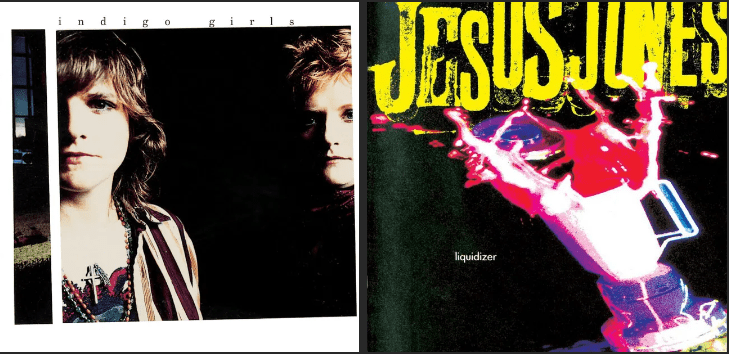
Today’s Matchup: Music With a Message Takes on A Feel Good Record

The Best Record of 1989: Day 42: #58 Boogie Down Productions, Ghetto Music: The Blueprint of Hip Hop vs #71Young MC, Stone Cold Rhymin’

Good morning!

Today we’re taking a look at records from BDP and Young MC


Note: As many of you know, I recently wrote about a Best Record of 1989 challenge and noted that I’d occasionally write some of these up.

I’ve started doing some quick hits of each matchup and posting them directly to the page. Some will be longer, some won’t, and some might just be a handful of sentences. There’ll probably definitely be some typos.

Check ’em out and let me know your thoughts! Chin wags & hot takes welcome! Sharing and restacks are always appreciated.

KA—


BDP—and, by extension, KRS-One—have always been lost on me. I have been much more interested in his role as a sort of hip-hop ambassador emeritus and the work he’s done in/for the community than I have in his work as an MC. This is not an indictment of his talent but a testament to where I was in life when he hit.

In 1989, things like “conscious rap” and a return to core principles weren’t on my radar. Sure, I’d take all the boom bap you could give me, but I was more into the beats (and bass) than anything else. Lessons and teachable moments? No thanks. And let’s be honest; as a teenager, hearing rhymes about “bitches” and light crimes was probably more thrilling than anything that would have opened my mind or raised my consciousness. I’m not saying that was cool; I’m just saying that’s how it was.

All that aside, there was a TON of hip hop to pick from in ‘89. We’ve already seen records from LL Cool J, The D.O.C., NWA, Biz Markie, Beastie Boys, with more on the way. No one was left wanting, regardless of what you were looking for in an MC or crew.

So while I was off misspending my youth, KRS-One was spreading a message to anyone ready to hear it. After the landmark Criminal Minded and By All Means Necessary, BDP came back for its third record in as many years: Ghetto Music: The Blueprint Of Hip-Hop.

The record has a dancehall/reggae flavor, reinforced through the samples used and lyrical cadence. Those easy rhythms support some harsh truths and real talk as KRS-One and co. take on all comers. No one’s safe; sucka MCs… crooked cops…you name it. The theme here is peace through strength. To achieve anything worthwhile, you must be willing to fight for it. “World Peace” throws an exclamation point on that, with wit, a deceivingly soulful beat, and a good dose of horns, oh, and a refrain of:

If we really want world peace
And we want it right now
We must make up our minds to take.. it..

That message was on time in ‘89 and is particularly relevant today. I might’ve passed on BDP back in the day, but Ghetto Music: The Blueprint Of Hip-Hop is too important to leave on the shelf.


The easy line here would be to note that Young MC had a massive hit with “Bust a Move,” and that was that. We could also talk about the chatter calling him an industry plant and grumble about his doing ads for Taco Bell and Pepsi. Doing ads might raise hackles, but they make financial sense. And who better in the game to pencil that out than someone with a (checks notes) economics degree from USC? WTF? Wasn’t everyone in ‘89 trying to talk about how street they were?

Maybe, but is it better to have one massive hit or a string of tracks the heads deem essential? One acts as a de facto annuity, and one gets you…props.

Depending on the criteria, Marvin “Young MC” Young had more than one hit to his name, helping pen some hit tracks for Tone Loc you might have heard. Even on this record, there were no less than six singles. I’ll be damed if I can remember more than two of them (“Principal’s Office” was also pretty good).

And the truth is, Stone Cold Rhymin is pretty good too. Some of the bars sound dated, as does the flow, but I’m listening to this as I type, and the overarching sentiment is one of surprise and mild delight. This isn’t half bad! Reading the liner notes, it looks like our man also had plenty of help; Mario “Mario C” Caldato Jr. is in the mix. Flea shows up. Wild. N’Dea Davenport of labelmates Brand New Heavies appears on “I Come Off.” There’s a lot more here than just the refrain of “if you want it, you got it, “ and a girl in yellow dancing on Arsenio Hall.

As much as I love that song (yes, really!), listening to it today, I’d dare say it’s not even the second or third best track on the record. The title goes to “Know How.” Young gets some help from the Dust Brothers, and using a sample from Shaft and the infamous Apache drum break, they deliver an absolute Banger.

Say what you will about Young MC, but he deserves credit for putting together a feel-good record that never tried to pretend it was anything different.


My vote: One of these records reinforced my (preconceived) notions about it, while the other demolished similar thoughts. BDP is good, carries a worthwhile message, and still just isn’t my bag. It is what it is. Young MC, meanwhile, put out a record far better than I remember/would‘ve given him credit for. I never owned either, but I am a little bummed it took me almost 40 years to dig into Stone Cold Rhymin’.

In sum, you’ve got some music with a message and a feel-good record. I have a feeling this is one match where people will vote for what they perceive as the more ‘real” record. Using that metric, BDP is the winner hands down, and my bracket reflects it.

Any thoughts on either of these records? Agree/disagree with my takes? Which one of these would you vote for? Sound off in the comments!

Check out the full bracket here.

Info on the tourney, voting, and more is here.

As always, thanks for being here.

KA—

The Best Record of 1989: Day 40

#47 Kristy MacColl, Kite vs. #82 Gang Starr, No More Mr. Nice Guy

Good morning!

Today we’re taking a look at records from Kristy MacColl and Gang Starr.


Note: As many of you know, I recently wrote about a Best Record of 1989 challenge and noted that I’d be occasionally writing some of these up.

I’ve started doing some quick hits of each matchup and posting them directly to the page. Some will be longer, some won’t, and some might just be a handful of sentences. There’ll probably definitely be some typos.

In case you missed any from earlier this week:

Day 36: #34 Bonnie Raitt, Nick of Time vs. #95 The Field Mice, Snowball

Day 37: #15 Madonna, Like a Prayer vs. #114 Peter Murphy, Deep

Day 38: #50 Lyle Lovett, Lyle Lovett and his Large Band vs. EPMD, Unfinished Business

Day 39: #18 Kate Bush, The Sensual World vs. #111 The Wonder Stuff, Hup

Check ’em out and let me know your thoughts! Chin wags & hot takes welcome! Sharing and restacks are always appreciated.

KA—


I first found Kristy MacColl, as I suspect many others have, through the “Fairytales of New York” song she did with The Pogues. Today, it seems the consensus pick for favorite Christmas song among hipsters. It’s one of those songs that’s somehow everyone’s favorite, that you’re just expected to like. I find it interminable. And for a long time, I used that as an excuse not to delve any further into her work. Silly me.

Other than that, all I really knew was that she did “They Don’t Know,” a lovely bit of sugary pop that was covered by Tracey Ullman. This is a small bit of trivia that has yet to come in handy. And did you know Tracey Ullman had her own show that featured recurring interstitial animation skits about a family named The Simpsons? I’m incredibly fun at parties and Bar Mitzvahs.

Back to Kite: MacColl was the daughter of folk singer Ewan MacColl, who, by most accounts, sounds like an asshole and may be why she steered her own career toward a poppier sound. Refusing to be pigeonhole (or molded) into whatever label execs thought a pop star should be, her career floundered a bit. She found a niche performing on other people’s records (see above) while still chugging along in her own career. Kite is her sophomore outing, released 8 years after 1981’s Desperate Characters (see above again). I should tell you now that I brought every preconceived notion I had to the party. I was expecting a record that alternated between dirges and folk songs.

And holy shit was I wrong! Sure, there are strains of folk here and there, but this record is …dare I say, jaunty? Opener “Innocence” was a delight and will be on a few playlists going forward. “Mother’s Ruin” slows the tempo, but is in no way a downer. There’s a Kinks cover (“Days”)!

Maybe more importantly, while it does concede that she’s good at singing other people’s work, often at the expense of her own, it also gives her a chance to showcase her own chops. MacColl can, in fact, write a helluva song.

There’s some overproduction here and there—then husband Steve Lillywhite was behind the boards, and I wonder if he was aiming to make this as accessible as possible (i.e., hoping to help his wife find commercial success). Not every edge has to always be sanded off, you know, but after a listen or two, I’ve decided that’s a feature, not a bug. I’m obviously late to the party, but Kite has proven to be a nice surprise.


Ask five people to name their favorite Gang Starr record, and you’ll get six opinions. Odds are also good that No More Mr. Nice Guy won’t be one of ‘em. It’s not that it’s a bad record, it’s that the others are soooo good. Dj Premier and Guru have rightfully earned a spot in any GOAT discussion, but in 1989, they still weren’t on the map. 

If nothing else, this record feels ”new,” like everyone‘s still new to the game and each other. They’re all feeling each other out and finding their levels. There’s a lot of first-day energy here, right down to the lyrics that feel kinda boilerplate.

Mark the 45 King is here, and his signature sound colors a couple of tracks. On the one hand, that‘s a good thing. On the other hand, it immediately took my mind to all the different tracks he was on at the time. Gang Starr’s unique style is what made them what they are. That’ll come in time, but it isn’t fully formed here.

I’m mindful that retroactively comparing this to their later records isn’t fair. Again, this is a solid record, especially for 1989—it’s just not on the level of what was to come.

Track picks: “Gotch U,” “2 Steps Ahead”


My vote: At the risk of undercutting literally every point I made above, my vote goes to Gang Starr. RIP Guru.

Any thoughts on either of these records? Agree/disagree with my takes? Which one of these would you vote for? Sound off in the comments!

Check out the full brackethere.

Info on the tourney, voting, and more is here.

As always, thanks for being here.

KA—

The Best Record of 1989: Day 37

#15 Madonna, Like a Prayer vs. #114 Peter Murphy, Deep

Good morning!

Today we’re taking a look at records from Madonna and Peter Murphy


Note: As many of you know, I recently wrote about a Best Record of 1989 challenge and noted that I’d be occasionally writing some of these up.

I’ve started doing some quick hits of each matchup and posting them directly to the page. Some will be longer, some won’t, and some might just be a handful of sentences. There’ll probably definitely be some typos.

Check ’em out and let me know your thoughts! Chin wags & hot takes welcome! Sharing and restacks are always appreciated.

KA—


In 1989, Madonna was everywhere. How you react to that sentence is a tell. Older readers will simply nod in agreement, with younger readers wondering what the fuss is. She was riding high on a string of hit records. She’d tried acting with somewhat less success. She’d been in a high-powered/, hot-tempered marriage with actor Sean Penn—the kind of wild ride that launches entire tabloids—or at least it did in 1989.

By the time Like A Prayer rolled around, most of that was beginning to show her. But Madonna Louise Ciccone was never one to shy away from a bit of controversy.

Ask that same crowd about MTV, and they’ll likely launch into a stemwinder about the channel actually playing videos. That’s true. There was more to life than just Tosh 2.0 ad infinitum. They also premiered videos in a way that harkened back to the glory days of Hollywood. A Madonna video? That was a big f’in deal. And it was appointment viewing.

You also have to understand that anything even vaguely religious was likely to give legions of Americans the vapors. Add a little interracial love into the mix, and you’ve got a bona fide scandal on your hands—a scandal that, at the very least, cost her a Pepsi commercial.

That video was for the title track on Like A Prayer, her blockbuster record. In the years up to this, she’d shown she was never afraid to push boundaries, but to this writer’s ears, the record serves as a dividing line: On one side, you have her earlier poppier sounds. This is the world of “Holiday” and “Angel.” Fantastic tracks, but there’s not a lot of heft there.

On the other hand, you have an artist trying to take back control of the narrative. She’s not Sean Penn’s wife anymore. She doesn’t owe anyone. Free of those guardrails, she’s free to push up against the corners and pressure test her sound. She wasn’t gonna answer to anyone.

If the title track didn’t telegraph that message, the second track, “Express Yourself,” surely did. This is Madge’s declaration of independence, and it’s a banger.

It’s not a clean break, though. “Til Death Do Us Part” is a bit of easy-breezy pop reminiscent of so much of her earlier stuff. “Cherish” doubly so; so much so that I could have sworn it was actually on True Blue. All well and good until you read the lyrics for the former and realize she’s singing from inside the dystopian hellscape of an abusive relationship. Oof.

Knowing the history (or at least what we read about in the papers), it’s hard not to see this record as explicitly autobiographical. And maybe it is. Today, stars leveraging trauma for clicks and money is par for the course. Thirty-six years ago, not so much. And in the end, maybe it doesn’t matter. Art and real life have always been a blurry line for her. What Like a Prayer made clear was that anything after this was going to be on her own terms.


That both Love and Rockets and Peter Murphy have records in this challenge should tell you something about the bumper crop of records we got that year. When talking about Love and Rockets earlier in the series, I commented that it felt like they were trying to make as un-Bauhaus of a record as possible. The same holds true here, with the band’s frontman shedding many darker themes and moods for something…accessible? The tracks here have a bigger, almost bombastic sound. His deep voice makes for quite a contrast against the (relatively) lighter sounds. It’s not hard to imagine a much more mainstream act doing “Crystal Wrists.”

Dare I say that Murphy is a fan of pop?

Lyrically, the record leans towards themes like love and the world around him. You have to work to untangle those words, though. Murphy likes to wrap his lyrics in riddles. They’re often enigmatic, and the challenge makes deciphering them feel all the sweeter. If you need an exact time to call Bela Lugosi’s death, let me point you to the 4:18 mark on the hit single “Cuts You Up.” This is when everything bursts open and the track hits peak exit velocity. It’s anthemic.

Bela Lugosi is dead, and he’s not reanimating for this record.


My vote: I’m a friend of the goths, but it was always gonna be Madge.

Any thoughts on either of these records? Agree/disagree with my takes? Which one of these would you vote for? Sound off in the comments!

Check out the full bracket here.

Info on the tourney, voting, and more is here.

As always, thanks for being here.

KA—

The Best Record of 1989: Day 35

#31 Ministry, The Mind Is a Terrible Thing to Taste vs. #98 Sepultura, Beneath the Remains

Good morning!

Today we’re taking a look at records from Ministry and Sepultura


Note: As many of you know, I recently wrote about a Best Record of 1989 challenge and noted that I’d be occasionally writing some of these up.

I’ve started doing some quick hits of each matchup and posting them directly to the page. Some will be longer, some won’t, and some might just be a handful of sentences. There’ll probably definitely be some typos.

Check ’em out and let me know your thoughts! Chin wags & hot takes welcome! Sharing and restacks are always appreciated.

KA—


I’m very much in the “Make Ministry synth pop again!” camp, but also loved The land of R*pe and Honey. I also had no reason to be angry about anything, but teenage angst is funny that way, I guess.

At any rate, earlier this year, frontman Al Jourgenson decided to listen to the masses (or his accountant) and put out The Squirrelly Years Revisited, a remaking/refresh of those early records.

Writing about it I noted,

In May of 1983, Ministry recorded With Sympathy. Frontman Al Jourgenson then spent the ensuing years telling anyone who’ll listen that it’s awful. If the “Make Ministry synthpop again “memes are anything to go by, many people never go to the memo. They’re also now getting what they want…kind of.

After With Sympathy, Ministry recorded Twitch and then began releasing a series of industrial and metal records, both as Ministry and with side projects like Revolting Cocks. All well and good until you make the same record several times in a row. The first time you hear a record like The Land of Rape and Honey, it’s amazing. But it only takes a few records to see that Jourgenson was on autopilot. For me, it was like the music version of the law of diminishing marginal returns.

Sometimes I wonder if with each passing record, Jourgenson was trying to get further and further away from those early releases. But here’s the thing: people liked records like With Symptahy and Twitch—at least where I lived, anyway. And even today, the coolest people I know still work “Every Day is Halloween” into their October playlists.

The Mind Is a Terrible Thing to Taste feels like him in a full sprint. It’s a great fusion of thrash, metal, and industrial. It’s bruising and the sort of record that is either perfect for channeling the misdirected anger you have in your life, or leaves you feeling like you’ve been in a bar fight. Better this than punching a wall or running red lights. The riffs are jagged, the beats pulverizing. It’s like taking the hardest parts of Skinny Puppy and dialing them up (they too would experiment with “louder, faster, more!” soon enough). The best parts of the record are where Jourgenson seamlessly blends industrial and metal elements. Tracks like “So What” are almost-almost!- Dance floor ready. You can run, but you can’t hide.

If nothing else, it serves as a decent enough vehicle for escape. Speaking of which, it’s worth noting that Jourgenson was absolutely off his rocker on drugs at this point.

At any rate, with each Ministry record, I grew further away from them while also (ironically) more into the Ministry adjacent bands like RevCo, and Murder Inc. Go figure. Listening to this again feels like falling into a time machine where I’m again fretting about acne, some girl, and god knows what else.


Pity my friend Mark. He is responsible for so much of my music discovery. He tried so hard to get me into Sepultura. This was literally a decades-long project. And yet, it was all for naught. It took a bracket challenge on Bluesky of all places to finally get me to listen to them.

And look, this record rips! If you’re a metal fan, you’ll love it. It’s in the same wheelhouse as LPs like Metallica’s Kill’ Em All and even Suicidal Tendencies. Perfect for ripping along back roads at 110 mph. Best played loud and not on a pair of work speakers at 8 AM, but you do what you gotta do. if I had to name a pull track, “Inner self” would do the trick.

All in all, a solid outing! A cursory glance online says that this is also a fan favorite, so there’s that.

I wouldn’t have much minded this as a teenager, but I likely would have only gone as far as getting a copy from someone. Maybe. I was just too far gone into other genres to dig this. Besides, a lot of the same people listening to this in ‘89 were the ones throwing me into lockers during passing time. Sorry, Marky, but I’m going to pass.


My vote: Chicago > Belo Horizonte. Would love to hear what you think!

Any thoughts on either of these records? Agree/disagree with my takes? Which one of these would you vote for? Sound off in the comments!

Check out the full bracket here.

Info on the tourney, voting, and more is here.

As always, thanks for being here.

KA—

The Best Record of 1989: Day 33

2 Beastie Boys, Paul’s Boutique vs. #127 Cardiacs, On Land and in the Sea

Good morning!

Today we’re taking a look at records from Beastie Boys and Cardiacs


Note: As many of you know, I recently wrote about a Best Record of 1989 challenge and noted that I’d be occasionally writing some of these up.

I’ve started doing some quick hits of each matchup and posting them directly to the page. Some will be longer, some won’t, and some might just be a handful of sentences. There’ll probably definitely be some typos.

Check ’em out and let me know your thoughts! Chin wags & hot takes welcome! Sharing and restacks are always appreciated.

KA—


Last fall, Sam Colt and I took on the absurd fun idea of writing up our respective Top 100 lists. We started at 100, and over several weeks worked out way to the top. I’ll say only this; Paul’s Boutique made it’s appearance pretty late in the game. Felt strange trying to describe what is best described as the band’s magnum opus, but below is/was my attempt.

Around the time this came out, a guy was something of an extra in the movie of my life. He was a DJ, and I’d see him everywhere. Tower Records, house parties, on the street; you name it. I lived in a suburb, but it wasn’t that small. He would refer to himself as “{your] hip hop connection” and hand us a business card, which I guess was the late 80s way of building a brand. I dunno. But he was really good at turning people on to new records. One of them was Paul’s Boutique.

Running into him on the street, he was evangelical about the record, almost begging us to buy it and see for ourselves. I did…and was promptly disappointed. In hindsight, I should‘ve known a DJ would talk up a record built on samples- so many, in fact, that a lot of them are almost unrecognizable. But I was expecting/half hoping for a License to Ill PT II. That, of course, wasn’t going to happen. Time and the band had moved on.

What we got instead was nothing the world had ever seen. MCA hadn’t yet gone full monk, but he was already cooler than a cucumber in a bowl of hot sauce. Tracks like “Shake Your Rump” show Ad-Rock and Mike D largely dropping the frat boy bit but none of their swagger. For anyone looking for “Brass Monkey” or a similar ditty about chasing girls, “Hey Ladies” will have to do. “Sounds of Science” is still a banger. “Looking Down The Barrel of a Gun” feels like an homage to the Cookie Puss days. This is a hip-hop record, but they were a band first.

It took me a while, but I came around to his record. Several months later, I was at a party where my DJ friend was spinning wax. He played “Sounds of Science,” and the place came alive. Later that night, we were outside smoking, and I told them I loved the record. “Man, I told you!” he said, “If you ever need a DJ, let me know,” pressing yet another business card into my hand.

Thirty-something years later, my son tagged along with me to our local record store. He liked rap and was looking for what would be his first vinyl buy. I sold him on Paul’s Boutique the same way I had been all those years—and miles—ago. He walked out the door with a copy.


If listening to Paul’s Boutique made me feel 10 times cooler, playing On Land and in the Sea did the opposite. I know there’s a whole world of fans out there that dig this sort of thing, but it just felt like a bit that would show up on an episode of The Young Ones. Something Vyv would love and something Mike the Cool Person wouldn’t touch. Rick would go predictably berserk, and Neil would say something out of pocket about carrots, or whatever. Hijinks ensue! Yawn.


My vote: Is there any question? A record that upended a whole genre for the better, or one that had me looking for some Anacin? Paul’s Boutique. All day.

Any thoughts on either of these records? Agree/disagree with my takes? Which one of these would you vote for? Sound off in the comments!

Check out the full brackethere.

Info on the tourney, voting, and more is here.

As always, thanks for being here.

KA—
A New Record You Should Check Out

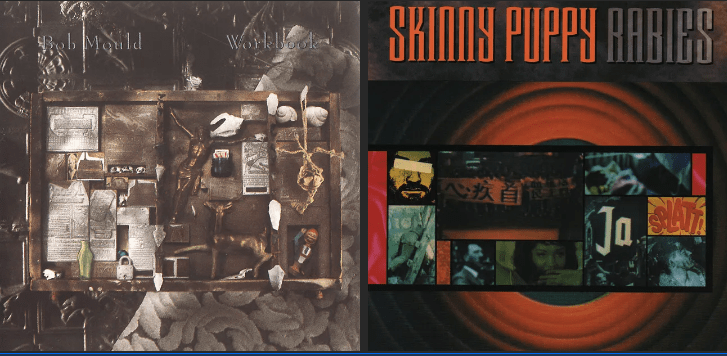
Laura Hobson of Phabies stops by to chat about The Curse of Caring, the band’s latest release.

Photo: Leigh Ann Cobb

Good morning!

We’re in for a treat today! Laura Hobson of Grand Rapids-based Phabies stops by to talk about their latest record, how it all came together, and what’s coming next.


When a reader first tipped me off to Phabies, I wasn’t sure what to expect. I initially thought this would be a band well suited to a punk band or co-headlining shows with The Germs. That’s what I get for judging a group by its name.

The band’s sound is nowhere near that. Their sophomore LP, The Curse of Caring, leans much more toward indie pop, with bright sounds and playful pop coursing through it: more sunshine, less low ceilings.

The odds are extremely high that you’ll get at least one of these songs stuck in your head for a day or two. They’re just that catchy. It’s an album that’s one of my faves of 2025. But that breezy sound contrasts with some heavy lyrics. Throughout the 10 songs, bandleader Laura Hobson tackles a menu of serious topics. “Who’s gonna save us now?” she asks on opener “Blooms of April.”

Who indeed?

“I’ve always felt a duty to create something out of nothing,” says Hobson. “Changing a grass lawn into a native ecosystem or playing three chords to create a song.”

On “Green Cement,” she asks us, Are we doing it right? Are we doing it right? / Pave the kingdom for an endless supply?”

I can’t answer that, but also? We’re not.

There is an urgency there, but The Curse of Caring isn’t a downer of a record. Hobson’s got strong thoughts and some unflinching takes, but they’re never preachy. It’s the opposite, leaving the listener full of hope and looking for a light at the end of the tunnel. We might be heading straight over the waterfall, but we can love one another right up until the end.

And we can spin some killer records like The Curse of Caring.

I recently had a chance to speak with Hobson via email. In our wide-ranging chat, we cover the Phabies origin story, the Grand Rapids scene, the record’s sound, and what’s next for the band. The discussion has only been lightly edited for grammar and flow.

KA—


For those that might not know, can you quickly walk us through the backstory of how the band came together?

Yes! Phabies was started by me (Laura Hobson) in 2018. I had been looking for a way back into playing music for years prior to solidifying the group. I had an enormous backlog of music but no one to play it with and I wasn’t interested in debuting these new songs as a singer/songwriter. The band clicked into place through long-lasting friendships. My partner Garrett Stier is the bassist and manager and my college buddy Josh Holicki plays drums. The three of us have played in the group Jack Droppers and the Best Intentions for a long time. I’ve known both of them for over a decade, so there’s a familiarity that makes practices and shows just feel like hanging out. Josh knew Max McKinnon from touring with his band Mertle and Max was able to join on synth/keys. In 2024, we welcomed Andrew Deters on guitar and he’s the most thoughtful guy. He’ll literally call you if he’s thinking about you.

Congrats on the new record! Was the approach similar to the last record (2022’s Fire Seed), or did you set out to make something wholly different?

Thanks for listening to the new album! The Curse Of Caring was in many ways much more difficult to write than Fire Seed, simply because I had that notion of the “sophomore slump” in my head. Feeling pressure to follow any creative endeavor with something even more unique, special, or exciting puts a tremendous amount of pressure on you. I was able to find a way out of my own head with help from friends who let me stay at their house and use their space as a quasi artist residency. It was a rejuvenating time and I wrote, or at least started, nearly half of the album while down there.

Fire Seed felt like a collection of songs that I used to explore the notion of songwriting. The songs each have their own unique flavor, as we were still a young band trying to hone in on our sound. The Curse Of Caring has a lot more intention, there are through-lines if you sit down with the lyrics.

During the recording of the album when I was intensely immersed, I made this murder map where I wrote all the lyrics out by hand and connected similar thoughts and through-lines with red string to get an overall feel for what I was trying to say. I’d like to think that each new album will just be tighter and more cohesive as the writing becomes stronger.

What’s the songwriting process look like? What generally comes first, the music or the lyrics?

Believe it or not, the lyrics and music usually come together at exactly the same time. It’s almost hard to practice new chords, scales, or tunings because as soon as I start learning, my brain goes off into creative overdrive. In a way, it’s a blessing, but when I’m just trying to practice it can feel like a procrastination technique I use to fight boredom. I never write any lyrics down ahead of time, with the exception of the song “Tell Her” from our new album. For me, it’s too clunky and rigid to force-fit lyrics into a melody. It always ends up trying to sound too profound or intellectual. I prefer for the lyrics and melody to evolve together so they feel tailored, like a couture suit.

“Tell Her” was the exception because it was written for an assignment given by Phil Elverum through School of Song. The assignment was to wake up uncomfortably early, meditate for 10 minutes, and then free write what you feel (not what you think you feel) for 5 minutes. We were then instructed to organize our writing into haibun (a chunk of prose ending in a haiku). The song came out almost completely formed, I only edited a few words and added the haiku onto the end.

I’m not sure if I’d get that lucky again, but this interview just reminded me about the process, so maybe I’ll try it out soon.

On “I Care For You” there’s a (very catchy) line that goes, “There’s too much city in you now/We gotta get out of this town/There′s too much city in you now/Ain’t gonna lose ya to the crowd.” I found myself singing it here and there over the course of a couple of days. What was the inspiration behind that verse? Is it simply a call to get away from all the concrete and back to nature, or is there a more abstract message here?

I love singing these lines because they have a very special memory attached to them. As I mentioned earlier, I had help from my friends when I was feeling daunted by what felt like an enormous creative endeavor. My friends Jake & Merilee let me stay at their home in Cincinnati for a week to help shake up the monotony of my own life, as I had been feeling stuck.

Jake arranged all of these fun things to do & I met and spoke with a woman who is a forensic psychiatrist and bee-keeper trying to save a forest in Cincinnati from being cut down for a dog park. I had lunch and saw “Stop Making Sense” in a group with Bryan Devendorf (drummer for The National) and watched films late into the night with Jake & Merilee (Children of the Corn, The Descent, They Live, Babadook, Event Horizon, The Mothman Prophecies).

Merilee and I went on a guided mushroom identification hike led by the parks department through the old-growth forest. On the hike, I overheard a woman lamenting about modern times, gesturing around at the forest saying, “These kids have too much city in ‘em these days! No one remembers this stuff. It used to be that when you lived in rural places, you’d know everything that came with each season.”

I knew immediately I would be incorporating the summarized phrase “there’s too much city in you now” into the chorus of I Care For You. It was the missing piece that I had been searching for, and it was gifted to me in that moment! It’s so special when things like that happen, that’s why it’s so important to shake up your routine. I never would have heard that woman if I had stayed fighting with my own brain in Grand Rapids. I still would have finished it, but the song would have been something else, entirely.

Grand Rapids, MI. isn’t on a lot of people’s radar. What should we know about the city? What’s the scene like there?

I’m hesitant to talk up my city too much for selfish reasons. I like that it’s not too crowded yet, haha. I think it’s like a miniature Austin, TX but with snow and very impressive and welcoming environmental movements.

I’m thinking specifically of Pleasant Peninsula, a national mural festival whose purpose is to fuel conservation and environmental education efforts. It was started by Eddie Chauffer a few years back but has turned into a full-blown music, art, education, and mural fest.

There’s a laid-back happiness to the people here. I know all my baristas by name and love seeing them. Grand Rapids still very much feels like a small town but with incredible coffee. Every time I leave the house, I run into someone I know. These built-in interactions provide just enough human connection to brighten my mood.

The music scene has always been here, but lately it feels like it’s become connected in more meaningful, exciting ways. When you’re in any place for over a decade, you become familiarized with the people and places around you. I take it for granted that we still have mid-size independent venues who don’t take merch cuts. Musicians have to work unfairly hard to make a living in any place, but at least in Grand Rapids, it’s still semi-affordable. I’m not running myself into the ground just to pay rent. Living here, I get to set my own pace. I love working with local photographers, videographers, and artists who feel like hidden gems.

The Grand Rapids scene feels like quality over quantity to me. Those who are creating are committed to it and it shows. Sometimes they make the jump to bigger cities, sometimes they stay. I stayed because I feel useful here, I have a lot of purpose in my own neighborhood and I like to feel helpful.

What’s next for Phabies? Any shows? Touring? What’s the back half of 2025 look like?

Hey, if you’re a band who’s further down the road than us and is looking for an opener to take along on tour, we’re interested. We’re not on a label, so Garrett’s been DIY-booking all of our shows so far and I bet he’s tired.

We’d love to tour and bring our music to more of the Midwest and beyond. I’m hoping to play in Chicago and Indianapolis again this year (nothing booked yet). If I’m allowed to dream for a second, the hope would be to tour somewhere warm during the winter months opening for a band in the the 500-1,000 seat range.

We are playing up in the Keweenaw Peninsula this August at a music festival called Farm Block. I’m excited about that show because I haven’t been that far North in over 5 years.

Last one, just for fun; I bump into you as you’re walking out of the record store. What records are you carrying?

“Oh, hey – what’s up, Kevin!” I found this record with a woman’s face on it in the $1 bin – I have no idea what kind of music it is and I can’t find anything online, but it’ll probably be fun to listen to. This other record is one I’ve been meaning to purchase for a long time, but haven’t been able to find because they’re an indie Melbourne-based songwriter. I put it on special order and it finally came in 🙂 The album is “Some Kind Of Control” by Ruby Gill, I love the song about the chimpanzees.


Listen:

Phabies | The Curse of Caring, 2025

Click the picture to listen via Bandcamp

Hit Bandcamp to grab your copy of the record, and connect with them via their website and Instagram.

As always, I’d love to hear your thoughts! Is this a new band to you? Sound off in the comments or send me an email- I read every one of ‘em.

Thank you to Laura for her time, and thank you for being here.

Kevin—