The Best Record of 1989 Day 51: #30 Camper Van Beethoven, Key Lime Pie vs. #99 Ice-T, The Iceberg/Freedom of Speech… Just Watch What You Say!
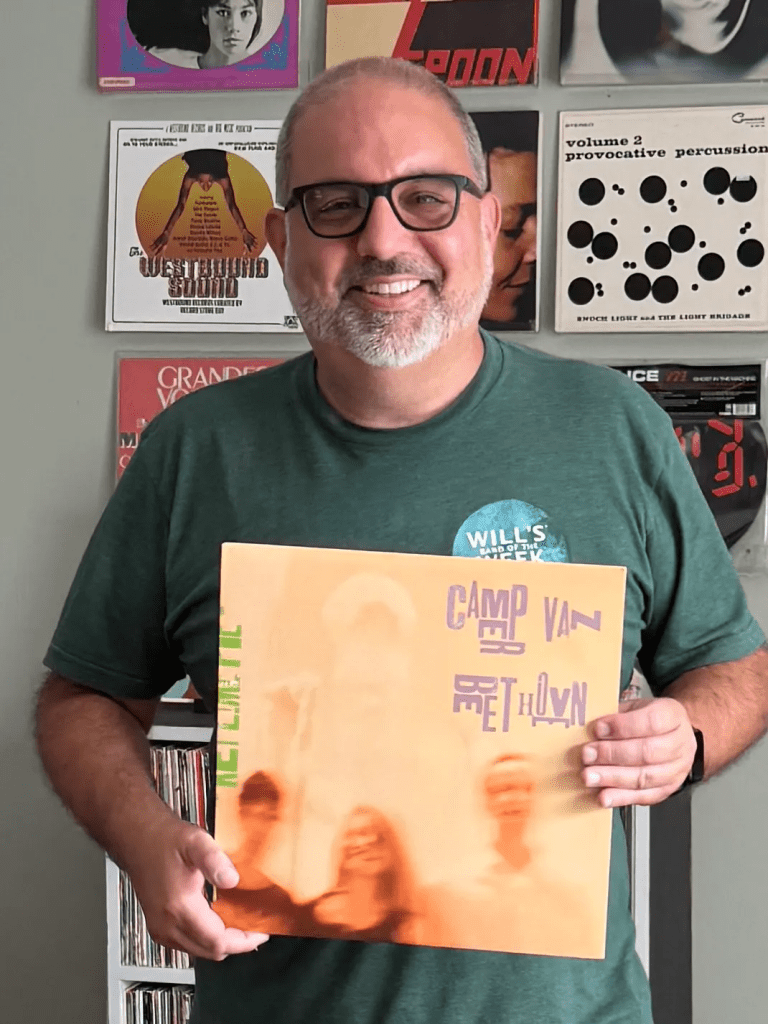
I am incredibly photogenic.
Good morning!
Today we’re taking a quick look at records from Camper Van Beethoven and Ice-T
Growing up, one of the guys on my block lived in a house with a basement. You have to understand that this was relatively unusual in Oregon. You also need to know that it had its own entry, separate from the rest of the house, which, of course, meant it was the default place for all of us to hang out.
All well and good, except that my friend also played guitar. Yeah, that guy. We all know one. Worse, he’d often play it to impress girls on the rare occasion they stopped by. This is how I first heard Camper Van Beethoven’s cover of “Pictures of Matchstick Men.” Not a strong start, but for better or worse, this was the band for me growing up.
This record was also the sound of Camper Van Beethoven growing up—not gracefully, exactly, but white-knuckling it through the end of the 80s like the rest of us. If Our Beloved Revolutionary Sweetheart was the band getting serious, Key Lime Pie is them getting mean; not in a cruel way, but with the kind of sardonic clarity that only comes after you’ve watched the Reaganomics tear apart the American Dream brick by brick.
By 1989, the band was peeling away their own layers. Jonathan Segel was gone. David Lowery had taken the wheel, and the group’s weirdness started to harden into something leaner and a bit darker. The violin remained, but now it ached. The jokes hadn’t vanished, but now, they came with shadows instead of a wink and a nudge. Irony no longer softened the blow; it was the hammer delivering it.
But that’s what makes this record the gem it is. Say what you will about this style shift, but Key Lime Pie is an honest, beautiful, and impossibly human album. The songs aren’t necessarily sad in the normal sense—they’re quietly devastating. It may take a few years and the benefit of hindsight to realize.
Listening feels like looking directly into the souls of people on edge, or even standing at the edge. It can be humbling, and it’s quite a counter to the demanding style of patriotism that was so in vogue.
Musically, Key Lime Pie is a masterclass in restraint. It’s still unmistakably them—strange little chord changes, unexpected melodic sidequests, and eerie violins—but it’s more grounded. Michael Urbano’s drumming is the most conventional thing on the whole record, giving the songs the structure they need. Pedal steel threads through tracks, especially on “Borderline” (my personal favorite) and “Sweethearts.”
And before I forget, the run from “Sweethearts” through “Borderline” is one of the strongest 4-track runs going.
The band sounds tighter, but not sanitized. They’ve ditched the genre-hopping of earlier albums and focused the chaos into something more purposeful. There’s Americana here, but it’s postmodern Americana.
Lyrically, Lowery is at his best here. There’s less snark, more ache. “Sweethearts” paints Ronald Reagan as a puppet for state-sponsored violence and capitalism, but it’s delivered with enough subtlety that you almost miss it.
“When I Win the Lottery” may be the best song ever written about bitterness as a survival strategy. It’s funny, but not ha-ha funny. It’s incredible line-level writing from the POV of someone like the guy at the end of your local bar; the one who’s seen some things.
The whole album walks the line between love and futility, beauty and decay, hope and despair—nihilism. This is a portrait of a broken America song by characters who’ve watched the American Dream collapse under its own weight.
It’s a record about America, sure. But more than that, it’s about people navigating what America does to you. People leaving, people drinking, people stuck in laundromats or backwater towns with only Swap Shop or gospel on the radio. People literally and figuratively stuck on the side of the road. Still, it’s the most empathetic album they ever made (we can use that, too). It doesn’t punch down; instead, it meets its characters where they are.
Despite my less-than-auspicious onramp to the band, this album has never really left my rotation. Very rarely do I play it and not find something new.
You can call it alt-rock, Americana (maybe), or whatever you want—it’s eclectic enough that pretty much anything will fit. But again, it’s just one of the most human records of the year. That sort of thing never goes out of style. It’s always relevant.
Gather ‘round, kids: It’s time to tell you the story of who Fin Tutuola used to be.
Shame that an entire generation only knows Ice-T from his portrayal of a cop on Law & Order. How odd it is to remember that the same guy now flashing a badge used to flout—and run afoul of—the law. This is, after all, a guy who was also almost arrested in Georgia for the high crime of swearing onstage. Such was the climate at the time. It’s all enough to catch a case of the vapors.
In 1989, Ice-T was still a rapper who put hot girls and guns on his covers. He sang songs about power, and how it started “with P like p***sy.” He swore. A lot.
Meanwhile, the Parents Music Resource Center was busy being busybodies and decided that someone should think of the children! Think Maude Flanders but with Congress’s ear. Ice-T made the perfect target. He rapped about all the things supposedly tearing this country apart, and he was popular.
Ice=T wasn’t about to give an inch, and if you were to condense a review of The Iceberg/Freedom of Speech…Just Watch What You Say down to a line or two, it’s that he made a whole-ass record doing just that. It was a baker’s dozen worth of tracks, and all of them were a raised middle finger to anyone with the audacity to decide what was best for anyone.
You can have your endless reruns of Law & Order SVU; I prefer this version of Ice-T.
My vote: Ice-T fought hard against Tipper Gore and co., but he’s no match for David Lowery. It’s Key Lime Pie all day for me.
Any thoughts on either of these records? Agree/disagree with my takes? Which one of these would you vote for? Sound off in the comments!
The Best Record of 1989: Day 44: #90 Roy Orbison, Mystery Girl vs. #39 Jungle brothers, Done By the Forces of Nature
Good morning!
Today we’re taking a look at records from Roy Orbison and Jungle Brothers
Note: As many of you know, I recently wrote about a Best Record of 1989 challenge and noted that I’d occasionally write some of these up.
I’ve started doing some quick hits of each matchup and posting them directly to the page. Some will be longer, some won’t, and some might just be a handful of sentences. There’ll probably definitely be some typos.
Check ’em out and let me know your thoughts! Chin wags & hot takes welcome! Sharing and restacks are always appreciated.
KA—
Let’s talk about Jungle Brothers’ second album. Done by the Forces of Nature isn’t just their best—it’s their crowning achievement. IMO, it’s conscious rap’s finest hour.
Hyperbole? Maybe. But I’ve listened to a ton of albums over the years, and I can’t think of one this consistent from front to back—fifteen tracks, and not a single dud in the mix. No filler. No skits. No middling nonsense. Just bangers. It never gets boring. It never stalls out. It’s sonically rich and wide-ranging. Even the cover reminds me of a happier era.
Picking a pull track here is tough. If pushed, I’d go with “Sunshine” and the infectious “What U Waitin’ For?”. If you’re old enough to remember house parties, this’ll take you right back to being squished into the front room with everyone. And of course, this being made when it was, there’s a group track, featuring Q-Tip, Monie Love, Queen Latifah, and De La Soul. It’s pretty much the full roster of the Native Tongues crew just vibing.
The production is textbook; especially with regards to sampling. Sure, you’ll recognize the samples, but they’re chopped, layered, and flipped into something new. And is that a sample of Junior’s “Mama Used to Say” on “Days 2 Come?” You better believe it. Magic. This was back when producers were alchemists, not just playlist DJs with a loop pack and a laptop. The sample of People’s Choice’s “Do It Any Way You Wanna” on “What U Waitin’ For?” is (chef’s kiss). On a sidenote, this is also fuels Public Enemy’s equally fantastic “Shake Your Booty.”
Sound-wise, you’ve got a sizeable dose of funk, jazz, and—less common at the time—Afrobeat, which fits well with the album’s Afrocentric vibe. But here’s the deal: it never gets preachy or self-righteous. None of that aggressive posturing some so-called “conscious” acts fell into that just got exhausting after a few tracks. Jungle Brothers recognize that rest is resistance. It’s okay to cut loose once in a while! It’s grounded and positive in a way often missing in modern rap.
This is the record people are thinking of when they talk about conscious, alternative hip-hop. It’s the blueprint, but somehow, still underappreciated. Maybe even forgotten in some circles? I’m sure some of that is down to its (relative) unavailability, which is a shame.
If you’ve never heard it, fix that immediately (you can find it on YouTube). If you have—listen again. It’s even better than you remember.
Until now, the only track I’d heard from Roy Orbison’s Mystery Girl was the hit “You Got It,” which seemed everywhere back in the day. With his operatic voice, Orbison has always seemed out of place in the world of rock. That’s not to say his voice is not stunning, only that he’s a square peg trying to fit in a round hole. He’s unique; I’ll give him that.
Mystery Girl was a comeback record in every sense of the word. After 10 years and a run of not-so-great releases, he put out what would be one of his best records. Unfortunately, it would also be the last one recorded while he was alive. Released posthumously, it was finished just a month or so before he passed away.
At the risk of being crass, if you’re going out on a high note, this is the way to do it. I’m not all that familiar with Orbison’s body of work, but taken in isolation, Mystery Girl works. An armada of talent put this together, including (at least) Jeff Lynne, Tom Petty, and the more famous half of U2. Bono and The Edge wrote “She’s A Mystery to Me” for Orbsion, and Bono produced the song.
With a roster like this, there’s always a risk of an album coming across as disjointed, but listening, I’m surprised at how consistent it sounds. There’s no shortage of sheen here—it’s a Jeff Lynne record, after all—but it doesn’t detract from things. The horns on songs like “The Only One” give it a nice Memphis sound.
Overall, it feels like the epitome of an Orbison record. Too bad he never got to see everyone enjoying it.
My vote: Orbison went out on a high note, but Done By The Forces of Nature is a force of nature. By bracket pick and vote are going to Jungle Brothers.
Any thoughts on either of these records? Agree/disagree with my takes? Which one of these would you vote for? Sound off in the comments!
The Best Record of 1989: Day 42: #58 Boogie Down Productions, Ghetto Music: The Blueprint of Hip Hop vs #71Young MC, Stone Cold Rhymin’
Good morning!
Today we’re taking a look at records from BDP and Young MC
Note: As many of you know, I recently wrote about a Best Record of 1989 challenge and noted that I’d occasionally write some of these up.
I’ve started doing some quick hits of each matchup and posting them directly to the page. Some will be longer, some won’t, and some might just be a handful of sentences. There’ll probably definitely be some typos.
Check ’em out and let me know your thoughts! Chin wags & hot takes welcome! Sharing and restacks are always appreciated.
KA—
BDP—and, by extension, KRS-One—have always been lost on me. I have been much more interested in his role as a sort of hip-hop ambassador emeritus and the work he’s done in/for the community than I have in his work as an MC. This is not an indictment of his talent but a testament to where I was in life when he hit.
In 1989, things like “conscious rap” and a return to core principles weren’t on my radar. Sure, I’d take all the boom bap you could give me, but I was more into the beats (and bass) than anything else. Lessons and teachable moments? No thanks. And let’s be honest; as a teenager, hearing rhymes about “bitches” and light crimes was probably more thrilling than anything that would have opened my mind or raised my consciousness. I’m not saying that was cool; I’m just saying that’s how it was.
All that aside, there was a TON of hip hop to pick from in ‘89. We’ve already seen records from LL Cool J, The D.O.C., NWA, Biz Markie, Beastie Boys, with more on the way. No one was left wanting, regardless of what you were looking for in an MC or crew.
So while I was off misspending my youth, KRS-One was spreading a message to anyone ready to hear it. After the landmark Criminal Minded and By All Means Necessary, BDP came back for its third record in as many years: Ghetto Music: The Blueprint Of Hip-Hop.
The record has a dancehall/reggae flavor, reinforced through the samples used and lyrical cadence. Those easy rhythms support some harsh truths and real talk as KRS-One and co. take on all comers. No one’s safe; sucka MCs… crooked cops…you name it. The theme here is peace through strength. To achieve anything worthwhile, you must be willing to fight for it. “World Peace” throws an exclamation point on that, with wit, a deceivingly soulful beat, and a good dose of horns, oh, and a refrain of:
If we really want world peace And we want it right now We must make up our minds to take.. it..
That message was on time in ‘89 and is particularly relevant today. I might’ve passed on BDP back in the day, but Ghetto Music: The Blueprint Of Hip-Hop is too important to leave on the shelf.
The easy line here would be to note that Young MC had a massive hit with “Bust a Move,” and that was that. We could also talk about the chatter calling him an industry plant and grumble about his doing ads for Taco Bell and Pepsi. Doing ads might raise hackles, but they make financial sense. And who better in the game to pencil that out than someone with a (checks notes) economics degree from USC? WTF? Wasn’t everyone in ‘89 trying to talk about how street they were?
Maybe, but is it better to have one massive hit or a string of tracks the heads deem essential? One acts as a de facto annuity, and one gets you…props.
Depending on the criteria, Marvin “Young MC” Young had more than one hit to his name, helping pen some hit tracks for Tone Loc you might have heard. Even on this record, there were no less than six singles. I’ll be damed if I can remember more than two of them (“Principal’s Office” was also pretty good).
And the truth is, Stone Cold Rhymin is pretty good too. Some of the bars sound dated, as does the flow, but I’m listening to this as I type, and the overarching sentiment is one of surprise and mild delight. This isn’t half bad! Reading the liner notes, it looks like our man also had plenty of help; Mario “Mario C” Caldato Jr. is in the mix. Flea shows up. Wild. N’Dea Davenport of labelmates Brand New Heavies appears on “I Come Off.” There’s a lot more here than just the refrain of “if you want it, you got it, “ and a girl in yellow dancing on Arsenio Hall.
As much as I love that song (yes, really!), listening to it today, I’d dare say it’s not even the second or third best track on the record. The title goes to “Know How.” Young gets some help from the Dust Brothers, and using a sample from Shaft and the infamous Apache drum break, they deliver an absolute Banger.
Say what you will about Young MC, but he deserves credit for putting together a feel-good record that never tried to pretend it was anything different.
My vote: One of these records reinforced my (preconceived) notions about it, while the other demolished similar thoughts. BDP is good, carries a worthwhile message, and still just isn’t my bag. It is what it is. Young MC, meanwhile, put out a record far better than I remember/would‘ve given him credit for. I never owned either, but I am a little bummed it took me almost 40 years to dig into Stone Cold Rhymin’.
In sum, you’ve got some music with a message and a feel-good record. I have a feeling this is one match where people will vote for what they perceive as the more ‘real” record. Using that metric, BDP is the winner hands down, and my bracket reflects it.
Any thoughts on either of these records? Agree/disagree with my takes? Which one of these would you vote for? Sound off in the comments!
#50 Lyle Lovett, Lyle Lovett and his Large Band vs. EPMD, Unfinished Business
Good morning!
Today we’re taking a look at records from EPMD and Lyle Lovett
Note: As many of you know, I recently wrote about a Best Record of 1989 challenge and noted that I’d be occasionally writing some of these up.
I’ve started doing some quick hits of each matchup and posting them directly to the page. Some will be longer, some won’t, and some might just be a handful of sentences. There’ll probably definitely be some typos.
Check ’em out and let me know your thoughts! Chin wags & hot takes welcome! Sharing and restacks are always appreciated.
KA—
If EPMD’s 1988 debut, Strictly Business, put the duo on the map, its follow-up, Unfinished Business, cemented their spot. The record is an incredible sophomore outing. Hip-hop back in the day had more weight: chunkier beats, rugged samples, and more bounce to the ounce (sorry, not sorry). The beats came out of the trunk like a left hook, except this was one you didn’t want to duck for.
That’s not to say that the duo of Erick Sermon and Parrish Smith don’t have flow- the pair has bars for days. But they lay down that flow over some industrial-grade beats. There’s fewer moving parts. Less is more. Things pop off with “So Wat Cha Sayin'” a bruising 5 minutes of funk with the infectious sampling of BT Express’“If It Don’t Turn You On (You Oughta Leave it Alone), layered over some drums from Soul II Soul of all people. Knick Knack Paddy Whack has a sample you’ll likely recognize. Try and see. Those samples and scratches are courtesy of George “DJ Scratch” Spivey, and his work on the 1s and 2s should not be overlooked here.
That flow might be their superpower. The two play off one another like two friends on a patio or sitting at a picnic table on their work break. They’re puttin’ in work, but it never feels labored (FWIW, I think P is better technically, while E has better flow per se.).
That’s not to say Unfinished Business is a no-skip record—you can feel confident in skipping “It’s Time 2 Party” and “You Had Too Much to Drink—but the good far outweighs the bad. Sermon and Smith are all business, and on this record, business was good.
I’ve never quite been able to read Lyle Lovett. Is he country? Something else? And how exactly did he and Julia Roberts wind up together? Lucky him.
That he’s never quite ascended to A-list stardom means that most audiences (and A&R reps and programming directors) were also stumped. But for those that get it, his records are a treat.
I hadn’t heard this one before, and if I’m honest, I wasn’t ready for the bluesy/jazzy/band-y flavor here. It’s good, just not what I thought would be on order. On brand for the man, I suppose. For example, I did not have “Here I Am” with its monologue in the middle on my bingo card. Nor was there a spot for a straight-faced cover of Tammy Wynette’s ” Stand by Your Man.” Yet here we are.
This record is light years from what I was playing in ’89, but listening now, it’s pleasant (not derogatory). I can easily see myself giving this a spin over brunch or on one of those rare days when I get to lie on the couch with Gizmo and stare out the window. It feels like Lovett came to terms with not being a “star,” embraced it, and made the record he wanted to make. Lucky us.
My vote: My heart (vote) says EPMD. My head (bracket pick) has me sayin’ Lyle Lovett.
Any thoughts on either of these records? Agree/disagree with my takes? Which one of these would you vote for? Sound off in the comments!
NWA’s Straight Outta Compton vs. Inner City’s Paradise
Good morning!
Today we’re taking a look at N.W.A.’s Straight Outta Compton (#8) and Inner City’s Paradise (#121)
Note: As many of you saw, I recently wrote about a Best Record of 1989 challenge and noted that I’d be occasionally writing some of these up.
I’ve started doing some quick hits of each match up and posting them directly to the page. Some will be longer, some won’t, and some might just be a handful of sentences. There’ll probably be a few typos.
Check ’em out and let me know your thoughts! Chin wags & hot takes welcome! Sharing and restacks always appreciated.
KA—
Portland has an NBA team but no NFL or NHL teams. Most people pick one based on proximity; thus, lots of Seahawks and 49ers fans. In 1989, if you didn’t know any better, you’d think everyone was an LA Kings or Raiders fan. Those hats with their distinctive script and Starter jackets were everywhere. And it was all down to NWA. We were nowhere near South Central, but you coulda fooled me. That fashion—and this record— were inescapable.
So why was a record about the gritty life in LA so popular in suburban Portland? Good question. The easy answer is that the sound was novel, and it sounded hella good coming out of our car speakers. Looking at the record through a clinical lens, the sound was new, the flow was different from what we knew, and the beats were 10/10.
There were larger cultural forces at play, of course. There is a point where kids rebel against whatever structures are in place: school, social systems, whatever. This was also the era of white paranoia, the explosion of the prison industrial complex, and Willie Horton. Tipper Gore was peaking. Parents were freaking out, and we were here for it. A few years earlier, we’d had the satanic panic; now it was hip hop’s turn in the barrel.
On a local level, law enforcement shifted from a community policing model (the one where cops would hand out Trailblazer trading cards) to a much more militarized version. Regular uniforms were out in favor of military ones. In my part of the world, they overindexed on firepower, too. It was not unusual for them to now show up at the basketball courts with assault rifles. Again, this was suburban Portland. It was absurd, and we (rightfully) bristled against it. To have an anthem like “Fuck Tha Police” was catnip, and we all ate it up. At one point, I saw a map of Compton in someone’s locker. Like a literal paper map. I wish I were kidding.
listening to his record through a 2024 lens isn’t easy. There’s a reason every track has an “explicit” label. The N-word is used liberally. The F-word is used like a comma. It’s snarling. It’s misogynistic. It’s…all the things, and I wouldn’t dare try to excuse, rationalize, or explain away any of it. It is what it is. Listen at your own risk…and maybe not at work.
That said, this was a record that literally everyone I knew had a copy of; the wannabe gangsters at my school, the jocks, the heads, and everyone in between. And we were listening to it on repeat. It’s been over 30 years since I’ve played this front to back, and I can remember almost every word— and I’m at that point where I spend a lot of my days looking for my glasses only to realize I’m wearing them.
Same goes in 2025 and for this record.
Straight Outta Compton is a look into a world that many of us will never see, and many others wish they could escape. Where earlier records had reflected the realities of this, like gang violence and misogyny, Straight Outta Compton glorified them.
And then there is the uncomfortable truth that this was a bot of socioeconomic voyeurism. A bit of ghetto tourism, if you will. America is very good at squirreling away its more unpleasant realities and keeping up appearances. This record ripped the lid off the reality of life in a place like Compton and put it all on display. There is, of course, some poetic license and a bit of aggrandizement in play. Was Ice Cube really gonna cook people up like gumbo? I doubt it, but the wordplay was on point).
It was all edgy and dangerous…and we could all visit that world without ever having to leave our very safe reality.
Perversely, the howls of protest from adults about the record proved the point NWA was trying to make. White America focused on how the message was delivered (profane, vulgar) and not the meaning behind the lyrics and the statements they were making. It was all a deflection of attention—a jingling of keys distracting us from the real issue. For our part, we were distracted by beats and the thrill of hearing taboo subjects being rapped about.
The members of the group eventually went their separate ways to varying degrees of success, but the marks they left were indelible. This was a statement record, a proclamation that they were here, and an indictment against any sucka who tried to say otherwise.
There’s a popular meme going around that reads “still punk AF as I…(insert something very not punk here). My contribution to the canon was that I was still punk AF as I turned down the car stereo so I could see better.
Sometimes, I wonder if there’s a hip-hop version. Was Ice Cube still gangster AF when he acted in “Are We There Yet?”? Yeah, probably.
Much like The Chronic,Straight Outta Compton upended an entire genre, carved another one out in gangster rap, and put Compton on the map.
Looking at this bracket, there are a few records that left me wondering, “How did this make the cut?!” A few others have left me wondering: How did I miss this? To be fair, The preliminary list of submissions for this bracket clocks in at just over 700 entries. Something slipping through the cracks was bound to happen.
Inner City’s Paradise is squarely in the latter category. For all of the punk and hardcore I was listening to, I was also spending a good bit of time listening to dance, techno, and house.
Before this, Kevin Saunderson’s main claim to fame was being part of the Belleville Three and being one of the originators of Detroit techno, referred to as such (as opposed to Detroit House) to distinguish it from Chicago house. I’m telling you, midwest rivalries run deep.
At any rate, Saunderson and vocalist Paris Grey teamed up, and the result is Paradise. Not to get too far into the weeds here, but Detroit techno differs from the Second City in a few ways; it’s a little more stripped down, with the instrumentation more rapid-fire and the beats more strident.
Similarly, a lot of tech records are best suited for after sunset. The association with the club is too much to overcome. Dusting off of a 12″ midday on a Sunday isn’t always the first thought that comes to mind. Paradise was one you could play. Grey’s vocals lend a brighter feel to it all (not as in disposition, as in “feels okay to play at 11 AM). There are faces on the album cover instead of a plain white or black sleeve.
Furthermore, this was a stylistic departure from the Detroit techno scene. The instrumentals are warmer. The concept of futurism is never far away in this genre, but here, that sterile vision of tomorrow comes up against things like string arrangements and warm synths. Even the drum machines take an occasional breather.
Again- another difference is that the genre is still built mainly on the 12″ single or SoundCloud download. Inner City made an entire record of techno tracks, and one I’ve found myself listening to repeatedly over the last few days.
With the benefit of hindsight, I can hear Inner City’s influence on many groups that came after them. This feels like a record that should be in the crate of any self-respecting DJ, and now, it needs to be in mine as well.
Bottom Line: That both of these records are/were influential isn’t up for debate. The ripple effects of Paradise can be felt far and wide, and no one should doubt the role Straight Outta Compton played in hip-hop culture and the larger cultural discussion. That said, I have to think name recognition will carry NWA here (I mean, it is #8 vs #121). If Inner City pulls it off, that’ll be one for the record books. And hey, my bracket’s trash anyway, so why not?
For me, the word “best” is doing a lot of work in this tourney. As I consider(ed) which way to go in a given match, I thought about the objective quality of the record (obvs), but also the aftershocks it set off, the wider ramifications in the industry, etc.
Taking all of that into consideration, it’s got to be NWA.
Vote & bracket pick: NWA’s Straight Outta Compton
Any thoughts on either of these records? Agree/disagree with my takes? Which one of these would you vote for? Sound off in the comments!
May 2025: Sam & I bring a some boom bap and Jeep beats to the table.
Good morning!
Today Sam Colt and I are each sharing a few of our favorite hip hop records from the 90s
Welcome to the fifth installment of our (not so) new series! For those of you who may have missed previous editions, here’s a bit of context:
In this monthly series, Sam Colt and I will each share our picks for artists and/or titles that haven’t received their due. You’ll recognize Sam’s name from our On Repeat and Friends Best of Series, and also our Top 100 of all-time serieslast fall. These posts will adopt the latter’s format; I will make my case for my three picks and my reaction to Sam’s. Sam’s page will do the reverse.
In the inaugural post, we noted that successive editions would narrow things down slightly. Maybe a specific genre…maybe a specific era…maybe a specific…well, who knows!
Break out your Timbs and turn up the Alpine; This month, we’re each making a case for a few underrated hip hop records from the 90s.
California’s share of the Best Coast is just under 900 miles, but NorCal and SoCal might as well be two different universes. In many ways, they are—and certainly were in the 90s. While NWA talked about bumpin’ in the city of Compton and Snoop’s smooth drawl introduced us all to the LBC, there was a whole world of hip hop artists up the road in the Bay Area. E-40 was there. Too Short, too. And then there were The Hieroglyphics; a collective made of cats like Del Tha Funky Homosapien, Casual, and Souls of Mischief.
Back then, we didn’t have any money. People did odd jobs, this and that. So I didn’t have a whole bunch of money to buy records, but I did whenever I could. I found that particular record, it’s a Billy Cobham album called Crosswinds. At that point it wasn’t one of the hot records for people to sample. It didn’t cost hella money, it was in the dollar bin. I just grabbed it, and when I got home, I listened to the sample. I used to listen to my samples on 45, because I didn’t have much sampling time in my sampler. [It was] some cheap shit. [The record is] a little gritty, but listening to it on 45, I was like, “Aw, this’d be dope, I’m gonna make it uptempo.”
The latter were perhaps the best of the lot…or at least made the best record of the bunch. The title track is an all-timer—and with good cause—but the album is here on your screen because it’s solid all the way through. Like The Pharcyde below, Souls of Mischief spent a lot of time digging through the crates looking for melodies, jazz, and other touches that gave the record a languid and infectious sound.
Lyrically, the crew was using words in ways others hadn’t thought of yet. And while they were still talking about the same things as other rappers (girls, guns, weed), they were doing it with a vibe that could only have come from the Bay Area.
You chillin’?
Sam’s pick and my take: Big L- Lifestylez Ov Da Poor & Dangerous
Sometimes, timing is everything. 1995 was a banner year for hip hop. Mobb Deep dropped an all-timer. Seemingly half of the Wu-Tang Clan released solo records, and even The Pharcyde followed up Bizarre Ride II with Labcabincalifornia. It was… a lot. Charts and tastes are finite spaces. Something had to give, and one Lamont “Big L” Coleman got lost in the wake. Before the comments light up, I’m sure the true heads knew about this record, but no one I knew was talking about it. And in 1995, I was 3 time zones away from Harlem.
Lifestylez pops off with “Put it On,” a track with a weapons-grade boom bap that quickly establishes that he’s taking no prisoners. We’re off to a strong start. Listening to follow up “M.V.P.” bugged me. Not because it’s bad—it’s not— but because I couldn’t place the sample. Dear reader, I spent way too long trying to figure out that it was “Stay With Me” from De Barge, but one I recognized from The Notorious B.I.G. Yes I know WhoSampled exists. Nevertheless…
A lot of the records on this list transcend the era in which they were made. They sound as relevant now as they were in the last millennium (eek). This one bets the other way. It 100% sounds like something made in the mid-90s. To my ear, that’s high praise. This is the sort of style I gravitate to more than any other. I’ll take all of this you got! This is a great record released in the middle of a tidal wave of great records. I have to think that had the timing been better, it would’ve been huge.
The Pharcyde- Bizarre Ride II the Pharcyde
Hip hop has always had an urgent side. A side that shines a harsh light on the plight of others and pulls the curtains back on parts of society most of us either don’t know or choose to ignore. Public Enemy and NWA are great examples of each, and I’d argue that both are (very) necessary.
But you can only listen to so much before burning out. You need a record with some bounce that is serious but doesn’t take itself too seriously—one that’s dare I say…fun? You need a record like Bizarre Ride II The Pharcyde.
A good record also makes you take a step back and excitedly mutter something like “oh shit” while you try to make sense of what you’re experiencing.
It’s not lost on me that the first words you hear on this record are “oh shit” and from a comedian. Bizarre Ride II is a record that will make you laugh and rearrange your mind in equal measure. The question isn’t if either of those will happen, it’s which one will happen first.
Musically, the album is much more elaborate than many of its contemporaries. There’s plenty of bass, but the crew builds elaborate soundscapes. The ride takes you through jazz, psychedelia, and just about everything else along the way. It’s a record that is much more in the vein of Paul’s Boutique than, say, something from Grandmaster Flash.
Lyrically, the crew knows their way around a little braggadocio (I mean, there’s an entire track of “Yo Mama” disses), but are much more interested in self-deprecating humor. There’s swagger in the verses, but an undercurrent of vulnerability underneath. Chuck D’s not gonna drop a line like “Damn I wish I wasn’t such a wimp“ the way they do on “Passin’ Me By.” Also: is this the first instance of “simp” being used in a track? Young guns take note.
Hip hop expert and friend of On Repeat Records Jeffrey Harvey nailed it, writing:
The Pharcyde are at their most inspired and relatable when addressing affairs of the heart. The album reach’s its zenith with a pair of colorfully imaginative parables of love lost, found, and unreciprocated.
“Passin’ Me By” stands not only as The Pharcyde’s signature song, but one of the signature songs of early ’90s hip-hop. From the first shuffle of the inverted drum loop cribbed from Jimi Hendrix’s “Are You Experienced?,” J-Swift’s meticulously constructed sample collage evokes the dizzying dervish of teenaged infatuation. Spirits soar high and crash hard as the fearless foursome hand their hearts to a quartet of enchanting young ladies, only to have them ignominiously broken.
The record has some skits; long-time readers may recall that I’m not a fan of those. But they are used in moderation here, and aren’t quite the distraction they can be on other records.
The worst part is that you have to wade through them before getting back to the good stuff. “Soul Flower” is an absolute banger, and relistening to the record ahead of this write-up, I found myself reaching for the “back” button a couple of times before remembering that I needed to keep moving.
The MCs are breaking new ground, but aren’t so busy that they don’t give an occasional nod to those who came before them. On “Officer,” a verse tips its hat to none other than Public Enemy’s “Black Steel in the Hour of Chaos,” but make sure that you remember what record you‘re playing by dropping a verse like this on “So I Ramble”:
About my life, is actually shambles Should have took the bus A bus without the silence or some old Nikes I wish we had good bikes We need to exercise
At one point on “Soul Flower,” they ask, “How long can you freak the funk?” The answer, in this case, is 56 minutes and 39 seconds—the whole damn record.
Sam’s pick and my take: UGK- Ridin’ Dirty
If it’s not already patently obvious, I’m not the target demographic for records like Ridin’ Dirty. Case in point: at first glance, I confused this with Chamillionaire’s track, and thought maybe Sam had included something from the wrong decade. Silly me. It should also go without saying, but playing this at work might not be the best idea. Like many of the records on this list, the lyrics don’t always hold up. Pound for pound, this LP has more profanity than the rest.
Which is kind of my point. Maybe more so than any other, this one is the most gritty. The most “real,” whatever that means. There’s no lack of bombast and bravado here, and -again, maybe I’m not the best one to plant this flag— but a lot of it sounds like UGK spent some time at the G-Funk finishing school. The fluid beats and rhymes all feel like maybe you’re on your second cup of Lean, or maybe you’ve been out in the Houston humidity too long. Either way, this was an enjoyable ride…not sure if it’s possible to be riding dirty in a Subaru wagon, but here we are.
Life in the dirty south might not be for the weak of heart, but that doesn’t mean you can’t have a little fun.
Handsome Boy Modeling School- So…How’s Your Girl?
You might not recognize the name Prince Paul, but having worked on the boards for everyone from Stetsasonic to De la Soul (and as a member of Gravediggaz), you know his work.
Dan “The Automator” Nakamura might be a tougher call. Still, there’s no doubt he’s made his mark, producing all sorts of indie rap records and perhaps most (relatively) famously releasing Dr. Octagonecologyst, a collab with him, Kool Keith, and DJ Q-Bert.
The two producers became friends, and like any close friendship, developed a second language of inside jokes. They also became fans of comedian Chris Elliott, which…is a choice. But from Elliot’s work came a reference; the sort of thing you sling back and forth in your texts. A wink and a nod that makes total sense to you, and absolutely none to everyone else on Earth.
Handsome Boy Modeling School was born from a plot line in an episode of Elliot’s show.
So to recap: you have two producers known for their quirky styles, a project built off the cuff, and named after a plot in a largely forgotten sitcom episode.
There were really only two ways this could have gone:
A: It was going to be a groundbreaking record built by—and for— the true heads
B: It would be too clever by half, become an oddity ouroboros, and collapse under it’s own weight.
25+ years later, I think it’s safe to say that it is absolutely an example of the former. The producers might be idiosyncratic, but they leverage that to their advantage here, creating track after track of incredible work. A record crate diggers would love, but one that was also accessible to everyone else.
And they brought some friends along. Long before “collab” was a verb we all knew, the two invited MCs from all corners to come through. Grand Puba is here. So is DJ Shadow (note: this record may remind many of his Endtroducing record). So too are Beastie Boy Mike D and (checks notes) one half of Cibo Matto— the two appearing on the same track should paint a clear picture of what sort of collage was built here. It only gets better from there.
So… How’s Your Girl is hip hop for those with discerning tastes, for the people who look at ID’ing samples as a parlor game, and for those who want something unconventional in their crate.
Sam’s pick and my take: De La Soul- De La Soul is Dead
You didn’t even have to play the record to see that the D.A.I.S.Y. Age was over; the wilted flowers and broken pot were right there on the cover. If that wasn’t enough, the title was a dead giveaway: De La Soul is Dead.
The D.A.I.S.Y. Age might have passed, but only the version of De la Soul we all knew was gone. You’d be excused for only knowing “Me, Myself, and I,” but the trio (and Prince Paul!) made quick moves to ensure the band didn’t become a novelty act. The follow-up is a pivot sharp enough to give you whiplash, but plays to the group’s strengths. The middle child in an incredible 3-record run (3 Feet High and Rising, De La Soul is Dead, and 1993’s trippy Buhloone Mindstate) is arguably the best of the three.
Like many records from the era, there are once again too many skits for my tastes, and that makes for a 27-track LP that would be much better as a 15-16 joint. But that’s a small price to pay for getting all-timers like “A Roller Skating Jam Named ‘Saturdays,’” or watching them take on heavier themes in tracks like “My Brother’s a Basehead.” And of course, the sample-rich jams that are Prince Paul’s trademark.
It’s not lost on me that we both picked a Prince Paul-related project as one of our picks. If there is a poster boy for “understated” in the hip-hop game, it’s him. He also has an almost unblemished track record of putting out shelf-stable records that sound as fresh today as they did on Day 1.
If sales are anything to go by, the message flew over a lot of people’s heads, and many copies of this record were left to collect dust on record store shelves. But that’s their loss. De La Soul is Dead showed that not only were they back—they were a force to be reckoned with.
That’s a wrap! What are your thoughts on these records? Do you own any of them? Share your thoughts in the comments! Rants, raves, and spicy takes are all welcome. And if you have any ideas on future themes, please share those as well! Don’t forget to check out Sam’s thoughts over at This Is a Newsletter!




 Kevin Sent
Leave a comment