Sound Advice: 18.Sept.2025

The flood of great records continues! Today we’re taking a quick look at the latest from BRNDA, Grant Pavol, Water From Your Eyes, and Die Spitz.

Longtime readers may recall that I reviewed 100 new (to me) records last year. Because I’m a glutton for punishment love music, I’m doing it again this year. This is the latest in the series.


Good morning!

Today we’re taking a look at the latest from BRNDA, Die Spitz, and more!

The boilerplate intro:

Every year, I celebrate all the great music we’ve been gifted while worrying that next year will see the other shoe drop. I first did that in December 2020 and have been proven wrong every month since. Not only are there a ton of releases steadily coming out, but it also transcends genre or any other artificial guardrail we try and put up—

In other words, a ton of good stuff is coming out, and there’s something for everyone. It’s almost overwhelming— but in all the best ways. Below is another batch that caught my attention recently.

A lot of recent releases landed on my radar all at once, and I want to shine a light on them before too much more time passes. Not quite an 88 lines about 44 records kind of deal, but close. More of a clearing the decks, if you will.

Let’s get into it!


BRNDA – Total Pain

Emerging from the D.C. music scene sometime around 2011 or 2012, BRNDA has spent over a decade honing a sound that blends post-punk urgency, twee charm, and occasional nervous energy into something uniquely their own. Their latest record, Total Pain, balances moments of melancholy with bursts of off-kilter humor, producing a listening experience that feels both optimistic and restless.

From the opening moments of Peach Pit, Leah Gage, Dave Lesser, Mark McInermey, and Nick Stavely set a tone reminiscent of Dry Cleaning, pairing post-punk guitars with a detached vocal delivery. Lyrically, the album is sharp, sardonic, and often self-aware. I mean, with lines like “And again and again and again and again and you’re really not making any new friends” and “And you spend and you spend and pretend and pretend that they care that you’re reading August Wilson’s Fences,” what else can you say?

Tracks like Books Are Bad showcase a strolling bass line and vocal stylings that might evoke Chris Frantz for listeners of a certain age, while Burn the Zoo continues the album’s rambling, improvisational mood. MT Eyes offers a lighter, twee-infused interlude, recalling the charm of Tullycraft, while Everyone Chicago hits with angular riffs, urgent energy, and—yes—a flute, adding an unexpected flourish I absolutely did not have on my bingo card.

Go for Gold leans into playful absurdity with squeaks, squonks, and nonsensical lyrics like “Who’s gonna break the code? Do your knuckle worst / Breakfast of mushroom champions eat first / Who’s gonna cut my carbon? Who’s gonna cut my steak?” Yet beneath the humor, the album is suffused with subtle sadness. As the band notes, “We didn’t need to call the album Total Pain… but pain infuses the album.”

The record’s energy bounces between nervous, melodic post-punk and playful experimentation. Parquet Courts comparisons aren’t far off, but BRNDA distinguishes itself by taking turns on vocals that shine brightest when Leah Gage takes the lead, particularly on tracks like Cool Night. Themes of life’s anxieties, domestic chaos, and paranoia weave throughout, creating a record that to my ear feels both intimate and unhinged. Apropos of nothing, I read in an interview that Gage and Lesser are parents of a toddler. Having been there/done that, the frazzled mindset of this record makes sense.

Standout moments like Blenderman exemplify this duality: the repeated line “I could (feelin’ lucky) win or time could beat me / I could (feelin’ lucky) win” captures hope tempered by existential uncertainty. The album closes with the delicious chaos of My Mother, a tense, slightly bonkers meditation on the modern family.

For fans of Sweeping Promises, Dry Cleaning, and Cola. Bandcamp also suggested Gaadge, which, to be honest, isn’t a bad call, either. (Bandcamp link)


Grant Pavol- Save Some Time (EP)

A little bit Krautrock, a little bit Yo La Tengo, with a dusting of twang across the top. This EP is enjoyable from start to finish. Save Some Time is a record Pavol describes as “an adult reassessment of youthful insecurity, carrying the weight of big emotions with a steady hand.” It’s also described as a bit like the Velvet Underground at their most Cale-Forward, which is fair. (Bandcamp link)


Die Spitz- Something to Consume

One thing you should know about me is that I’m a grammar nerd. Words matter. Definitions matter. And I suppose whether or not you consider a record an EP matters where you draw the line. Is it at four tracks? 6? I mention this because everything I’ve seen online refers to this record as the band’s debut. That might make for easy copy, but it ignores 2022 EP The Revenge of Evangeline and 2023’s 7-song release, Teeth.

Okay, rant over.

My elevator pitch for this Austin-based quartet has always been simple: Die Spitz is the Gen Z equivalent of L7. To be clear, that’s meant as high praise. They’re fast, loud, and have something to say— and exactly zero Fs to give. Ava Schrobilgen, Chloe De St. Aubin, Eleanor Livingston, and Kate Halter also happen to be talented musicians. 2023’s record was centered around “Hair of Dog,” one of my favorite tracks of the year, and the EP quickly found its way onto my Best of 2023 list. It set the stage for Something to Consume. Almost a rough draft, if you will. That’s not to say that this record has the edges sanded off- it absolutely doesn’t- but it’s clear that the group has worked to evolve from those early beginnings.

The first notes of opener “Pop Punk Anthem (Sorry For The Delay)” tell listeners in no uncertain terms that this ride is different. It’s almost radio-friendly. Almost. Ditto follow-up “Voir Dire.” If you have a hard rock station in your local market, don’t be surprised to hear the latter on the air at some point. Any concerns that the band might’ve lost its edge (whatever that means) are erased with “Throw Yourself to the Sword” and its piledriver riff. “Sound to No One” balances heaviness with ethereal vocals. “RIDING WITH MY GIRLS” is all gas and no brakes and purpose-built for getting the pit going.

Like L7 before them, Die Spitz’s sound is fueled by rage at the injustice(s) around them. The targets may have changed, the ferocity has not. In an era where terms like “punk” are co-opted into aesthetics, Die Spitz makes it all refreshingly honest again. The album takes the best parts of Teeth and levels up. In a word? Something to Comsume is extraordinary. (Bandcamp link)


Water From Your Eyes- It’s a Beautiful Place

Water From Your Eyes has been bending guitars into shapes you wouldn’t think possible for nearly a decade. The Brooklyn-by-way-of-Chicago duo of Rachel Brown and Nate Amos has built a catalog where the instrument is less an anchor and more a medium. Their live shows are notorious for stretching the songs until they blur into the unrecognizable. I suppose that’s fitting; this band thrives on the idea that the analog and digital worlds don’t need to agree—they just need to collide.

It’s a Beautiful Place opens with “One Small Step,” a blurry half-minute prelude that quickly gives way to “Life Signs,” and we’re off to the races. The song staggers and surges, with all kinds of time signatures

“Nights In Armor” charges further onward with a killer groove, Brown’s voice slicing through the circular bassline with a line that doubles as both invitation and dare: “I just want to fight you ’cause I’m tired.” It’s disarmingly simple, yet lands hard. Then comes “Born 2,” a warped cousin of a Weezer anthem fed through a psychedelic filter. Amos’s guitar churns in heavy downstrokes while Brown hovers just above accessibility.

The interludes scattered across the record serve as a chance to catch your breath and get your bearings.

“Spaceship” takes a break from gravity and order, the guitars dissolving into backward swells and percussion that lands like meteors. Next up is “Playing Classics,” a highlight built on club-ready synths and a deadpan vocal. It’s funny, strange, and incredibly addictive. If you’re in the market for an earrowm, start here.

Elsewhere, “Blood on the Dollar” trades distortion for restraint, Amos’s country-tinged guitar floating beneath Brown’s more reflective delivery. But even here, the band resists simplicity, adding textures that complicate what could have been an easy folk-rock closer. The title track and final instrumental tie everything together nicely, ending the record similarly to how it started.

Across It’s a Beautiful Place, Brown and Amos ricochet between maximalist noise, crooked pop structures, and ambience, every song a shot at testing the elasticity of sound. This record asks you to commit multiple listens before making any judgment calls—not because it’s elusive (okay, it is a little), but because it keeps giving more each time. (Bandcamp link)


As always, I’d love to hear your thoughts on these records! Did I get it right, or am I way off the mark?

Leave a comment

Sound Advice: 05.Sept.2025

The flood of great records continues! Today we’re taking a quick look at the latest from The Beths, Suede, Smut, and more!

Longtime readers may recall that I reviewed 100 new (to me) records last year. Because I’m a glutton for punishment love music, I’m doing it again this year. This is the latest in the series.


Good morning!

Today we’re taking a look at the latest from The Beths, Jens Kuross, Smut, and more!

The boilerplate intro:

Every year, I celebrate all the great music we’ve been gifted while worrying that next year will see the other shoe drop. I first did that in December 2020 and have been proven wrong every month since. Not only are there a ton of releases steadily coming out, but it also transcends genre or any other artificial guardrail we try and put up—

In other words, a ton of good stuff is coming out, and there’s something for everyone. It’s almost overwhelming— but in all the best ways. Below is another batch that caught my attention recently.

A lot of recent releases landed on my radar all at once, and I want to shine a light on them before too much more time passes. Not quite an 88 lines about 44 records kind of deal, but close. More of a clearing the decks, if you will.

Let’s get into it!


The Beths- Straight Line Was a Lie

As someone now squarely in middle age, I sometimes question writing about new, hip bands. Should a suburban dad be writing about whatever the kids like? I dunno. What I do know is that I like The Beths. I liked Expert in a Dying Field and love this latest release.

The record opens with a familiar ring, landing squarely in that Beths sweet spot: catchy enough to feel like it’s been rattling around your brain for years, but just weird and self-aware enough to ever get filed under “power pop.” But from there, things get… sketchier. Elizabeth Stokes has been candid about her recent health struggles. That shadow looms large here— not a downer per se, but in the gravity of song titles like “No Joy” and “Mother, Pray For Me,” and in the slower, more introspective undercurrent that runs through the record.

In the press release, Stokes noted, “I was kind of dealing with a new brain…it was like my instincts were just a little different. They weren’t as panicky.” She also mentioned that many of these tracks were written using a Remington typewriter, which IMO is fantastic. Hammering those keys daily for a month resulted in about 10 pages worth of material, much of which ultimately found its way here.

Still, this isn’t a total pivot. The Beths can still rip. “No Joy” is a sharp track, and “Metal” and “Best Laid Plans” punch through the clouds with bright, hyper-melodic jangle, the latter even flirting with some Day-Glo 80s new wave shimmer. “Roundabout” (no, not that “Roundabout”) feels like a lost gem from a late-night college radio set. As for “Take?” I’m not saying I listened to it 3x in a row on the drive home the other day, but I’m not not sayin’ it, either.

No lie: Look for this to be on a lot of AOTY lists come December/January. (Bandcamp Link)


Suede- Antidepressants

Suede’s tenth studio album is like a lightning bolt. Their first new music since 2022’s Autofiction feels less like a continuation and more like an aftershock—proof that this band, after nearly forty years in the game, has no interest in setting the autopilot and coasting along..

The record opens with “Disintegrate,” which feels like a rollercoaster drop into chaos. It’s loud, frayed, and hella angsty. That sets the tone for everything that follows: songs designed less as comfort food and more as jolts to our already overloaded nervous systems.

“If Autofiction was our punk record, Antidepressants is our post-punk record…It’s about the tensions of modern life, the paranoia, the anxiety, the neurosis. We are all striving for connection in a disconnected world. This was the feel I wanted the songs to have. The album is called Antidepressants. This is broken music for broken people.”

Suede frontman Brett Andersen

I first thought that “Disintegrate” would be the record’s feature track…and then track 2 started. “Dancing with the Europeans” is bombastic, theatrical, and over the top in all the best ways, and I’m 100% here for it. 

“Criminal Ways” reminds me of early Smiths (maybe “How Soon is Now?”) and is glorious and trashy in equal measure. Andersen is in full voice here, with the band swirling around him with the urgency of people who know time is short. This is Suede mining the same sounds that made them a force in the first place—only now with the added benefit of perspective. 

“Trance State” sounds like something that could have just as easily come from Republic-era New Order. I know, I know. I can see you shaking your head from here. But give it a listen—especially the bass line—and tell me it’s not reminiscent of Hooky’s work. Regardless, it’s an awesome track. 

Back to my original point, what’s most striking to me is how much Antidepressants refuse to “settle.” The lyrics are heavy with dread and dissonance and are particularly relevant in this moment when everything seems particularly fraught. 

Coasting would’ve been easy—and I don’t think anyone would’ve blamed them. Instead, they’ve doubled down on urgency and almost dare people not to pay attention. I know I’ve (over)used that word here plenty, but listening to the record, it’s the theme I keep coming back to.

Ten albums in, Suede sounds like a band running out of time but unwilling to slow down. The ultimate winner in all this? Us. The world might be coming apart at the seams, but at least we can say we were around to see some of Suede’s best work. (Suede’s website)


Jens Kuross- Crooked Songs

Kuross’s story is a familiar one: singer-songwriter decamps to LA with bright eyes and hope for the future, only to be chewed up and spit out by the machine. Sick of being on the fringes eking out a living as a session musician, he returned to Idaho and returned to basics. In this case, that means an entire record of just his vocals and an electric piano. The kind of thing you listen to with a glass of whiskey while you dream of going off the grid and building a boat by hand in a garage somewhere. On paper, this sounds like a solid concept. To be fair, this isn’t really in my wheelhouse, but even with that aside, I couldn’t get past the muddled mix. I’m sure that was intentional and meant to give the whole thing some sort of mystery or whatever, but Kuross’s voice is already an acquired taste. Doing this in a much more straightforward manner would have really gone a long way. With only his voice and the piano, you can only go so many directions, and Crooked Songs quickly falls into the sameness trap. If you like this sort of thing, it’s a fun place to be. For most of us, though, this is music best consumed in small doses. A song here or there is plenty. (Bandcamp link)


Smut- Tomorrow Comes Crashing

A lot has happened since Smut released their previous record, 2022’s How the Light Felt. The record had a poignant, almost ethereal quality, informed by the death of singer Tay Roebuck’s sister. At the risk of being too clever by half, in many ways, the record felt like the low light of autumn (not derogatory).

In the meantime, the band has moved, Roebuck and band member Andie Min married, and the lineup has changed, with John Steiner and Aidan O’Connor joining on bass & drums. That rhythm section sets an excellent foundation for a louder, cleaner sound. Think less Saint Etienne or Sundays and more Hole. It’s as if they’ve realized that the amps actually go up to 10. Andrew Rogers and Sam Ruschman are both on guitar, and while their presence is certainly out front, the ferocity never overtakes the sound. They alternate between clean hooks and blast furnace power chords at the right time/pace. Roebuck’s voice is the secret weapon here. She’s equally at home singing in an almost lullaby to a full-throated scream and everything in between. It not only keeps the gutiars in check, it elevates them.

Writing about the band in 2023, I noted:

You’re out of luck if you’re looking for a heavier, sludgy sound. You’ve hit pay dirt if you like your indie rock jangly with bright, clean vocals. And if you like all of that tinged with a 90s influence? Well, you might have a new favorite record on your hands.

Tomorrow Comes Crashing has something for both camps. (Bandcamp link)


Also awesome:

Planet Smashers-On the Dancefloor: Solid ska out of Montreal. I run hot and cold with this genre. I love first wave stuff, but have no taste for the unserious stylings of bands like Reel Big Fish. Not everything needs to be a joke! Thankfully, the band’s 10th record is enjoyable. Neville Staple of The Specials makes an appearance here as well. Rad! (Bandcamp link)

Mo Lowda & The Humble- Tailing the Ghost: Fun fact: These guys headlined the first show I saw post-COVID, and it was worth the wait. At any rate, Tailing the Ghost is More of the soulful sound you’ve come to expect from these Philly-based groove merchants, with tracks like “Canary” leading the way. Looks like they’re on tour again. If they’re comin’ your way, make a plan to check ‘em out! (Shopify link)

Terminal Buildings- Belles of the Bucket:The second of a 1-2 punch of records released nearly simultaneously. While A Binful of Bells was a sprawling affair, this is much more compact, and the tunes are much more economical. Speaking with frontman Finlay via email, he described the record as “[taking] the cast-offs that were too punchy to fit in with the rest of that album. The songs were written and recorded on either side of a move back to my home city of Aberdeen, which is why it took so long.” This is a fantastic dose of straight-ahead lo-fi power pop. Imagine a slightly more wistful version of GBV, and you‘ve got the gist. Also worth noting that these records are priced at Pay What You Can, with all revenue going to charity. (Bandcamp link)

As always, I’d love to hear your thoughts on these records! Did I get it right, or am I way off the mark?
Thanks for being here,

Kevin—

A Punk Icon and Industrial Band Walk Into a Bar…

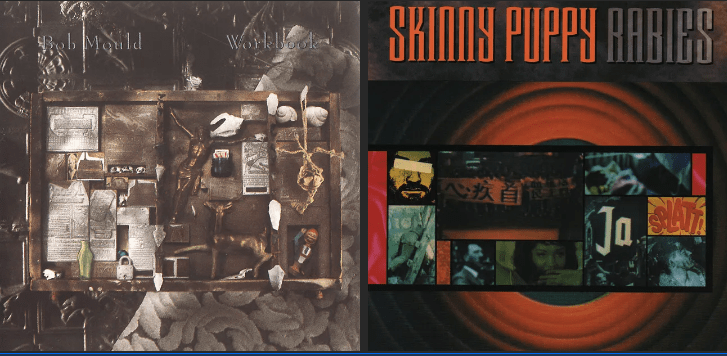
The Best Record of 1989, Day 43: #26 Bob Mould, Workbook vs #103 Skinny Puppy, Rabies

Good morning!

Today we’re taking a look at records from Bob Mould and Skinny Puppy


Note: As many of you know, I recently wrote about a Best Record of 1989 challenge and noted that I’d occasionally write some of these up.

I’ve started doing some quick hits of each matchup and posting them directly to the page. Some will be longer, some won’t, and some might just be a handful of sentences. There’ll probably definitely be some typos.

Check ’em out and let me know your thoughts! Chin wags & hot takes welcome! Sharing and restacks are always appreciated.

KA—


The first time I heard Husker Du’s New Day Rising, it was like a kick to the head. The blast furnace riffs, the distortion, the vocals—the record was a revelation. I couldn’t get enough and went on to devour any record of theirs I could find.

The first time I heard Bob Mould’s Workbook, I was surprised. I’d been looking for more of the same and instead got… an acoustic guitar? And was that a cello? WTF was going on here? Where was the feedback? The molten lava feedback? Had Mould gone pop?

Maybe. Or maybe he was just tired of being angry. Either way, Husker Du was dead, and Mould was starting anew. In his autobiography, “See A Little Light,” he notes, “I sensed there was a part of the punk audience that would feel betrayed.” I’m sure there was plenty of that (it’s worth noting that when seeing Sugar a few years later, he emphatically stated that they would NOT be playing any Husker Du songs), but if anyone felt betrayed, that’s on them.

Artists are allowed to pivot, are they not?

I didn’t feel betrayed per se— I hadn’t been a Husker fan that long, anyway. Even if that was justified, I’m not sure I’d put in enough time for it to be justified. It was a case of not knowing what to do with what I had in my hands. I was an angry/angsty teenager, and records like New Day Rising fit right in with that. Workbook opens with a 2(ish) minute acoustic number. This record was appealing, but it was also much more (relatively) poppy. Those two things did not align for 14-15-year-old me.

Much like the Grinch, whose heart grows two times bigger, mine opened just enough to let this record in. It took a few listens and more than a few renewals from the Beaverton Library for that to happen, but I eventually came to love this record.

The aforementioned acoustic track (“Sunspots”) is fine, but things really kick off with “Wishing Well,” which to my ear initially felt like a feedback-free return to form. “See a Little Light” is, for my money, the most accessible track Mould has ever penned. I’m talking about mainstream audiences here, btw.

“Poison Years” is a preview of what was to come with Mould’s next project, Sugar, and proves early that this wouldn’t be all mandolins (or whatever) and pastoral moods. It was all right there; it just took a few listens for it to click for me. Mould is supported by Tony Fier and Tony Maimone here, and they do well to both support him as he strikes out on his own and keep him tethered (this isn’t the last time we’ll see Maimone in this challenge, btw).

And lest anyone still feel betrayed, the swirling maelstrom of the closing track, “Whatever Way The Wind Blows,” offers one last chance to see that the patented sound hadn’t died; it‘d just changed form.


My youngest son recently asked me if he could go with his friends to see Pantera play. My official on-the-record answer was that I needed more info (who, what, here, all the things we’re supposed to be asking). My unofficial answer was “hell yeah.”

My own experience with shows means I require clearing a pretty low bar to get permission. Really, it just involves listening to my prepackaged bit about safety, sticking together (he’s going with friends), and serving up my boilerplate speech about wearing earplugs. Luckily, a lifetime of him hearing me say “What?” makes this an easy sell. But really, I just want him and his brother to have the same transformative experiences I did.

In the winter of 1990, I had a chance to see Skinny Puppy perform. I’m intentionally using the word “perform” here instead of the (linguistically) easier “play.” It was as much a performance as a concert, and it completely rearranged my mind in all the best ways. The kids today would describe it as unhinged.

You could say the same thing for their records. Bites was my on-ramp to the band, and “Assimilate” is still one of my go-to records anytime I’m in the mood to hear something industrial. Many of those elements were still in place on Rabies; Nivek Ogre’s vocal stylings (half growl/half underwater), film clip dialogue spliced into tracks, and synths best described as vaguely menacing. There is an art to creating music like this, and Skinny Puppy are master craftsmen.

Opener “Rodent” starts things off on just the right note. Ditto “Hexonxonx.” You want industrial dance music? You’re gonna get industrial dance music. “Worlock” comes across as something Front 242’s evil twin made. It’s magnificent.

Ministry’s Alain Jourgensen produced and contributed here, and depending on your tastes, either enhances the order or detracts from it. This was the same era as “A Mind Is a Terrible Thing to Taste,” where our Al was shifting further away from synths and more towards blinding speed and off-the-charts BPMs. That works well in limited doses, but feels out of place in spots. And that’s the rub; as a fan of the band, this is a record I enjoyed, but don’t return to the same way I do BitesViva Sect VI, or Remission. I like my Skinny puppy synth-y, thank you.

Tracks like “Tin Omen” would be right at home on A Mind…, but on Rabies, they feel a bit like an odd man out. Still, it sounded great live; I just wish I’d worn earplugs.


My vote: To varying degrees, both of these records represent a shift in style(s). Rabies is more of a transition, while Workbook is almost a clean break. There’s really not much other common ground here.

Workbook took time to grow on me, while Rabies never truly landed the way earlier records had. I played it early and often, but it was more about skipping to tracks I liked than letting it play all the way through. Workbook was enjoyable enough to clear the hurdle of my preconceived notions, while Rabies clipped the bar. My vote will be for the former.

Any thoughts on either of these records? Agree/disagree with my takes? Which one of these would you vote for? Sound off in the comments!

Check out the full bracket here.

Info on the tourney, voting, and more is here.

As always, thanks for being here.

KA—

From the Archive: A Quick Revisiting of Wire’s ‘IBTABA’ Album

Today we’re revisiting Wire’s groundbreaking “It’s Beginning To And Back Again” album as it takes on Laurie Anderson’s Strange Angels in the battle for The Best Record of 1989.

When I was a soccer coach, Most players had one or two go-to moves, got pretty good at them, and then got complacent. It was fairly predictable. It’s also incredibly easy to coach against.

Much better—and much more interesting—were the players unafraid to do what I (very professionally) referred to as trying shit. These players might not have been blessed with speed or height, but their superpower was unpredictability.

These players always had a spot on my roster.

Similarly, Wire has never been afraid to experiment with new sounds, bend genres, and ignore convention.

In other words, they’ve never been afraid to try shit.

Of course, Wire is the band that gave us Pink Flag, Chairs Missing, and 154, arguably one of the best three record runs of our time. They followed that by splitting up for several years.

“There are those who say Wire was the best punk band ever because it broke all of the rules, didn’t stick with any of the blueprints and did actually what it wanted…I just wouldn’t call that punk, personally. Punk is just one of those words that’s so overused that you have no idea what it means anymore.”

~Wire frontman Colin Newman

In 1985, they reunited and again tried something new, this time swapping jagged guitars and minimalism for a more electronic sound. They had found synthesizers on their hiatus and embraced them. Signed to Mute, they delivered a 1-2 punch of 1987’s The Ideal Copy in 1987 and A Bell Is A Cup…Until It Is Struck the next year. The band’s live sound was always quite different from what listeners experienced on the records—mainly because the technology they used to create the music in those days wasn’t exactly easy to load in the van and take on the road.

Nevertheless, there was a growing demand from fans for a live record. That could’ve been easy. Record a show or two, clean the tapes up in post-production, and ship units. Simple enough. But Wire’s never been one to take the easy route. Instead, they decided to try something new.

Enter It’s Beginning To And Back Again (“IBTABA”)


The quick and dirty story of IBTABA is that the record is 11 alternate takes, half from The Ideal Copy and A Bell… and the rest previously unreleased. Describing it that way is also reductive. Wire didn’t just mix things up; they took the songs, dismantled them, and rebuilt them using overdubbed guitar, synth, and vocals—most of the drum parts stayed. The results are (almost) wholly new tracks.

An album of remixes also often represents a creative drought, a cash grab, or both. And those indictments would have been justified had these been straightforward reworkings. But they’re not; they’re complete revampings and remodeling of what previously existed. In many cases, the titles are the only recognizable things left standing.


Experiments sometimes represent breakthroughs; sometimes, they end up with shattered glass on the lab floor. One of the knocks against IBTABA is that it’s a mixed bag. Some of the songs are brilliant, and some are… not.

“Finest Drops” is heavier than the originals, and that extra bounce makes for a superior version. The grit and bleak imagery of “German Shepherds” benefit similarly from a revamping here (IBTABA’s title is derived from a line in this song). And most people agree that this version of “In Vivo” is much worse than the original mix. It’s also worth noting that it wasn’t included on the original vinyl release and was only added later when the label wanted another single. If A Bell Is A Cup…Until It Is Struck represents peak pop for the band; this record represents an intentional dive back toward the experimental.

The 12” version of “Eardrum Buzz” (the second single) is here and is as radio-friendly as the band gets. In the opinion of this writer, the 12” is light years better than the original, and the original isn’t bad.  It was also the on-ramp to the band for many, thanks to decent rotation on MTV. At the opposite end of the spectrum are tracks like “Over Theirs,” which was likely the off-ramp for those same fans, and why you saw so many copies of IBTABA in the cutout bin not too long after the record was released.


Distilled down, IBTABA represents some amazing results and some…not so amazing ones. It’s a signpost that marks the band’s second era and closes the book on the Pink Flag/Chairs Missing/154 triad for good. Call Wire what you will; at this point in their career, they might’ve still embraced the punk ethos writ large, but the days of playing punk music were done and dusted.

There is also a timing issue, of course. 1989 was a seminal year for albums; the calendar was packed with great releases—and IBTABA isn’t in line with any of them. If you wanted comfortable, indie, or “college rock,” this wasn’t the record for you. But if you like unpredictability and bands opposed to complacency, then IBTABA checks a lot of boxes.


(sigh)

Ok, look; I know I’m supposed to hold this album in some high(er) regard, but I just can’t. I know Anderson is a beloved figure who has long been on the cutting edge of avant-garde art and was Lou Reed’s partner, among other notable achievements.

None of that takes away from the fact that the entire time I listened to Strange Angels, I felt like I was watching a rehearsal for a play at the Learning Annex directed by someone who thinks they’re too good for the place. At its best, it felt like it was trying to punch above its weight (“Ramon”). At its worst, it was just annoying (“The Day the Devil”). I’m not trying to rain on anyone’s parade here- if you like this, more power to you! But man, life’s just too short…

Bottom Line: One of my Desert Island Discs is facing off against a record I could barely get through. Strange Angels was always going to have a steep climb, but the record’s pretentious nature didn’t help.

My vote: Bracket and vote are for IBTABA, without a second thought.

Any thoughts on either of these records? Agree/disagree with my takes? Which one of these would you vote for? Sound off in the comments!

Check out the full bracket here.

Info on the tourney, voting, and more is here.

As always, thanks for being here.

KA—

An Album of the Month Event You Should Check Out

We’ve got a great host and a killer record, all set to go. All we need now is you! Here’s how to join the fun.

Good Afternoon!

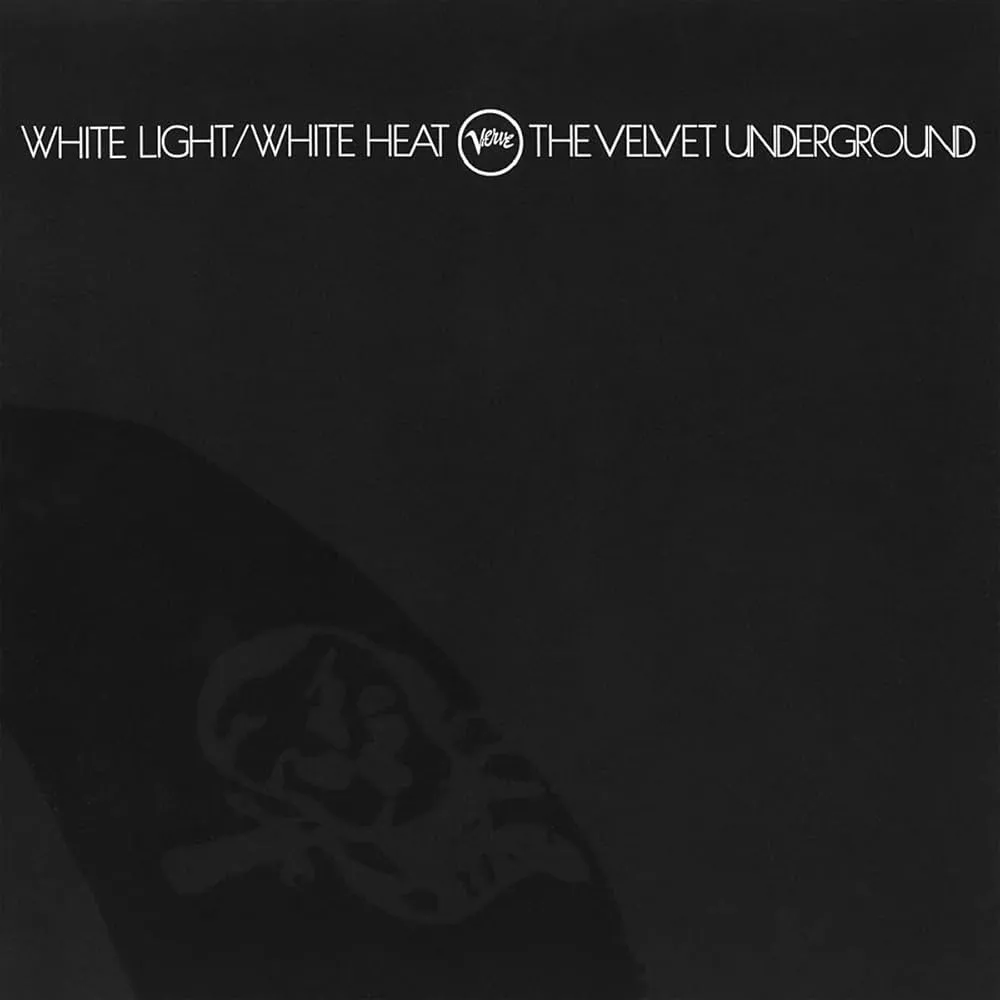
Today we’re talking The Velvet Underground’s White Light/White Heat, and well, how you can talk about the band with other like minded people.

Note: As some of you know, I’m one of the editors for an online music publication called The Riff. Each month we host an album discussion (via Zoom), and this month’s is coming up on Sunday. To be clear, all credit goes to  Terry Barr who facilitates the meeting, and  Scott Fountain this month’s host. These two are doing the heavy lifting.

As you’ll see below, these are low-key affairs; all are welcome! If you want to share some thoughts, that’s awesome. Wanna just sit back & listen? That’s cool, too.

Either way, it’d be better with you there.

KA—

It’s that time again; it’s time for our monthly album discussion!

One of The Riff’s core tenets is sharing music. That obviously involves writing about it, but also talking about it together. We do that monthly here.

This Sunday May 4th is that day.

Below is my boilerplate explanation of these discussions and the value you’ll get from joining us. Under that are both the record being discussed and the meeting log-in details.

  • Don’t know the record? Doesn’t matter.
  • Not comfortable speaking in public? Me either. And you don’t have to if you don’t want to. Heck, you don’t even have to turn your camera on. It’s a safe space, but you control what you share.
  • Ultimately, you’re part of the community; we want you to be a part of this, too.

So check out the “rules” below, and then plan to dial in.

What is this?

For new readers (hi everyone!), The Riff hosts an online discussion every month.

Here’s how it works:

  • A writer (more on that in a second) picks a record to discuss and writes a brief piece about their choice and the meeting details.
  • At the meeting, they discuss why they picked it, offer a bit of a backstory/context, and whatever else they’d like to share.
  • Everyone else on the call can share their own “hot take,” related story, or anything else you think is relevant.
  • At the end of the meeting, next month’s writer volunteers (or is chosen), and the process repeats itself.

NOTE FOR INTROVERTS: If you’d prefer to sit in and listen, that is 110% okay. Keep your video off…stay muted…it’s up to you. It’s a safe place; you can participate as much/as little as you’d like.

This month’s host:

This month’s host is a star contributor to The Riff and a friend of On Repeat Records. Scott Fountain is a fantastic writer, and his expertise spans many genres. You can also find him here on Substack, where he recently planted his flag. If you’re unfamiliar with his work, I highly recommend it!

Cool! So, what are we talking about?

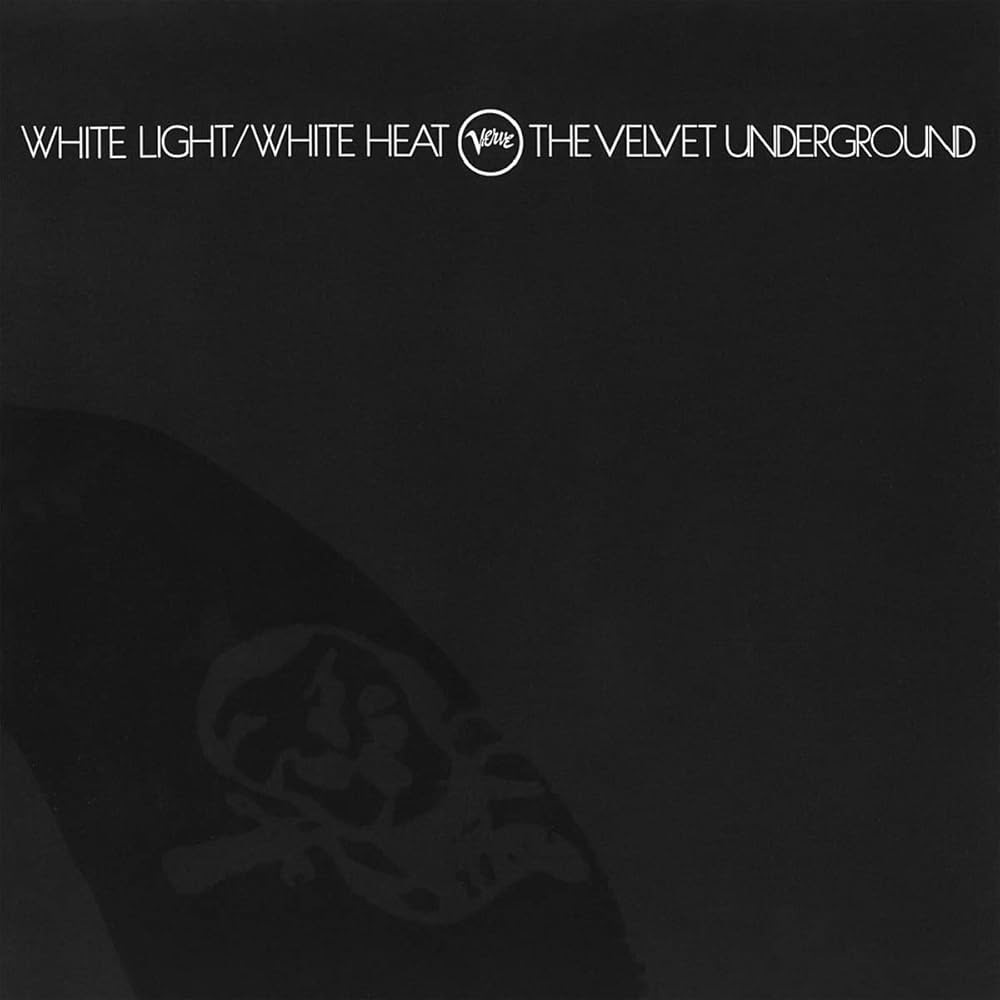
Scott has chosen The Velvet Underground’s White Light/White Heat.

From his story announcing the pick:

I’m not sure if critics called it proto-punk in the 1990s, but during that time, I could identify that sense of evolution between late 1950s rock and late 1970s punk. Likewise, recognizing how different forms of rock share a common lineage with rhythm and blues, jazz, and country was always (and still is) fun to consider.

While songs from White Light / White Heat may not be as upbeat and have as much drive as other proto-punk songs from the 1960s, Lou Reed’s lyrics, amongst an orchestrated sea of noise and distortion, set a bar for topical songwriting involving sex, drugs, and violence.

Musical adventure, exploring new sounds, and sharing great music with great people make these discussions a joy.

Join us and see for yourself.

Listen:

(Click the record to listen on your platform of choice)

I’m in! How can I join?

Here ya go:

When: Sunday, May 4th: 4 PM Eastern/ 8 PM GMT

Where: Join Zoom Meeting

Join our Video Meeting
ID: 827 4674 3053
Passcode: 91987

Thanks for being here (and there!),

Kevin—

Leave a comment