The Best Record of 1989: Day 52: #35 10,000 Maniacs, Blind Man’s Zoo vs. #94 Michael Penn, March
Good morning!
Today we’re taking a quick look at records from 10,000 Maniacs and Michael Penn
Note: As many of you know, I recently wrote about a Best Record of 1989 challenge and noted that I’d occasionally write some of these up.
I’ve started doing some quick hits of each matchup and posting them directly to the page. Some will be longer, some won’t, and some might just be a handful of sentences. There’ll probably definitely be some typos.
Check ’em out and let me know your thoughts! Chin wags & hot takes welcome! Sharing and restacks are always appreciated.
KA—
I’ve mentioned it before, but I’ve always associated 10,000 Maniacs’ very specific, very literate sound with universities. And not just any university, but somewhere like Dartmouth (sorry, Hurricane fans). It’s a sound that, to me, has always felt more at home on a campus with a vibrant field hockey program than on the Billboard charts.
The short version of these earlier records is this: a bit of well-styled jangle pop coupled with Natalie Merchant’s gorgeous voice and thoughtful lyrics. That’s the upshot. The downside is that these often leave you feeling like you’re being lectured to. Merchant can come across like that neighbor who’s usually pretty cool, but will also tut-tut you for not composting enough or not having one of those “In This House We Believe…” signs1. Nice enough and well-intentioned, but it can wear thin.
Cueing this up, I wondered if I’d been remembering them in too harsh a light. After all, “These Are the Days” is a song I associate with travel and adventure, thanks to reading Jeff Greenwald’s “The Size of the World.” Maybe I’d been wrong?
The opening track, “Eat For Two,” is about teen pregnancy, so well, no. But that slick, made-for-radio formula is as delicious as I remember it.
Speaking of which, this is the last record that could be classified as janlge pop, and even here, it’s a stretch in places. This is really the jumping-off point for the more refined pop style of Our Time in Eden and everything that came after.
“Trouble Me” is a fine, if unremarkable, bit of ear candy, and I’m starting to wonder (again) if I’m being too harsh on the band. Those doubts vaporize pretty quickly with “You Happy Puppet.” Musically, it’s right up my alley. It’s polished with the sort of sunny grooves I buy in bulk.
And then I make the mistake of pulling up the lyrics, and well:
How did they teach you to be just a happy puppet dancing on a string? How did you learn everything that comes along with slavish funnery? Tell me something, if the world is so insane, Is it making you sane again to let another man tug at the thread that pulls up your nodding head?
Same story with “Headstrong”…
…and “Poison in the Well”…
(sigh).
Stylistically, it is a great transitional record that does well to tie the two on either side of it together. With the benefit of hindsight, the signs are also all there that 10,000 Maniacs is increasingly becoming a Natalie Merchant backing band. Our Time In Eden would seal the deal, even if the timelines don’t match up perfectly.
A couple of songs feel like they go out of their way to be inoffensive (in the same way that same neighbor might start every criticism with something like “I feel like…”, but overall it’s not enough to sink the record. That title goes to the preachy and overbearing lyrics. Blind Man’s Zoo is a solid effort, but one best consumed in small doses.
I’ll be honest here: here’s everything I know about Michael Penn: His brother is Sean Penn (RIP Chris Penn). He’s married to Aimee Mann, and No Myth was inescapable when it came out. That’s it. He was almost a predecessor to Duncan Sheik, if you remember. All signs point to him being an artist I’d be more familiar with, but here we are.
All signs also point to him taking himself too seriously, but I don’t get that impression when I listen to the first few tracks. The ride takes us through a few folk-y ballads and a couple of up-tempo numbers. It’s all well done, but I’m not getting a particularly strong sense of FOMO here. It’s fine that I’ve waited 36(ish) years to hear this…
…and then we get to the closer, “Evenfall,” and man, talk about ending on a high note! This is a rollicking good time, with barrel piano and an ornate section that’ll have you moving in your chair. Now that’s how you close an album! Where was this in ’89?!
My vote: I have a feeling a lot of people are in the same boat as me here (10,000 Maniacs aren’t bad, have only heard the one song by Penn). I will vote mainly on name recognition and Merchant’s voice. I’m still in the bottom third of the rankings in this challenge, and the first rule of getting out of a hole is to stop digging. My bracket pick and vote will both be for Blind Man’s Zoo.
Any thoughts on either of these records? Agree/disagree with my takes? Which one of these would you vote for? Sound off in the comments!
The Best Record of 1989 Day 51: #30 Camper Van Beethoven, Key Lime Pie vs. #99 Ice-T, The Iceberg/Freedom of Speech… Just Watch What You Say!
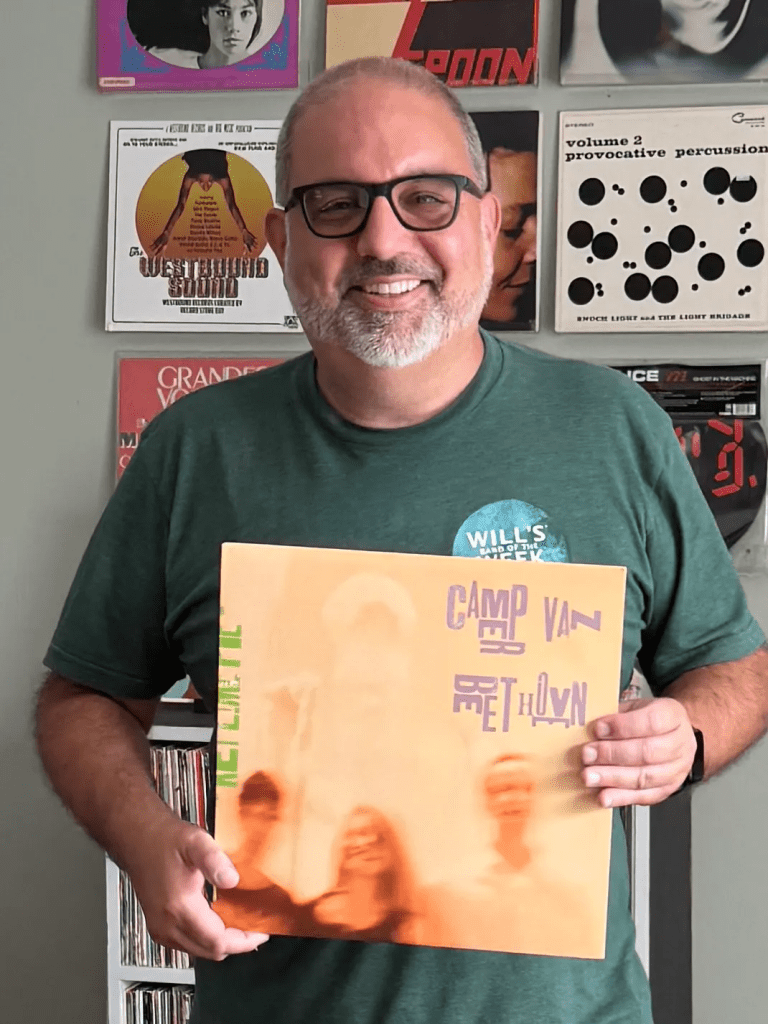
I am incredibly photogenic.
Good morning!
Today we’re taking a quick look at records from Camper Van Beethoven and Ice-T
Growing up, one of the guys on my block lived in a house with a basement. You have to understand that this was relatively unusual in Oregon. You also need to know that it had its own entry, separate from the rest of the house, which, of course, meant it was the default place for all of us to hang out.
All well and good, except that my friend also played guitar. Yeah, that guy. We all know one. Worse, he’d often play it to impress girls on the rare occasion they stopped by. This is how I first heard Camper Van Beethoven’s cover of “Pictures of Matchstick Men.” Not a strong start, but for better or worse, this was the band for me growing up.
This record was also the sound of Camper Van Beethoven growing up—not gracefully, exactly, but white-knuckling it through the end of the 80s like the rest of us. If Our Beloved Revolutionary Sweetheart was the band getting serious, Key Lime Pie is them getting mean; not in a cruel way, but with the kind of sardonic clarity that only comes after you’ve watched the Reaganomics tear apart the American Dream brick by brick.
By 1989, the band was peeling away their own layers. Jonathan Segel was gone. David Lowery had taken the wheel, and the group’s weirdness started to harden into something leaner and a bit darker. The violin remained, but now it ached. The jokes hadn’t vanished, but now, they came with shadows instead of a wink and a nudge. Irony no longer softened the blow; it was the hammer delivering it.
But that’s what makes this record the gem it is. Say what you will about this style shift, but Key Lime Pie is an honest, beautiful, and impossibly human album. The songs aren’t necessarily sad in the normal sense—they’re quietly devastating. It may take a few years and the benefit of hindsight to realize.
Listening feels like looking directly into the souls of people on edge, or even standing at the edge. It can be humbling, and it’s quite a counter to the demanding style of patriotism that was so in vogue.
Musically, Key Lime Pie is a masterclass in restraint. It’s still unmistakably them—strange little chord changes, unexpected melodic sidequests, and eerie violins—but it’s more grounded. Michael Urbano’s drumming is the most conventional thing on the whole record, giving the songs the structure they need. Pedal steel threads through tracks, especially on “Borderline” (my personal favorite) and “Sweethearts.”
And before I forget, the run from “Sweethearts” through “Borderline” is one of the strongest 4-track runs going.
The band sounds tighter, but not sanitized. They’ve ditched the genre-hopping of earlier albums and focused the chaos into something more purposeful. There’s Americana here, but it’s postmodern Americana.
Lyrically, Lowery is at his best here. There’s less snark, more ache. “Sweethearts” paints Ronald Reagan as a puppet for state-sponsored violence and capitalism, but it’s delivered with enough subtlety that you almost miss it.
“When I Win the Lottery” may be the best song ever written about bitterness as a survival strategy. It’s funny, but not ha-ha funny. It’s incredible line-level writing from the POV of someone like the guy at the end of your local bar; the one who’s seen some things.
The whole album walks the line between love and futility, beauty and decay, hope and despair—nihilism. This is a portrait of a broken America song by characters who’ve watched the American Dream collapse under its own weight.
It’s a record about America, sure. But more than that, it’s about people navigating what America does to you. People leaving, people drinking, people stuck in laundromats or backwater towns with only Swap Shop or gospel on the radio. People literally and figuratively stuck on the side of the road. Still, it’s the most empathetic album they ever made (we can use that, too). It doesn’t punch down; instead, it meets its characters where they are.
Despite my less-than-auspicious onramp to the band, this album has never really left my rotation. Very rarely do I play it and not find something new.
You can call it alt-rock, Americana (maybe), or whatever you want—it’s eclectic enough that pretty much anything will fit. But again, it’s just one of the most human records of the year. That sort of thing never goes out of style. It’s always relevant.
Gather ‘round, kids: It’s time to tell you the story of who Fin Tutuola used to be.
Shame that an entire generation only knows Ice-T from his portrayal of a cop on Law & Order. How odd it is to remember that the same guy now flashing a badge used to flout—and run afoul of—the law. This is, after all, a guy who was also almost arrested in Georgia for the high crime of swearing onstage. Such was the climate at the time. It’s all enough to catch a case of the vapors.
In 1989, Ice-T was still a rapper who put hot girls and guns on his covers. He sang songs about power, and how it started “with P like p***sy.” He swore. A lot.
Meanwhile, the Parents Music Resource Center was busy being busybodies and decided that someone should think of the children! Think Maude Flanders but with Congress’s ear. Ice-T made the perfect target. He rapped about all the things supposedly tearing this country apart, and he was popular.
Ice=T wasn’t about to give an inch, and if you were to condense a review of The Iceberg/Freedom of Speech…Just Watch What You Say down to a line or two, it’s that he made a whole-ass record doing just that. It was a baker’s dozen worth of tracks, and all of them were a raised middle finger to anyone with the audacity to decide what was best for anyone.
You can have your endless reruns of Law & Order SVU; I prefer this version of Ice-T.
My vote: Ice-T fought hard against Tipper Gore and co., but he’s no match for David Lowery. It’s Key Lime Pie all day for me.
Any thoughts on either of these records? Agree/disagree with my takes? Which one of these would you vote for? Sound off in the comments!
The Best Record of 1989: Day 49: #3 De La Soul, 3 Feet High and Rising vs. #126 Hoodoo Gurus, Magnum Cum Louder
Good morning!
Today we’re taking a quick look at records from De La Soul and Hoodoo Gurus
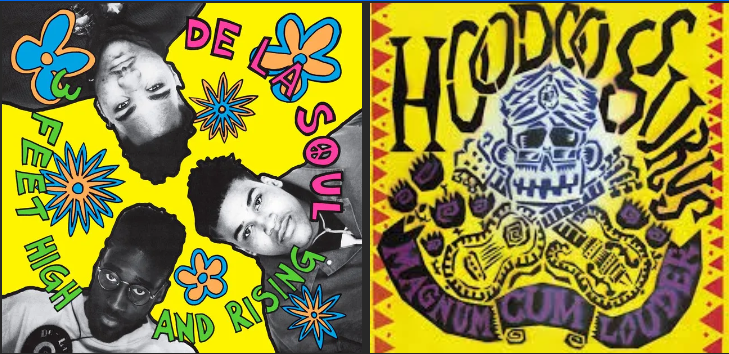
I should be mad at De La Soul—or at least annoyed. I have a particular distaste for the skits that litter so many hip-hop records, which can be traced back to the band’s 1989 record, 3 Feet High and Rising. That said, while those were often used as filler on other releases, they have a certain charm on this record. I’m still not sold on the idea, but they’re at least tolerable. If nothing else, they’re not distracting from the overall product.
Okay, so that’s the bad part out of the way. Now let’s talk about the good. We can talk about Prince Paul’s touch and how he helped sculpt this into something nothing like what we’d heard before. This and Paul’s Boutique ushered in a new era of layering samples like a collage. Now, instead of an MC and a breakbeat, we had soundscapes. Both of these records influenced countless crews that followed. Why one was a hit out of the blocks and took years to get its due is worth its own discussion.
We can talk about the stylings of Posdnous and Trugoy’s flow and the insistence on bringing concepts like peace and harmony back into the collective discussion. Maybe carve out some time to remember how fun “Me, Myself, and I” felt when it dropped. Posse cuts were de rigueur then, and “Buddy” is one of the best. All of those things are true, and each of them matters.
In our Top 100 series, Sam had this slotted in at #77.
My take then was:
Looking back through admittedly fuzzy memory, in the mid-to-late 80s, everyone I knew had three hip-hop records: Beastie Boys’ License To Ill, Run DMC’s Raising Hell, and this. Only one has a Steely Dan sample, and only one sounds as good now as it did then. “This,” of course, would be 3 Feet High and Rising. It’s the summer of love with some 808, and I’m here for it.
I still am.
I lucked my way into a group of avowed music nerds in school. Finding and sharing new (or at least new to us) music became our raison d’être. This is how Hoodoo Gurus’ Magnum Cum Louder first got onto my radar.
I don’t recall this becoming an obsession with any of us, but instead falling into the “it’s got a couple of great songs” purgatory. Those lucky few wound up circulating on mixtapes, with the rest of the tracks confined to the dustbin of history.
If you’re of a certain age, you know the deal; you bought a record on the strength of a good song over two, and hoped for the best with regard to the rest of the album. In this case, I wouldn’t have felt bad being out $8.99 or whatever the list price was, but I was also happy with just having a copy.
In Magnum Cum Louder’s case, that one good song is “Come Anytime.” About a minute in, I realized I was playing it loud and singing along at equal volume (note: If we happened to have been sharing the ordeal yesterday afternoon, I’m sorry you had to hear that).
It’s as good as ever. The hook…the sing-along chorus…all of it. It does well to set the stage for what’s to come. The next couple of tracks (“Another World,” “Axegrinder”) are also pretty good, even if they don’t quite meet that same high bar. They’re nice enough, but feel like a small step down. Get to about track six and realize it’s more of the same. It’s a nice “same,” —” Shadow Me” and “All the Way” in particular— but a same nonetheless.
Magnum Cum Louder is, of course, a play on the term Magnum cum laude, which is a fancy way of adding a “better than average” rider to a degree or diploma. It seems aspirational here, especially when stacked up against the rest of the discography.
A few tweaks here and there might’ve earned it a legit shot at that distinction.
My vote: 3 Feet High and Rising changed the game. Magnum Cum Louder barely caused a ripple in my suburban friend group. It’d be a much tougher call if we were going on the strength of “Come Anytime” alone, but we’re not.
It’s the D.A.I.S.Y. Age for the win.
Any thoughts on either of these records? Agree/disagree with my takes? Which one of these would you vote for? Sound off in the comments!
As part of the Best Record of 1989 challenge, we’re taking another look at The B52’s Cosmic Thing. This originally ran in June of last year, and has only been lightly edited for today.
Tomorrow marks 35 years since The B52s released Cosmic Thing, their fifth full-length studio album1 and the first made without founding member Ricky Wilson.
After an incredible three-record run, the B-52s had carved out a place as cult favorites and the perfect soundtrack for any party—out of bounds or not. However, tragedy struck the band when Wilson passed away. The remaining members finished the fourth album but didn’t tour to promote it or really do much with it at all.
We would go to radio stations basically to beg them to play the song. Even the record company thought it was too weird. I thought it was the most accessible thing we had done.
The B52s’ Fred Schneider
The album signals a shift in the group’s style. Wilson’s death was a shock to the system. The quirky lyrics and party band mood were still there, as was the big hair. But this record pivoted to more sophisticated sounds and heavier grooves. It was met with lukewarm critical reviews and low commercial sales and is often overlooked in discussions about the band. If anything, it’s very much a record occupying a liminal space in the band’s discography and marks the boundary between Ricky’s records and the ones that came afterward.
After Wilson’s death, no one would’ve blamed the B52s for calling it quits. Indeed, they almost did. Raw with grief, the band pushed on and released 1986’s Bouncing Off the Satellites, a record that even today has never quite washed off the ash of loss it was covered in. It’s a record from a party band who felt like doing anything but.
Camp and a good time were two of their calling cards, all packaged in lovely new wave sound. Those were largely absent on Bouncing, leaving fans wondering what—if anything— was next.
Like the band, I found this record in a liminal space in my own life. In the fallout after my dad’s passing, my mom and I somehow found ourselves at K-Mart, of all places. Turns out that even in the throes of grief, you need things like potting soil. On that trip, I got a scooter and a copy of this on cassette. I don’t remember asking for either. In hindsight, I think as a recent widow, my mom just wasn’t sure what to do, and maybe throwing some gifts at it all would help. The scooter lasted a matter of months. The cassette is upstairs somewhere as I type this.
📻📻📻
“I lived in a house across the pond from Keith [Strickland], and I’d canoe over to his house…he played me a couple of things, and then we all got together. We said, ‘This is for us, for our healing, and this is for Ricky.’ It was kind of miraculous that we came back together.”
Flash forward 3 years, life is better, though trying to navigate high school in the late 80s was, um, something. Meanwhile, at the urging of Keith Strickland, the group decided to give it another go. You never really know what you’ll get with the B52s (this band gave us everything from ‘Private Idaho’ to ‘Quiche Lorraine,’ after all), and the tracks on Cosmic Thing were no exception. Camp and quirk were out, traded for a much more polished, full sound. New wave was swapped for pop. Much of that was down to the production combo of Niles Rodgers and Don Was, with the legendary Chic guitarist giving the record plenty of funk and Was adding touches of pop magic throughout.
Sound aside, the record also marks a departure from the band’s vocal stylings. Whereas before, they’d done a lot of call-and-response-type stuff or had either Cindy Wilson or Kate Pierson singing alone, this time, the producers had them singing together on tracks like ‘Channel Z,’ ‘Cosmic Thing,’ and ‘Deadbeat Club.’ And by together I mean so closely in tune that listeners would be excused for thinking it was one wonderful voice.
If Bouncing Off the Satellites’ sound signaled the start of the transition, Cosmic Thing represented a clean break.
The lead single, ‘Channel Z,’ with its thumping bass, is infectious and reminds one of ‘Mesopotamia.’ It was purpose-built to be a dancefloor filler. Nevertheless, it fizzled on the charts, not even breaking into the Hot 100.
The title track did a little better, quelling some fears, but it would be the third single that changed everything.
That single the band had such a hard time selling to radio stations?
It was ‘Love Shack.’
The song took its sweet time to work its way up the charts, taking 2.5 months to work all the way up to #3 on the Hot 100 before starting its reentry back to earth. But it’s also never really left the airwaves and can still be heard fairly regularly today.
If there was any question that this was a comeback record, ‘Roam’ erased those doubts. The follow-up to ‘Love Shack’ also made it all the way to the third spot in early 1990 and helped the record peak at #4.
‘Deadbeat Club’ was the last of the singles and made it to #30. It’s also the most wistful track on the album—which, after a decade together, probably makes sense—and if forced to choose, is the one track that’s out of place here. That’s not to say it’s bad—it’s not—but it’s different. Even the best of party bands is entitled to a little reminiscence.
📻📻📻
35 years on, it would be easy to call Cosmic Thing a statement record, and one that marked not only the band’s comeback but their ascent into pop stardom. That’s not quite how it played out, however. Cindy Wilson left in 1990 to focus on her family. The band, now a trio, released 1992’s Good Stuff, only to be met with mediocre sales and middling reviews. Wilson would eventually return, and the band would return to the studio…8 years later. In 2006, they began work on what would become 2008’s Funhouse. It had two singles make the dance charts but is largely forgotten otherwise.
So, where does that leave Cosmic Thing in the grand scheme of things?
It most certainly is a comeback record, and it made clear in no uncertain terms that the band was back (they are literally doing a final run of shows as I write this). Perhaps more importantly, on this record, the band sounds like they’re back to enjoying themselves again.
1989 was as good of a time as any for the band to take some risk and break some new ground. Cosmic Thing is a record that is a little introspective, a bit autobiographical, and a lot of fun.
Effie, Madge, and Mabel would approve.
📻📻📻
What are your thoughts on this record? Do you have any favorite tracks or memories associated with it? Where does it land on your list of albums by The B52s? Share your thoughts in the comments!
The Best Record of 1989: Day 44: #90 Roy Orbison, Mystery Girl vs. #39 Jungle brothers, Done By the Forces of Nature
Good morning!
Today we’re taking a look at records from Roy Orbison and Jungle Brothers
Note: As many of you know, I recently wrote about a Best Record of 1989 challenge and noted that I’d occasionally write some of these up.
I’ve started doing some quick hits of each matchup and posting them directly to the page. Some will be longer, some won’t, and some might just be a handful of sentences. There’ll probably definitely be some typos.
Check ’em out and let me know your thoughts! Chin wags & hot takes welcome! Sharing and restacks are always appreciated.
KA—
Let’s talk about Jungle Brothers’ second album. Done by the Forces of Nature isn’t just their best—it’s their crowning achievement. IMO, it’s conscious rap’s finest hour.
Hyperbole? Maybe. But I’ve listened to a ton of albums over the years, and I can’t think of one this consistent from front to back—fifteen tracks, and not a single dud in the mix. No filler. No skits. No middling nonsense. Just bangers. It never gets boring. It never stalls out. It’s sonically rich and wide-ranging. Even the cover reminds me of a happier era.
Picking a pull track here is tough. If pushed, I’d go with “Sunshine” and the infectious “What U Waitin’ For?”. If you’re old enough to remember house parties, this’ll take you right back to being squished into the front room with everyone. And of course, this being made when it was, there’s a group track, featuring Q-Tip, Monie Love, Queen Latifah, and De La Soul. It’s pretty much the full roster of the Native Tongues crew just vibing.
The production is textbook; especially with regards to sampling. Sure, you’ll recognize the samples, but they’re chopped, layered, and flipped into something new. And is that a sample of Junior’s “Mama Used to Say” on “Days 2 Come?” You better believe it. Magic. This was back when producers were alchemists, not just playlist DJs with a loop pack and a laptop. The sample of People’s Choice’s “Do It Any Way You Wanna” on “What U Waitin’ For?” is (chef’s kiss). On a sidenote, this is also fuels Public Enemy’s equally fantastic “Shake Your Booty.”
Sound-wise, you’ve got a sizeable dose of funk, jazz, and—less common at the time—Afrobeat, which fits well with the album’s Afrocentric vibe. But here’s the deal: it never gets preachy or self-righteous. None of that aggressive posturing some so-called “conscious” acts fell into that just got exhausting after a few tracks. Jungle Brothers recognize that rest is resistance. It’s okay to cut loose once in a while! It’s grounded and positive in a way often missing in modern rap.
This is the record people are thinking of when they talk about conscious, alternative hip-hop. It’s the blueprint, but somehow, still underappreciated. Maybe even forgotten in some circles? I’m sure some of that is down to its (relative) unavailability, which is a shame.
If you’ve never heard it, fix that immediately (you can find it on YouTube). If you have—listen again. It’s even better than you remember.
Until now, the only track I’d heard from Roy Orbison’s Mystery Girl was the hit “You Got It,” which seemed everywhere back in the day. With his operatic voice, Orbison has always seemed out of place in the world of rock. That’s not to say his voice is not stunning, only that he’s a square peg trying to fit in a round hole. He’s unique; I’ll give him that.
Mystery Girl was a comeback record in every sense of the word. After 10 years and a run of not-so-great releases, he put out what would be one of his best records. Unfortunately, it would also be the last one recorded while he was alive. Released posthumously, it was finished just a month or so before he passed away.
At the risk of being crass, if you’re going out on a high note, this is the way to do it. I’m not all that familiar with Orbison’s body of work, but taken in isolation, Mystery Girl works. An armada of talent put this together, including (at least) Jeff Lynne, Tom Petty, and the more famous half of U2. Bono and The Edge wrote “She’s A Mystery to Me” for Orbsion, and Bono produced the song.
With a roster like this, there’s always a risk of an album coming across as disjointed, but listening, I’m surprised at how consistent it sounds. There’s no shortage of sheen here—it’s a Jeff Lynne record, after all—but it doesn’t detract from things. The horns on songs like “The Only One” give it a nice Memphis sound.
Overall, it feels like the epitome of an Orbison record. Too bad he never got to see everyone enjoying it.
My vote: Orbison went out on a high note, but Done By The Forces of Nature is a force of nature. By bracket pick and vote are going to Jungle Brothers.
Any thoughts on either of these records? Agree/disagree with my takes? Which one of these would you vote for? Sound off in the comments!
#47 Kristy MacColl, Kite vs. #82 Gang Starr, No More Mr. Nice Guy
Good morning!
Today we’re taking a look at records from Kristy MacColl and Gang Starr.
Note: As many of you know, I recently wrote about a Best Record of 1989 challenge and noted that I’d be occasionally writing some of these up.
I’ve started doing some quick hits of each matchup and posting them directly to the page. Some will be longer, some won’t, and some might just be a handful of sentences. There’ll probably definitely be some typos.
Check ’em out and let me know your thoughts! Chin wags & hot takes welcome! Sharing and restacks are always appreciated.
KA—
I first found Kristy MacColl, as I suspect many others have, through the “Fairytales of New York” song she did with The Pogues. Today, it seems the consensus pick for favorite Christmas song among hipsters. It’s one of those songs that’s somehow everyone’s favorite, that you’re just expected to like. I find it interminable. And for a long time, I used that as an excuse not to delve any further into her work. Silly me.
Other than that, all I really knew was that she did “They Don’t Know,” a lovely bit of sugary pop that was covered by Tracey Ullman. This is a small bit of trivia that has yet to come in handy. And did you know Tracey Ullman had her own show that featured recurring interstitial animation skits about a family named The Simpsons? I’m incredibly fun at parties and Bar Mitzvahs.
Back to Kite: MacColl was the daughter of folk singer Ewan MacColl, who, by most accounts, sounds like an asshole and may be why she steered her own career toward a poppier sound. Refusing to be pigeonhole (or molded) into whatever label execs thought a pop star should be, her career floundered a bit. She found a niche performing on other people’s records (see above) while still chugging along in her own career. Kite is her sophomore outing, released 8 years after 1981’s Desperate Characters (see above again). I should tell you now that I brought every preconceived notion I had to the party. I was expecting a record that alternated between dirges and folk songs.
And holy shit was I wrong! Sure, there are strains of folk here and there, but this record is …dare I say, jaunty? Opener “Innocence” was a delight and will be on a few playlists going forward. “Mother’s Ruin” slows the tempo, but is in no way a downer. There’s a Kinks cover (“Days”)!
Maybe more importantly, while it does concede that she’s good at singing other people’s work, often at the expense of her own, it also gives her a chance to showcase her own chops. MacColl can, in fact, write a helluva song.
There’s some overproduction here and there—then husband Steve Lillywhite was behind the boards, and I wonder if he was aiming to make this as accessible as possible (i.e., hoping to help his wife find commercial success). Not every edge has to always be sanded off, you know, but after a listen or two, I’ve decided that’s a feature, not a bug. I’m obviously late to the party, but Kite has proven to be a nice surprise.
Ask five people to name their favorite Gang Starr record, and you’ll get six opinions. Odds are also good that No More Mr. Nice Guy won’t be one of ‘em. It’s not that it’s a bad record, it’s that the others are soooo good. Dj Premier and Guru have rightfully earned a spot in any GOAT discussion, but in 1989, they still weren’t on the map.
If nothing else, this record feels ”new,” like everyone‘s still new to the game and each other. They’re all feeling each other out and finding their levels. There’s a lot of first-day energy here, right down to the lyrics that feel kinda boilerplate.
Mark the 45 King is here, and his signature sound colors a couple of tracks. On the one hand, that‘s a good thing. On the other hand, it immediately took my mind to all the different tracks he was on at the time. Gang Starr’s unique style is what made them what they are. That’ll come in time, but it isn’t fully formed here.
I’m mindful that retroactively comparing this to their later records isn’t fair. Again, this is a solid record, especially for 1989—it’s just not on the level of what was to come.
Track picks: “Gotch U,” “2 Steps Ahead”
My vote: At the risk of undercutting literally every point I made above, my vote goes to Gang Starr. RIP Guru.
Any thoughts on either of these records? Agree/disagree with my takes? Which one of these would you vote for? Sound off in the comments!
#18 Kate Bush, The Sensual World vs. #111 The Wonder Stuff, Hup
Good morning!
Today we’re taking a look at records from Kate Bush and The Wonder Stuff
Note: As many of you know, I recently wrote about a Best Record of 1989 challenge and noted that I’d be occasionally writing some of these up.
I’ve started doing some quick hits of each matchup and posting them directly to the page. Some will be longer, some won’t, and some might just be a handful of sentences. There’ll probably definitely be some typos.
Check ’em out and let me know your thoughts! Chin wags & hot takes welcome! Sharing and restacks are always appreciated.
KA—
Oh, to be one of the people who first found Kate Bush through Stranger Things! I love that (seemingly) an entire generation was exposed to “Running Up That Hill.” That’s tempered somewhat by my fear that it’s as far as they went. As good as it is, even “just” checking out Hounds of Love leaves a lot on the table.
Talking about that album in our Top 100 series last year, I noted:
What can I say about this record? I love that so many people have found it thanks to Stranger Things (at least, I hope they’ve gone past “Running Up That Hill”). It is an exquisite take on love, life, heartache, and death; it’s a synth record. It’s theater in the round. It’s an album with millions and millions of listens, and it feels like it was made for you and you alone. It’s got a song for the dance floor (“Running Up That Hill”), one for a quiet morning (“The Morning Fog”), and everything in between. Hounds of Love is anthemic. “The Big Sky” is over the top and as ostentatious as anything else you’ll see in this series. And I’m here for all of it.
I stand by all of that. The record is a must listen, and (IMO) should have a spot in any record collection. It’s Kate’s Pet Sounds, and in the same way that the Beach Boys were judged on everything that came after their landmark record, so too was Bush. Hounds of Love has a long shadow, and it’s easy to see why later work got lost in it.
The stylings on TheSensual World don’t exactly help. Hounds of Love is bold, anthemic pop. Its lyrics are full of dreams. Every track feels like an entire Broadway show packed into 4-5 minutes.
In other words, it’s everything The Sensual World is not. Don’t get tit Twitsed; I love this record, but it’s easy to see why someone whose onramp was the over-the-top pomp of, say, “The Big Sky” might feel put off by this record’s slower, romantic sounds. Artists have to be willing to pivot, and this feels like a record made by someone coming into their own, and less like a record sculpted by outside influences. There’s less spectacle and more intimacy (in every sense of the word). One needs only listen to the opening title track to see that.
If Hounds of Love is Bush breaking free of the cocoon, The Sensual World is her fully free and flying under her own power. This record has an elegance that we’d previously only seen sparks of. Depending on your preferences, the songs are either elegiac or affirming, and usually a bit of both. Songs like “Running Up That Hill” are a protest of male power, while this record is a celebration of female agency.
I don’t have a title in mind for “best record that came out after Pet Sounds that you should definitely listen to,” but if all you know of Bush is Hounds of Love, your next stop should be The Sensual World.
Around 1989, something strange happened. It felt like every band decided to pivot to a much more psychedelic sound—the Charlatans, Inspiral Carpets, you name it. The Wonder Stuff were no exception.
Hup, their follow-up to The Eight Legged Groove Machine, is full of swirling guitars and sounds that resemble those of other bands. If left out too long, everything blends into one blob, and the tracks become indistinct.
Luckily, the band takes care to avoid that here. While predecessor LP was sharp, quick, and to the point, Hup takes a longer route. To be clear, these are pop songs, but there’s more to them on this record. Also: Banjos and fiddles. Those aren’t usually found on an expressway.
If you‘re looking for a track with some oomph, “Them Big Oak Trees” has got you covered. It’s the standout track on the record. “Good Night Though” is a gut punch with its verse of
“Don’t play that awful song, she said ‘cause then we’ll know that the party has gone on too long.” I said, “This stairway ain’t to heaven This one’s to oblivion”
If anything, that should be the record’s closer and not at the halfway mark. I’m sure there’s some reason for sequencing it where they did, but I can’t see it. Makes the rest of the record feel like it was almost an after though— and it; ‘s anything but. “Gimme Some Truth” is another track worth double-clicking on.
If there’s a knock on the record, it comes in comparison to follow-up “Never Loved Elvis.” The latter is blatantly poppy and varied. You could make the argument that Hup is exactly what I described above- monotonous, similar from front to back. I’d instead argue that it ‘s focused. They knew the sound they wanted to make, went itno the studio, and came back out with exactly that.
Hup is the record that planted the band’s flag here in the States. The next LP would bring a modicum of fame, with the sublime “Caught in My Shadow” seeing some rotation on MTV and airplay. There are a handful of songs here that easily could’ve made their mark on listeners. Shame they never did. I’m guilty of using the term “underrated” like a comma when summing up records, but in this case, it fits.
My vote: Hup’s a good record, but The Sensual World is a great one. Kate Bush for the win.
Any thoughts on either of these records? Agree/disagree with my takes? Which one of these would you vote for? Sound off in the comments!
#15 Madonna, Like a Prayer vs. #114 Peter Murphy, Deep
Good morning!
Today we’re taking a look at records from Madonna and Peter Murphy
Note: As many of you know, I recently wrote about a Best Record of 1989 challenge and noted that I’d be occasionally writing some of these up.
I’ve started doing some quick hits of each matchup and posting them directly to the page. Some will be longer, some won’t, and some might just be a handful of sentences. There’ll probably definitely be some typos.
Check ’em out and let me know your thoughts! Chin wags & hot takes welcome! Sharing and restacks are always appreciated.
KA—
In 1989, Madonna was everywhere. How you react to that sentence is a tell. Older readers will simply nod in agreement, with younger readers wondering what the fuss is. She was riding high on a string of hit records. She’d tried acting with somewhat less success. She’d been in a high-powered/, hot-tempered marriage with actor Sean Penn—the kind of wild ride that launches entire tabloids—or at least it did in 1989.
By the time Like A Prayer rolled around, most of that was beginning to show her. But Madonna Louise Ciccone was never one to shy away from a bit of controversy.
Ask that same crowd about MTV, and they’ll likely launch into a stemwinder about the channel actually playing videos. That’s true. There was more to life than just Tosh 2.0 ad infinitum. They also premiered videos in a way that harkened back to the glory days of Hollywood. A Madonna video? That was a big f’in deal. And it was appointment viewing.
You also have to understand that anything even vaguely religious was likely to give legions of Americans the vapors. Add a little interracial love into the mix, and you’ve got a bona fide scandal on your hands—a scandal that, at the very least, cost her a Pepsi commercial.
That video was for the title track on Like A Prayer, her blockbuster record. In the years up to this, she’d shown she was never afraid to push boundaries, but to this writer’s ears, the record serves as a dividing line: On one side, you have her earlier poppier sounds. This is the world of “Holiday” and “Angel.” Fantastic tracks, but there’s not a lot of heft there.
On the other hand, you have an artist trying to take back control of the narrative. She’s not Sean Penn’s wife anymore. She doesn’t owe anyone. Free of those guardrails, she’s free to push up against the corners and pressure test her sound. She wasn’t gonna answer to anyone.
If the title track didn’t telegraph that message, the second track, “Express Yourself,” surely did. This is Madge’s declaration of independence, and it’s a banger.
It’s not a clean break, though. “Til Death Do Us Part” is a bit of easy-breezy pop reminiscent of so much of her earlier stuff. “Cherish” doubly so; so much so that I could have sworn it was actually on True Blue. All well and good until you read the lyrics for the former and realize she’s singing from inside the dystopian hellscape of an abusive relationship. Oof.
Knowing the history (or at least what we read about in the papers), it’s hard not to see this record as explicitly autobiographical. And maybe it is. Today, stars leveraging trauma for clicks and money is par for the course. Thirty-six years ago, not so much. And in the end, maybe it doesn’t matter. Art and real life have always been a blurry line for her. What Like a Prayer made clear was that anything after this was going to be on her own terms.
That both Love and Rockets and Peter Murphy have records in this challenge should tell you something about the bumper crop of records we got that year. When talking about Love and Rockets earlier in the series, I commented that it felt like they were trying to make as un-Bauhaus of a record as possible. The same holds true here, with the band’s frontman shedding many darker themes and moods for something…accessible? The tracks here have a bigger, almost bombastic sound. His deep voice makes for quite a contrast against the (relatively) lighter sounds. It’s not hard to imagine a much more mainstream act doing “Crystal Wrists.”
Dare I say that Murphy is a fan of pop?
Lyrically, the record leans towards themes like love and the world around him. You have to work to untangle those words, though. Murphy likes to wrap his lyrics in riddles. They’re often enigmatic, and the challenge makes deciphering them feel all the sweeter. If you need an exact time to call Bela Lugosi’s death, let me point you to the 4:18 mark on the hit single “Cuts You Up.” This is when everything bursts open and the track hits peak exit velocity. It’s anthemic.
Bela Lugosi is dead, and he’s not reanimating for this record.
My vote: I’m a friend of the goths, but it was always gonna be Madge.
Any thoughts on either of these records? Agree/disagree with my takes? Which one of these would you vote for? Sound off in the comments!
63 The Primitives, Pure vs. #66 Bob Dylan, Oh Mercy
Good morning!
Today we’re taking a look at records from the Primitives and Bob Dylan
Note: As many of you know, I recently wrote about a Best Record of 1989 challenge and noted that I’d be occasionally writing some of these up.
I’ve started doing some quick hits of each matchup and posting them directly to the page. Some will be longer, some won’t, and some might just be a handful of sentences. There’ll probably definitely be some typos.
Check ’em out and let me know your thoughts! Chin wags & hot takes welcome! Sharing and restacks are always appreciated.
KA—
Pure is The Primitives’ sophomore record, following Lovely (home of the hit “Crash”). They’re often lazily categorized as “pop,” though I’d say any Venn diagram should include pop, power pop, and new wave. On this release, I might add a smaller circle for psychedelia.
This record is a sign of the time, and no one was impervious to the “Madchester” sound. You can hear bits and pieces of it worked in throughout the record. Pure is an album loaded for bear with lethal hooks and jangly guitars— all supporting Tracy Tracy’s distinct vocals. This makes for a solid if disposable batch of pop songs.
Here’s the thing, though; things get interesting when the band starts playing further afield- I’m thinking specifically of the tapping into that experimental psychedelia, but more importantly, tracks where guitarist PJ Court takes over on vox. Maybe it’s because it’s an unexpected change, but I found those tracks to be the record’s highlights. You would be excused for mistaking “All The Way Down” for a Jesus and Mary Chain track. “I Almost Touched You” sounds like (insert your fave Madchester band here), but is still a fun listen.
Ultimately, this record was a pleasant diversion. Certainly not unforgettable, and unlikely something I’ll reach for again, but with a couple of tracks that’ll probably wind up on a playlist or two at some point.
Kinda like a lot of the Manchester bands of the era.
As soon as I saw this record made the cut, I knew this was coming.
I know that no matter what I write, no matter how many angels sing, I will get at least one reply telling me that it wasn’t enough, that I hadn’t quite prostrated myself correctly at the feet of Dylan. And how dare I?
There will invariably be some invective telling me to go F myself as well. Which, ok. I mean, I get it. This is a man people love dearly. He could read the phone book, and someone, somewhere, would laud it. Someone else would pore over the lyrics with a Talmudic intensity, searching for hidden meaning from our Minnesota magi.
I am not one of those people.
I can respect the love people have for him. I find his influence on music and pop culture interesting. But I have to be in the mood—I mean, really in the mood—to hear some Dylan, and even then, it’s limited to small doses. My runaway favorite song is this version of “Jokerman,” and most of that is because he’s playing with The Plugz.
He made a Christian rock record, and it didn’t go down well. My first thought was that this was another helping of that, and a sermon from Bob Dylan was absolutely not something I needed.
Cueing up opener “Political World” made defaulting to all my preconceptions easy. I vaguely remember hearing it, and wondered if I’d found it as pedestrian then as I did today. We talked about Lou Reed’s New York recently, and all I could think of was how much better he did the “The world is shit” bit better with his “Dirty Blvd.” track.
(sigh)
But a funny thing happened on the next track (“Where Teardrops Fall”); I found myself almost… enjoying it? What was happening here?! “Everything Is Broken” has an easy rhythm and groove that is even better. Was I…was I digging a Dylan record? Order was restored with “Ring Them Bells,” a ballad that did absolutely nothing for me. It’s nice, I guess. I’m sure one of the reply guys has this on their funeral playlist. That’s fine, too. “Man in the Long Black Coat” felt vaguely Biblical, like he hadn’t quite moved past the idea of witnessing to all of us. It’s also got about 12m listens on Spotify as I type this, so clearly someone, somewhere digs it.
Ultimately, Oh Mercy breaks a streak of some awful records, even by his standards. That’s a notch in the win column. Daniel Lanois and the musicians did well to create a soothing and uneasy atmosphere (depending on the track).
Compared to his other records, I found this to be pretty good! Not bad, even! But it’s still not something I’d proactively reach for. And it’ll never beat that version of “Jokerman.”
I’ll see you in my inbox.
My vote: The winner here meets Paul’s Boutique in the next round, so any victory’ll be short-lived. My bracket pick played to my confirmation bias (80s kid energy vs. Ok Boomer vibes). But after listening again, my vote today’ll likely go to Dylan. Would love to hear what you think!
Any thoughts on either of these records? Agree/disagree with my takes? Which one of these would you vote for? Sound off in the comments!
Laura Hobson of Phabies stops by to chat about The Curse of Caring, the band’s latest release.
Photo: Leigh Ann Cobb
Good morning!
We’re in for a treat today! Laura Hobson of Grand Rapids-based Phabies stops by to talk about their latest record, how it all came together, and what’s coming next.
When a reader first tipped me off to Phabies, I wasn’t sure what to expect. I initially thought this would be a band well suited to a punk band or co-headlining shows with The Germs. That’s what I get for judging a group by its name.
The band’s sound is nowhere near that. Their sophomore LP, The Curse of Caring, leans much more toward indie pop, with bright sounds and playful pop coursing through it: more sunshine, less low ceilings.
The odds are extremely high that you’ll get at least one of these songs stuck in your head for a day or two. They’re just that catchy. It’s an album that’s one of my faves of 2025. But that breezy sound contrasts with some heavy lyrics. Throughout the 10 songs, bandleader Laura Hobson tackles a menu of serious topics. “Who’s gonna save us now?” she asks on opener “Blooms of April.”
Who indeed?
“I’ve always felt a duty to create something out of nothing,” says Hobson. “Changing a grass lawn into a native ecosystem or playing three chords to create a song.”
On “Green Cement,” she asks us, Are we doing it right? Are we doing it right? / Pave the kingdom for an endless supply?”
I can’t answer that, but also? We’re not.
There is an urgency there, but The Curse of Caring isn’t a downer of a record. Hobson’s got strong thoughts and some unflinching takes, but they’re never preachy. It’s the opposite, leaving the listener full of hope and looking for a light at the end of the tunnel. We might be heading straight over the waterfall, but we can love one another right up until the end.
And we can spin some killer records like The Curse of Caring.
I recently had a chance to speak with Hobson via email. In our wide-ranging chat, we cover the Phabies origin story, the Grand Rapids scene, the record’s sound, and what’s next for the band. The discussion has only been lightly edited for grammar and flow.
KA—
For those that might not know, can you quickly walk us through the backstory of how the band came together?
Yes! Phabies was started by me (Laura Hobson) in 2018. I had been looking for a way back into playing music for years prior to solidifying the group. I had an enormous backlog of music but no one to play it with and I wasn’t interested in debuting these new songs as a singer/songwriter. The band clicked into place through long-lasting friendships. My partner Garrett Stier is the bassist and manager and my college buddy Josh Holicki plays drums. The three of us have played in the group Jack Droppers and the Best Intentions for a long time. I’ve known both of them for over a decade, so there’s a familiarity that makes practices and shows just feel like hanging out. Josh knew Max McKinnon from touring with his band Mertle and Max was able to join on synth/keys. In 2024, we welcomed Andrew Deters on guitar and he’s the most thoughtful guy. He’ll literally call you if he’s thinking about you.
Congrats on the new record! Was the approach similar to the last record (2022’s Fire Seed), or did you set out to make something wholly different?
Thanks for listening to the new album! The Curse Of Caring was in many ways much more difficult to write than Fire Seed, simply because I had that notion of the “sophomore slump” in my head. Feeling pressure to follow any creative endeavor with something even more unique, special, or exciting puts a tremendous amount of pressure on you. I was able to find a way out of my own head with help from friends who let me stay at their house and use their space as a quasi artist residency. It was a rejuvenating time and I wrote, or at least started, nearly half of the album while down there.
Fire Seed felt like a collection of songs that I used to explore the notion of songwriting. The songs each have their own unique flavor, as we were still a young band trying to hone in on our sound. The Curse Of Caring has a lot more intention, there are through-lines if you sit down with the lyrics.
During the recording of the album when I was intensely immersed, I made this murder map where I wrote all the lyrics out by hand and connected similar thoughts and through-lines with red string to get an overall feel for what I was trying to say. I’d like to think that each new album will just be tighter and more cohesive as the writing becomes stronger.
What’s the songwriting process look like? What generally comes first, the music or the lyrics?
Believe it or not, the lyrics and music usually come together at exactly the same time. It’s almost hard to practice new chords, scales, or tunings because as soon as I start learning, my brain goes off into creative overdrive. In a way, it’s a blessing, but when I’m just trying to practice it can feel like a procrastination technique I use to fight boredom. I never write any lyrics down ahead of time, with the exception of the song “Tell Her” from our new album. For me, it’s too clunky and rigid to force-fit lyrics into a melody. It always ends up trying to sound too profound or intellectual. I prefer for the lyrics and melody to evolve together so they feel tailored, like a couture suit.
“Tell Her” was the exception because it was written for an assignment given by Phil Elverum through School of Song. The assignment was to wake up uncomfortably early, meditate for 10 minutes, and then free write what you feel (not what you think you feel) for 5 minutes. We were then instructed to organize our writing into haibun (a chunk of prose ending in a haiku). The song came out almost completely formed, I only edited a few words and added the haiku onto the end.
I’m not sure if I’d get that lucky again, but this interview just reminded me about the process, so maybe I’ll try it out soon.
On “I Care For You” there’s a (very catchy) line that goes, “There’s too much city in you now/We gotta get out of this town/There′s too much city in you now/Ain’t gonna lose ya to the crowd.” I found myself singing it here and there over the course of a couple of days. What was the inspiration behind that verse? Is it simply a call to get away from all the concrete and back to nature, or is there a more abstract message here?
I love singing these lines because they have a very special memory attached to them. As I mentioned earlier, I had help from my friends when I was feeling daunted by what felt like an enormous creative endeavor. My friends Jake & Merilee let me stay at their home in Cincinnati for a week to help shake up the monotony of my own life, as I had been feeling stuck.
Jake arranged all of these fun things to do & I met and spoke with a woman who is a forensic psychiatrist and bee-keeper trying to save a forest in Cincinnati from being cut down for a dog park. I had lunch and saw “Stop Making Sense” in a group with Bryan Devendorf (drummer for The National) and watched films late into the night with Jake & Merilee (Children of the Corn, The Descent, They Live, Babadook, Event Horizon, The Mothman Prophecies).
Merilee and I went on a guided mushroom identification hike led by the parks department through the old-growth forest. On the hike, I overheard a woman lamenting about modern times, gesturing around at the forest saying, “These kids have too much city in ‘em these days! No one remembers this stuff. It used to be that when you lived in rural places, you’d know everything that came with each season.”
I knew immediately I would be incorporating the summarized phrase “there’s too much city in you now” into the chorus of I Care For You. It was the missing piece that I had been searching for, and it was gifted to me in that moment! It’s so special when things like that happen, that’s why it’s so important to shake up your routine. I never would have heard that woman if I had stayed fighting with my own brain in Grand Rapids. I still would have finished it, but the song would have been something else, entirely.
Grand Rapids, MI. isn’t on a lot of people’s radar. What should we know about the city? What’s the scene like there?
I’m hesitant to talk up my city too much for selfish reasons. I like that it’s not too crowded yet, haha. I think it’s like a miniature Austin, TX but with snow and very impressive and welcoming environmental movements.
I’m thinking specifically of Pleasant Peninsula, a national mural festival whose purpose is to fuel conservation and environmental education efforts. It was started by Eddie Chauffer a few years back but has turned into a full-blown music, art, education, and mural fest.
There’s a laid-back happiness to the people here. I know all my baristas by name and love seeing them. Grand Rapids still very much feels like a small town but with incredible coffee. Every time I leave the house, I run into someone I know. These built-in interactions provide just enough human connection to brighten my mood.
The music scene has always been here, but lately it feels like it’s become connected in more meaningful, exciting ways. When you’re in any place for over a decade, you become familiarized with the people and places around you. I take it for granted that we still have mid-size independent venues who don’t take merch cuts. Musicians have to work unfairly hard to make a living in any place, but at least in Grand Rapids, it’s still semi-affordable. I’m not running myself into the ground just to pay rent. Living here, I get to set my own pace. I love working with local photographers, videographers, and artists who feel like hidden gems.
The Grand Rapids scene feels like quality over quantity to me. Those who are creating are committed to it and it shows. Sometimes they make the jump to bigger cities, sometimes they stay. I stayed because I feel useful here, I have a lot of purpose in my own neighborhood and I like to feel helpful.
What’s next for Phabies? Any shows? Touring? What’s the back half of 2025 look like?
Hey, if you’re a band who’s further down the road than us and is looking for an opener to take along on tour, we’re interested. We’re not on a label, so Garrett’s been DIY-booking all of our shows so far and I bet he’s tired.
We’d love to tour and bring our music to more of the Midwest and beyond. I’m hoping to play in Chicago and Indianapolis again this year (nothing booked yet). If I’m allowed to dream for a second, the hope would be to tour somewhere warm during the winter months opening for a band in the the 500-1,000 seat range.
We are playing up in the Keweenaw Peninsula this August at a music festival called Farm Block. I’m excited about that show because I haven’t been that far North in over 5 years.
Last one, just for fun; I bump into you as you’re walking out of the record store. What records are you carrying?
“Oh, hey – what’s up, Kevin!” I found this record with a woman’s face on it in the $1 bin – I have no idea what kind of music it is and I can’t find anything online, but it’ll probably be fun to listen to. This other record is one I’ve been meaning to purchase for a long time, but haven’t been able to find because they’re an indie Melbourne-based songwriter. I put it on special order and it finally came in 🙂 The album is “Some Kind Of Control” by Ruby Gill, I love the song about the chimpanzees.
Listen:
Phabies | The Curse of Caring, 2025
Click the picture to listen via Bandcamp
Hit Bandcamp to grab your copy of the record, and connect with them via their website and Instagram.
As always, I’d love to hear your thoughts! Is this a new band to you? Sound off in the comments or send me an email- I read every one of ‘em.
Thank you to Laura for her time, and thank you for being here.