Good morning! Need an antidote for the algorithms? Looking for a place to share the music you love with like-minded people? You’re in the right spot.
As always, thank you to those who have upgraded your subscriptions this past week. Your direct support fuels this community and makes a positive impact. Shares and reposts all help as well! Thank you!
When you’re ready, joining them is easy. Just click here:
For those of you who are new, we kick off every week by sharing what we’ve been playing.
The playlist below is some of what I’ve had in heavy rotation. This week found me again listening to a ton of new (like, brand new) releases from the likes of Cyan Pools, Dar Williams, and Great Comet. Always a good thing! 2025 might be a hot mess, but not where new music is concerned.
The singer stops by to talk about her new album, the inspiration behind it, and what being pulled onstage to sing with a soul legend was like.
Photo: Lila Wolfe
Good morning!
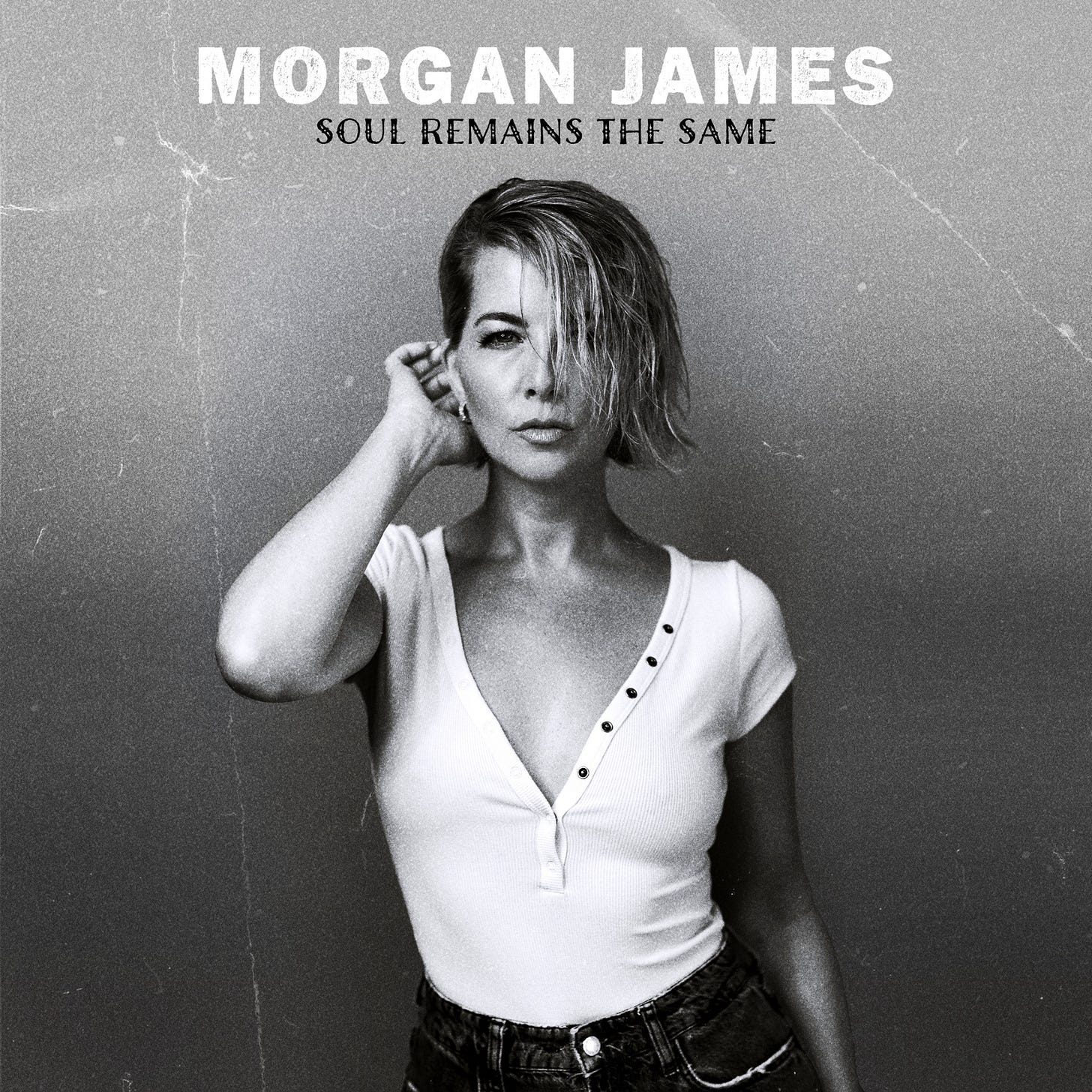
We’re in for a treat today; soul singer Morgan James stops by to chat!
If you’re taking on AC/DC, Stone Temple Pilots, and Metallica, you need your A-game. With Soul Remains the Same, Morgan James delivers, backed by the quiet defiance that’s fueled her career for over a decade.
This record is way more than just a covers album; it’s a declarative statement.
James reshapes the tracks on Soul Remains the Same by standing her ground, not distancing herself or making rote copies. These versions are “faithful” only in that they respect the bones; after that, all bets are off.
Honestly, I had some questions, but it’s a good thing. She knows what these songs mean to all of us (she’s a fan too), and what they mean now, in her hands.
Vocally, James sounds assured. This is someone who spontaneously swapped verses with Chaka Khan, after all. There’s no trace of studio polish (or autotune) papering anything over. She’s giving 110% here; the result is full-range soul, restraint when needed, power when it’s called for. Her background in theater and classical music explains the discipline, but emotion rules this release. There is a fine line between putting one’s stamp on something and staining it. Morgan is aware of this and keeps it in mind. She doesn’t copy anything here; instead, she completely reinterprets everything. Nor is she trying to out-sing the originals-she doesn’t have to. She’s giving them new life while honoring where they came from.
“I don’t try to change something to be clever. I don’t want to change something that’s already great…But sometimes I’ll hear a song and think to myself, This would be amazing with horns, or what would this sound like with a choir or a B3?”
James has built her career off the beaten path—first at Juilliard, then Broadway, and now releasing records independently. Some artists release cover albums as placeholders or as a cash grab. This isn’t one of those times. James takes a bigger gamble here: she puts herself into every verse. These aren’t tribute tracks or glorified karaoke—they’re testimonials.
As I listened, I’d think, “This sounds familiar,” only to remember that it was a song I’d heard countless times before. That’s perhaps the best thing I can say about Soul Remains the Same; James’ take is so novel that you forget you’re listening to her perform one of your favorites. Instead of comparing versions, you’re too caught up in how good these are.
“In making this album, I fell in love with these songs all over again,” said James. “Even iconic songs you’ve known your whole life take on a completely new meaning when seen and heard through the eyes and voice of a woman. This may not be a musical space people would envision me entering into—but I hope fans will listen with fresh ears and find new meaning and power in this music, just as I have.”
I know this is starting to read like a presser, so I’ll stop here. But consider me sold. Soul Remains the Same is a fantastic record well worth your time.
I recently had a chance to speak with James via email. We covered everything from the song that “had” to be on the record to licensing tracks. Our conversation has been lightly edited for clarity and flow.
Congrats on the new record! Can you quickly walk us through your backstory for those who might not know?
Thank you so much!! So my new album is called Soul Remains The Same, and I like to describe it as: It’s as though Aretha Franklin went into the studio with AC/DC. It’s heavy, masculine tunes from the ‘80s and ‘90s, iconic rock songs through a soul lens. But it’s all the classic soul sounds that I am known for and that I love so much—the songwriting is just from a different era.
You’ve previously recreated entire single albums, such as Jeff Buckley’s Grace. Why take things in a more collective direction this time?
Between my original music albums and my periods of writing songs, I like to exercise my creativity in other ways. And what better than to draw inspiration from the great artists and songwriters around me. The reason I covered complete albums in the past, such as Grace, the White Album, or Joni Mitchell’s Blue, is because I wanted to step inside a whole body of work. And I think that really teaches you so much about the mind of an artist and the process of making an album, from start to finish.
For this album, I really wanted to focus on a period of time that was united by certain themes and a very specific sound, and it was a period of tunes written by and for men— where sometimes the soaring melodies are slightly obscured by the (really cool!) but heavy production style. I wondered what would happen if you stripped some of that away and replaced it with horns, a Wurlitzer, or layers of feminine vocal choirs. I hoped that it would really bring these songs into a light.
Of the tracks on Soul Remains the Same, do you have a particular favorite, or one that just “had” to be on the record?
I have fallen in love with every single one—even more than I already did, listening to them as a teen!
I KNEW I had to have ‘The Day I Tried to Live’ by Soundgarden. I think Chris Cornell is one of the greatest singers of all time, and his songs are so virtuosic and dramatic—I wanted to pay tribute to him, for sure. I also knew I wanted to rep Living Colour, as well, with ‘Cult of Personality.’ And that song has never been more relevant.
How have the original artists reacted to your work? Have you received any feedback?
I haven’t heard feedback from them yet! I hope I do.
On a more technical note, how much of a hassle was the licensing process? Was securing the rights for any songs, particularly easy or hard?
Securing compulsory licenses is not difficult—you don’t need ‘permission’ to record a song that was already previously released. Unless it’s by Prince (IYKYK) 😉
Getting pulled onstage to sing with Chaka Khan had to be the thrill of a lifetime! What was going through your mind as you belted out “Sweet Thing” together?
I am still not over it! It was one of those true magical New York moments, completely unplanned. But like they say: stay ready so you don’t have to get ready! But I definitely blacked out hahaha.
If you could pick one track to play for someone who’s never heard your work, which would it be and why?
One track from this new album? That might be… ‘Better Man,’ because it has all the elements of what I love in a song and in one of MY arrangements. It has the instrumentation and background vocal arranging, and the dynamic range really takes you on a journey. If I were to choose a song of mine that I wrote, I would choose ‘Say The Words.’
Last one, just for fun; I bump into you as you walk out of the record store. What records are you carrying?
I am carrying the Duke Ellington Nutcracker, Aretha Franklin Unforgettable: a tribute to Dinah Washington, and Stevie Nicks Wild Heart.
Click the record to listen on the platform of your choice.
Soul Remains the Same is out today (8/8). You can grab your copyhere.
Click here to learn more about Morgan, grab copies of her records, and find her tour dates.
The Best Record of 1989: Day 54: #51 The Sugarcubes, Here Today, Tomorrow, Next Week! vs. #78 3rd Bass, The Cactus Album
Good morning!
Today we’re taking a quick look at records from The Sugarcubes and 3rd Bass.
Note: As many of you know, I recently wrote about a Best Record of 1989 challenge and noted that I’d occasionally write some of these up.
I’ve started doing some quick hits of each matchup and posting them directly to the page. Some will be longer, some won’t, and some might just be a handful of sentences. There’ll probably definitely be some typos.
Check ’em out and let me know your thoughts! Chin wags & hot takes welcome! Sharing and restacks are always appreciated.
You know those clips on YouTube where they isolate the bassline from a hit song, or Michael McDonald’s voice from “Peg?” Imagine something like that, but where you could edit out an element.
Now, picture using the audio equivalent of Control + F to find/delete everything related to Einar Örn’s vocals from The Sugarcubes’ Here Today, Tomorrow Next Week! You’d have a contender for record of the year, with fans split over whether it or Life’s Too Good is their best. I like Stick Around For Joy, but let’s be real—I might be alone on that.
Here Today, Tomorrow, Next Week! should’ve been the album where The Sugarcubes leveled up by doubling down on what made Life’s Too Good so memorable. Instead, they ran with the one element that worked because it was restrained and put it front and center. Imagine being the producer and hearing, “More Einar everywhere!” Yeesh.
On Life’s Too Good, Einar appeared in just the right doses, playing something of a foil to Björk—it worked, because it was contained. Here, the leash is off, and his constant interruptions drag down nearly every track.
I don’t mean to pile on here, but at the same time I kind of do—especially since his trumpet playing is one of the things I like most about this record. Why couldn’t he have focused on that instead? What’s with wanting to be the North Atlantic version of Fred Schneider?
Meanwhile, Björk is in fine form, throwing herself into these songs with a fury that hints at her later solo career. You hear her pushing her limits. Just when you think, Yes! Yes!—Einar bursts in with more yelped nonsense, and all bets are off.
Musically, there’s a lean, angular energy, with tight, new wave-adjacent grooves and just enough pop sparkle to keep things moving. The horn sections shine, especially on songs like “Tidal Wave.” The rhythm section is locked in, pushing things forward nicely. It makes you want to like this record more than you do. Which again begs the question—why not steer Einar toward his strengths?
Back to YouTube: imagine you’ve erased Einar’s vocals and are listening to the improved version. The sound has evolved, and the grooves have more substance. It still tries to be a party record but is less about novelty and more about what the album could have been.
That’s the rub. The record succeeds in many areas: Björk shines, and the band delivers. So what happened? Did Einar have outsized sway, or did everyone agree? It feels self-sabotaging.
The other fault is that it drags on too long. It feels longer than Life’s Too Good, despite actually being shorter. Someone should’ve made the unilateral decision to cut “Hot Meat,” which feels like a Temu version of “Cold Sweat.”
Here Today…is a record that comes so close, but with Einar’s overwhelming presence, it ultimately misses the mark. Still, if you lean in close, you can hear real gold. Here Today, Tomorrow, Next Week! is the band at a crossroads, unsure of what to keep or cut.
Sometimes it works—but more often, it’s just exhausting.
For the third Bass, I had to phone a friend. I had a feeling that we liked a couple of tracks, but otherwise, we spent most of our time pointing and laughing at MC Serch and Pete Nice. Turns out my memory failed me (quelle surprise!). My buddy texted back within minutes, saying, “The Cactus Album is a Classic.”
Okay, so that’s sorted then.
Listening to the record, I’m surprised at how well it’s held up and the creativity of the samples used. I wasn’t expecting a Blood Sweat and Tears track sample here, but it’s also possible I memory-holed it like everything else. I did remember “Gas Face,” and it’s as fun now as it was then. Does 50-year-old me find the same appeal that teenage me did? Apparently, yes. Same story with “Steppin’ to the AM” (home of the sample mentioned above). Do two tracks a record make? No, but this was a nice enough way to soundtrack part of my shift at work.
My vote: Took the easy out here, and went with The Sugarcubes. For all its faults, this is still a Sugarcubes record and Björk’s on it. That’s some gravitational pull. Also, another example of the performative voting we’ve seen previously (and will see again).
Ask yourself: Who’s cooler: Bjork or MC Serch? Exactly.
Any thoughts on either of these records? Agree/disagree with my takes? Which one of these would you vote for? Sound off in the comments!
P.S. Tomorrow’s Match Up features #19 Neneh Cherry’s Raw Like Sushi taking on #110 Don Henley’s End of the Innocence.
One I’d never heard before now, and one I’m ambivalent (at best) towards. Decided to punt on this one and give myself a pass on writing it up. My bracket pick and vote will both be going to Neneh Cherry.
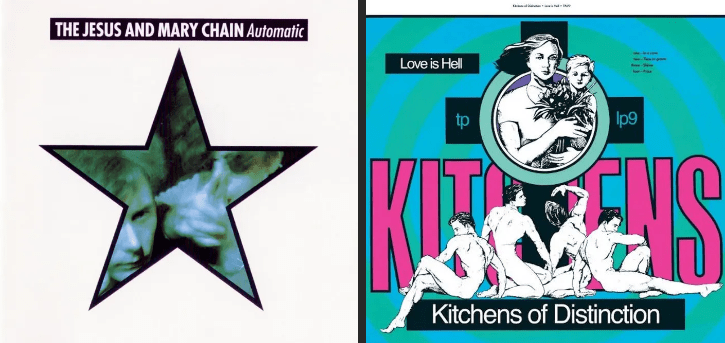
The Best Record of 1989 Day 53: #14 Jesus and Mary Chain, Automatic vs. #115 Kitchens of Distinction, Love is Hell
Good morning!
Today we’re taking a quick look at records from Jesus and Mary Chain and Kitchens of Distinction
Note: As many of you know, I recently wrote about a Best Record of 1989 challenge and noted that I’d occasionally write some of these up.
I’ve started doing some quick hits of each matchup and posting them directly to the page. Some will be longer, some won’t, and some might just be a handful of sentences. There’ll probably definitely be some typos.
Check ’em out and let me know your thoughts! Chin wags and hot takes are welcome! Sharing and restacks are always appreciated.
KA—
The first of what would be many trips to Portland’s Pine Street Theater was marked by a beer bottle winged from the stage, whizzing inches from my head. It turned out fine; this became an anecdote I’ve shared many times. A ha-ha moment that was very close to having a very different ending.
The band playing? The Jesus and Mary Chain.
I don’t think people thought this record was a joke, but I do remember many people lamenting that it wasn’t another Psychocandy. The band also got some flak for using drum machines and synths (there’s no bass guitar on the record). You can argue for each of those points, but I think they were saying that the record might be too poppy for their taste.
Ultimately, though, Automatic gets a largely undeserved bad rap.
The album followed 1988’s Barbed Wire Kisses and would be followed by the ’92’s Honey’s Dead. In other words, you’ve got my favorite on one side and a solid outing on the other. But Automatic’s importance in the Jesus and the Mary Chain discography shouldn’t be questioned. LikeDarklands, it has been a sleeper that has risen in reputation as time passes.
The album was produced by the Reid brothers and recorded at Sam Therapy studios in West London. It would give us two hit singles: “Blues From a Gun” and “Head On,” the latter being the poppiest thing they ever made this side of “Sometimes, Always.” The album reached #11 on the UK album charts but only managed #105 on the US charts.
At the time of its release, the reception was lukewarm, but in some circles it was shit hot. “Head On” got a lot of airplay on the likes of MTV’s 120 Minutes, and no less than Pixies wound upcovering it. It also caught the eye of my then-girlfriend, which meant that I had a willing partner in crime to make the cross-town trek to Pine Street.
Possible hot take: If Barbed Wire Kisses was an homage to surf rock, Automatic was a nod to dance music writ large. “Blues From A Gun” has a swagger that’ll get your hips moving, “Head On” has one of the most glorious choruses of the year, and the druggy “Here Comes Alice” is all dark sugary goodness. None of these are dancefloor fillers in the traditional sense, but all make it hard to stay still.
The Jesus and Mary Chain never made the same record twice. Each has a unique style (or vibe) and sound, leading to some red lines being drawn among the fanbase. Some people liked the fuzzed-out/tripped out nature of Psychocandy. Others, the more accessible sheen of Darklands. Some loved the heavy gauged riffs of Barbed Wire Kisses. Automatic had a little something for all three camps.
What I think everyone could agree on was just how far upfront the drums and sequencers were compared with their other releases. The programmed bass gave the album a relentless pace and feel, as if it was daring all of us to keep up.
Automatic is a rock & roll record that tapped into what was going on around it—and the band—at the time. While I’m not entirely sure it understood the assignment, I’m positive it’s held up over the ensuing years.
Perhaps the biggest reason time has rehabbed its reputation is this: at its core, this is a (maybe the only?) JAMC record you can dance to.
Which is exactly what I was doing when that bottle flew by.
The nicest thing I can say about Kitchen’s of Distinction’s Love is Hell is that “Prize” is a great song. Really. I listened to it, like, 3 times in a row. That it took ‘til track 4 to get to it is a story for another day. I’m usually all in on dream pop, but this just didn’t anything for me. Maybe it’s a record that asks you to listen a couple of times before you get it? I dunno.
My vote: JAMC is one of my all-time favorite bands, which means Kitchens of Distinction never really had a chance. A record full of tracks like “Prize” might’ve given me a moment’s pause, but my bracket pick and vote were never really in doubt.
Any thoughts on either of these records? Agree/disagree with my takes? Which one of these would you vote for? Sound off in the comments!
The Best Record of 1989: Day 52: #35 10,000 Maniacs, Blind Man’s Zoo vs. #94 Michael Penn, March
Good morning!
Today we’re taking a quick look at records from 10,000 Maniacs and Michael Penn
Note: As many of you know, I recently wrote about a Best Record of 1989 challenge and noted that I’d occasionally write some of these up.
I’ve started doing some quick hits of each matchup and posting them directly to the page. Some will be longer, some won’t, and some might just be a handful of sentences. There’ll probably definitely be some typos.
Check ’em out and let me know your thoughts! Chin wags & hot takes welcome! Sharing and restacks are always appreciated.
KA—
I’ve mentioned it before, but I’ve always associated 10,000 Maniacs’ very specific, very literate sound with universities. And not just any university, but somewhere like Dartmouth (sorry, Hurricane fans). It’s a sound that, to me, has always felt more at home on a campus with a vibrant field hockey program than on the Billboard charts.
The short version of these earlier records is this: a bit of well-styled jangle pop coupled with Natalie Merchant’s gorgeous voice and thoughtful lyrics. That’s the upshot. The downside is that these often leave you feeling like you’re being lectured to. Merchant can come across like that neighbor who’s usually pretty cool, but will also tut-tut you for not composting enough or not having one of those “In This House We Believe…” signs1. Nice enough and well-intentioned, but it can wear thin.
Cueing this up, I wondered if I’d been remembering them in too harsh a light. After all, “These Are the Days” is a song I associate with travel and adventure, thanks to reading Jeff Greenwald’s “The Size of the World.” Maybe I’d been wrong?
The opening track, “Eat For Two,” is about teen pregnancy, so well, no. But that slick, made-for-radio formula is as delicious as I remember it.
Speaking of which, this is the last record that could be classified as janlge pop, and even here, it’s a stretch in places. This is really the jumping-off point for the more refined pop style of Our Time in Eden and everything that came after.
“Trouble Me” is a fine, if unremarkable, bit of ear candy, and I’m starting to wonder (again) if I’m being too harsh on the band. Those doubts vaporize pretty quickly with “You Happy Puppet.” Musically, it’s right up my alley. It’s polished with the sort of sunny grooves I buy in bulk.
And then I make the mistake of pulling up the lyrics, and well:
How did they teach you to be just a happy puppet dancing on a string? How did you learn everything that comes along with slavish funnery? Tell me something, if the world is so insane, Is it making you sane again to let another man tug at the thread that pulls up your nodding head?
Same story with “Headstrong”…
…and “Poison in the Well”…
(sigh).
Stylistically, it is a great transitional record that does well to tie the two on either side of it together. With the benefit of hindsight, the signs are also all there that 10,000 Maniacs is increasingly becoming a Natalie Merchant backing band. Our Time In Eden would seal the deal, even if the timelines don’t match up perfectly.
A couple of songs feel like they go out of their way to be inoffensive (in the same way that same neighbor might start every criticism with something like “I feel like…”, but overall it’s not enough to sink the record. That title goes to the preachy and overbearing lyrics. Blind Man’s Zoo is a solid effort, but one best consumed in small doses.
I’ll be honest here: here’s everything I know about Michael Penn: His brother is Sean Penn (RIP Chris Penn). He’s married to Aimee Mann, and No Myth was inescapable when it came out. That’s it. He was almost a predecessor to Duncan Sheik, if you remember. All signs point to him being an artist I’d be more familiar with, but here we are.
All signs also point to him taking himself too seriously, but I don’t get that impression when I listen to the first few tracks. The ride takes us through a few folk-y ballads and a couple of up-tempo numbers. It’s all well done, but I’m not getting a particularly strong sense of FOMO here. It’s fine that I’ve waited 36(ish) years to hear this…
…and then we get to the closer, “Evenfall,” and man, talk about ending on a high note! This is a rollicking good time, with barrel piano and an ornate section that’ll have you moving in your chair. Now that’s how you close an album! Where was this in ’89?!
My vote: I have a feeling a lot of people are in the same boat as me here (10,000 Maniacs aren’t bad, have only heard the one song by Penn). I will vote mainly on name recognition and Merchant’s voice. I’m still in the bottom third of the rankings in this challenge, and the first rule of getting out of a hole is to stop digging. My bracket pick and vote will both be for Blind Man’s Zoo.
Any thoughts on either of these records? Agree/disagree with my takes? Which one of these would you vote for? Sound off in the comments!
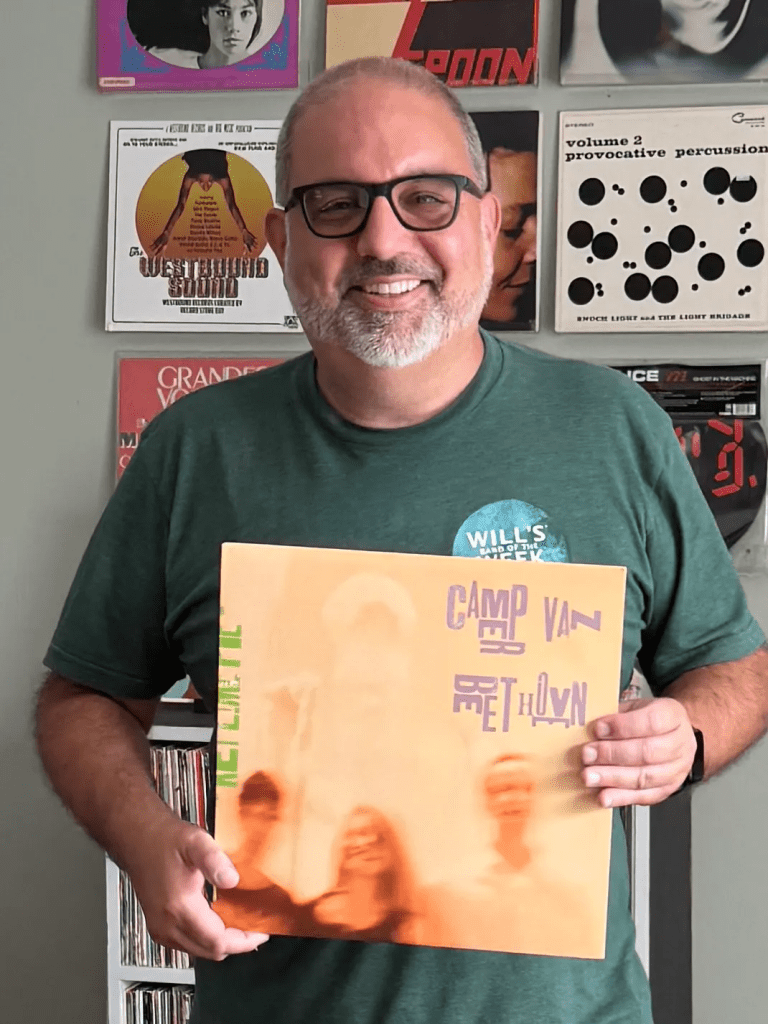
The Best Record of 1989 Day 51: #30 Camper Van Beethoven, Key Lime Pie vs. #99 Ice-T, The Iceberg/Freedom of Speech… Just Watch What You Say!
I am incredibly photogenic.
Good morning!
Today we’re taking a quick look at records from Camper Van Beethoven and Ice-T
Growing up, one of the guys on my block lived in a house with a basement. You have to understand that this was relatively unusual in Oregon. You also need to know that it had its own entry, separate from the rest of the house, which, of course, meant it was the default place for all of us to hang out.
All well and good, except that my friend also played guitar. Yeah, that guy. We all know one. Worse, he’d often play it to impress girls on the rare occasion they stopped by. This is how I first heard Camper Van Beethoven’s cover of “Pictures of Matchstick Men.” Not a strong start, but for better or worse, this was the band for me growing up.
This record was also the sound of Camper Van Beethoven growing up—not gracefully, exactly, but white-knuckling it through the end of the 80s like the rest of us. If Our Beloved Revolutionary Sweetheart was the band getting serious, Key Lime Pie is them getting mean; not in a cruel way, but with the kind of sardonic clarity that only comes after you’ve watched the Reaganomics tear apart the American Dream brick by brick.
By 1989, the band was peeling away their own layers. Jonathan Segel was gone. David Lowery had taken the wheel, and the group’s weirdness started to harden into something leaner and a bit darker. The violin remained, but now it ached. The jokes hadn’t vanished, but now, they came with shadows instead of a wink and a nudge. Irony no longer softened the blow; it was the hammer delivering it.
But that’s what makes this record the gem it is. Say what you will about this style shift, but Key Lime Pie is an honest, beautiful, and impossibly human album. The songs aren’t necessarily sad in the normal sense—they’re quietly devastating. It may take a few years and the benefit of hindsight to realize.
Listening feels like looking directly into the souls of people on edge, or even standing at the edge. It can be humbling, and it’s quite a counter to the demanding style of patriotism that was so in vogue.
Musically, Key Lime Pie is a masterclass in restraint. It’s still unmistakably them—strange little chord changes, unexpected melodic sidequests, and eerie violins—but it’s more grounded. Michael Urbano’s drumming is the most conventional thing on the whole record, giving the songs the structure they need. Pedal steel threads through tracks, especially on “Borderline” (my personal favorite) and “Sweethearts.”
And before I forget, the run from “Sweethearts” through “Borderline” is one of the strongest 4-track runs going.
The band sounds tighter, but not sanitized. They’ve ditched the genre-hopping of earlier albums and focused the chaos into something more purposeful. There’s Americana here, but it’s postmodern Americana.
Lyrically, Lowery is at his best here. There’s less snark, more ache. “Sweethearts” paints Ronald Reagan as a puppet for state-sponsored violence and capitalism, but it’s delivered with enough subtlety that you almost miss it.
“When I Win the Lottery” may be the best song ever written about bitterness as a survival strategy. It’s funny, but not ha-ha funny. It’s incredible line-level writing from the POV of someone like the guy at the end of your local bar; the one who’s seen some things.
The whole album walks the line between love and futility, beauty and decay, hope and despair—nihilism. This is a portrait of a broken America song by characters who’ve watched the American Dream collapse under its own weight.
It’s a record about America, sure. But more than that, it’s about people navigating what America does to you. People leaving, people drinking, people stuck in laundromats or backwater towns with only Swap Shop or gospel on the radio. People literally and figuratively stuck on the side of the road. Still, it’s the most empathetic album they ever made (we can use that, too). It doesn’t punch down; instead, it meets its characters where they are.
Despite my less-than-auspicious onramp to the band, this album has never really left my rotation. Very rarely do I play it and not find something new.
You can call it alt-rock, Americana (maybe), or whatever you want—it’s eclectic enough that pretty much anything will fit. But again, it’s just one of the most human records of the year. That sort of thing never goes out of style. It’s always relevant.
Gather ‘round, kids: It’s time to tell you the story of who Fin Tutuola used to be.
Shame that an entire generation only knows Ice-T from his portrayal of a cop on Law & Order. How odd it is to remember that the same guy now flashing a badge used to flout—and run afoul of—the law. This is, after all, a guy who was also almost arrested in Georgia for the high crime of swearing onstage. Such was the climate at the time. It’s all enough to catch a case of the vapors.
In 1989, Ice-T was still a rapper who put hot girls and guns on his covers. He sang songs about power, and how it started “with P like p***sy.” He swore. A lot.
Meanwhile, the Parents Music Resource Center was busy being busybodies and decided that someone should think of the children! Think Maude Flanders but with Congress’s ear. Ice-T made the perfect target. He rapped about all the things supposedly tearing this country apart, and he was popular.
Ice=T wasn’t about to give an inch, and if you were to condense a review of The Iceberg/Freedom of Speech…Just Watch What You Say down to a line or two, it’s that he made a whole-ass record doing just that. It was a baker’s dozen worth of tracks, and all of them were a raised middle finger to anyone with the audacity to decide what was best for anyone.
You can have your endless reruns of Law & Order SVU; I prefer this version of Ice-T.
My vote: Ice-T fought hard against Tipper Gore and co., but he’s no match for David Lowery. It’s Key Lime Pie all day for me.
Any thoughts on either of these records? Agree/disagree with my takes? Which one of these would you vote for? Sound off in the comments!
Good morning! Need an antidote for the algorithms? Looking for a place to share the music you love with like-minded people? You’re in the right spot.
As always, thank you to those who have upgraded your subscriptions this past week. Your direct support fuels this community and makes a positive impact. Shares and reposts all help as well! Thank you!
When you’re ready, joining them is easy. Just click here:
For those of you who are new, we kick off every week by sharing what we’ve been playing.
The playlist below is some of what I’ve had in heavy rotation. This week found me listening to a ton of new (like, brand new) releases from the likes of Immersion, Massage, and The Symptones. Always a good thing!
NOTE: Spotify has been intermittently throwing a “no upstream” code message for the last couple of days. If you’re still seeing it, you can check out the playlist here.
Some thoughts on the Billy Joel rock doc, class themes and classism
In high school, I spent most of my time railing against just about anything remotely considered pop music, so it should not surprise you that I was less than pleased when Billy Joel’s “Time to Remember” was nominated for my class’s theme song. That my vote was for Talking Heads’ “Road to Nowhere” should also tell you a lot about what I used to be like.
I mean, we were in Oregon! Indie/Alternative was having a moment, and we were gonna have this? This schmaltzy pop ballad from a mainstream artist?! We might as well have just thrown in a vote for Jack Wagner. Wasn’t Joel someone our parents were into? WTF? The fact that David Byrne is only a couple of years younger than Joel was completely lost on me, which should also tell you something.
And did anyone read the lyrics? It should be clear that they did not.
Billy Joel is all of those things. He is also a lot of other things. He is the living embodiment of multiple things being able to be true at the same time. He was also a lot like me and my circle than I cared to admit, something that I came back to repeatedly while watching And So It Goes.
The rest of this column is currently available for paid subscribers only. You can access the rest with a free one-week trial (email me) or subscribe starting at less than $4 per month for a full year.
The Best Record of 1989 Day 50: #62 Violent Femmes, 3 vs. #67 Queen Latifah, All Hail the Queen
Good morning!
Today we’re taking a quick look at records from Violent Femmes & Queen Latifah
Note: As many of you know, I recently wrote about a Best Record of 1989 challenge and noted that I’d occasionally write some of these up.
I’ve started doing some quick hits of each matchup and posting them directly to the page. Some will be longer, some won’t, and some might just be a handful of sentences. There’ll probably definitely be some typos.
Check ’em out and let me know your thoughts! Chin wags and hot takes are welcome! Sharing and restacks are always appreciated.
The pitch: After three years, the Femmes got back together and got back to basics. As good as Hallowed Ground and The Blind Leading the Naked may be, this is a band at its best when it’s stripped down to its core parts. Brian Ritchie’s bass, a quiet beat, and whatever of Gordon Gano’s neuroses he feels like talking about today.
3 (actually the band’s fourth record) starts strong with “Nightmares” and “Just Like My Father.” Deserved or not, Gano always seems like the type of guy we’ll hear about on the 6 o’clock news, invariably with a neighbor describing him as “…nice guy, kept mostly to himself.” Part of that is down to his habit of writing/singing songs from the perspective of some people with, well, some issues. The 1-2 punch of the first two tracks won’t do anything to disabuse people of those notions.
That theme keeps right on going on “World We’re Living In,” with Gano singing:
I can’t go out no more I just better stay at home I just better stay all alone ’cause what am I gonna do if I see someone I’d like to do something to
“Fool in the Full Moon” might just be the closest thing to a rock song the Femmes ever put to tape. But the rest of it is what most people would come to expect from the band: Gano’s nasally vocals, a mildly chaotic racket, and lyrics that’ll have you singing along until you realize what’s coming out of your mouth.
3 is a fun, enjoyable record. It isn’t quite up to the level of their band’s self-titled classic or even the maudlin atmosphere of Hallowed Ground, but it let everyone know the band was back, and that was enough.
I’ve mentioned it before, but the first time I heard Queen Latifah’s “Dance For Me,” it was thundering out of my friend Kiki’s Honda as he took the corner onto our block at an impossibly high rate of speed.
With A Tribe Called Quest and Jungle Brothers having already dropped releases, it only made sense that another member of the Native Tongues crew would come out, and it was never going to be anyone else but Queen Latifah. And that opening track put everyone on notice that she wasn’t going anywhere.
I’m sure the way I found the record has something to do with it, but to my ear, this LP had an urgency to it. DJ Mark the 45 King put his unique stamp on much of the record, diving deep into the crates, corralling some unruly sounds and reforming them as dance-floor fillers.
This was also the era when MCs became infatuated with house music—sometimes with mixed results. All Hail the Queen is no exception with “Come into My House.” A solid if unremarkable track. And it wouldn’t be a 1989 record without some friends coming along for the ride. Fellow Native Tongues De la Soul are here (“Mama Gave Birth to the Soul Children”) as is KRS-One (“Evil That Men Do”).
The former has something like 14 samples in it-everyone from Otis Redding to Billy Squier. When I said Mark the 45 King dug deep, I wasn’t kidding.
As a whole, All Hail the Queen is solid, but standouts like “Dance For Me” carry a lot of the weight, and trimming a couple of tracks would’ve elevated this from good to great.
My vote: I’m a fan of the Femmes, and the fact that they’re from Milwaukee scores some points for them. Both records are good, neither is great. I went with a nod to my old neighborhood for the tiebreaker, and threw my vote to the woman known to the New Jersey DMV as Dana Owens.
Any thoughts on either of these records? Agree/disagree with my takes? Which one of these would you vote for? Sound off in the comments!
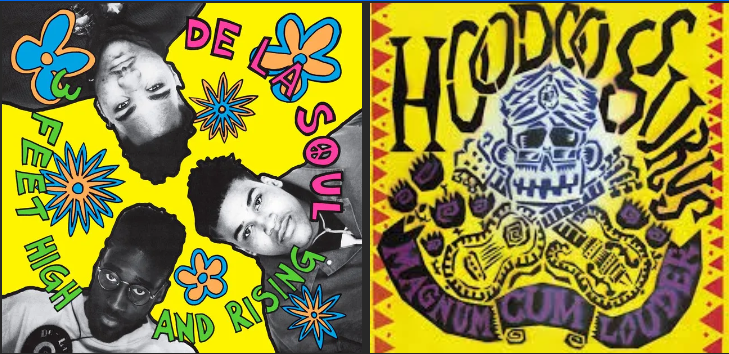
The Best Record of 1989: Day 49: #3 De La Soul, 3 Feet High and Rising vs. #126 Hoodoo Gurus, Magnum Cum Louder
Good morning!
Today we’re taking a quick look at records from De La Soul and Hoodoo Gurus
I should be mad at De La Soul—or at least annoyed. I have a particular distaste for the skits that litter so many hip-hop records, which can be traced back to the band’s 1989 record, 3 Feet High and Rising. That said, while those were often used as filler on other releases, they have a certain charm on this record. I’m still not sold on the idea, but they’re at least tolerable. If nothing else, they’re not distracting from the overall product.
Okay, so that’s the bad part out of the way. Now let’s talk about the good. We can talk about Prince Paul’s touch and how he helped sculpt this into something nothing like what we’d heard before. This and Paul’s Boutique ushered in a new era of layering samples like a collage. Now, instead of an MC and a breakbeat, we had soundscapes. Both of these records influenced countless crews that followed. Why one was a hit out of the blocks and took years to get its due is worth its own discussion.
We can talk about the stylings of Posdnous and Trugoy’s flow and the insistence on bringing concepts like peace and harmony back into the collective discussion. Maybe carve out some time to remember how fun “Me, Myself, and I” felt when it dropped. Posse cuts were de rigueur then, and “Buddy” is one of the best. All of those things are true, and each of them matters.
In our Top 100 series, Sam had this slotted in at #77.
My take then was:
Looking back through admittedly fuzzy memory, in the mid-to-late 80s, everyone I knew had three hip-hop records: Beastie Boys’ License To Ill, Run DMC’s Raising Hell, and this. Only one has a Steely Dan sample, and only one sounds as good now as it did then. “This,” of course, would be 3 Feet High and Rising. It’s the summer of love with some 808, and I’m here for it.
I still am.
I lucked my way into a group of avowed music nerds in school. Finding and sharing new (or at least new to us) music became our raison d’être. This is how Hoodoo Gurus’ Magnum Cum Louder first got onto my radar.
I don’t recall this becoming an obsession with any of us, but instead falling into the “it’s got a couple of great songs” purgatory. Those lucky few wound up circulating on mixtapes, with the rest of the tracks confined to the dustbin of history.
If you’re of a certain age, you know the deal; you bought a record on the strength of a good song over two, and hoped for the best with regard to the rest of the album. In this case, I wouldn’t have felt bad being out $8.99 or whatever the list price was, but I was also happy with just having a copy.
In Magnum Cum Louder’s case, that one good song is “Come Anytime.” About a minute in, I realized I was playing it loud and singing along at equal volume (note: If we happened to have been sharing the ordeal yesterday afternoon, I’m sorry you had to hear that).
It’s as good as ever. The hook…the sing-along chorus…all of it. It does well to set the stage for what’s to come. The next couple of tracks (“Another World,” “Axegrinder”) are also pretty good, even if they don’t quite meet that same high bar. They’re nice enough, but feel like a small step down. Get to about track six and realize it’s more of the same. It’s a nice “same,” —” Shadow Me” and “All the Way” in particular— but a same nonetheless.
Magnum Cum Louder is, of course, a play on the term Magnum cum laude, which is a fancy way of adding a “better than average” rider to a degree or diploma. It seems aspirational here, especially when stacked up against the rest of the discography.
A few tweaks here and there might’ve earned it a legit shot at that distinction.
My vote: 3 Feet High and Rising changed the game. Magnum Cum Louder barely caused a ripple in my suburban friend group. It’d be a much tougher call if we were going on the strength of “Come Anytime” alone, but we’re not.
It’s the D.A.I.S.Y. Age for the win.
Any thoughts on either of these records? Agree/disagree with my takes? Which one of these would you vote for? Sound off in the comments!






 Kevin Sent