There’s a common idea that “good” music—and the joy of discovering it—is a thing of the past. A relic from a bygone era that fits in with memes about drinking water from a garden hose. People like Dan Gorman prove that’s simply not true.
I first connected with Dan through the Rosy Overdrive community, and now we’re lucky to have his newsletter, The Discover Tab. If you’re someone who’s always chasing new sounds—and I’m guessing you are—it’ll check a lot of boxes for you. It’s a “never miss” for me.
Dan recently launched a series called Digging for Something, where fellow writers highlight underrated records that deserve more time in the spotlight. I was excited to be included, and I hope one of my picks becomes your next favorite.
Good morning! Need an antidote for the algorithms? Looking for a place to share the music you love with like-minded people? You’re in the right spot.
As always, thank you to those who upgraded their subscriptions over the last several days. Your direct support fuels this community and makes a positive impact. Shares and reposts also help!
When you’re ready, joining them is easy. Just click here:
For those of you who are new, we kick off every week by sharing what we’ve been playing.
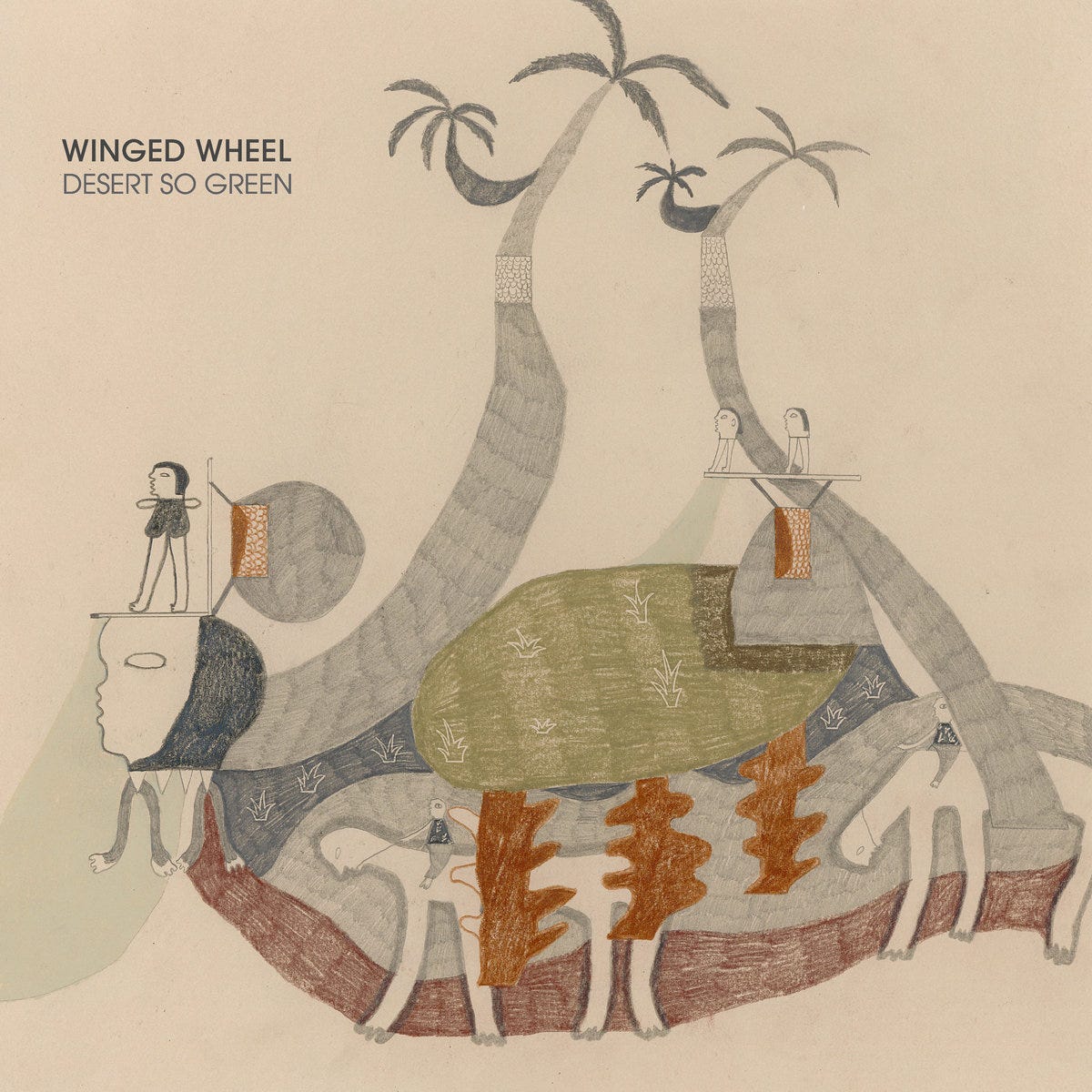
The playlist below is some of what I’ve had in heavy rotation. This week’s Side A kicks off with a new single from The Lemonheads. Yep, they’re back. Evan Dando’s got a new memoir out as well. That’s followed by Eleventh Dream Day—a band I missed their first time around, and Ride who luckily, I didn’t. Winged Wheel might be putting out some of the most interesting music these days; their “Sleep Training” was one of my most played tracks last year. The side’s rounded out with the latest from The New Romantics. Synthpop from Knoxville? Yes please!
Side B roars in with Sugar’s latest. I promise it really is 2025. Like Dando, Bob Mould is as good as ever, and this feels like the band hasn’t taken any time off at all. ‘Course when you have a blast furnace for a guitar, the rust probably comes off easy. Anyway, your neighbors will like it too. After that is some power pop from Crossword Smiles and then a 1-2 punch of faves from the Blake Babies and Paul Westerberg, before we wrap up with the latest from Winter and Billie Marten, who’s Dog Eared LP is on the AOTY leaderboard.
Some thoughts on Ticketmaster, Resellers, and Swifties.
It shouldn’t surprise you that a considerable chunk of my adolescent years were spent going to, coming from, or actually at shows. If you’re reading this, I’d bet our timelines overlap.
Some of that was down to questionable life decisions—I quit more than one job after being unable to get time off. Some was timing— people on my block had cars long before I did, making getting downtown easier. But mostly, it was economics. Tickets were simply cheaper (something that will surprise absolutely no one). We dealt with plenty along the way, but automated resellers weren’t one of ’em.
Back then, the first step to seeing a show usually meant heading to a brick-and-mortar building—a sporting goods store called GI Joe’s (think Dick’s Sporting Goods, but with a token record section). They had a desk whose sole mission was to sell park passes, fishing licenses, and concert tickets. This was the designated Ticketmaster outlet, back before they decided to go all in on villain shit. Prices were reasonable, and fees weren’t absurd. Most bands and crews weren’t getting rich, but at least the system hadn’t yet been weaponized against us.
Those little paper tickets were passports to whole new worlds—or beloved old haunts. Today, they mostly live in shoeboxes or scrapbooks. Concert tickets now exist on phones or in apps we’re forced to download—just a string of ones and zeroes sitting on a server somewhere. And speaking of numbers: the average ticket last year was $136.45, up about 42% from just five years earlier.
I know, I know—I’m deep in “old man yells at cloud” territory. Stick with me.
This isn’t a “things were cheaper in my day” stemwinder. Of course they were—so was everything else. I’ve got neighbors who had apartments downtown, paid $250 a month, and can’t figure out what today’s kids are griping about. I get it.
There were certainly systemic issues even then, and Pearl Jam was already taking on Ticketmaster. People were already testing workarounds. But complete monopolization hadn’t yet hit, and “reseller” still usually meant a chainsmoking, slightly sketchy dude in the parking lot an hour before showtime. Thirty-five-ish years later, we’re still inventing workarounds: house shows are back, pop-ups are a thing, and so on.
It’s the reseller I want to focus on here.
And look, I get it—we live in a late-stage capitalist hellscape. Supply and demand are real. So is surge pricing. Even the airline I may or may not work for has toyed with the idea. In aviation, it’s called Yield Management. In the music world, it more closely resembles highway robbery. And look, if artists and crews were the ones making that extra revenue, it might be palatable—but they’re not. It’s going to faceless corporations and bad actors who’ve mastered the system. The losers? Concertgoers and, occasionally, local venue owners.
Today’s resellers are much more ominous and much better equipped. They have all the levers of technology at their fingertips and know how to weaponize each one. The rise of AI has changed the rules of engagement yet again. If you’ve ever tried to buy tickets only to find the remaining ones priced several orders of magnitude above face value, you know what I’m talking about.
It’s gotten so bad that legislation was recently introduced here in Wisconsin to push back. The bill—introduced by Democratic lawmakers—came after a theater in Racine watched helplessly as $22 tickets ballooned to several hundred dollars for a production of Legally Blonde, effectively pricing people out of the show and diverting revenue from the venue. If passed, it would require resellers to disclose total ticket costs, cap markup limits, and prohibit bots that scoop up tickets before fans can.
History is littered with similar bills that never made it out of committee. Others have tried to tackle pricing itself. If I ruled the world, future versions would include bans on venues taking merch cuts. I’m not holding my breath. That’s one the market itself will have to handle—maybe if enough of us stop going to those places, they’ll stop. Maybe.
You’ve got to have a dream, right?
Back to the bill: Wisconsin is one of the most politically balkanized states in the nation. Both parties spend more time throwing rocks at each other than actually getting things done. The GOP here can be politely characterized as “humorless.” Still, I’d like to think there’s a sliver left that remembers it’s supposed to champion small business and working people. They’ve whiffed on plenty of easy wins in recent years—hopefully this won’t be one of them. Other states are following similar paths, but like the slogan says: As goes Wisconsin…
Ideally, these obscene price hikes will go the way of the paper ticket. My dream is that kids today get to experience the same adventures I did—and that, for once, consumers aren’t the ones left holding the bag.
If nothing else, at least the bill has a killer name: the Stop Wildly Inflated Fees and Ticketing Industry Exploitation Act. 11/10 No notes. Hopefully, our elected officials will get it and realize the peril of voting against something with a title like this.
Political survival 101: Never start a land war with Swifties.
Today we’re talking about AI. Or rather the crossroads of AI and music with our pal Chris Dalla Riva.
You don’t have to go far to hear about AI today. There’s everything from wistful think pieces to spicy takes and everything in between. It’s an equal opportunity target. If you’re anything like me, you’ve read a million takes both for and against its use.
Consider this the millionth and one.
Most of us have a strong opinion one way or the other; we either think it’s great or hate it. I’ve yet to see anyone say they don’t much care. Those strong thoughts are particularly divided in the art world/creator economy, where consumers are being overrun with slop and artists/authors are rewarded by having their work stolen and used to “teach” machines or compose hours of mindless music to be piped into fluorescent-lit hallways and your local Anthropologie.
Before we get too far, I want to be clear: I’m all for what has been referred to as the Three C’s: Consent, Credit, and Compensation. Those are largely self-explanatory, but the short version is this: if a tech bro is gonna hoover up an original idea, they should at least be paying the person whose synapses sparked it. A little credit would go a long way, too.
What does that look like in practice? I don’t know yet, but it’s not whatever we have right now.
I also want to be clear that most of the discourse so far has been binary. A lot of bandwidth’s been used in either/or discussions when it should be more of a “yes, and” or “yes, but” dialogue. For example, should a person take a 2-line prompt, generate a 750-word article “in the style of Kevin Alexander,” and pass it off as their own? I think most reasonable people would say no. What about non-native English speakers who use Grammarly to clean up grammar errors in their own words/ideas? Is that okay? I personally think it’s in bounds.
Much of the pushback has been because it feels like we’re being taken advantage of. We want to believe the person whose work we’re reading or listening to actually hammered it out on a notepad, keyboard, or instrument. Modern life never misses a chance to take advantage of us (or sell us more shit), and this often feels like one more in a long line of slights.
But what if the builder is transparent? Does upfront disclosure change the calculus? I think it does, if only because a consumer can then make a more informed choice. Pivoting back to music, that was a huge driver in the pushback against The Velvet Sundown earlier this year. The sting of catching someone trying to pull a fast one on you doesn’t wash away easily. If a singer tells you they’re using AI to give voice to their own words—now what?
Enter
Chris Dalla Riva. Chris writes the fantastic Can’t Get Much Higher which sits at the intersection of objective data and how it relates to the almost purely subjective world of music. He’s also the author of the forthcoming book Uncharted Territory: What Numbers Tell Us about the Biggest Hit Songs and Ourselves, a data-driven history of pop music and a multi-year project that started with him listening to every number one hit in history. Put another way, he knows his stuff. I’m reading an advance copy, and can confirm it would make a great early Christmas gift.
Long-time readers may also recall Chris and me working on a project where he used Python code to extract data points from my Spotify history. He then used those to paint a picture of what I look like as a user, and share what I was “really listening to.” It was fascinating to watch come together. It’s also a situation where I think one could make a use case for using AI. After all, isn’t sifting through large data sets the sort of thing we want AI doing?
At any rate, today Chris brings us two real-world examples worth consideration. The first is an artist using AI to “sing” lyrics she herself came up with. The second is a fantastic breakdown of how it can be used to remaster/rerelease songs long thought lost to time.
Neither of us makes a declarative statement or pretends to have the answers. In my opinion, Chris’s article reinforces that more than anything, we need to collectively decide what’s acceptable and what isn’t, rather than outsourcing that to companies that only see us as data points to extract ad revenue from.
And with that, I’ll get out of the way and let Chris take the wheel.
So, who is this rising star? I’m not sure. She doesn’t exist in the traditional sense.
Xania Monet is the first AI-generated artist to land a song on one of Billboard’s charts. Unlike other AI-generated artists in the news, nobody is claiming that Monet is a real person. “Xania Monet” is a project by Telisha Jones, says Billboard, a “Mississippi woman … who writes her own lyrics but uses the AI platform Suno to make them into music.”
Scrolling through the comments on Monet’s songs, you’ll notice that people connect with it. And most have no idea that this is not a traditional artist. As someone who works in the music business, writes songs, and spends most of his free time chronicling the music industry, I’m all for songs people can connect with. Music can have power independent of the technology used to create it. Still, I think there are some looming ethical issues with fully AI-generated artists.
First, is this music copyrightable? A recent report from the US Copyright Office noted that, according to existing law, “Copyright does not extend to purely AI-generated material, or material where there is insufficient human control over the expressive elements.” Furthermore, “Whether human contributions to AI-generated outputs are sufficient to constitute authorship must be analyzed on a case-by-case basis.” Is setting human-written lyrics to AI-generated music enough human contribution to be copyrightable? It’s unclear.
Second, even if it is copyrightable, should the artists whose music was included in Suno’s training set receive royalties when Xania Monet is streamed? Given Anthropic’s recent settlement with book authors and pendinglawsuits against Suno and Udio, it seems that the underlying music will have to be licensed in some way.
But let’s assume all of the intellectual property debates get sorted out. (They will at some point.) Then, is there an ethical issue with generating music with AI in part or in full? In the abstract, I don’t think so. Generative AI is a new musical technology in the same way that pitch correction and drum machines were once new musical technologies. As I note in my book, new musical technology always faces backlash. Still, when you think about the specific consequences of music made like this, things become dicier.
The Ethical Issues of Generative AI Music
I know next to nothing about Telisha Jones, the person behind Xania Monet. But let’s imagine for a second that I created Xania Monet. For those that don’t know, I am a 30-year-old White guy. Xania Money is presented as a Black woman. I think most people would agree that a White guy using generative AI to make music as a Black woman would be a bad thing. But I don’t see any world where that doesn’t happen without some sort of regulation around the usage of this technology.
Furthermore, generative technologies allow music to be made at an inhuman rate. Since July, Xania Money has released 44 songs. It is certainly possible for a human to release that many songs in a matter of months (see Morgan Wallen). However, products like Suno make it easy for someone to generate thousands of songs quickly. Unless it was choked off at some point in the distribution process, there’s no way streaming services don’t become flooded entirely with musical slop.
Anytime I levy these criticisms about generative music, I am often met with some claim that companies like Suno are “democratizing creation.” I’ve never bought this claim. Though you could argue that music has been democratized since the rise of upright pianos and low-cost acoustic guitars, I think it’s safe to say that true democratization came in three parts over the last 25 years.
The proliferation of digital audio workstations, like Pro Tools and GarageBand, made recording at home incredibly cheap
The rise of digital distributors, like TuneCore and Distrokid, drove the marginal cost of distributing your music around the world close to zero
Mobile recording software, like BandLab, has made it possible to create musical masterpieces with nothing more than a phone
If I am such a downer on AI being used in the music industry in this way, then am I excited by any AI-based technologies? Of course. When I last wroteon this topic, I highlighted a few exciting tools. A year later, the most exciting use case remains stem separation.
On the Joys of Separation
One of the earliest known compositions of country legend Hank Williams is “I’m Not Coming Home Anymore,” a sad tale of lost love that sounds as complete as some of his more mature classics. The problem is that you can’t really hear it. Williams’ beautiful melody barely peaks through an avalanche of static. If only we could pull The Hillbilly Shakespeare’s voice out of that static.
Because of AI, we kind of can.
AI technologies have proven very adept at taking a mixed audio file and separating out all of the instruments. In the Hank Williams case, stem splitting technologies from LALAL.AI, Deezer, Serato, and a bunch of others could almost certainly get a clean cut of Williams’ vocal separated from the static and acoustic guitar.
We have already seen this technology used to great effect. In 2023, The Beatles released “Now and Then,” often noted as their “final song.” This was created from a low-quality home recording that John Lennon had made decades before. The Beatles’ team lifted a clean vocal from the recording using AI-powered technology. The living Beatles then completed Lennon’s demo.
This technology will become ubiquitous in the coming years. Not only will it allow us to preserve the past pristinely, but it will also make it easier than ever before for artists to remix, remaster, and reimagine other musical works.
As you can tell, I am much more excited by this musical technology than the technology that just allows us to generate songs for artists like Xania Monet. This new stem separation technology uses AI to solve a very hard problem. What Suno, Udio, and other generative products do is cool, but I don’t think it fundamentally alters the music-making process.
So what do you think? Are you all in, or are you on Team No F’in Way? In your view, are there acceptable carveouts? If so, what are they? I’d love to hear your thoughts!
Thanks again to Chris for his time, and thank you for being here.
Good morning! Need an antidote for the algorithms? Looking for a place to share the music you love with like-minded people? You’re in the right spot.
As always, thank you to those who upgraded their subscriptions over the last several days. Your direct support fuels this community and makes a positive impact. Shares and reposts also help!
When you’re ready, joining them is easy. Just click here:
For those of you who are new, we kick off every week by sharing what we’ve been playing.
The playlist below is some of what I’ve had in heavy rotation. This week, we’re starting by heading back in time (and just a little bit south of here) to Rockford Illinois, for a dose of Cheap Trick. Are they Power Pop? Maybe. Do they rock? No doubt. From there we’ve got a deeper cut from JAMC, and a brand new one from
It’s Spooky Szn, so Side 2 kicks off with a trifecta of Fever Ray’s “Shiver,” Water From Your Eyes’ “Nights In Armor,” and something from LA Witch, before ending with fresh tracks from Massage, Joel Cusumano, and Petrov, the Hero.
Broken record alert: I know I’ve said it for several weeks now, but it’s true: 2025 might be is a hot mess, but not when it comes to new music.
Today we’re taking a quick look at the latest from Automatic, The Cords, and Ryan Davis and the Roadhouse Band.
Longtime readers may recall that I reviewed 100 new (to me) records last year. Because I’m a glutton for punishment love music, I’m doing it again this year. This is the latest in the series.
Good morning!
Today we’re taking a look at the latest from Automatic, The Cords, and Ryan Davis and the Roadhouse Band
The boilerplate intro: Every year, I celebrate all the great music we’ve been gifted while worrying that next year will see the other shoe drop. I first did that in December 2020 and have been proven wrong every month since. Not only are there a ton of releases steadily coming out, but it also transcends genre or any other artificial guardrail we try to put up.
In other words, a ton of good stuff is coming out, and there’s something for everyone. It’s almost overwhelming— but in all the best ways. Below are another trio that caught my attention recently.
Let’s get into it!
Automatic- Is It Now?
Cover art courtesy of Stones Throw Records
When we last heard from Los Angeles’ Automatic, they had us looking toward the stars. On this latest release, they’re looking at the world collapsing around them.
Is It Now? finds the trio deepening their sound while sharpening their focus. Formed nine years ago, the band has this time teamed with producer Loren Humphrey (Arctic Monkeys, et al.), who brings a lean precision to their already taut mix of minimalist grooves and pop-forward melodies.
When I wrote about Excess, I asked readers to “close your eyes and imagine Devo as a dance band—or a collaboration between the Go-Go’s and Wire—and you have Automatic.” That description still holds, but Is It Now? pushes further into darker territory. The group uses those perky, tightly wound rhythms as a vehicle to deliver commentary on automated warfare, mindless consumerism, and the political machinery of oil and power.
The grooves remain effortlessly cool, but the themes cut waaay deeper.
Of the single “Black Box,” Izzy Glaudini says, “The title ‘Black Box’ refers to the black box in a crashed plane. The repetitive synth is supposed to suggest a plane gliding as it crashes/ an alarm distress call. I was listening to the Leonard Cohen album The Future a lot around the time the lyrics were written. It’s a pretty straightforward critique of people that have sold out on a large scale, specifically within creative industries. Thierry Mugler said, “art used to tell money what to do, now money tells art what to do” and the world is a less interesting place because of it.”
Okay, then!
Elsewhere, the woozy synths on “Mercury” are fantastic—coming in and out of focus, staying just long enough for you to find their rhythm before disappearing again. Those fragmented textures leave you slightly off balance in the best way.
“Lazy” is a chilled-out groove that I played three times in a row, trying to place its reference point before landing on Altered Images. I’m curious to hear if you hear it, too. And I’ll tell you this: “Country Song” doesn’t refer to the genre.
Last time around, I said the band had a bass sound that felt like it “came from the same finishing school as Peter Hook.” I meant that as high praise, and I’ll happily repeat it here, doubly so on the title track. The song is the album’s centerpiece—icy, chaotic, and alive all at once. It sounds like Movement-era New Order at their most up-tempo, and it absolutely hits.
Is It Now? is a record that makes you think as much as it makes you move. The beats are irresistible, the message impossible to ignore. Unlike Excess, this isn’t about escapism—it’s about working your way through the current moment, heavy as it may be. Luckily, Automatic know how to turn reflection into rhythm.
Good morning! Need an antidote for the algorithms? Looking for a place to share the music you love with like-minded people? You’re in the right spot.
As always, thank you to those who upgraded their subscriptions this past week. Your direct support fuels this community and makes a positive impact. Shares and reposts also help! Thank you!
When you’re ready, joining them is easy. Just click here:
For those of you who are new, we kick off every week by sharing what we’ve been playing.
The playlist below is some of what I’ve had in heavy rotation. This week, we’re starting by heading to Portland (the best city on Earth, in my extremely biased opinion) for a taste of “America’s best Krautrock band.” From there, it’s off to Nashville and some very-much-not-country music from palm Ghosts. The first three wrap up with the latest from Coast City Bus.
Side 2 kicks off with a little bit from The Church’s Starfish album, a brand new one from This House is Creaking, and a 1-2 combo of Dummy and Immersion. From there we wind things out with a lesser known SY track, a gem from Pąșśìóň Pïț and a jolt of jangle pop from The Radio Dept.
Broken record alert: I know I’ve said it for several weeks now, but it’s true: 2025 might be is a hot mess, but not when it comes to new music.
The flood of great records continues! Today we’re taking a quick look at the latest from Immersion and Kathleen Edwards.
Longtime readers may recall that I reviewed 100 new (to me) records last year. Because I’m a glutton for punishment love music, I’m doing it again this year. This is the latest in the series.
Good morning!
Today we’re taking a look at Immersion’s WTF?? and Kathleen Edward’s Billionaire.
The boilerplate intro:
Every year, I celebrate all the great music we’ve been gifted while worrying that next year will see the other shoe drop. I first did that in December 2020 and have been proven wrong every month since. Not only are there a ton of releases steadily coming out, but it also transcends genre or any other artificial guardrail we try and put up—
In other words, a ton of good stuff is coming out, and there’s something for everyone. It’s almost overwhelming— but in all the best ways. Below are another pair that caught my attention recently.
Let’s get into it!
Immersion- WTF??
Cover art courtesy of Swim
Not too long after I got my driver’s license, my mom signed me up for something called a “skid car” course. For those who don’t know, this is a course where they take a normal car—I’m pretty sure it was something like a Nissan Maxima—and surround it with a sort of superstructure. You drive a circuit the same way you would on any surface street, but the instructor is able to manipulate the handling of the car—for example, taking away control of the front or rear wheels (and later on, both). The idea is to teach you how to navigate the unexpected and literally steer through it. They also taught you how to take curves at high speed (this was held at a race track, after all), but that’s a story for another day.
So you’re driving along, and things are going the way you’d expect them to; your inputs cause the usual reactions. Then the instructor goes to work, and everything starts to feel surreal. You’re operating the car the way you know how to, but everything’s just a little off—the car takes longer to respond to your inputs, or doesn’t at all. On the surface, things are business as usual, but it’s very clearly not.
I’ve been thinking about that class a lot lately as we navigate these “unprecedented times” (sorry not sorry). On one level, life is normal—I go to work, I play with Gizmo, I spin records, etc. At the same time, things are very much not normal. As I type this, my hometown is prepping for an onslaught of federal troops. The economy’s about to fully go off the tracks, and all the things we’ve relied on to keep us on the pavement are being demolished. It’s almost as if America is in one big skid car.
Immersion is one of those projects that slips under the radar until you realize the pedigree involved: Wire’s Colin Newman and his partner Malka Spigel of Minimal Compact. WTF?? marks their fourth full-length and first since 2016’s Analogue Creatures Living on an Island. This time they’ve pulled Matt Schulz in along for the ride. So what’s it sound like? The easy answer would be something like electronic rock (or, if we’re going with Wire, something from more recent years), but that’s reductive at best. It’s a little of both, and it defies easy boxing.
The record kicks off with Defiance, an instrumental that gets things off to a strong start with uptempo beats but refuses to plant its flag in either camp: not synth, not pop, not really anything but itself. Immersion—and Wire before them—thrive in these in-between zones, especially when they let the music do the talking. I tried to categorize their last record, Nanocluster Vol. 4, and failed spectacularly. I know better this time around. It’s A Long Way to Brooklyn is a highlight, a track that doesn’t need words. But the whole thing opens up when they do. Spigel’s voice on Timeline is cool and almost detached, and Newman sidles in with a wry spoken-word counterpoint. Elsewhere, like onUse It Don’t Lose It, his trademark deadpan delivery turns a good track into a great one.
If this all sounds heavy, it is—and it isn’t. At least no more so than something like Talking Heads’ Life During Wartime was back in the day. David Byrne was singing about NYC’s Alphabet City, and Immersion is speaking on a much larger scale. Nevertheless.
WTF?? is an album about the constant low-grade anxiety of modern life, and an era where current events have you saying “what the fuck?” several times before lunch.
Things are bad, but we can still have nice things. Things like this record. The grooves are brisk when they need to be and pared back when called for. The production somehow manages to feel both retro (the analog textures are a nod to history) and way, way ahead of the curve. I’m biased, but most Wire records still sound like they’re from the future. This one sounds like the right record for the right time.
Writing about Geese, Steven Hyden recently noted that “Music critics like to do this thing where they point to an album or a song and declare, ‘This music captures how it feels to live in America right now.’ And, often, I make fun of this. And you probably do, too. It just sounds so foolish and pompous. Because it’s almost never literally true.”
Fair point, but if I may, I’d like to make a motion to exempt WTF??. It’s sharp, a little angsty, and a little bewildered. In other words, it’s a record that—at least to me—captures exactly what it’s like right now.
It didn’t take me long to get why people are so excited about this record. In fact, it took about 30 seconds of the opener “Save Your Soul.” I found myself nodding and saying, “Okay, then.” The line “Line your pockets with gold… Who’s gonna save your soul/When your money’s no good.” feels like a question a LOT of people should be asking themselves in 2025. And just in case Jason Isbell doesn’t already have enough fans here in the community, the solo on this track rips.
That was followed up with “Say Goodbye, Tell No One,” one of those rare tracks whose gorgeous sound is a thin cover for caustic lyrics. It’s incredible. I can almost guarantee someone’s going to use this to get through a bad breakup. They could do worse.
Edwards is a Canadian singer-songwriter who’s spent a lot of time away from the music business. Part of that self-imposed exile away from the grind (heh) was spent running the perfectly titled Quitters Coffee. She returned to the music scene in 2020 with Total Freedom, made a covers record earlier this year, and is in fine form here.
If there’s a weak link, it’s “Need a Ride.” Clocking in at six and a half minutes, it’s about three and a half too long, and frankly, it feels like a drag on the system. Fair play to Edwards here, though- the lyrics are (again) on point. She’s saying what a lot of people are thinking. “FLA” is an ode to the Sunshine State, shouting everything from Gainesville to Tom Petty to Pelicans. It’s one of the highlights on the record for me.
Towards the end, Shelby Lynne and Allison Moorer stop by to add some vocals. It’s a nice touch on a record already overflowing with talent.
I’m many things, but an expert on Americana isn’t one of them—and maybe that’s the best part of Billionaire; you don’t have to be to get swept away by this record.
Good morning! Need an antidote for the algorithms? Looking for a place to share the music you love with like-minded people? You’re in the right spot.
As always, thank you to those who upgraded their subscriptions this past week. Your direct support fuels this community and makes a positive impact. Shares and reposts also help! Thank you!
When you’re ready, joining them is easy. Just click here:
For those of you who are new, we kick off every week by sharing what we’ve been playing.
The playlist below is some of what I’ve had in heavy rotation. This week, we’re starting with one from Former Champ and the latest from Chicago’s Ratboys, before heading down to Louisville for the new single from Second Story Man, a band a reviewer once asked readers to think of as a “female-fronted Jawbreaker.” ICYMI, Natalie Weiner recently wrote a great piece on Amanda Shires for Texas Monthly. Tsar’s 1998 demos are finally (!) seeing the light of day and sound fantastic.
Side 2 kicks off with some Immersion. If you’ve been here a little while, you know what a fanboy I am of Wire and frontman Colin Newman’s solo work. Immersion is the work of he and his partner Malka Spigel. Look for a review of the record soon. There is also a (relatively) deep cut from Depeche Mode, and a little something from Total Wife, before coming back to Chicago and ending with a (definitely) deep cut from Urge Overkill.
I know I’ve said it for several weeks now, but it’s true: 2025 might be is a hot mess, but not when it comes to new music.
Volume 9 | September 2025: Sam & I throw on hoodies and share some perfect records for fall listening.
Good morning!
Today Sam Colt and I are each sharing a few of our favorite fall records…ones that might’ve been overlooked or deserve more time in the spotlight.
Welcome to the ninth installment of our (not so) new series! For those of you who may have missed previous editions, here’s a bit of context:
In this monthly series, Sam Colt and I will each share our picks for artists and/or titles that haven’t received their due. You’ll recognize Sam’s name from our On Repeat and Friends Best of Series, and also our Top 100 of all-time serieslast fall. These posts will adopt the latter’s format; I will make my case for my three picks and my reaction to Sam’s. Sam’s page will do the reverse.
In the inaugural post, we noted that successive editions would narrow things down slightly. Maybe a specific genre…maybe a specific era…maybe a specific…well, who knows!
As many of you know, I live in a college town. It’s a big enough school that the city’s energy ebbs and flows in tune with the academic year. Spring is full of excitement about what’s to come. Summer is for the locals. Winter is… well, I live in the upper Midwest, so winter is usually for hunkering down and trying not to track salt everywhere. And hockey. Always hockey.
That leaves fall. As a card-carrying Gen Xer, it’s in my DNA to snicker at woo-woo things like “vibe shifts,” but there’s a palpable change that happens as soon as the first wave of students returns for the new academic year. The chaos usually kicks off with Hippie Christmas, followed by the steady arrival of new and returning students, and all the familiar events we associate with the collegiate experience: football games, drinks at the Memorial Union, and so on.
There’s a brief window before we lose the daylight and bearable temperatures where the dial turns down from “sweltering” to “this is kinda nice.” The dress code might call for a parka in the morning and a t-shirt in the afternoon. It’s a heady time for the shorts-and-hoodie crowd (of which I am also a card-carrying member). That’s the sweet spot we’re traveling to today.
This month, Sam and I are sharing a few fall records that for whatever reason might’ve been overlooked.
When you’re done here, remember to check out Sam’s take at This Is a Newsletter!
Let’s get to it!
KA—
Brothertiger- Fundamentals III
You have to dig deep to find a silver lining in the COVID lockdown, but if you’re struggling to come up with an example, I offer you Brothertiger’s Fundamentals series. Like many musicians, John Jagos was forced to stop public performances in 2020, but that didn’t mean he stopped performing. Jagos had previously made an album of Tears for Fears covers and later released a self-titled album that was one of my favorites of 2022. But in between, the pandemic forced him into pivoting to livestreams.
Each of these instrumental records was born and evolved in real time during those livestreams, while fans offered feedback to help shape them. There are four in total, but Vol. III is far and away my favorite, with Westerlies being a highlight. It’s a track a friend of the newsletter
Kiley Larsen once described as “the one with that never-ending Bruce Hornsby piano riff.” He’s right. And it’s awesome.
Likewise, the shimmering pianos of Pelée and the expansive quality of closing track Gran Canaria wrap the album in light—something I find myself desperately clinging to as the days grow increasingly shorter.
Each of the records is loosely built around an element, but I also think there’s an unintentional(?) emotional arc across the series. I might be reading too much into it, but for me Vol. I is moody and uncertain. Vol. II, even more so. In contrast, Vol. III feels like a release. It’s much more buoyant and joyful than the two that came before it.
Whenever I’m stuck writing a piece, I like to look out the window. In my field of vision is a tree that seems to operate on its own schedule. It’s the first to turn bright red while the others around it are still enamored with their lush green colors. It just does its own thing—looking forward to whatever’s coming next and ignoring everything else around it. That tree reminds me of this record, and vice versa.
Sam’s pick and my take: Cleo Sol- Rose in the Dark
The first thing I should tell you is that in my early research, I came across Cleo Sol’s name in a forum thread where someone described her music as “Erykah Badu meets Sade.” That got my attention. The second was that I was shocked to pull up this record on Spotify and see that she has over 3 million monthly listens. Another case of my being late to the party, I guess.
And that count makes more sense when you learn that Sol is a part of SAULT, but this records stand firmly on its own. Rose in the Dark may not carry the experimental edge of her group projects, but it thrives in its own constraints. The mood here is chilled out, and the sound is stripped down. IMO, that subtlety is a strength. Her singing is poised, and she‘s not overselling the emotion. The production mirrors that approach: pared back, easygoing, and full of nods to 1970s soul. You hear it in instruments like flutes and synths. It all makes for an unhurried groove and a pretty neo-soul record. I can see listening to this on a frosty Sunday morning or pairing it with a nice cozy dinner at home.
R.E.M.- Green
Okay, hear me out. I know this series is all about underrated records—or albums that might’ve flown under your radar. Green is not that. I’m also aware of the irony in choosing a record titled Green for a series on fall records. But perhaps more than any other here, this reminds me of autumn. That’s influenced in large part by the fact that I first heard this at the beginning of the school year. I was also lucky enough to see them in concert while they were on the road supporting this record. That show was in… October.
I’m the kind of listener who is long on association. There’s simply no way my brain can be rewired to tie this to the dog days of summer. Not to oversell it, but I really only listen to it in the fall and winter. By contrast, I regard Out of Time as a “summer record.” Even the pop brilliance of Pop Song ’89 takes me right back to those gray, rainy days and claustrophobic halls of junior high, where headphones were as much about body armor as they were about listening to music.
With its mandolin, You Are the Everything just feels like a fall evening.
Another (possible) hot take: Get Up is fantastic. I know it sets some listeners’ hair on fire, and the lyrics are… okay. But that rhythm? I’ll take all of that, you got! Turn You Inside Out is my vote for “R.E.M. song that should’ve been bigger.” It’s one fans know & love, but not a whole lot of casual listeners are familiar with. If that’s you, please check it out ASAP. The closest analog I can think of (it’s still early) is Push by The Cure.
Michael Stipe would spend a lot of the late ’80s and early ’90s in the political arena, and World Leader Pretend is one of the first times he writes an overtly political track—or at least one that unveils some of his political leanings. And hey, we have elections in the fall, right?
Orange Crush is about Agent Orange, which was used in Vietnam—a war we just happened to learn about in the fall of that same school year. It was all very timely, you see.
My on-ramp to the band was a 1-2 punch of Green and Eponymous. Some people say that it’s the band’s first bad record, but I’d argue the other way. I think it holds up well (yes, even Stand). I rate Green—and even Eponymous—higher than someone who came to the band earlier might. That raises some hackles every time it comes up, but I stand by it. I might be convinced to listen to this in the dog days of summer, but I’ll never be convinced that this is a poor studio outing for the group.
Sam’s pick and my take: Julia Holter- Have You In My Wilderness
Julia Holter’s fourth studio album is packaged with a distinctly sunlit, atmospheric sound, drawing clear inspiration from 1970s SoCal. The production evokes early mornings when the marine layer hasn’t quite yet lifted. It’s a backdrop well-suited to Holter’s strengths: carefully crafted songwriting and a precise sense of arrangement.
One of the record’s more striking qualities is its accessibility. Melodies are open and inviting, and the sounds are layered without ever feeling dense.
If there’s a fault here, it’s that, for as sunny and accessible as this record is, Holter occasionally overindexes on the ethereal. It’s almost as if that same marine layer will obscure her completely. That said, the storytelling is nothing if not vivid. Who else is going to work the line “sharp and high on the Balearic Promontory” into a song? A song about being seduced and then left to die on an island, by the way.
Like those early, misty mornings, this can be hard to get on the first listen, but once that burns off and the sky is clear and a million, you’re in for a treat.
Cleaners From Venus- Midnight Cleaners
This is lo-fi before any of us knew what lo-fi meant. Originally only available on tape, it was later reissued on CD and vinyl. I have a copy of the latter, and while it’s remastered and sounds great, many of the rougher qualities are still there—I hope that was by design, because in my opinion it’s a feature, not a bug.
Midnight Cleaners is at its strongest on more structured songs, like the fantastic “Only a Shadow.” The guitar is particularly sweet, and it’s something that wouldn’t be out of place on your favorite Smiths record. “Only a Shadow” also stands out because it uses real drums. I doubt anyone involved would have labeled this “lo-fi” at the time, but looking at it now, it’s tough to define it any other way. There are lots of easy GBV comparisons to make, though I can’t see Robert Pollard throwing a big block of sax on one of his records. What I can picture is this album being made in a drafty upstairs room or attic or a crisp fall evening. That aesthetic permeates the record. It too is a feature, not a bug.
Cassette recordings were never exactly high fidelity, and more than anything else, this feels like an album purpose-built for tape.
Sam’s pick and my take: Grouper-Dragging a Dead Deer Up a Hill
Ok, so my brain is clearly cooked from being terminally online, but this title had me thinking I was about to get into some sort of Swedish death metal. The closest this comes to connecting those dots is my saying that at first blush this feels like a witchy version of Cocteau Twins (not derogatory). Dragging is a record-long trip into dream pop and delicate vocals. Things get a bit gauzy, but never tip over into being too obscured to listen to. In other words, right up my alley. As for a fall record, the sounds certainly evoke this time of year, and a bunch of titles reference things like water and sleep, which aren’t exactly reminiscent of, say, July.
That’s a wrap! What are your thoughts on these records? Do you own any of them? Share your thoughts in the comments! Rants, raves, and spicy takes are all welcome. And if you have any ideas on future themes, please share those as well! Don’t forget to check out Sam’s thoughts over at This Is a Newsletter!
Leave a comment