The Best Record of 1989: Day 18

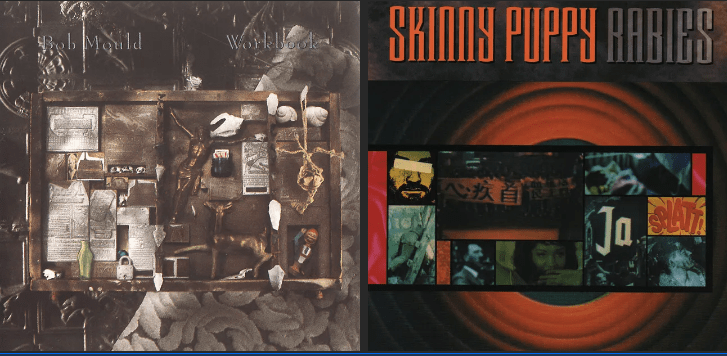
61 The Blue Nile, Hats vs. #68 Soul II Soul, Club Classics Vol. 1

Good morning!

Today we’re taking a look at records from The Blue Nile and Soul II Soul


Note: As many of you know, I recently wrote about a Best Record of 1989 challenge and noted that I’d be occasionally writing some of these up.

I’ve started doing some quick hits of each matchup and posting them directly to the page. Some will be longer, some won’t, and some might just be a handful of sentences. There’ll probably definitely be some typos.

Check ’em out and let me know your thoughts! Chin wags & hot takes welcome! Sharing and restacks are always appreciated.

KA—


In music, there’s a fine line between genuine and schmaltzy. A lot of bands try to stay on the right side of the line, only to get tripped up.

With 1989’s Hats1, Scottish band The Blue Nile does well to navigate that minefield and make it through to the other side. This record plays like an (almost) 40-minute love letter. But what kind, and to whom?

  • To a long-term love?
  • An unrequited one?
  • A love lost?

I never really did figure it out, and to be honest, I’m not sure it matters. However you interpret it, the songs are genuine and evocative. The lyrics are plaintive but don’t make you cringe.

This isn’t music for the party; it’s for the after-after party. For when the crowd’s gone home, and you’re dancing slowly with your tie undone and city lights in the background.

If anything, this album’s strength is delivering you to a very specific idea of a place. In his review of the record, Pitchfork’s Sam Sodomsky wrote:

Their music is patient and understated. Their songs mostly explore the trajectory of relationships, from their glittery beginnings to their plateaus of contentment and their exhausted, haunted finales. Their stories are set in the smoky locales of noir: in ragtown, shantytown, tinseltown. It’s usually raining. To listen passively to the Blue Nile is to ride in a taxi through the city at night as familiar scenes blur outside your window.

Verdict:

Like the fleeting scenes in the songs, the record isn’t too long. Forty minutes is about right, I think. Any more and it would’ve run the risk of becoming too much. Torch songs are a medicine best taken in moderation.

This is a great record for very specific times/places. Giving it a first listen midday in a very busy Ready Room at work was probably not the best decision, but that it was able to take me away to different universe speaks to its strengths.


Junior high dances are an interesting exercise. A fun night out if you’re in the right crowd. A preview of hell if you’re not. The only thing worse than enduring an hour or two of holding up one of the side walls is not going. And so, I found myself walking to one my freshman year (note: our schools were so overcrowded at the time that you did your freshman year at “intermediate school, which is a lovely euphemism for “the bonus year of junior high:). It’s a long walk from where I lived to the school- living on the far edge of the district was another strike against me, but I didn’t want to ride my biker- god forbid I’d roll into the place sweaty or with messed up hair (I never really did figure out how to comb out anyway)

So yeah, basically another day in early teenager hell. Until I saw a $20 on the ground. I don’t have to tell you that this might as well have been $2000. and then I saw another. And another.

Before you knew it, I was running Frogger-style in and out of traffic on Farmington Road, picking up a handful more. Manna from heaven or a windfall from someone else’s carelessness? Who cared? I was rich! I went to the dance, still resigned, but at least stoked to have some cash.

Why am I telling you this? For two reasons. First, “Keep On Moving” was big at the time and I can almost guarantee you it was played as a fast dance song. Had I even a sliver of courage back then, I would’ve been anywhere else besides the sidelines. Maybe in my next lifetime.

Second, I used that money to buy some CDs, one of which was this album.

It’s been a long time since I was in HS and probably almost as long since I played this record. It’s good, and it managed to hold its own against a rising tide of indie and hardcore records that started flooding in quickly as the year went on. As I’m playing it today for this challenge, I’m struck by how sharp it sounds and how gorgeous Caron Wheeler’s voice is. It’s the voice of an angel. That’s a sentence I’d have never written back then, either. God forbid you say anything nice. Had I been asked, I probably would’ve said something like, “She’s cool, I guess.”

I could say the same today about Jazzie B. His style is fine, but this record shines when the spotlight is on Wheeler or the beats. That’s truly where this record excels. The music itself pulls the best elements of dance, R&B, and African rhythms together, aggregating it all and producing something wholly new. It’s a clean sound with fat beats and a lovely sheen over the top. Even at age 36, I could see this playing in an upscale shop or coffeehouse. There’s some filler here, but even that feels like it would be fine in the right element. A clean, well-lit place. With lovely tile floors and some ferns. Probably.

I didn’t know it then, but one of the best things about that school was how it similarly fused all kinds of different elements into one: rich kids, poor kids, every race and demographic you could think of. All brought together because their families had decided to live in proximity to one another. Almost as random as finding a bunch of money on the way to a dance.


Bottom Line: Both of today’s records are fantastic for very specific times/places. Hats would be an absolute bummer to hear midday, and Keep On Movin’ has no place at the after-after party on a dreary fall evening.

My vote: My bracket says “Hats,” but my heart—and vote— say “Soul II Soul.”

Any thoughts on either of these records? Agree/disagree with my takes? Which one of these would you vote for? Sound off in the comments!

Check out the full bracket here.

Info on the tourney, voting, and more is here.

As always, thanks for being here.

KA—
The Best Record of 1989: Day 17

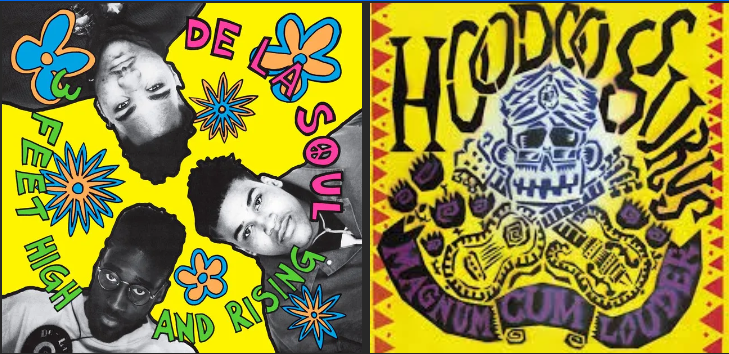
4 The Cure, Disintegration vs. #125 Cher’s Heart of Stone

Good morning!

Today we’re taking a look at records from The Cure and Cher.


Note: As many of you know, I recently wrote about a Best Record of 1989 challenge and noted that I’d be occasionally writing some of these up.

I’ve started doing some quick hits of each matchup and posting them directly to the page. Some will be longer, some won’t, and some might just be a handful of sentences. There’ll probably definitely be some typos.

Check ’em out and let me know your thoughts! Chin wags & hot takes welcome! Sharing and restacks are always appreciated.

KA—


I’ll save everyone some time: Disintegration is one of my Desert Island Discs. Some Cure fans will swear by a record like 17 Seconds. For others The Head on the Door is a hill they’re willing to die on. A chaos agent or two might even throw a vote in for Wild Mood Swings.

Me? It’s this record, and it’s not even close.

Last fall, as

Sam Colt and I wrapped up or top 100 records of all time, I slotted Disintegration in at #4. Nothing has changed in the ensuing months.I’m resharing that blurb in full below:


Do kids these days still go through their “Cure phase?” Growing up, it just seemed like something you were supposed to do, even if you weren’t feeling particularly miserable. There was always a bit of irony there.

Robert Smith was feeling down when recording this began. He felt pressure to follow up on the success Kiss Me Kiss Me Kiss Me had brought, and he was disillusioned with the band’s newfound popularity. He escaped those closing walls by taking a lot of LSD. Disintegration was every bit a group effort, but the result feels like we’re on one of Smith’s trips.

This was Sam’s #38 pick, and he wrote that he “…threw on some headphones and was blown away by how big everything sounded…” I’m not sure when Sam first put this record on, but I can tell you my first impression was almost the same. Even when they wandered a bit, the band’s previous records felt (relatively) compact. This was much more sprawling. Languid in parts, haunting in others. It was—and is—a sonic kaleidoscope, “Plainsong” especially. “Fascination Street” feels like the most on-brand track on the album, and even that sounds like new ground. The title track’s riff is as good as any the band ever recorded. The shattering of a mind never sounded so catchy.

For my part, I described the record as “A masterpiece. Gorgeous, lush music from the elder statesmen of the alternative/goth/whatever world. Reach into the bag and pick whatever superlative you want; they all fit. It was a record so good that one of their best tracks from that era (“2 Late”) was relegated to being a B-side. Kiss Me Kiss Me Kiss Me was one of the first CDs I ever bought. Growing up, I had a poster of Head on the Door in my bedroom. But if the house is on fire, this is the record I’m grabbing.”

In that same issue, I named Marvin Gaye’s What’s Going On my #36 pick, which, according to Sam, was an act of war. It became the yardstick against which every one of my future picks would be compared. I feel the same way with Sam “only” rating this #38. Gaye was looking to heal a splintered world. Smith was looking to heal his splintered mind. Both wound up delivering the best work of their careers.

At any rate, I think it’s pretty clear that we both hold this record in high regard—and rightly so. It remains the band’s magnum opus. Start here if you’re looking for a definitive record by The Cure.

Smith was uncomfortable with the band’s newfound popularity and wound up making one of their most significant records. Disintegration also had a love letter to Smith’s wife (“Lovesong”) that became one of their biggest hits, peaking at #2 on the Billboard Hot 100. That’s some next-level irony.

As for me? I’m pushing 50 and am still in my “Cure phase.”


Do I really l need to talk about Cher? For real? Um, okay…well, let’s see…

“If I Could Turn back Time” is pretty representative of the “big” pop from that era. It was this sort of bombastic, polished sound that launched 1000 grunge bands. Not a bad song per se, but the world was ready for something else, and this was the sort of thing that proved to be an accelerant.

There are 11 other songs on the record. They have things like chords, verses, bridges, and choruses. There’s a lovely duet with Chicago’s Peter Cetera that got a lot of airplay in my mom’s car. K103 probably just set it to autoplay. No one would’ve minded. It’s nice.


Bottom Line: Disintegration is a masterpiece. Heart of Stone is a record that happened to come out the same year.

My vote: In case it wasn’t obvious, my bracket and my vote will both be going to Robert Smith & co.

Any thoughts on either of these records? Agree/disagree with my takes? Which one of these would you vote for? Sound off in the comments!

Check out the full bracket here.

Info on the tourney, voting, and more is here.

As always, thanks for being here.

KA—
A Fantastic Music Project You Should Know About

The ways we discover and create music continue to evolve. Matthew Vanderkwaak’s new project is shining a light on both his own music and other emergent Canadian artists.

Photo: Samuel Landry

It’s 2025, and many of the guardrails and gatekeepers that used to decide what music we consumed are gone. We are no longer bound solely to whatever an A& R rep might decide we like. We can decide for ourselves.

That goes for artists as well. Most of us grew up with the narrative that discovery is either by sheer luck or after getting in the van and burning hard miles down the road. And even if you wanted to make a record, that might prove cost-prohibitive.

While some of that is still true, for the most part, the barriers to entry are lower than they’ve ever been. Today, it’s entirely possible to make a record using your phone and a few other software programs. You can do this without ever leaving your bedroom.

So that’s the good news; if you want to make a record, you can! The not-so-good side effect is that listeners must wade through more and more records before finding you.

Discovery might’ve changed forms, but it still matters.

Enter Matthew Joel Vanderkwaak. Matthew is from Atlantic Canada and is an artist himself. Taking a page from the likes of Fog Chaser, miter and olivia rafferty, he’s creating music in real time, using new pathways, and his readers get to hear it first.

Further, he’s committed to raising the profile of other artists and has a series where he spotlights emerging Canadian musicians, with an emphasis on Canadian folk and country music.

In 2025, algorithms and digital platforms are making a lot of noise. Artists/curators like Matthew Vanderkwaak provide a valuable signal, lighting the way for new listeners.

And with that, I’ll get out of the way and let Matthew share his work.

Enjoy!

KA—

I’m Matthew Joel, an artist from Atlantic Canada on a quest to encounter the spirit of Canadian folk and country music as it lives and breathes in our moment. I’m here today to share about my new project, The New Canadiana—a journalistic series about regular and mostly unknown Canadians who are writing, recording, and releasing music right now.

In the age of algorithmic curation and procedurally generated noise, I think folks are more hungry than ever to make meaningful connections with the human beings who make the music they love. This might be one of the major upshots of ai-generated media—it shows us how precious human-made art really is. More than ever I want to feel I know the people making the music I’m listening to, and more than ever, I’m learning that this kind of relationship requires an almost heroic act of focused attention. That attention, though, leads me into the spirit of art-making that inhabits human life and makes it special.

Last year, I finally finished grad studies and realized I wanted to start recording and releasing music again. It turned out that after 10+ years of desk work, academic writing, and listening to Carrie and Lowell on repeat, a lot had changed in the world of music marketing and promotion. Back in 2010, it was all about selling CD-Rs to my friends, posting on tumblr, and sending out mass emails hoping to strike gold in the blogosphere. I had never distributed music to streaming platforms before. If I did, would anyone hear it? How could I find a community of interested listeners?

Purveyors of music-biz best practice said that I should find out who else was making music like mine and do whatever they did. But who even were these people? Where could I find them? While asking these questions from within the horizons of social media and streaming platforms, I felt lost. The fact was that many of the people I knew making beautiful music had almost no traction on a place like Spotify. But at the same time, as I gathered more and more of this pressingly beautiful music together, I started to see common threads running through these different Canadian cities.

My conviction is that algorithms cannot be trusted to tell the stories of the human beings who make the art most precious to us. It takes human beings to make known what is truly human in our music. Of course, here at On Repeat Records, I’m preaching to the choir. This is how The New Canadiana was born—out of my attempts to practice attending in a more structured and public way to the beautiful human-made art that is all around me.

In this post, I’m distilling what I’ve learned from the year so far: three rules for attending to the music of a place. I’m especially happy to share about these principles, because what I’m seeing in these Canadian cities must be happening everywhere else too. I want to know how you are following rules like these and what you have discovered along the way.

1. Start with music made in the place where you are

In the effort to resist the algorithmic anonymization of music, I think each of us has a special vocation in the places we belong to. The first rule is to begin with the music made by people you know in places you know. Then, follow the threads. Trace the outlines of the scene that you are at the centre of by virtue of the fact that you are the one listening. You are the one who most of all can understand the meaning of the music that arises out of the situation that you also arise out of. And the rest of us need you to help us access to the art you are most equipped to hear.

The spirit of locality is very close to the spirit of music making. Human-made music belongs somewhere, and that place is not primarily an Instagram reel or Youtube video (which are only records of an event). Canada, which is ostensibly the subject of The New Canadiana, is, in truth, much too large a subject.

Instead, I have begun my quest with the actual Canadians I know whose music burns bright in my ears and heart. This first rule is about learning to trust that this feeling shows me the way forward. There’s no one else with my particular experience of this music made by these particular people. This means I have a task—something to attend to.

2. Have meaningful conversations with the music you love

The great threat to music distributed by streaming platforms is that it becomes a mere mechanism to evoke a mood or vibe without ever being allowed to become an end in itself. By contrast, I’m amazed at what I discover when I sit down with a friend and really ask them about their art. I might have assumed that the public nature of an interview would involve too much self-conscious reflexivity to invite meaningful reflection. On the contrary, I find that when I have a conversation that is on record, this imparts a focus and intensity that elevates my awareness of what we are trying to explore together.

As I prepare for interviews, I bring a structured mode of attention to the music that I rarely make time for. As I pay attention, I start to get curious: what makes this music work? What is it saying to me? How can I dialogue with its particular beauty? While conducting these interviews, I feel my conscience prick—why haven’t I asked my friends these questions before? They’ve made this beautiful art, and the meaning of its beauty is at risk of slipping by, unnoticed unless someone stops to recognize what has occurred.

3. Keep a public record of your discoveries

All it takes to dignify a work of art is attention, and the third rule is to give what you have understood in the art a public voice. Let us infiltrate online spaces designed to manipulate and monetize attention with the records of what we have discovered on the ground and in our bodies with other human beings.

Let us keep coming back to places like On Repeat Records to celebrate the beautiful music that has made itself known individually upon each of us as individuals. Keep a record of what you notice—snapshots of live music, reflections on concert experiences, evidence of physical media, listening journals, conversations shared between friends and fellow aspirants. The record of these experiences matters because only a human can access what is human in a work of art.

4. The New Canadiana

I’ve committed in 2025 to make my discoveries public in two ways:

  1. I am interviewing one Canadian songwriter a month. The interviews are an almost anthropological effort to encounter the spirit of this moment in Canadian music. If you’re to new to the series, I encourage you to start with the first one featuring Simon Bridgefoot.
  2. I maintain a playlist that situates these Canadians’ music in the larger context of folk and country music in this country. The playlist privileges songs that have come out in the past five years.
    The playlist lives here:

It all started as a chance to work out where I can locate my own music, and what I’ve discovered instead is that there is a world to which I already belong. Give the interviews a read and the playlist a listen and let me know what you see in them.

How many of you are already applying principles like these in your own practices listening to music? What have been the results?

Kevin here again: Thank you to Matthew for sharing his work, and thank you for being here. Be sure to check out his project and the other fantastic interviews he’s already done!

Leave a comment

From the Archive: Warren Zevon’s ‘Excitable Boy’

Album art courtesy of Asylum Records

Good morning!

Today we’re reaching into the crate and dusting off this classic from Warren Zevon.

Maybe it’s just my timeline, but Warren Zevon seems to be having a moment on here recently. As much as I kvetched about this year’s Rock and Roll Hall of Fame nominees , I was happy to see him get in via their “Musical influence” category. A side door’s still a door, right?

Or, as Brian of 3 Albums 6 Old Guys put it:

As a fan, I’ll put it another way. Recently I visited the Baseball Hall of Fame in Cooperstown, NY. Walking among the plaques, I found Gil Hodges, player with the 1955 World Series champion Brooklyn Dodgers and manager for the 1969 World Series champion New York Mets. Did I think to myself, “yeah, but he made it via the Veterans’ Committee (actually, by that time, the Golden Days Committee)”? Absolutely not. I thought, “that’s right, Gil fucking Hodges, Hall of Famer.”

Zevon encountered some pitfalls along the way—some self-inflicted, many due to the vagaries of pop culture—but there’s no question he deserves a spot in the hall.

For my money, it’s an honor long overdue for the man responsible for writing the best opening line in rock history, and it’s worth taking another look at what I consider his best record.

Last year, Sam Colt and I shared our top 100 albums. Excitable Boy was my #41, and where the words below first appeared.

I still wonder if I shoulda slotted it in higher up the chart.

KA—

The real question isn’t whether or not Warren Zevon is a fantastic songwriter. It’s whether or not he sees himself in the characters he writes about or whether he’s in on the joke. This record is home to his biggest hit, “Werewolves of London,” and one of the greatest songs ever (“Lawyers Guns and Money.”) The former often gets him lumped in with one-hit wonders and on Halloween playlists. Shame, really- did Bobby “Boris” Pickett name-check Trader Vics or have Fleetwood Mac’s rhythm section backing him up on “Monster Mash?” I think not.

The latter is a great example of why so many people keep coming back for more. If you ever want to write a great opening line, write out, “I went home with the waitress/ the way I always do,” and stick it to the side of your computer. Good luck. This is the sort of lyric you could base an entire novel on. Maybe that’s what Carl Hiaasen did.

The title track is field trip through any number of psychoses. “Nighttime in the Switching Yard” is Zevon’s attempt at a bit of funk, and it works well. Turns out he can get down with the best of ‘em. “Accidentally Like a Martyr” closes out the first side. I’ll be damned if I know what that means, but it does well to show his more serious, romantic side. It can’t all be wild adventures and cages with bones.

I mentioned Fleetwood Mac earlier, but the rest of the roster reads like a who’s who of the late ’70s SoCal scene; Linda Ronstadt and Jennifer Warnes sing backup on “Excitable Boy.” JD Souther makes an appearance. Waddy Wachtel is on here, because of course he is. There’s at least one Pocaro brother in the mix.

Zevon would go on to make many records after with various levels of commercial and critical success, but for my money, nothing afterward quite captures the same lightning in a bottle as this album does.

Thanks for being here,

Kevin—

Have any thoughts on this record? Do you own a copy? Where would you place it in his discography? Sound off below!

Happy Sluttering Day to All Who Celebrate!

Jawbreaker- Sluttering (May 4th)

Photo: NorthernExpress.com

Good morning!

Today we’re listening to “Sluttering (May 4th)” by Jawbreaker. Yes May 4th is a day for Star Wars (and Dave Brubeck!) memes, but it is also Sluttering Day— half celebration, half inside joke enjoyed by Jawbreaker fans the world over. Below is the original post from the early days of On Repeat Records. It has since become one of several annual traditions here. Enjoy!

KA—


This isn’t the first I’ve written about Jawbreaker, and it likely won’t be the last. The challenge for me isn’t picking songs by the band I want to share; it’s making sure that I don’t do it every week.

It’s pretty safe to say that everyone has at least one band that completely rearranged your mind the first time their sound met your ears. Jawbreaker is one of those for me, and in fact, I can remember excitedly picking up each of their 1st three records.

But it was also the early-mid 90s, and people were still drawing extremely Talmudic definitions of what constituted “selling out” or not. Jawbreaker happened to sign to DGC and release “Dear You” at exactly the wrong time, and the blowback was swift—and wholly unfair.

If “Sluttering” is the tale of someone being done wrong (it is), Dear You is the story of a band being turned on by its fans (also yes). For years, it was a dividing line amongst a fan base otherwise monolithic in their love for everything the band put out.


I didn’t buy this record right away. In fact, I waited some time before picking up the CD, and even then it was at a pawn shop in one of Portland’s suburbs. What a waste. The record is different from the previous three but no less excellent.

A garbage shot of the start of an amazing show. Photo by me.

In the fallout, the band split up. They reunited for 2017’s Riot Fest, and I consider that show one of the best I’ve ever been to.

And for all the thrashing and wailing about “Dear You?” The setlist had quite a few tracks off the album, and the crowd never missed a beat.


More:

“The word ‘sluttering’ means a kind of drunk muttering,” he added. “I actually defined it once as ‘pontification under duress.’ There was an angry love triangle and then an elaborate revenge plot designed to incur maximum humiliation. It succeeded horribly and I wound up in the hospital in Concord.”

Read the rest of the article here.


Listen:

“Sluttering (May 4th)” by Jawbreaker | Dear You, 1995

Click the record to listen on the platform of your choice:

What’d you think of this one? Are/were you a fan of the band? If so, what side of the line were you on back then?

Leave a comment

From the Archive: The 7 Latest Additions to My Record Collection


AT THE RECORD STORE SERIES

Note: I’m bringing this series back for 2025, and as part of that, dusting this one off from just pver a year ago. I love seeing what people pick up on their crate digging excursions, and assume (hope?) many of you feel the same way.

P.S. The Matty C. show I mention below was fantastic. If he’s comin’ to your town, make a plan to be there!


You know that old joke about garage sales, “Everything you want and nothing you need?” I think it’s similar with records. We don’t know we need something until we see it. Then, we can’t imagine life without it.

You’re not looking for most records when they find you.

I wasn’t looking for a record sale this past weekend, either. I was on the Harmony Bar’s website, making sure I had the right date for 

Matty C’s show this fall when I saw a sale happening. Tomorrow.

Ten minutes earlier, I had no idea it was going to happen. Now, I was making sure I could make it. Funny how that works.

Like the bar, the sale itself was lowkey. One small yard sign out front was the only hint that something was going on. I hadn’t been here in a while, but not much had changed. The door still creaks, as do the floorboards. The paint is the same. It still smells vaguely of beer and fried cheese curds—just as nature intended. This is, after all, the house that Rollo Steele built.

The crates were in the back room, sharing space with the regular bar stuff- it was Saturday in Wisconsin, after all. The Badger game was on TV, with people keeping one eye on the overhead screens and one on the crates. The jukebox was silent (see previous). Right next to us, a lady loudly recounted her impending divorce hearing to sympathetic girlfriends. If things went down as she described, this guy had a really bad Monday. A toddler dropped a record on the floor.

There was also a family eating lunch, oblivious to everything around them. I didn’t eat.


Four vendors had their crates set up in a U-shape. The first of the four had far and away the biggest selection and highest quality stuff. Worth noting that he had a LOT of jazz records. Not my specialty, but this would’ve been a field day for the right person. Everything was priced to move at $5 or 5 for 20 unless otherwise marked.

The dB’s Like This was the first record out of the gate. It’s a classic, and for my money, ‘Love is For Lovers’ is the quintessential pop song. I already own it, but this one was in better shape. It’s also almost impossible to find their music online (which is, I suppose, ultimately a good thing, but that’s a story for another day).

Did I really need a second copy? After spending some time in my pile, I decided I did not.

I also came across a copy of R.E.M.’s ‘Life’s Rich Pageant.’ Some of you may recall my looking for this for a while. Several months ago, I excitedly grabbed a copy at a nearby secondhand store, only to get home and realize it was a different record inside. That’s what I get for not checking. On the plus side, the (now empty) sleeve looks nice on my wall.

This time, I did check, and while in great shape, it didn’t seem worth the $125 sticker price. The show must go on. Quite a few other records spent time in my hands but were put back for one reason or another.

Below is the list that made it out the door with me.


Tom Verlaine- Words From The Front (BSK-3685, 1982)

Verlaine’s solo work is a bit of a blind spot for me. I know Television, and I know his self-titled debut. But after that? Nada. So, this was a low lift risk, and it paid off. I’ve only spun it once so far, but my early impression is that it’s on brand for him and in line with his other work. For those well-versed in all things Verlaine, I’d love to hear your thoughts on where this sits with you.


Romeo Void- Benefactor (ARC 38182, 1982)

The story of Romeo Void can be summed up in three and a half words: What might’ve been.

The band was on a rocket ride to the top, with a unique sound and fantastic frontwoman in Deborah Lyall. They had a hit on their hands with ‘Never Say Never’ and its risque (for 1982) line of ‘I might like you better if we slept together.’ All systems were go. Until they weren’t.

So what happened?

We’ve talked about it here before, but the short version is MTV happened.

Video Killed The Radio Star might’ve been the first video played on MTV, but Romeo Void was a band that would end up living that narrative.

The group had every ingredient for success; critical praise, great storytelling, a dynamic singer, a fantastic sax player in Benjamin Bossi, and an EP produced by Ric Ocasek.

They checked a lot of boxes. So what happened? MTV happened. And unfortunately, that sent labels looking for bands with a certain look. Singer Deborah Iyall didn’t fit that mold, and the band’s label made the decision to stop supporting them. The term ghosting didn’t yet exist, but looking back, it certainly fits.

Today, most people only know this track. A few more will recognize “A Girl In Trouble.” but they were so much more than one-hit wonders—a point again driven home while listening to Benefactor later that afternoon. An incredible new wave record from start to finish.


The Pretenders- Get Close (92-54881, 1986)

Get Close is the fourth outing by the third iteration of the band. And while (to my ear) it lacks some of the grit & spark of the first couple of releases, it’s nonetheless solid. Plus, it has “Don’t Get Me Wrong,” one of my favorites and one many of us contributed as a suggestion for last summer’s crowdsourced wedding playlist.


Nancy Wilson/Cannonball Adderley-S/T (T-1657, 1961)

As noted, there were a ton of jazz records, most of which I flipped right by. Cannonball Adderley always stops me in my tracks. This was no exception.

The hype sticker notes that it’s “41 mins 59 seconds of jazz!” That’s my kinda odd specificity. Couldn’t they squeeze out an extra note to make it an even 42 minutes?


Aztec Camera- Backwards & Forwards 10” EP (1-25285, 1985)

I’m not that big of Aztec Camera or Roddy Frame fan. I love ‘The Crying Scene,’ but that’s pretty much where it begins and ends. The vendor noticed my looking at the album and mentioned that this was the one where they take on Van Halen’s ‘Jump.’

Sold.


O.M.D.- The Pacific Age (SP-5144, 1986)

By 1986, OMD were on their 7th record, The Pacific Age. Produced by Stephen Hague, it bears much of his hallmark style and took the band in a more sophistipop-y direction. It was my on-ramp to the band (thanks, Columbia House!) and is also home to “We Love You,” my favorite track by the group. Critics hated it. So did the band, with Andy McCluskey calling it the band’s ‘musical nadir” and describing it as one that just doesn’t sound like them. I hadn’t heard the whole thing in probably 30 years, but I remember really liking 3-4 tracks and fast-forwarding through everything else. It can’t be that bad, right? For $5, I’m willing to find out.


John Hiatt-Bring The Family, (SP-5158, 1987)

This was in the $1 bin, which is a crime. I could’ve sworn I already had a copy1, but there was no way I was going to let this languish in any defacto cut-out bin. Not on my watch. Any record with ‘Memphis In the Meantime,’ ‘Thing Called Love,’ and ‘Have A Little Faith in Me’2 deserves a forever home. And now this copy has one.


So how about you? Found any good records lately? Have any thoughts on the ones I picked up? Share your thoughts in the comments!

The 5 Latest Additions to My Record Collection

Another “little bit of everything” edition

B-Side records. Photo: Henry Alexander

Here’s to great teachers!

My son has photography as an elective this semester, and his class took a field trip downtown last week.

Remember when we’d get excited to see a teacher roll a TV in on a cart, and it was movie day? You knew you could just relax and kinda mail it in? This is the educator’s equivalent. There are 2–3 stops every school in this town makes, and regardless of what year you go, you usually come away being able to tell the same story- we went to the capital, we took some shots of the lake, etc. Only the clothes change.

Except that’s not what happened this time.

Sure, they touched all the usual bases, but somewhere along the way, she decided they should stop into one of the record stores downtown. This particular shop is small enough that you have to know how to sidle to navigate it, so 25 kids must’ve seemed like…a LOT.

But more than a few kids picked up some records, which was apparently the day’s highlight. My son grabbed a couple of hip-hop records I’d never touch, but I gotta say it was pretty cool to get a text asking if he could grab ’em.

My point in telling you all of this? Two things. First, sometimes even the most rudimentary experiences can wind up being novel.

Second, you never know what you’re gonna find in the crates. I guarantee my kid didn’t wake up that morning knowing he’d come home with two records, but that’s exactly what happened (and some really good pictures too). But that’s half the fun of going crate digging in the first place, right?

You might walk in with a list, but when another LP leaps into your arms? That makes it all worthwhile.

A few days prior, I’d gone on my own field trip to my usual store just a short distance away. I went 0-for-everything as far as my list went but came away with several other records I didn’t know I needed until they told me.

Yo La Tengo- Fade (OLE 944–1, 2013)

Lately, I’ve listened to more & more Yo La Tengo. It’s a deep discography, and few rabbit holes are more fun to jump down.

Part of the appeal is that their music requires attention. I mean, you can have it on in the background — especially a record like The Sounds of the Sounds of Science — but it’s best experienced intentionally. When one does so, the songs reveal something new every time.

I’ve been rotating through the trio of This Stupid WorldPainful (my favorite), and Fade. Yo La Tengo can be alternately cool or confessional. Fade splits the difference. Opener “Ohm” is easily one of the poppiest songs they’ve ever created, and “Paddle Forward” feels vaguely unsettling.

Both are fantastic work.

Cleaners from Venus- Midnight Cleaners (reissue, CT-147, 2012)

If Guided By Voices’ Robert Pollard has a spirit animal, it’s The Cleaners from Venus’ Martin Newell.

I’m convinced, and It’ll only take a track or two from each band for you to buy in as well.

This record is split between an “art side” and a “pop side.” The latter has some of the best infectious lo-fi sounds going.

I’d been looking for this for quite a while before happening on it in the wild. It’s a reissue, but I’m cool with it. That’s for the purists on Discogs & AllMusic to quibble about.

Delaney & Bonnie– Accept No Substitutes (EKS-74039, 1969)

It’s ironic that the first words we hear on this record are, “We’ve got to get ourselves together/take some time and talk it over/we’ve got to get ourselves together/try to understand each other.”

By most accounts, the entire session was a hot mess, with everyone at each other’s throats and no shortage of screaming at one another.

At some point, each musician took their turn storming out of the studio. Dr. John wrote the track “When The Battle Is Over” and came in to teach the band how to play it- he also was kicking heroin at the time and was in full detox mode, sweating and shivering as he forced his way through the track.

Despite all that, something magical happened. Having a backing band that included Leon Russell, Jim Keltner, and Rita Coolidge (among others) surely helped. This record perfectly blends white soul, blues, and a good dose of kicks rocks. It’s raw, and my copy is a little rough around the edges- just like the music itself.

It’s an easy album to get into despite what it took to get it made.

Note: Bonnie & Delaney’s daughter Bekka, was Fleetwood Mac’s singer on Behind The Mask & Time along with her partner guitarist Billy Burnette

George Symonette & his Goombay Sextette, S/T (BR 34, 1961)

I am still on my Caribbean music kick, which fits the bill nicely. We’ve entered the “false spring” stage of winter up here, where it alternates between temps flirting with the ’50s and slush. It’s bleak, and some sunny rhythms go a long way toward making that tolerable.

Sidebar: One of my favorite things about some of these older records is the completely unpretentious nature of the liner notes, or in this case, the back cover:

The Dean of Bahamian Entertainers, Genial George Symonette finds it more convenient to sit sideways while accompanying himself at the piano. He plays and sings because he enjoys doing so and his natural humor and joi de vivre sparkle in his performance.

While formerly catering only to night club patrons George Symonette has now responded to the demands of a wider audience and is a familiar part of the Bay Street scene during the lunch hour as well as in the evening.

He is frequently accompanied by Berkeley “Peanuts” Taylor on Bongos and drums and the two entertainers have appeared together on several television programs, notably Today and Tonight.

The label advertised it as “Strong VG,” and at $4.99, it was a strong bet that I’d like this. And I did.

Pretenders- S/T (SRK0 6083, 1979)

Probably the one record on this list every reader had but me. I don’t know why it took me so long to find a copy of this. There are a bazillion of ’em out there, but somehow I could never find just the right one. Poor condition, too much money; some reason or another always managed to get in the way. Until now.

And what a record! From opener “Precious” to closer Mystery Achievement, there isn’t a skip in the lot.

So how about you? Found any good records lately? Have any thoughts on the ones I picked up? Share your thoughts in the comments!