Good morning! Need an antidote for the algorithms? Looking for a place to share the music you love with like-minded people? You’re in the right spot.
As always, thank you to those who upgraded their subscriptions over the last several days. Your direct support fuels this community and makes a positive impact. Shares and reposts also help!
When you’re ready, joining them is easy. Just click here:
For those of you who are new, we kick off every week by sharing what we’ve been playing.
The playlist below is some of what I’ve had in heavy rotation. This week, we’re starting by heading back in time (and just a little bit south of here) to Rockford Illinois, for a dose of Cheap Trick. Are they Power Pop? Maybe. Do they rock? No doubt. From there we’ve got a deeper cut from JAMC, and a brand new one from
It’s Spooky Szn, so Side 2 kicks off with a trifecta of Fever Ray’s “Shiver,” Water From Your Eyes’ “Nights In Armor,” and something from LA Witch, before ending with fresh tracks from Massage, Joel Cusumano, and Petrov, the Hero.
Broken record alert: I know I’ve said it for several weeks now, but it’s true: 2025 might be is a hot mess, but not when it comes to new music.
Volume 9 | September 2025: Sam & I throw on hoodies and share some perfect records for fall listening.
Good morning!
Today Sam Colt and I are each sharing a few of our favorite fall records…ones that might’ve been overlooked or deserve more time in the spotlight.
Welcome to the ninth installment of our (not so) new series! For those of you who may have missed previous editions, here’s a bit of context:
In this monthly series, Sam Colt and I will each share our picks for artists and/or titles that haven’t received their due. You’ll recognize Sam’s name from our On Repeat and Friends Best of Series, and also our Top 100 of all-time serieslast fall. These posts will adopt the latter’s format; I will make my case for my three picks and my reaction to Sam’s. Sam’s page will do the reverse.
In the inaugural post, we noted that successive editions would narrow things down slightly. Maybe a specific genre…maybe a specific era…maybe a specific…well, who knows!
As many of you know, I live in a college town. It’s a big enough school that the city’s energy ebbs and flows in tune with the academic year. Spring is full of excitement about what’s to come. Summer is for the locals. Winter is… well, I live in the upper Midwest, so winter is usually for hunkering down and trying not to track salt everywhere. And hockey. Always hockey.
That leaves fall. As a card-carrying Gen Xer, it’s in my DNA to snicker at woo-woo things like “vibe shifts,” but there’s a palpable change that happens as soon as the first wave of students returns for the new academic year. The chaos usually kicks off with Hippie Christmas, followed by the steady arrival of new and returning students, and all the familiar events we associate with the collegiate experience: football games, drinks at the Memorial Union, and so on.
There’s a brief window before we lose the daylight and bearable temperatures where the dial turns down from “sweltering” to “this is kinda nice.” The dress code might call for a parka in the morning and a t-shirt in the afternoon. It’s a heady time for the shorts-and-hoodie crowd (of which I am also a card-carrying member). That’s the sweet spot we’re traveling to today.
This month, Sam and I are sharing a few fall records that for whatever reason might’ve been overlooked.
When you’re done here, remember to check out Sam’s take at This Is a Newsletter!
Let’s get to it!
KA—
Brothertiger- Fundamentals III
You have to dig deep to find a silver lining in the COVID lockdown, but if you’re struggling to come up with an example, I offer you Brothertiger’s Fundamentals series. Like many musicians, John Jagos was forced to stop public performances in 2020, but that didn’t mean he stopped performing. Jagos had previously made an album of Tears for Fears covers and later released a self-titled album that was one of my favorites of 2022. But in between, the pandemic forced him into pivoting to livestreams.
Each of these instrumental records was born and evolved in real time during those livestreams, while fans offered feedback to help shape them. There are four in total, but Vol. III is far and away my favorite, with Westerlies being a highlight. It’s a track a friend of the newsletter
Kiley Larsen once described as “the one with that never-ending Bruce Hornsby piano riff.” He’s right. And it’s awesome.
Likewise, the shimmering pianos of Pelée and the expansive quality of closing track Gran Canaria wrap the album in light—something I find myself desperately clinging to as the days grow increasingly shorter.
Each of the records is loosely built around an element, but I also think there’s an unintentional(?) emotional arc across the series. I might be reading too much into it, but for me Vol. I is moody and uncertain. Vol. II, even more so. In contrast, Vol. III feels like a release. It’s much more buoyant and joyful than the two that came before it.
Whenever I’m stuck writing a piece, I like to look out the window. In my field of vision is a tree that seems to operate on its own schedule. It’s the first to turn bright red while the others around it are still enamored with their lush green colors. It just does its own thing—looking forward to whatever’s coming next and ignoring everything else around it. That tree reminds me of this record, and vice versa.
Sam’s pick and my take: Cleo Sol- Rose in the Dark
The first thing I should tell you is that in my early research, I came across Cleo Sol’s name in a forum thread where someone described her music as “Erykah Badu meets Sade.” That got my attention. The second was that I was shocked to pull up this record on Spotify and see that she has over 3 million monthly listens. Another case of my being late to the party, I guess.
And that count makes more sense when you learn that Sol is a part of SAULT, but this records stand firmly on its own. Rose in the Dark may not carry the experimental edge of her group projects, but it thrives in its own constraints. The mood here is chilled out, and the sound is stripped down. IMO, that subtlety is a strength. Her singing is poised, and she‘s not overselling the emotion. The production mirrors that approach: pared back, easygoing, and full of nods to 1970s soul. You hear it in instruments like flutes and synths. It all makes for an unhurried groove and a pretty neo-soul record. I can see listening to this on a frosty Sunday morning or pairing it with a nice cozy dinner at home.
R.E.M.- Green
Okay, hear me out. I know this series is all about underrated records—or albums that might’ve flown under your radar. Green is not that. I’m also aware of the irony in choosing a record titled Green for a series on fall records. But perhaps more than any other here, this reminds me of autumn. That’s influenced in large part by the fact that I first heard this at the beginning of the school year. I was also lucky enough to see them in concert while they were on the road supporting this record. That show was in… October.
I’m the kind of listener who is long on association. There’s simply no way my brain can be rewired to tie this to the dog days of summer. Not to oversell it, but I really only listen to it in the fall and winter. By contrast, I regard Out of Time as a “summer record.” Even the pop brilliance of Pop Song ’89 takes me right back to those gray, rainy days and claustrophobic halls of junior high, where headphones were as much about body armor as they were about listening to music.
With its mandolin, You Are the Everything just feels like a fall evening.
Another (possible) hot take: Get Up is fantastic. I know it sets some listeners’ hair on fire, and the lyrics are… okay. But that rhythm? I’ll take all of that, you got! Turn You Inside Out is my vote for “R.E.M. song that should’ve been bigger.” It’s one fans know & love, but not a whole lot of casual listeners are familiar with. If that’s you, please check it out ASAP. The closest analog I can think of (it’s still early) is Push by The Cure.
Michael Stipe would spend a lot of the late ’80s and early ’90s in the political arena, and World Leader Pretend is one of the first times he writes an overtly political track—or at least one that unveils some of his political leanings. And hey, we have elections in the fall, right?
Orange Crush is about Agent Orange, which was used in Vietnam—a war we just happened to learn about in the fall of that same school year. It was all very timely, you see.
My on-ramp to the band was a 1-2 punch of Green and Eponymous. Some people say that it’s the band’s first bad record, but I’d argue the other way. I think it holds up well (yes, even Stand). I rate Green—and even Eponymous—higher than someone who came to the band earlier might. That raises some hackles every time it comes up, but I stand by it. I might be convinced to listen to this in the dog days of summer, but I’ll never be convinced that this is a poor studio outing for the group.
Sam’s pick and my take: Julia Holter- Have You In My Wilderness
Julia Holter’s fourth studio album is packaged with a distinctly sunlit, atmospheric sound, drawing clear inspiration from 1970s SoCal. The production evokes early mornings when the marine layer hasn’t quite yet lifted. It’s a backdrop well-suited to Holter’s strengths: carefully crafted songwriting and a precise sense of arrangement.
One of the record’s more striking qualities is its accessibility. Melodies are open and inviting, and the sounds are layered without ever feeling dense.
If there’s a fault here, it’s that, for as sunny and accessible as this record is, Holter occasionally overindexes on the ethereal. It’s almost as if that same marine layer will obscure her completely. That said, the storytelling is nothing if not vivid. Who else is going to work the line “sharp and high on the Balearic Promontory” into a song? A song about being seduced and then left to die on an island, by the way.
Like those early, misty mornings, this can be hard to get on the first listen, but once that burns off and the sky is clear and a million, you’re in for a treat.
Cleaners From Venus- Midnight Cleaners
This is lo-fi before any of us knew what lo-fi meant. Originally only available on tape, it was later reissued on CD and vinyl. I have a copy of the latter, and while it’s remastered and sounds great, many of the rougher qualities are still there—I hope that was by design, because in my opinion it’s a feature, not a bug.
Midnight Cleaners is at its strongest on more structured songs, like the fantastic “Only a Shadow.” The guitar is particularly sweet, and it’s something that wouldn’t be out of place on your favorite Smiths record. “Only a Shadow” also stands out because it uses real drums. I doubt anyone involved would have labeled this “lo-fi” at the time, but looking at it now, it’s tough to define it any other way. There are lots of easy GBV comparisons to make, though I can’t see Robert Pollard throwing a big block of sax on one of his records. What I can picture is this album being made in a drafty upstairs room or attic or a crisp fall evening. That aesthetic permeates the record. It too is a feature, not a bug.
Cassette recordings were never exactly high fidelity, and more than anything else, this feels like an album purpose-built for tape.
Sam’s pick and my take: Grouper-Dragging a Dead Deer Up a Hill
Ok, so my brain is clearly cooked from being terminally online, but this title had me thinking I was about to get into some sort of Swedish death metal. The closest this comes to connecting those dots is my saying that at first blush this feels like a witchy version of Cocteau Twins (not derogatory). Dragging is a record-long trip into dream pop and delicate vocals. Things get a bit gauzy, but never tip over into being too obscured to listen to. In other words, right up my alley. As for a fall record, the sounds certainly evoke this time of year, and a bunch of titles reference things like water and sleep, which aren’t exactly reminiscent of, say, July.
That’s a wrap! What are your thoughts on these records? Do you own any of them? Share your thoughts in the comments! Rants, raves, and spicy takes are all welcome. And if you have any ideas on future themes, please share those as well! Don’t forget to check out Sam’s thoughts over at This Is a Newsletter!
Good morning! Need an antidote for the algorithms? Looking for a place to share the music you love with like-minded people? You’re in the right spot.
As always, thank you to those who upgraded their subscriptions this past week. Your direct support fuels this community and makes a positive impact. Shares and reposts also help! Thank you!
When you’re ready, joining them is easy. Just click here:
For those of you who are new, we kick off every week by sharing what we’ve been playing.
The playlist below is some of what I’ve had in heavy rotation. This week, we again overindex new tracks, with a couple of old faves balancing things out. We start with community fave Water From Your Eyes before kicking into high gear with a 1-2 punch of Bob Mould & Die Spitz. From there, we’ve got the latest from our friend,
The Ririverse, and we end Side 1 with the latest from a longtime DC area band.
Side two kicks off with a track from a record I once deemed the #4 record of all time, before taking a trip to Pittsburgh to hear some Gaadge. I’m not on Threads anymore, but before I left, I was lucky to meet a couple of you and find Palm Ghosts. Their latest is here. Here’s to silver linings.
I know I keep saying it, but it’s true: 2025 might be a hot mess, but not when it comes to new music.
Note: Last night I had the pleasure of seeing Garrett Graff speak. Graff is the author of several books, including The Only Plane in the Sky, a harrowing recount of 9/11 as told by those who were there. Below is mine. I originally wrote this to mark the 20th anniversary of that day. I’d like to think my writing style has changed a bit in the years since. My feelings about 9/11 have not. Thanks for letting me share this. We’ll be back to our regularly scheduled programming tomorrow.
September 11th was the day the evil came to the United States. It was the day that evil came to most people’s lives.
They didn’t think it existed. They came and it exists. And it was in our backyard.
~Mary Galligan, former head of FBI’s PENTTBOM team
It’s hard to believe that over 20 years have passed since that day. The actual events were over fairly quickly-just a few hours, really. But 9/11 was an inflection point for this country, and in a lot of ways it still hasn’t ended.
Aviation today is almost unrecognizable — if you’re old enough that 9/11 was a lived event, you’re old enough to remember not having to take off your shoes, and having friends meet you at the gate.
Another good way to “tell someone your age without telling them your age” is to have a plane fly overhead at low altitude. Anyone who was around that day will still reflexively look up.
Memories can be quirky. Quiz me about last week, and I’d be hard-pressed to answer. Ask me about 9/11, and I can tell you almost anything with amazing clarity. Not just the obvious parts, but much smaller details:
What the weather was like.
The sounds (or lack thereof).
How calm my commute to the airport was — I followed a white car over the Glenn Jackson bridge.
Snippets of conversations.
The tinny voice coming out of the AM dial in my work truck as I “guarded” grounded aircraft.
I’ve tried to write this story multiple times — the funny thing about 9/11 is that everyone wants to share “their” story — but I keep getting tripped up. It’s hard to do justice to something so profound, yet something we each experienced in our own unique way.
I hope that sentence reads better than I think it does.
The aviation community is extremely fraternal. Maybe second only to law enforcement. Everyone “knows a guy” at this carrier or that station. It may not have been our our paint on those 4 planes, but in an abstract way it still us, you know?
I was that kid who used to look up and stare at planes flying overhead. In a lot of ways, I still am. To realize that these machines had been turned into weapons of mass destruction was devastating. To wonder what those last minutes were like is more than I can bear.
Flights departing the East Coast were already in the air when the FAA decided to ground all air traffic. Those flights were diverted to the nearest available concrete. Flights inbound from Asia and Europe overwhelmed Canadian airports on both ends of the country.
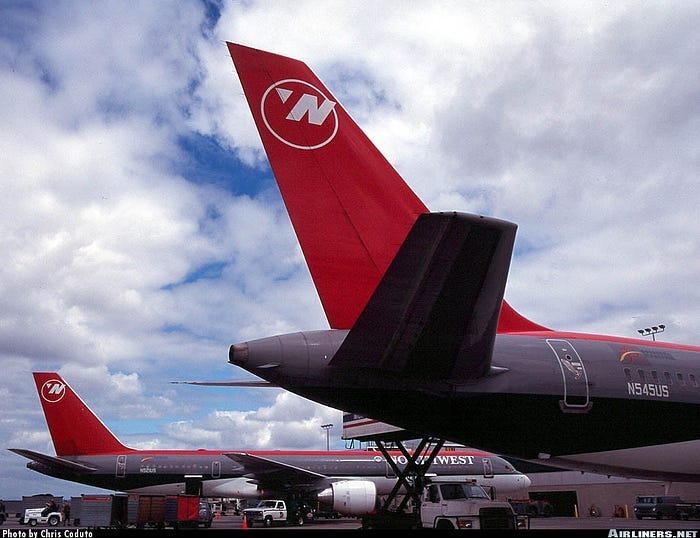
Where I spent 9/11/2001. Photo: Airliners.Net/Chris Coduto
Flights on the West Coast, where I was, had for the most part never left. Gates are usually full overnight, but rarely at midday. Yet there all the planes were, still tucked in from the night before.
The airport looked as if it had just overslept.
We had five planes on the ground. I was initially tasked with “guarding” one. Against what, I didn’t know. I also wasn’t armed or trained — before 9/11, the protocol was to accommodate a suspect’s demands as best you could — so I spent most of the day sitting on the hood of our station’s truck, smoking and listening to the radio. What else was I gonna do? I’ve since come to think this assignment was borne more out of a need to feel like we were doing something than anything else.
The people I worked with did not do helpless well.
As the afternoon moved into evening, we decided that playing sentry was pointless and regrouped to watch TV in our break room. We had a TV strapped to a cart like schools used to. Reception was dodgy, and developments came sporadically.
Meanwhile, our teletype printer never stopped. Looking back, I wish I would’ve saved some of those messages, but the paper fades after a few years, so it wouldn’t have done much good. Everything is ephemeral.
And everything with 9/11 is like a paradox. Recounting the day can be paralytic, and yet the words flow easily. I never really talk that much about 9/11, yet find myself writing too much, going off in every direction lest I dishonor the story by leaving some small part out.
The beautiful weather didn’t match the hellish events.
Airports were quiet.
Traffic calm.
Being high on adrenaline and drained all at once.
A few weeks ago, my state’s newspaper called for submissions. Readers were asked to send in their memories. Posts were to be capped at 250 words. At first, those guardrails seemed like a constraint. In the end, they were freeing.
I did what I could. I think I managed okay. The words below are my submission. This is my story.
I work for an airline. In 2001, I was a new crew chief working the night shift in Portland, Oregon. I was sleeping when our phone started ringing off the hook. Our friends back east were already seeing the horror show unfold. They woke us up just in time to watch the second plane hit, and our lives forever changed.
I was called into work early that day to “guard” our planes; an absurd request, given that none of us were armed, and our training at the time was to accommodate the demands of any threat (much like the flight crews on that day). All of that would change shortly.
In the meantime, I spent most of Tuesday, September 11th, 2001, sitting on the hood of our station’s 20-year-old truck listening to ABC News on AM radio.
People will tell you that it was beautiful that day, and it was. It was sunny in NYC and clear and a million on the West Coast. It was quiet, too; no noise on an airfield is both rare and disconcerting.
Late that night, we were still glued to our break room TV. The graveyard supervisor came in and wondered why we weren’t working. He’d left his previous shift in an ordinary world, slept all day, and returned that night to one that was now unrecognizable to any of us.
One guy wordlessly pointed at the TV. He took a seat and watched with us all.
Wherever the day finds you, I hope the weather is as beautiful as it was that Tuesday morning in 2001.
And please spare a second for the flight crews who fought so valiantly for us before we knew anything was wrong.
We’ve got a great host and a killer record, all set to go. All we need now is you! Here’s how to join the fun.
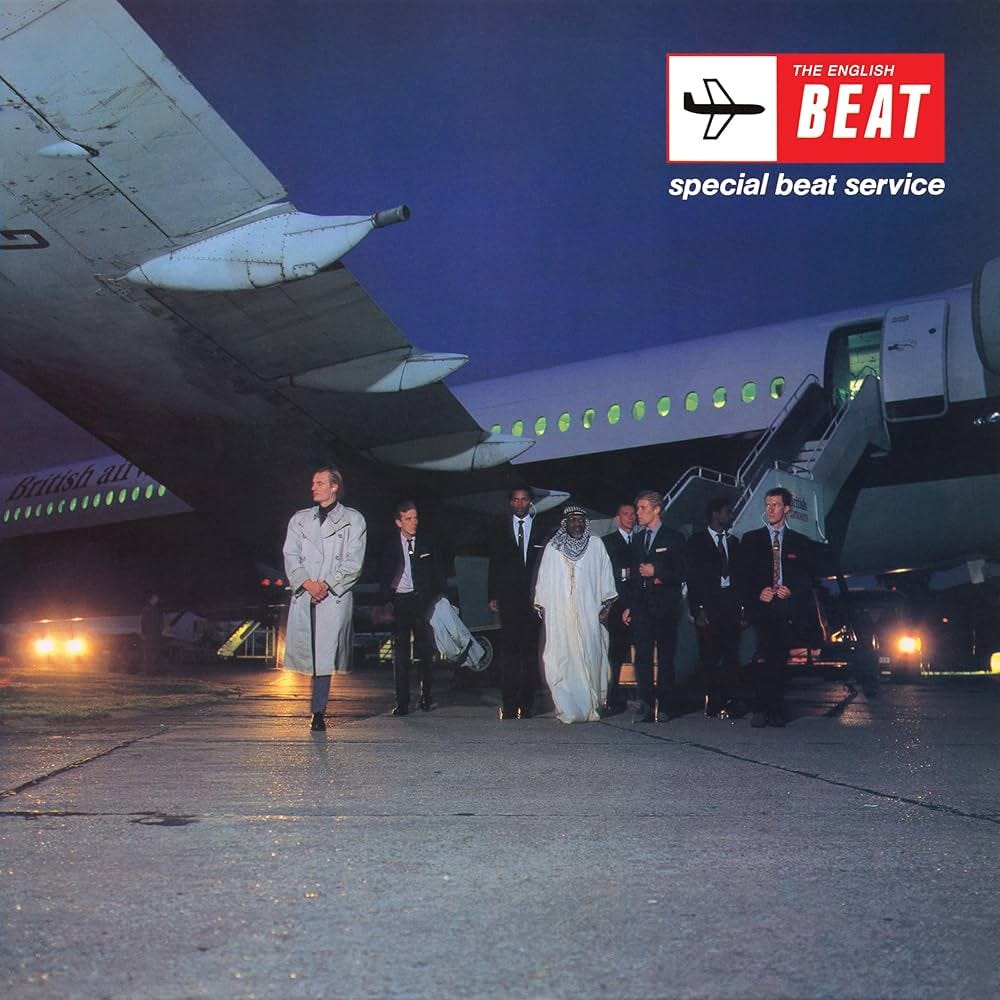
Cover art courtesy of IRS Records
Good Morning!
Today we’re talking about The English Beat’s Special beat Service, and well, how you can talk about the band with other like minded people.
Note: As some of you know, I’m one of the editors for an online music publication called The Riff. Each month, we host an album discussion (via Zoom), which is coming up on Sunday.
To be clear, all credit goes to Terry Barr and Scott Fountain, who facilitate the meetings, and Jessica Lee McMillan, this month’s host. These three are doing the heavy lifting.
As you’ll see below, these are low-key affairs; all are welcome! If you want to share some thoughts, that’s awesome. Wanna just sit back & listen? That’s cool, too.
Either way, it’d be better with you there.
KA—
It’s that time again; it’s time for our monthly album discussion!
One of our core tenets is sharing music. That obviously involves writing about it, but also talking about it together. We do that monthly here.
This Sunday, August 24th, is that day.
Below is my boilerplate explanation of these discussions and the value you’ll get from joining us. Under that are both the record being discussed and the meeting login details.
Don’t know the record? Doesn’t matter.
Not comfortable speaking in public? Me either. And you don’t have to if you don’t want to. Heck, you don’t even have to turn your camera on. It’s a safe space, but you control what you share.
Ultimately, you’re part of the community; we want you to be a part of this, too.
So check out the “rules” below, and then plan to dial in.
What is this?
For new readers (hi everyone!), we host an online discussion every month.
Here’s how it works:
A writer (more on that in a second) picks a record to discuss and writes a brief piece about their choice and the meeting details.
At the meeting, they discuss why they picked it, offer a bit of a backstory/context, and whatever else they’d like to share.
Everyone else on the call can share their own “hot take,” related story, or anything else you think is relevant.
At the end of the meeting, the next month’s writer volunteers (or is chosen), and the process repeats itself.
NOTE FOR INTROVERTS: If you’d prefer to sit in and listen, that is 110% okay. Keep your video off…stay muted…it’s up to you. It’s a safe place; you can participate as much/as little as you’d like.
This month’s host:
This month’s host is Jessica Lee McMillan, a poet, writer, and teacher based in Vancouver, B.C. Her work has been featured in dozens of publications. You can see more of her writing here or on her website.
Cool! So, what are we talking about?
Jessica has chosen ‘Special Beat Service’ by The English Beat..
I am still grateful for the third wave, which brought The Specials back into rotation at clubs. I was only a few years old when the Beat emerged, and I had records and cassettes of General Public and Fine Young Cannibals. But I have to thank that third wave for making its way into the goth community here in Vancouver, where — of all places — I first learned to skank to Madness in my late teens.
Musical influences can travel anywhere — like language — and while we want to respect its origins, genre — like language — is a living thing that evolves and migrates.
Special Beat Service is the album you intentionally pull out several times a year. It is a rock. It is a place to return.
That’s why I have chosen it for the album of the month.
Musical adventure, exploring new sounds, and sharing great music with great people make these discussions a joy.
Join us and see for yourself.
Listen:
The Beat | Special Beat Service (1982)
(Click the record to listen on your platform of choice)
From the archive: A quick look at Pere Ubu’s groundbreaking Cloudland album.
Good Morning!
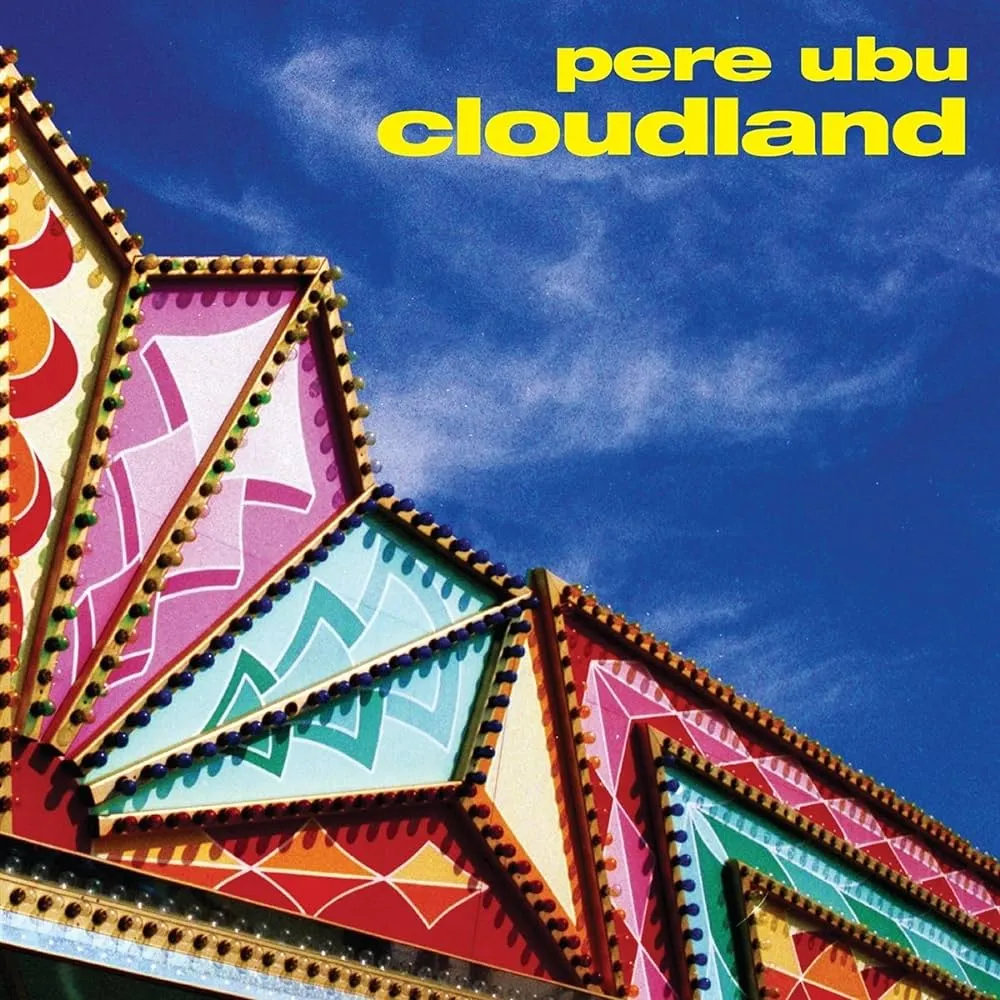
Today as Round 1 of the Best Record of 1989 tourney wraps up, we’re taking a quick look at Pere Ubu’s Cloudland. This was originally published in May of last year to mark the record turning 35.
Most record collectors have a holy grail: the one record they hope to find above all others. For years, mine was Pere Ubu’s 1989 album, Cloudland.
I’d first found the record not too long after it came out. In the late 80s, CDs were still a novelty, but someone at our city library decided to go “all in” on them (thank you, whoever you are). It was delightfully eclectic as a place trying to be something for everyone. You truly never knew what you might find and rarely came out with exactly what you’d gone in looking for.
They’d put a lot of effort into procuring them but not nearly as much into keeping them organized, settling instead for a brittle system of roughly sorting by genre and hoping for the best. It was all a wonderful mess purpose-built for happy accidents.
One of those collisions was my onramp to the band.
📻📻📻
I would ride my bike there (Haro freestyle, thankyouverymuch) and spend hours flipping through the titles, picking not just names I knew but ones that looked, well, interesting. I’m sure there was an official limit on how many titles you could have checked out at once, but I usually defaulted to about 7-8, as that’s how many could fit in those heavy-duty plastic bags they gave you.
It was always easy to check this CD out. As much as I’d like to frame myself as some sort of tastemaker or just ahead of my time, the reality was that word traveled slowly from Cleveland. And the people who may have known them from work like “30 Seconds Over Tokyo” or their Dub Housing record were probably not hanging out in suburban Portland libraries.
This record has proven hard to find in subsequent years for a bunch of reasons. If I’m honest, had I known how many years I’d ultimately spend looking for this record, I might’ve just kept it, said I lost it and paid the fine. Nevertheless…
📻📻📻
It’s reductive to call the band avant-garde, but the band has done more to define the genre than most. Their sound combined elements of kraut rock, art, flurries of guitar, and frontman Dave Thomas’ odd yelps and yowls. Thomas’s vocals also ricochet between spoken word, a warbling, and actual singing, and the result is a mix of what we recognize as the structure of normal songs and wild sonic field trips. Along the way, Pere Ubu has created a sound that is often dissonant but always original.
You don’t listen to a Pere Ubu record; you experience it.
In 1987, after a several-year hiatus, the band reformed with what would be one of a bazillion lineup iterations and released The Tenement Year—a record with one foot firmly in the traditional realm of the band’s anarchic sound and the other edging toward a more palatable—if not quite radio-friendly—world.
If The Tenement Year represented dipping a toe into the world of Pop, Cloudland was a cannonball into the deep end of the pool. Stephen Hague (Pet Shop Boys, New Order, among others) was behind the boards and took everything the band had done to that point and proudly ignored it. Gone were the usual weapons-grade chaos, tangents, and noise. Instead, he helped corral the band’s usual wanderings into something much more cohesive and melodious. Experimentation was out, and flirting with formulas was in.
In other words, Hague helped Pere Ubu make something no one saw coming—a bona fide pop record.
📻📻📻
There are plenty of high water marks here. Through any other lens, “Race the Sun” and “Ice Cream Truck” would be boilerplate tracks, but Pere Ubu is nothing if not subversive, and the band puts their own odd magical touch on them almost in spite of themselves.
“Waiting For Mary” is the closest they’ve come yet to a hit, cracking the Modern Rock Tracks top 10. “Bus Called Happiness” is arguably the most pop song the band has ever—or will ever—create. It’s also this writer’s favorite and drove much of the multi-year quest to hunt this record down.
That’s not to say Hague finished the job. If Side A is as radio-friendly as it gets (certainly college radio, anyway), Side B assures fans that not all has been forgotten. There are plenty of odd loops and experimentation here on tracks like “Nevada” and “Monday Night,” maintaining a line to the rest of the band’s catalog.
📻📻📻
I wasn’t looking for Cloudland when I walked into my local record shop a couple of years ago—in fact, I rarely know what I’m looking for when I go in. And even when I do, I usually either toss that list, come up with something totally different, or both.
But the universe has a funny way of gifting you things when you least expect them. In much the same accidental way I came across their CD all those many years ago, I came across a vinyl copy, misfiled under the wrong letter.
Again, Pere Ubu can be an acquired taste. A friend and I saw them open for Pixies not too long after this came out. Going in, I’d bet we were 2 of only a handful of people eager to see them. Post-show, I doubt that number went up much. Their records can be hard to find, and even if/when you do, they are often inaccessible and occasionally unlistenable. The release was out of print forever, and a reissue appears to be missing a couple of tracks—even trying to find listening links for this article has proven to be a challenge.
But when they’re on, they’re on, and with Cloudland, Pere Ubu made a masterpiece.
📻📻📻
What are your thoughts on this record? Do you have any favorite tracks or memories associated with it? Where does it land on your list of Pere Ubu albums? Share your thoughts in the comments!
Thanks for being here,
Kevin—
Some light housekeeping:
Save the date! The date for this month’s Album of the Month Discussion will be on Sunday, the 24th, at 4 PM Eastern. This month’s discussion will be led by Vancouver-based Jessica Lee McMillan, whose previous presentation on Stereolab’s Dots and Loops was one for the ages. This time around, we’ll discuss Special Beat Service by The English Beat. These are always fun, but will be better with you there! Meeting Details:When: Sunday 24 Aug 2025 ⋅ 4pm — 6pm EST Zoom Meeting Link:. https://presby-edu.zoom.us/j/85339128617?pwd=MDfb510FCFXCayaFPNtatnLiUdEsey.1&jst=2
The Best Record of 1989, Day 61: #11 Fugazi, 13 Songs vs. #118 Paul McCartney, Flowers in the Dirt.
Good morning!
Today we’re taking a quick look at records from Fugazi and Paul McCartney
Note: As many of you know, I recently wrote about a Best Record of 1989 challenge and noted that I’d occasionally write some of these up.
I’ve started doing some quick hits of each matchup and posting them directly to the page. Some will be longer, some won’t, and some might just be a handful of sentences. There’ll probably definitely be some typos.
Check ’em out and let me know your thoughts! Chin wags & hot takes welcome! Sharing and restacks are always appreciated.
Note: Today’s piece on Fugazi draws heavily from this one I wrote as part of our Top 100 Records series from last year. That article specifically discussed the Repeater LP, but if anything, my feeling for the band itself has only grown in the months since.
KA—
Fugazi, 13 Songs
Some records change your life, but rarely does a band come along that changes the way you live. Fugazi did both. In an era when selling out was still a four-letter word, the band did what they did best: they lived their lives on their terms. They could make a compelling case for why you should be on their team, but if you weren’t, that was okay, too. It was a big tent, and their live-and-let-live mindset was a far cry from the straight-edge kids who had teased those threads to their extreme and spent shows looking for drinks to knock out of people’s hands.
Speaking of those shows, the band capped admission at $5 and insisted they be all-ages. I imagine that eventually paid off in the form of increased record sales, but they left a lot of money on the table then. Same with shying away from selling merch and staying on their homegrown Dischord label. Respect and street cred are all well and good, but they don’t pay the rent. But here’s the thing: that DIY ethic wasn’t just a gimmick for Fugazi; it was everything. When one of your songs has a chorus that screams, “You are not what you own,” selling t-shirts becomes a little tricky.
The band held themselves to a high ethical standard, and none of it would’ve mattered if the music wasn’t any good.
But about that record…
Before the postcards from Pedantry Place start filling my mailbox, yes, I know 13 Songs is technically the combo of Fugazi’s self-titled and Margin Walker EPs. So does almost everyone else reading this. You should also know that Margin Walker itself barely missed the cut to be in the tourney. A tourney that somehow has Godflesh and Cardiacs. In other words, I’m just happy this one’s here. No Fugazi would’ve been a real injustice.
At any rate, the short version is this: before they’d even released an LP proper (the incredible Repeater), they had already made a statement record (or two, really) that were then combined to make this, kicking off a decade-plus run of statement records and declarative statements.
If you know nothing else about this band, you likely know the bassline/intro to “Waiting Room.” By this point, it’s been in everything from viral clips of kids covering it at bandcamp to Metallica briefly playing it on stage during one of the “jamming” sessions they do at every show.
The record is also home to “Bulldog Front” and “Promises,” both blistering, both taking aim at something and taking no prisoners. Perhaps more than anything, Fugzai is best at demolishing someone or something (shitty friends, sexism, rampant consumerism), and doing it to one of the funkiest beats to NOT come from an 808.
It’s also worth mentioning that, as iconic as the “Waiting Room” bass line is, it’s not the only one of note here; “Bad Mouth” is another one. The chunky riffs on Margin Walker are infectious.
Who else but this band could get us to sing along to lines like:
Untraceable, untranslatable I can’t explain all I ever wanted to do Trajectory passing right through me Threads my needle sends it right to you.
They can be preachy, sure, but it’s all for a good cause, and all set to a great sound. The music is softer than that of predecessor bands like Rites of Spring and Minor Threat, but if anything, the message is stronger. And it’s important to note that none of these records were promoted as usual- no merch, no guest hosting on 120 Minutes, etc. The entire thing was built on word of mouth, flyers on telephone poles, and blistering shows for the unheard of (even then) price of $5. This felt subversive in 1989. In 2025, it feels downright revolutionary. And in a lot of ways, it was.
On paper, Fugazi is still a band. In reality, they’ve been on hiatus for over twenty years now. Occasionally, a rumor pops up that they’ve again left money on the table by refusing to reunite to play a festival. Sometimes, there are even whispers that they’re getting back together. But nothing has come of it yet, and most of it is just white noise and/or wishful thinking.
Again, I’m going off memory, but I also recall the shows being played with just regular lights. Other than them coming up and going down, nothing changed throughout the setlist- no color, no nothing. The spotlight was on the music itself. Fugazi wouldn’t have had it any other way.
Paul McCartney, Flowers in the Dirt
My grandmother liked to go to the movies, and we had an informal deal; sometimes I got to pick, and sometimes she did. That s how we ended up seeing Breakin’2 in the theaters, but also how we wound up enduring “Give My Regards to Broadstreet,” whose soundtrack was, well, not well regarded. It gave us one “okay” hit (“No More Lonely Nights” and the rest of the film is probably best left forgotten. This is a long way of saying that the 80s were not McCartney’s best era.
Like a kid doing a great final project to salvage a grade after a term of sleeping through class, Flowers in the Dirt was a good—not great—record to end the decade. I don’t know if I’d consider it a comeback per se, but it’s close enough.
The most notable thing here is the collaboration with Elvis Costello. The two worked side by side in the studio, with some tracks ending up here and some going to Costello’s records (including “Veronica”). This pairing works better than I would ‘ve thought. I get that both are from Liverpool, travel in similar musical circles, etc. I guess I didn’t expect them to click the way they did. To me, Costello has always had just the right amount of cynicism, while McCartney has seemed sunny to a fault (I realize this doesn’t necessarily reflect reality, only my interpretations of their respective catalogs). In 2017, the record was re-released as a ‘special edition,’ and those bonus tracks/demos/outtakes are even better than the original. That doesn’t happen too often.
My vote: Shame that McCartney is up against one of my favorite records of all time here. Flowers in the Dirt was far more enjoyable than I’d expected—enough so that I did a quick search to see if any copies were “priced to move” on Discogs. The winner here also (I think?) will have a relatively easy next match, facing either The Pogues or Nomeansno in Round 2. That said, there are countless people whose lives were changed by The Beatles. Fugazi changed mine, and that’s who’ll be getting my vote today.
Any thoughts on either of these records? Agree/disagree with my takes? Which one of these would you vote for? Sound off in the comments!
The Best Record of 1989, Day 59: #27 Fine Young Cannibals, The Raw and the Cooked vs. #102 Godflesh, Streetcleaner
Good morning!
Today we’re taking a quick look at records from Fine Young Cannibals and Godflesh
Note: As many of you know, I recently wrote about a Best Record of 1989 challenge and noted that I’d occasionally write some of these up.
I’ve started doing some quick hits of each matchup and posting them directly to the page. Some will be longer, some won’t, and some might just be a handful of sentences. There’ll probably definitely be some typos.
Check ’em out and let me know your thoughts! Chin wags & hot takes welcome! Sharing and restacks are always appreciated.
KA—
Fine Young Cannibals, The Raw and the Cooked
Going into this review, my biggest question was, “Is it any good?” I knew the ubiquitous “She Drives Me Crazy” and “Good Thing.” I also vaguely remembered “I’m Not Satisfied” and “Baby Don’t Look Back” and vaguely recalled liking them.
My biggest question afterward was, How do you classify this record? And why had I not bothered with it all these years? Okay, that’s two questions, but both fair ones. Honestly, I have zero idea how to classify this album. There’s ska, Motown-era influence, a Buzzcocks cover, and everything in between.
FWIW, that cover was featured in the movie Something Wild, and a few other tracks were featured in other films. Even the band name was taken from a movie title.
Fine Young Cannibals — which included former members of The Beat, Andy Cox and David Steele, and vocalist Roland Gift — weren’t exactly straight out of central casting when it came to hit makers, but here we are. Steele and Cox had already cracked the chart code before with tracks like “Mirror in the Bathroom” and “Save It for Later,” but it turns out what would be their biggest hit almost didn’t happen.
The Cannibals—Roland, Andy and David—sent me songs through email for a few weeks and we decided on a list.”
One song was titled “She’s My Baby,” which David Z loved. The band, however, appeared less than enthused: “When they said it was rubbish and they wanted to throw it away, I told them I wouldn’t want to work with them unless we did that song,” Z said, “They reworked the lyrics and came up with ‘She Drives Me Crazy.’ Everyone I know could feel that way—and has.”
Lucky for us, it was released. With that sharp snare hit, a stripped-down arrangement, and Roland Gift’s now-iconic falsetto, we got the sort of right song at the right time that comes along about every 10 years or so.
The much more straightforward “Don’t Look Back” peaked at #11, while the fifth and final single, “I’m Not Satisfied,” only reached an anemic #90. Shame, really, as it deserves to be heard by a much wider audience.
This would (more or less) mark the end of the line for the band; they split up a few years later before recording a follow-up LP. But before that, we got the Raw and the Cooked- a record that is, well, a good thing (sorrynotsorry)
Don’t be me: If you haven’t checked outThe Raw and the Cooked yet, do yourself a favor and give it a listen. Albums that nail that perfect mix of art and pop, old school and new school, don’t come around too often.
Godflesh, Streetcleaner
Oh, hey, sludgy riffs and ghoulish vocals labeled as “post metal.” Fun! Man, what a letdown after listening to FYC. I hope whoever nominated this got the help they needed.
Okay, that’s maybe a bit unfair. I can appreciate the way they blend metal and industrial genres here, and they’ve done well to paint a dystopian hellscape, but this feels like something a SWAT team would play on a loop to coax a suspect out of a house. Hard pass.
My vote: Ever fallen in love with a record you hadn’t heard in a while? You can never have too much of a good thing. I’m not gonna look back when I vote for FYC.
Any thoughts on either of these records? Agree/disagree with my takes? Which one of these would you vote for? Sound off in the comments!
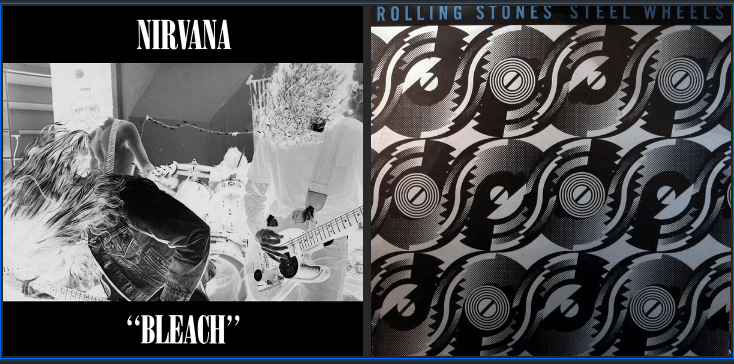
The Best Record of 1989, Day 57: #6 Nirvana, Bleach vs. #123 The Rolling Stones, Steel Wheels.
Good morning!
Today we’re taking a quick look at records from Nirvana and The Rolling Stones
Note: As many of you know, I recently wrote about a Best Record of 1989 challenge and noted that I’d occasionally write some of these up.
I’ve started doing some quick hits of each matchup and posting them directly to the page. Some will be longer, some won’t, and some might just be a handful of sentences. There’ll probably definitely be some typos.
Check ’em out and let me know your thoughts! Chin wags & hot takes welcome! Sharing and restacks are always appreciated.
KA—
Note: Today’s piece draws heavily from anarticle I wrote in April of last year marking the anniversary of Kurt Cobain’s passing.
Nirvana, Bleach
It’s weird to find myself at an age where I can start a story with “I remember when” without irony.
Nirvana and Kurt Cobain are no exception. I recall with razor-sharp clarity how hearing ‘Negative Creep’ live off “their upcoming record” felt like a kick to the head. It was amazing, and everyone in the crowd that night knew we were at the starting line of something special.
Barreling to my local Tower Records in a car whose steering wheel I couldn’t see over to get Nevermind? Yep. That too.
They played great music, no doubt. But their relatability was magnetic. Come for the music, stay for the down-to-earthiness. Krist Novoselic always struck me as the proverbial older brother of my friends. The one who was either an upperclassman in HS, or went to Reed. An itinerant presence, but one that always came with a smile and cool records.
Cobain was something else. I think what made Cobain so relatable was the feeling that he was one of us. Aberdeen Washington isn’t that close to where I grew up, but people tend to generalize the entire Pacific Northwest as where they’re from.
Different license plates be damned; he was one of us.
…and two things struck me instantly. The first was: oh, wow, I know this guy. He wasn’t some sort of rock-and-roll space alien—he was actually like a lot of the stoners I went to high school with.
Reading that 30+ years later hit me the same way ‘Negative Creep’ did all those years ago. I “knew” that guy, too. In a lot of ways, I was that guy.
Back to the record:
Before Geffen, Smart Studios, Courtney Love, or even Dave Grohl, there was Bleach. Nevermind’s time stamp marks the group as a ’90s band, and it’s close, but the reality is they were tearing the roof off of clubs and upstaging headliners well before that. My words above weren’t meant to be hyperbolic; we really did feel like we were witnessing something amazing. A lot of bands back in the day were awesome, but not like this. Even in the early days, Nirvana was extraordinary.
This was even before picking up their music at Tower Records. They were on Sub Pop, and I have no idea about any distribution deals, but I can tell you I picked up my copy of Bleach (on cassette, thankyouverymuch) at a place called Locals Only Records in Beaverton. That wasn’t false advertising; they only sold music by artists from the Pacific Northwest. Aberdeen counts.
If Nevermind is mentioned in the same breath as Pearl Jam, Bleach deserves to be mentioned in the same breath as (relatively) lesser-known Seattle bands like Tad and the Melvins. It’s heavier, with sludgy riffs and a chugging rhythm section (Chad Canning and Dale Crover were on drums here).
“Negative Creep” is like standing in front of a blast furnace, and for my money, it is still one of the best tracks they ever put on tape. “Love Buzz” puts a fantastic spin on the Shocking Blue track and, dare I say, bests it. Opener “Blew” is a maelstrom.
Kurt Cobain gets an early chance to show off his songwriting here. Tracks like “Floyd the Barber” lean toward the absurd, but he truly shines on “About a Girl.” It turns out he’s got some chops. It was not always the easiest thing to hear behind the wall of fuzzed-out stoner rock we were getting, but it was there, just waiting for us.
Cobain’s untimely death and the band’s relatively short lifespan mean that they are often lionized (see also Joy Division). That’s fine. I think it’s safe to say that Nevermind changed the world—it’s a record that rearranged plenty of minds. But that momentum starts with Bleach. “Negative Creep” walked so that “Smells Like Teen Spirit” could run. I’m just glad I was there to see it.
The Rolling Stones, Steel Wheels
If you ever want to get the prototypical “music guy” (and they’re almost always guys) to launch into a stemwinder about how music today sucks, say something mildly negative about the Stones…or say something like Undercover has a couple of good songs. Or just leave ’em out of your Top 100 albums altogether. Trust me; it’s like moths to a flame. Just give your inbox a heads up about what’s comin’.
So, at the risk of taking a swing at that hornet’s nest, I’ll say this: Steel Wheels is an incredibly mediocre record. It’s home to one of their best tracks (“Mixed Emotions“) and forgettable tracks like “Hold on to Your Hat.” It also has an “Almost Hear You Sigh,” which is somewhere in the middle. A serviceable enough ballad, but one weighed down by too many coats of polish. I’m sure in ’89 some people wore out this cassingle during a break up or whatever, but are we sure this is the same band that put out tracks like “Gimme Shelter?’
Steel Wheels served as a reunion record of sorts, with Keith Richards and Mick Jagger burying the hatchet and laying some tracks down. That’s all well and good—it ensured another 30+ years of tours where they played the hits—but it would’ve been nice to see something novel come out of this reconciliation.
My vote: Look, I get why people have an affinity for the Rolling Stones. We tend to latch onto bands we first heard in our youth. I feel the same way about Nirvana- it would be hypocritical of me to say anything otherwise. That said, the Stones’ records of yore are not the same ones they released mid-career. The edges have been sanded off. There’s not a lot of ‘there” there. It’s commercially viable, but also the stuff of commercials. Bleach is a record whose edges are impossible to wear down. Love it or hate it, it’s one of the first green shoots of what was to come. And what was to come was incredible. My bracket pick and vote will both be going for Nirvana.
Any thoughts on either of these records? Agree/disagree with my takes? Which one of these would you vote for? Sound off in the comments!
Today we’re taking a quick look at records from Steve Reich and Concrete Blonde
Note: As many of you know, I recently wrote about a Best Record of 1989 challenge and noted that I’d occasionally write some of these up.
I’ve started doing some quick hits of each matchup and posting them directly to the page. Some will be longer, some won’t, and some might just be a handful of sentences. There’ll probably definitely be some typos.
Check ’em out and let me know your thoughts! Chin wags & hot takes welcome! Sharing and restacks are always appreciated.
KA—
More than once during this series, I have hit the keyboard with no idea what I’m going to type out. Maybe I don’t know the record…maybe I’m agnostic toward the band…whatever the reason, there’s not a clear/cut direction mapped out ahead of time.
For me, that’s part of the fun. Can I make this work? Can I sculpt these random thoughts into something both entertaining and informative for anyone on the other side of the screen? We’ll find out before too long, but I’ll tell you this for free: if any record’s gonna pressure test that ability, Steve Reich’s Different Trains is it. I’d never heard of either him or the record. Because I’m a chaos agent, I like to be spontaneous, so I decided to go cold without doing any research first. If you are familiar with this record, you’ve probably already sussed out the ending by now and can skip ahead to my thoughts on Concrete Blonde. For everyone else, let’s see where this ride takes us…
Pulling it up, I see it’s Steve Reich and Kronos Quartet. I only vaguely know the latter name, and if pressed to name a single piece of work by them, I would fail. This clearly is something not in my wheelhouse, either now or in 1989. But it’s also seeded relatively high, so I’m hoping that it’ll be interesting even if it isn’t something appealing to me. Mostly, I just want something tangible or an interesting angle.
The short version is this: there are three songs, er, “movements,” and the intensity ramps up with each successive track. There are voice snippets here, each growing ever shorter until they simply become notes in the work(s) themselves. There are also on-brand sounds such as steam trains, whistles, brakes, etc. It all makes for work that leaves the listener disoriented. It’s pretty intense—and I like me some intense. Once I learned the backstory, it became even more so.
Reich, as it turns out, was a child of divorce. His parents split early, and he spent a lot of time riding the rails across the country between his mom’s new home in LA and his dad’s in New York. Later, it would dawn on him that at the same time he was criss-crossing the US, other kids his same age were riding trains with much uglier destinations; Auschwitz, Dachau, etc. A real case of “there but for the grace of God, go I.” The voices we hear on the record are from his governess, a porter on the trains Reich regularly rode, and three holocaust survivors. Different Trains is intense before you know the backstory. It becomes downright harrowing once you do.
I’ve been thinking a lot about that lately- how where/when you ‘re born is the structure to your life’s story. I’ve been viewing it through the eyes of a middle-aged dad who spends a lot of time wondering how he got here (and where his glasses are). But at the same time, how fortunate a hand I was dealt. I was the right age at the right time to be one of the first to see more than one band that would change the world (more on that tomorrow!). My parents’ decision to buy a home where they did meant proximity to kids who would also be music nerds, and of course, the wonder that is Oregon1. Mt. Hood? Way good.
And so too is this record. I don’t have the technical savvy to discuss the specific elements of the record (the cello is nice, I guess?), but I can definitely vouch for this being a ride that’ll leave you more than a little shaken. It’s one you don’t easily forget. In 2025, “Never forget” seems more imperative than ever.
Please don’t be the one with Joey on it Please don’t be the one with Joey on it Please don’t be the one with Joey on it
~Me, pulling this record up to play
My not-at-all-subjective take on Concrete Blonde going in was this: I don’t like “Joey.” Like, at all. I love “Still In Hollywood.” Like, unequivocally. “Bloodletting” (the song) is cool in a sort of sleazy way. Everything else is up for grabs.
About four tracks in, I feel a strange sensation come over me. Do I…do I like this record? Yes, yes I do. Time to tear up my old thoughts on the band, and at a minimum, carve out an exemption for this record.
So “Joey wouldn’t” come for another year (yay!), and in the meantime, we get a gritty, just sleazy enough record packed to the gills with chunky riffs and Johnette Napolitano’s voice. There are some who’ll tell you she can’t quite stay on key. Doesn’t matter. The sheer force of these pipes is something to behold. And the list of people who sing worse is a mile long. More importantly, it feels purpose-built to match the music here. It’s something you hear in impossibly hot clubs with low ceilings and bathrooms that qualify as Superfund sites. It’s delicious. Put together, the record feels perfect to soundtrack the side of LA tour buses that don’t take you through. The world of dive bars, out-of-this-world Mexican food that never gets Instagrammed, and the sorts of unforgettable characters that make for great song lyrics.
My vote: I would love to say that Steve Reich’s record is now hopelessly quaint. An anachronistic recording of an event that could never possibly happen again, but we’d both know I was lying. At age 36, its lessons have more urgency now than they did when it was released. A record doesn’t have to be in your wheelhouse to tell a riveting, necessary story, and this one does.
Going the other way, Concrete Blonde delivers a snapshot of a very specific vision of Los Angeles that most people either never see or that has been lost to time and/or the clouding of memories. In this version, the beer is cheap, adventure plentiful, and things are just dangerous enough to get interesting. And that’s my kinda town. My vote’s for Concrete Blonde (not having “Joey” on the record also helps).
Any thoughts on either of these records? Agree/disagree with my takes? Which one of these would you vote for? Sound off in the comments!







 Kevin Sent
Leave a comment