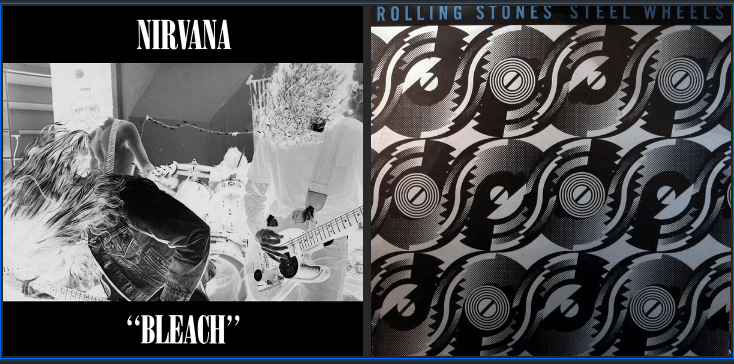
The Best Record of 1989, Day 57: #6 Nirvana, Bleach vs. #123 The Rolling Stones, Steel Wheels.
Good morning!
Today we’re taking a quick look at records from Nirvana and The Rolling Stones
Note: As many of you know, I recently wrote about a Best Record of 1989 challenge and noted that I’d occasionally write some of these up.
I’ve started doing some quick hits of each matchup and posting them directly to the page. Some will be longer, some won’t, and some might just be a handful of sentences. There’ll probably definitely be some typos.
Check ’em out and let me know your thoughts! Chin wags & hot takes welcome! Sharing and restacks are always appreciated.
KA—
Note: Today’s piece draws heavily from anarticle I wrote in April of last year marking the anniversary of Kurt Cobain’s passing.
Nirvana, Bleach
It’s weird to find myself at an age where I can start a story with “I remember when” without irony.
Nirvana and Kurt Cobain are no exception. I recall with razor-sharp clarity how hearing ‘Negative Creep’ live off “their upcoming record” felt like a kick to the head. It was amazing, and everyone in the crowd that night knew we were at the starting line of something special.
Barreling to my local Tower Records in a car whose steering wheel I couldn’t see over to get Nevermind? Yep. That too.
They played great music, no doubt. But their relatability was magnetic. Come for the music, stay for the down-to-earthiness. Krist Novoselic always struck me as the proverbial older brother of my friends. The one who was either an upperclassman in HS, or went to Reed. An itinerant presence, but one that always came with a smile and cool records.
Cobain was something else. I think what made Cobain so relatable was the feeling that he was one of us. Aberdeen Washington isn’t that close to where I grew up, but people tend to generalize the entire Pacific Northwest as where they’re from.
Different license plates be damned; he was one of us.
…and two things struck me instantly. The first was: oh, wow, I know this guy. He wasn’t some sort of rock-and-roll space alien—he was actually like a lot of the stoners I went to high school with.
Reading that 30+ years later hit me the same way ‘Negative Creep’ did all those years ago. I “knew” that guy, too. In a lot of ways, I was that guy.
Back to the record:
Before Geffen, Smart Studios, Courtney Love, or even Dave Grohl, there was Bleach. Nevermind’s time stamp marks the group as a ’90s band, and it’s close, but the reality is they were tearing the roof off of clubs and upstaging headliners well before that. My words above weren’t meant to be hyperbolic; we really did feel like we were witnessing something amazing. A lot of bands back in the day were awesome, but not like this. Even in the early days, Nirvana was extraordinary.
This was even before picking up their music at Tower Records. They were on Sub Pop, and I have no idea about any distribution deals, but I can tell you I picked up my copy of Bleach (on cassette, thankyouverymuch) at a place called Locals Only Records in Beaverton. That wasn’t false advertising; they only sold music by artists from the Pacific Northwest. Aberdeen counts.
If Nevermind is mentioned in the same breath as Pearl Jam, Bleach deserves to be mentioned in the same breath as (relatively) lesser-known Seattle bands like Tad and the Melvins. It’s heavier, with sludgy riffs and a chugging rhythm section (Chad Canning and Dale Crover were on drums here).
“Negative Creep” is like standing in front of a blast furnace, and for my money, it is still one of the best tracks they ever put on tape. “Love Buzz” puts a fantastic spin on the Shocking Blue track and, dare I say, bests it. Opener “Blew” is a maelstrom.
Kurt Cobain gets an early chance to show off his songwriting here. Tracks like “Floyd the Barber” lean toward the absurd, but he truly shines on “About a Girl.” It turns out he’s got some chops. It was not always the easiest thing to hear behind the wall of fuzzed-out stoner rock we were getting, but it was there, just waiting for us.
Cobain’s untimely death and the band’s relatively short lifespan mean that they are often lionized (see also Joy Division). That’s fine. I think it’s safe to say that Nevermind changed the world—it’s a record that rearranged plenty of minds. But that momentum starts with Bleach. “Negative Creep” walked so that “Smells Like Teen Spirit” could run. I’m just glad I was there to see it.
The Rolling Stones, Steel Wheels
If you ever want to get the prototypical “music guy” (and they’re almost always guys) to launch into a stemwinder about how music today sucks, say something mildly negative about the Stones…or say something like Undercover has a couple of good songs. Or just leave ’em out of your Top 100 albums altogether. Trust me; it’s like moths to a flame. Just give your inbox a heads up about what’s comin’.
So, at the risk of taking a swing at that hornet’s nest, I’ll say this: Steel Wheels is an incredibly mediocre record. It’s home to one of their best tracks (“Mixed Emotions“) and forgettable tracks like “Hold on to Your Hat.” It also has an “Almost Hear You Sigh,” which is somewhere in the middle. A serviceable enough ballad, but one weighed down by too many coats of polish. I’m sure in ’89 some people wore out this cassingle during a break up or whatever, but are we sure this is the same band that put out tracks like “Gimme Shelter?’
Steel Wheels served as a reunion record of sorts, with Keith Richards and Mick Jagger burying the hatchet and laying some tracks down. That’s all well and good—it ensured another 30+ years of tours where they played the hits—but it would’ve been nice to see something novel come out of this reconciliation.
My vote: Look, I get why people have an affinity for the Rolling Stones. We tend to latch onto bands we first heard in our youth. I feel the same way about Nirvana- it would be hypocritical of me to say anything otherwise. That said, the Stones’ records of yore are not the same ones they released mid-career. The edges have been sanded off. There’s not a lot of ‘there” there. It’s commercially viable, but also the stuff of commercials. Bleach is a record whose edges are impossible to wear down. Love it or hate it, it’s one of the first green shoots of what was to come. And what was to come was incredible. My bracket pick and vote will both be going for Nirvana.
Any thoughts on either of these records? Agree/disagree with my takes? Which one of these would you vote for? Sound off in the comments!
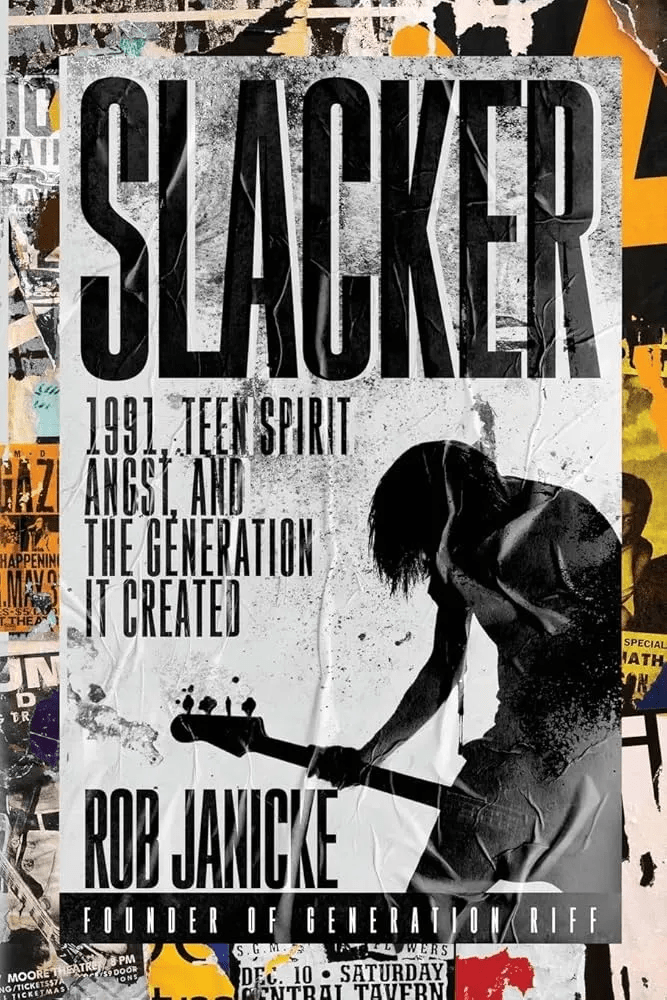
We’re in for a treat today! Author Rob Janicke stops by to talk about his book,Slacker—1991, Teen Spirit Angst, and the Generation It Created.
It’s weird, this online life. There are people I’ve known for years—that I feel like I’ve known longer— that I’ve never been in the same room (or even the same time zone) with.
Rob Janicke is one of those people. He and I first connected as editors for the same online publication. It quickly became clear that we had more in common than a penchant for using a red pen. Our music tastes run largely in parallel, but so too did a lot of our early years, and the transformative role music played in them. More than once, I’ve said that it’s not an exaggeration to say music saved my life. It certainly saved his.
I’ve quipped that he and I were often at the same shows, just on opposite coasts. Except that it’s not a joke. Having those chats makes me wish I’d saved more than 1-2 of my ticket stubs. Who saw which band first, depending mainly on which side of the country the van left from?
Rob stepped away from his editing role to start a new project—a project that ultimately became Slacker—1991, Teen Spirit Angst, and the Generation It Created. As you’ll see below, it’s been a long road, and the final version looks very different from that initial pitch.
I will tell you now that reviewing this book was tough. It’s a project I’ve rooted for, and I was ecstatic to get an early copy of it (NOTE: for more on how to win a signed one of your own, read on). In other words, you shouldn’t have any expectation of objectivity here. Spoiler alert: it’s awesome. That said, I’m not just being nice when I tell you this is a harrowing and exhilarating read in equal parts.
It would’ve been easy enough for him to write a fairly straightforward look back at that early 90s scene. People love that sort of thing, right? Maybe even punch it up by making it into an oral history full of stories from those lucky enough to have been there. Instead, Rob weaves together that history with that of his own life. Ultimately, that blend makes for a much richer, more interesting story.
The shiny parts are an easy read (hanging out at the record store, going to shows, etc.). The book also dips a bit into the science of why music moves us the way only it can. If you’ve ever had your mind rearranged by a slab of vinyl, this’ll be relatable. All well and good.
However, the book also touches on some darker parts of life as a latchkey kid. That’s his story to tell, and he doesn’t gloss over any of it. My copy is full of highlights, dog-eared pages, and notes in the margins- some of which were questions I wanted to make sure to ask him.
Slacker isn’t a puff piece for GenXers looking to relieve their youth; there’s no garden hose memes, or rants about “kids these days.” Rather, it’s for anyone looking to read more about why that very specific time had such an outsized impact on our lives and pop culture. It was an era that changed the world, one life at a time.
If you’re of a certain age, it will absolutely resonate with you. You’ll likely see your own life reflected back at you the way I did.
I recently (Finally!) had a chance to speak with Rob. In our wide-ranging chat, we discuss the Slacker origin story, where it started and ended up, and the opportunities writing the book has presented.
The discussion has only been lightly edited for grammar and flow.
KA—
Congrats on the book! I know this has been years in the making. For those who may not be familiar with the backstory, could you walk us through how Slacker came to be?
Thanks, Kevin! You’re right. SLACKER started with some personal introspection during the COVID-19 pandemic and kind of took on a life of its own soon after I wrote the first few pages. It was April 2020, and I was in my backyard watching my dog play. As I’m sure you remember, life was pretty strange back then, as we were all locked down in our homes due to the pandemic and had to pass the time somehow.
While standing in the yard and sort of daydreaming a bit, I recalled a conversation I’d heard on a podcast or radio show earlier in the day. During that show, the year 1991 was brought up, and I remember thinking, “damn, next year (2021) we will be 30 removed from ‘91”. It blew my mind. I tend to think of life in terms of music, and for me, as many Gen Xers, 1991 was a massively important year in terms of music and culture. It changed everything.
So, with that in mind, I went back into my house and just started writing my thoughts down about that year, what it meant to me, the music I discovered, and the impact it and so much of what came after have had on me right up through this very day. A few months later, I found myself with over 30,000 words, some chapters, and the skeleton of a book.
To avoid making this answer too long, I’ll fast-forward to a meeting with a publisher (after many rejections or simply being ignored by other publishers had taken place) who was given a description of my “book” by a mutual friend. Luckily for me, they loved the idea and wanted to learn more. As they say, the rest is history.
One thing that sets this book apart is how it takes your own story and parallels it with what is happening in the music scene. It would’ve been easy to write a more straightforward history of the scene–and a lot of people would’ve dug that. What made you decide to pivot this into a more personal narrative?
This is a great question because, at first, the intention was to chronicle the scene without too much of a personal narrative. I don’t believe there are many books that do that with regard to the early Seattle movement. There are plenty of books on bands and artists from that era, but I can’t think of one that walks you through the overall story.
As I was writing it, though, it became obvious that the reason I love the music and culture from that period as much as I do is due in large part to how it shaped and helped me from the earliest moments of me hearing it. I couldn’t separate myself from the music. I’ve always believed that the personal lyrics and vulnerability of the songs played as much of a role as the sound of the music did in creating a global fanbase.
Millions upon millions upon millions of people cared about this music and still do today, so it didn’t seem right to leave my story out. I knew other fans would be able to relate because their stories probably mirrored mine in many ways.
You make no secret of your mental health struggles here. For me, this made reading the story that much more authentic. What sort of other feedback have you received from people? Have you been doing (or plan to do) any speaking on the topic as you do press for the book?
I appreciate you saying that. In early drafts of the book, I hinted at certain things about the issues and trouble I had back then, but I wasn’t fully letting go. I have to give credit to my publisher, Inspired By You Books, and their editors for teaching me how to let go. They saw what I was doing and worked with me to dig deeper and allow myself to be more upfront about my life rather than tiptoe around the more difficult topics.
As far as feedback, I’m so grateful that it’s been overwhelmingly positive thus far. They like the musical aspects for sure, and many casual fans of the era have told me they learned so much about the scene, how and when some of the bands started, etc. One thing almost everyone has said, though, is that they were taken aback by my story (most people in my life knew little to nothing about some of the more personal aspects) and that, in some cases, has given them courage to start talking about past trauma they’ve been through. Some have even told me things that they never told anyone else.
I wasn’t prepared for that, but I cannot tell you how happy it makes me that people struggling with things found at least a small step towards dealing with their struggles because they’ve read my book. As for speaking engagements surrounding the topic of mental health and/or how music plays a role in healing, I’ve given a few talks so far and absolutely plan on doing more.
There’s a passage–and I’m paraphrasing here– that says, “When strange things get stranger or just played out, and the youth of any generation decides it’s time for a change, things happen.” In your opinion, are we there now? We could take this in numerous socioeconomic directions, but I’m specifically interested in hearing how it might relate to music and how we discover and consume it. Listening parties are back in fashion. Blogs are in vogue. Are we there? If so, what’s that next phase look like?
I hope so!! Had I been asked this question prior to 2020, I’d say that we may never see a change in music or youth culture again. I was pretty sure of that. Since then, however, I have changed my mind. I think we’re living through very strange, difficult, and dare I say bizarre times right now, and I’ve seen and heard more than a handful of bands and artists rising to the challenge of creating something new.
Back in the day, music discovery was limited to Top 40 radio, MTV, fanzines, corporate magazines, and, to a lesser degree, your local scene. Distribution for the local or underground music was essentially nonexistent, so without major record labels and the money and power that came with them, we “discovered” what they told us to. It just so happened that what they gave us in the late 80s and early to mid-90s was pretty damn great. That music was the definition of change and rebellion to the norm at that time.
In today’s musical and cultural landscape, that doesn’t exist outside of pop music (included in that are the vanilla versions of hip hop and country). But because of streaming technology and the social media revolution, we can find anything we want. It takes more effort than it did back when it was spoon-fed to us, but it’s more fun this way.
I find most of the new music I love by diving down rabbit holes on YouTube or Instagram, Spotify, and the like. They say that if something was truly great, or at least powerful enough to have made a large dent in culture, it will find its way back every 25-30 years. This is because the original youth audience has grown up, had kids of their own to expose it to, and those kids have reached an age where they become inspired enough to put their spin on what they’ve been shown.
I think we are at that point now. I feel like the future of music will get edgier and angrier than it has been in a while, and hopefully, it will become popular enough to influence future generations to continue that sonic cycle.
In the book, you state that “Smells Like Teen Spirit” isn’t the best song on Nevermind, but rather that “Lounge Act” is. That’s a take sure to raise some eyebrows. Say more on that, please.
Ha…I’m glad you picked up on that. Let me first say that I LOVE “Smells Like Teen Spirit.” I thought it was an amazing song in 1991, and I think it’s an amazing song now. I honestly do not get tired of hearing it. It’s the reason the scene had a chance to take off and thrive, so it’s undoubtedly one of the most important songs of all time.
As far as my comment about “Lounge Act” being better, it’s a matter of taste. ‘Teen Spirit’ has that perfect verse-chorus-verse arrangement (the song actually begins with the chorus but without any vocals so you don’t really get the full punch) to it so once you get through the first chorus, the formula is there and you know what to expect.
Like I said, amazing song, blew me away when I first heard it. “Lounge Act,” with its infectious bassline that starts the track, instantly finds its way into your bloodstream. It’s just a great, solid groove. But as the song continues, it slowly builds up, feeling a little anxious and ready to explode.
The problem is, you don’t know where or how it will explode because the verses and choruses don’t change much, except for those slight upticks in tempo and feel. Then, the last verse hits, and structurally it’s the same as the others except Kurt is now screaming the vocal part. This is the payoff. It floored me the first time I heard and I just fell in love with it from that day on. It’s so simple yet I can’t recall hearing a song with such a slow build up (for a fast song no less) that leads to this visceral pounding.
As you look back now on the process of writing this, what surprised you the most?
The biggest surprise is that I finished it. I gave up a couple (or five) times. I took month-long breaks from writing a single word. I fought bouts of Imposter Syndrome. I had never written a book before and had absolutely no clue just how hard it would be. I believed in it though, so no matter the obstacle or length of time, I was determined to finish it.
One of the people you interviewed stated [they] believe record stores are more important than churches or cathedrals. I agree and would add concert halls to the list. What do you think it was that made those places so sacred for people like you and me?
Yes, that was John Richards, host of the morning show on KEXP in Seattle. He’s a legendary figure on the music scene, and since he’s my age, he was there when it all started. I loved speaking with him.
Record stores, along with music venues, as you mentioned, were the communal foundation for music fans from our generation. I lived in my local record store from 1991-1994. I spent most weekends going to small and medium-sized clubs in NYC to see any and every band I could. This was during the very infancy of the internet and more than a decade before any semblance of social media, so these places are where we found our tribe. People who wanted to watch, listen to, and discuss music.
It’s where we not only felt welcomed but also belonged. Those stores and venues, although owned by others, were ours, and we all felt it.
Towards the end, you touch on the idea that describing what it was like to be on the scene in 1991 will never come close to actually being there. Was trying to do that one of the reasons for writing this book? Mission accomplished?
Absolutely! When I was in college, I spent a ridiculous amount of time in the school’s main library for a kid who barely held a C average. I wasn’t studying or doing homework as you can gather by my previous sentence. Instead, I was reading every book I could find on The Beatles, The Rolling Stones, Led Zeppelin, and any other musician or band I liked or simply heard of.
I immersed myself in cultures I wasn’t alive to see for myself but wanted to learn about. I’ve always been the type of music fan who reads every liner note inside the album jacket, every story and interview in the magazines, and watches every documentary I can. I was a sponge and information about music was the water. The more I knew about my musical heroes, the more I wanted to listen to their music.
Fast forward to today, or more importantly, when I started writing the book, I wanted to “pay back” the authors who wrote all the books I read from days gone by and hopefully have SLACKER become one of those books for some wide-eyed kid wanting to learn about music he or she wasn’t alive for. I want it to be a historical document as well as a relatable story of a kid who had his ups and downs, but through these bands, and through this music, made it out far enough to write a book about it all and hopefully inspire others to do the same if they so choose.
Mission accomplished? I think so, but time will tell I guess.
Last one, just for fun, you got tickets for a show this weekend. Who are we going to see?
Hmmm. Well, if you’re talking about a band from back in the day, it would have to be Nirvana. I say that because they’re just about the only band from that era I didn’t see. As you know, they broke big very quickly, in January of 1992. That’s when Nevermind went to number one on the Billboard album chart and the band only lasted a little more than two years beyond that. They didn’t tour a ton in the States after Nevermind took off, and for me in New York, most of their shows were for TV and a few invitation-only shows.
If your question is geared for the present day, I’d say we’re going to see either Bad Nerves or Winona Fighter.
Thanks so much, Kevin, this was a lot of fun!
We want to get this book into your hands! Want one? Here’s all you need to do:
Comment below and/or restack this post before 11:59 PM CDT on Wednesday, July 23rd, 2025.
Entries will be thrown in a wheel, with the winning name drawn on Thursday.
This is open to all readers. As always, Paid supporters of the newsletter automatically get two entries, and free subscribers can restack the post for a second entry.
44 Soundgarden, Louder Than Love vs. #85 Skid Row, Skid Row
Good morning!
Today we’re taking a look at records from Soundgarden and Skid Row
Note: As many of you know, I recently wrote about a Best Record of 1989 challenge and noted that I’d be occasionally writing some of these up.
I’ve started doing some quick hits of each matchup and posting them directly to the page. Some will be longer, some won’t, and some might just be a handful of sentences. There’ll probably definitely be some typos.
Check ’em out and let me know your thoughts! Chin wags & hot takes welcome! Sharing and restacks are always appreciated.
KA—
Earlier this year, I used a piece of lawn furniture I once owned to make the case that Soundgarden belonged in the rock and roll hall of fame, noting:
I was also recently doing some purging and found a picture with some friends at Portland International Raceway from that same era. We were there for an Indy Car race before that weird split fractured all open-wheel racing in the U.S. into god-knows-what.
In that (unfiltered, thankyouverymuch) picture, most likely taken with a disposable camera, are three of us who have had just a little too much to drink and have definitely had too much sun. The fourth thing in the frame was a chair named “Full On Kevin’s Chair,” after the Soundgarden song.
This track is from the band’s Louder Than Love LP, a record that sounds best turned up to 11.
There is a notion that bands from the NW were writing more innovative music than their heavy metal counterparts- that the music was somehow smarter. As someone from that part of the world, I’m happy enough to go along with that. But the reality is that Soundgarden wasn’t exactly singing about the global south or scientific breakthroughs.
They were (often) making songs about sex and not exactly being abstract about it. Just look at “Hands All Over,” the aforementioned “Full on Kevin’s Mom,” and Big Dumb Sex (a piss take on heavy metal/glam rock bands like today’s opponent). For the latter, if the title wasn’t a giveaway, one only needs to play the chorus (and maybe not at work).
Mostly, though, it was a record begging to be played loud. It was never about the words, anyway, was it? It was about the sound full of bludgeoning riffs and concussive beats that you feel so much as you hear. Frontman Chris Cornell would go on to earn a bit of heartthrob status, and the band would go on to hit great heights and worldwide fame. But in 1989, they just wanted to rawk. Mission accomplished.
The first green shoots of grunge on the Left Coast were in some part a response to glam metal and bands like Skid Row. After all, Soundgarden couldn’t have made a parody song if the “real” version hadn’t first existed.
In Skid Row’s case, somewhere under all that spandex and Aqua Net (so much Aqua Net), was a band that at least superficially was earnest. Soundgarden was making carols about fucking with a wink and a smile. In New Jersey, Skid Row didn’t bother with any such artifice. For all the yowls and whirring guitars, even the ballads like “I Remember You” and the cautionary tale “18 and Life” feel plaintive, innocent even. At the other end, there were rippers like “Big Guns” and “Youth Gone Wild,” a track which thumped out of many a speaker in my part of the world before we all learned that hip-hop was the genre best suited to rumble out of our trunks.
Stylistically, if Soundgarden didn’t easily fit in any box, Skid Row took the best parts of bands like Def Leppard and put their own spin on them. And we haven’t even got to the band’s secret weapon: Sebastien Bach. His penchant for being over the top works in the record’s favor and doesn’t overpower the music- it lifts it up. When it worked, it worked (18 and Life, Big Guns, I Remember You).
In between, though, were some tracks that were just sort of okay. Some filler was par for the course, but it takes what could’ve been a great review and leaves it as merely good. But Youth Gone Wild sure still sounds good blaring out of a car stereo, even if that car is now a station wagon in the suburban Midwest.
My vote: I’ve got to stay true to my Best Coast roots here. And besides did Skid Row ever inspire someone to rename a lawn chair? I think not. My bracket and vote will both go to Soundgarden.
Any thoughts on either of these records? Agree/disagree with my takes? Which one of these would you vote for? Sound off in the comments!
Mudhoney’s self-titled record takes on Robyn Hitchcock & The Egyptians’ Queen Elvis
Good morning!
Today we’re taking a look at Mudhoney’s self-titled release (#57) as it squares off again Queen Elvis by Robyn Hitchcock and The Egyptians (#72)
Note: As many of you know, I recently wrote about a Best Record of 1989 challenge and noted that I’d be occasionally writing some of these up.
I’ve started doing some quick hits of each matchup and posting them directly to the page. Some will be longer, some won’t, and some might just be a handful of sentences. There’ll probably definitely be some typos.
Check ’em out and let me know your thoughts! Chin wags & hot takes welcome! Sharing and restacks are always appreciated.
KA—
On day 4, we covered Screaming Trees, and here we are less than a week later in the Emerald City. As a PDX native, this is not my favorite place. As a music fan, I’m willing to overlook some things.
The reality is that Mudhoney—or rather, Mark Arm — had a hand in a lot of the bands we all know and love. In the 80s and 90s, the overlap in personnel was common. Many people were in the same bands. You sometimes needed a scorecard to keep track at home. Arm was in more than a couple, including Green River, which gave way to Mudhoney, but also Mother Love Bone, Temple of the Dog, and more. Jeff Ament and Stone Gossard were there. I wonder what ever happened to them? I hope they’re still playing somewhere.
They went one way, and Arm went another. There was Mudhoney, and there was this record —a bar-burner of white-hot rock ‘n’ roll. There’s some psych here. Some punk. Some metal. It sounds like every opening band that ever played a sweaty club with low ceilings and a sound tech learning the ropes— and I 100% mean that in the best way possible,
“Flat Out F*cked” drops the hammer and never lets up. It’s an insistent piledriver that dares you not to sing along. “Get Into Yours” sounds like every song we’d hear from out on the street if we were late getting to a show. This is an admittedly clunky description, but one I hope both makes sense and is relatable. It’s also high praise. “Here Comes Sickness” has an infectious, scuzzy groove.
With maybe the exception of “Come To Mind,” the whole record goes on like this. It’s a one-note recording, but it never gets old.
The guitars and Arm’s vocals are out front here, but to discount the rhythm section of Matt Lukin (yes, the same Lukin PJ named a song after) and Dan Peters would be a disservice. Someone had to keep things tethered to the Earth.
Some groups aspire to a higher calling. They write records they hope will change the world. This record isn’t trying to do anything of the sort.; it’s just trying to have a good time.
It’s trying to rock — and that’s exactly what it does.
Remember when you were a kid, and your parents would try to get you to taste new food? It’s got everything you like in it! they’d plead, while you sat there with your arms crossed. Just take a bite! You’ll see.
And it’s true that you likely would’ve liked whatever it was on the plate in front of you. But for whatever reason, that wasn’t the day. Maybe you’d eventually come around. Perhaps you never would.
A few years would go by, and instead of food and your parents, it would be your friends and an artist.
And yet
This record is great! They’d say. It’s got intelligent lyrics and wry humor! They’re on top of some of the sunniest, jangly music going! There’s a video on 120 Minutes! It’s got everything you like! The record would be Robyn Hitchcock & The Egyptians’ Queen Elvis….and I still wasn’t biting (heh).
Look, there is nothing wrong with this record. It’s objectively good! It’s generally regarded as one of the best in his extensive discography. It’s extremely British. It was quirky before that became a thing.
Lyrics like this from Devil’s Coachman are the sort of thing I would’ve pored over:
I remember everything as if it happened years ago Probably it did, so I remember it You are just your feelings. It might give you vertigo Falling off a high place and into it And I was into you
And yet.
“Madonna of the Wasps “is an excellent peek at the sort of thing 120 Minutes might expose you to. For many people, I suspect this was their on-ramp to Hitchcock, doubly so if you lived somewhere with cable but without a decent college radio station. Listening to the record ahead of this, I wondered if that’s how whoever nominated this first found him.
“Freeze” is a track I genuinely dig. It’s about as hard as things get on the album. There are bits of horns, too, which I always dig. No less than REM’s Peter Buck makes a balance here. Another thing I like.
And yet.
Bottom Line: Rooting for my Pacific Northwest homeland can make for strange bedfellows. Sometimes it even means rooting for a band from Seattle. Mudhoney it is.
Any thoughts on either of these records? Agree/disagree with my takes? Which one of these would you vote for? Sound off in the comments!



 Kevin Sent