For The Record- 18. October. 2025

Some thoughts on Ticketmaster, Resellers, and Swifties.

It shouldn’t surprise you that a considerable chunk of my adolescent years were spent going to, coming from, or actually at shows. If you’re reading this, I’d bet our timelines overlap.

Some of that was down to questionable life decisions—I quit more than one job after being unable to get time off. Some was timing— people on my block had cars long before I did, making getting downtown easier. But mostly, it was economics. Tickets were simply cheaper (something that will surprise absolutely no one). We dealt with plenty along the way, but automated resellers weren’t one of ’em.

Back then, the first step to seeing a show usually meant heading to a brick-and-mortar building—a sporting goods store called GI Joe’s (think Dick’s Sporting Goods, but with a token record section). They had a desk whose sole mission was to sell park passes, fishing licenses, and concert tickets. This was the designated Ticketmaster outlet, back before they decided to go all in on villain shit. Prices were reasonable, and fees weren’t absurd. Most bands and crews weren’t getting rich, but at least the system hadn’t yet been weaponized against us.

Those little paper tickets were passports to whole new worlds—or beloved old haunts. Today, they mostly live in shoeboxes or scrapbooks. Concert tickets now exist on phones or in apps we’re forced to download—just a string of ones and zeroes sitting on a server somewhere. And speaking of numbers: the average ticket last year was $136.45, up about 42% from just five years earlier.

I know, I know—I’m deep in “old man yells at cloud” territory. Stick with me.

This isn’t a “things were cheaper in my day” stemwinder. Of course they were—so was everything else. I’ve got neighbors who had apartments downtown, paid $250 a month, and can’t figure out what today’s kids are griping about. I get it.

There were certainly systemic issues even then, and Pearl Jam was already taking on Ticketmaster. People were already testing workarounds. But complete monopolization hadn’t yet hit, and “reseller” still usually meant a chainsmoking, slightly sketchy dude in the parking lot an hour before showtime. Thirty-five-ish years later, we’re still inventing workarounds: house shows are back, pop-ups are a thing, and so on.

It’s the reseller I want to focus on here.

And look, I get it—we live in a late-stage capitalist hellscape. Supply and demand are real. So is surge pricing. Even the airline I may or may not work for has toyed with the idea. In aviation, it’s called Yield Management. In the music world, it more closely resembles highway robbery. And look, if artists and crews were the ones making that extra revenue, it might be palatable—but they’re not. It’s going to faceless corporations and bad actors who’ve mastered the system. The losers? Concertgoers and, occasionally, local venue owners.

Today’s resellers are much more ominous and much better equipped. They have all the levers of technology at their fingertips and know how to weaponize each one. The rise of AI has changed the rules of engagement yet again. If you’ve ever tried to buy tickets only to find the remaining ones priced several orders of magnitude above face value, you know what I’m talking about.

It’s gotten so bad that legislation was recently introduced here in Wisconsin to push back. The bill—introduced by Democratic lawmakers—came after a theater in Racine watched helplessly as $22 tickets ballooned to several hundred dollars for a production of Legally Blonde, effectively pricing people out of the show and diverting revenue from the venue. If passed, it would require resellers to disclose total ticket costs, cap markup limits, and prohibit bots that scoop up tickets before fans can.

History is littered with similar bills that never made it out of committee. Others have tried to tackle pricing itself. If I ruled the world, future versions would include bans on venues taking merch cuts. I’m not holding my breath. That’s one the market itself will have to handle—maybe if enough of us stop going to those places, they’ll stop. Maybe.

You’ve got to have a dream, right?

Back to the bill: Wisconsin is one of the most politically balkanized states in the nation. Both parties spend more time throwing rocks at each other than actually getting things done. The GOP here can be politely characterized as “humorless.” Still, I’d like to think there’s a sliver left that remembers it’s supposed to champion small business and working people. They’ve whiffed on plenty of easy wins in recent years—hopefully this won’t be one of them. Other states are following similar paths, but like the slogan says: As goes Wisconsin…

Ideally, these obscene price hikes will go the way of the paper ticket. My dream is that kids today get to experience the same adventures I did—and that, for once, consumers aren’t the ones left holding the bag.

If nothing else, at least the bill has a killer name: the Stop Wildly Inflated Fees and Ticketing Industry Exploitation Act. 11/10 No notes. Hopefully, our elected officials will get it and realize the peril of voting against something with a title like this.

Political survival 101: Never start a land war with Swifties.

Onward!

KA—
The Best Record of 1989: Day 38

#50 Lyle Lovett, Lyle Lovett and his Large Band vs. EPMD, Unfinished Business

Good morning!

Today we’re taking a look at records from EPMD and Lyle Lovett


Note: As many of you know, I recently wrote about a Best Record of 1989 challenge and noted that I’d be occasionally writing some of these up.

I’ve started doing some quick hits of each matchup and posting them directly to the page. Some will be longer, some won’t, and some might just be a handful of sentences. There’ll probably definitely be some typos.

Check ’em out and let me know your thoughts! Chin wags & hot takes welcome! Sharing and restacks are always appreciated.

KA—


If EPMD’s 1988 debut, Strictly Business, put the duo on the map, its follow-up, Unfinished Business, cemented their spot. The record is an incredible sophomore outing. Hip-hop back in the day had more weight: chunkier beats, rugged samples, and more bounce to the ounce (sorry, not sorry). The beats came out of the trunk like a left hook, except this was one you didn’t want to duck for.

That’s not to say that the duo of Erick Sermon and Parrish Smith don’t have flow- the pair has bars for days. But they lay down that flow over some industrial-grade beats. There’s fewer moving parts. Less is more. Things pop off with “So Wat Cha Sayin'” a bruising 5 minutes of funk with the infectious sampling of BT Express’ “If It Don’t Turn You On (You Oughta Leave it Alone), layered over some drums from Soul II Soul of all people. Knick Knack Paddy Whack has a sample you’ll likely recognize. Try and see. Those samples and scratches are courtesy of George “DJ Scratch” Spivey, and his work on the 1s and 2s should not be overlooked here.

That flow might be their superpower. The two play off one another like two friends on a patio or sitting at a picnic table on their work break. They’re puttin’ in work, but it never feels labored (FWIW, I think P is better technically, while E has better flow per se.).

That’s not to say Unfinished Business is a no-skip record—you can feel confident in skipping “It’s Time 2 Party” and “You Had Too Much to Drink—but the good far outweighs the bad. Sermon and Smith are all business, and on this record, business was good.


I’ve never quite been able to read Lyle Lovett. Is he country? Something else? And how exactly did he and Julia Roberts wind up together? Lucky him.

That he’s never quite ascended to A-list stardom means that most audiences (and A&R reps and programming directors) were also stumped. But for those that get it, his records are a treat.

I hadn’t heard this one before, and if I’m honest, I wasn’t ready for the bluesy/jazzy/band-y flavor here. It’s good, just not what I thought would be on order. On brand for the man, I suppose. For example, I did not have “Here I Am” with its monologue in the middle on my bingo card. Nor was there a spot for a straight-faced cover of Tammy Wynette’s ” Stand by Your Man.” Yet here we are.

This record is light years from what I was playing in ’89, but listening now, it’s pleasant (not derogatory). I can easily see myself giving this a spin over brunch or on one of those rare days when I get to lie on the couch with Gizmo and stare out the window. It feels like Lovett came to terms with not being a “star,” embraced it, and made the record he wanted to make. Lucky us.


My vote: My heart (vote) says EPMD. My head (bracket pick) has me sayin’ Lyle Lovett.

Any thoughts on either of these records? Agree/disagree with my takes? Which one of these would you vote for? Sound off in the comments!

Check out the full bracket here.

Info on the tourney, voting, and more is here.

As always, thanks for being here.

KA—

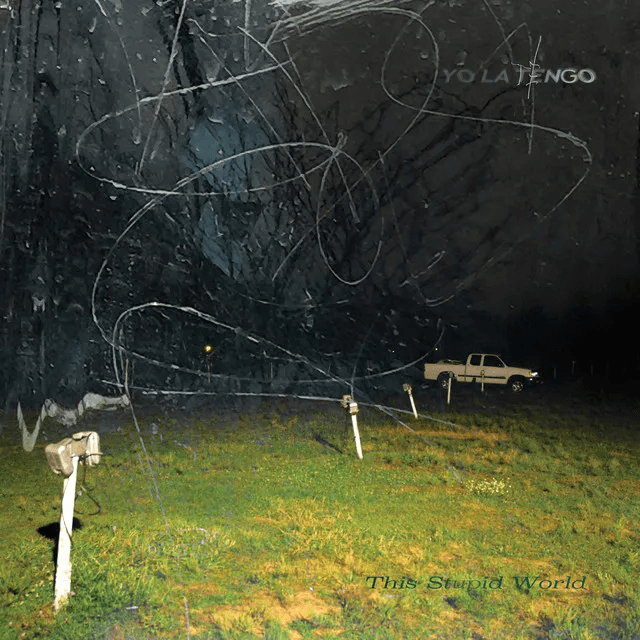
Why Yo La Tengo’s ‘This Stupid World’ Could Be Your New Favorite Album

There are two sides to Yo La Tengo. Both are very good sides.

The first is quiet, contemplative Yo La Tengo. That’s the one we’ve seen the most of in recent years. Sometimes haunting and/or listless, other times endearing. Occasionally, like on tracks like Looney Tunes, a sonic lazy river that seemingly stretches forever.

The second is rocking Yo la Tengo. Sometimes it’s vaguely menacing, as with tracks like Shaker. The sound is locomotive. I’ll also include their poppier side and impeccable taste in picking covers here.

Either way, they’re giving us straight rippers with Kaplan barely in control, playing like one of those inflatable wavy guys you see at low-rent used car lots.

Instead of a specific direction, they just chose ‘em all

Messy. Precise. Jarring. Soothing. Over the last forty(ish) years, Yo La Tengo have consistently been an exercise in contradiction. And yet somehow, it all fits together nicely, as it’s supposed to. 

This is one of those bands that always sound like themselves, no matter what boundary they’re pushing or which norm they’re winging out a third-story window.

It’s always a YLT record, ya know?

On their latest release, “This Stupid World,” they’ve kept all of that going.

Sidebar: Yo La Tengo can be a band that makes you work before you get it. The full listening experience requires intention. There’s friction. The effort is always worth it, though, with something new revealing itself with every spin. And while they have some songs that could broadly be classified as singles, this band’s work is best heard from A1 to the closer.

So I have to say that for as much hype as there was leading up to the release of This Stupid World, I’m grateful that they only released a couple of tracks ahead of time. Hearing the record unfold for the first time is a joy. 


The record opens strong with Sinatra Drive Breakdown. Look, I know “motorik” is fast becoming the most overused adjective in my arsenal, right up there with “awesome” and “fantastic.” but for this track, it fits. Just trust me here.

Drummer Georgia Hubley and bassist James “new guy since ‘92” Mcnew lay down a killer groove that promptly chugs on for 7+ minutes. So much for radio-friendly.

Another rule proudly ignored.

Next up is “Fallout,” easily their most pure pop offering since perhaps Ohm off of Fade, or Electr-O-Pura’s Tom Courtenay. With an easy rhythm and quasi-call-and-response-like chorus of:

Wanna fall out, fall out of time

Don’t be surprised if you get caught singing this at a red light. I’m not saying this has happened to me, but I’m not not saying it, either.

This band is famously introverted, with Hubley sometimes giving the impression that she’s using the drum kit as a shield. But perhaps more than anyone else, she has come more into her own with each release.

On “Aselestine,” her vocals are unguarded & lovely, even as she’s singing Where are you/The drugs don’t do/What you said they do.

On closer, “Miles Away,” they’re endearing as she laments those she’s lost along the way.

You feel alone
Friends are all gone
Keep wiping the dust from your eyes
So many signs
I must be blind
How few of them I see

But to get there, we get to get through a few more tracksKaplan’s usual knack for squishing an entire backstory into a paragraph is on display throughout the record, but perhaps no more so than on Apology Letter, where he sings:

It’s so clear
What I’m trying to say, but right on cue
It doesn’t ever come that easily
‘Cause the words
Derail on the way from me to you
It seems to happen with some frequency
Depressingly


Brain Capers is expansive and rides a thick groove. It’s relentless—and it’s my favorite song on the record. Kaplan is in full glorious wavy inflatable guy mode here.

The title track is a steely shoegaze monster. A weighted blanket of the band’s distortion and feedback, with Kaplan telling us, “This stupid world, it’s all we have.”

They know the only way out is through, and this is their way of telling us that if it’s not gonna end well, we can at least have a good time on the way down.


Bottom Line: Yo La Tengo has never been a band that fits nicely in a box, and 2023’s no time to start. They’ve gone from critics darling to your favorite band’s favorite band to indie rock elder statesmen.

And all of that from a band that feels more like neighbors you’d ask to watch your house while on vacation.

With seventeen records and a bunch of EPs and singles, this would’ve been a fine capstone to a storied discography. Instead, it feels like a band hitting its stride with the best yet to come.