The Best Record of 1989: Day 32

44 Soundgarden, Louder Than Love vs. #85 Skid Row, Skid Row

Good morning!

Today we’re taking a look at records from Soundgarden and Skid Row


Note: As many of you know, I recently wrote about a Best Record of 1989 challenge and noted that I’d be occasionally writing some of these up.

I’ve started doing some quick hits of each matchup and posting them directly to the page. Some will be longer, some won’t, and some might just be a handful of sentences. There’ll probably definitely be some typos.

Check ’em out and let me know your thoughts! Chin wags & hot takes welcome! Sharing and restacks are always appreciated.

KA—


Earlier this year, I used a piece of lawn furniture I once owned to make the case that Soundgarden belonged in the rock and roll hall of fame, noting:

I was also recently doing some purging and found a picture with some friends at Portland International Raceway from that same era. We were there for an Indy Car race before that weird split fractured all open-wheel racing in the U.S. into god-knows-what.

In that (unfiltered, thankyouverymuch) picture, most likely taken with a disposable camera, are three of us who have had just a little too much to drink and have definitely had too much sun. The fourth thing in the frame was a chair named “Full On Kevin’s Chair,” after the Soundgarden song.

This track is from the band’s Louder Than Love LP, a record that sounds best turned up to 11.

There is a notion that bands from the NW were writing more innovative music than their heavy metal counterparts- that the music was somehow smarter. As someone from that part of the world, I’m happy enough to go along with that. But the reality is that Soundgarden wasn’t exactly singing about the global south or scientific breakthroughs.

They were (often) making songs about sex and not exactly being abstract about it. Just look at “Hands All Over,” the aforementioned “Full on Kevin’s Mom,” and Big Dumb Sex (a piss take on heavy metal/glam rock bands like today’s opponent). For the latter, if the title wasn’t a giveaway, one only needs to play the chorus (and maybe not at work).

Mostly, though, it was a record begging to be played loud. It was never about the words, anyway, was it? It was about the sound full of bludgeoning riffs and concussive beats that you feel so much as you hear. Frontman Chris Cornell would go on to earn a bit of heartthrob status, and the band would go on to hit great heights and worldwide fame. But in 1989, they just wanted to rawk. Mission accomplished.


The first green shoots of grunge on the Left Coast were in some part a response to glam metal and bands like Skid Row. After all, Soundgarden couldn’t have made a parody song if the “real” version hadn’t first existed.

In Skid Row’s case, somewhere under all that spandex and Aqua Net (so much Aqua Net), was a band that at least superficially was earnest. Soundgarden was making carols about fucking with a wink and a smile. In New Jersey, Skid Row didn’t bother with any such artifice. For all the yowls and whirring guitars, even the ballads like “I Remember You” and the cautionary tale “18 and Life” feel plaintive, innocent even. At the other end, there were rippers like “Big Guns” and “Youth Gone Wild,” a track which thumped out of many a speaker in my part of the world before we all learned that hip-hop was the genre best suited to rumble out of our trunks.

Stylistically, if Soundgarden didn’t easily fit in any box, Skid Row took the best parts of bands like Def Leppard and put their own spin on them. And we haven’t even got to the band’s secret weapon: Sebastien Bach. His penchant for being over the top works in the record’s favor and doesn’t overpower the music- it lifts it up. When it worked, it worked (18 and Life, Big Guns, I Remember You).

In between, though, were some tracks that were just sort of okay. Some filler was par for the course, but it takes what could’ve been a great review and leaves it as merely good. But Youth Gone Wild sure still sounds good blaring out of a car stereo, even if that car is now a station wagon in the suburban Midwest.

My vote: I’ve got to stay true to my Best Coast roots here. And besides did Skid Row ever inspire someone to rename a lawn chair? I think not. My bracket and vote will both go to Soundgarden.

Any thoughts on either of these records? Agree/disagree with my takes? Which one of these would you vote for? Sound off in the comments!

heck out the full bracket here.

Info on the tourney, voting, and more is here.

As always, thanks for being here.

KA—

The Best Record of 1989: Day 31

#21 Lou Reed, New York vs. #108 Tone Lōc, Lōc-ed After Dark

Good morning!

Today we’re taking a look at records from Lou Reed and Tone Loc.


Note: As many of you know, I recently wrote about a Best Record of 1989 challenge and noted that I’d be occasionally writing some of these up.

I’ve started doing some quick hits of each matchup and posting them directly to the page. Some will be longer, some won’t, and some might just be a handful of sentences. There’ll probably definitely be some typos.

Check ’em out and let me know your thoughts! Chin wags & hot takes welcome! Sharing and restacks are always appreciated.

KA—


By the time the late 80s rolled around, Lou Reed was on something of a downswing- I say this not with the backing of any empirical information, but rather the prevailing mindset of people in my circle and what I was hearing on the radio/MTV.

The Velvet Underground still carried emeritus status -and some people were into their records because that’s just what you were supposed to have in the crate. If your parents had a copy? That telegraphed a sense of coolness you couldn’t buy. But by 89, VU was something from the past. It would eventually become my fave record of his, but New Sensations (great!) had been followed with Mistrial (not so much).

Say what you will about Reed, but he’s certainly willing to transform himself and his style. If Mistrial was an attempt at creating a synthetic version, New York was about a return to basics–and nothing says “return to basics” like a record about your hometown.

New York in the 1980s was beset by socioeconomic ills—AIDs, crack, and more. The big apple was rotting, and Reed was right under the tree. He did the only thing he could—he wrote some of the best songs of his career.

It’s worth noting the irony that the same person who sang “Sister Ray” and “I’m Waiting for the Man” is penning polemics about the scourge of drugs. But times change, and people do, too.

The songs on New York are over-indexed on pop/rock. Reed has some things on his mind, and 1989 was not the time for a field trip into Metal Machine Music territory or whatever esoteric pursuits he might’ve wanted to follow. Instead, we get one of the most straightforward records in the catalog.

“There is no Time is a ripper” (that’s a sentence I never thought I’d type about a Reed song), and plenty of tracks come as close as Reed’s gonna get to pop as well. “Dirty Blvd.” is the story of a kid growing up in a hotel and wound up hitting #1 on the Billboard Modern Rock charts…and that might not even be the 2nd or 3rd best track on the record.

I’m mindful that many people rank Reed higher than they might otherwise because of his– and VU’s–status in the rock canon. Fair enough, but fair play to Reed- when he’s on, he’s on, and this is a helluva record.

Reed might have once been down, but he was never out—and neither was the city (or people) he sang about.


Whoever nominated Tone Loc’s Loc-ed After Dark must either have A: Been waxing nostalgic, or B: just returned from a cruise.

I vote for B since artists like Tone Loc always find a second life on such excursions. Your mom, dad, (or grandparents!) relive the wild parts of their youth while also wearing wristbands, entitling them to an endless buffet and bottomless drinks. No house party here. No pre-planning on which backyard fence to jump if need be. It’s a very curated sort of hedonism.

While Reed was writing about cities falling apart, Loc was penning tracks about clothes coming off and any other sort of tawdry thing you can imagine. Pop culture was full of big hair and small bikinis. Some of the biggest stars weren’t even people—they were dogs used to sell beer…and it worked.

This being 1989, outsized guitar riffs weren’t entirely out of style- indeed, they were just what many of us were still clamoring for, and a well-placed Van Halen riff propping up verses easy to sing along to when drunk made for a winning recipe, which makes the case for option B. Time sweetens all memories, and we remember the good parts of the parties, not the mornings after or the gouges on one ‘s leg that came from picking the wrong fence. Cruise lines, too, have figured this out, and these have become a cash grab, with just about any genre you want available on the high seas.

With the benefit of hindsight, Loc-ed After Dark is derivative. He’s got a unique voice…until you realize that so did the DOC (note: I’m not calling either out for WHY their voices are the way they are- only noting the similarities).

His flow is fine…until you remember that Rakim exists.

Ditto Slick Rick when it comes to the writing itself. Even the cover art pips Donald Byrd’s New Perspective album.

And there’s a bit of trans and/or homophobia worked in on “Funky Cold Medina,” because, of course, there is. I wonder if Nana and Papa will still sing along with that line on the main deck?

So what’s good about this record? For one, the sampling. The Dust Brothers are on the boards and brought a big-ass crate into the studio. “Funky Cold Medina” alone pulls from no less than six tracks. “Cutting Rhythms,” seven. And for the latter, the roster ranges from Steely Dan to Juice to Wings (!). Anytime you’re surprised and delighted by a sample is a good thing, and it’s a notch in the win column for Loc-ed After Dark, but it’s not enough to overcome the dated way the album sounds. It’s enough to make me want to miss my Joe Camel t-shirts.


Bottom Line: Both records represent the bipolar nature of 1989 well. It was truly a “best of times, worst of times” situation, and what side you were on depended on a lot of factors you likely had no control over. One record telegraphs that you were cool in a hipster sorta way in ’89, while the other says you were a lout. And for a lot of us, given how blurred those lines got, we were both. That said, one record holds up well in 2025, while the other feels like I’m watching a beer ad while clipping Marlboro Miles.

My vote: Start spreading the news; My vote and my bracket pick are going to Lou Reed’s New York.

Any thoughts on either of these records? Agree/disagree with my takes? Which one of these would you vote for? Sound off in the comments!

Check out the full bracket here.

Info on the tourney, voting, and more is here.

As always, thanks for being here.

KA—
The Best Record of 1989: Day 30

#53 Operation Ivy, Energy vs #76 Ciccone Youth, The Whitey Album

Good morning!

Today we’re taking a look at records from an antecedent of Rancid, and a Sonic Youth side project.


Note: As many of you know, I recently wrote about a Best Record of 1989 challenge and noted that I’d be occasionally writing some of these up.

I’ve started doing some quick hits of each matchup and posting them directly to the page. Some will be longer, some won’t, and some might just be a handful of sentences. There’ll probably definitely be some typos.

Check ’em out and let me know your thoughts! Chin wags & hot takes welcome! Sharing and restacks are always appreciated.

KA—


The strip mall Babylon I grew up in was punctuated with subdivisions that only kinda connected with one another. You could get there, but winding up on a new street sometimes felt like you needed a passport. Meeting in shared spaces like the Chevron parking lot or the local elementary school was much easier. The latter had a huge covered area–this was Oregon, after all– that lent itself nicely to skating during the off hours. Invariably, someone would bring a boombox and something like Operation Ivy would soundtrack the session. My block had a taste for bands like Jawbreaker, while the next subdivision over fell in love with 3rd wave ska like this.

Like many bands of the era, Operation Ivy burned fast and burned quickly, which often makes me wonder if that brevity leads to more of a legacy than might otherwise be warranted, similar to the way Joy Division is lionized. Like our friends from Manchester, Op Ivy was only around for a couple of years and really only released one full-length record (there was also Hectic, an EP, but I digress).

Similarly, some of the band members went on to relative fame after the dissolution of this one, with Tim “Lint” Armstrong and Matt Freeman moving on to help form Rancid.

The record is loud, fast, and brash. Think of Ranicd before; some of the edges were sanded off. They were a little bit messy and had minimal low-end. Jesse Michael’s voice sounds like he’s living on a steady diet of Marlboros and fast livin’. This was just how we liked it. The lyrics covered the usual bases (love, F authority, etc.), all with a beat going 100 mph. Think a sped-up version of the Clash.

It’s also worth noting that this record hit in the very narrow sweetspot before purity tests and gatekeepers took back over; no one bothered to tell them that they weren’t playing ska “correctly,’ or that it wasn’t fast (or angry) enough to be punk. They did their own thing, fused the two, and let’er rip. If you’re new to this record, start with “Soundsystem” and go from there. You might also recognize opener “Knowledge” from Green Day’s cover of it.

Energy is a solid record that lends (lends?) itself well to those sorts of drives that go nowhere on purpose or an afternoon skating session on an unseasonably sunny fall Saturday. It’s a landmark album of third-wave ska/ska-punk that inspired many bands that went on to far greater levels of fame than they enjoyed.

Operation Ivy walked so Green Day could run.


There’s no shortage of bands that are essentially Sonic Youth tribute bands. Nothing wrong with that, but I’m always more interested in what Sonic Youth were into. What ingredients went into the sound that ultimately influenced so many?

I don’t have a full list, but at one point, they were into Madonna enough to record a few tracks for a tribute record that never came to pass. But the band wasn’t about to leave those on the shelf. The result? One of the oddest side projects of the day: The Whitey Album by Ciccone Youth (Madge’s legal last name).

I vaguely recall reading that SY had all their gear stolen at one point. That’s bad enough on its own, but I knew from seeing them that they used some instruments for a specific song or even a specific effect. Again, going off of memory, but I could swear some were described as things like “the one used with a screwdriver.” (EDIT: I found a list and a plea from Lee Ranaldo for its safe return.)

I mention this because, at first, The Whitey Album feels like the sorts of odds and ends that can only come from noodling around in the studio and testing things out. The first couple of tracks are full of odd snippets and sounds that never quite arrive at being fully formed. There’s even a full minute of silence (the aptly titled “Silence”).

“G-Force” is one of those tracks where Kim Gordon does something resembling a rant or poetry slam. Dealer’s choice. In other words, something only Sonic Youth can get away with. That’s all good, but like on their other records, it can feel like a toll you need to pay to gain access to the good stuff.

And The Whitey Album does have a couple of those nuggets. Their version of “Burnin’ Up” is a slowed-down, louche version. It’s great. It’s also something only this band could pull off. “Into the Groovey” is about as faithful a rendition as you’re gonna get here, mainly due to sampling the original. “Tuff Titty Rap” is a nod to old school hip hop and feels like the band had two too many margaritas before trying to karaoke something off of LL Cool J’s Walking With a Panther, getting just far enough in before the Dj cut the mic.

“Too Cool Rock Chicks Listening to Neu” might be the most niche title we see in the first round, and I’m here for it (not so much the song, though).

So! What to make of all this, exactly? In some ways, The Whitey Album feels like an inside like four friends are all in on, and in others like something best left in the studio. It’s too earnest to be a joke album, yet too joke-y to be regarded as a regular album. Is it satire? Is it art? You can never be sure with Sonic Youth, but you’re better off for having experienced it. And maybe that’s the point.


Bottom Line: If The Whitey Album was labeled as a Sonic Youth Record, I think it would sail through primarily on name recgontion. Similarly, if the name Operation Ivy had been replaced with the band’s logo, it would’ve punched above its weight. I love both these bands, and nostalgia admittedly plays into that. I am lucky to have both seen SY play and been turned onto Operation Ivy by the older kids in my circle.

That said, Energy holds up way better than The Whitey Album. Sure, once you’ve heard one song, you’ve (more or less) heard them all, but I happen to like those songs, and I think that outweighs The Whitey Album’s coming across more as an experiment than anything else.

My vote: My bracket pick and vote will be going to Operation Ivy.

Any thoughts on either of these records? Agree/disagree with my takes? Which one of these would you vote for? Sound off in the comments!

Check out the full bracket here.

Info on the tourney, voting, and more is here.

As always, thanks for being here.

KA—
New Order’s ‘Technique’ | A Quick Look at the Band’s Seminal 1989 Record

On their fifth release the dance rock pioneers hit their peak

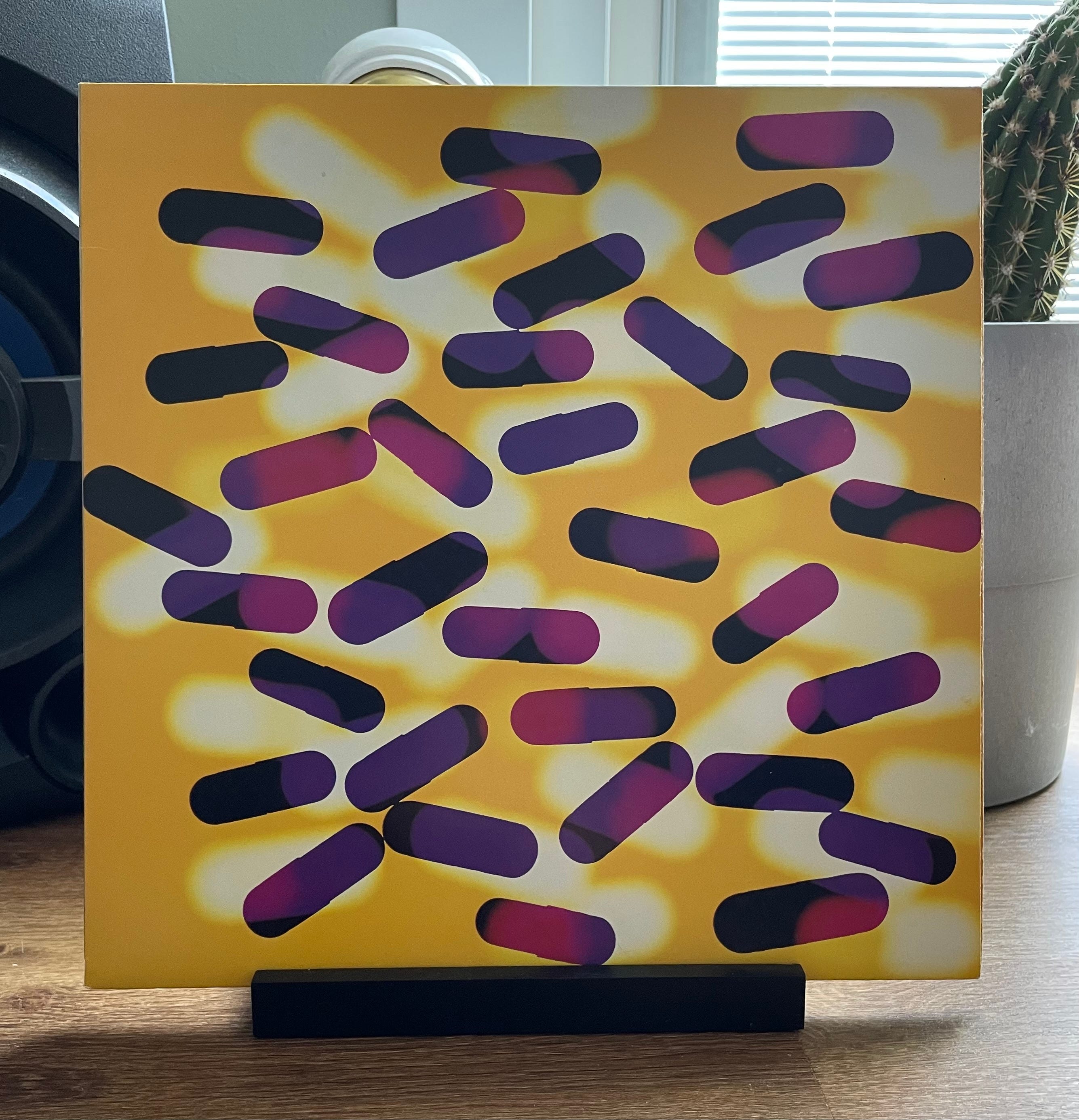
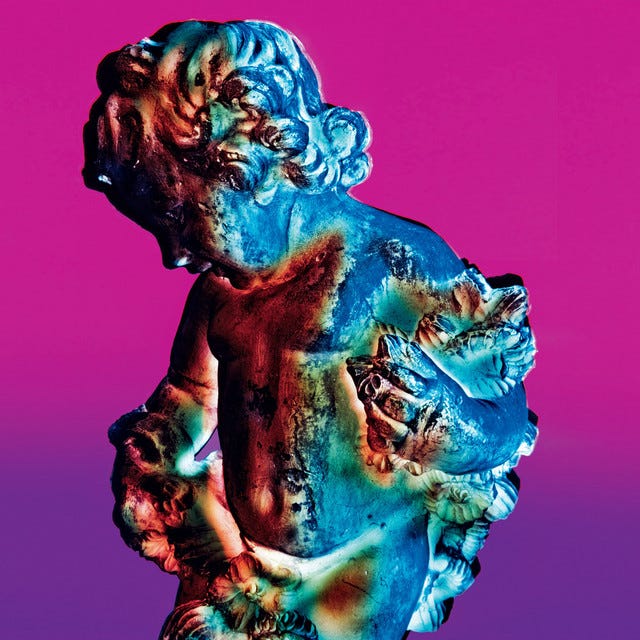
Album art courtesy of Qwest Records

Good Morning!

Today we’re taking another quick look at ‘Technique’ by New Order as it takes on Billy Joel’s Storm Front on Day 29 of the Best Record of 1989 Challenge.


There’s not much point in burying the lede here; this lookback won’t come close to being objective. If you’ve been with us for more than a few weeks, you know my love for this band and are keenly aware that On Repeat Records could devolve into a New Order fan page at any moment.

That said, this record is a massive achievement for the band at a time when not much else was going right for them-certainly not internally, anyway. To put something out amidst so much strife and financial pressure alone would be worth noting. That it is some of the best work they’ve ever produced makes it all the more remarkable.


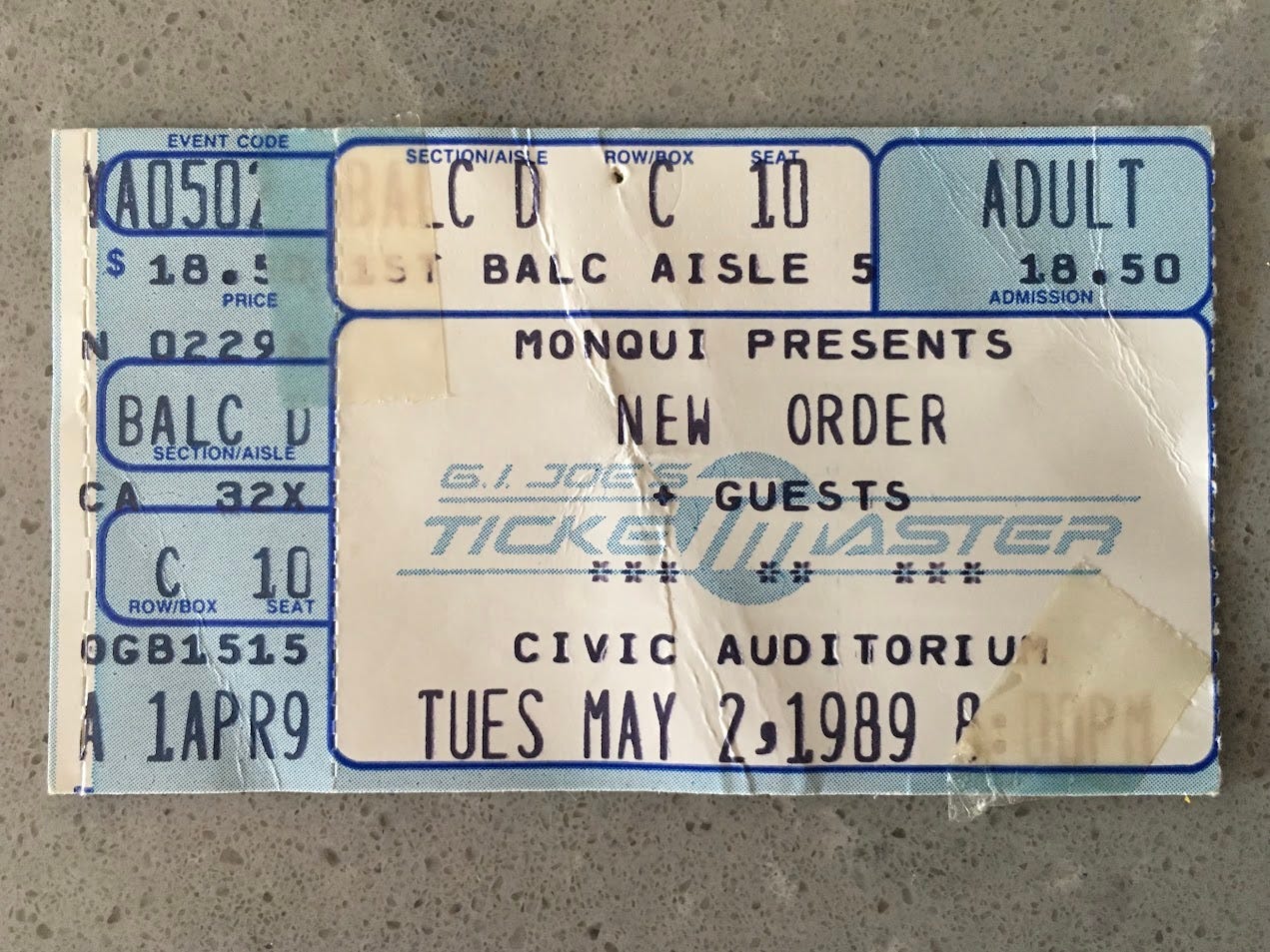
Most people will remember March 24th, 1989, as the date the Exxon Valdez ran aground. I remember walking to the closest shopping mall to get tickets to see New Order.

That was the closest Ticketmaster outlet, and I was probably halfway down the street before my mom had even finished giving me permission. With the benefit of hindsight — and now being a parent myself — I now know what a huge leap of faith this must’ve been for her. We lived in the suburbs, and she was giving the green light to an (almost) 14 yr. old to ride the bus across the metro area to see a band she heard nonstop but didn’t know.

I suppose on some level you just know when to let your kids leap.


The band was on the road supporting their 5th studio album, Technique, and it came out when I was in junior high. The record was one of the bright spots in an otherwise blah era for me.

If Low Life is a show at an intimate venue, Technique is a sweaty rave filled with strobe lights and ecstasy. Indeed, the record was partly recorded in Ibiza with the band off their rockers. Technique is firmly rooted in the sounds surrounding them in their new environs. They choose the sunny locale at Hook’s insistence after a run of recordings made in “dark and horrible” London studios. The band decamped for Ibiza, hoping the change in scenery (and menu of drugs) would have the same positive effect that New York had had for them years earlier.

It worked…sort of…

After four months, the band only had ‘Fine Time’ and a couple of other tracks recorded to show for their time on the island. Declaring their holiday over, their label called them back to the UK, where they finished the record at Peter Gabriel’s Real World Studios.

We had expected to hear a lot of acid house music when we got to Ibiza because that had taken off in Manchester two to three months before we left, but we didn’t – we were hearing something called Balearic Beat,” Bernard said.We were actually disappointed at first because we were really into acid house, and what we heard, this Balearic Beat, was this crazy mash-up of styles and really commercial-sounding but there was also some really good stuff. By the end of our time there we were really influenced by it.

Their time in the sun may seem unproductive on the surface, but it had left an indelible mark on the group’s sound.

Fine Time is an acid-house Balearic Beat classic. Round and Round1 is pop perfection and saw decent airtime on MTV.

Run is credited to not only New Order, but also (*checks notes) John Denver?!

Yes, really. Denver sued the band, alleging that the guitar riffs were lifted from his Leaving On a Jet Plane.The case was settled out of court, with his name subsequently added to the credits.

A mediocre picture of the fantastic ‘Fine Time’ 12”. Photo by author.

We could do a track-by-track breakdown, but the short version is this: Technique feels like the band’s most honest record. Whether that’s down to the drugs or the Balearic sun, I don’t know. In the end, I suppose it doesn’t matter.

Perhaps more importantly, it is economical. Listening to it, every note has its place, and there is nothing extraneous. It’s both a dance record and a pop record—in other words, a New Order record—but listening to it, there is a discipline that sets it apart from the band’s previous work.

The songs themselves are compact; the sequencers nailed down— there is no 9-minute version of anything on this LP. By this point, the band had also mastered the art of shifting between pop and dance tracks.

On Brotherhood, a distinct boundary exists between the two (literally- the styles each have their own side on the album). There are no guardrails here; the band makes segueing between styles look easy.

All of that is well and good, but why is it my number 1?

Technique was really the first record by the band that I found on my own. Yes, I knew them. Yes, I’d heard almost everything they had recorded up to that point. But this was different; I’d learned of its release on my own and gone and bought it with my own money.

No hand-me-downs from friends’ older siblings or songs clipped from mix tapes. You always remember your first…

Good records always take you somewhere special. Thirty-five years later, Technique still does that for me.


Listen:

New Order | Technique, 1989

Click the record to listen on the platform of your choice.

What are your thoughts on this record? Do you have any favorite tracks or memories associated with it? At 35, does it still hold up? Share your thoughts in the comments!


As for Storm Front, aside from it never having a chance going up against New Order, it’s not good. I might be the only one that likes “We Didn’t Start the Fire,” but even that’s just one song on a totally dour record. “Go to Extremes” is a nice bit of pop, I guess. The rest just feels like Joel mailed it in. No thanks.

Check out the full bracket here.

Info on the tourney, voting, and more is here.

As always, thanks for being here.

KA—
The Best Record of 1989: Day 28

#37 Tracy Chapman, Crossroads vs. #92 Emmylou Harris, Bluebird

Good morning!

Today we’re taking a look at records from Tracy Chapman and Emmylou Harris


Note: As many of you know, I recently wrote about a Best Record of 1989 challenge and noted that I’d be occasionally writing some of these up.

I’ve started doing some quick hits of each matchup and posting them directly to the page. Some will be longer, some won’t, and some might just be a handful of sentences. There’ll probably definitely be some typos.

Check ’em out and let me know your thoughts! Chin wags & hot takes welcome! Sharing and restacks are always appreciated.

KA—


If it felt like Tracy Chapman came out of nowhere with 1988’s “Fast Car,” it’s cause, well, she did. We loved the song (and record), but we really liked her backstory of busking while in school, etc. We love us a well-constructed pop song, but we really love the story of someone hitting it big- whether on the baseball field or in music. Rooting for the underdog is in our DNA.

Her self-titled debut checked a lot of boxes.

Love song? Check (“Baby Can I Hold You”).

Protest song? You bet (“Talkin’ About a Revolution.”).

And then, of course, there’s “Fast Car,” about a couple down on their luck—you know, a couple of underdogs. Of course, we liked the track! Those are just the singles; the rest of the album is equally solid.

In 1988, we were ready for Chapman’s voice and talent for storytelling.

So how’d she follow that record up? By making one suspicious of the very trappings of wealth and fame that had just arrived at her feet. I can imagine record execs listening to this with furrowed brows, wondering what to do. There’s no obvious single here. Carried on the momentum of her debut, it sold well enough, and those who bought it were rewarded with a record as in-depth and soulful as her first. There might not’ve been a blatant hit here, but this is no sophomore slump.

Indeed, the album sees Chapman tackling some of the same prickly subjects as before: social (in)equality, politics, and her own relationships. “Born to Fight” is a highlight, as are the title track and “Subcity.”

Crossroads is the sort of record that takes a few spins to soak in, but it’s grown on you before you know it. It showed both that Chapman was a force to be reckoned with and that she was going to stay true to herself and her style.


How Emmylou Harris manages to sound both like a songbird and someone who has seen some things is a magic outside the scope of this blog. That said, both are true no matter what (or whose) material she’s signing. The world got its first real glimpse of her as the singing partner of Gram Parsons on his Grievous Angel record (yes, there was Gliding Bird before that, but let’s be real; it’s not good). As for Grievous Angel? You should totally own it- at least buy a digital copy.

And grab one soon. It’ll change your life.

At any rate, something happened between the Gliding Bird and 1975’s Pieces of the Sky. Maybe it was Parsons (I mean, just listen to “I Can’t Dance!), maybe something else- but whatever forces collided, this is for all intents and purposes where things start- and where they get good.

Fast-forward 15ish years, and Emmylou’s a bona fide star with at least a fistful of good records and a couple of S-tier ones to boot. She’s sung her own songs, lent her voice to the work of others, and sang with others (Trio with Dolly and Linda). There have been peaks and valleys.

Then, we get to Bluebird, which is a both of both. And maybe that’s its downfall. It’s trying to be earlier Emmylou while matching the style of the day. She can still knock ‘em out of the park, though. Witness her take on John Hiatt’s “Icy Blue Heart.” If it doesn’t move you, check your pulse. There’s no shortage of heartbreak here, no lack of being hard done by. Again, by this point, Harris has been through it. Even “Heartbreak Hill” is deceptively upbeat.

So there’s a couple of standouts and a bunch that are, well, kind of forgettable. Not even so bad as to stand out. Just midpack anodyne stuff.

To be clear, Harris could sing a grocery list and make it sound good, but we’re judging records here, and this one just isn’t that strong. There’s a reason a lot of lists of her discography slot this in mid-pack or worse.

Pick a couple of tracks for your playlists and put your money toward grabbing a copy of Grievous Angel instead.


Bottom Line: Two singers with one-in-a-million voices. Neither record is the hallmark of their respective careers, but when looked at as a whole, Chapman’s Crossroads is the better of the two.

My vote: Both my bracket pick and my vote will be going toward Chapman.

Any thoughts on either of these records? Agree/disagree with my takes? Which one of these would you vote for? Sound off in the comments!

Check out the full bracket here.

Info on the tourney, voting, and more is here.

As always, thanks for being here.

KA—

The Best Record of 1989: Day 27

28 Yo La Tengo, President Yo La Tengo vs. #101 Prefab Sprout, Protest Songs

Good morning!

Today we’re taking a look at records from Yo La Tengo and Prefab Sprout


Note: As many of you know, I recently wrote about a Best Record of 1989 challenge and noted that I’d be occasionally writing some of these up.

I’ve started doing some quick hits of each matchup and posting them directly to the page. Some will be longer, some won’t, and some might just be a handful of sentences. There’ll probably definitely be some typos.

Check ’em out and let me know your thoughts! Chin wags & hot takes welcome! Sharing and restacks are always appreciated.

KA—


Yo La Tengo has been around long enough now that most people who know the band have a favorite record, era, or run. But in those early years—before they became your favorite band’s favorite band- they were still feeling their way through to what they wanted to become. President is a preview of all of the boxes; whatever passes for a single in the YLT universe, a good slab of feedback, and an uncanny ability to pull off a cover song you never saw coming.

Regarding the “singles.” I should preface this by saying that the first two tracks on this album are two of my all-time faves by the band, and that they sit atop a long list. “Baranbay, Hardly Working” is an all-timer. It kicks off with a wave of hypnotic feedback that grabbed me instantly and has never really let go. The organ that comes in later and its repetition of it all sealed the deal. “Drug Test” is vaguely menacing— or at least as menacing as Ira Kaplan can muster.

“Orange Song” is a bit of garage rock the likes of which used to radiate out of garages nationwide. It’s hyper, a little bit rockabilly, and a lot unhinged. It’s fantastic. “Alyda” slows things down and is a lovely lilt featuring Georgia Hubley on backing vocals- something we’d see more of as the years went on.

There are two versions of “The Evil That Men Do” here- and in, yes, a harbinger of things to come, they are wildly different from one another (see also: “Big Day Coming” off of 1993’s Painful). The first (“Craig’s version”) feels like something from an Ennio Morricone fever dream- I say that as a compliment. Do psychedelic westerns exist? If not, they should. What a fun genre! At any rate, this would be a great track for one of those.

The second (“Pablo’s version”) is a 10-minute-plus blast furnace of sonic chaos. Like clouds parting, something resembling a “normal” (it’s all relative) song appears before the whole thing collapses back upon itself. If you count yourself in the “fan of noisy YLT” camp, you‘re in for a treat.

It all wraps up with the band putting their own spin on Dylan’s “I Threw it All Away,” because, of course, it does.

AllMusic describes this as the record that “gets to the heart of what makes this band tick.” That’s fair, but what President Yo La Tengo does best is show us a band on the precipice of greatness, giving us a preview of what’s to come.


I should preface this one by noting that Prefab Sprout’s Steve McQueen (or Two Wheels Good, depending on what side of the Atlantic you’re reading this on) is one of my favorite records. So much so that I essentially stopped listening to anything else from the band. I’ll carve out an exception for the band’s “The Sound for Crying,” but even that was on Life of Surprises, a Best Of compilation. Pound for pound, the first four tracks on Steve McQueen (“Faron Young,” “Bonny,” “Appetite,” and “When Love Breaks Down”) might be the brightest example of sophisti-pop from 1985. Maybe the decade?

Paddy McAloon can hold his own behind the mike (Wendy Smith can, too), and their vocals float on top of wonderfully complex rhythms and shimmering melodies.

Okay, that’s a lot of words to say. I wasn’t really sure what I was in for here. Skimming a couple of reviews, I saw what were, for me, red flags. Phrases like “stripped down” signaled that I’d be getting an acoustic or folk-tinged record. No thanks. But I was pleasantly surprised to hear it referred to as a logical next step to Steve McQueen.

If that was a nice surprise, realizing it’s more of a sequel than anything else was a delight. Why it was decided to squish a record in between ( 1988’s From Langley Park to Memphis) is beyond me. That one’s not bad either, but it makes their discography feel slightly amiss.

Any doubts I had left vanished after hearing the opening pair of “The World Awake” and “Life of Surprises.” “Faron Young” set an impossibly high bar (IMO), but these both rise to the occasion. It takes five tracks to get to anything stripped down, and “Dublin” is a doozy. It’s spartan with more space than sound as McAloon sings about the IRA. “Diana” is about Princess Diana, and as smooth as anything else in the band’s catalog.

“Pearly Gates” closes out the record with a rumination on mortality.

There’ll be no stampede on the Pearly Gates
I’ll say ‘after you,’ you’ll say ‘I don’t mind the wait’
There’ll be no stampede on those imposing doors
Naked and afraid, cowering we crawl on all fours
There’ll be no stampede on the Pearly Gates
I’ll say ‘after you,’ you’ll say ‘I don’t mind the wait

It’s a shame that Protest Songs wasn’t released in the order in which it was recorded. Had that happened, I have to think it would’ve served as a 1-2 punch with Steve McQueen and given the band some real momentum. As it stands, this record is known mainly to fans. C’est la Vie.


Bottom Line: Protest Songs was a genuine delight, and a huge case of “what might’ve been.” President Yo La Tengo is rough around the edges, but a huge case of “preview of what’s to come.”

My vote: My bracket pick and vote will be going to YLT.

Any thoughts on either of these records? Agree/disagree with my takes? Which one of these would you vote for? Sound off in the comments!

Check out the full bracket here.

Info on the tourney, voting, and more is here.

As always, thanks for being here.

KA—

The Best Record of 1989: Day 26

60 Biz Markie, The Biz Never Sleeps vs. #69 Love and Rockets, Love and Rockets

Good morning!

Today we’re taking a look at records from The Biz and 3/4 of Bauhaus


Note: As many of you know, I recently wrote about a Best Record of 1989 challenge and noted that I’d be occasionally writing some of these up.

I’ve started doing some quick hits of each matchup and posting them directly to the page. Some will be longer, some won’t, and some might just be a handful of sentences. There’ll probably definitely be some typos.

Check ’em out and let me know your thoughts! Chin wags & hot takes welcome! Sharing and restacks are always appreciated.

KA—


Pity Marcel Hall; he never quite gets the respect he deserves. Like a sort of Warren Zevon of Hip Hop, his biggest hit was a novelty (“Just a Friend”), featured a big ass beat and some seriously off key signing. The bars are relatable if not “fire,” and I’m willing to be that most people of a certain age can still recite them…or after a couple of drinks will willingly caterwaul the chorus at the local watering hole’s karaoke night.

Fun. But that doesn’t tell the rest of the story about the rest of Hall’s (aka Biz Markie), The Biz Never Sleeps. Once you get past that put-on silliness, the album is a goldmine of sampling, beats, and production. While Biz might not’ve had the best flow in ‘89, he was a dynamo behind the boards. And just in case that wasn’t enough, Marley Marl came through to mix it all.

Besides, “Just a Friend,” the other single off the record was “Spring Again,’ an all-timer, IMO. Biz is still trying to lay that weird singing across the chorus, but man! The rest of it with Roberta Flack and Donny Hathaway’s “Back Together Again?” That sure sounded good booming out of the trunks in my neighborhood.

In a post just after Flack’s passing, I noted:

At any rate, this record found me at just the right time. People contain multitudes, but in 1988-89, you only needed five letters to sum me up: s-u-r-l-y.

Bad acne, bad hair (never quite figured that one out), and a worse attitude. Everything was terrible all the time. Even playing soccer- a game woven into my DNA- became an exercise in misery. This team could be better… Our opponents suck….Why can’t first-year students letter?

Blah, blah, blah. I was insufferable.

But hearing the right track at the right time was always the exception. There’d be a respite, if only for 3-4 minutes. I wasn’t the biggest Biz Markie fan, but this track did it for me. The horns up against that beat? Incredible! His bars? Solid. All made for a nice 3-4 minute respite. I’m old enough to know this is no longer my time to refer to songs as “bangers” or that I was obsessed, but both are true. I’m also old enough to remember the time before the internet and sites like whosampled.com. I knew enough to know Biz was sampling other tracks but not enough to know where to look to find out.

So we’ve got two singles—one a huge hit and one that should’ve been. But what about the rest of the record?

There’s plenty more silliness- topics covered include such “hard-hitting” themes as bad breath and kindergarten girlfriends- but also plenty more samples. You want soul? Maybe some funk? He’s got you. Have fun trying to place ‘em all!

One sidenote that needs to be pointed out: it’s not all fun and games here. “A Thing Named Kim” is problematic at best. After a pretty dope build up, Biz fumbles by ending with a shitty verse of transphobia. Delete the punchline. It’s some standard issue braggadocio of the day, and put together nicely. Leave it in and it ages like milk left in the sun. Even looking at it through a 1989 lens, it’s still a letdown. Did it reflect the times? Yeah kinda, but that doesn’t mean we can’t call it out.

Luckily, our man gets back on track with “I Hear Music,” this writer’s second favorite track on the record after “Spring Again.” Why this has been relegated to deep cut status is beyond me. This has “summer playlist staple” written all over it.

Biz Markie’s legacy might be “Just a friend,” but this record is so much more than that; just like Excitable Boy is so much more than “Werewolves of London.”


At my school, having a Bauhaus (or synth-era Ministry) shirt was the ultimate badge of indie cool. This was before such things became common, and to have one was to tell people you had zero interest in whatever was on the radio. There’s probably a timeline out there where “Stigmata Martyr” was a huge hit, but we’re not living in it.

How strange, then, to have 3/4 of the band with an unlikely hit on their hands with “So Alive.” To be fair, it’s got all the ingredients of a hit song recipe: steady beat, beguiling backing vocals, and Daniel Ash half-whispering into your ear.

It’s also unlike just about everything else on the record.

There are harder-edged tracks that might remind one of the more jagged edges of Bauhaus. “Motorcycle” is loud and repetitive in all the best ways. Yeah, it’s about…motorcycles..but who cares? It sounds fantastic. For my (entirely subjective) money, it remains the band’s best.

“No Big Deal” feels like something stamped out at The Jesus and Mary Chain’s song factory (pre-Automatic). It’s good, but doesn’t lend itself to pretend listens.

The knock on this record is that it’s uneven. Like, really uneven. The highs (“Motorcycle”) are offset by things like “The Purest Blue,” a track that takes far too long to go absolutely nowhere. Seriously, was there a song quota they needed to meet?

At 6+ minutes, you could probably make the same argument for “Bound For Hell,” but at least it’s got a rocking groove, some harmonica, and you have a decent time getting there. Meanwhile, some of the slower tracks like “The Teardrop Collector” border on annoying. Not something you want to say about these guys!

Ultimately, this record’s songs sound better in isolation than they do as a collective. It’s a good enough record, but there’s a reason Love and Rockets shirts never really caught on.


Bottom Line: Despite its faults, The Biz Never Sleeps works really well as a whole album. Maybe it’s first-day jitters, but Love and Rockets’ debut is uneven, quite so when compared to today’s opponent. Winning this sets you up to face Pretty Hate Machine in the next round, so that victory might be short-lived. Nevertheless.

My vote: Biz Markie all day.

Any thoughts on either of these records? Agree/disagree with my takes? Which one of these would you vote for? Sound off in the comments!

Check out the full bracket here.

Info on the tourney, voting, and more is here.

As always, thanks for being here.

KA—

The Best Record of 1989: Day 25

5 Nine Inch Nails, Pretty Hate Machine vs. #124 Dog Faced Hermans, Everyday Timebomb

Good morning!

Today we’re taking a look at records from Nine Inch Nails and Dog Faced Hermans.


Note: As many of you know, I recently wrote about a Best Record of 1989 challenge and noted that I’d be occasionally writing some of these up.

I’ve started doing some quick hits of each matchup and posting them directly to the page. Some will be longer, some won’t, and some might just be a handful of sentences. There’ll probably definitely be some typos.

Check ’em out and let me know your thoughts! Chin wags & hot takes welcome! Sharing and restacks are always appreciated.

In case you missed this week’s earlier matches:

Day 21: #13 Janet Jackson, Rhythm Nation 1814 vs. #116 King’s X, Gretchen Goes to Nebraska

Day 22: #52 Laurie Anderson, Strange Angels vs. #77 Wire, It’s Beginning to and Back Again

Day 23: #20 Julee Cruise, Floating Into the Night vs. #109 Eleventh Dream Day, Beet

Day 24: #45 The Beautiful South, Welcome to the Beautiful South vs. #84 Keith Jarrett, Changeless


My junior high school was a hothouse. It had low ceilings and few windows (this was intentional- it was intended as a security measure). The few that did exist were of the reinforced variety.

It didn’t feel safe, it felt like we were in County. And it was overcrowded. So crowded in fact, that they had to add 2 extra minutes of passing time between periods because of the human gridlock.

My friends and I used that time in traffic to swap mixtapes, talk about bands, and whatever else 14-year-olds do.

And so it was in A-hall that I had a copy of this record pressed into my hands. I waited until the bus ride home to put it in my Walkman (related: I’m old).

It didn’t take long for Pretty Hate Machine to rearrange my mind.

“Sin” is far and away my favorite track on the record. The beat is relentless and never lets you catch your breath. It’s desperate and danceable all at once. “Head Like a Hole” has some of the most visceral lyrics on an album full of them. When Reznor screams, “I’d rather die than give you control,” you feel it. Slower tracks like “Something I Can Never Have” are solid, even if they sound like how driving on a surface street feels right after getting off the freeway.

Nine Inch Nails’ sound is dominated by clanging synths and sardonic, shrieking vocals. But Reznor stretches that industrial-strength noise over a pop framework, and his harrowing but catchy music has taken the college charts by storm.

In 1989, the music world was as crowded space as those halls. Even in the alternative and/or industrial genres, it was hard to stand out. But this record did and does. It took the college charts by storm, and my group of friends were along for the ride.

Note: Pretty Hate Machine made my list of Top 100 albums, coming in at #26. This first appeared as part of that project.


Years ago, I was reading a review in (I think) Flipside in which the reviewer mentioned being so annoyed by the record’s intentionally stupid title that they almost didn’t bother listening to it. If memory serves, it still got a pretty poor rating, but that always stuck with me.

Sometimes, you can judge a book by its cover.

Fast-forward to today, and I was 90% sure I was going to do the same with Dog-Faced Hermans. I mean, really? But I rationalized it by seeing that they’re from Amsterdam by way of Scotland and thought maybe, just maybe, it’s some slang term that presents much better overseas.

Yesterday, I cited a review using the term “ostinato feel” and shared that my new life goal was to shoehorn that term into as many reviews as possible. I was only half-joking, but it only took a day.

Everyday Timebomb is a blitzkrieg of jazz punk, angular guitars, noise, and repetition—so, so much repetition. There are some African elements here, and I’ll give them points both for their social stances and the use of oddball instruments, but man, does this get old fast. Save yourself some time and just skip to “frock.” It goes long on jazzy grooves and (relatively) short on squonks and dissonant noise.

There are seven tracks here, and once you’re about a minute into the first, you’re good. There is much ostinato. The novelty comes in hot but burns out quickly—another case of being able to judge a record by the cover. No thanks.


Bottom Line: Thank you Trent Reznor for putting out a record that rearranged my mind. Thank you Dog Faced Hermans for reminding me that I have a low tolerance for “Jazz punk.”

My vote: Pretty Hate Machine all day.

Any thoughts on either of these records? Agree/disagree with my takes? Which one of these would you vote for? Sound off in the comments!

Check out the full bracket here.

Info on the tourney, voting, and more is here.

As always, thanks for being here.

KA—

The Best Record of 1989: Day 24- The Beautiful South vs. Keith Jarrett

Today’s battle sees some sophisti-pop squaring off against some improv jazz.

Good morning!

Today we’re taking a look at Welcome to the Beautiful South by The Beautiful South and Keith Jarrett’s Changeless.


Whatever else you might say about Paul Heaton, he’s definitely got a flair for the subversive. Few others can wrap acerbic lyrics in sunny pop melodies the way he can. Before we even get to that, we have the band name itself. The Beautiful South is a bit of dry wit for a band from Hull (very much in the north). The group itself came into being when Heaton and David Hemingway left Housemartins at their peak. This, of course, also meant that Norman Cook was now free to reinvent himself as well. If that name doesn’t ring a bell, maybe Fatboy Slim does.

Then we get to the cover, featuring a woman with a gun in her mouth and a man lighting a heater. Wild album art conceals some gorgeous-sounding sophisti-pop. And that gorgeous sound? Well, that’s covering up some of the most acerbic lyrics you’ll hear in this bracket challenge. No one pairs angsty words and upbeat, catchy sounds quite like our Mr. Heaton. See also: The Housemartin’s Happy Hour Again

Distilled own, the one-liner for this record could be “Housemartins as Sophistipop.” or “Close cousin to the Smiths.” Heaton’s less of an asshole than Morrissey turned out to be, so that’s good. I might also throw in a cheap comparison to Prefab Sprout, but that might be because Two Wheels Good just turned 40, which means I’ve been playing it a lot lately. That Petrol Emotion as well just in case someone wants another one.

The melodies are bright. They’d be right at home in an elevator, er, “lift.” The topics are alternately between cynical and straight-up grim (looking at you, “Woman in the Wall”). Along the way, we get treatises on love lost, irony, and no shortage of brass which is a nice touch.

“Oh Blackpool” is a standout for this writer and feels like a 45 rpm of Happy Hour Again played at 33. And then there’s a cover of Pebbles’ “Girlfriend.” Because, of course, there is.

Welcome to the Beautiful South is Heaton at his peak— and that’s coming from a staunch Housemartins fan. The arrangements are on point, and the lyrics are pointed. It’s pop, but he still makes you work a bit for it (the first two tracks are each 6 minutes, for example.

Being jaded never sounded so fun.


So, fair play to Keith Harrett (or rather, the “Keith Jarrett Trio”), but I probably shouldn’t have played this at 6:13 in the morning. This is relaxing piano bar stuff. It’s the sort of thing you wash down with a finely aged scotch, not 2-3 cups of coffee that come from a Bunn machine. Changeless is nice jazz (not derogatory), but this is/was the wrong time and place for it. It’s also a live record, which I didn’t realize until I was well into it. The crowd is that muted- even when adjusting for scale/genre. that’s all well and good, but man, if you’re gonna do a live record, leave some of that energy in! If we wanted a studio album, we’d play one, ya know?

Also: The short track on here clocks in *just* under 9 minutes, which, I mean, ok.

AA review I read of the album refers to it as “subversive,’ but having just come off the Paul Heaton ride, I’m not sure what to make of that statement. Apparently, in this context, it’s in regards to the improvisation. Turns out this entire record was made on the fly. That’s truly admirable! No snark from me on that point.

Another one gifted us this gem: As per usual, Peacock sparks the trio’s deepest-running flame, and his amplified bass line herein lulls us into a memorable groove. The ostinato feel builds through Jarrett’s grinding left hand while DeJohnette’s never-cease-to-amazing subtleties draw us in.

Jesus.

As if jazz fans didn’t already have a (usually undeserved) reputation for being haughty and aloof. Can you imagine someone reading a review like this and being inspired to run out and grab the record? Dear reader, I most certainly cannot. And we haven’t even made it to the liner notes, which are wild. Talk about being high on your own supply.

To wit:

And that’s a shame, ’cause honestly, this is pretty solid all around. “Lifeline”–all 11 minutes plus of it— was a favorite, and I could see myself cueing it up again at some point.

Also, New life goal: work “ostinato” into as many reviews as I can.

NOTE: I want to give a huge shoutout/thanks to friend of the newsletter Greg Layton who helped a ton by lending his expertise and perspective, as well as unearthing a copy of the liner notes and some reviews. His help was invaluable. Greg runs The Jazz Tome, which is a goldmine of record covers, liner notes and more. Seriously, cancel your plans and go check it out.


Bottom Line: Two well done records, neither of which would normally normally be in my wheelhouse. Both are well polished, shiny gems. One has Paul Heaton’s sardonic wit. The other has “ostinato feel.”

My vote: bracket and ballot are both going to our friends from Hull.

Any thoughts on either of these records? Agree/disagree with my takes? Which one of these would you vote for? Sound off in the comments!

Check out the full bracket here.

Info on the tourney, voting, and more is here.

As always, thanks for being here.

KA—

From the Archive: A Quick Revisiting of Wire’s ‘IBTABA’ Album

Today we’re revisiting Wire’s groundbreaking “It’s Beginning To And Back Again” album as it takes on Laurie Anderson’s Strange Angels in the battle for The Best Record of 1989.

When I was a soccer coach, Most players had one or two go-to moves, got pretty good at them, and then got complacent. It was fairly predictable. It’s also incredibly easy to coach against.

Much better—and much more interesting—were the players unafraid to do what I (very professionally) referred to as trying shit. These players might not have been blessed with speed or height, but their superpower was unpredictability.

These players always had a spot on my roster.

Similarly, Wire has never been afraid to experiment with new sounds, bend genres, and ignore convention.

In other words, they’ve never been afraid to try shit.

Of course, Wire is the band that gave us Pink Flag, Chairs Missing, and 154, arguably one of the best three record runs of our time. They followed that by splitting up for several years.

“There are those who say Wire was the best punk band ever because it broke all of the rules, didn’t stick with any of the blueprints and did actually what it wanted…I just wouldn’t call that punk, personally. Punk is just one of those words that’s so overused that you have no idea what it means anymore.”

~Wire frontman Colin Newman

In 1985, they reunited and again tried something new, this time swapping jagged guitars and minimalism for a more electronic sound. They had found synthesizers on their hiatus and embraced them. Signed to Mute, they delivered a 1-2 punch of 1987’s The Ideal Copy in 1987 and A Bell Is A Cup…Until It Is Struck the next year. The band’s live sound was always quite different from what listeners experienced on the records—mainly because the technology they used to create the music in those days wasn’t exactly easy to load in the van and take on the road.

Nevertheless, there was a growing demand from fans for a live record. That could’ve been easy. Record a show or two, clean the tapes up in post-production, and ship units. Simple enough. But Wire’s never been one to take the easy route. Instead, they decided to try something new.

Enter It’s Beginning To And Back Again (“IBTABA”)


The quick and dirty story of IBTABA is that the record is 11 alternate takes, half from The Ideal Copy and A Bell… and the rest previously unreleased. Describing it that way is also reductive. Wire didn’t just mix things up; they took the songs, dismantled them, and rebuilt them using overdubbed guitar, synth, and vocals—most of the drum parts stayed. The results are (almost) wholly new tracks.

An album of remixes also often represents a creative drought, a cash grab, or both. And those indictments would have been justified had these been straightforward reworkings. But they’re not; they’re complete revampings and remodeling of what previously existed. In many cases, the titles are the only recognizable things left standing.


Experiments sometimes represent breakthroughs; sometimes, they end up with shattered glass on the lab floor. One of the knocks against IBTABA is that it’s a mixed bag. Some of the songs are brilliant, and some are… not.

“Finest Drops” is heavier than the originals, and that extra bounce makes for a superior version. The grit and bleak imagery of “German Shepherds” benefit similarly from a revamping here (IBTABA’s title is derived from a line in this song). And most people agree that this version of “In Vivo” is much worse than the original mix. It’s also worth noting that it wasn’t included on the original vinyl release and was only added later when the label wanted another single. If A Bell Is A Cup…Until It Is Struck represents peak pop for the band; this record represents an intentional dive back toward the experimental.

The 12” version of “Eardrum Buzz” (the second single) is here and is as radio-friendly as the band gets. In the opinion of this writer, the 12” is light years better than the original, and the original isn’t bad.  It was also the on-ramp to the band for many, thanks to decent rotation on MTV. At the opposite end of the spectrum are tracks like “Over Theirs,” which was likely the off-ramp for those same fans, and why you saw so many copies of IBTABA in the cutout bin not too long after the record was released.


Distilled down, IBTABA represents some amazing results and some…not so amazing ones. It’s a signpost that marks the band’s second era and closes the book on the Pink Flag/Chairs Missing/154 triad for good. Call Wire what you will; at this point in their career, they might’ve still embraced the punk ethos writ large, but the days of playing punk music were done and dusted.

There is also a timing issue, of course. 1989 was a seminal year for albums; the calendar was packed with great releases—and IBTABA isn’t in line with any of them. If you wanted comfortable, indie, or “college rock,” this wasn’t the record for you. But if you like unpredictability and bands opposed to complacency, then IBTABA checks a lot of boxes.


(sigh)

Ok, look; I know I’m supposed to hold this album in some high(er) regard, but I just can’t. I know Anderson is a beloved figure who has long been on the cutting edge of avant-garde art and was Lou Reed’s partner, among other notable achievements.

None of that takes away from the fact that the entire time I listened to Strange Angels, I felt like I was watching a rehearsal for a play at the Learning Annex directed by someone who thinks they’re too good for the place. At its best, it felt like it was trying to punch above its weight (“Ramon”). At its worst, it was just annoying (“The Day the Devil”). I’m not trying to rain on anyone’s parade here- if you like this, more power to you! But man, life’s just too short…

Bottom Line: One of my Desert Island Discs is facing off against a record I could barely get through. Strange Angels was always going to have a steep climb, but the record’s pretentious nature didn’t help.

My vote: Bracket and vote are for IBTABA, without a second thought.

Any thoughts on either of these records? Agree/disagree with my takes? Which one of these would you vote for? Sound off in the comments!

Check out the full bracket here.

Info on the tourney, voting, and more is here.

As always, thanks for being here.

KA—