
Subscribe to continue reading
Subscribe to get access to the rest of this post and other subscriber-only content.
Your antidote for the music algorithm
Subscribe to get access to the rest of this post and other subscriber-only content.
The ways we discover and create music continue to evolve. Matthew Vanderkwaak’s new project is shining a light on both his own music and other emergent Canadian artists.

Photo: Samuel Landry
It’s 2025, and many of the guardrails and gatekeepers that used to decide what music we consumed are gone. We are no longer bound solely to whatever an A& R rep might decide we like. We can decide for ourselves.
That goes for artists as well. Most of us grew up with the narrative that discovery is either by sheer luck or after getting in the van and burning hard miles down the road. And even if you wanted to make a record, that might prove cost-prohibitive.
While some of that is still true, for the most part, the barriers to entry are lower than they’ve ever been. Today, it’s entirely possible to make a record using your phone and a few other software programs. You can do this without ever leaving your bedroom.
So that’s the good news; if you want to make a record, you can! The not-so-good side effect is that listeners must wade through more and more records before finding you.
Discovery might’ve changed forms, but it still matters.
Enter Matthew Joel Vanderkwaak. Matthew is from Atlantic Canada and is an artist himself. Taking a page from the likes of Fog Chaser, miter and olivia rafferty, he’s creating music in real time, using new pathways, and his readers get to hear it first.
Further, he’s committed to raising the profile of other artists and has a series where he spotlights emerging Canadian musicians, with an emphasis on Canadian folk and country music.
In 2025, algorithms and digital platforms are making a lot of noise. Artists/curators like Matthew Vanderkwaak provide a valuable signal, lighting the way for new listeners.
And with that, I’ll get out of the way and let Matthew share his work.
Enjoy!
KA—

I’m Matthew Joel, an artist from Atlantic Canada on a quest to encounter the spirit of Canadian folk and country music as it lives and breathes in our moment. I’m here today to share about my new project, The New Canadiana—a journalistic series about regular and mostly unknown Canadians who are writing, recording, and releasing music right now.
In the age of algorithmic curation and procedurally generated noise, I think folks are more hungry than ever to make meaningful connections with the human beings who make the music they love. This might be one of the major upshots of ai-generated media—it shows us how precious human-made art really is. More than ever I want to feel I know the people making the music I’m listening to, and more than ever, I’m learning that this kind of relationship requires an almost heroic act of focused attention. That attention, though, leads me into the spirit of art-making that inhabits human life and makes it special.
Last year, I finally finished grad studies and realized I wanted to start recording and releasing music again. It turned out that after 10+ years of desk work, academic writing, and listening to Carrie and Lowell on repeat, a lot had changed in the world of music marketing and promotion. Back in 2010, it was all about selling CD-Rs to my friends, posting on tumblr, and sending out mass emails hoping to strike gold in the blogosphere. I had never distributed music to streaming platforms before. If I did, would anyone hear it? How could I find a community of interested listeners?
Purveyors of music-biz best practice said that I should find out who else was making music like mine and do whatever they did. But who even were these people? Where could I find them? While asking these questions from within the horizons of social media and streaming platforms, I felt lost. The fact was that many of the people I knew making beautiful music had almost no traction on a place like Spotify. But at the same time, as I gathered more and more of this pressingly beautiful music together, I started to see common threads running through these different Canadian cities.
My conviction is that algorithms cannot be trusted to tell the stories of the human beings who make the art most precious to us. It takes human beings to make known what is truly human in our music. Of course, here at On Repeat Records, I’m preaching to the choir. This is how The New Canadiana was born—out of my attempts to practice attending in a more structured and public way to the beautiful human-made art that is all around me.
In this post, I’m distilling what I’ve learned from the year so far: three rules for attending to the music of a place. I’m especially happy to share about these principles, because what I’m seeing in these Canadian cities must be happening everywhere else too. I want to know how you are following rules like these and what you have discovered along the way.
In the effort to resist the algorithmic anonymization of music, I think each of us has a special vocation in the places we belong to. The first rule is to begin with the music made by people you know in places you know. Then, follow the threads. Trace the outlines of the scene that you are at the centre of by virtue of the fact that you are the one listening. You are the one who most of all can understand the meaning of the music that arises out of the situation that you also arise out of. And the rest of us need you to help us access to the art you are most equipped to hear.
The spirit of locality is very close to the spirit of music making. Human-made music belongs somewhere, and that place is not primarily an Instagram reel or Youtube video (which are only records of an event). Canada, which is ostensibly the subject of The New Canadiana, is, in truth, much too large a subject.
Instead, I have begun my quest with the actual Canadians I know whose music burns bright in my ears and heart. This first rule is about learning to trust that this feeling shows me the way forward. There’s no one else with my particular experience of this music made by these particular people. This means I have a task—something to attend to.
The great threat to music distributed by streaming platforms is that it becomes a mere mechanism to evoke a mood or vibe without ever being allowed to become an end in itself. By contrast, I’m amazed at what I discover when I sit down with a friend and really ask them about their art. I might have assumed that the public nature of an interview would involve too much self-conscious reflexivity to invite meaningful reflection. On the contrary, I find that when I have a conversation that is on record, this imparts a focus and intensity that elevates my awareness of what we are trying to explore together.
As I prepare for interviews, I bring a structured mode of attention to the music that I rarely make time for. As I pay attention, I start to get curious: what makes this music work? What is it saying to me? How can I dialogue with its particular beauty? While conducting these interviews, I feel my conscience prick—why haven’t I asked my friends these questions before? They’ve made this beautiful art, and the meaning of its beauty is at risk of slipping by, unnoticed unless someone stops to recognize what has occurred.
All it takes to dignify a work of art is attention, and the third rule is to give what you have understood in the art a public voice. Let us infiltrate online spaces designed to manipulate and monetize attention with the records of what we have discovered on the ground and in our bodies with other human beings.
Let us keep coming back to places like On Repeat Records to celebrate the beautiful music that has made itself known individually upon each of us as individuals. Keep a record of what you notice—snapshots of live music, reflections on concert experiences, evidence of physical media, listening journals, conversations shared between friends and fellow aspirants. The record of these experiences matters because only a human can access what is human in a work of art.
I’ve committed in 2025 to make my discoveries public in two ways:
It all started as a chance to work out where I can locate my own music, and what I’ve discovered instead is that there is a world to which I already belong. Give the interviews a read and the playlist a listen and let me know what you see in them.
How many of you are already applying principles like these in your own practices listening to music? What have been the results?

Kevin here again: Thank you to Matthew for sharing his work, and thank you for being here. Be sure to check out his project and the other fantastic interviews he’s already done!
Four decades on, the band’s third release sounds as new as it did on Day 1.
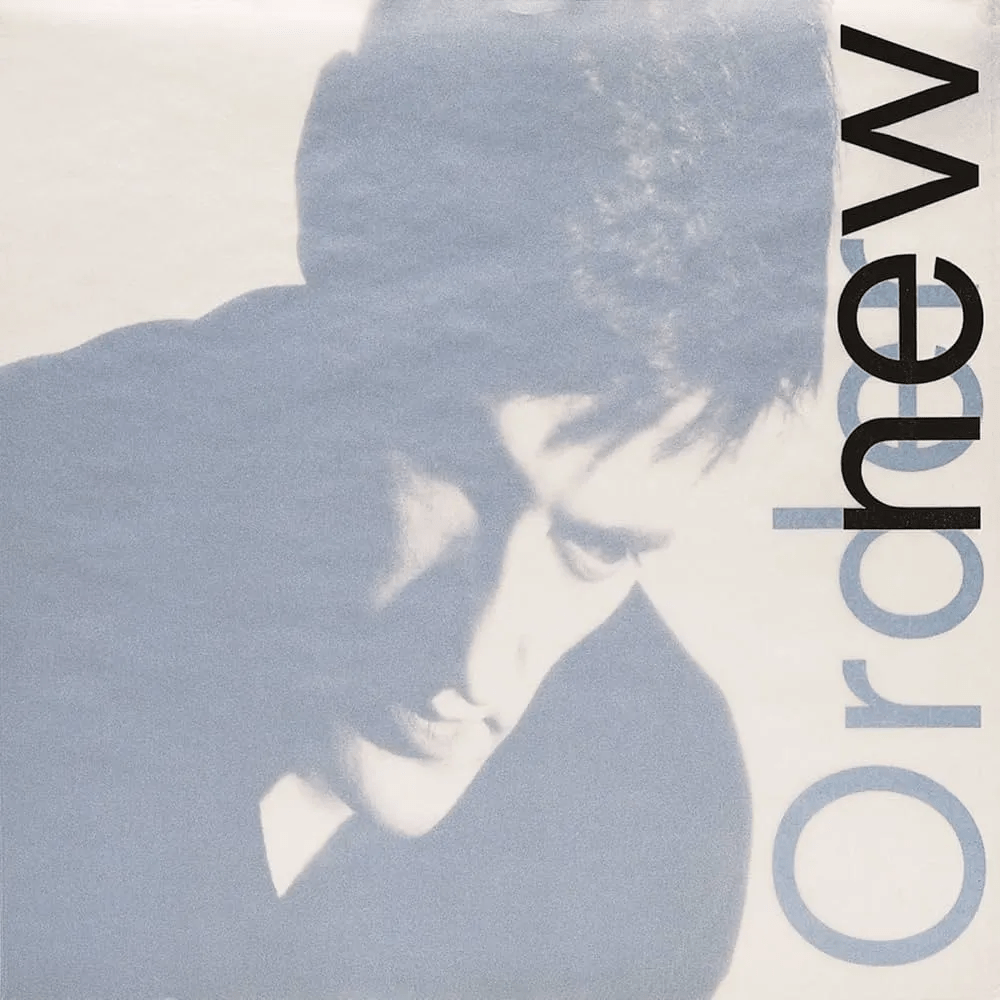
Today we’re taking a quick look at New order’s Low Life LP as it turns 40.
If you’ve been here more than a day or two, you know my love for this band. Various people have described it as “rabid,” “partisan,” and “a lot.” I can’t argue with any of those, nor would I want to. I’m old enough to still reflexively sneer at the term “fanboy,” but when the shoe fits…
At any rate, this isn’t the first time the band has grabbed some column inches here, and it won’t be the last. Indeed, some of the first writing I ever did online (not counting shitposting in aviation forums) was on the band. Along the way, we’ve covered their underrated tracks, force-ranked each closing track of the first ten records, and twice made the case why they should be in the Rock and Roll Hall of Fame. Expect a third around this time next year.
TL; DR- I love this band and I love this record.
The Transmissions podcast (correctly) described the band as one that changed the world. Twice. I just described them as one I shamelessly love. This first ran as part of a piece I wrote for Matty C’s What AM I Making newsletter, where I talked about their first four records.
Low Life is the third of that lot, and 40 years on, it is still one of their best. To my ear, it sounds as relevant now as it did on day 1. What do you think?
KA—
I had a giant poster of this record cover for years, and I was well past the “unframed poster” age when it finally came down. It survived more moves than many other supposedly more important possessions. (and more than a few relationships, jobs, etc.). New Order—or rather their graphic designer Peter Saville—also habitually released records with beautiful covers. Every release was a marriage of sight and sound. Saville wasn’t picky, either; he was at home tapping into Bauhaus or Constructivist influences as much as he was classic art. In this case, we got the first—and to date, only— cover to feature pictures of themselves on the cover.
Low Life first hit my ears early in junior high. I’m now pushing fifty, and still play it quite often. The idea that I now have a kid the same age I was when I first found this is mind-bending and probably a story for later.
The album is tight from A1 to B4, with almost no missteps. The punchy “Love Vigilantes” kicks things off, and the listener immediately knows things will be different. First, the lyrics are a narrative (the lyrics finally tell a story! Stay for the surprise at the end!). The frantic “Sunrise” features one of Hook’s most propulsive bass lines–really, Hook’s bass playing is solid across the entire record– and the tandem of Morris & Gilbert adds a pop layer to everything.
Low Life marks the spot where the band finally decided to include singles on their records, though they were often heavily remixed. The first single was the glorious “The Perfect Kiss” (this author’s favorite song, not just on the record but of all time). The only thing wrong here is that they used the 5-minute version, not the epic 9-minute 12″ single. The record’s last track, “Face Up,” starts moody before shapeshifting into a very poppy track with Sumner practically yelling, “Oh, how I cannot bear the thought of you!”
I don’t know who he was singing about, but I still don’t like them.
This is also their first record that feels like a record with an overtly intentional progression and lyrics that aren’t intentionally vague. It’s meant to be consumed in whole. Words are used to tell actual stories here–at least in a few places.
The result? A blindingly good record
As always, I’d love to hear your thoughts on these records! Did I get it right, or am I way off the mark?
Good morning! Need an antidote for the algorithms? Looking for a place to share the music you love with like-minded people? You’re in the right spot.
As always, thank you to those who have recently upgraded your subscriptions. Your direct support fuels this community and makes a positive impact. Shares and reposts all help as well! Thank you!
When you’re ready, joining them is easy. Just click here:
On to the music:
For those of you who are new, we kick off every week by sharing what we’ve been playing.
The playlist below is some of what I’ve had in heavy rotation. This week, we’ve got sounds from Santa Fe to the South Coast. Sounds from close to home and tracks from a Million Miles Away.
Now it’s your turn.
What caught your ear this week? Any new releases or shows you’re looking forward to?
Whatcha got? Share your thoughts in the comments!

Album art courtesy of Asylum Records
Today we’re reaching into the crate and dusting off this classic from Warren Zevon.
Maybe it’s just my timeline, but Warren Zevon seems to be having a moment on here recently. As much as I kvetched about this year’s Rock and Roll Hall of Fame nominees , I was happy to see him get in via their “Musical influence” category. A side door’s still a door, right?
Or, as Brian of 3 Albums 6 Old Guys put it:
As a fan, I’ll put it another way. Recently I visited the Baseball Hall of Fame in Cooperstown, NY. Walking among the plaques, I found Gil Hodges, player with the 1955 World Series champion Brooklyn Dodgers and manager for the 1969 World Series champion New York Mets. Did I think to myself, “yeah, but he made it via the Veterans’ Committee (actually, by that time, the Golden Days Committee)”? Absolutely not. I thought, “that’s right, Gil fucking Hodges, Hall of Famer.”
Zevon encountered some pitfalls along the way—some self-inflicted, many due to the vagaries of pop culture—but there’s no question he deserves a spot in the hall.
For my money, it’s an honor long overdue for the man responsible for writing the best opening line in rock history, and it’s worth taking another look at what I consider his best record.
Last year, Sam Colt and I shared our top 100 albums. Excitable Boy was my #41, and where the words below first appeared.
I still wonder if I shoulda slotted it in higher up the chart.
KA—
The real question isn’t whether or not Warren Zevon is a fantastic songwriter. It’s whether or not he sees himself in the characters he writes about or whether he’s in on the joke. This record is home to his biggest hit, “Werewolves of London,” and one of the greatest songs ever (“Lawyers Guns and Money.”) The former often gets him lumped in with one-hit wonders and on Halloween playlists. Shame, really- did Bobby “Boris” Pickett name-check Trader Vics or have Fleetwood Mac’s rhythm section backing him up on “Monster Mash?” I think not.
The latter is a great example of why so many people keep coming back for more. If you ever want to write a great opening line, write out, “I went home with the waitress/ the way I always do,” and stick it to the side of your computer. Good luck. This is the sort of lyric you could base an entire novel on. Maybe that’s what Carl Hiaasen did.
The title track is field trip through any number of psychoses. “Nighttime in the Switching Yard” is Zevon’s attempt at a bit of funk, and it works well. Turns out he can get down with the best of ‘em. “Accidentally Like a Martyr” closes out the first side. I’ll be damned if I know what that means, but it does well to show his more serious, romantic side. It can’t all be wild adventures and cages with bones.
I mentioned Fleetwood Mac earlier, but the rest of the roster reads like a who’s who of the late ’70s SoCal scene; Linda Ronstadt and Jennifer Warnes sing backup on “Excitable Boy.” JD Souther makes an appearance. Waddy Wachtel is on here, because of course he is. There’s at least one Pocaro brother in the mix.
Zevon would go on to make many records after with various levels of commercial and critical success, but for my money, nothing afterward quite captures the same lightning in a bottle as this album does.
Thanks for being here,
Kevin—
Have any thoughts on this record? Do you own a copy? Where would you place it in his discography? Sound off below!
The flood of great records continues! Today we’re taking a quick look at the latest from The Tisburys, Mekons, and Silvis.
Longtime readers may recall that I reviewed 100 new (to me) records last year. Because I’m a glutton for punishment love music, I’m doing it again this year. This is the latest in the series.
Today we’re listening to the latest from The Tisburys, Mekons, and Silvis.
Every year, I celebrate all the great music we’ve been gifted while worrying that next year will see the other shoe drop. I first did that in December 2020 and have been proven wrong every month since. Not only are there a ton of releases steadily coming out, but it also transcends genre or any other artificial guardrail we try and put up—
In other words, a ton of good stuff is coming out, and there’s something for everyone. It’s almost overwhelming— but in all the best ways. Below is another batch that caught my attention recently.
Let’s get into it!

There was a time—even in the recent years— when Twitter had a few redeeming qualities. Sure, you still had to wade through AI slop, Temu ads, and tech bro weirdness, but the reward was connecting with people like Tisburys frontman Tyler Asay, and in turn the band’s fantastic Exile on Main Street, a record I described as
“… an album with a seriously well-put-together sound. The tracks are well-balanced, blending Americana, Power Pop, and just the right amount of jangle.
It’s meant as a love letter to Philly, but it feels like it could mean just as much to anyone, anywhere.”
Hard to believe it’s been roughly three years since that record’s release, but here we are. And here The Tisburys are with A Still Life Revisited. The band’s sound has evolved with each release, and this latest iteration shows them hitting on all cylinders.
With it’s rollicking piano and anthemic chorus, lead single “The Anniversaries” is a bit of sonic comfort food. But before we get there, we get to first pass through fantastic tracks like “Painted Eyes” with just enough horns, and the delightful, sensible pop of “Elephant Hotel” (this writer’s favorite track on the record), before ending on a strong note with “Here Comes The Lonesome Dove.”
If Exile felt like an homage to ‘90s college rock (it did), Still Life feels like a reflection on running full speed into the wall that is adulthood. The band might be growing up, but so is their style, with more harmonies and a fuller sound. They’re also not afraid to explore new ground (see: the dancefloor-ready “Wildfire”). The guitars are brighter, and the horns are more prominent (yes, please!). Asay might be singing about time marching on, but he refuses to sound down about it.
Visit A Still Life Revisited Here
A Mekons record in 2025? I can’t think of a more timely release. If you’re a fan of the band, it will not surprise you in the least that they’re not happy with the state of the world and have some thoughts about it. In a time of presidents floating Papacy trial balloons and measles on a comeback tour, current members Jon Langford, Sally Timms, Tom Greenhalgh, Dave Trumfio, Susie Honeyman, Rico Bell, Steve Goulding, and Lu Edmonds have gifted us an antidote. Will it surprise you to hear that the tracklist contains tiles like a “War Economy,” “Private Defense Contractor,” and “Sad and Sad and Sad?” Probably not. Nor will it shock that their particular blend of styles are on full display here. It’s leftist punk stylings with a steady beat, “War Economy” and “Mudcrawlers” in particular. Seen through her lens of historic British imperialism, it’s a record only Mekons could’ve made. The band is on tour and will return to the States starting in July. Catch ‘em if you can.
Experience the joy of Horrors here.
One of the things that amuses me most about living in flyover country are the chronic debates about which states count as part of the Midwest and which ones don’t. Should Ohio count? Indiana? And in what universe does Missouri make the cut?
What does this have to do with anything? Not much other than I like to spotlight Midwest bands, and Silvis is from Columbus. On their latest, A Tendency to Seek Distraction, the trio of Luke and Matt Johnson and Nick Allen delivers another dose of catchy melodic guitar pop. Opener “Do I Need It?” was featured on Monday’s playlist, and sets the tone and expectations early. This is gonna be a record full of smart hooks, smarter lyrics, and plenty of oohs and ahhs.
“This album is about the push and pull between distraction and clarity—how we sometimes run from our realities but eventually find meaning in the chaos,” says Luke, Silvis’s frontman. “We wanted to create something that feels distantly familiar, real, and emotionally resonant.”
Tracks like “Avert Your Eyes” take a bit of a harder tone with crunchier riffs, while “Who I Am” shifts toward the more gentle, but neither strays too far from the blueprint. This is a good thing. The closest RIYL line I can draw is to Saint Paul’s’ Hippo Campus. This is also a good thing.
Minnesota? Definitely in the Midwest. A Tendency to Seek Distraction? Definitely a record you should have on your radar.
As always, I’d love to hear your thoughts on these records! Did I get it right, or am I way off the mark?
Good morning! Need an antidote for the algorithms? Looking for a place to share the music you love with like-minded people? You’re in the right spot.
On to the music:
For those of you who are new, we kick off every week by sharing what we’ve been playing.
The playlist below is some of what I’ve had in heavy rotation. This week, we’ve got sounds from the Silvis to Deep Sea Diver to Social Distortion.
Now it’s your turn.
What caught your ear this week? Any new releases or shows you’re looking forward to?
Whatcha got? Share your thoughts in the comments!

Jawbreaker- Sluttering (May 4th)
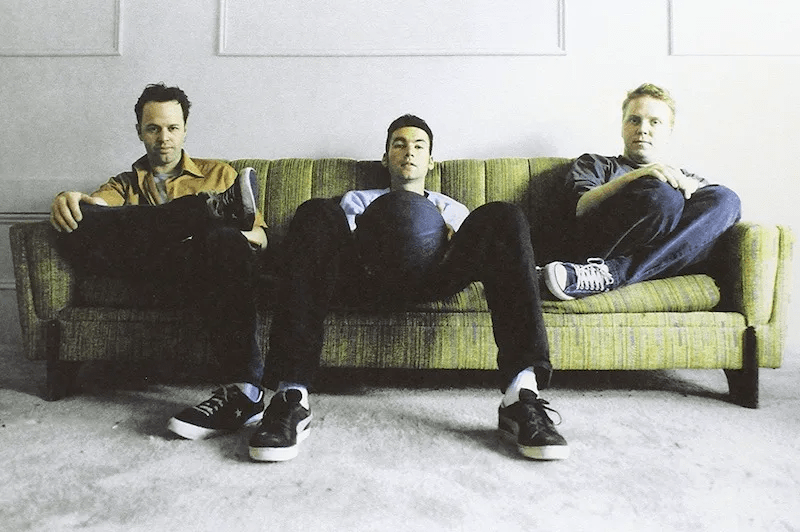
Photo: NorthernExpress.com
Today we’re listening to “Sluttering (May 4th)” by Jawbreaker. Yes May 4th is a day for Star Wars (and Dave Brubeck!) memes, but it is also Sluttering Day— half celebration, half inside joke enjoyed by Jawbreaker fans the world over. Below is the original post from the early days of On Repeat Records. It has since become one of several annual traditions here. Enjoy!
KA—
This isn’t the first I’ve written about Jawbreaker, and it likely won’t be the last. The challenge for me isn’t picking songs by the band I want to share; it’s making sure that I don’t do it every week.
It’s pretty safe to say that everyone has at least one band that completely rearranged your mind the first time their sound met your ears. Jawbreaker is one of those for me, and in fact, I can remember excitedly picking up each of their 1st three records.
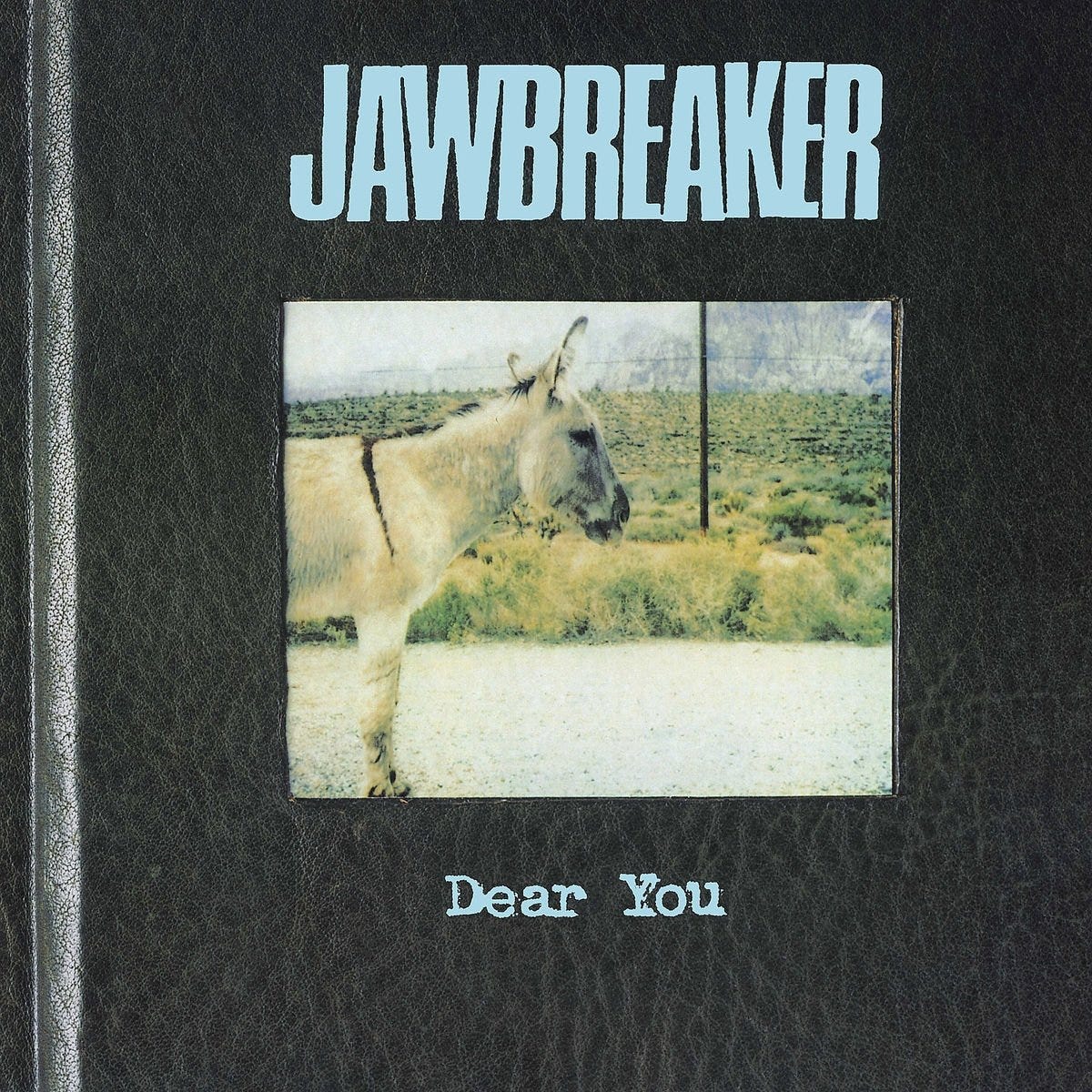
But it was also the early-mid 90s, and people were still drawing extremely Talmudic definitions of what constituted “selling out” or not. Jawbreaker happened to sign to DGC and release “Dear You” at exactly the wrong time, and the blowback was swift—and wholly unfair.
If “Sluttering” is the tale of someone being done wrong (it is), Dear You is the story of a band being turned on by its fans (also yes). For years, it was a dividing line amongst a fan base otherwise monolithic in their love for everything the band put out.
I didn’t buy this record right away. In fact, I waited some time before picking up the CD, and even then it was at a pawn shop in one of Portland’s suburbs. What a waste. The record is different from the previous three but no less excellent.
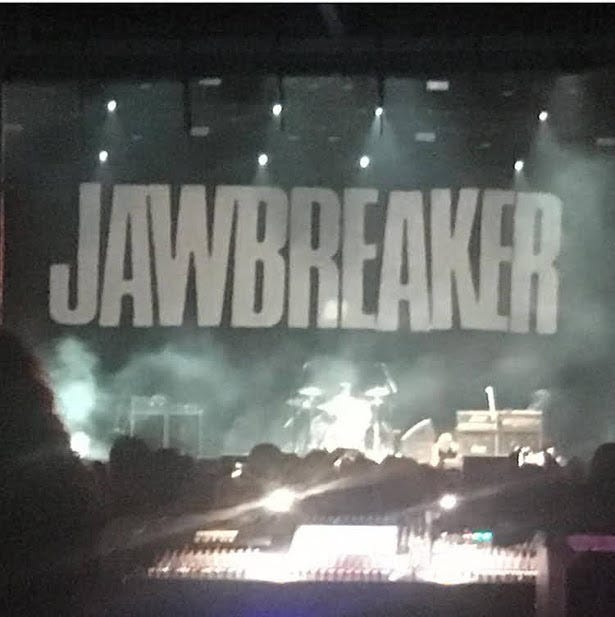
In the fallout, the band split up. They reunited for 2017’s Riot Fest, and I consider that show one of the best I’ve ever been to.
And for all the thrashing and wailing about “Dear You?” The setlist had quite a few tracks off the album, and the crowd never missed a beat.
“The word ‘sluttering’ means a kind of drunk muttering,” he added. “I actually defined it once as ‘pontification under duress.’ There was an angry love triangle and then an elaborate revenge plot designed to incur maximum humiliation. It succeeded horribly and I wound up in the hospital in Concord.”
Read the rest of the article here.
What’d you think of this one? Are/were you a fan of the band? If so, what side of the line were you on back then?
The Madison band is back and sounding better than ever.

The Flavor That Kills. Photo credit: Catherine Cahoon
Today we’re listening to “Spin” by Madison WI band The Flavor That Kills
Over the last few years, our journey to find new music has taken us to some odd corners of the country. We’ve made stops in places as far afield as Bellingham, Washington; Bloomington, Indiana; Athens, Georgia; and Portland, Maine.
Today, we’re heading somewhere much closer to home: Madison, Wisconsin.
A year ago (literally yesterday), I shared the story of how Madison-based band The Flavor That Kills had me wandering around in circles looking for a treasure they’d buried. A code was listed in the liner notes of their Book Of Secrits (sic) record, and I was hell-bent on finding it. That didn’t pan out–turns out I’m terrible at geocaching–but I did find a new favorite local band.
And now they’re back.
If any band is appropriate for now, it’s The Flavor That Kills. They’re chaos agents who describe their sound as a “mix of rock, soul, melody, punk, and a dash of classic psychedelic sensibilities.” In other words, it’s the perfect soundtrack to the madness we’re currently living through. I described the music as an existential threat to any roof it’s played under. Their latest single is no exception and wastes no time getting to work.
Ahead of their fourth release, they’ve added a fifth member and more synthesizers. After splitting recording sessions between America’s Dairyland and Oakland, Thunderbird Lodge will be out later this year, but for now, we’re getting a taste with “Spin.”
Talking about the single, drummer Eric Hartz noted, “We didn’t really have a complete song when we recorded Spin.” We wrote a lot of that song while we were in the studio, which was a new experience for the band.”
They could have fooled me. Spin finds the band channeling all that frenetic energy with laser-like precision and shifting into another gear.
“Spin’s” recording process might have been new territory for the band, but delivering mind-blowing sound is not. This is another one that goes to 11. Your neighbors will thank you later.
As always, I’d love to hear your thoughts on this record!
 Kevin Sent
Leave a comment