It was premature, but it felt like a corner had turned. It has, but it also turns out that they’re hardy creatures. Someone’ll need to keep the cockroaches company post-nuclear apocalypse, I guess. Part of their insidiousness is the way they change form. We’ve all had a run-in with the “name 3 songs” dorks and the boomer who will regard your disregard for Dylan as a war crime. They’re easy to spot and fun to laugh at.
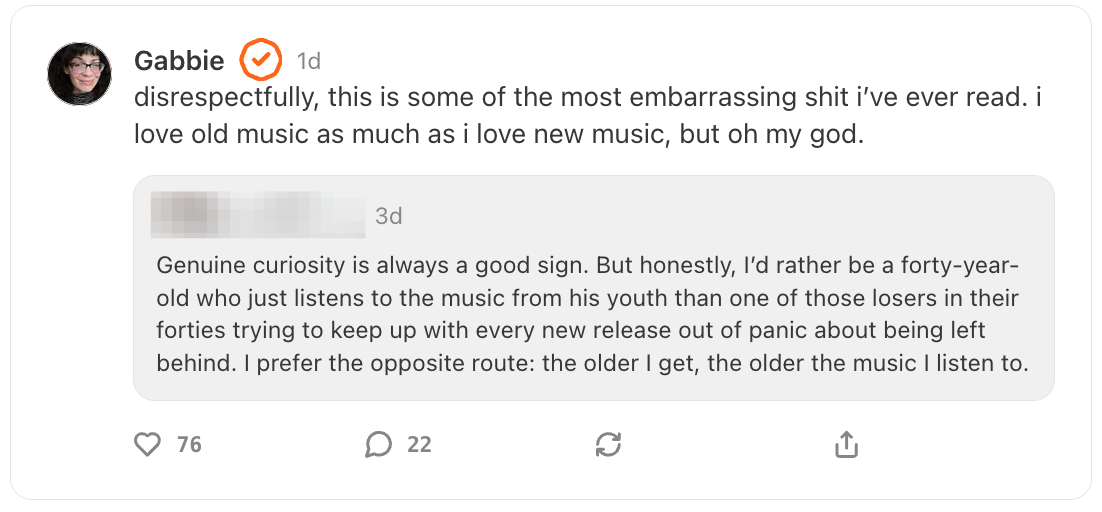
But once you leave them in the dust, you meet the final boss, the “there’s no good new music anymore” guy. Guys like this:
It’s just 3 “name three songs” guys in a trench goat. And kudos to Gabbie for calling it out.
Here’s the deal:
There’s nothing worth feeling overwhelmed. An unholy number of songs are released every day. It’s reasonable to think you don’t have enough time to check out everything being released (that’s where I come in!). It’s also totally okay to like stuff from your youth (see also: Kevin & New Order). It’s science. But to frame discovery as a sort of loser behavior is mind-boggling. That’s some next-level fixed mindset happening!
It also misses a crucial point; “new” can also really just mean “new to you.” Any doubts I had evaporated over the summer listening to records as part of The Best Record of ‘89 bracket challenge. These are obviously 36-year-old records, but I was hearing several of them for the first time. And take your favorite band: odds are good you found them in high school or college. Now imagine someone hearing them for the first time. Today. The truth? That’s probably happening somewhere in the world as you read this.
The best solution for folks like this is to offer them an off-ramp, and that‘s what this is. New doesn’t have to mean chronologically recent. It can just mean hearing it with fresh ears. Some people are too far gone to get it, but for others, there’s still hope.
The first step is to hand ‘em a copy of Technique.
The indie pop band stops by to talk about their latest record, what we should know about the Louisville scene, and what’s next.
Good morning!
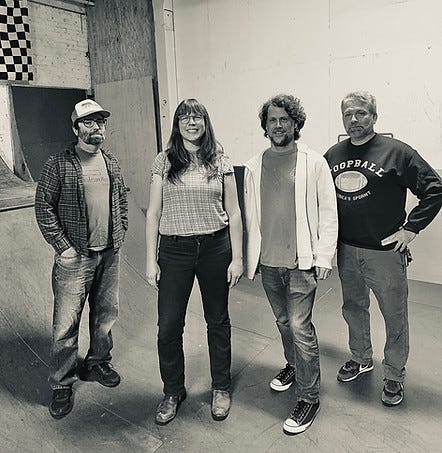
We’re in for a treat today; Louisville’s Second Story Man stops by to talk about their latest record, how it came to be, and what’s coming next.
The pitch: A Louisville band forms in the late 90s, and over the course of the next few years, puts out several EPs and a long player. The next several years see another couple of LPs—and a comparison to Jawbreaker (!)—and more than a couple of lineup changes.
In a mark of incredible timing, the band started recording a new record in… 2020. COVID had other plans, and between that and real life, the record took five years to come to fruition. But all good things come to those who wait, and ‘Calico’ is proof positive.
With this record, we made a conscious effort to embrace simplicity, to not overthink, and to accept imperfections. The instruments were all recorded live with no punching in allowed.
~Carrie Neumayer
Having retroactively gone back through the band’s discography, I can say that this record is a delight. Any vestigial line to Jawbreaker has been erased, replaced by a (slightly) refined sound. The best groups evolve over time, and this is no exception. And it’s a sound that really can only come from the chemistry that comes from playing together for years. If you like punchy, well-built indie pop, Calico is for you. We’ve already seen a couple of tracks featured on the weekly playlists; now the entire record is available.
I recently had a chance to chat with the band via email. In our wide-ranging discussion, we talked about where the band has been and what’s coming next. Our chat has only been lightly edited for grammar and flow.
KA—
Congrats on the new record! For those that might not know, can you walk us through the backstory of how this project came together? Carrie: Thanks! We started writing these songs sometime around 2017/2018 and finally got into the studio to record them in March 2020 with our friend Anne Gauthier. Then the world shut down, and so did we! I ended up going back to school and made a career change, Jeremy became a father, Drew was raising a young child, we grieved some very significant losses, and we all just kind of focused on other aspects of our lives until last yea,r when we decided that the record was worthy of seeing the light of day. We are extremely grateful to our longtime friends at Noise Pollution Record,s who believed in it and offered to put it out.
A previous review described the band as “…a female fronted Jawbreaker, with angular-gang-vocals in the style of Sleater-Kinney and bittersweet noise a la Superchunk for good measure.” That’s a lot to unpack, but more than anything else: Is that an accurate take?
Carrie: I think most long-term relationships inherently have many deaths and rebirths. That’s certainly been true for Second Story Man. We’ve reinvented our sound many times, so I don’t think that description accurately captures our 27 years of creative partnership. We’ve always aimed to make something that is uniquely us. Also, Evan and I sing equally on this album, so “female-fronted” is only half true!
Photo courtesy of Noise Pollution Records
Doubling clicking on that, this is the first record in several years. How is Calico different from the earlier albums?
Carrie: I had a realization recently that before this record, I’d held onto a belief that if I wasn’t singing and playing guitar at the same time 100% of the time, then I wasn’t working hard enough. So silly! With this record, we made a conscious effort to embrace simplicity, to not overthink, and to accept imperfections. The instruments were all recorded live with no punching in allowed. In our past albums, we were much more maximalist (and neurotic!)
Louisville is a place a lot of people might not be familiar with. What should we know about the city? What’s the scene like there?
Carrie: All four of us were born and raised in Louisville. Our drummer Drew and I even went to first grade together! Louisville is not quite southern and not quite northern. It’s a small city/big town. It lives in the in-between. I think the Ohio River plays a big role in the collective unconscious and shows up a lot in the music that gets made here in ways that are difficult to put into words. The scene is both robust and fragmented— there are multiple scenes, many of which do not overlap. For example, the Black gospel music scene in Louisville is legendary. There’s a thriving intergenerational hardcore/punk scene that can draw like 800 people to some of its shows! Then there’s the ever-evolving indie/art rock scene that all of us grew up in. It has splintered out in a lot of directions over time but has always had a moody, dynamic, cerebral, psych/experimental sort of flavor (e.g. Slint, Rodan, Rachel’s, Shipping News, Evergreen, Parlour, Wombo, and a hundred others I could name here) or channeled that sensibility through more of a literary and folk/country lens (e.g. Will Oldham, Catherine Irwin, Ryan Davis and the Roadhouse Band, Grace Rogers, etc.) The older I get, the more deeply I appreciate what we’ve got here.
For anyone new to Second Story Man, what’s the one thing you hope they walk away with?
Evan: Our record!
What’s next for the band? What do the next 6-9 months look like?
Carrie: Our plan is to take things one day at a time. We all work full-time, and Jeremy and Drew are parents, so finding time to do things the way we did when we were in our 20s isn’t possible! It sure would be fun to try to get out of town and play some shows. We’ll see!
Last one, just for fun; I bump into you as you walk out of the record store. What records are you carrying?
Carrie: The most recent records by current artists that I’ve enjoyed have been Grace Rogers’ “Mad Dogs”, Michael Beach’s “Big Black Plume” Idle Ray’s “Even in the Spring”, and S.G. Goodman’s “Planting by the Signs”
Jeremy: Some recent favorites have been Ghost Woman’s S/T album, Wand’s “1000 Days”, and Richard Swift’s “Walt Wolfman”
Drew: I’ve been listening to Tangerine Dream’s “Thief” soundtrack, the “K Pop Demonhunters” soundtrack, and covers by The Middle Age Dad Jam Band.
Good morning! Need an antidote for the algorithms? Looking for a place to share the music you love with like-minded people? You’re in the right spot.
As always, thank you to those who upgraded their subscriptions over the last several days. Your direct support fuels this community and makes a positive impact. Shares and reposts also help!
When you’re ready, joining them is easy. Just click here:
On to the music:
For those of you who are new, we kick off every week by sharing what we’ve been playing.
The playlist below is some of what I’ve had in heavy rotation. And welcome to November. Hard to believe 2025 is already rounding third and heading for home, but here we are. Is it obvious that I’ve still got baseball on my brain? Trust your gut. Someday—in like, 10 years—I might be able to enjoy last night’s Game 7. Not yet, though. If you’re a Dodger fan, enjoy your time in the sun! You’ve earned it. To everyone else: spring’s comin’!
Anyway, like last week, this week’s listening cleaves closer to the fall weather than anything. Acapulco Lips are back to kick things off, followed by a 1–2 punch of fresh tracks from Joyer and The Convenience, before going back in time. Can you name-check the ’80s sitcom that referenced Scritti Politti in an episode and why it might (or how?) be relevant to the paragraph above?
Side B takes us to the Windy City and a new one from Ratboys. It’s a good day any time they gift us some new sounds! We’ve also got one from Cate Le Bon, thanks to Austin Kleon talking it up in a guest post for Jacqui Devaney . You never know where a new favorite might come from! This side also overindexes on sonic comfort food with The Fall, JAMC, and my all-time fave GBV track. They have a brand-new one out as well—because of course they do—but I haven’t had a chance to hear it yet.
We’ve got a great host and a killer record, all set to go. All we need now is you! Here’s how to join the fun.
Good Morning!
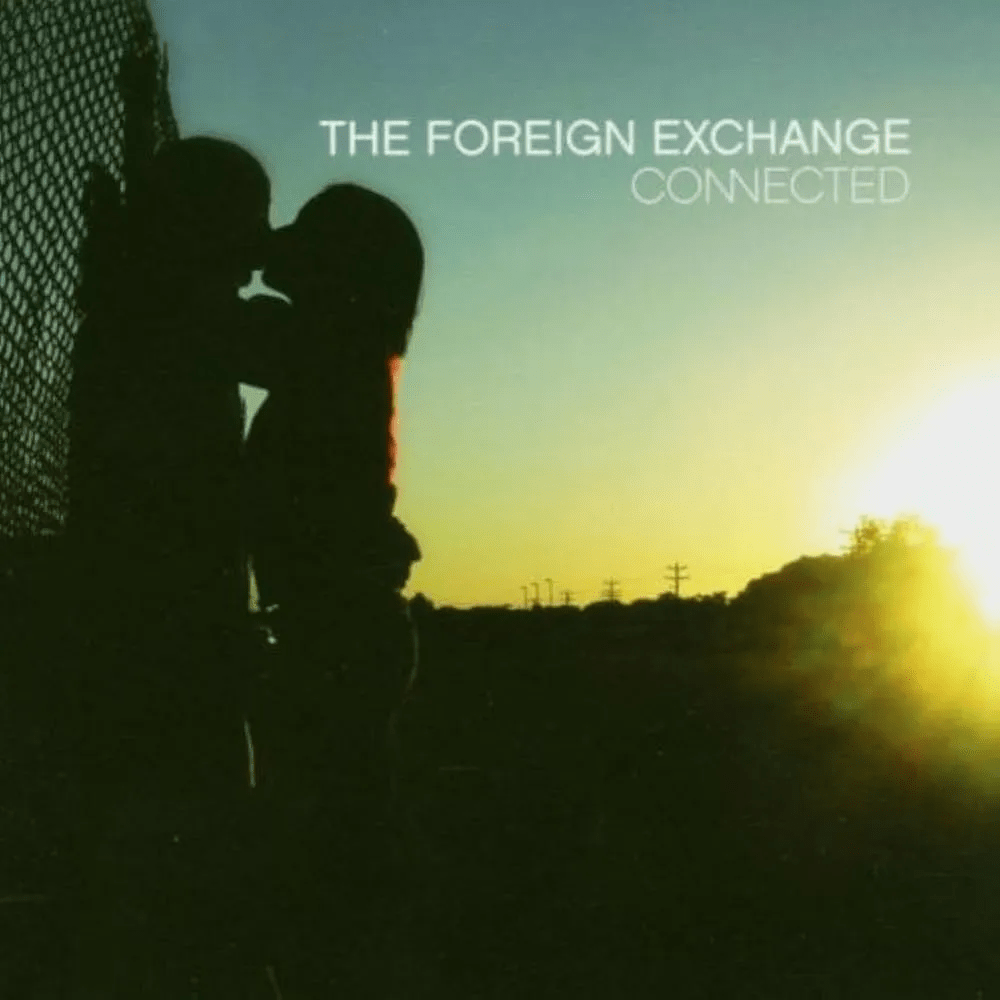
Today we’re talking about Connected by The Foreign Exchange, and how you can talk about the record with other like minded people.
Note: As some of you know, I’m one of the editors for an online music publication called The Riff. Each month, we host an album discussion (via Zoom), and this month’s is coming up this Sunday November 2nd, 4PM EST/1PM PT
Backspin Hip-Hop’s Jeffrey Harvey, this month’s host. These guys are doing the heavy lifting.
As you’ll see below, these are low-key affairs; all are welcome! If you want to share some thoughts, that’s awesome. Wanna just sit back & listen? That’s cool, too. Everything you need to know about how to join us is below.
Either way, it’d be better with you there.
Today’s guest post below comes from Harvey himself, who makes a fantastic case for why he picked this record, why it’s the right record for right now, and why you should be there Sunday to hear about it and/or share your thoughts.
KA—
My connection to October/November’s Riff Album of the Month was a culmination of sorts. Or maybe a coronation. It actually came by way of the album after this one in a catalog that offered a template for 21st Century collaboration.
But let’s rewind before we fast forward.
In 1999, producer/The Roots’ drummer ?uestLove and writer Angela Nissel founded Okayplayer as an online hub to connect progressive hip-hop artists with like-minded listeners. As was happening all over the web, a community emerged. The features, reviews, and artist interviews gave the platform its gravitas. But its lifeblood was the message boards.
The boards allowed members to connect with one another. They quickly became a place where everybody knows your username for a particular subset of teens and young adults. This was the crowd more likely to stay up until 3 AM deciphering how Dilla chopped that Rick James sample into sonic witness protection on Common’s “Dooinit” rather than arguing over which sucker MCs Com was firing at. On those message boards, they found their tribe.
Chief among the tribesmen was “Taygravy.” Behind that username lived Phonte Coleman, an aspiring MC from North Carolina who shared tracks from his group, Little Brother, on the boards. In 2002, Little Brother landed a record deal, based at least partly on the internet buzz that began on Okayplayer. When their debut album, The Listening, the following year, it was a seminal moment for the site — the message boards in particular. Though The Listening was released through a tiny indie label and struggled to find retail space on box store shelves, it felt like the moment that Okayplayer’s digital oasis became anchored in something tangible.
When Dutch producer Nicolay began corresponding with Phonte via the boards, he was connecting with a made man. Yet, in the context of the Okay-ecosystem, they were peers. Music lovers. OKPs. Young artists hustling to connect their sounds with open ears. What began as an exchange of beats and ideas between community members blossomed into something unprecedented. It ultimately foreshadowed the future of not only music but 21st-century collaboration.
From Holland, Nicolay sent files to Phonte in Durham via AOL Instant Messenger (RIP AOL). Phonte laid vocals and snail-mailed the files back to Nicolay for post-production. Momentum built, and what began as an experiment became a passion project.
Tay and Lay could have held the lightning in a bottle for themselves. Instead, they opened the bottle and invited their friends to sip. Tay’s Little Brother partner, Big Pooh, features prominently. So does their extended Carlonia-based Justus League crew. But the album also provides a platform for peers from around the U.S. (the Eastern Seaboard, anyway) to whom the duo extended the digital share space — fellow OKP Von Pea (Brooklyn), Critically Acclaimed (DC by way of NYC), Kenn Starr (DC), Oddisee (Maryland).
As a result, the album plays as a collective mission statement for a generation ascending into adulthood at a moment of jarring paradigm shifts and getting by with a whole lot of help from their friends. Want a cheat code to understanding the album’s ethos? Pay close attention to the propulsive fourth track, “Hustle, Hustle”. Here, Phonte seems not only content, but enthusiastic to slide into a supporting role. He sings the hook while Critically Acclaimed’s Quartermaine and C.A.L.I.B.E.R. set the album’s thematic table of navigating the quest for personal fulfillment in the face of mounting responsibilities.
No matter when you entered adulthood, the core themes of defining identity, priorities, and place in the world will likely resonate as a right of passage. The universality of the themes and earnestness with which they’re explored are a big part of why, even at a moment when digital technology was making our relationship to music more transient, this album stuck with its listeners.
The other component of its timelessness is Nicolay’s production. Think the meticulous sonic polish of Steely Dan paired with the enveloping warmth of The Ummah. But where Steely Dan had access to state-of-the-art studios and all-star musicians, Nicolay had a desktop computer and a mini-arsenal of keyboards in a bedroom. If Aja represents the pinnacle of analog-era studio craft, this month’s album was an early beacon of fully realized digital-age craftsmanship.
By the time I formally joined the Okayplayer team as a writer in the late 2000s, the platform had already tipped. OkayOGs like Common, Erykah Badu, and Jill Scott were firmly situated in popular culture. Okayplayer was regularly cited in mainstream media outlets, as established journalists increasingly looked to it as a harbinger of cresting sounds. The signature logo shirts were visible on the streets of major cities worldwide. The Roots would soon become Jimmy Fallon’s house band.
Yet, there was the distinct sense that us second (third?) generation writers had arrived after the true golden years — the moments when a movement was coalescing in real time.
So when I was tapped to write the top-of-fold review for The Foreign Exchange’s 2008 sophomore album, Leave It All Behind, it felt like a connection to the glory days. A link to the era when a website became a community, digital dialog sparked creative collaboration, and a proof-of-concept emerged for 21st-century connection. When my review was “blurbed” for the album’s digital banner ad, it was validation. (I would soon be blurbed for Brooklynatiby Von Pea’s group, Tanya Morgan — also formed on the message boards — locking in my Okay bonafides.)
This month, we’re going back to the genesis.
October/November’s Riff Album of the Month is Connected by The Foreign Exchange.
We’ll connect and discuss on Sunday, November 2nd at 4 PM EST, details below.
** A BRIEF LISTENING NOTE: ** The original version consists of 14 tracks, ending with “All That You Are.” Tracks 15–17 were later added as bonus cuts. Feel free to listen, but for the purposes of the discussion, the album is tracks 1–14.
With The Riff Album of the Month Club itself having evolved from digital dialog to virtual community to several in-person meet-ups, it feels like the perfect setting to discuss not only Connected, but the nature of connection in the age of digital anomie.
I hope to see all the regulars, semi-regulars, and irregulars.
For newcomers, joining the community is easy. Simply listen to the album and log into the Zoom call detailed below. You can talk as much or as little as you want and are free to say anything.
This article is not paywalled, so share it freely on social media and elsewhere.
“A clown is a coronary in a wig waiting to happen. “ ~ Sheila Moeschen
Good morning!
Today we’re diving into the sounds of the season. Spooky Szn, that is.
It’s Spooky szn y’all!
It’s October, and that means a season of ghouls and zombies. It also means pumpkin spice everything, and if you’re in a “battleground state” like I am, some years it means the torture of nonstop political attack ads that often run back-to-back-to-back. This is an off year, so we’ve mostly been spared, but all of this is its own horror show (waves hands around).
I don’t know about you, but I think I’d take the zombies if given a choice.
There are often certain conventions attached to holiday playlists.
For example, on Thanksgiving, there really can only be one song. With Christmas, people usually have their own lines drawn in the sand:
Traditional vs. non-traditional…
Religion-themed vs laic…
What’s the earliest allowable date to hear Mariah Carey’s “All I Want for Christmas Is You…”
And so on…
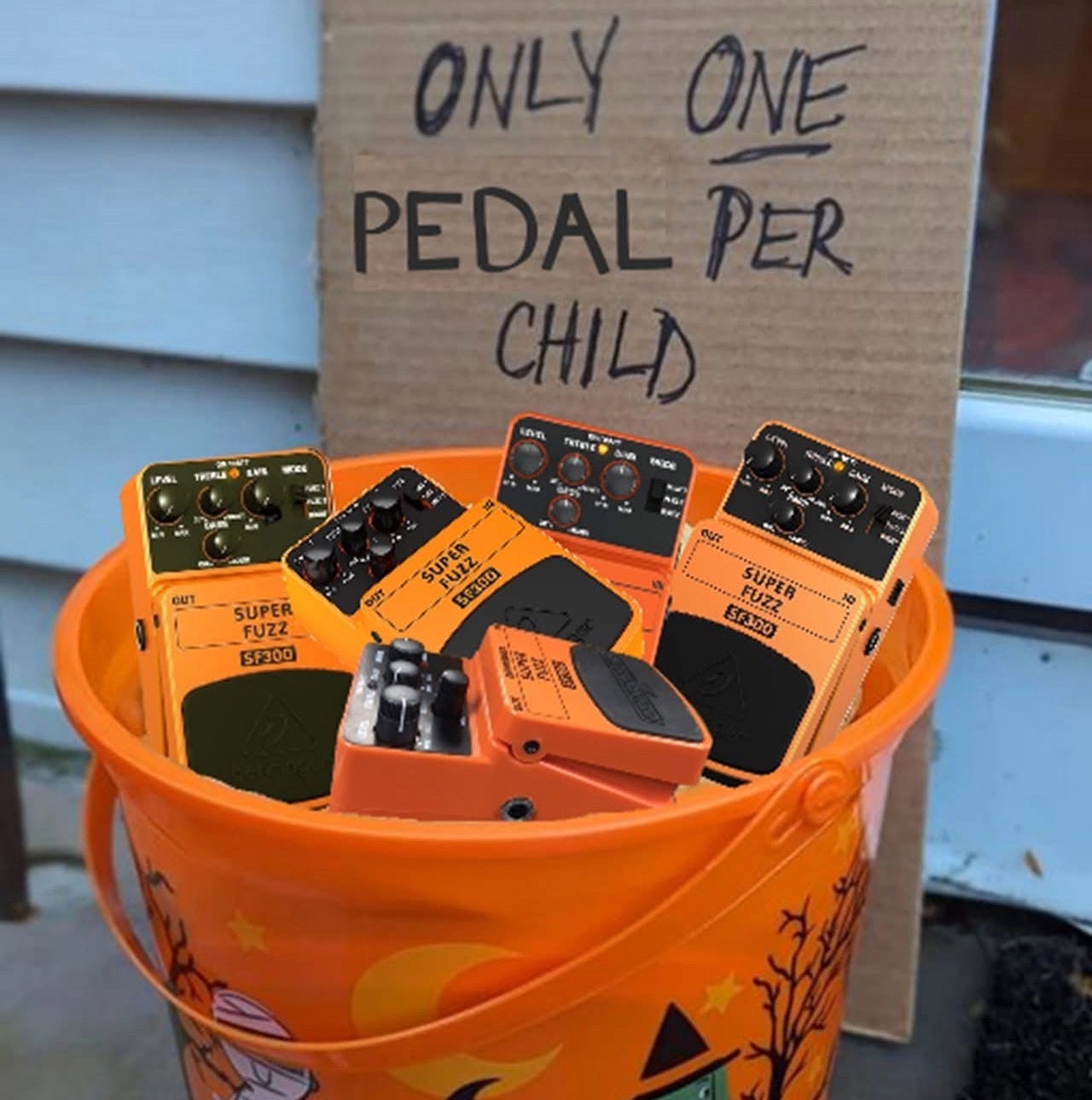
Instagram photo courtesy of SW Lauden
Halloween lists don’t generally bend to those same orthodoxies.
Maybe it’s because so many of us associate the day with the same themes. It’s not a consumption vs. family debate. It’s trick-or-treating and bad movies. And if you live where I do, there’s the annual angst surrounding whether or not it’ll snow.
In other words, anything goes, as long as it can be loosely tied to the day.
There are plenty of standards, a few curveballs, and at least one legit jump scare in here…and hopefully a new favorite (or two) to add to your mixes!
What’re your favorite tracks to play on Halloween? Any tracks that should be on here? Let me know in the comments!
Thanks for being here,
KA—
The Terrible, Horrible, No Good, Very Bad Halloween Playlist:
Subscribe to continue reading
Become a paid subscriber to get access to the rest of this post and other exclusive content.
Volume 10 | October 2025: Sam & I throw the hoodies back on and share some perfect records for fall listening.
Good morning!
So nice, we’re doin’ it twice. Today Sam Colt and I are each sharing a few more of our favorite fall records…ones that might’ve been overlooked or deserve more time in the spotlight.
Welcome to the tenth installment of our (not so) new series! For those of you who may have missed previous editions, here’s a bit of context:
In this monthly series, Sam Colt and I will each share our picks for artists and/or titles that haven’t received their due. You’ll recognize Sam’s name from our On Repeat and Friends Best of Series, and also our Top 100 of all-time serieslast fall. These posts will adopt the latter’s format; I will make my case for my three picks and my reaction to Sam’s. Sam’s page will do the reverse.
In the inaugural post, we noted that successive editions would narrow things down slightly. Maybe a specific genre…maybe a specific era…maybe a specific…well, who knows!
Last month, I talked about the vibe shifts that coincide with the school year. Living in a college town puts all of those in sharper relief. Living in a place where you get all four seasons (sometimes in a day) cements it.
We’re in full swing here, with school having been in session long enough that high school playoffs have started. The UW Badgers football team hasn’t quite figured out that the regular season has started, but that’s… fine. Hockey’s here, and hoops start soon enough! (EDIT: Tonight, actually!)
It’s the most wonderful time of the year. It’s also the time of year when a certain set of records hits differently than they do in the dog days of summer or the preternaturally hopeful late spring. These are generally softer—or if not, at least have heavier themes. Sometimes a record just “feels like fall.” Or if your mind’s wired like mine, a record that was released in October with blue cover art forever imprints itself as an autumn record.
Whatever the reason, there are a lot of fall records. Enough so that Sam and I felt like we’d left some great picks on the table last month. The responses we got from all of you said the same. So we went back to the crates and grabbed a few more that fit the bill. Some of these will be familiar. Some might be ones that get overlooked by bigger releases in the artist’s catalog.
I am a devout heliophile. Summer is my time—even if I don’t like sweating. For me, fall starts strong: it’s still sunny, there’s all the new school year energy, etc. But just underneath that is the slight unease that comes with knowing temps in the teens and a monochromatic landscape are right around the corner.
Zooming out, I think on some level, the records here represent a sort of fight against the dying of the light. I don’t mean in some big-minded, overly literate way—I mean literally clinging to daylight for as long as Mother Nature’ll let me. Someday I will retire. My plan? Put a snowblower in the back of the truck. As soon as I get somewhere that people ask what it is, I’ll know I’m far enough south. That day’s not here yet, and I need to keep finding comfort in records.
Sam paints a picture of a guy who’s already got his sweaters out and is raring to go. Maybe this is his time to shine? I probably should’ve asked him when we were chatting about this month’s piece. Either way, all of his picks were new to me. Maybe a few of these will be to you as well? At any rate, we decided on a second round, and here we are.
When you’re done here, remember to check out Sam’s take at This Is a Newsletter!
After a long hiatus, Sugar is back. After a recent cryptic post on Instagram, they confirmed it by releasing a single and a few tour dates. I suppose a post on social media is how one builds hype in 2025. In 1992, it looked different. You might read about a record in a magazine. Maybe see something on 120 Minutes. And of course, word of mouth. In the fall of that year, I was swimming in all of those circles and constantly on the hunt for new sounds. When/where I first heard about this project has been lost to time, but the smart money says word of mouth. I knew Hüsker Dü—New Day Rising is still an all-timer for me—and I knew of Mould’s solo work. But a new band? That had my curiosity piqued.
There’s no need to bury the lede here: this record rips. Mould’s solo work to that point was good, but he’s in his element when the amps are set to “full throttle.” Writing about it previously, I noted:
Sugar feels like Hüsker Dü if you turn up the pop dial and down the screaming. It hits as hard as anything they put out, but it’s sunnier, more refined, and almost anthemic. Mould is on record as loving MBV’s Loveless and, upon hearing it, recognized the need to add more dimensions to his sound. Mission accomplished, but it never gets too complex. The album is track after track of pop rock that goes 100 mph. The only real pause you get is on “If I Can’t Change Your Mind,” a lovely respite and a highlight on the record. Copper Blue is a record that holds up a lot better than much of what came out in the fall of ’92. You can hear vestigial traces of it in hundreds of records that have come in the years since, including Mould’s more recent solo work.
For years, the answer to the question, “What’s the loudest concert you’ve ever been to?” was Sugar. And it wasn’t even close. Melvins took that title a few weeks ago, but this record is still one of the best in Mould’s discography—and a perfect one to rattle those last leaves off the trees in your yard.
Sam’s Pick and My Take: Elliott Smith – Self-Titled
Speaking of marketing: one of the things I miss are concert flyers posted on telephone poles. I know they still exist, but they seem like a much rarer commodity today. Growing up in Portland, one of our favorite things to do (besides going to the shows themselves) was to walk around NW Portland—this was before it had been rebranded as “The Pearl”—and find flyers. If it was for a show that had passed, we felt like they were fair game to take. If it was for an upcoming show, we only did if there was more than one on the post. I don’t know who was putting these up, but at least one guy was hella lazy and would put like 15 on each pole so he could clock out early. Whoever you are, thank you.
That’s all to say that I liked Heatmiser, and one of those flyers graced my bedroom walls for a good chunk of my teens. I feel lucky to say that I was able to see them play.
This record is very clearly not a Heatmiser record. Their louder, electric sound is replaced by a gentler acoustic one. That shift is even more acute if you decide that listening to them before this album is a good idea. Ask me how I know this.
So, about the record: the TL;DR is that it’s a much more spare affair than much of what the band put out. But this softer sound also gave Smith’s voice room to stand in front of the music, rather than having to shout over it. The themes are darker, and there’s no shortage of brooding. Smith met a tragic end, and it’s easy—I think—to slip into a Talmudic parsing of lyrics, looking for clues or cries for help. Mostly, I think he was just looking to be taken seriously as a songwriter and made a record that reflected where his head was at at this point.
Bar trivia: Alphabet Town is in the same part of town I mentioned above, and when he sings “I’ll show you around this alphabet town,” I wonder if he was imagining those same pole-lined streets my friends and I were cruising up and down looking for Heatmiser fliers. The streets all go in alphabetical order, and at least four Simpsons characters got their names from them (Matt Groening is also a PDX native). I’ve also literally never heard it referred to as such until recently. If you happen to look up the list or find yourself in the Rose City, just know that “Couch” rhymes with “Pooch.”
Rebecca Gates joins him on “St. Ides Heaven.” Gates was one half of The Spinanes, a band that belongs on any list of underrated early-’90s bands from the NW.
Yo La Tengo – Painful
If you’ve been with us for any length of time, you’ve seen me spill some words about this band. The joke is that they’re one of your favorite bands’ favorite bands. Well, that applies to music writers, too. Heck, this isn’t even the first time this series that this record has come up.
Writing about it previously, I noted:
That steadiness is reflected in the record itself. Previous YLT records had a bad habit of bouncing between walls of fuzz and something akin to folk rock. Appealing yet inconsistent. Ira Kaplan’s vocals could verge into a bratty/sneering style. He hasn’t lost his edge, but they’ve evolved into a more—if not congenial—then conversational style.
One of YLT’s hallmarks is that any song feels like it could be remade in a dozen different ways. Much of Painful continues that tradition—see the two wildly different versions of “Big Day Coming” as Exhibit A—but it also feels fully fleshed out. The record turned 30 earlier this year, but it’s the one I repeatedly return to. I can’t say the same for many of the records released around the same time.
The first lyrics we hear are “Let’s be undecided,” but Painful is a decisive statement record from a band fully formed. One hitting its stride and never looking back.
If you’re getting the idea that it’s an important record to me, trust your gut. What it’s not, though, is a summer record. Not that YLT is a band you play while out on the lake, but even relatively speaking, some tracks pair better with October. And it doesn’t hurt that this record came out in October. I’d make an “Autumn Sweater” joke here, but that’d be too on the nose.
One could also make the argument that And Then Nothing Turned Itself Inside Out fits here, but it’s a brooding record—more fitting for short days and long nights when you’re hunkered in. Painful still has jolts of energy in it, much like those random 70-degree days when you’ve already pulled out your sweatshirts and hard pants. My copy might not leave the shelf a lot in July, but in October or November? That’s a different story.
Sam’s Pick and My Take: Alex Turner – Submarine (EP) & boygenius – S/T (EP)
Most of what I know about Arctic Monkeys actually comes from Sam, who included their 2006 record Whatever People Say I Am, That’s What I’m Not in our Top 100 series. Likewise, frontman Alex Turner didn’t know much about the film he was asked to score—director Richard Ayoade didn’t let him see any of the film until after the songs had been composed. He delivered a lovely (to my ear) EP of five(-ish) tracks. I say that as a snippet of “Stuck on the Puzzle” kicks the record off. Speaking of which, the full version is a highlight here, and is as close as we’re gonna get to a conventional pop song. It’s also the fastest song on the record—again, it’s all relative; by fast, I really just mean that there are some drums on it. The pace is lilting, and maybe that’s why it feels right for fall. Its slower pace and gentle sounds are fitting for this time of year.
On that Arctic Monkeys record, Sam noted that the first words we hear from Turner are: “Anticipation has a habit to set you up for disappointment.” Maybe. But not in this case. I always anticipate Sam’s picks, as they usually involve something I’ve never heard before. I had no idea what I was in for, but this was anything but disappointing.
If these words have reached you, I’m fairly sure you’re familiar with boygenius, and 2023’s cleverly titled record… the record. It was seemingly everywhere, and few AOTY lists left it off. Objectively, it was solid. Subjectively, it wasn’t my speed. I was a fan of Bridgers (both solo and with Better Oblivion Community Center), but I dunno… it just never really landed with me. Maybe a case of anticipation setting me up for disappointment.
Nevertheless…
“Bite the Hand” kicks things off with Lucy Daucus starting before being joined by Bridgers and Julien Baker, and the harmonies are incredible. The record might not’ve been my thing, but that’s a me problem. Their talent—and the way they play off one another—isn’t in question. And if it is, that last bit of this track should be Defense Exhibit A.
Sometimes fall can be subtly jarring. I know that’s an oxymoron, but I’m thinking about those times when you walk outside and the air is a lot sharper than you bargained for—and you realize another whole season has passed. “Stay Down” caught me in a similar fashion—I was listening and thinking that Julien Baker is really underrated, and that this was a pretty song… and then I started listening to the lyrics:
I look at you and you look at a screen I’m in the back seat of my body I’m just steerin’ my life in a video game Similar acts and a different name
Damn.
I suppose this is where I should talk more about the record and the level of talent it takes to pull off making dark lyrics sound pretty. Or delve into production or some other liner-notes-style details. Mostly, what I thought as I listened was: okay, I’m on board now. I didn’t get the fervor around the record. Now I do. I get it.
The Fall – Extricate
John Peel once described The Fall as “always different, always the same,” and it’s easy to see how that could be construed as reductive—but The Fall were one of his favorite bands, and I’ve always interpreted that line the same way you might describe Guided By Voices. If you’re not a fan, everything sounds kind of the same. If you’re listening with open ears, there’s a ton of variation in style and sound. Robert Pollard is the only constant for GBV, and Mark E. Smith for The Fall. Both bands can be described as “prolific,” with dozens of records apiece.
The Fall’s discography can be broken up into seasons: the early years, the Brix years, etc. “Brix” refers to Brix Smith, a member of the band and Mark’s one-time wife.
Extricate is the first record of the post-Brix era (both in the band and in Mark’s life), and in many ways, it feels like a divorce record. If you overlay the five stages of grief onto the tracklisting, you can kinda imagine him going through it as he wrote. He’s at turns distraught, sanguine, and as cynical as ever—mostly the latter. The names might’ve changed, but the sentiment hasn’t. Always different, always the same.
Musically, the sound is way different, with things like keyboards and (I think?) a violin. There are horns, too. It’s almost as if Smith is trying to distract himself from the absence Brix (and her guitar) left behind.
“Bill Is Dead” is gorgeous and feels almost like an elegy for a relationship that’s imploded. We’ve hit the Acceptance stage early, and it’s the looking back you do while walking through the ashes of something that didn’t quite make it to forever. Then you remember who you’re listening to and imagine it being sarcastic, and well… Oops. Still rad, though. Still one of my all-time favorites from a band that put out countless tracks.
Other points on the curve include Anger (“Black Monk Theme Pt. 1” and “Sing, Harpy!”). It’s a wild ride all around—and one I think more people should take. Most “best of” lists usually slot this one in around mid-pack to upper-third, with Hex Induction Hour or This Nation’s Saving Grace taking the top spot. But Extricate is one of my faves and belongs right up there with the best of ’em.
Sam’s Pick and My Take: Real Estate – Atlas
Once again, Sam has batted 1.000 regarding records I haven’t heard. Honestly, I’m not sure I’d even heard of Real Estate. That said, this is nice (again, not derogatory). It feels of a piece with bands like The Shins—the type of record you hear on a day when you’ve got wool socks on, have scraped your windshield, and half the heat in the car is coming from the travel mug between your seats.
I can easily see myself playing this one quite a bit in the coming weeks.
That’s a wrap! What are your thoughts on these records? Do you own any of them? Share your thoughts in the comments! Rants, raves, and spicy takes are all welcome. And if you have any ideas on future themes, please share those as well! Don’t forget to check out Sam’s thoughts over at This Is a Newsletter!
Good morning! Need an antidote for the algorithms? Looking for a place to share the music you love with like-minded people? You’re in the right spot.
As always, thank you to those who upgraded their subscriptions over the last several days. Your direct support fuels this community and makes a positive impact. Shares and reposts also help!
When you’re ready, joining them is easy. Just click here:
For those of you who are new, we kick off every week by sharing what we’ve been playing.
The playlist below is some of what I’ve had in heavy rotation. The last vestiges of summer finally seem to be giving way here, and fall is in full swing. In my part of the world, that means bright red trees and frosty windshields. It also means winter isn’t too far out.
There are records I like in July, and some that really only see daylight this time of year. Maybe that’s you, too? At any rate, my listening habits tend to change with the seasons, and this week’s playlist reflects those cooler temps and lower sun. Side A kicks off with an all-timer from one of my favorite bands. Sonic comfort food? Maybe. From there, we go to brand new stuff from Dazy and Formal Sppeedwear before more comfort food from Paul Wedsterberg.
Side B takes us back to early ‘90s Portland and Elliott Smith before he was, you know, Elliott Smith. We visit another Smith (as in Mark E., Neko Case, and Louisville before ending with a gorgeous track from Ezra Furman.
There’s a common idea that “good” music—and the joy of discovering it—is a thing of the past. A relic from a bygone era that fits in with memes about drinking water from a garden hose. People like Dan Gorman prove that’s simply not true.
I first connected with Dan through the Rosy Overdrive community, and now we’re lucky to have his newsletter, The Discover Tab. If you’re someone who’s always chasing new sounds—and I’m guessing you are—it’ll check a lot of boxes for you. It’s a “never miss” for me.
Dan recently launched a series called Digging for Something, where fellow writers highlight underrated records that deserve more time in the spotlight. I was excited to be included, and I hope one of my picks becomes your next favorite.
Good morning! Need an antidote for the algorithms? Looking for a place to share the music you love with like-minded people? You’re in the right spot.
As always, thank you to those who upgraded their subscriptions over the last several days. Your direct support fuels this community and makes a positive impact. Shares and reposts also help!
When you’re ready, joining them is easy. Just click here:
For those of you who are new, we kick off every week by sharing what we’ve been playing.
The playlist below is some of what I’ve had in heavy rotation. This week’s Side A kicks off with a new single from The Lemonheads. Yep, they’re back. Evan Dando’s got a new memoir out as well. That’s followed by Eleventh Dream Day—a band I missed their first time around, and Ride who luckily, I didn’t. Winged Wheel might be putting out some of the most interesting music these days; their “Sleep Training” was one of my most played tracks last year. The side’s rounded out with the latest from The New Romantics. Synthpop from Knoxville? Yes please!
Side B roars in with Sugar’s latest. I promise it really is 2025. Like Dando, Bob Mould is as good as ever, and this feels like the band hasn’t taken any time off at all. ‘Course when you have a blast furnace for a guitar, the rust probably comes off easy. Anyway, your neighbors will like it too. After that is some power pop from Crossword Smiles and then a 1-2 punch of faves from the Blake Babies and Paul Westerberg, before we wrap up with the latest from Winter and Billie Marten, who’s Dog Eared LP is on the AOTY leaderboard.
Some thoughts on Ticketmaster, Resellers, and Swifties.
It shouldn’t surprise you that a considerable chunk of my adolescent years were spent going to, coming from, or actually at shows. If you’re reading this, I’d bet our timelines overlap.
Some of that was down to questionable life decisions—I quit more than one job after being unable to get time off. Some was timing— people on my block had cars long before I did, making getting downtown easier. But mostly, it was economics. Tickets were simply cheaper (something that will surprise absolutely no one). We dealt with plenty along the way, but automated resellers weren’t one of ’em.
Back then, the first step to seeing a show usually meant heading to a brick-and-mortar building—a sporting goods store called GI Joe’s (think Dick’s Sporting Goods, but with a token record section). They had a desk whose sole mission was to sell park passes, fishing licenses, and concert tickets. This was the designated Ticketmaster outlet, back before they decided to go all in on villain shit. Prices were reasonable, and fees weren’t absurd. Most bands and crews weren’t getting rich, but at least the system hadn’t yet been weaponized against us.
Those little paper tickets were passports to whole new worlds—or beloved old haunts. Today, they mostly live in shoeboxes or scrapbooks. Concert tickets now exist on phones or in apps we’re forced to download—just a string of ones and zeroes sitting on a server somewhere. And speaking of numbers: the average ticket last year was $136.45, up about 42% from just five years earlier.
I know, I know—I’m deep in “old man yells at cloud” territory. Stick with me.
This isn’t a “things were cheaper in my day” stemwinder. Of course they were—so was everything else. I’ve got neighbors who had apartments downtown, paid $250 a month, and can’t figure out what today’s kids are griping about. I get it.
There were certainly systemic issues even then, and Pearl Jam was already taking on Ticketmaster. People were already testing workarounds. But complete monopolization hadn’t yet hit, and “reseller” still usually meant a chainsmoking, slightly sketchy dude in the parking lot an hour before showtime. Thirty-five-ish years later, we’re still inventing workarounds: house shows are back, pop-ups are a thing, and so on.
It’s the reseller I want to focus on here.
And look, I get it—we live in a late-stage capitalist hellscape. Supply and demand are real. So is surge pricing. Even the airline I may or may not work for has toyed with the idea. In aviation, it’s called Yield Management. In the music world, it more closely resembles highway robbery. And look, if artists and crews were the ones making that extra revenue, it might be palatable—but they’re not. It’s going to faceless corporations and bad actors who’ve mastered the system. The losers? Concertgoers and, occasionally, local venue owners.
Today’s resellers are much more ominous and much better equipped. They have all the levers of technology at their fingertips and know how to weaponize each one. The rise of AI has changed the rules of engagement yet again. If you’ve ever tried to buy tickets only to find the remaining ones priced several orders of magnitude above face value, you know what I’m talking about.
It’s gotten so bad that legislation was recently introduced here in Wisconsin to push back. The bill—introduced by Democratic lawmakers—came after a theater in Racine watched helplessly as $22 tickets ballooned to several hundred dollars for a production of Legally Blonde, effectively pricing people out of the show and diverting revenue from the venue. If passed, it would require resellers to disclose total ticket costs, cap markup limits, and prohibit bots that scoop up tickets before fans can.
History is littered with similar bills that never made it out of committee. Others have tried to tackle pricing itself. If I ruled the world, future versions would include bans on venues taking merch cuts. I’m not holding my breath. That’s one the market itself will have to handle—maybe if enough of us stop going to those places, they’ll stop. Maybe.
You’ve got to have a dream, right?
Back to the bill: Wisconsin is one of the most politically balkanized states in the nation. Both parties spend more time throwing rocks at each other than actually getting things done. The GOP here can be politely characterized as “humorless.” Still, I’d like to think there’s a sliver left that remembers it’s supposed to champion small business and working people. They’ve whiffed on plenty of easy wins in recent years—hopefully this won’t be one of them. Other states are following similar paths, but like the slogan says: As goes Wisconsin…
Ideally, these obscene price hikes will go the way of the paper ticket. My dream is that kids today get to experience the same adventures I did—and that, for once, consumers aren’t the ones left holding the bag.
If nothing else, at least the bill has a killer name: the Stop Wildly Inflated Fees and Ticketing Industry Exploitation Act. 11/10 No notes. Hopefully, our elected officials will get it and realize the peril of voting against something with a title like this.
Political survival 101: Never start a land war with Swifties.








 Kevin Sent
Leave a comment